Week 46.1: Salt Lake City

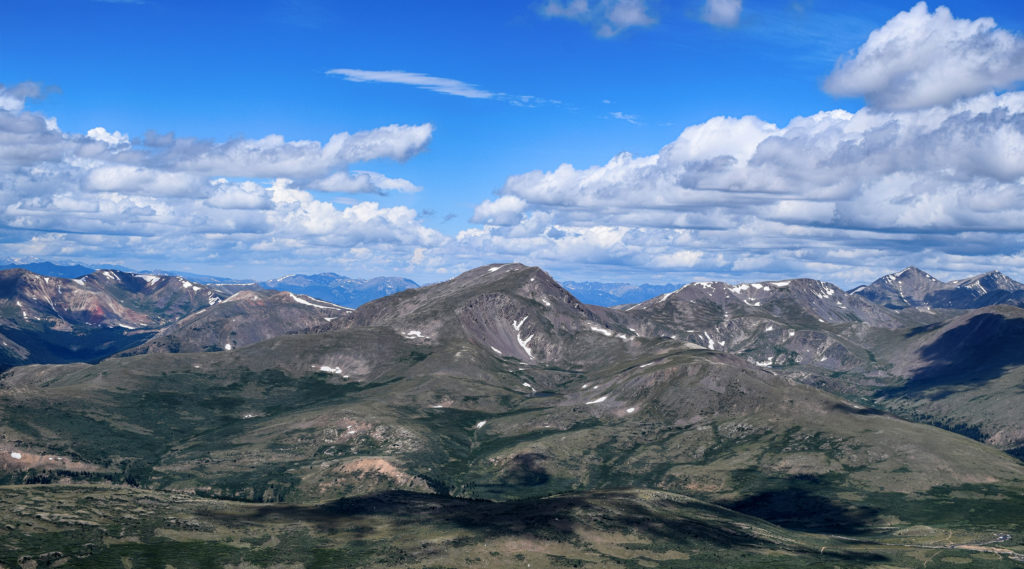
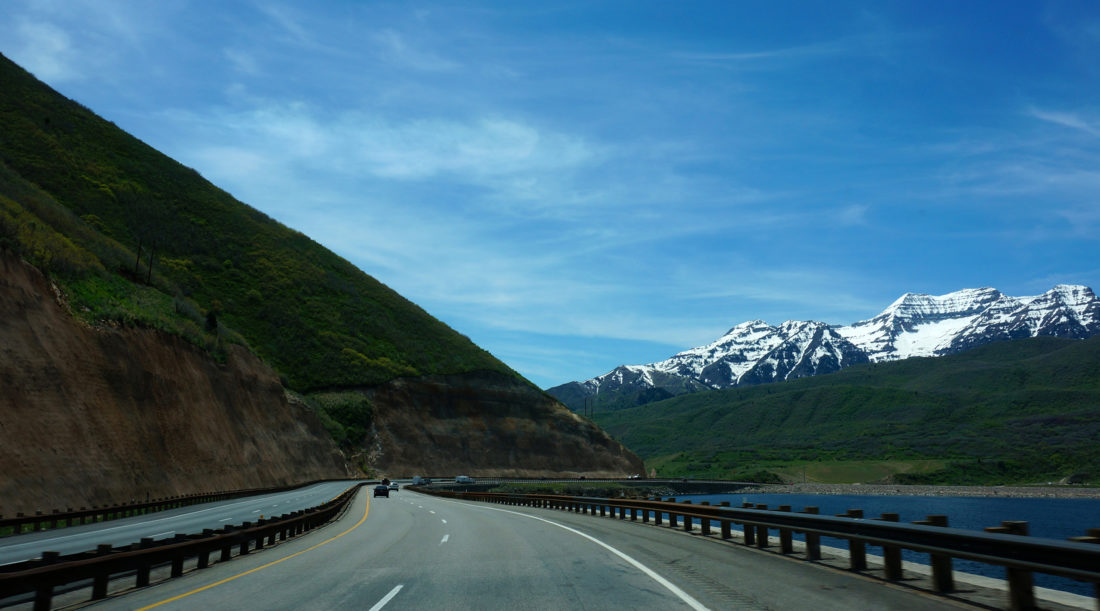
In mid-may we traveled southeast from Twin Falls, headed for Salt Lake City.  It was a long day’s drive, but for once, we didn’t mind the distance.  We were finally in Utah! The Promised Land of our road trip, mountainous Utah is home to five national parks, numerous state parks and national monuments, and – indisputably, in our opinion – the most beautiful scenery in the continental United States.

We spent a month in Utah, beginning in mid-May, and we took a lot of photos – a whopping 8,633, to be exact.*  It’s a mind-blowing place, and we are pretty excited to finally get to share it with all of you.  In fact, 11 of our next 13 blog posts are about national parks – so stay tuned.

* Heather deals with all the photos for our blogs (Jake does the writing), so… sorry, dear.
Mountain Temples

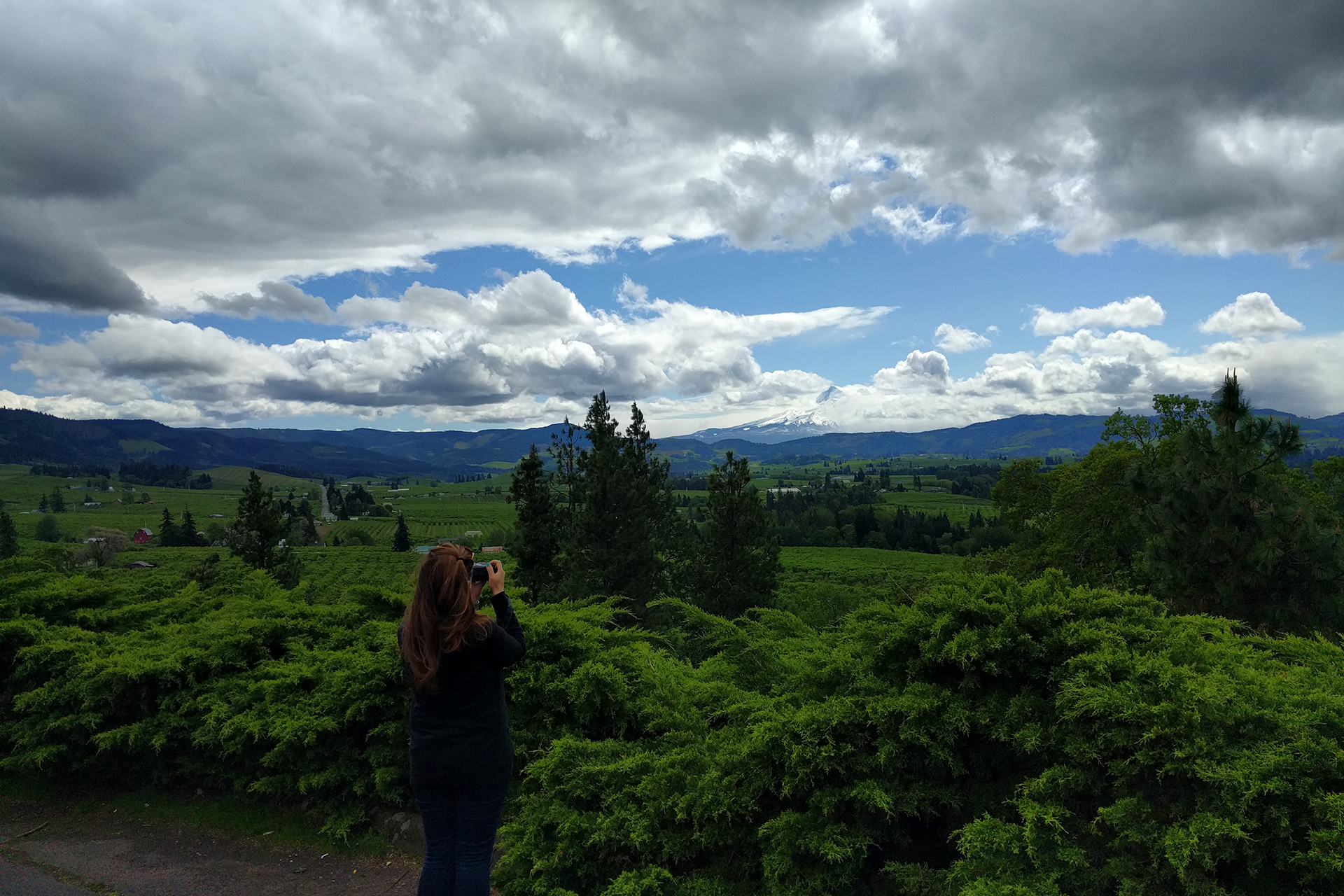
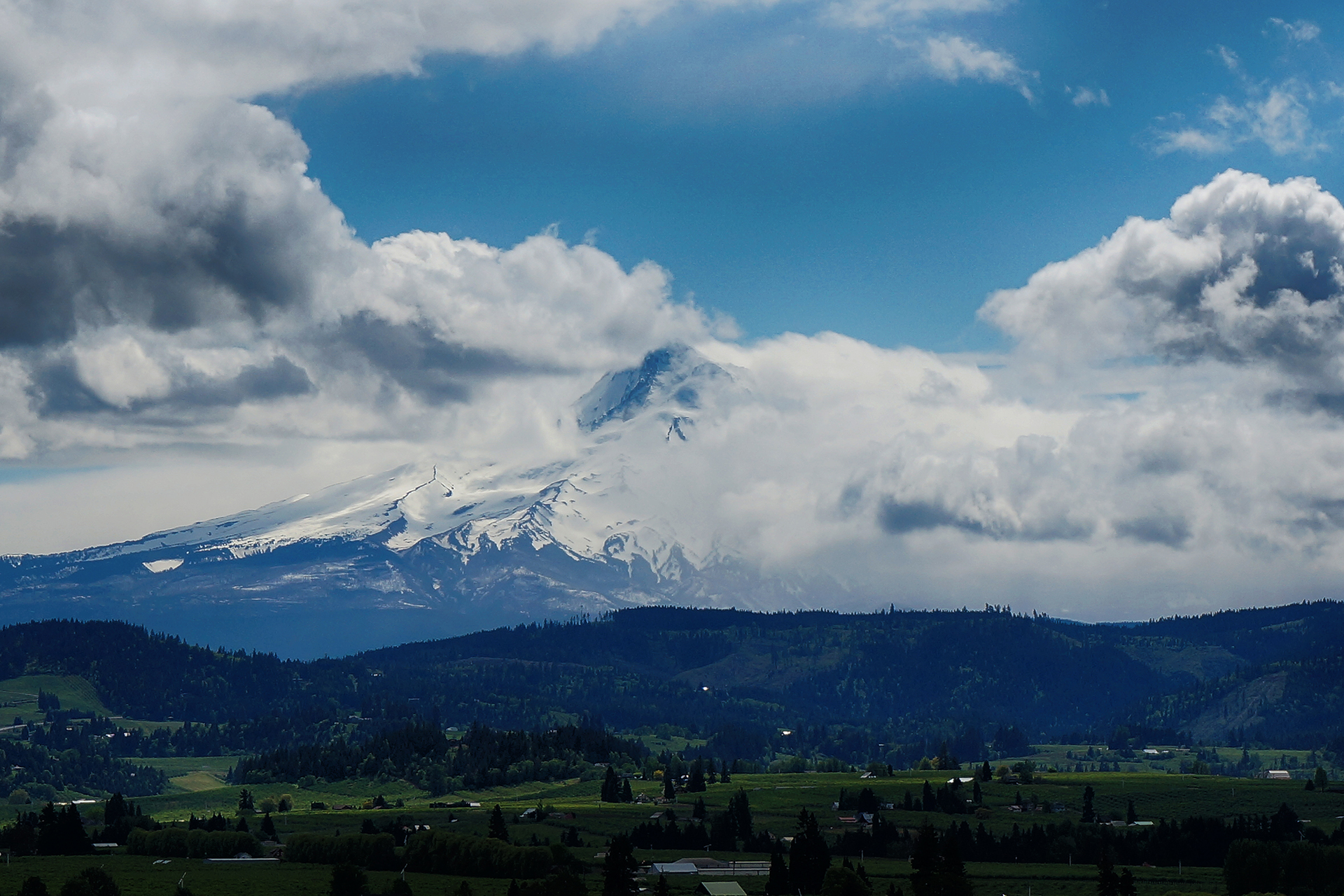
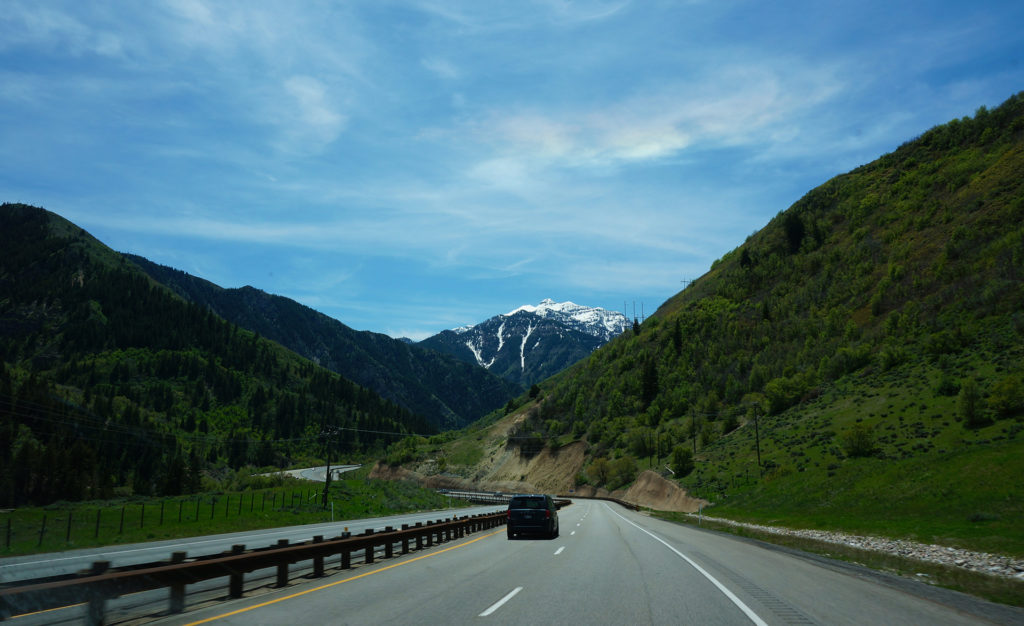
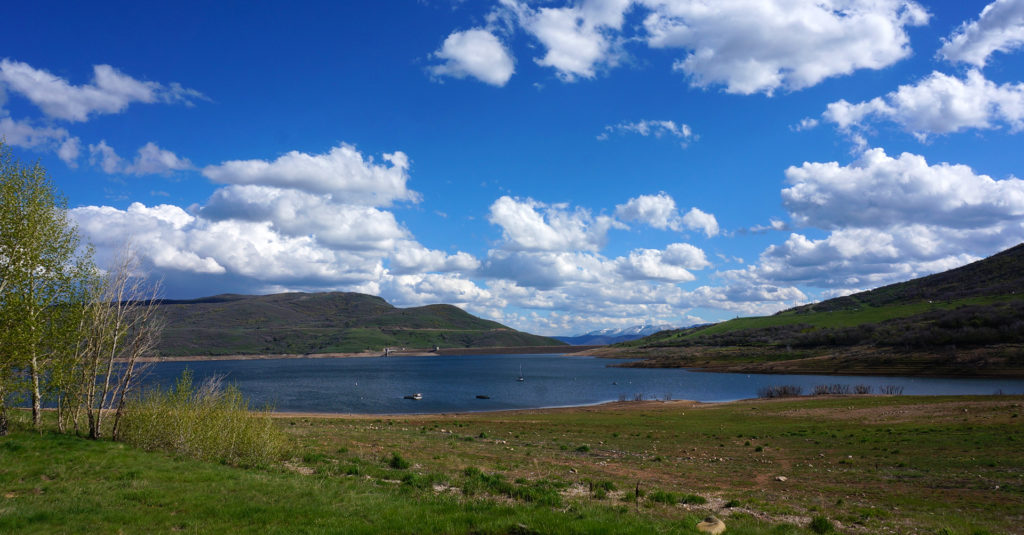
The drive to Salt Lake City is absolutely stunning, in every direction.  The city sits on a broad plain, but it’s surrounded by mountains, especially to the east.  Of course, being Utah rookies, that’s exactly where we had made reservations to stay.  We didn’t realize it when we booked our site, but our campground – located in nearby Park City – was at more than 6,100 feet!  Salt Lake City is only at about 4,000 feet, and there was a LOT of vertical climbing to get up to our spot.  Luckily, our RV made it just fine, and we got to enjoy staying in a beautiful Utah state park, one of the nicest we had seen since Elephant Butte Lake in New Mexico.
We took a day trip down from the mountains to visit Salt Lake City, the last large city we would see for two months, and we actually came away pretty impressed.  The city itself is clean and pretty, with lots of trees for shade and intentionally wide streets.  There were a lot of people on bicycles – always a good sign – and even some hipster types, with piercings and tattoos and beards.  That was a little surprising to us, because Salt Lake City is the center of the Mormon world, and they are a particularly clean-cut group.  If you didn’t know, Utah is something like 98% Mormon – primarily because nobody else wanted to live in what used to be an unforgiving desert.

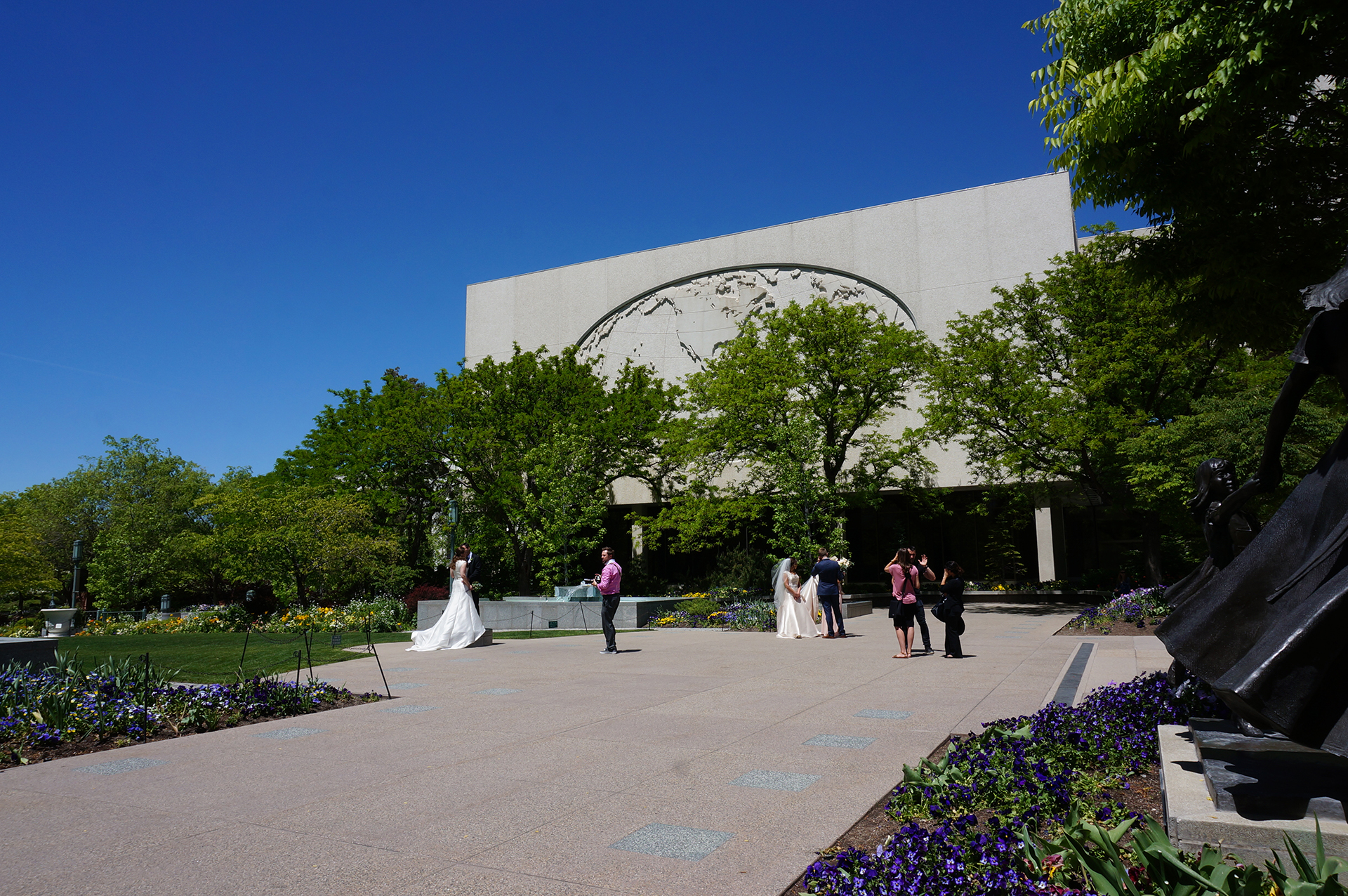
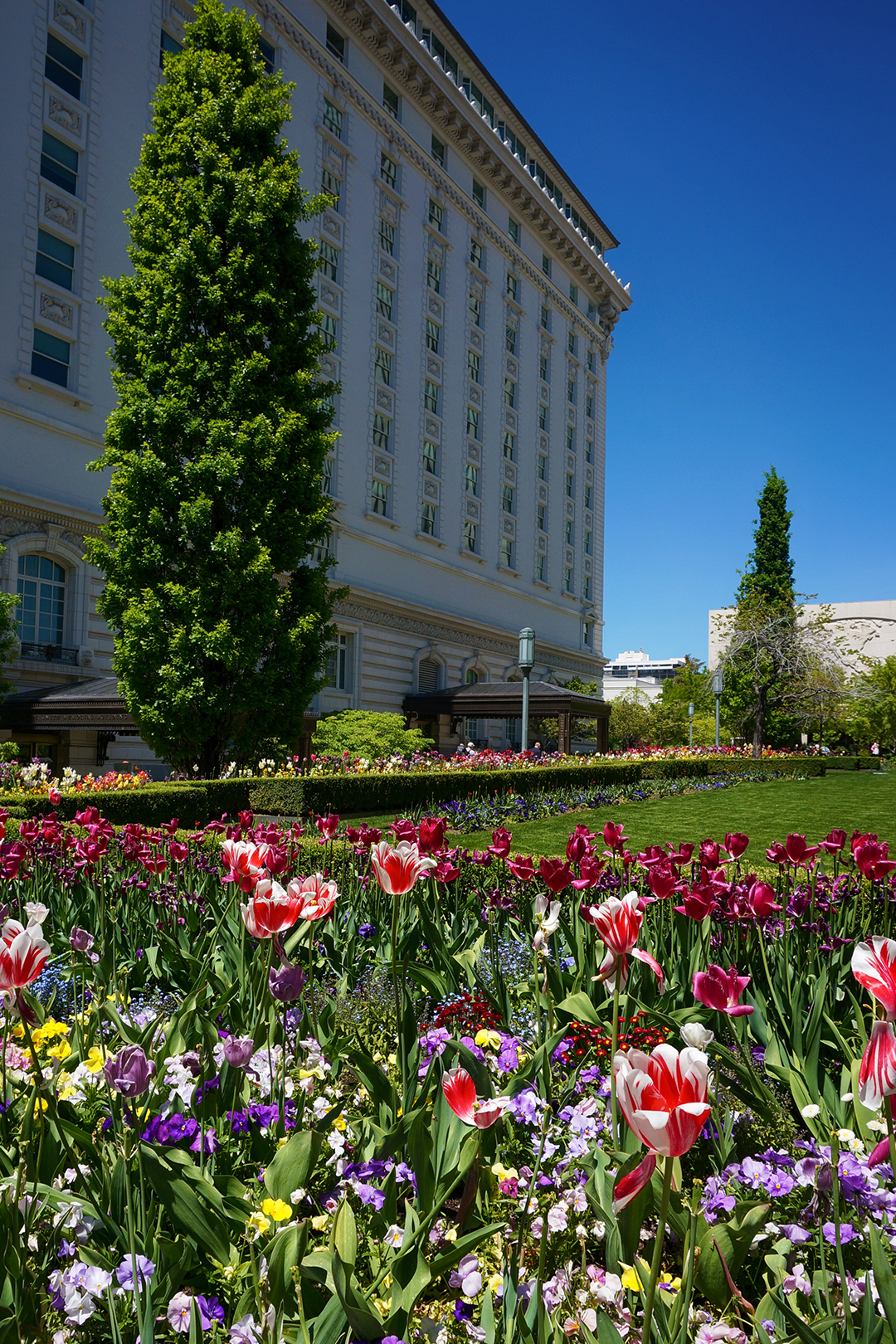
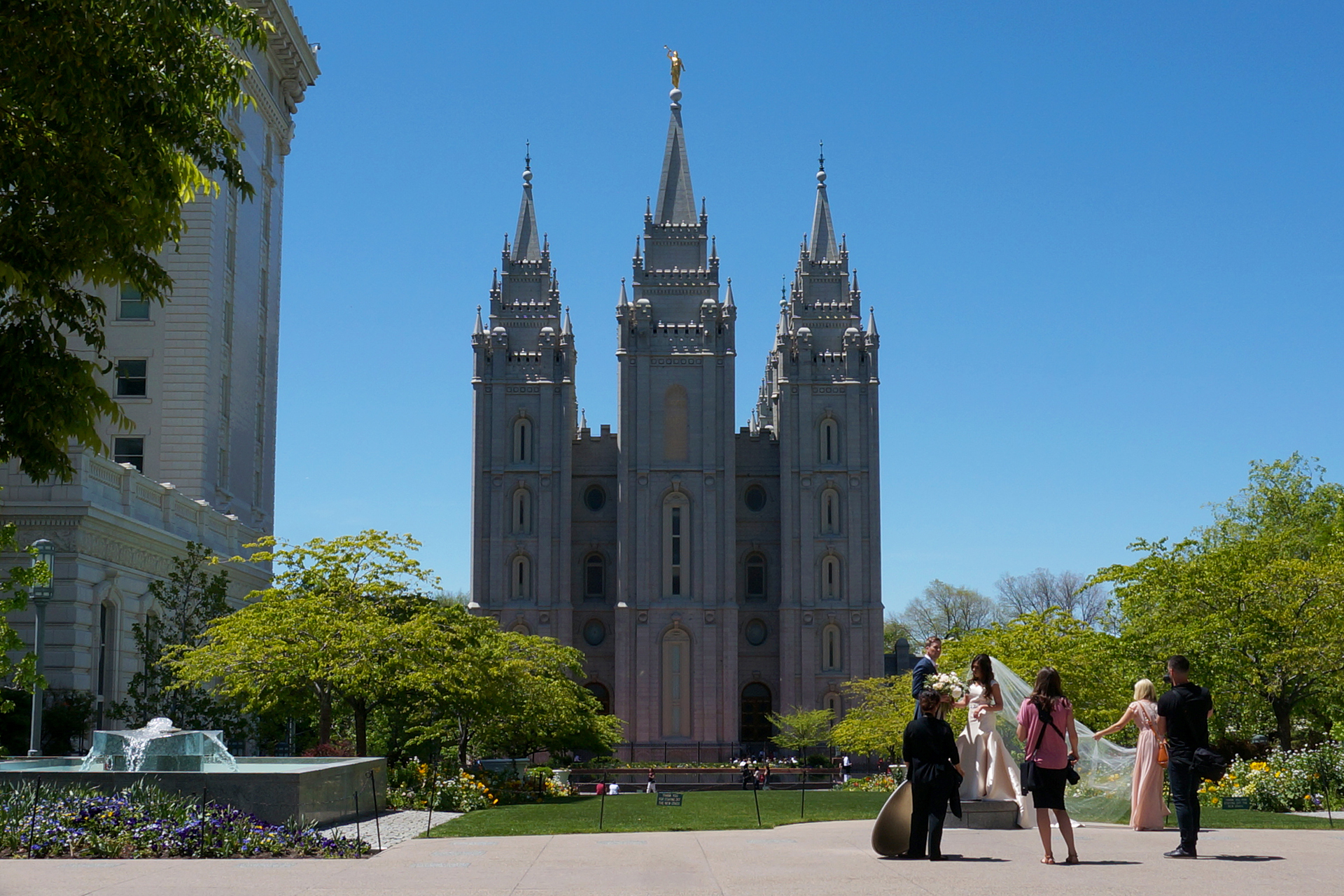
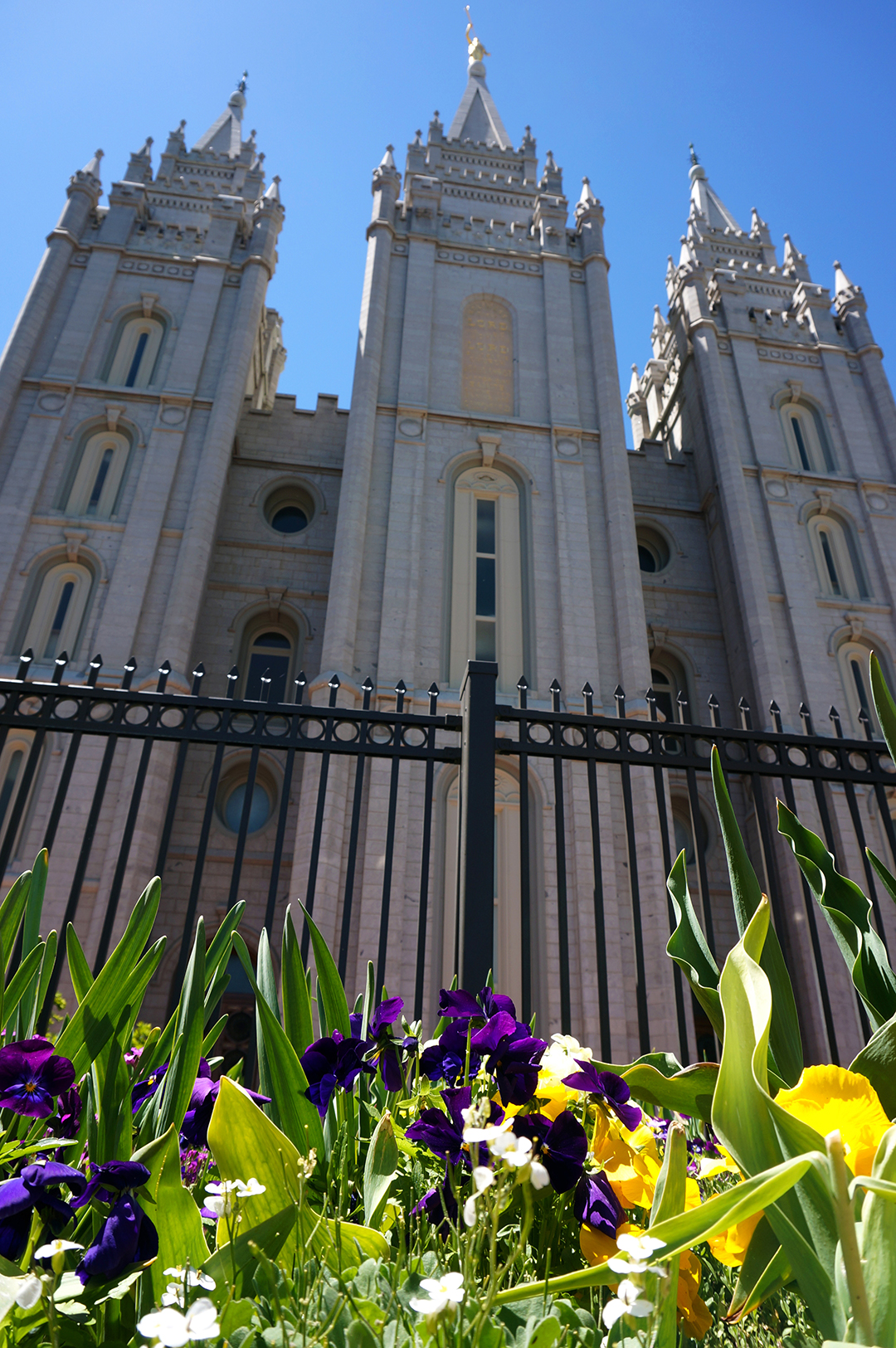
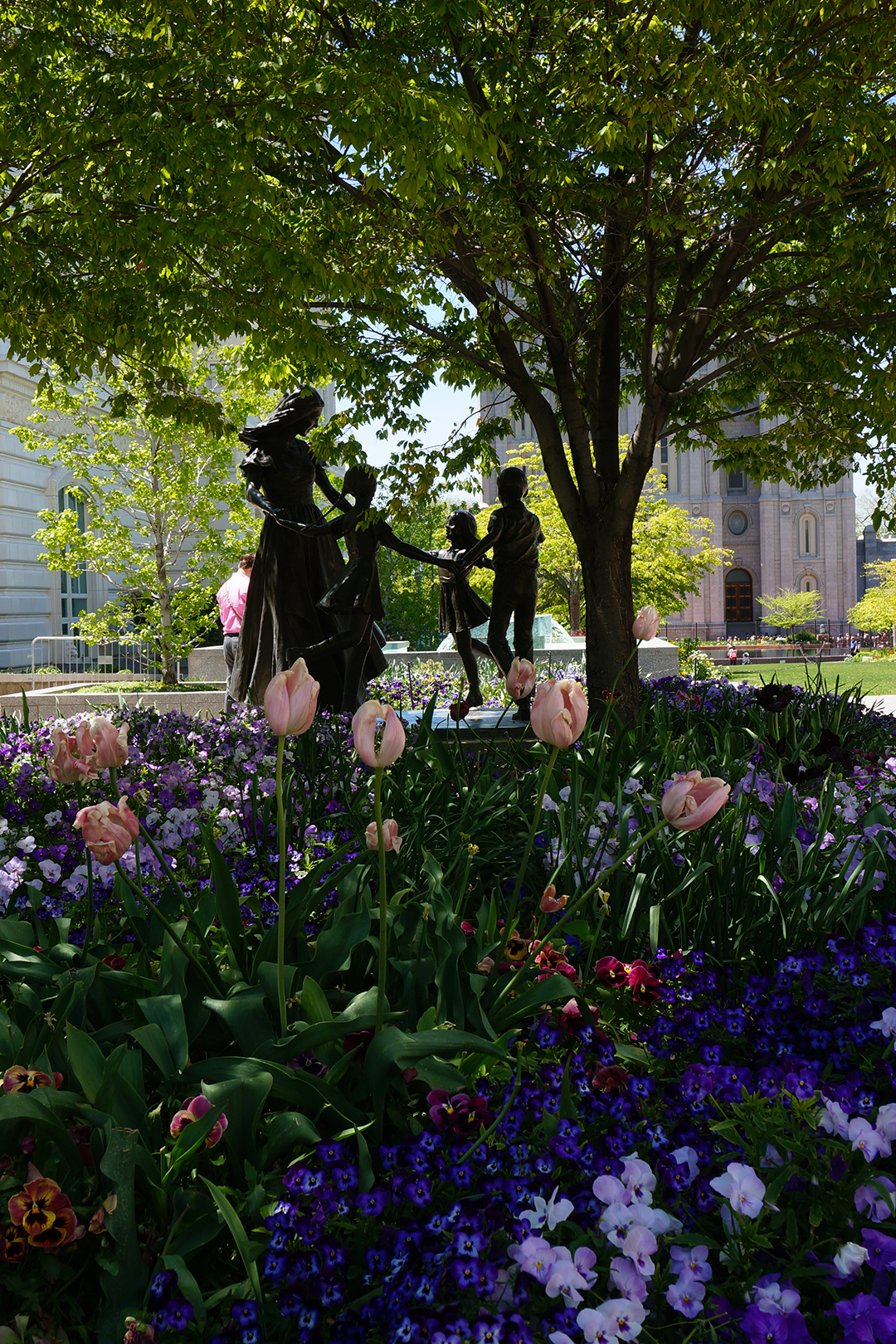
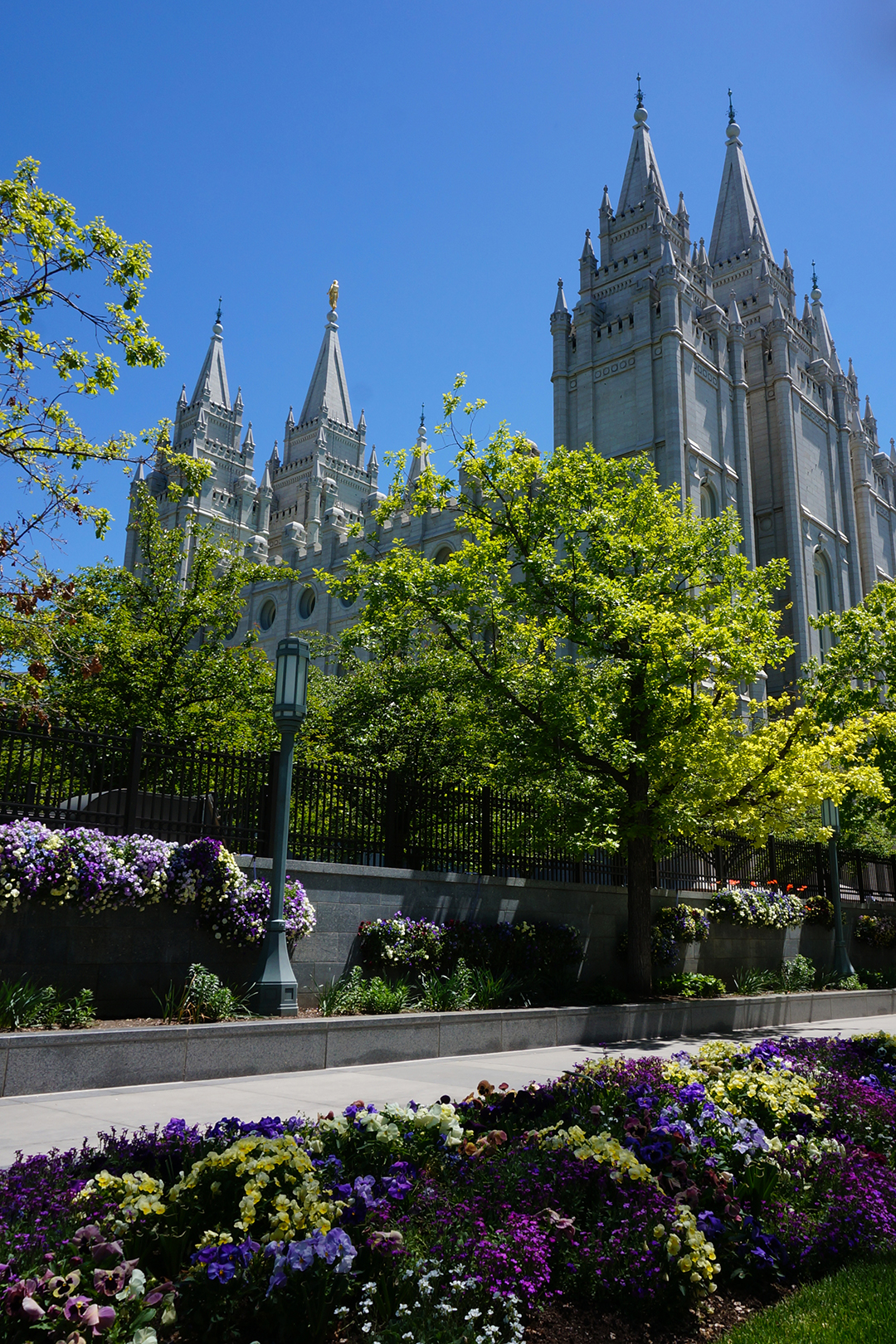
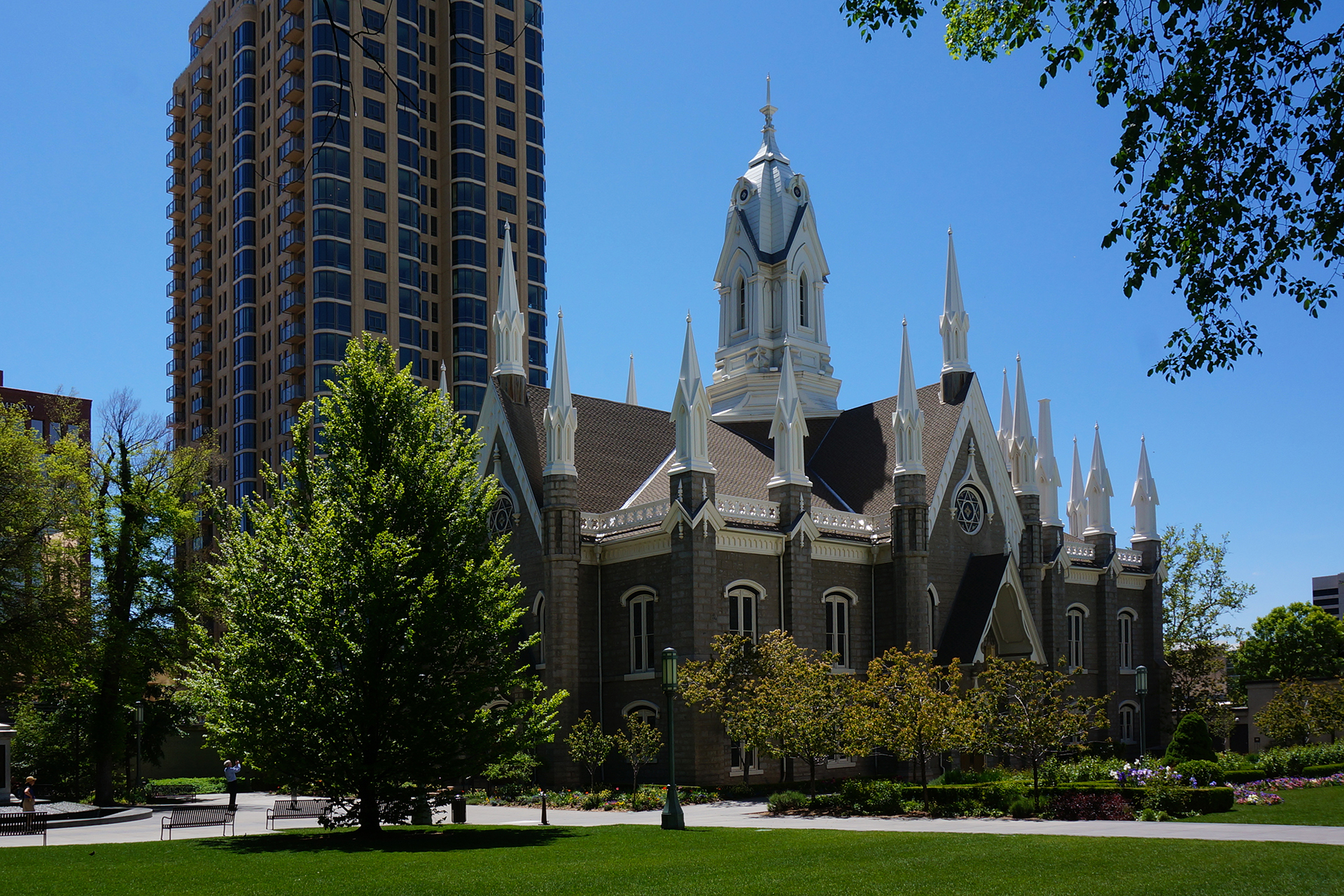
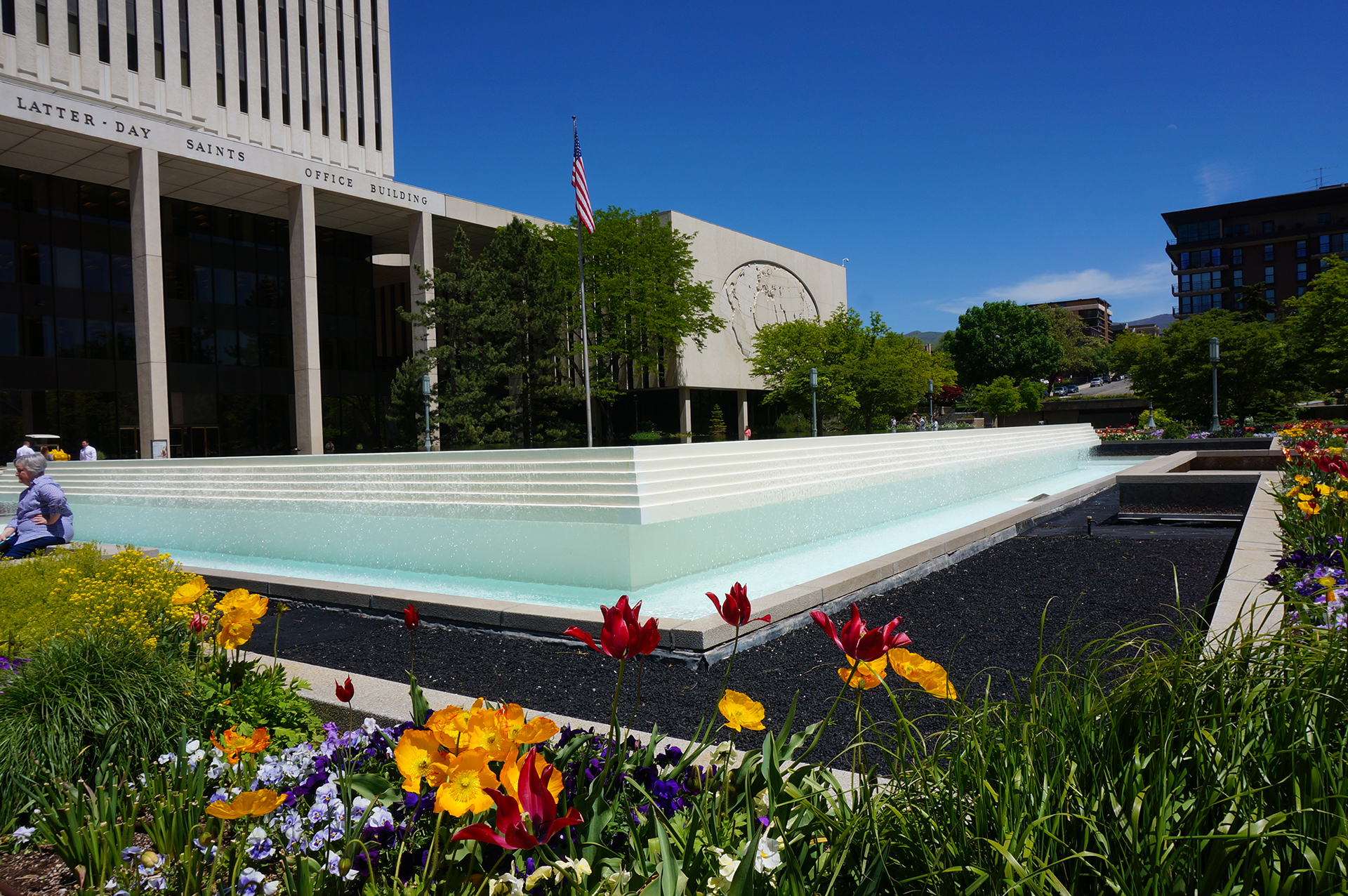
As the headquarters of Mormondom, there is a lot of work and money put into the city.  It’s particularly concentrated in and around the Mormon Temple, a beautiful series of structures with exquisite landscaping.  Some areas were off-limits to us heathens, but frankly, the outside was pretty enough to satisfy.  And we weren’t the only ones who liked it – we counted at least six wedding photo shoots in the half-hour we were there.

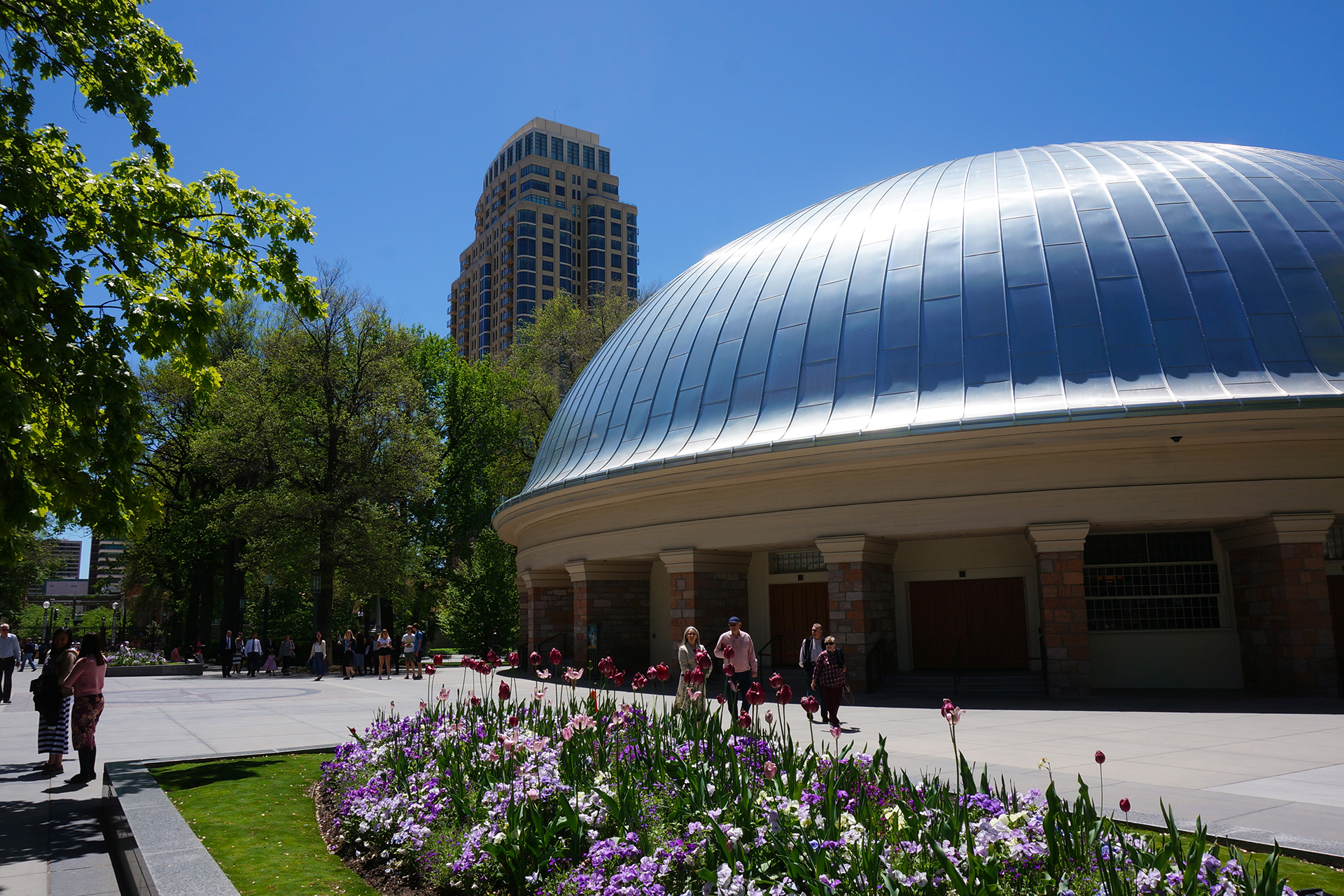
We had planned to tour inside the Tabernacle, a round dome with perfect acoustics.  Jake visited as a child, and vividly remembers sitting in the back seats and hearing a pin drop on the altar.  However, we got a little scared off, and never went in.  See, every tour comes with a recruitment pitch, and, well… Heather isn’t great at saying “no.”

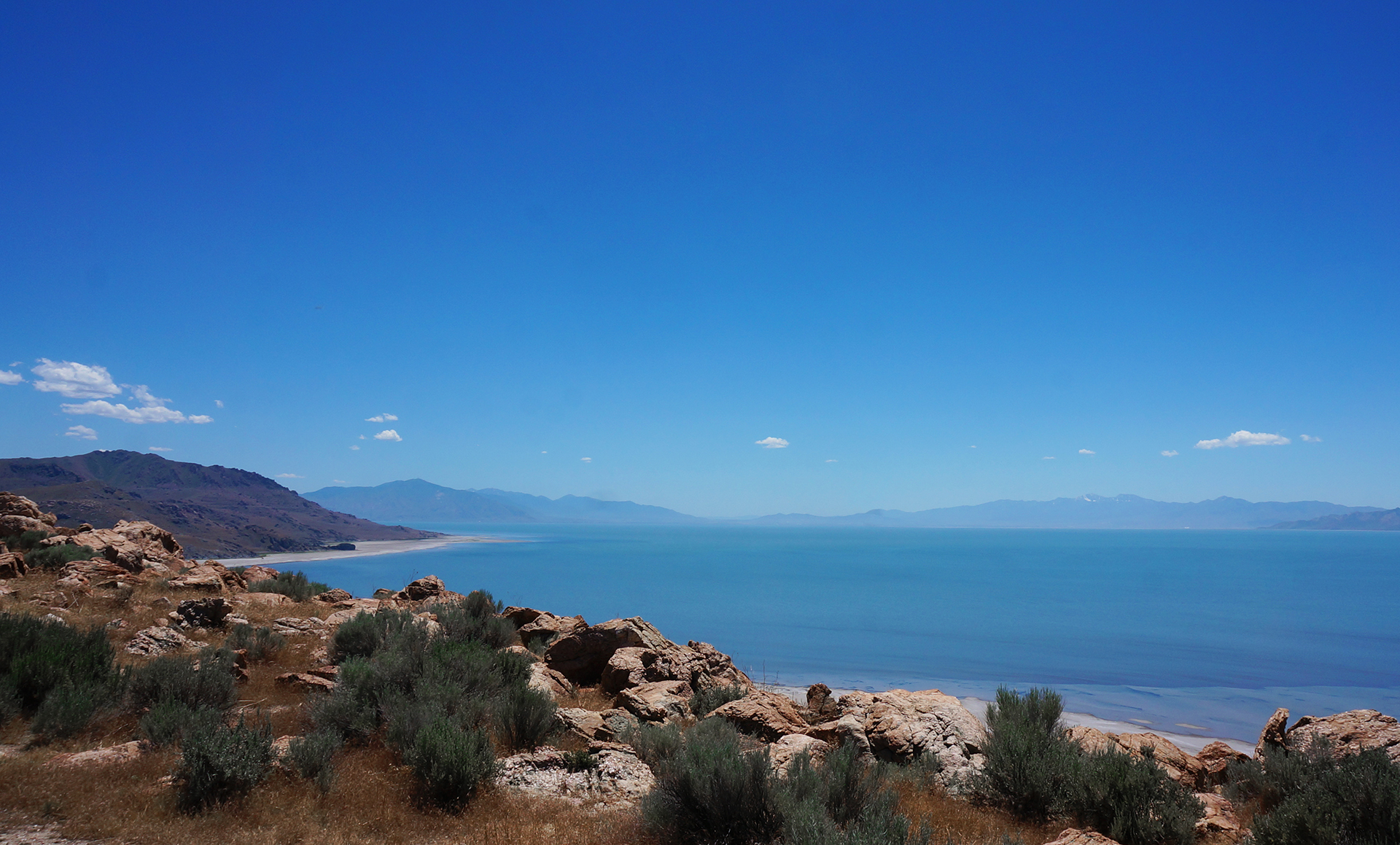
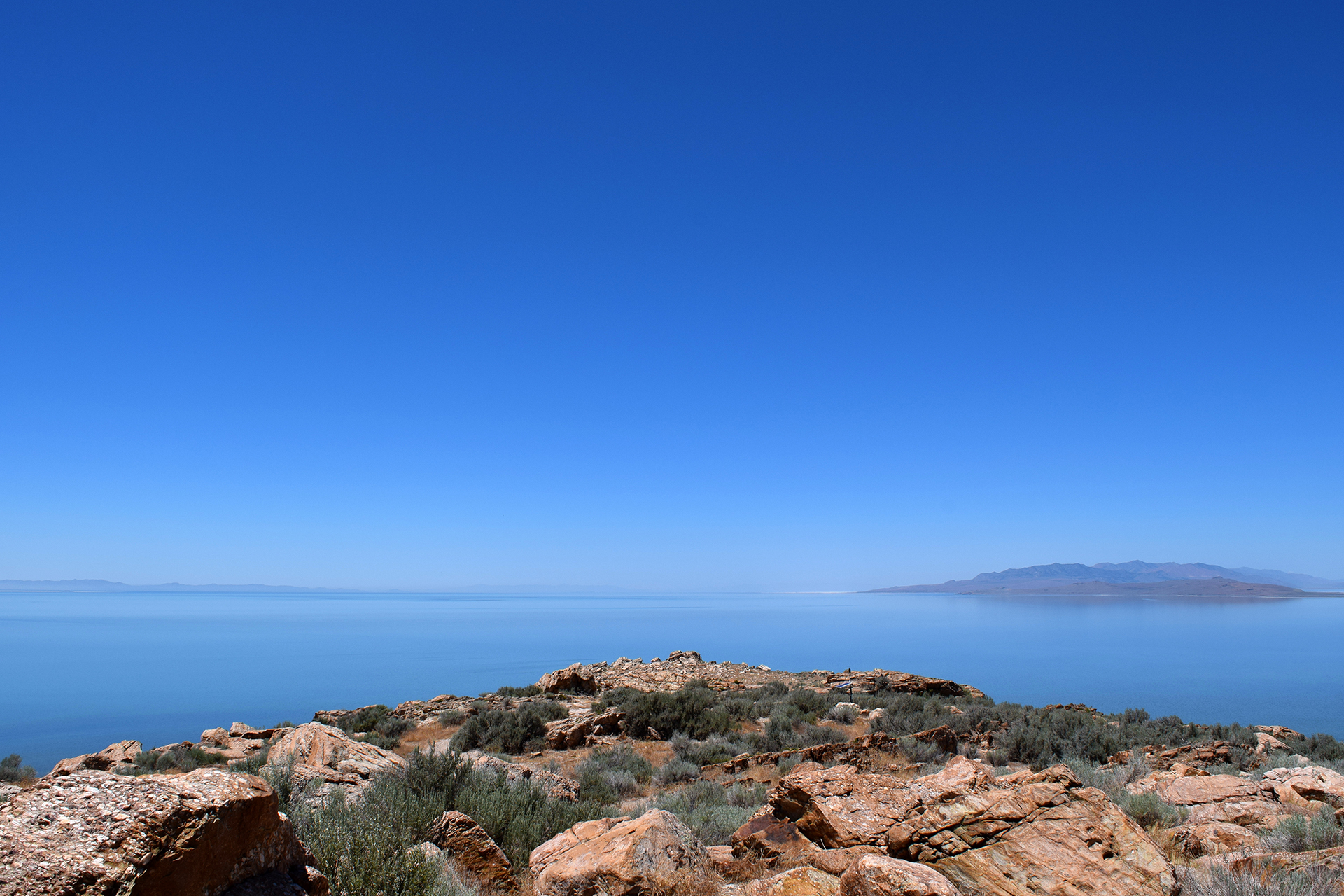
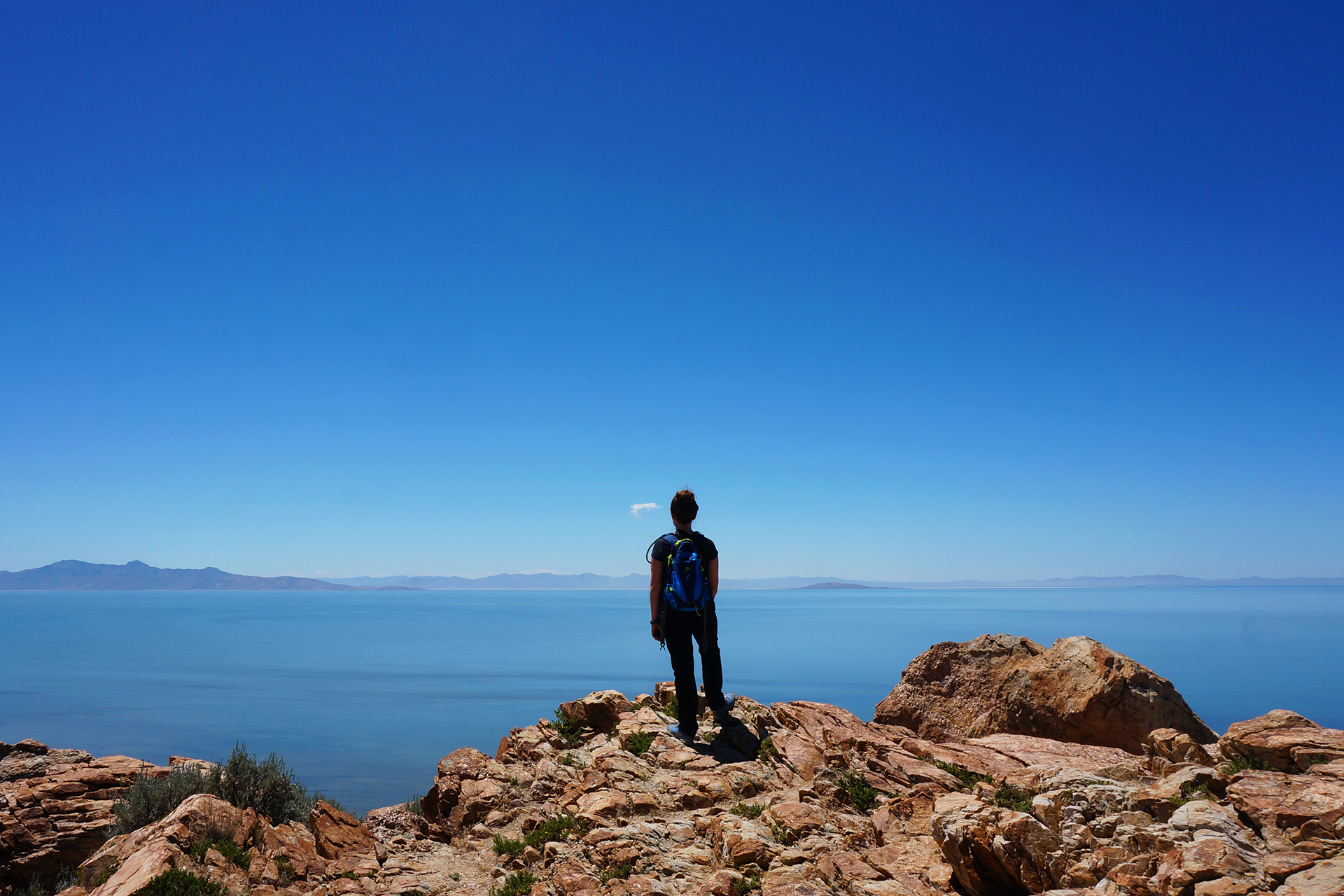
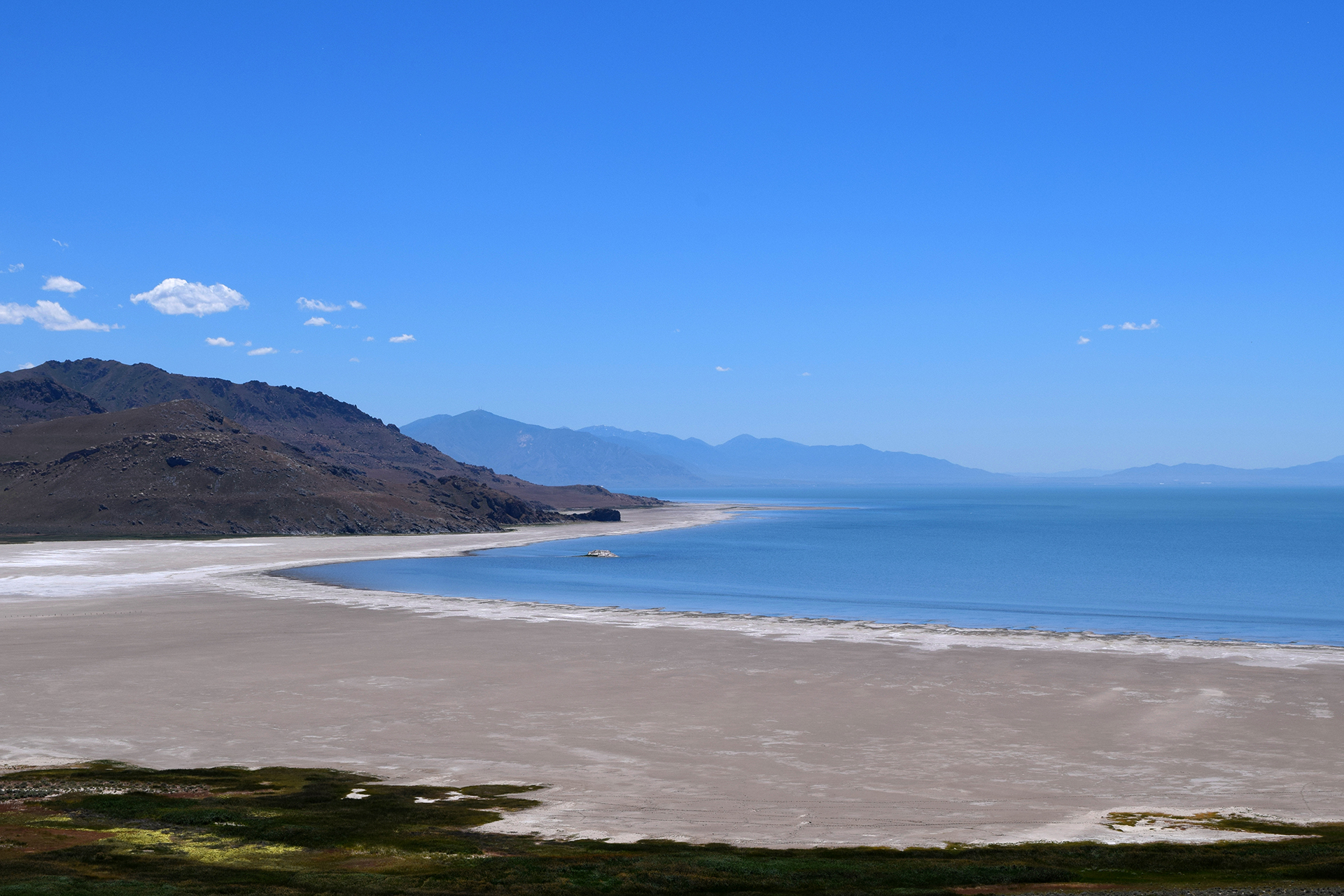
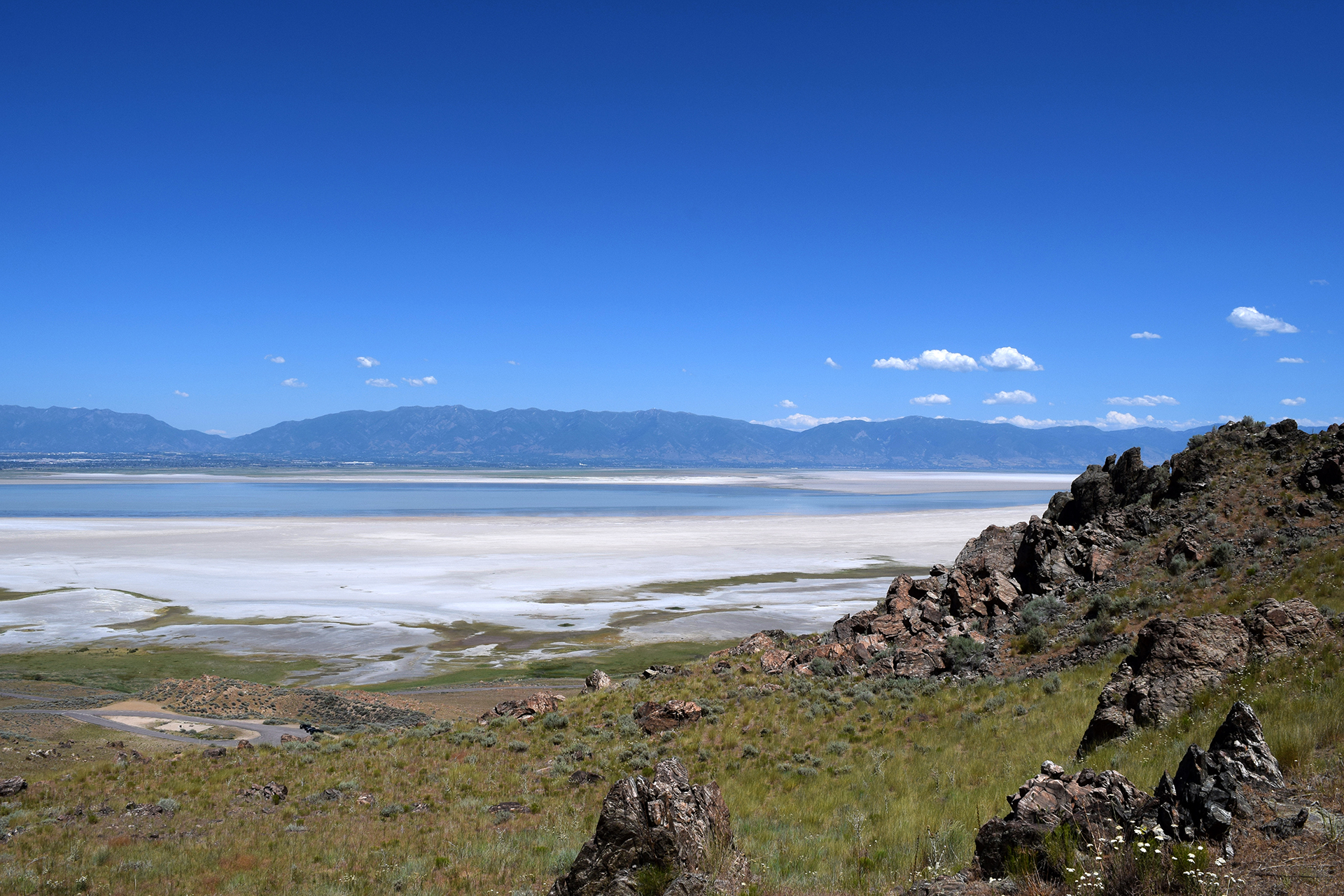
We’re happy with our current religious status (and we like alcohol and caffeine), so we skipped out on the tour.  With some time to kill, we instead headed out to the beach.  The Great Salt Lake isn’t the ocean, but it’s as close as you’re likely to find in the interior of the country – big, blue, and briny.
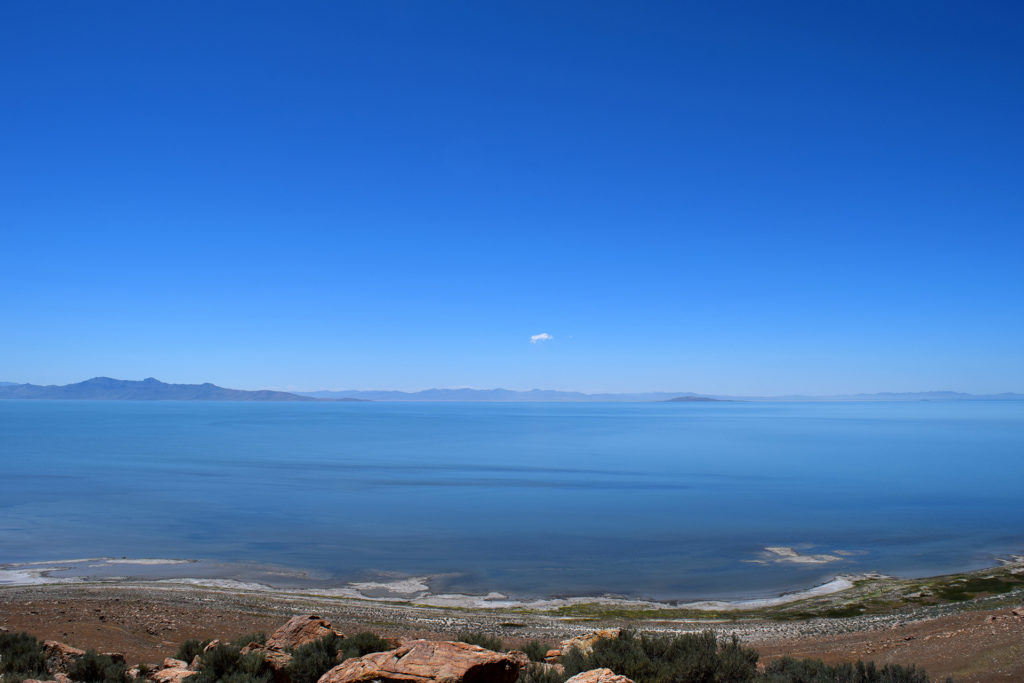
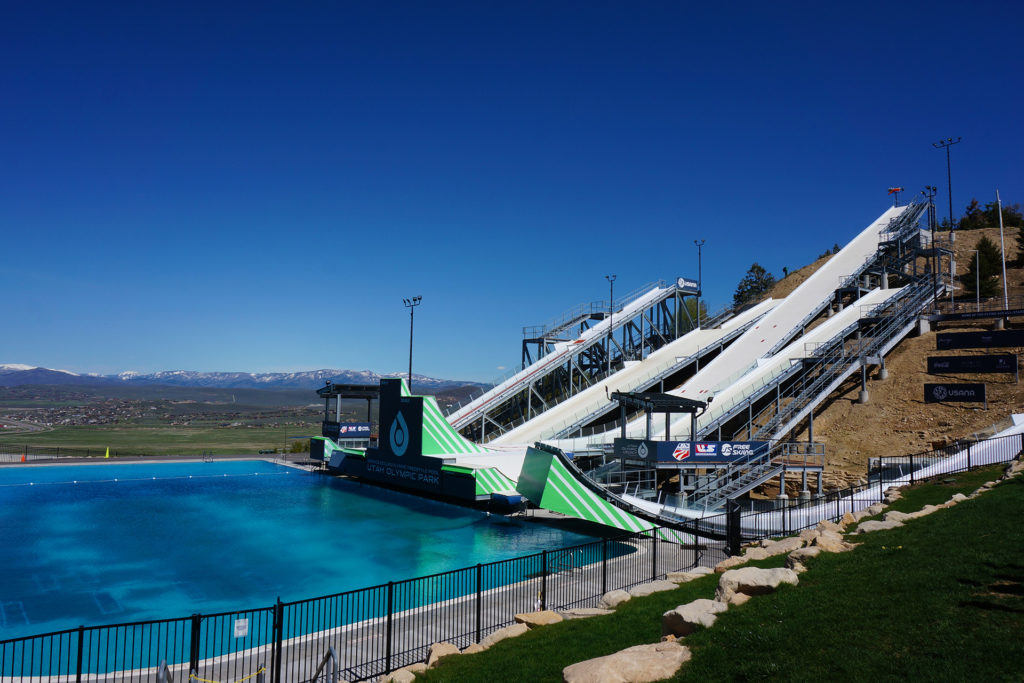
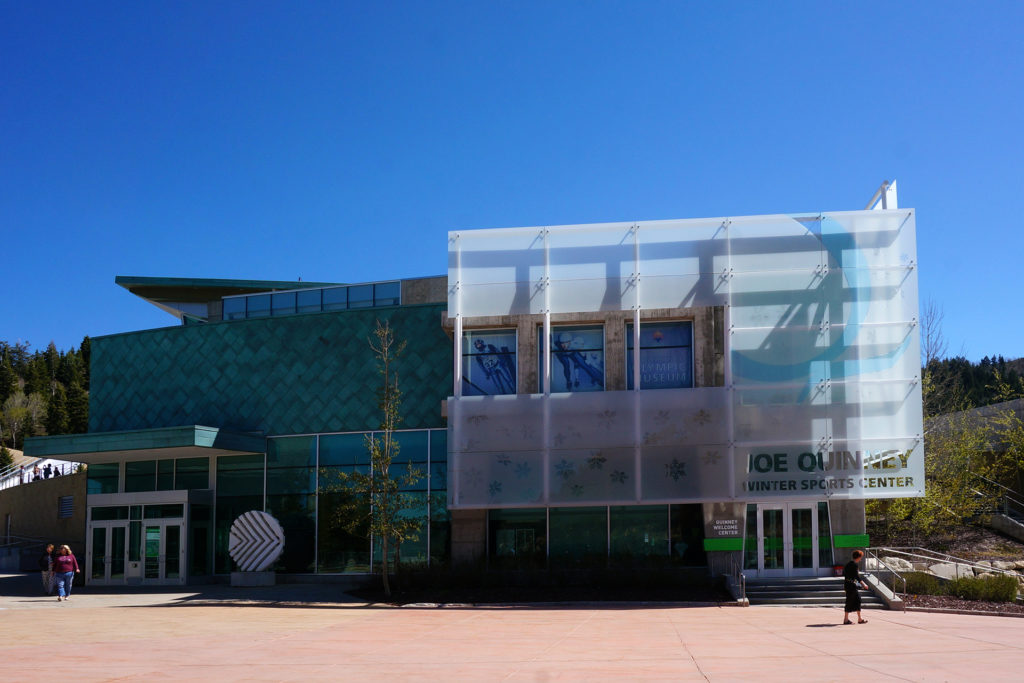
There wasn’t a lot to do there, though, so we headed back into the mountains.  We spent a few hours touring Park City, a classic ski town.  This is where the 2002 Olympics were held, and while the Olympic Village is now just big box stores and coffee shops, many of the athletic facilities still exist.  Unfortunately, the Olympic Park was still closed for the season – we were there one day early! – so we didn’t get to try out any of the attractions, like the zip line that runs down along the ski jump ramps (!!).  D’oh!
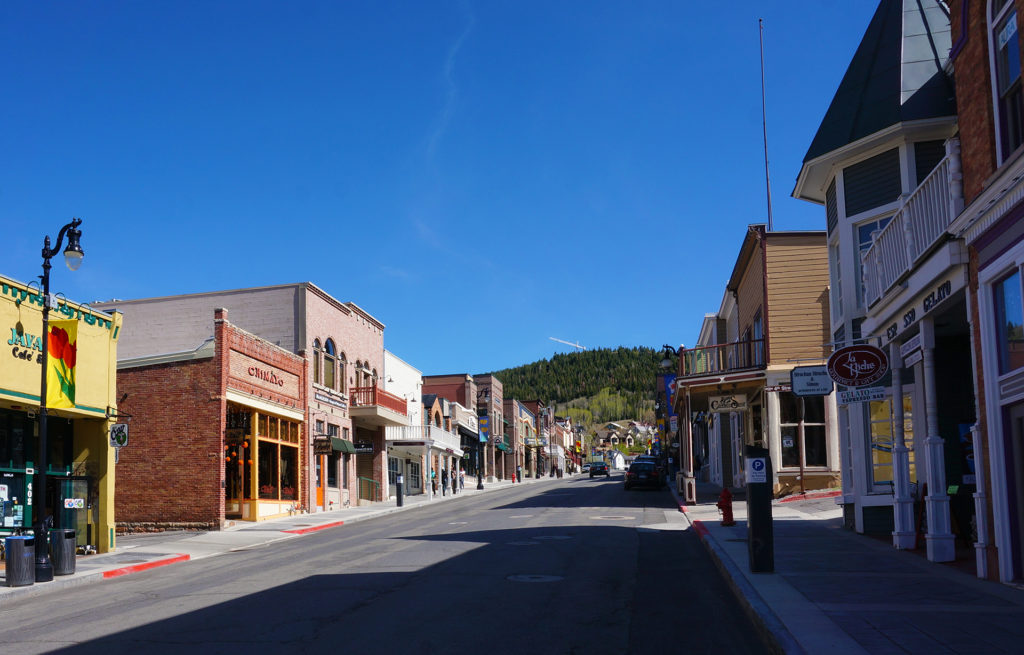
Stymied, we drove over to the older part of Park City.  It was actually quite cool – or, in what we can only assume is the local parlance, “chill, brah.”  There were lots of charming little shops, and the whole area reminded us of a Swiss ski town named Zermatt we visited a few years ago.  There weren’t a lot of people around yet, but we found something better than people: a brewery serving real beer!

If you’ve never been to Utah, you might not realize how exciting this is – even in bars, beer sold in Utah is typically 4.2% alcohol (or lower) by law.  Drinking a glass of the good (read: strong) stuff while relaxing on a mountain patio was a rather nice way to finish the afternoon.
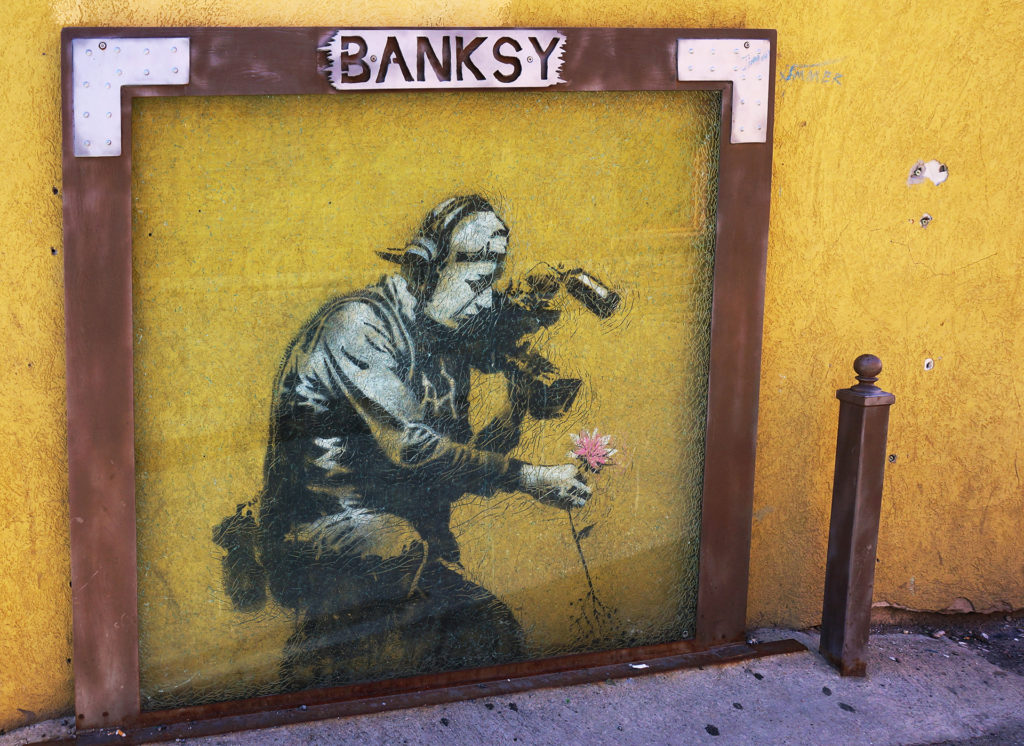
As a bonus, as we walked back to our car, we found some street art, courtesy of the one and only Banksy!  We were amused (but unsurprised) to find it protected by glass and a metal frame.
Planet Utah

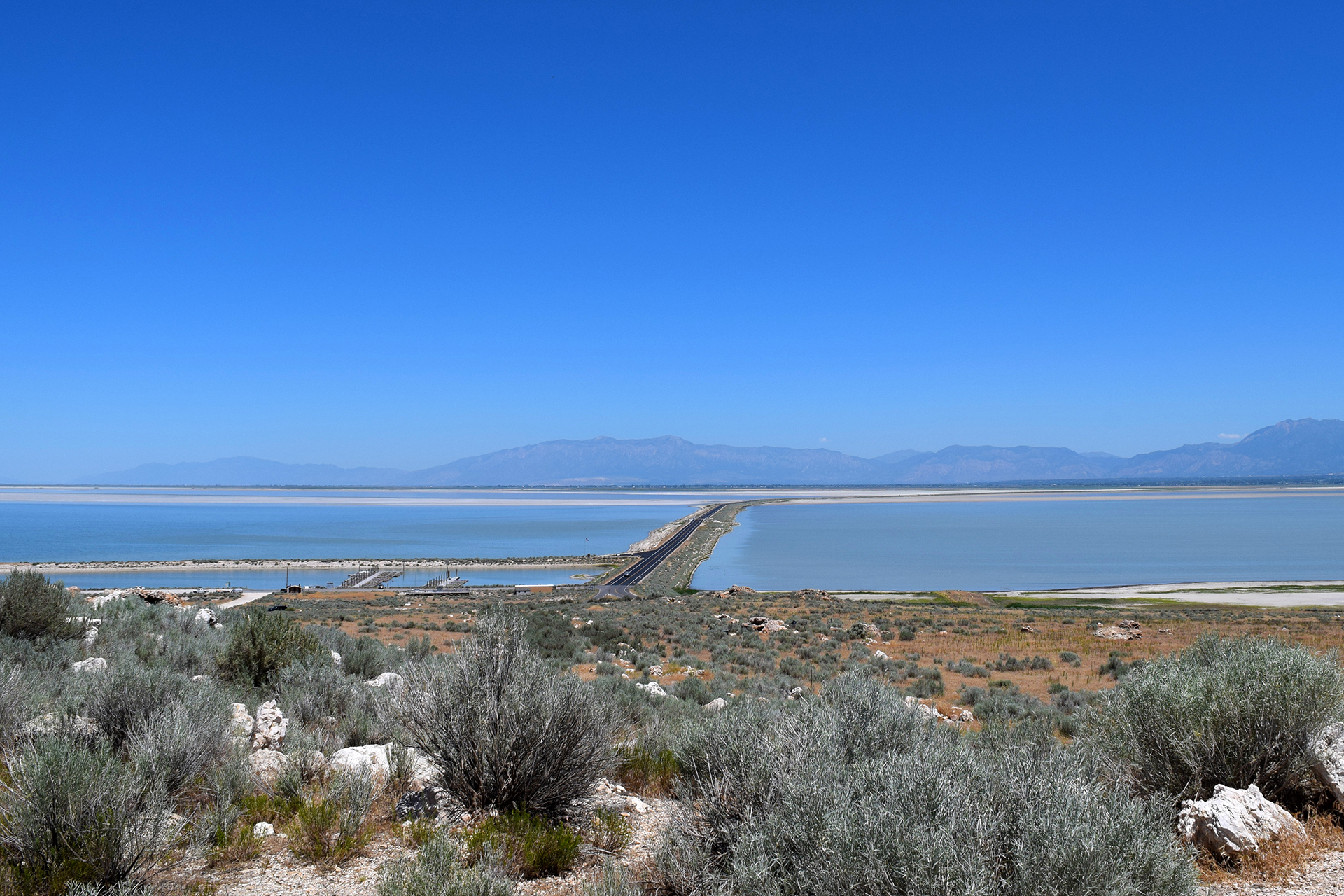
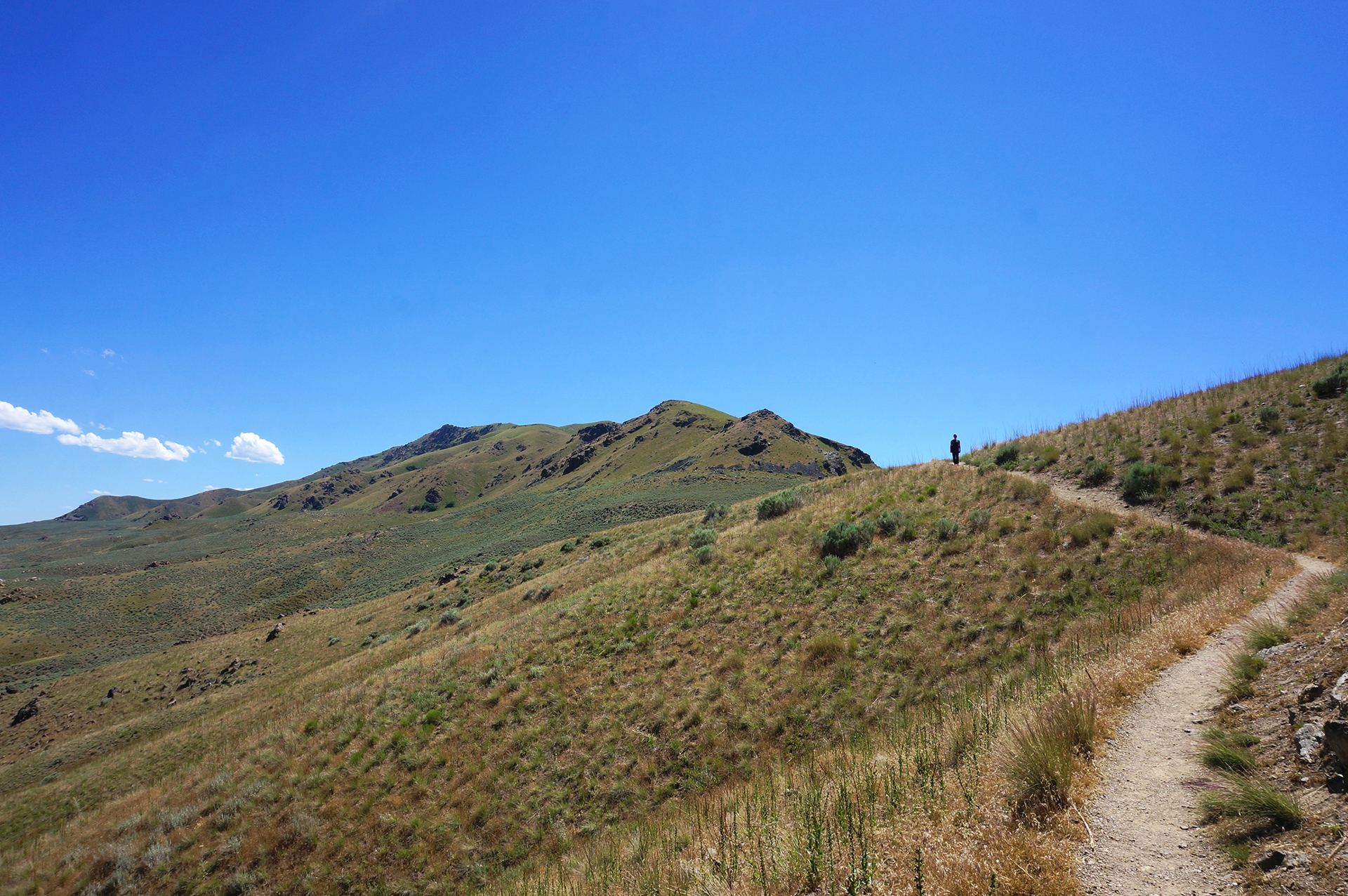
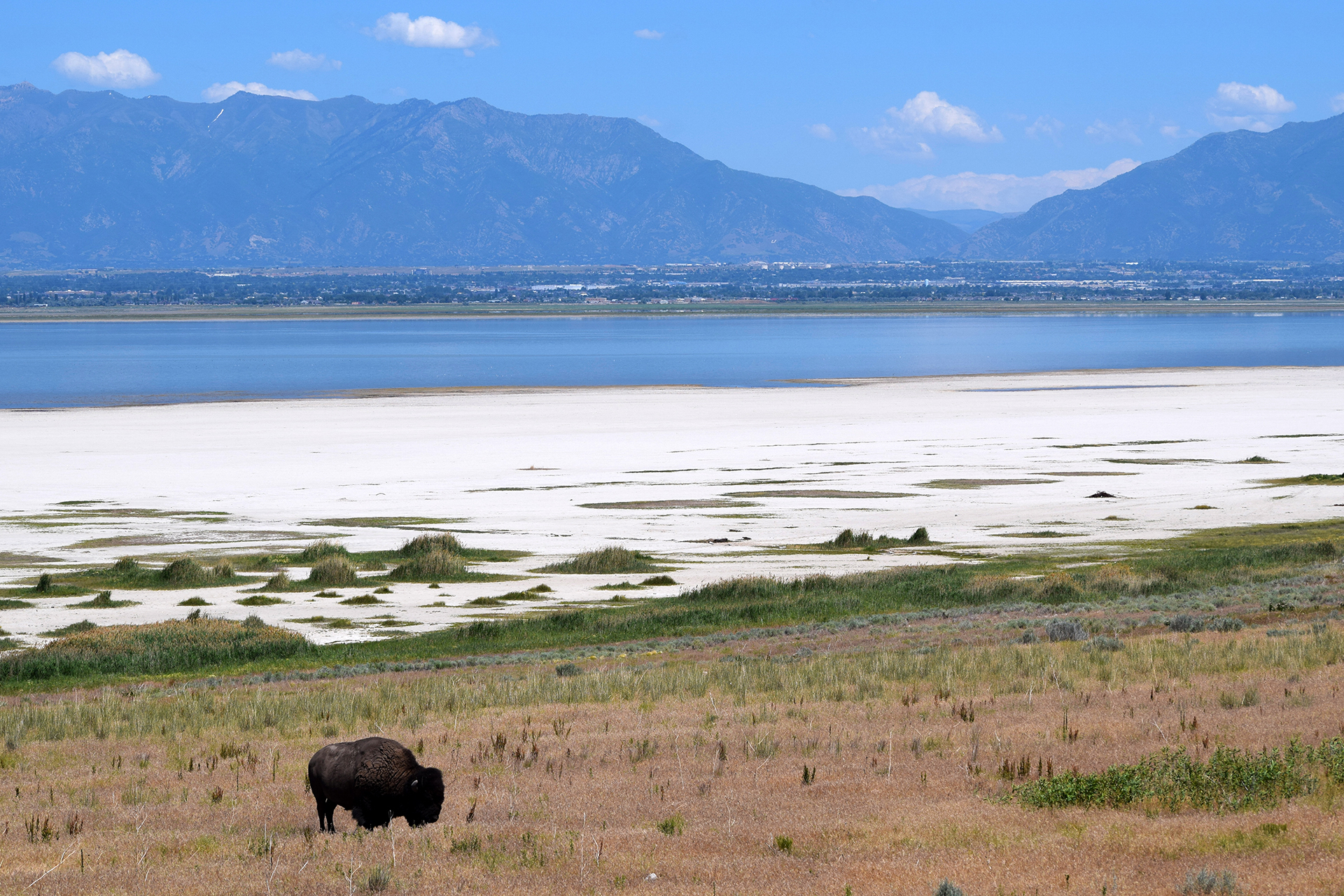
That was pretty much it for our first visit, but our tour of Utah was a big loop, and we returned through Salt Lake City a month later.  We had originally planned to go back to the Olympic Park, but the vagaries of RV campsite reservations left us north of SLC, in Ogden.  We took advantage of our new location to visit Antelope Island State Park, a large island in the Great Salt Lake connected by a causeway.
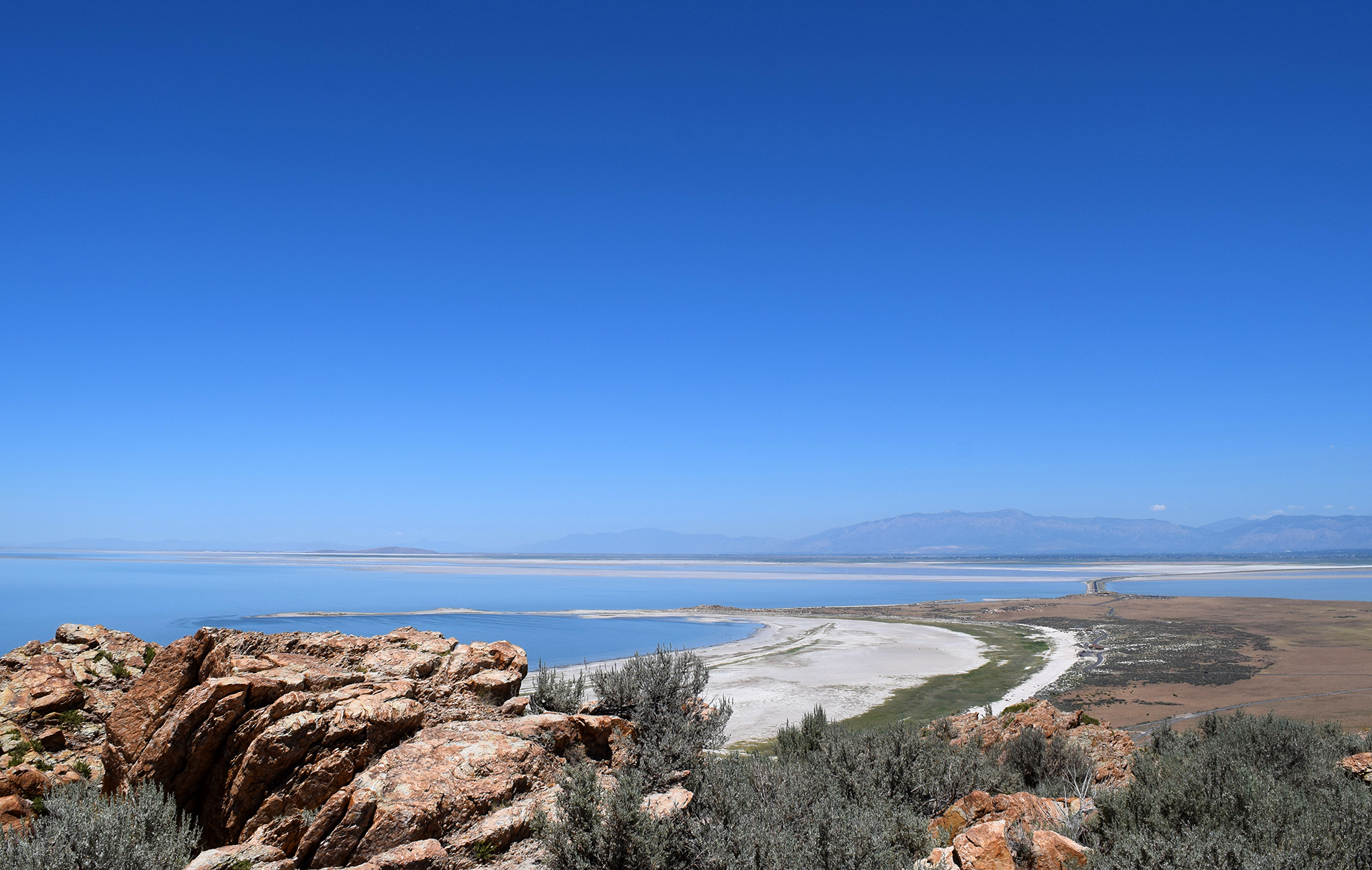
The island was beautiful.  It’s surprisingly mountainous, and many locations offered striking views of the water and Salt Lake City.  We intended to hike up to the peak at the center, but… it was hot.  Really, really hot.
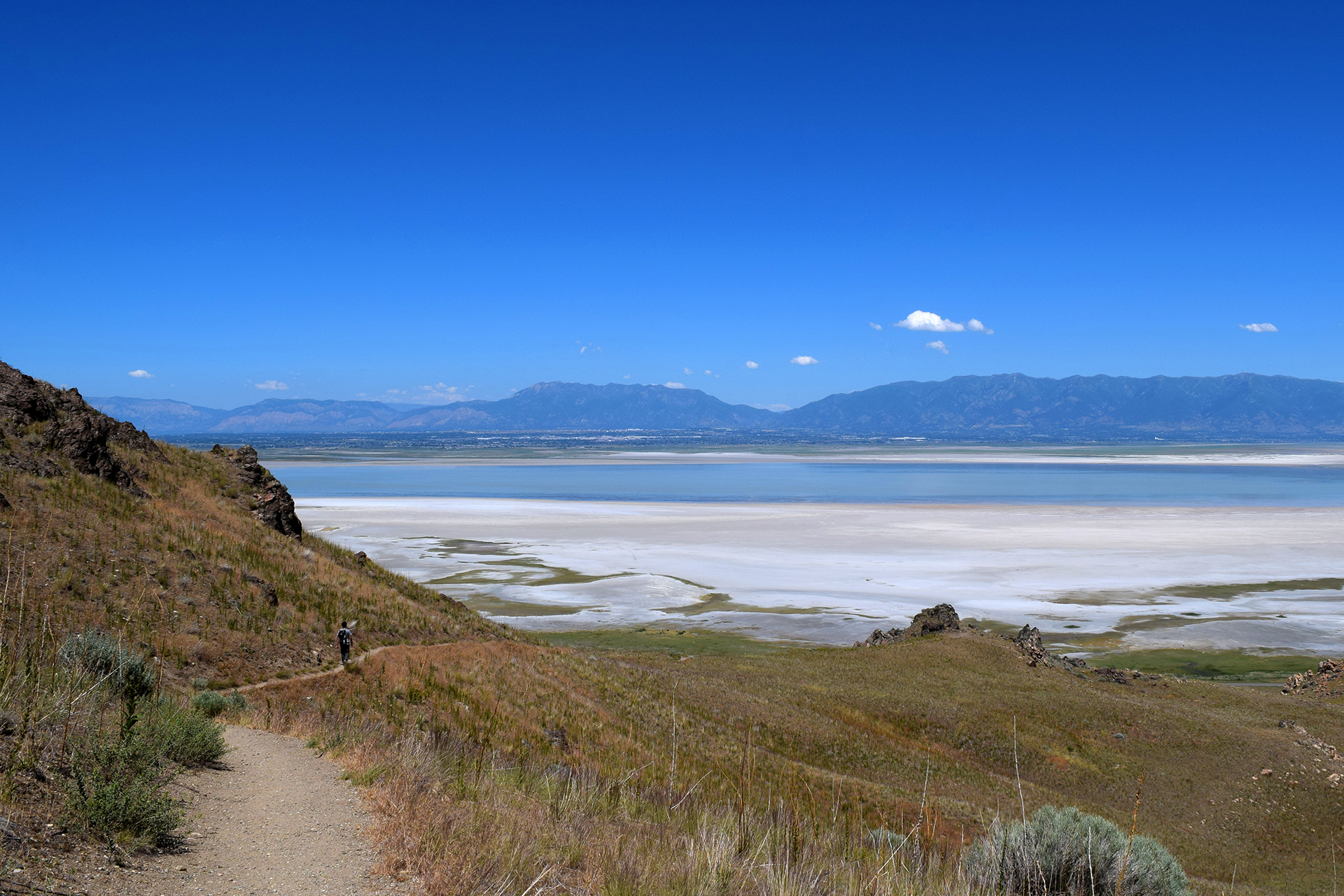
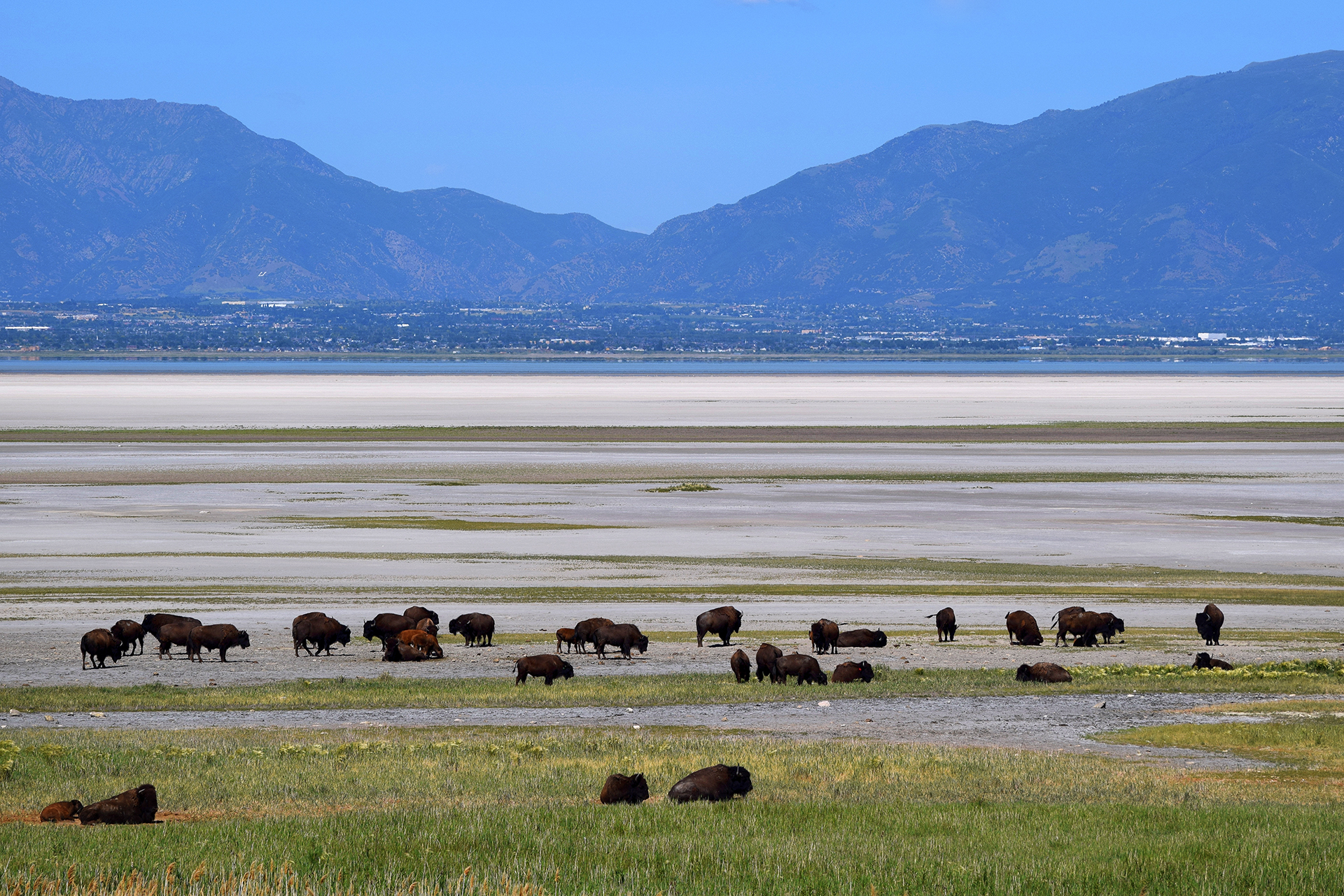
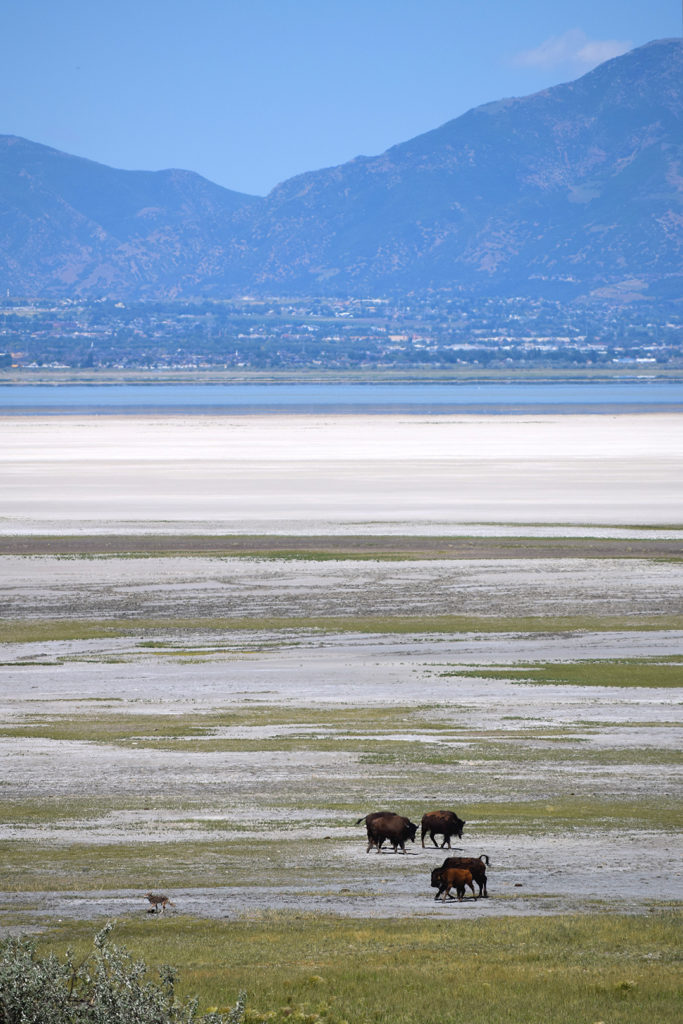
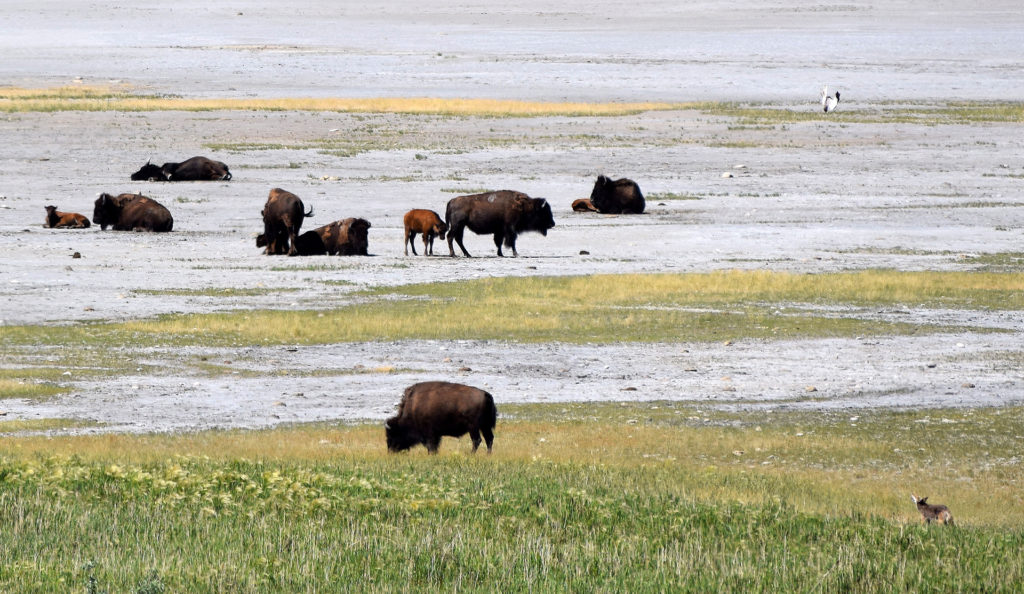
So, we cut our hike short to go wildlife watching.  A herd of bison roams free on the island, and they are fun to photograph.
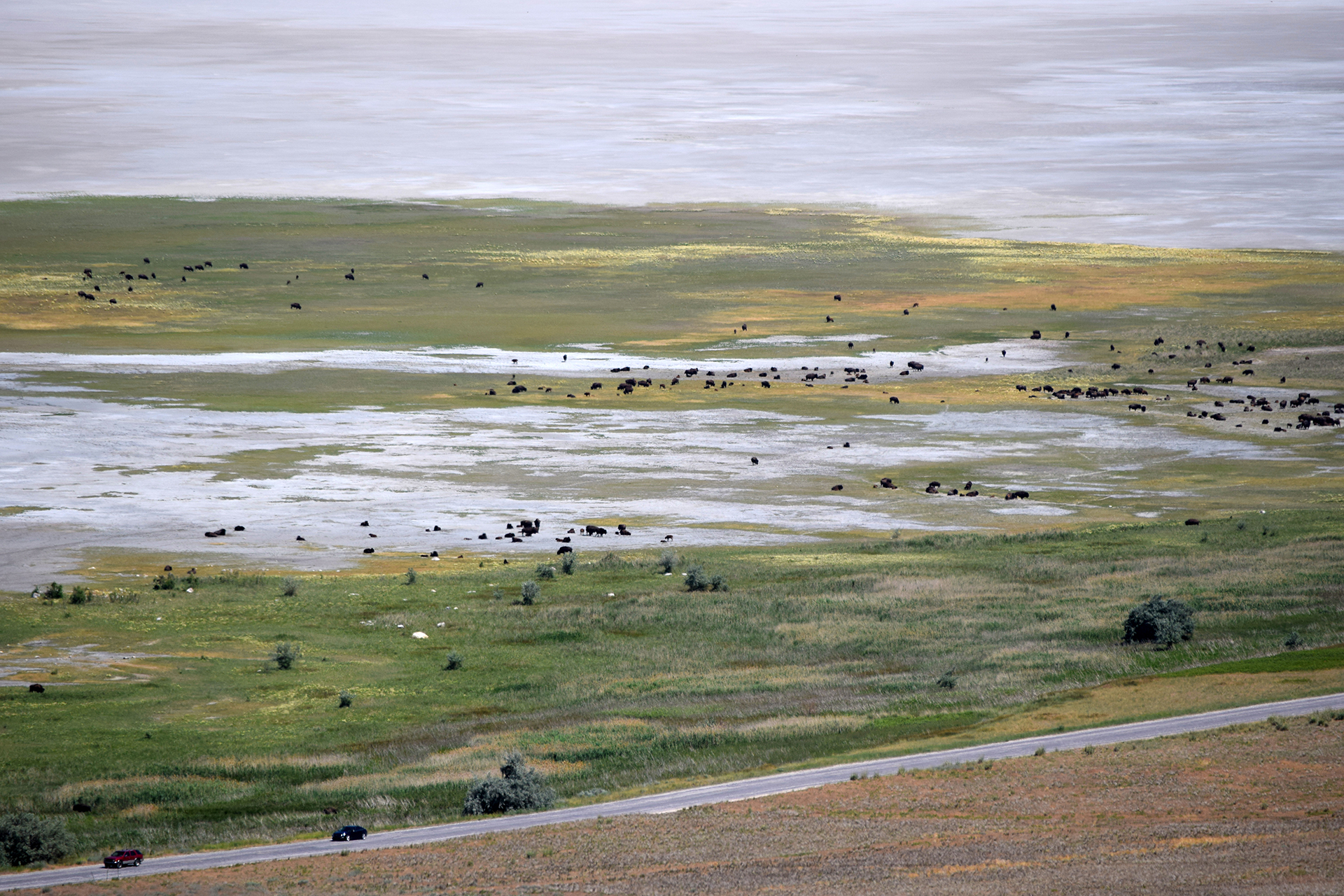
While we were watching and taking photos with our zoom lens, we got to see a real Planet Earth moment.  A coyote came out of the brush and approached one of the young bison, obviously hoping for a snack.  However, a full-grown bison noticed and charged full-steam at the coyote, which wisely retreated back into the brush.  You can see this below – the coyote is the blotchy grey spot in the lower left.
The coyote wasn’t going home empty-mouthed, though, and it trotted over to a different part of the herd, prowling around while two bison eyed it.  It was hard to see what happened next, but the coyote must have found a bird’s nest in the tall grass, because suddenly some birds started swooping at the coyote aggressively!  Unfortunately for the birds, the coyote didn’t seem too bothered, and we’re guessing it ended up with some eggs or chicks for dinner.

Good for the bison, good for the coyote, bad for the birds.  Nature can be rough.
Roadtrip Time Travel

Roadtrip Status

Still alive?  Check.

Where are you now?  Pittsburgh, PA, seeing some friends and family and living in denial about the end of our road trip.

Next location?  TBD as always.  Upstate NY, maybe?

Follow Us On Social Media

FacebooktwitterinstagramFacebooktwitterinstagram

Latest Posts

0

Week 46: The Reverse Oregon Trail to the Moon

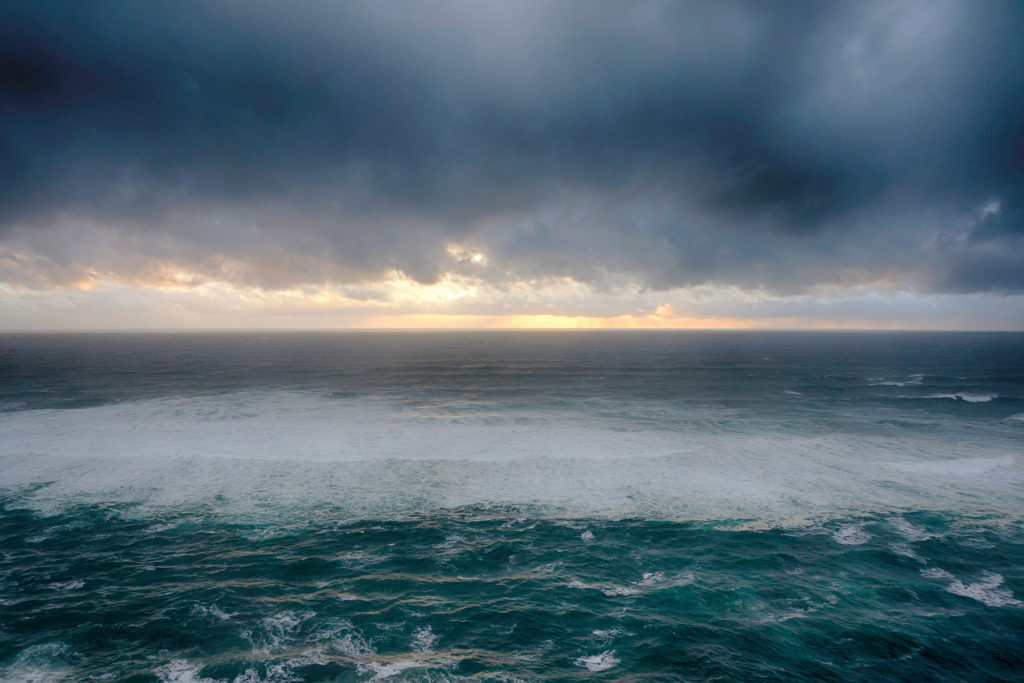
We first arrived at the Pacific Ocean in late January, and it was a constant companion for months.  But in early May, we finally hit our northward limit near Seattle, and it was time to hitch up our wagons, turn the corner, and bid a sad adieu to the West Coast.

We drove southeast across Washington, Oregon, and Idaho for two long but beautiful days, and it was fascinating to watch the terrain change before our eyes.  As we crossed the spine of the Cascade mountains, the pristine evergreen forests suddenly disappeared, turning into scrubland that reminded us of West Texas.

As it turns out, while western Washington is the wettest place in the country, the eastern parts of Washington and Oregon are high deserts.  Fresh off of redwoods and rainforests, it was a sudden transition, but a welcome one – because the desert is freaking awesome.

Grueling Pace

We covered a lot of ground in two days.  Our first night was spent at a Wal-Mart near La Grande, Oregon, an area which seemed pretty empty even to us.  The Wal-Mart parking lot was quite popular, though, especially among travelers – so much so that there was actually a placard where we parked our RV suggesting things to do in the area.

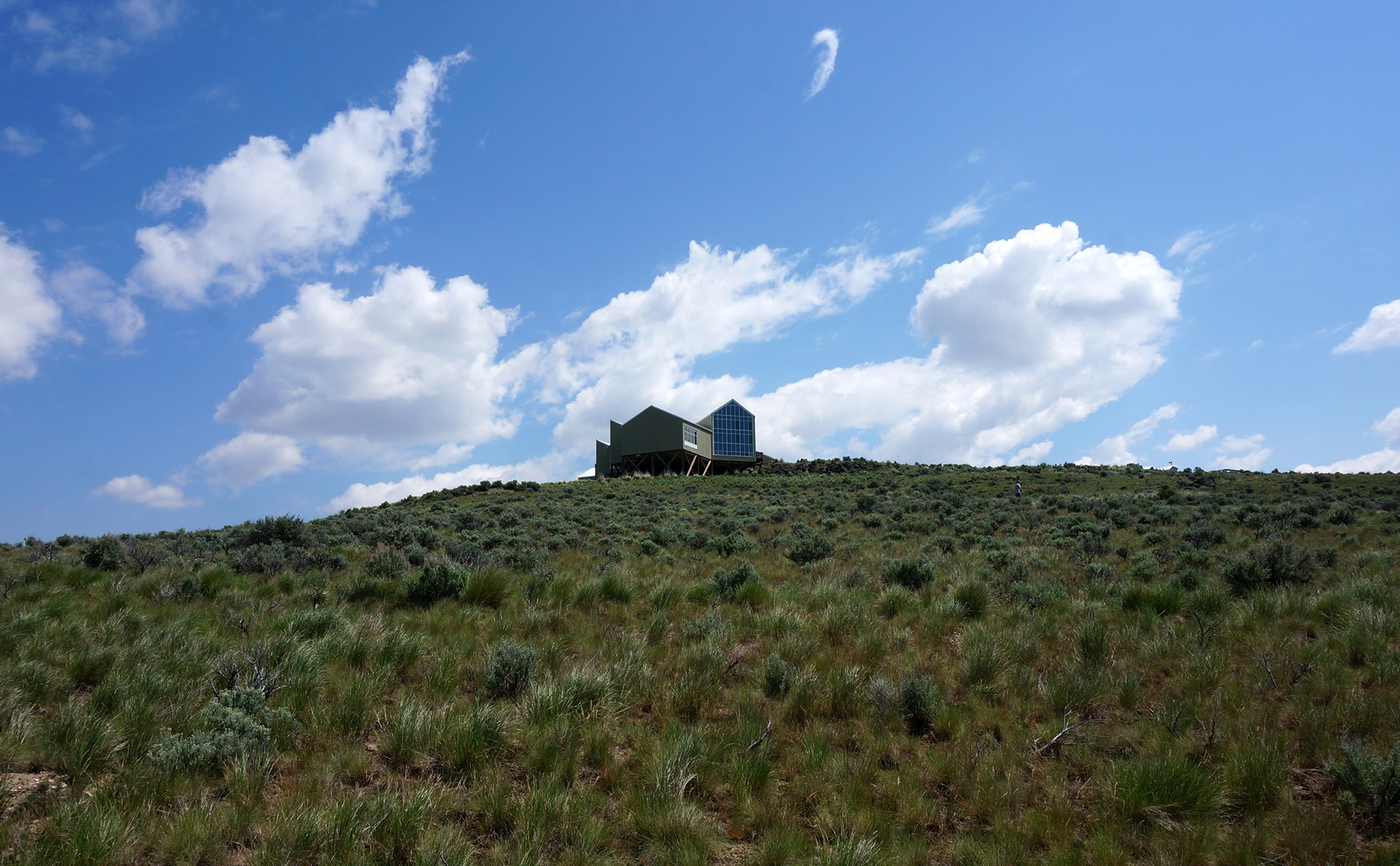
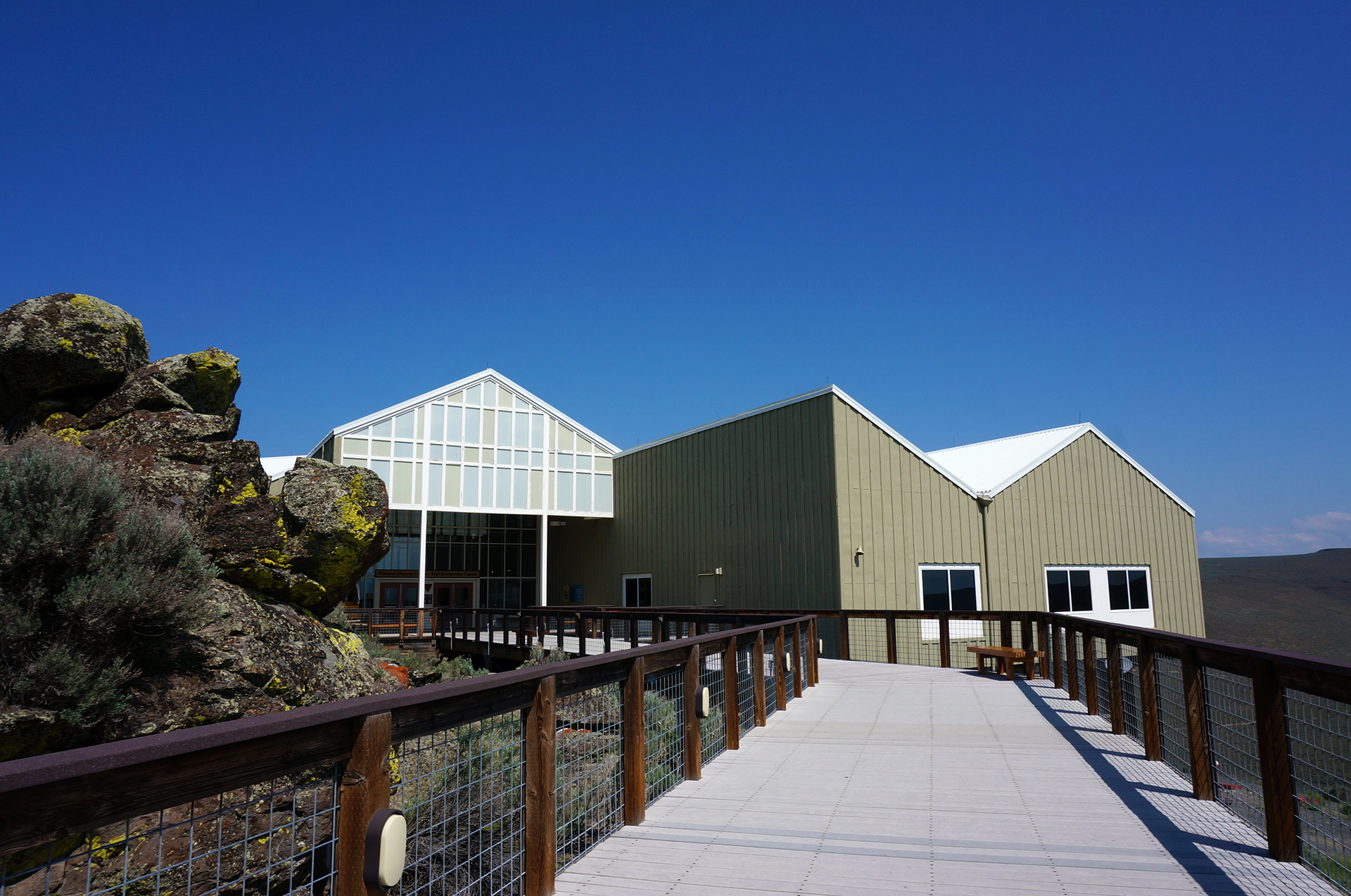
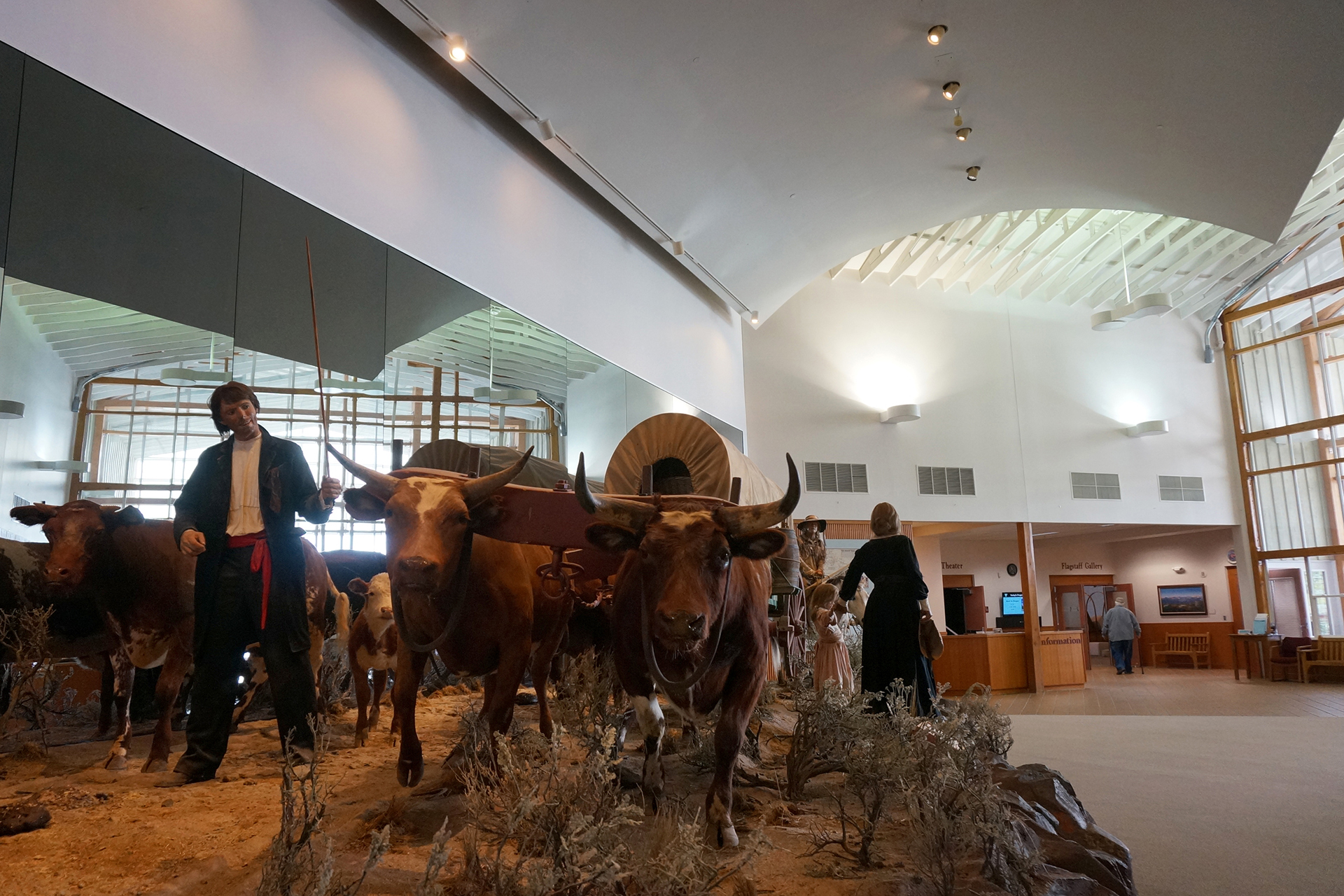
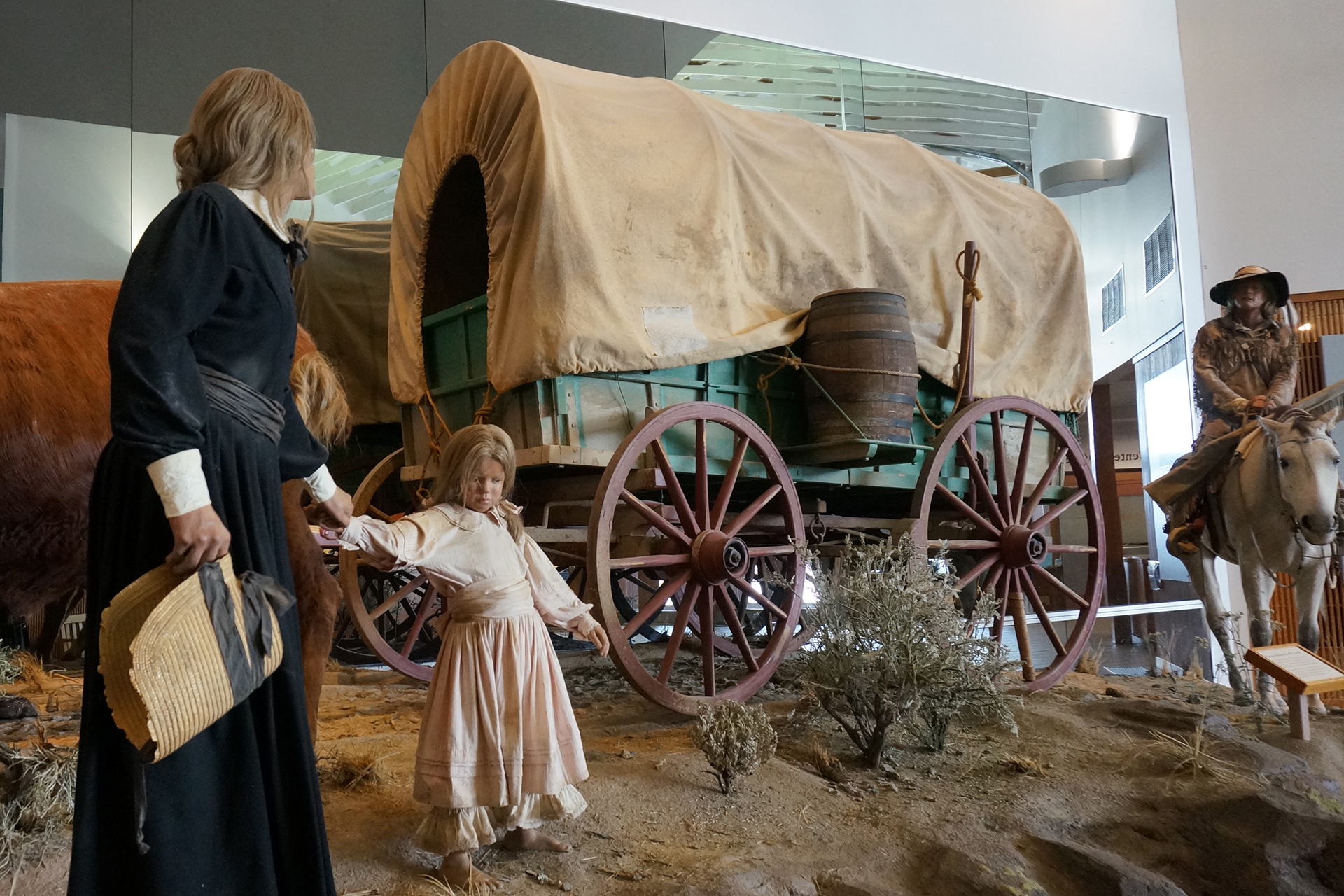
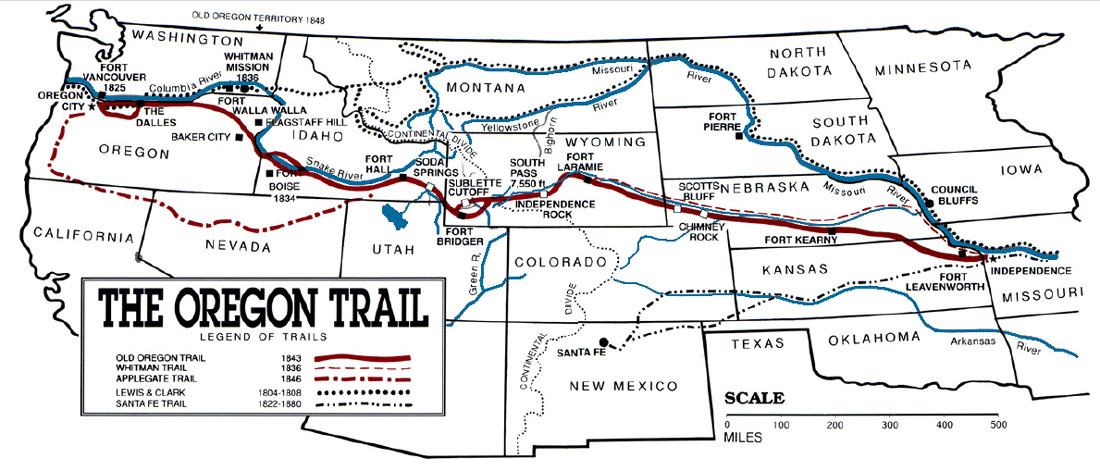
The next morning, we stopped at the excellent National Historic Oregon Trail Interpretive Center in Baker City, which was filled with cool displays about life on the actual Oregon Trail.  Sadly, there were no monocolor terminals available to play the original game (which we have a “slightaffinity for), but it was fascinating nonetheless.

Here’s a fun fact we’re pretty sure we saw here: people constantly tried to bring their 1,000+ lb cast iron stoves in their wagons with them, only to have to abandon them along the trail because of the weight.  A local entrepreneur realized this and began collecting the stoves from the trail, then bringing them back and selling them to new trailgoers, thereby creating his own, stove-based internal economy. Smart!

After checking out the museum and learning some interesting tidbits, we went outside and took a short hike through the blazing desert sun – still weird to think about in Oregon – for some pretty scenery…

… and a view of the actual wagon ruts from the actual Oregon Trail!

Wait, the actual Oregon Trail?  From the 1850s?

Well, that’s what they claimed, but upon reading the fine print, we discovered they were “reproductions” of where the wagons would have rolled.  Eh, close enough.

Fording the Snake River

After the Interpretive Center, we headed along essentially the reverse path of the old Oregon Trail.  Southern Idaho is basically one big mountain range with a giant valley cutting a pass through it – you can see it with Google Earth – and there’s really only one sane way to go across it.  We used the same way the settlers did, just slightly more easily.

We stopped for a few days in Twin Falls, Idaho, in the center of the valley.  We aren’t sure what we expected from Idaho, but it was surprisingly prosperous and normal.  We stocked up on supplies (but no cast-iron stoves), ate at a restaurant called Jakers (!!), and found out that there actually are two waterfalls in Twin Falls.

Oh, and the falls are spectacular.

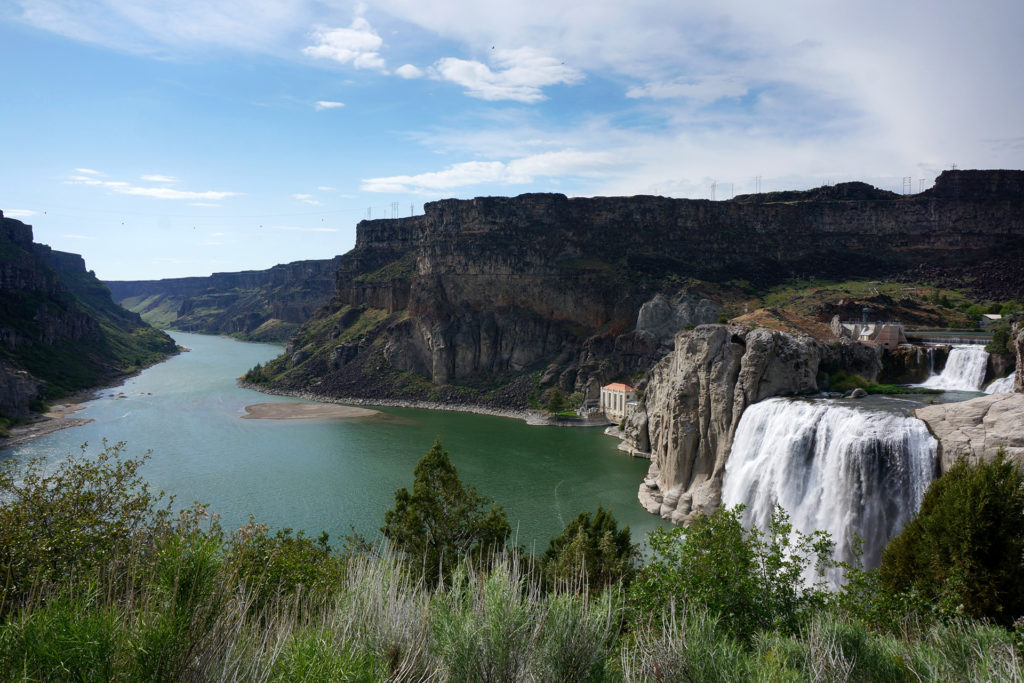
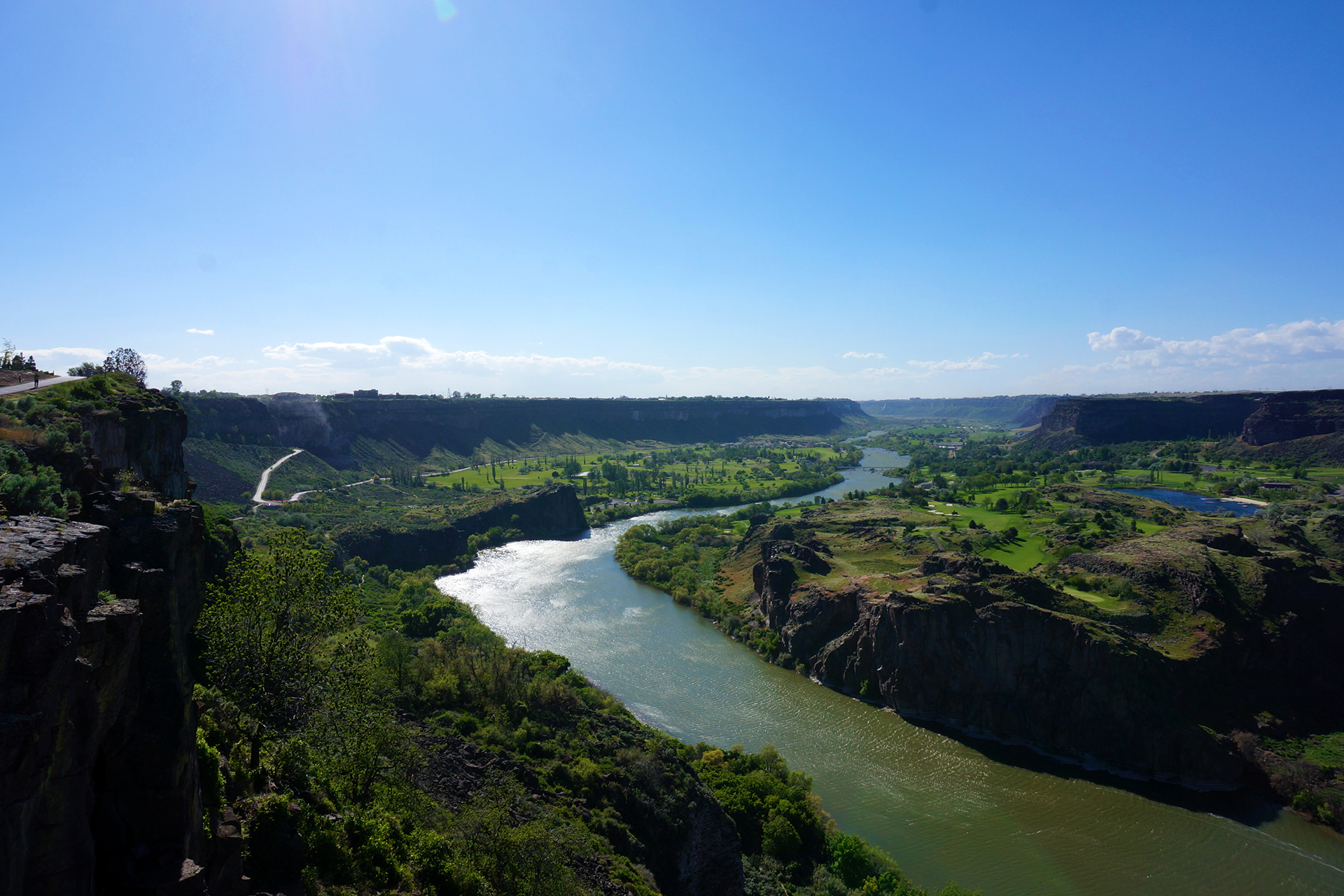
Shoshone Falls claims to be the “Niagara of the West,” which is pretty questionable considering there were like 20 people there (and no casinos).  That said, it roars with some serious force.  The Snake River Canyon that it sits in is no slouch, either – a full mile wide, Evel Knievel once tried to jump the gorge on his “specially engineered rocket motorcycle,” but he failed when his parachute opened immediately on takeoff.  (A bummer to be sure, but it definitely could have been worse.)

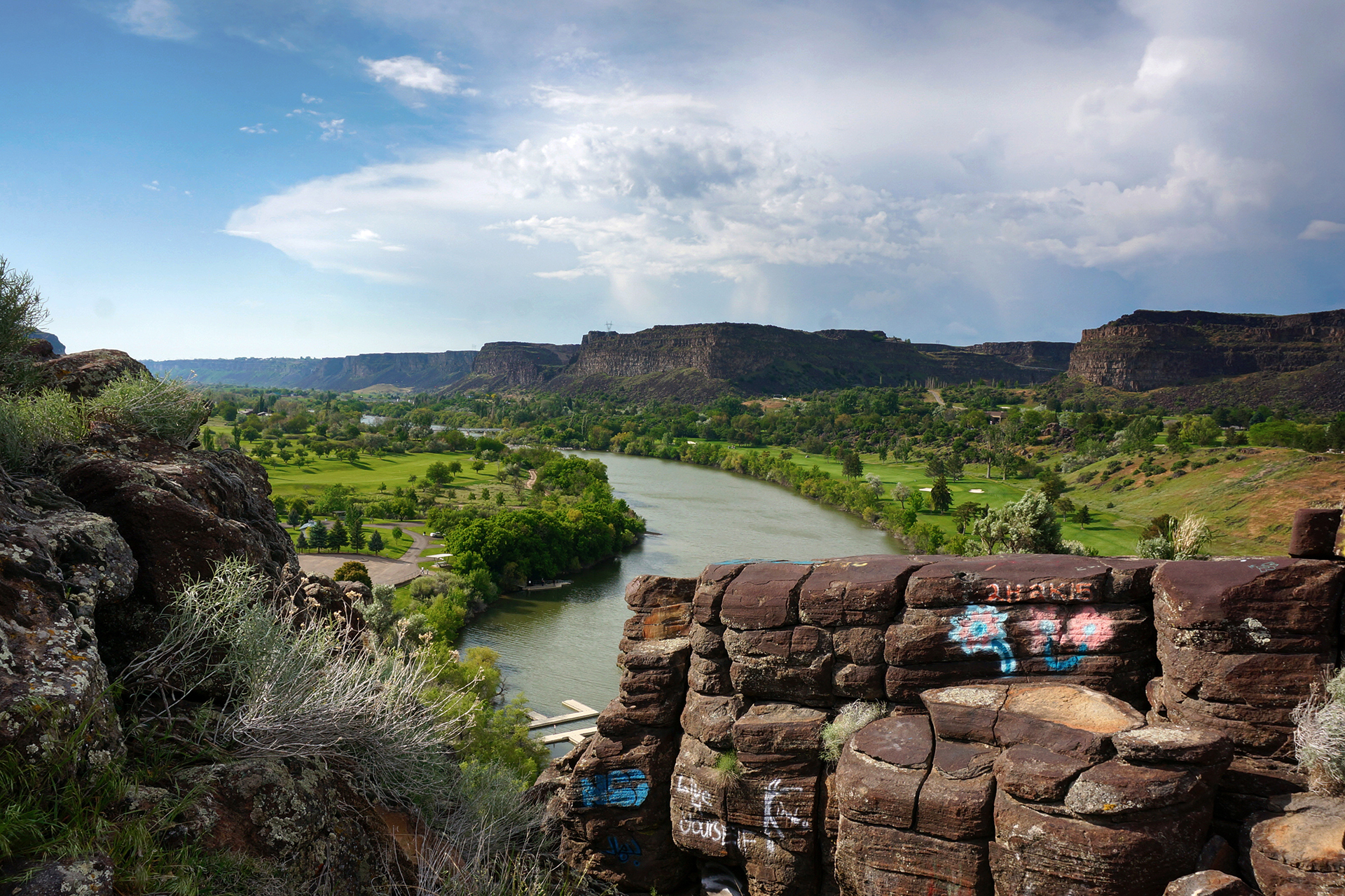
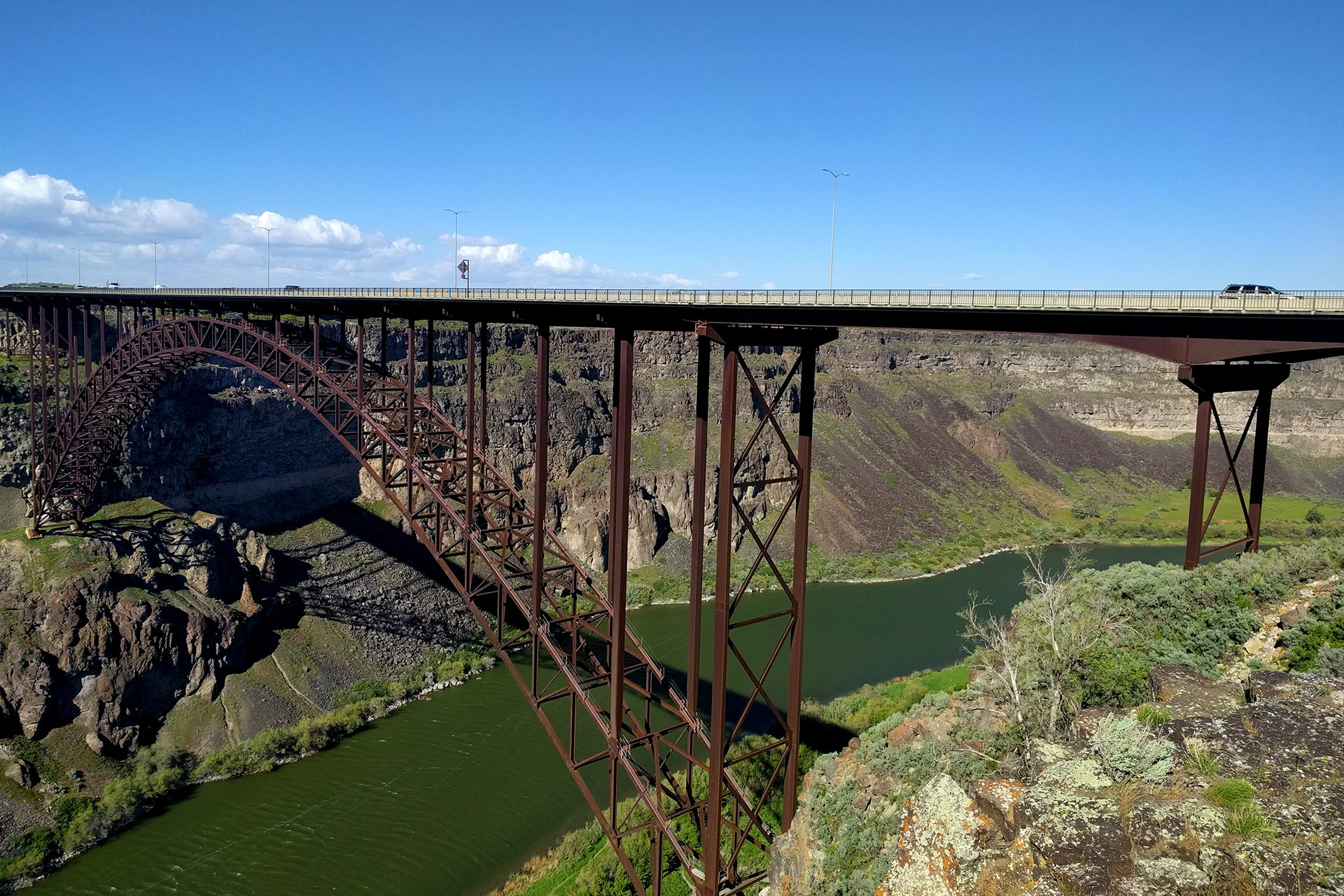
The whole gorge area was extraordinarily beautiful, including the other waterfall and the Perrine Bridge crossing the chasm.  We really knew nothing about Twin Falls and didn’t expect to wander into something like this, but that’s basically why the West is awesome.

Crater Faces

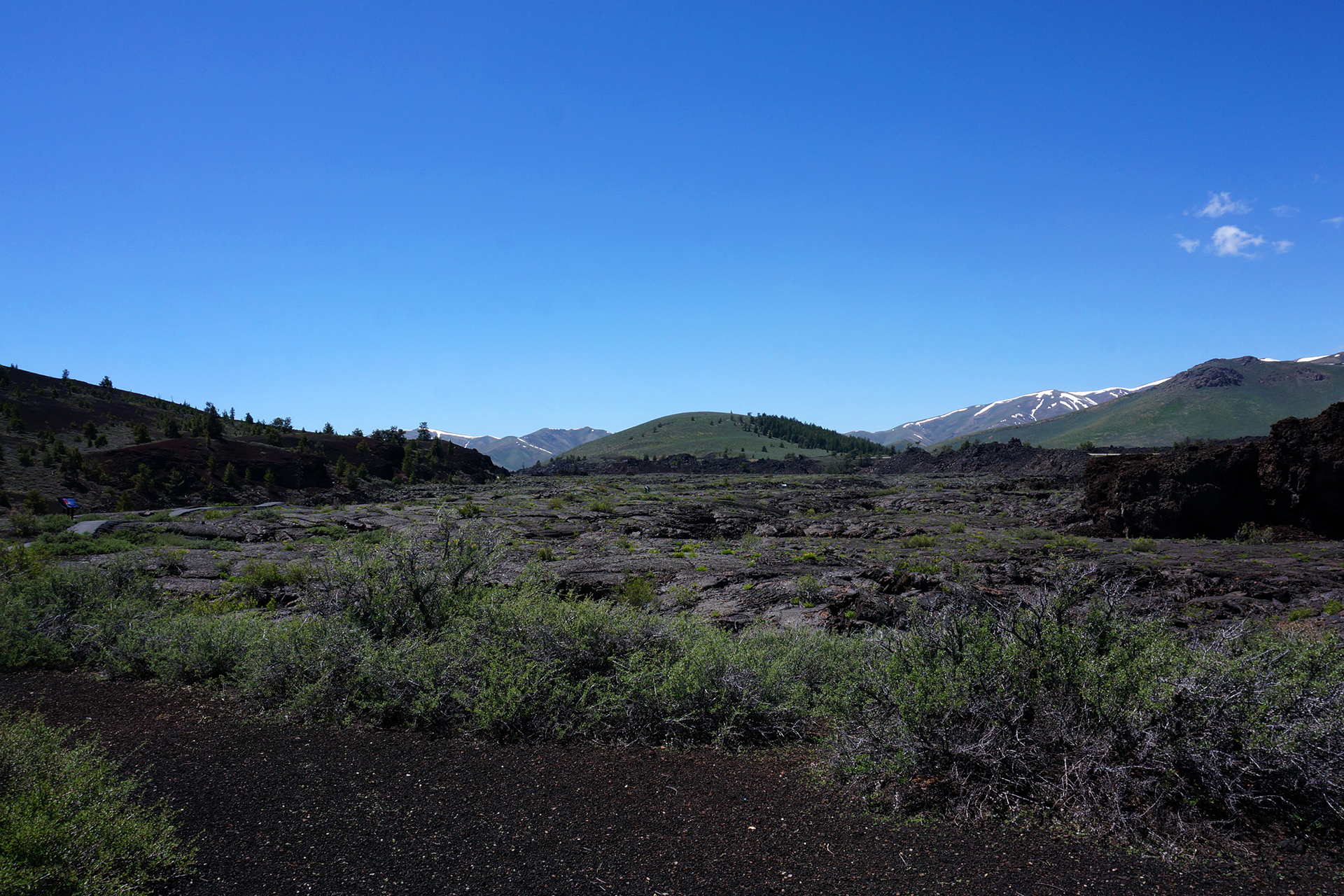
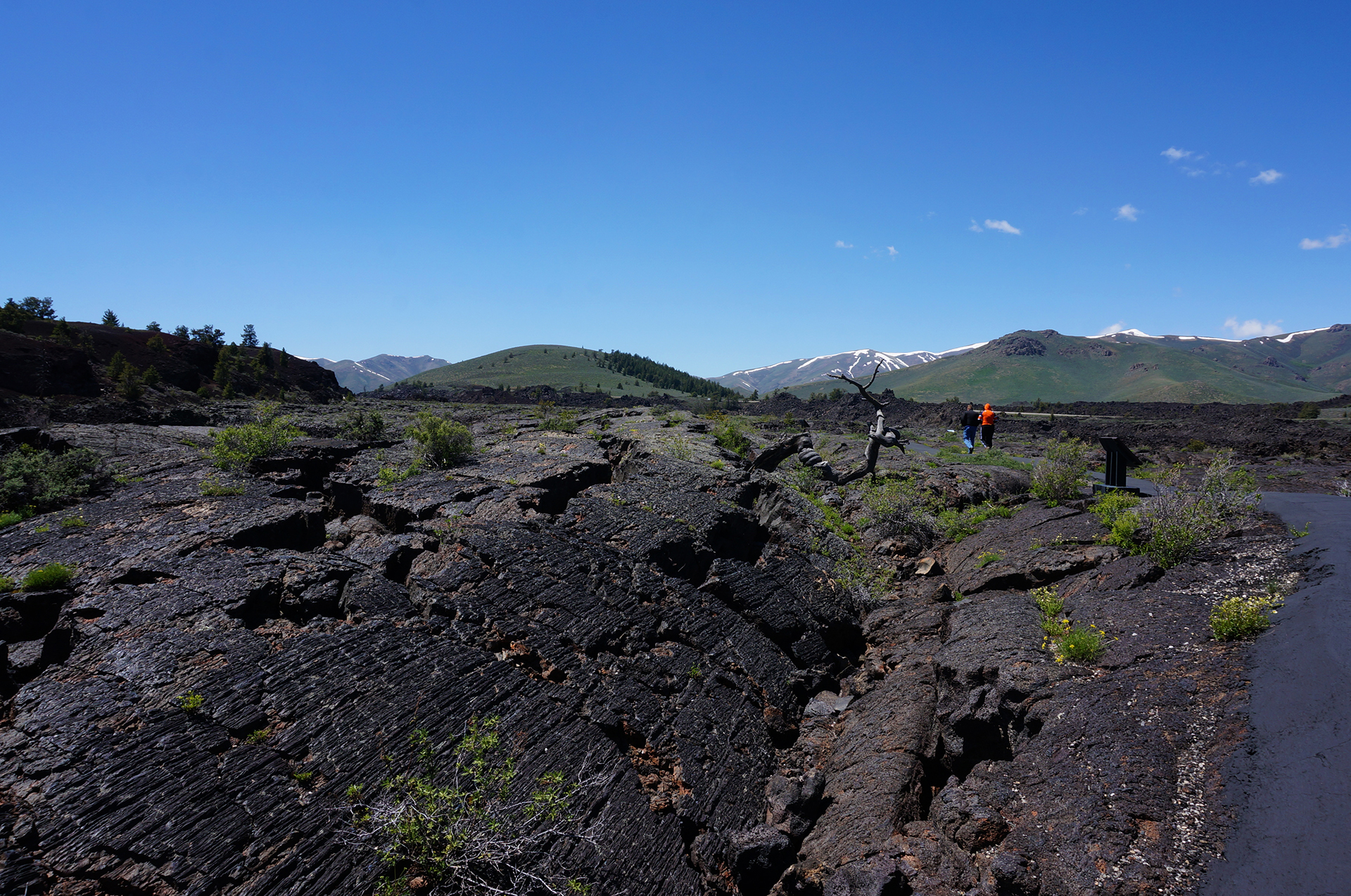
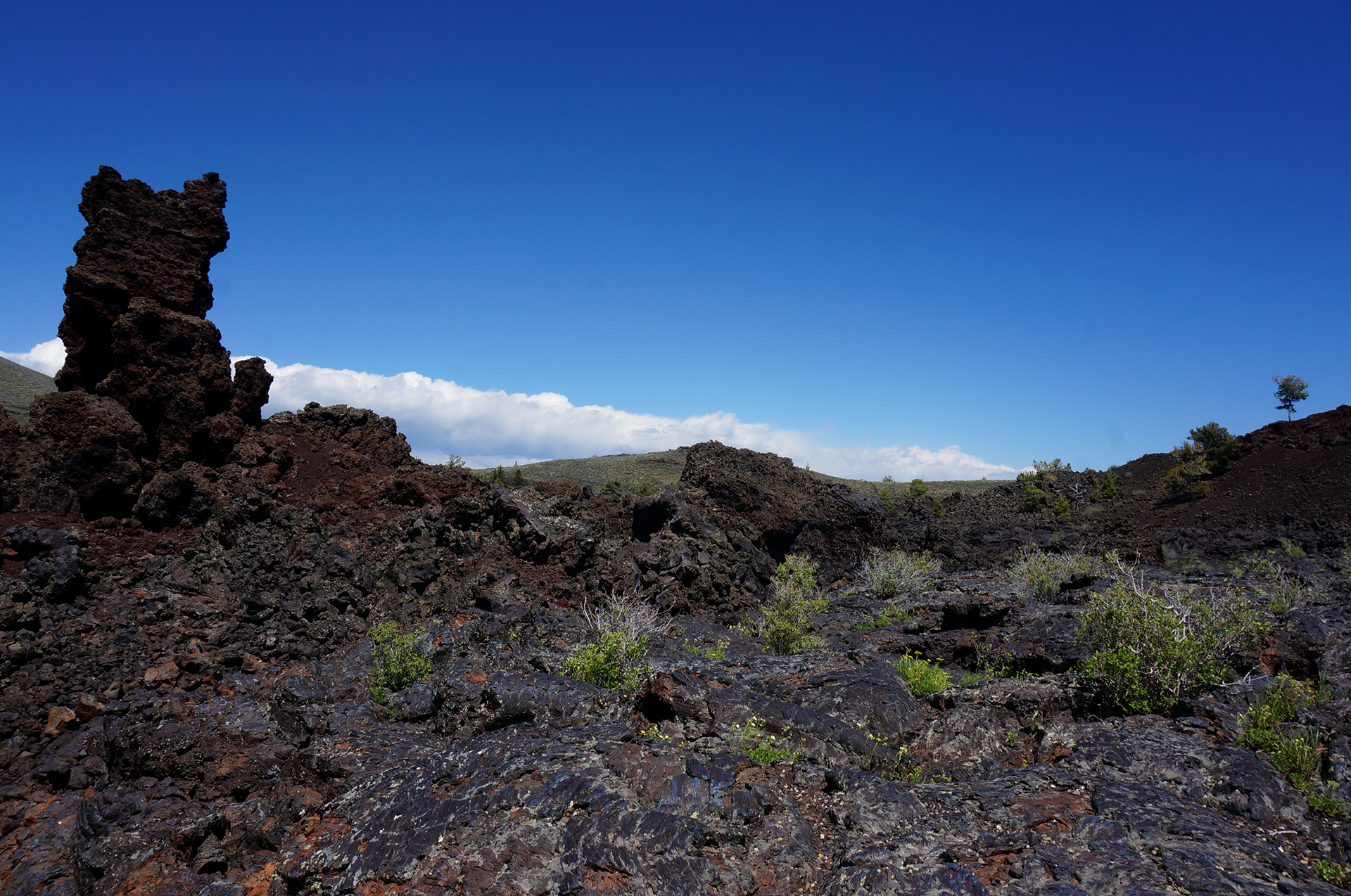
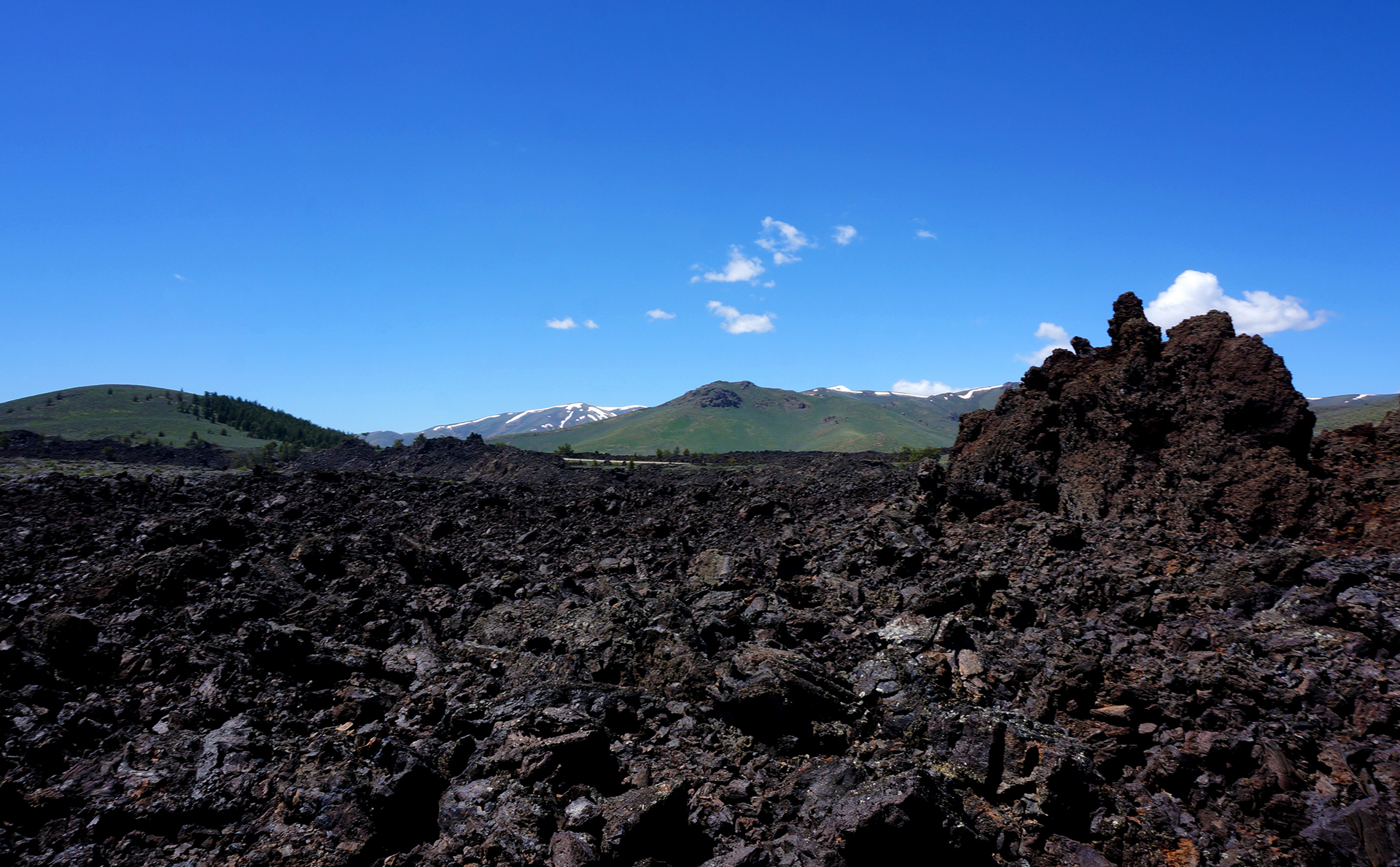
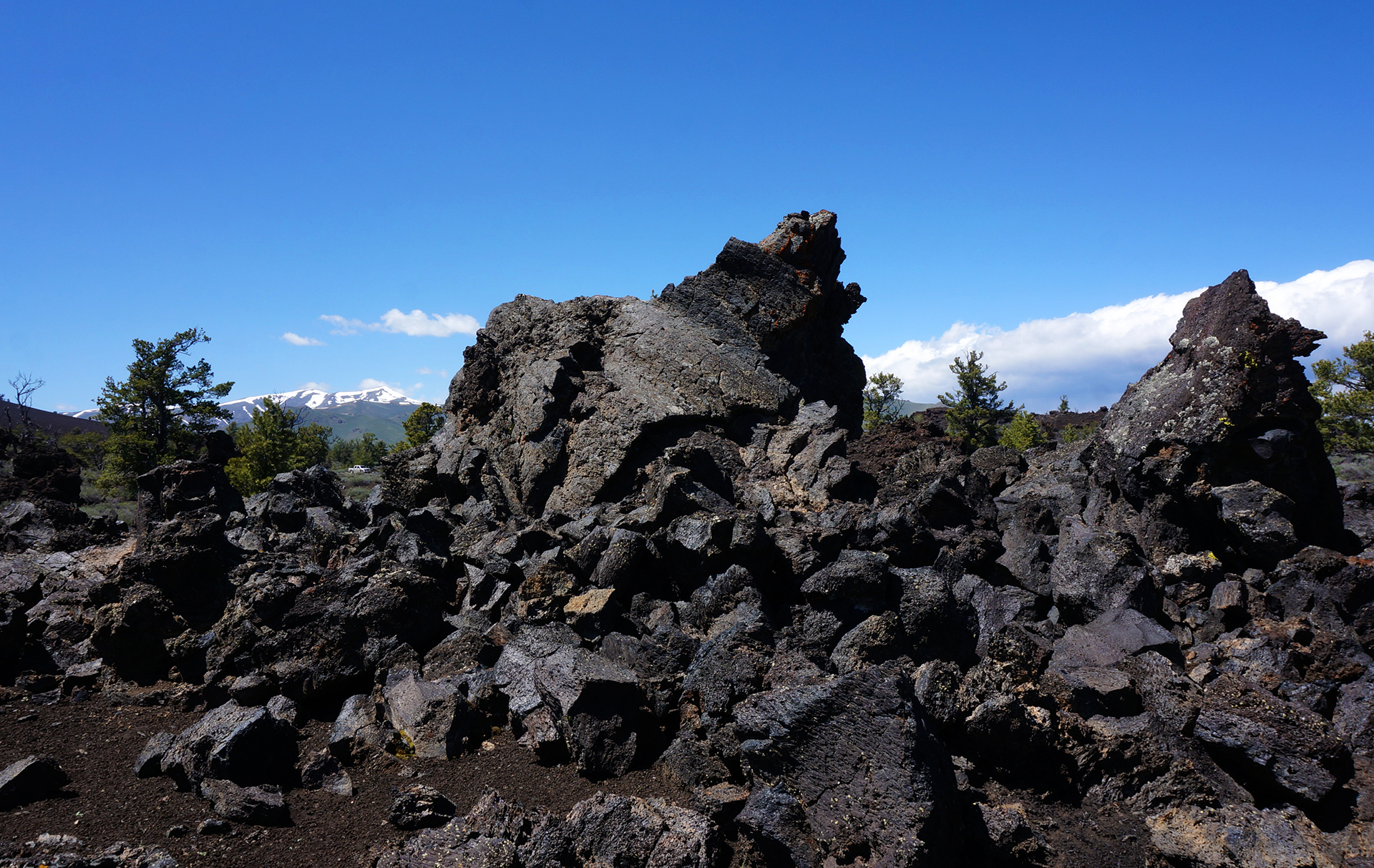
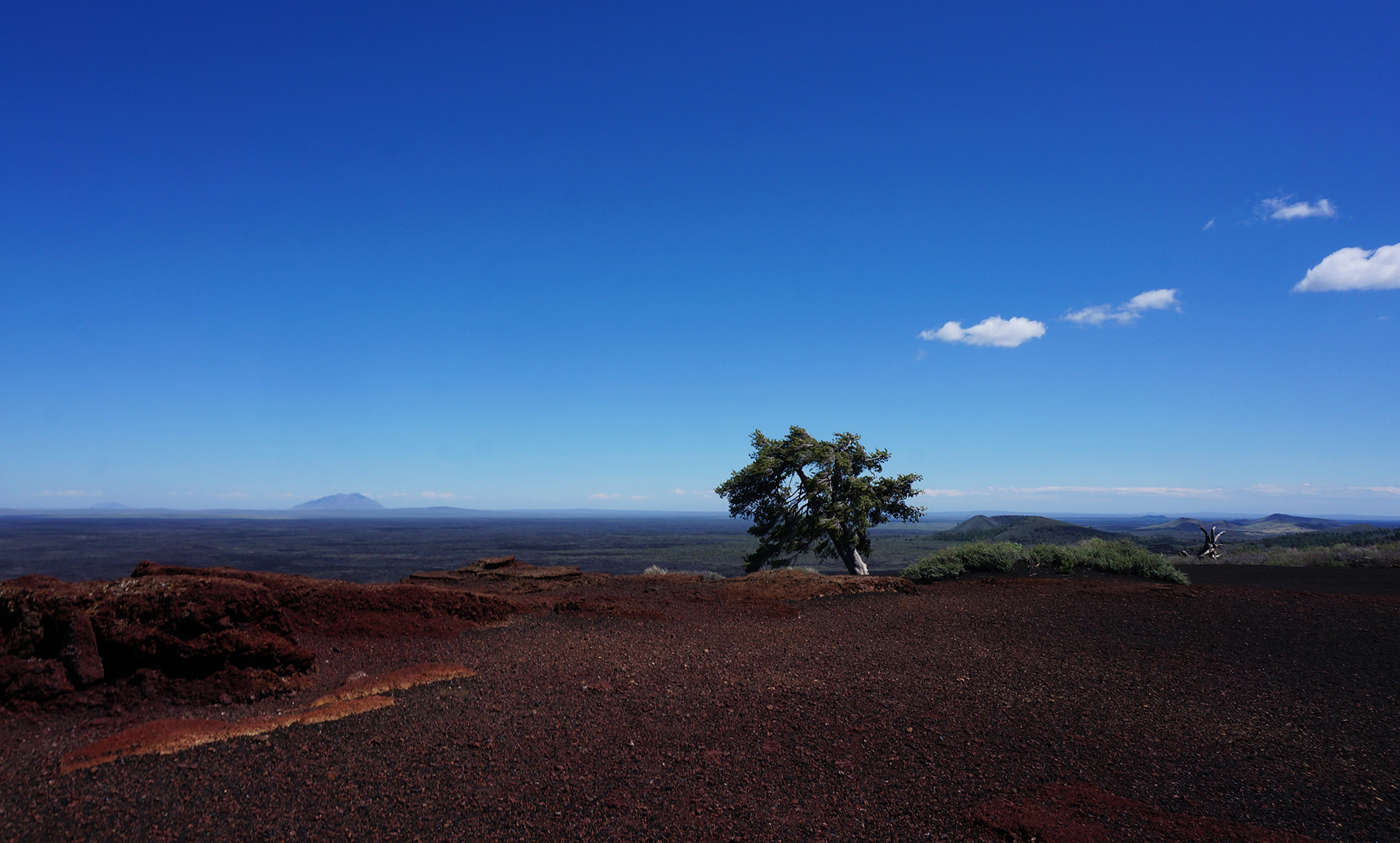
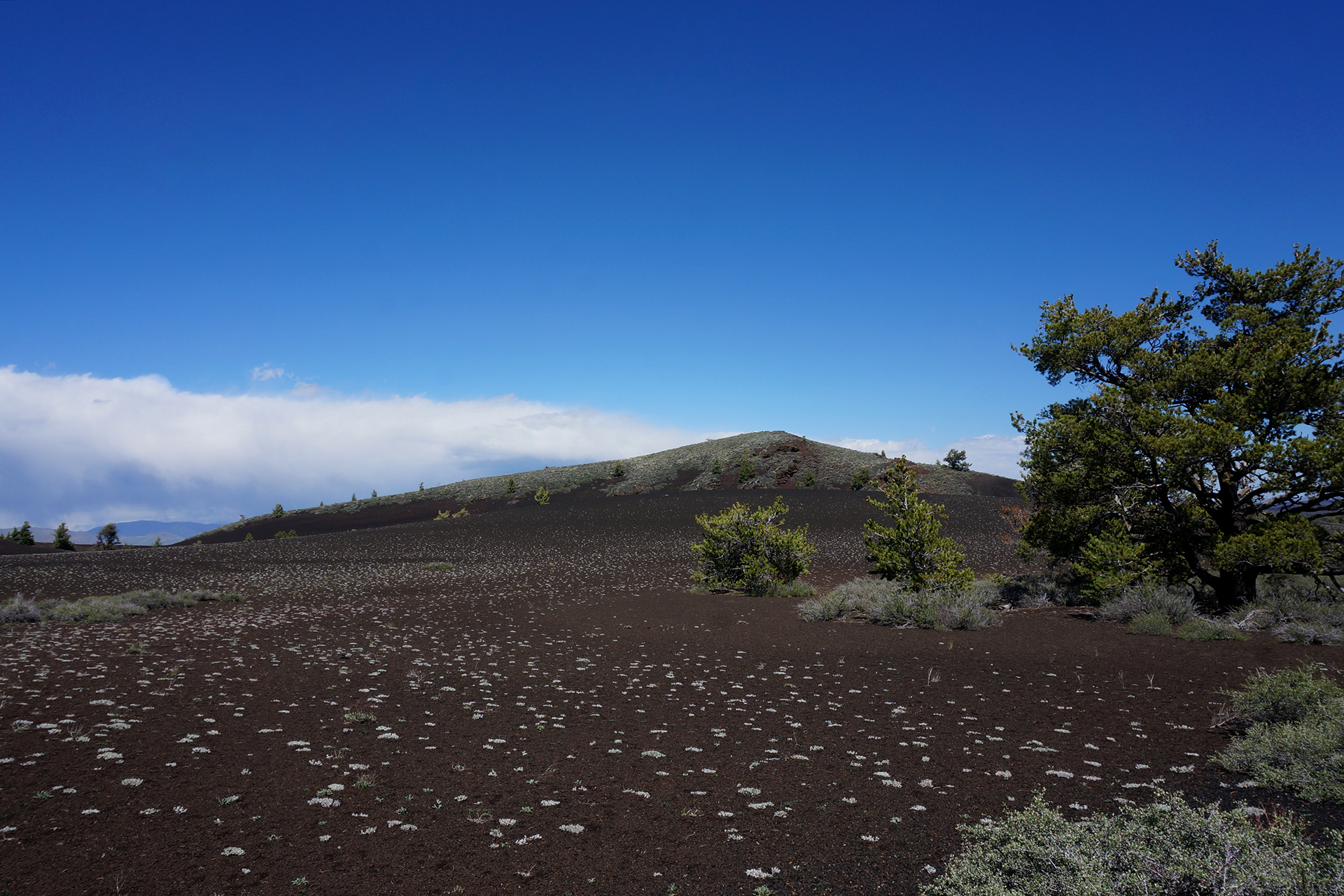
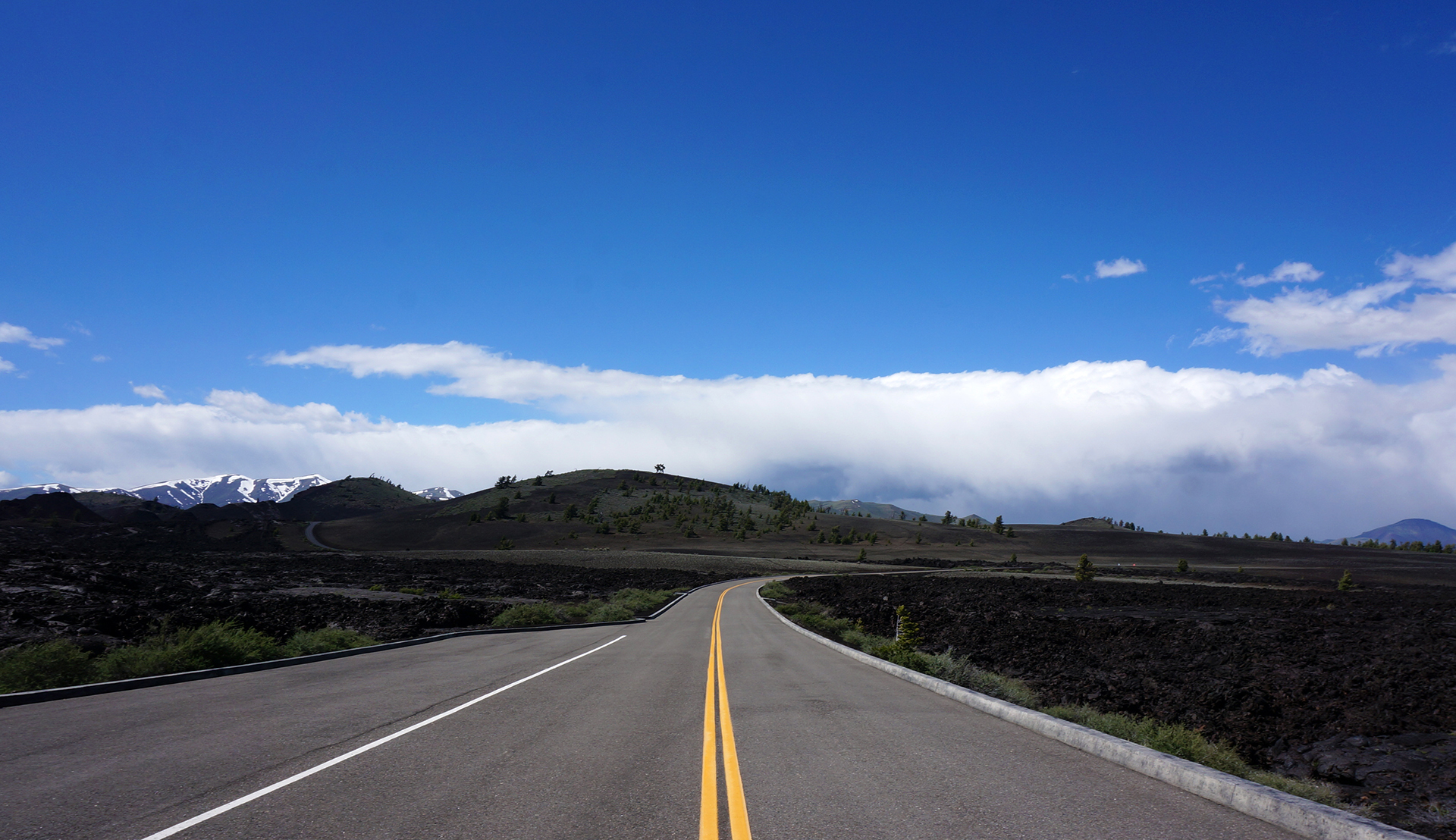
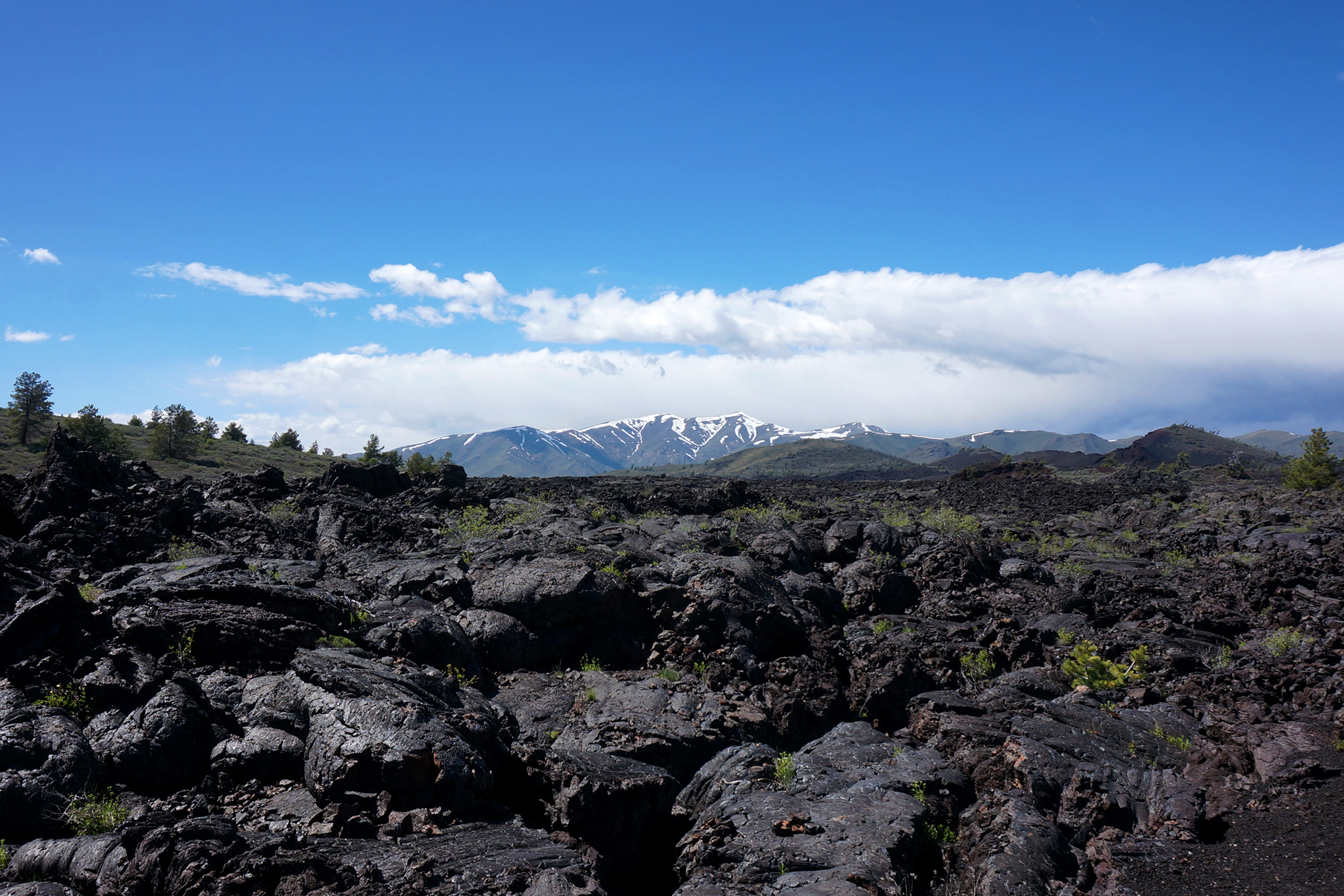
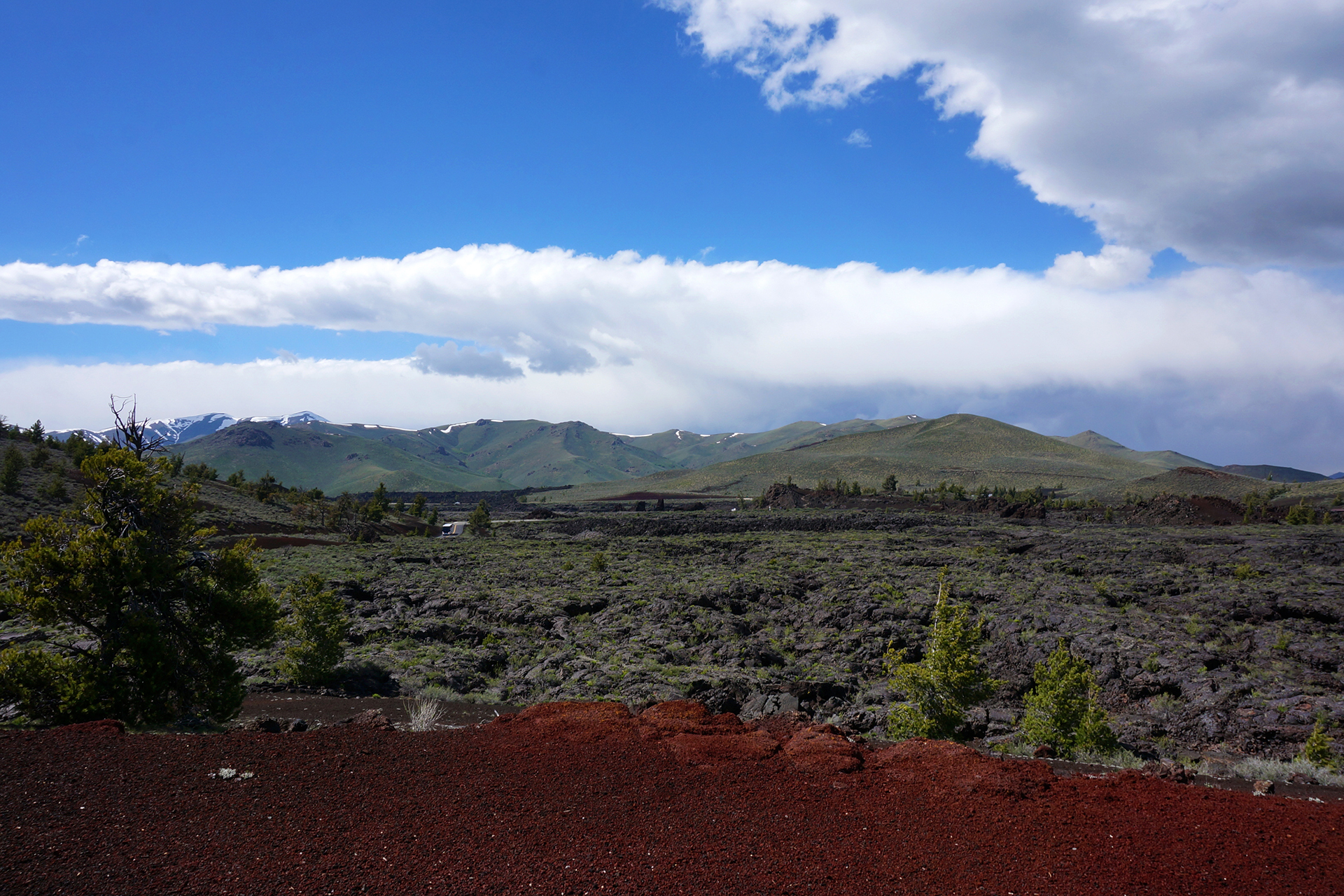
The one thing we did expect to do in Twin Falls was visit Craters of the Moon National Monument, and it didn’t disappoint.  The “craters” are just remnants from an ancient lava flow, but they look otherworldly, especially in a setting like Idaho instead of Hawaii.

The lava field shown above is the North Crater Flow, and it’s only about 2,000 years old – a baby, really.  The oldest lava fields in the park are around 15,000 years old, and although they are currently “dormant,” they are expected to erupt in less than a thousand years. We thought about waiting around a couple hundred years to watch, but alas, our roadtrip schedule was unforgiving.

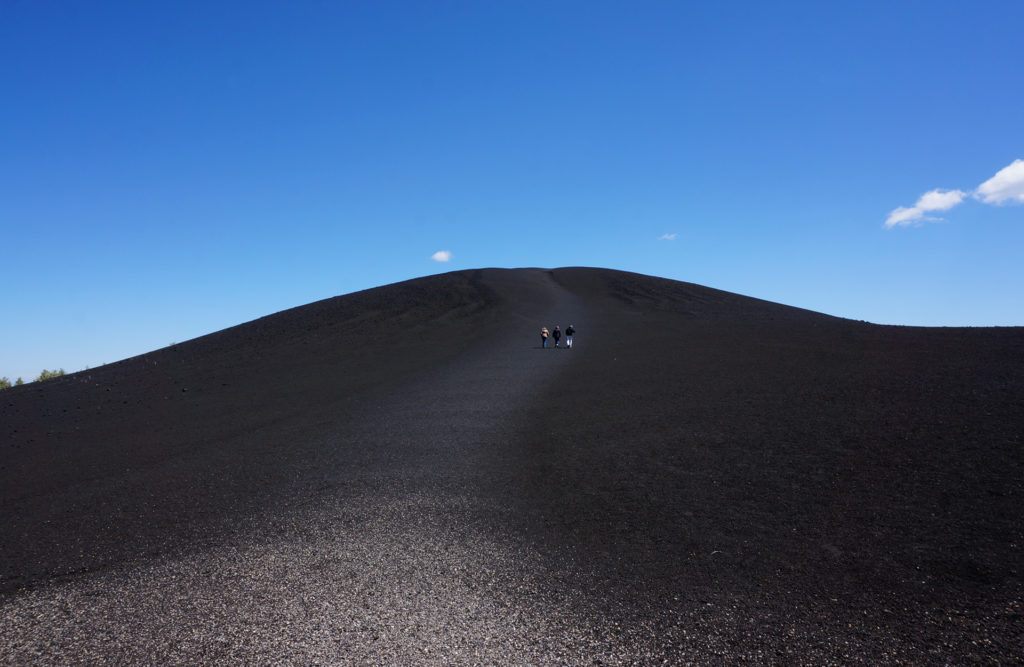
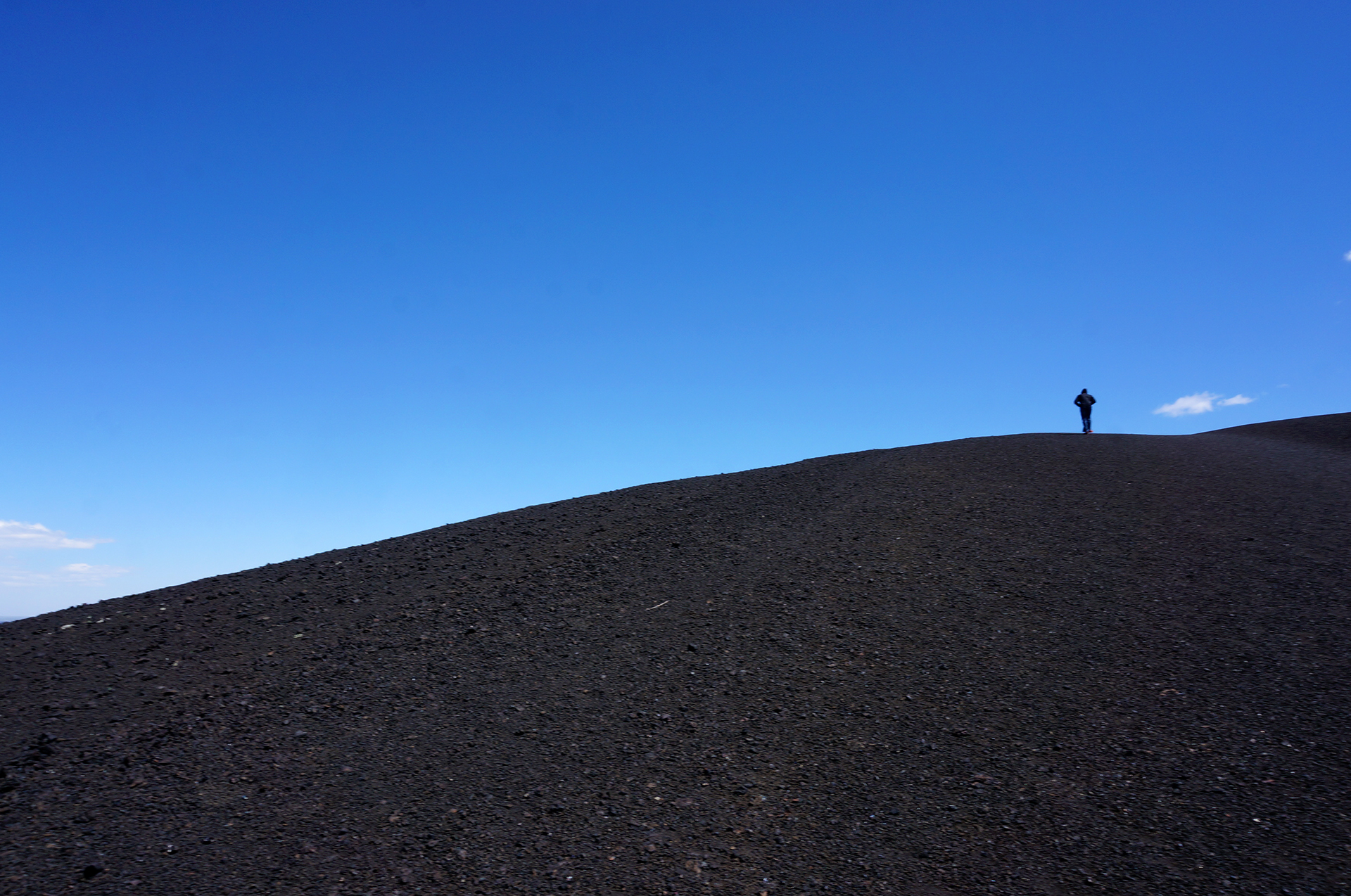
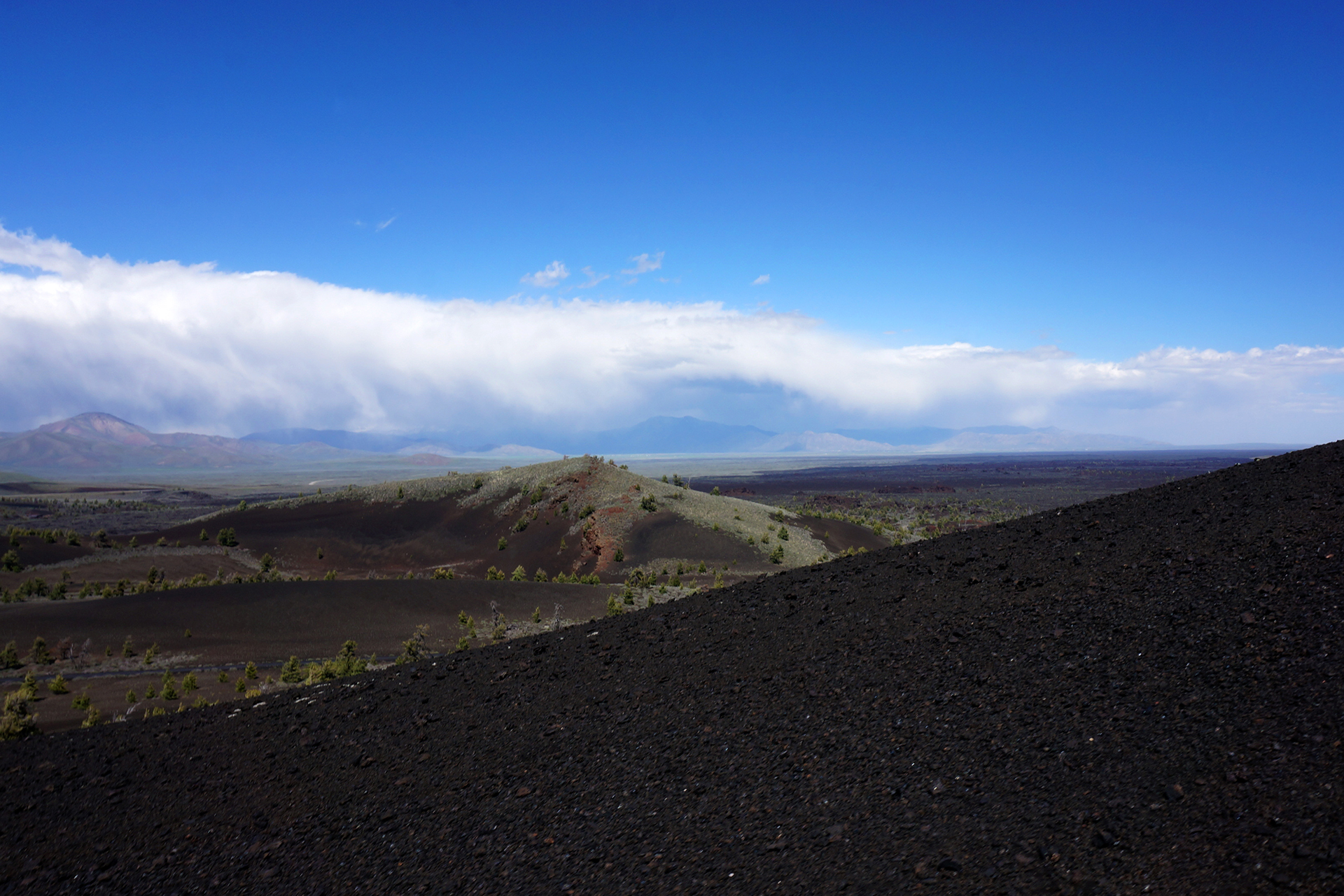
While the lava fields were pretty neat, our favorite feature of the park was the cinder cone. Inferno Cone is essentially a 160 ft tall sand dune made out of volcanic ash.

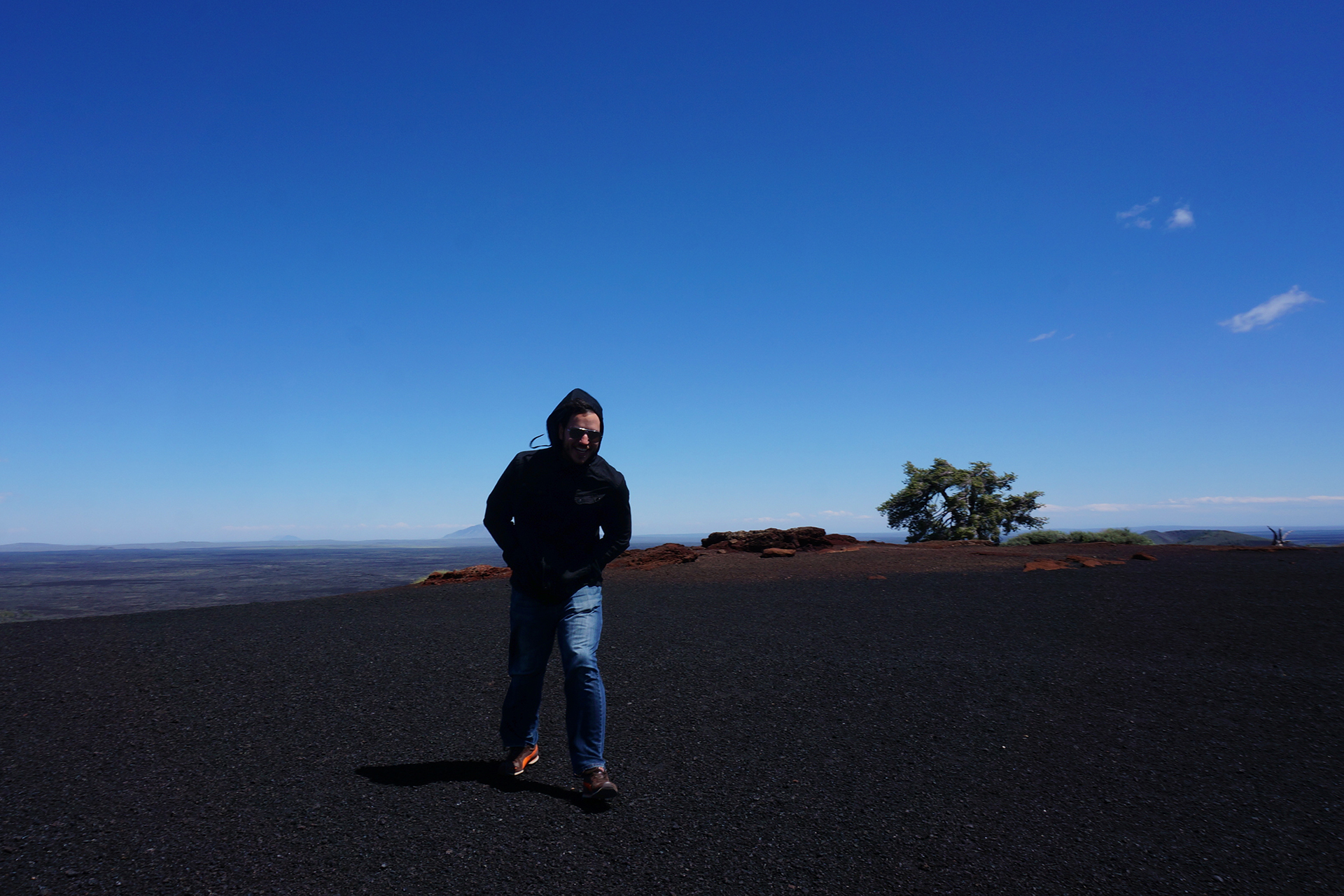
The only downside, and it was a big one, was the ungodly strength of the wind that day.  It was constant and oppressive.  Climbing up the Inferno Cone required pulling our hoods down and walking nearly parallel to the ground.  And since the ground was literally ash, we were under constant assault from airborne particles seeking to make their way into our eyes, ears, noses, and especially mouths.

Got some cool pictures, though.

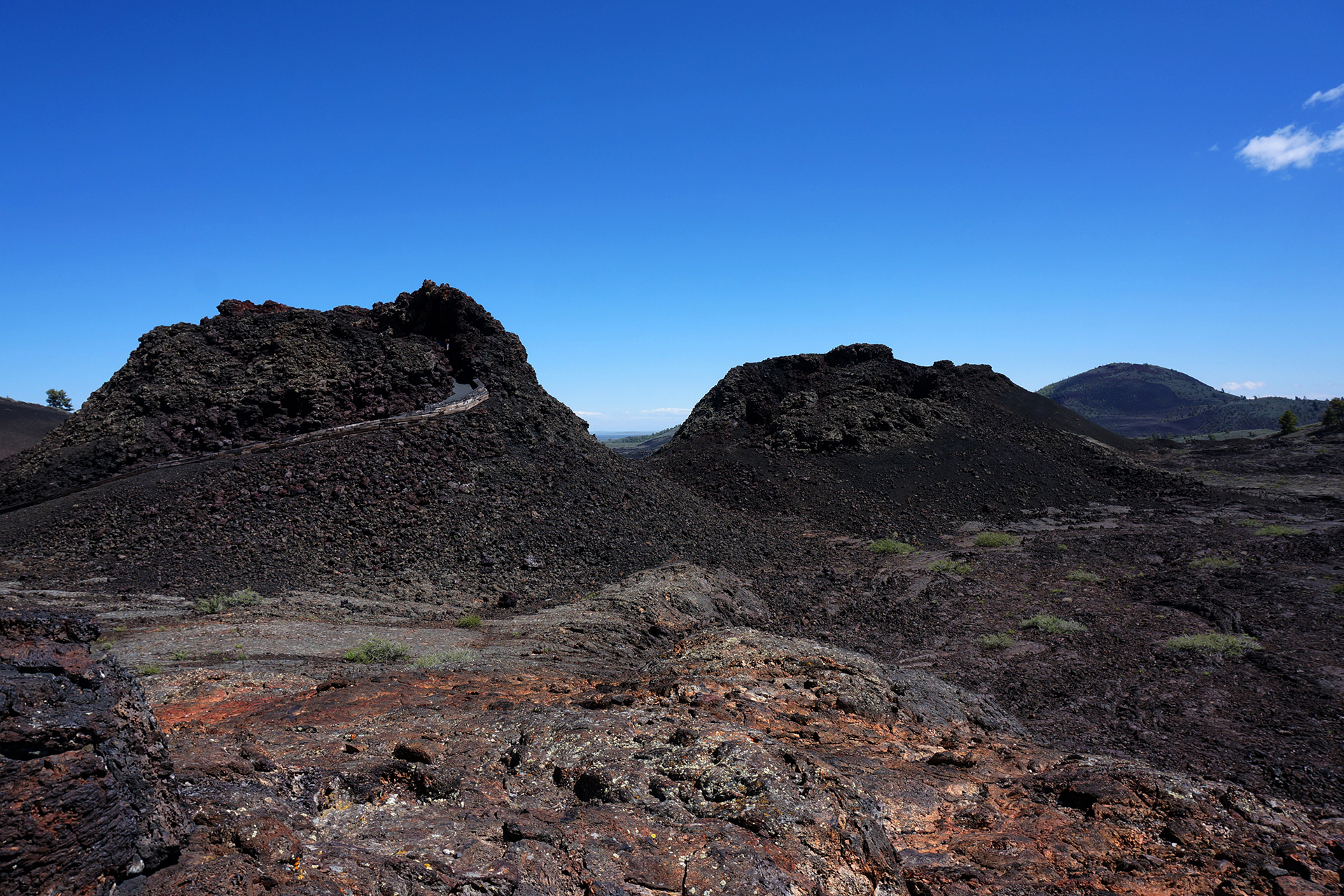
After recovering from the volcanic ash pelting, we moved on to check out the Spatter Cones, the “Old Faithful” of Craters of the Moon. It’s pretty obvious why:  Old Faithful spews out hot water every 35-120 minutes, while the Spatter Cones spew out hot lava every… well, 500-3,000 years.

OK, maybe the comparison is a bit overblown.  Still, the Spatter Cones were pretty neat, and frankly, this is one eruption we’re thankful not to have seen in person.

The final feature at Craters of the Moon were lava tube caves. We really wanted to explore them, but it required a little hike to get to the caves, and we had hit our limit of bone chilling wind and volcanic cinders raining down on us.  The lava tube caves will have to wait for our next cross-country RV road trip.

On our way out we snapped a few more pictures.  Even the side of the road was cool.

Chekhov’s Interpretive Center

Whew!  This was a long blog post.  [Ed. note: Heather really loved Craters of the Moon and made that section approximately 800 times longer.] But hold on for one more second, because we’re about to tie this entire thing together with a bow.

Remember how we started this post with the Oregon Trail? Well, just outside of Craters of the Moon is a rather pretty area known as Goodale’s Cutoff.

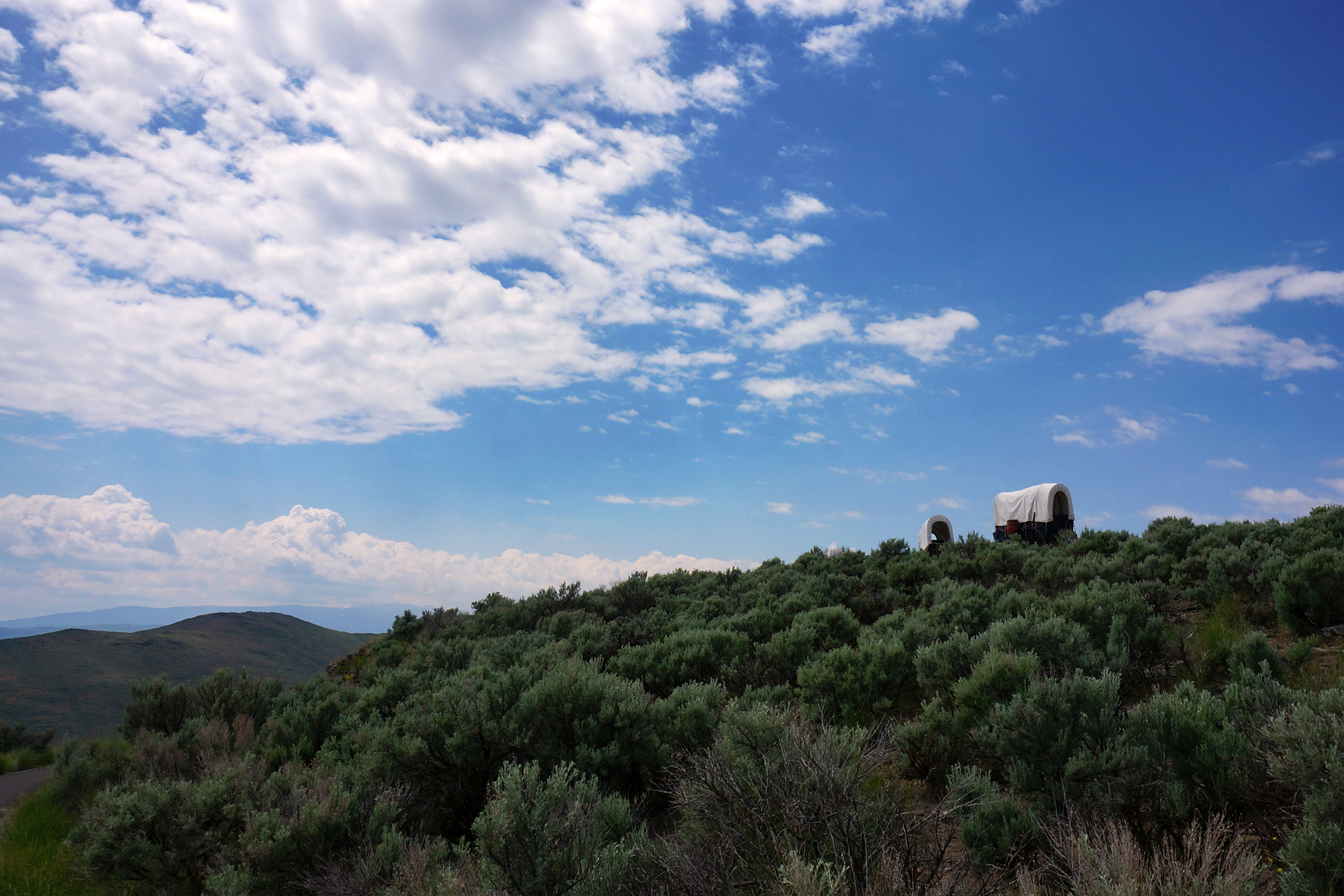
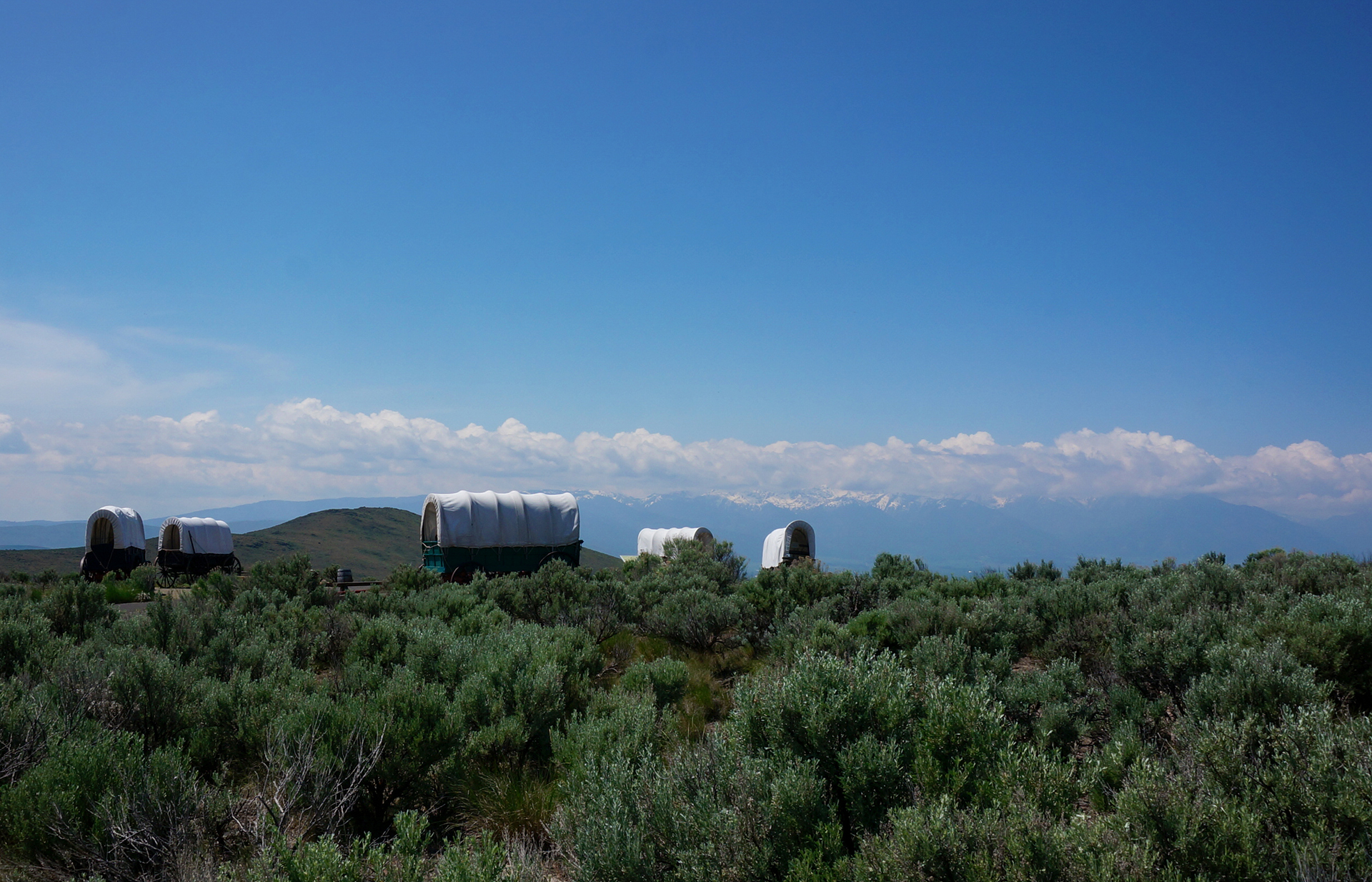
Pioneers on the Oregon Trail used Goodale’s Cutoff, an alternate route along the trail, to skirt the lava flows and avoid potential Shoshone Indian attacks along the Snake River. The Cutoff paralleled the Oregon Trail for some distance, before rejoining it in… Baker City, home of the Oregon Trail Interpretive Center!

And so, just like the moon’s orbit, we have come full circle.

Roadtrip Time Travel

Roadtrip Status

Still alive?  Check.

Where are you now?  Indiana Dunes State Park, near Chicago, seeing lots of old friends.

Next location?  Still TBD.

Follow Us On Social Media
FacebooktwitterinstagramFacebooktwitterinstagram

Latest Posts

0

Week 45.1: North Cascades National Park

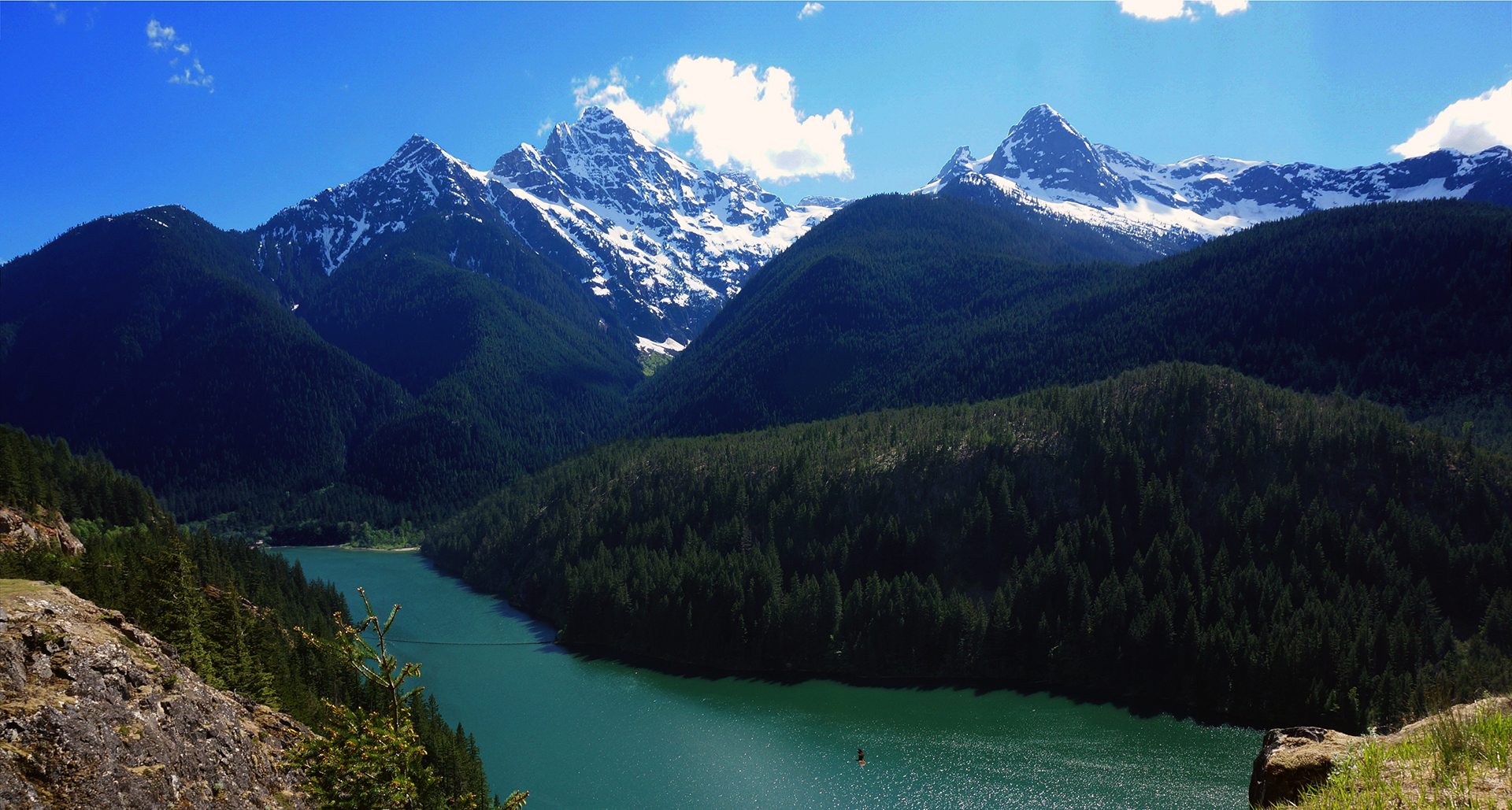
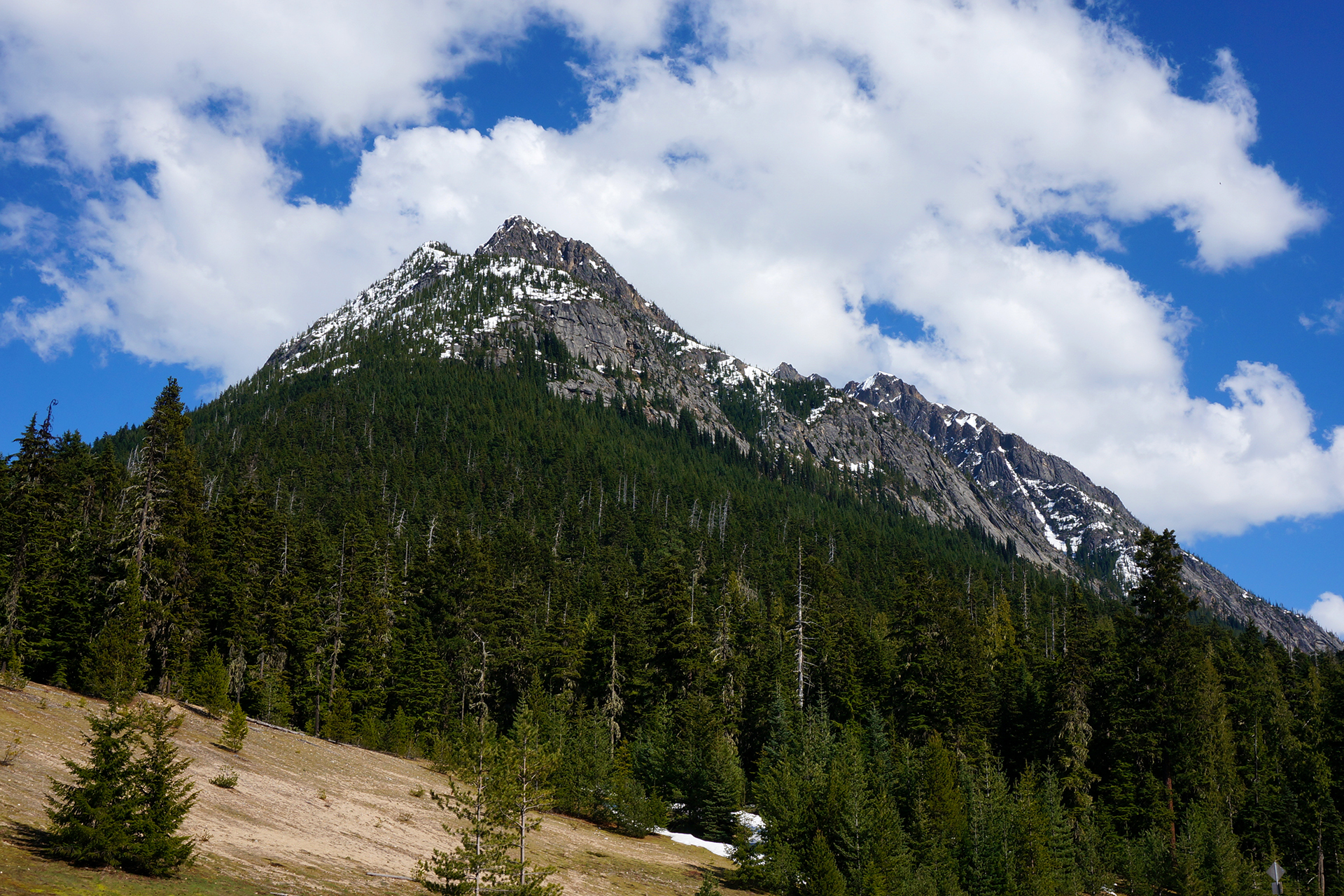
As a day trip from our campground north of Seattle, we headed out to North Cascades National Park.  The park is situated northeast of the city, very close to the Canadian border, and all we can say is:  Wow.

North Cascades is a stunner.

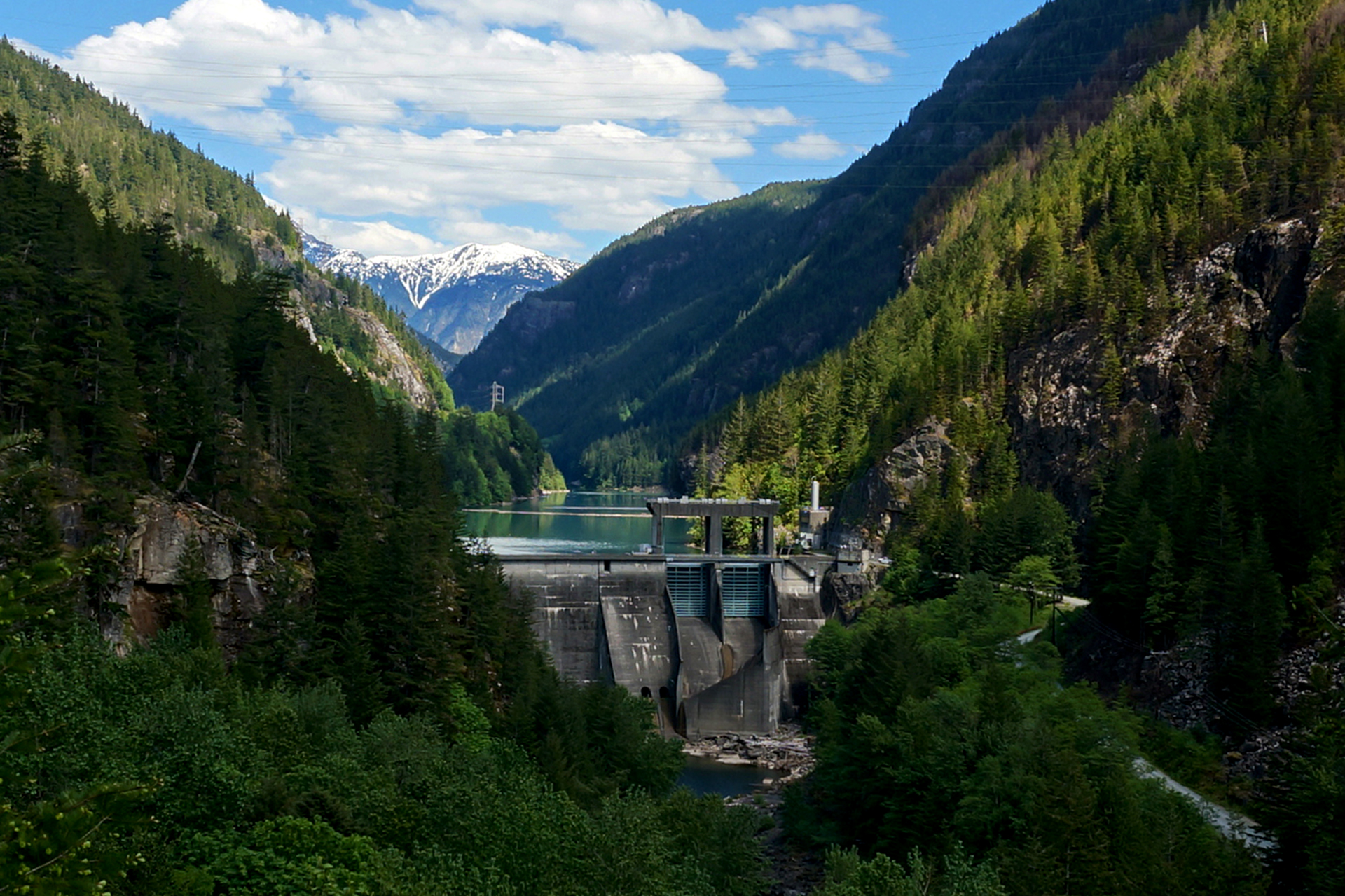
North Cascades is somewhat unusual in that there isn’t all that much to do – the park is mostly undeveloped, save for a village servicing the hydroelectric dams and some hiking trails and overlooks.  We were there in early May, and as it happened, that was too early in the season even for most of the hiking trails.  (You’ll see why later.  Foreshadowing!)  So, although we love to hike at national parks, we just drove through and enjoyed the views.

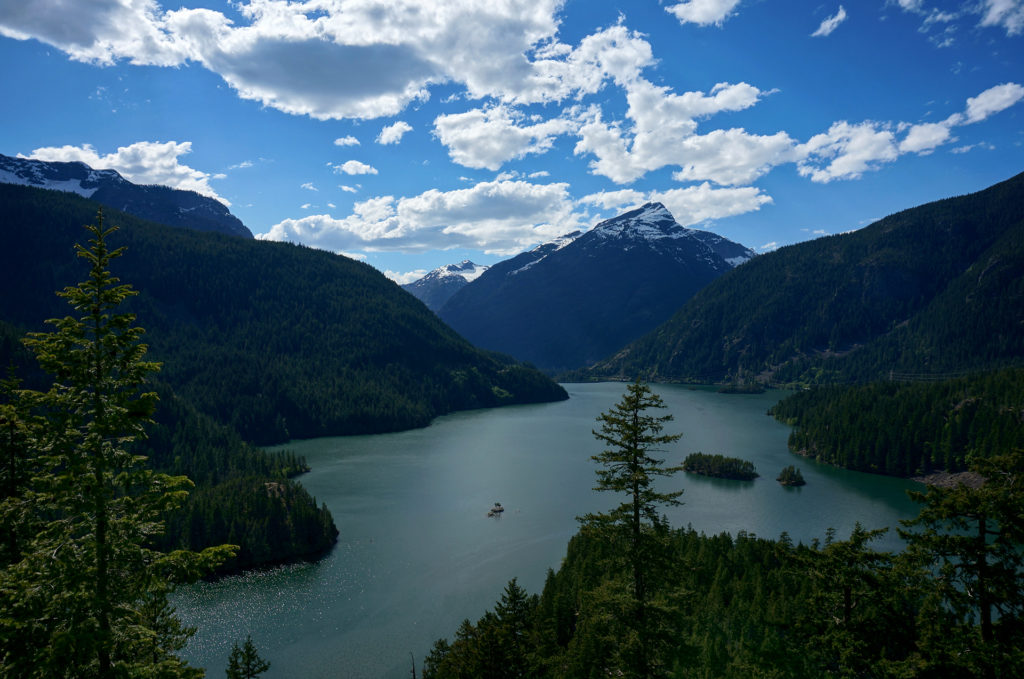
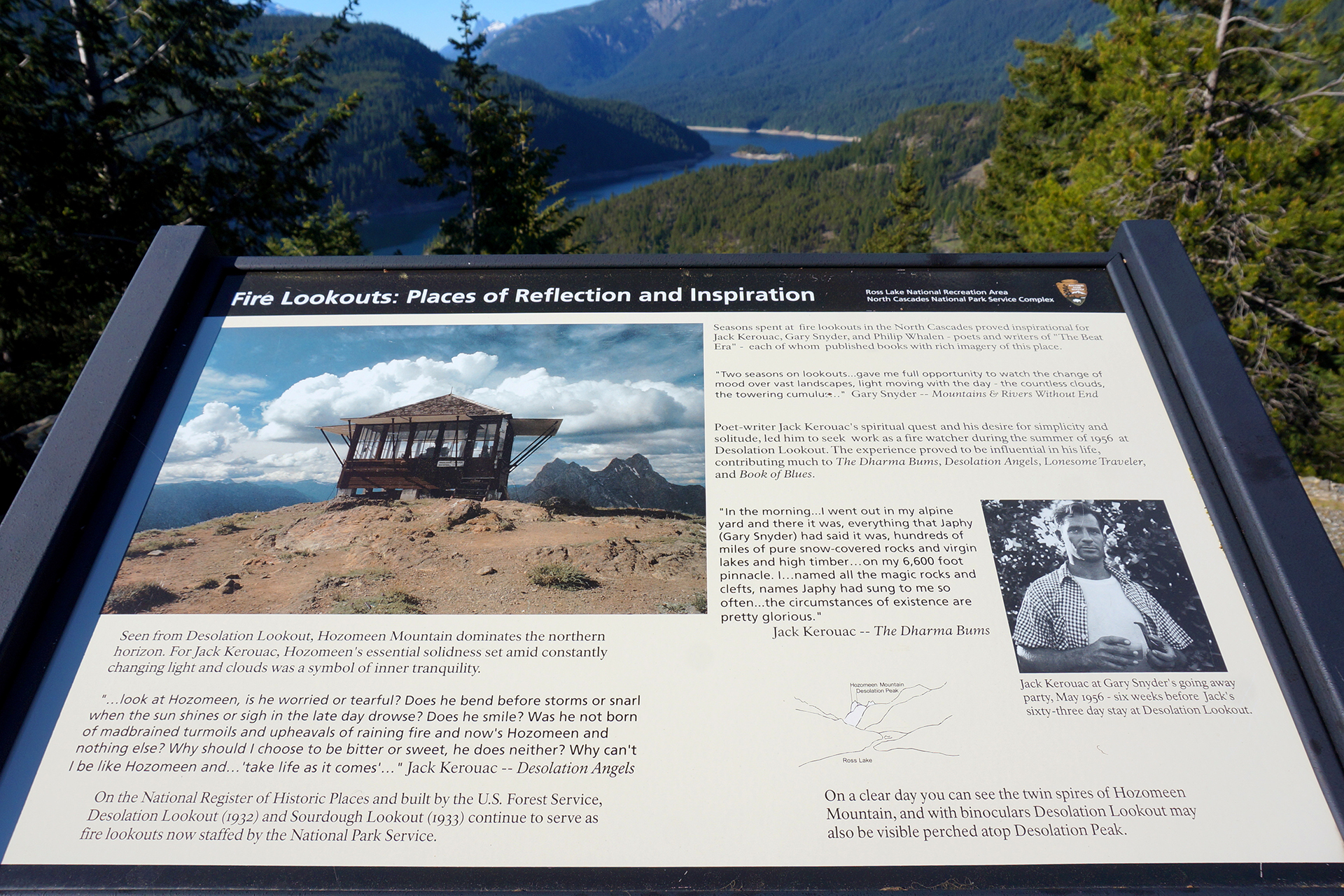
Jack Kerouac once worked as a fire spotter at North Cascades for a few months, at the colorfully-named “Desolation Peak,” and we can see the appeal.  The views here are incredible.  The lakes are bright blue, colored by “rock flour” – stones ground to dust millennia ago by the weight of the glaciers.  Most have since retreated, but the park still holds many of the country’s glaciers.  In fact, in many ways, the park is like a less-developed version of Glacier National Park.

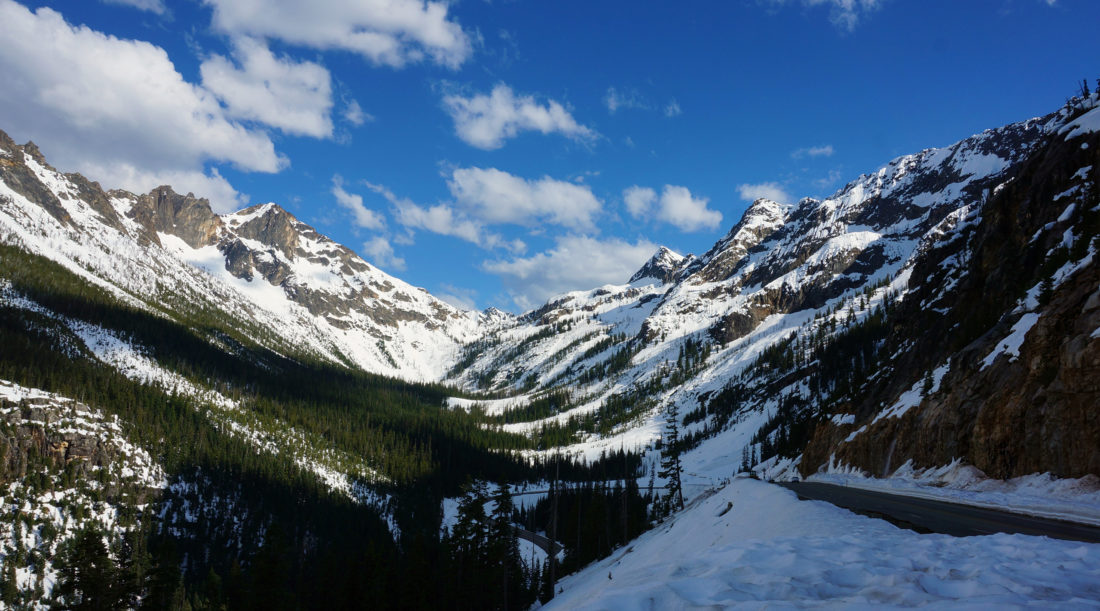
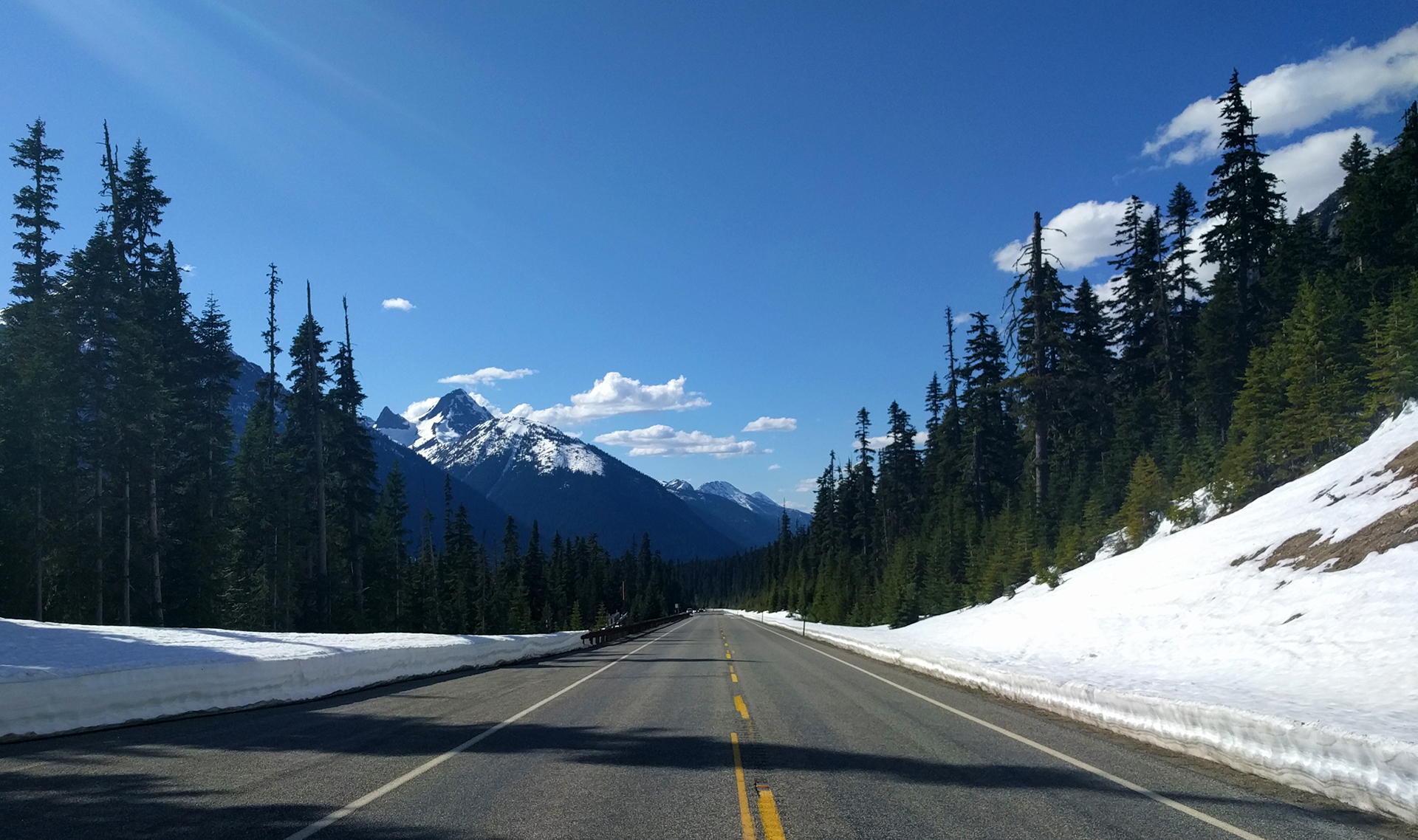
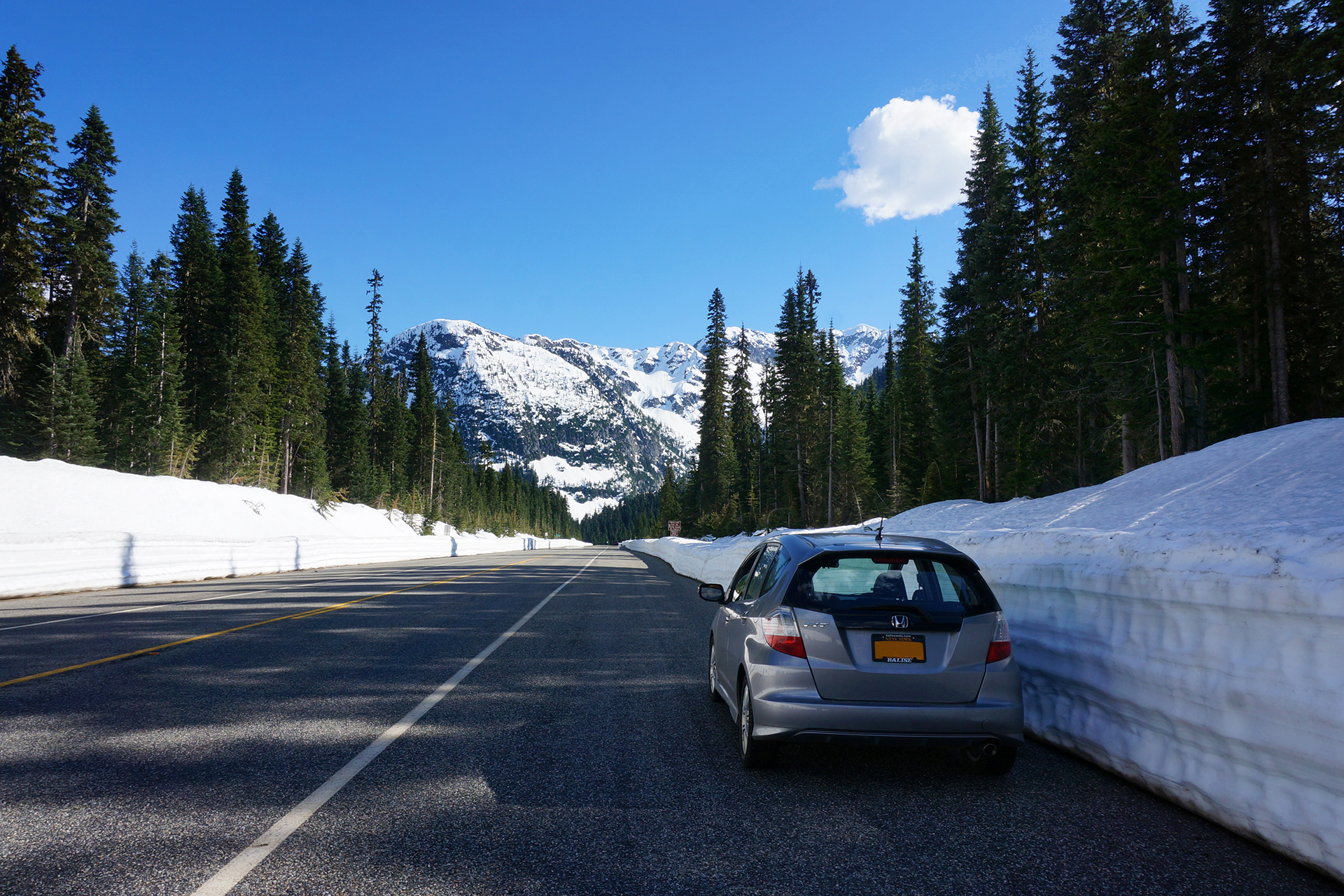
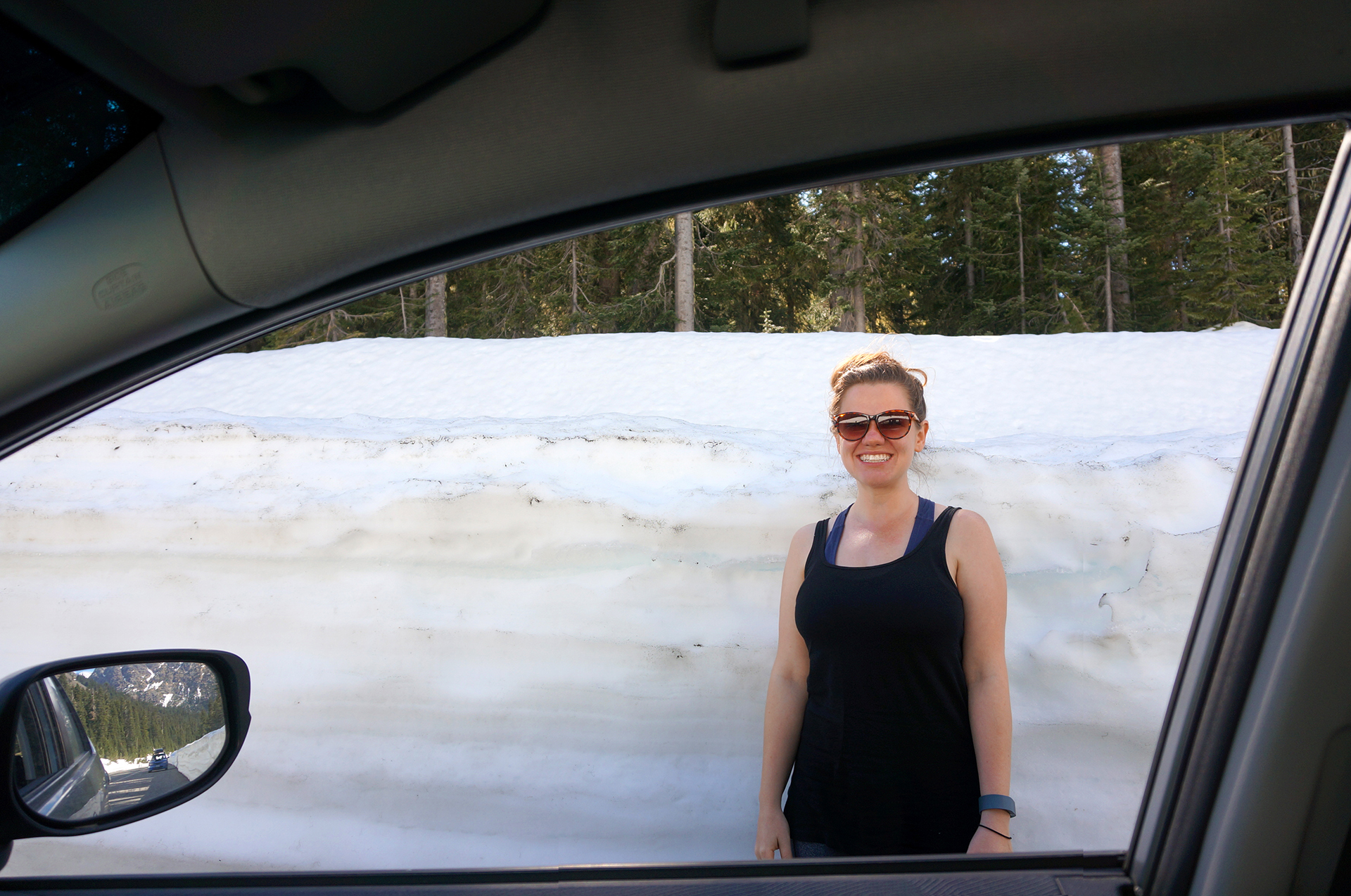
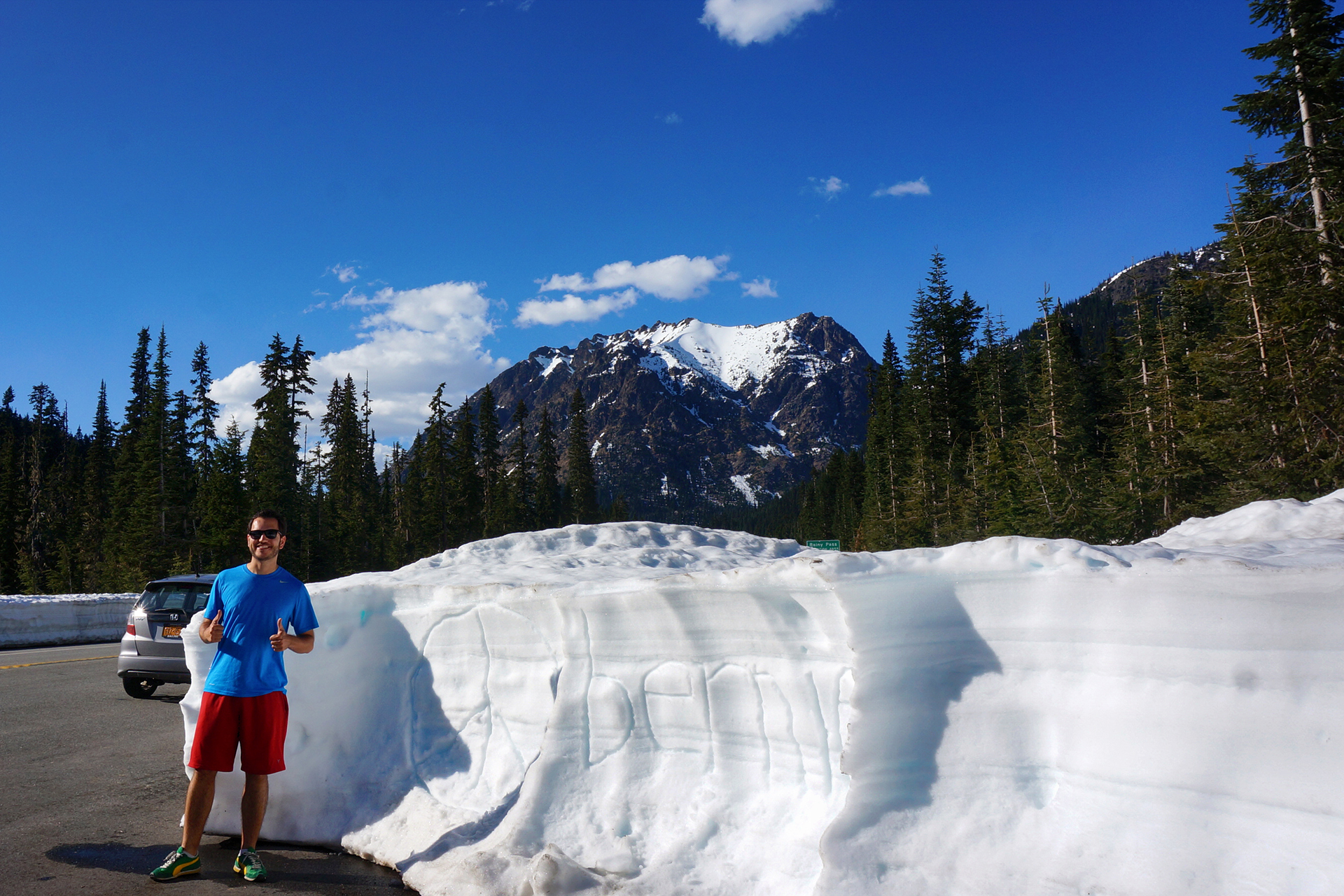
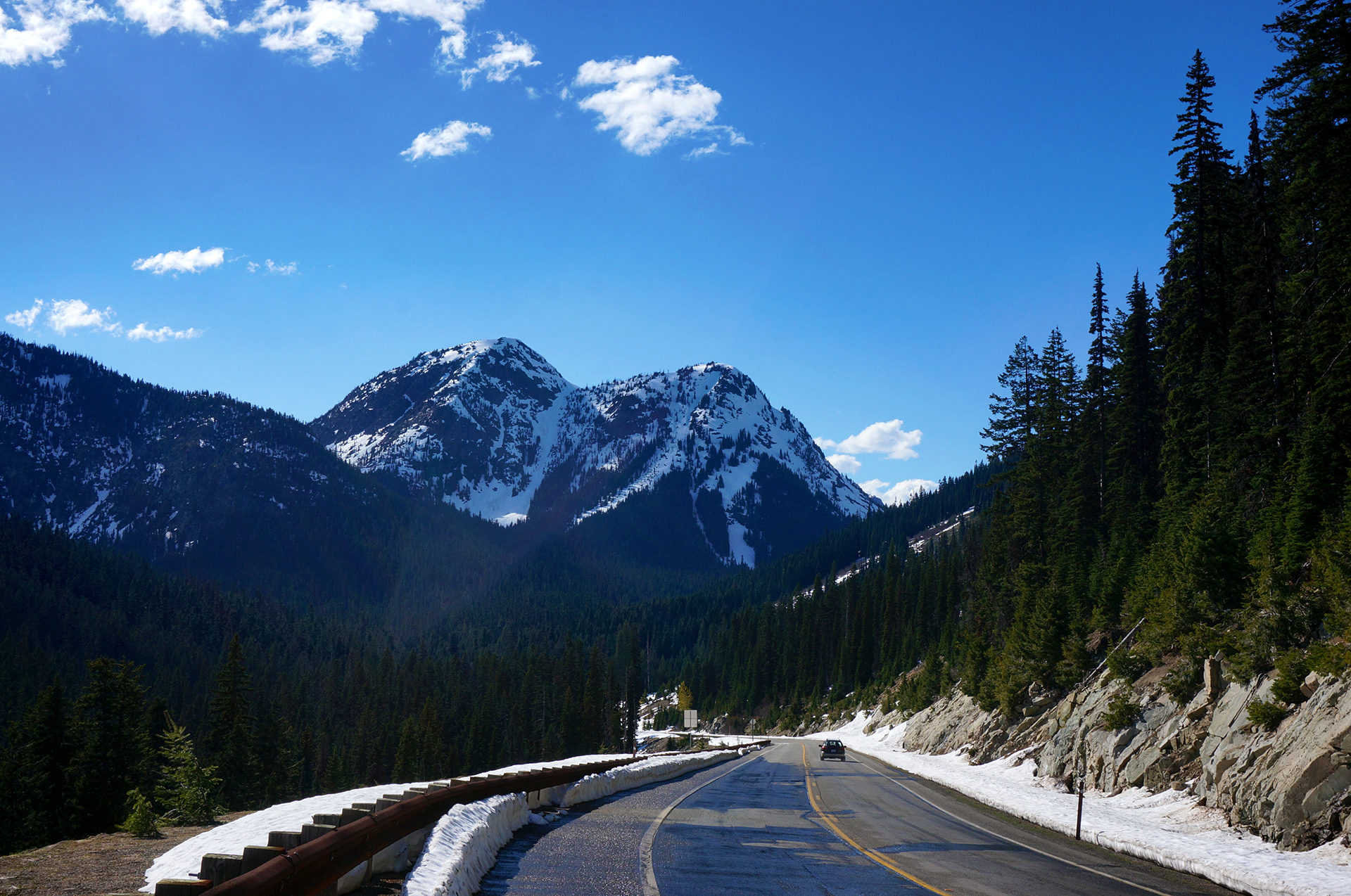
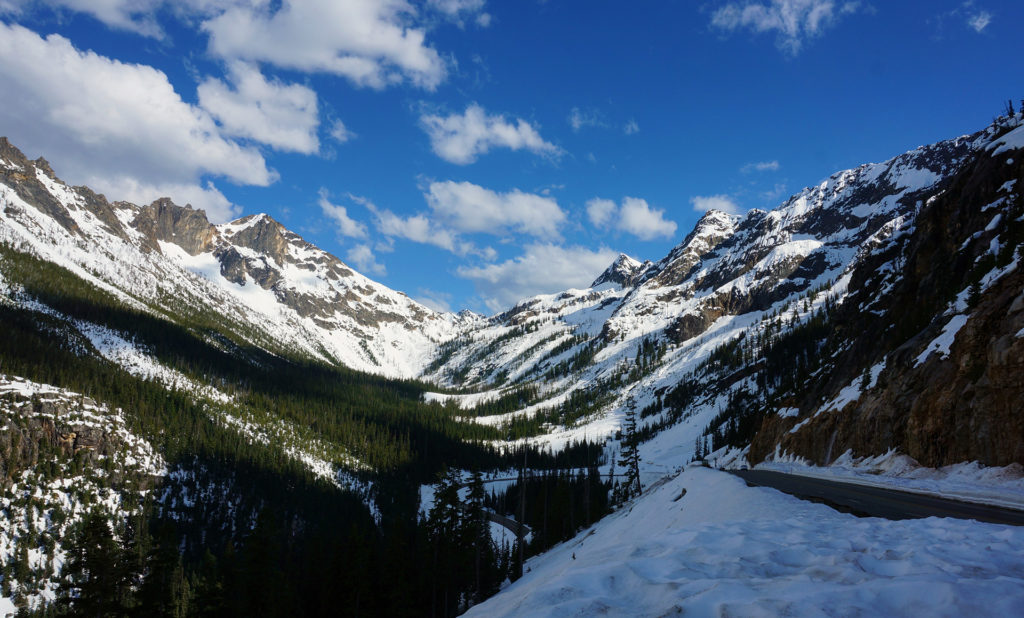
U.S. Route 20 runs through the park, and it had only just opened when we arrived.  We didn’t fully understand why until the road began to climb – and the snow piled up alongside us.  Soon, we were driving past massive snow banks, 10+ feet high, the road cutting sharply through the drifts.  In May.

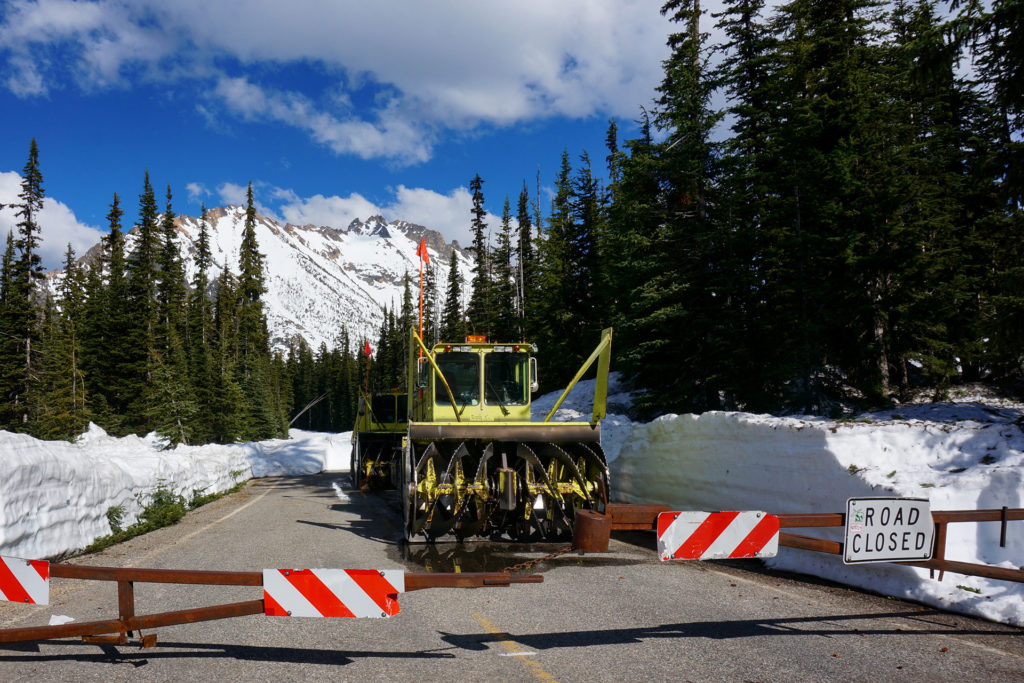
We were wondering about the mammoth job required to clear the road, which can receive up to 40 feet of snow per year and is prone to massive avalanches.  However, when we reached the pass which marked the unofficial end of our scenic drive, we got to see it in action:  the road crews hadn’t quite finished with their snow removal.  The scenic overlook was completely snowed in, with two gigantic plows waiting to finish the job.

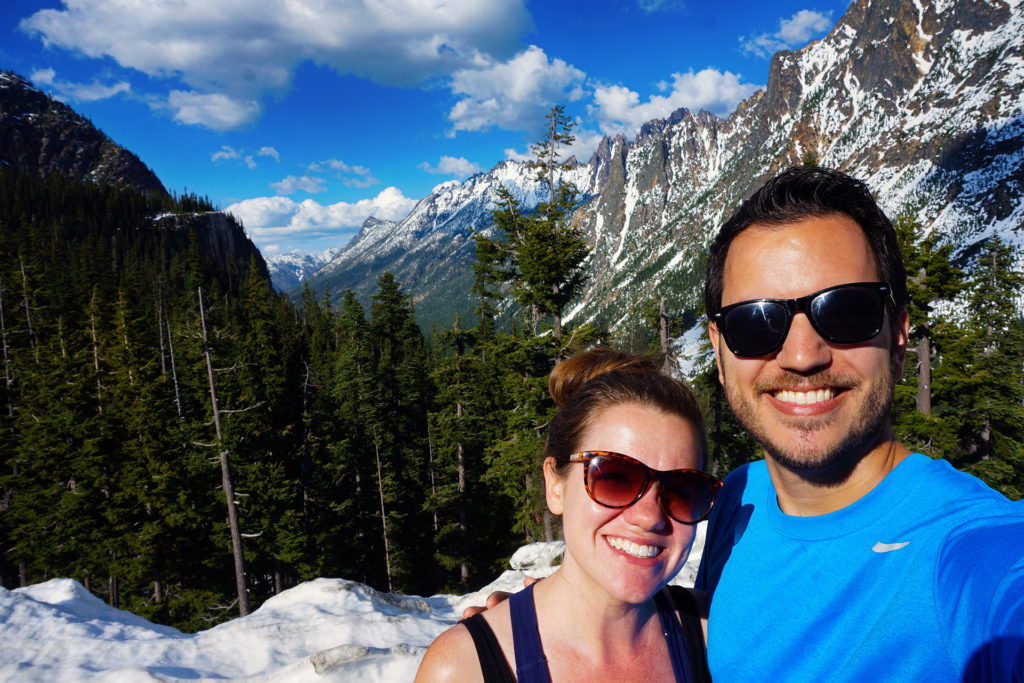
Of course, we had to get a picture.

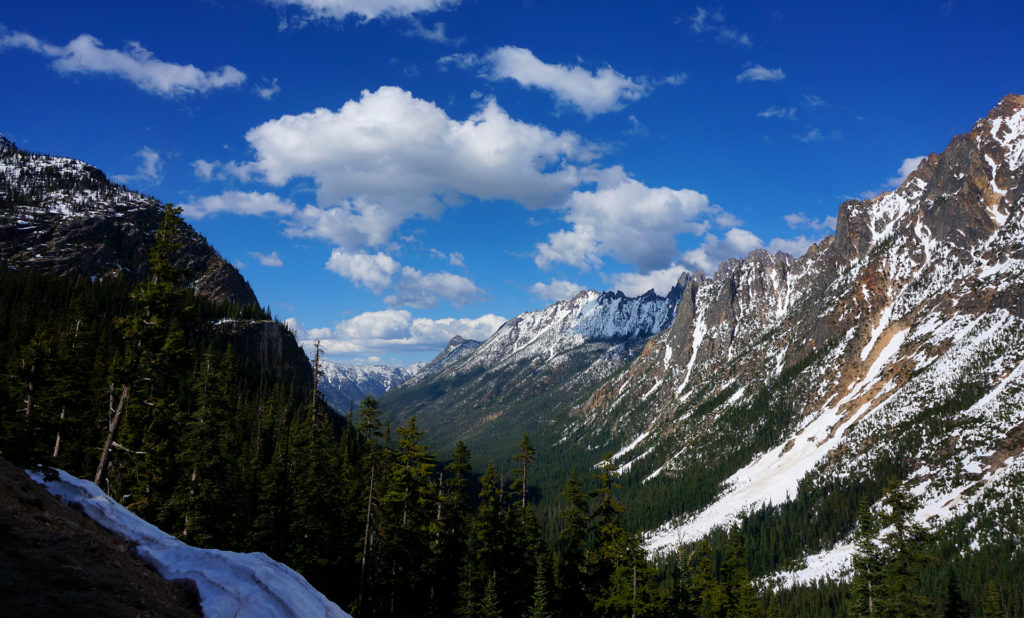
Luckily, a fellow tourist alerted us to an alternative overlook a mile down the road, where we enjoyed a truly epic view.  North Cascades is definitely a “show, not tell,” kind of park, so we’ll leave the rest up to the pictures.

Roadtrip Time Travel

Roadtrip Status

Still alive?  Check.

Where are you now?  “Chicago,” which really means “an hour away from Chicago in Indiana.”

Next location?  TBD.

Follow Us On Social Media
FacebooktwitterinstagramFacebooktwitterinstagram

Latest Posts

0

Week 45: Seattle & Vancouver, Eh?

After an impressive showing by Olympic National Park – which earned a gold medal in “wettest national park” and a bronze in “most deserted” – we headed east to Seattle.  With a tour guide assist from a friend, the Emerald City turned out to be a pretty excellent place – as was Vancouver, its friendly neighbor to the north.

Pacific Northwest, you’ve got it going on.

Seattle’s Best

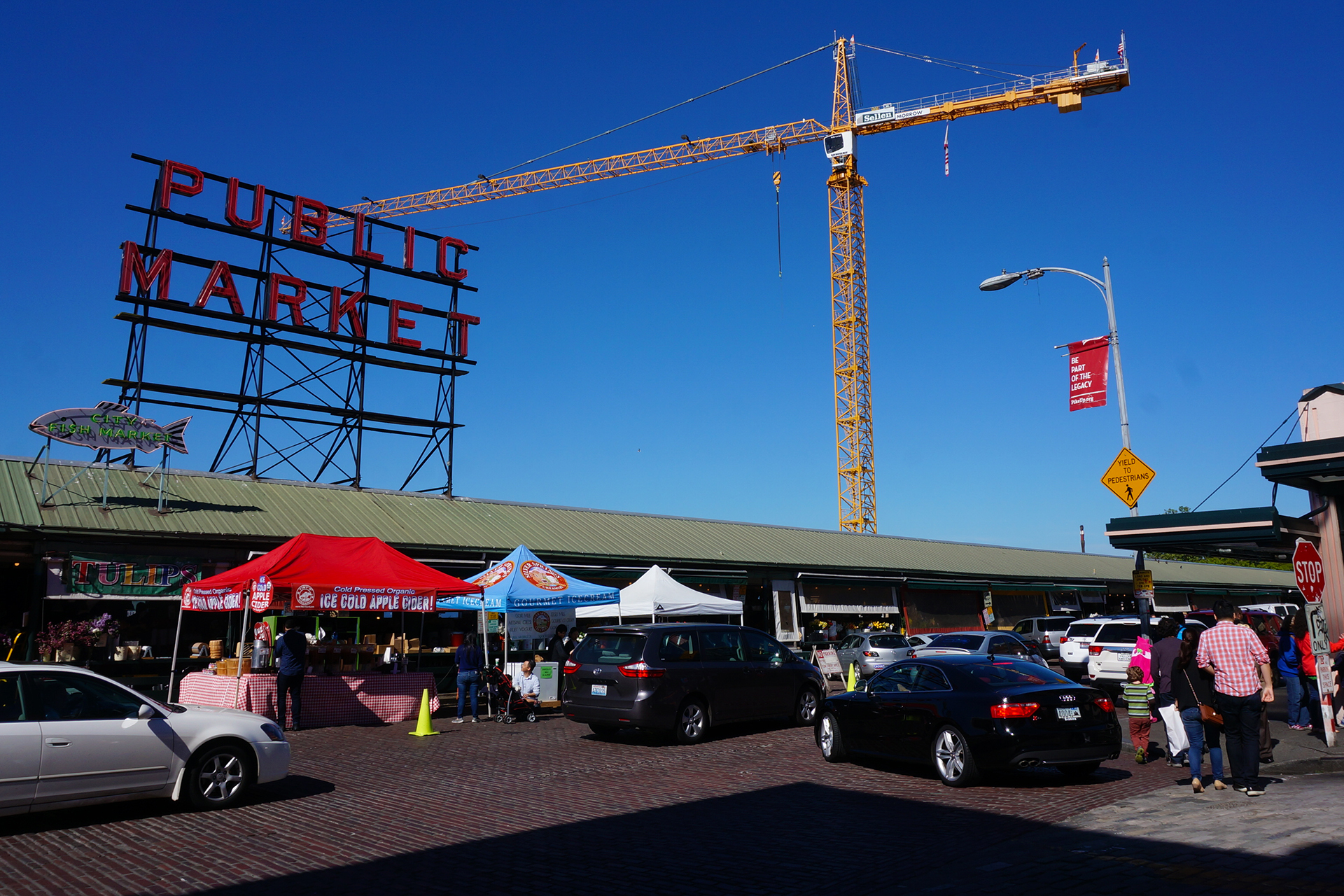
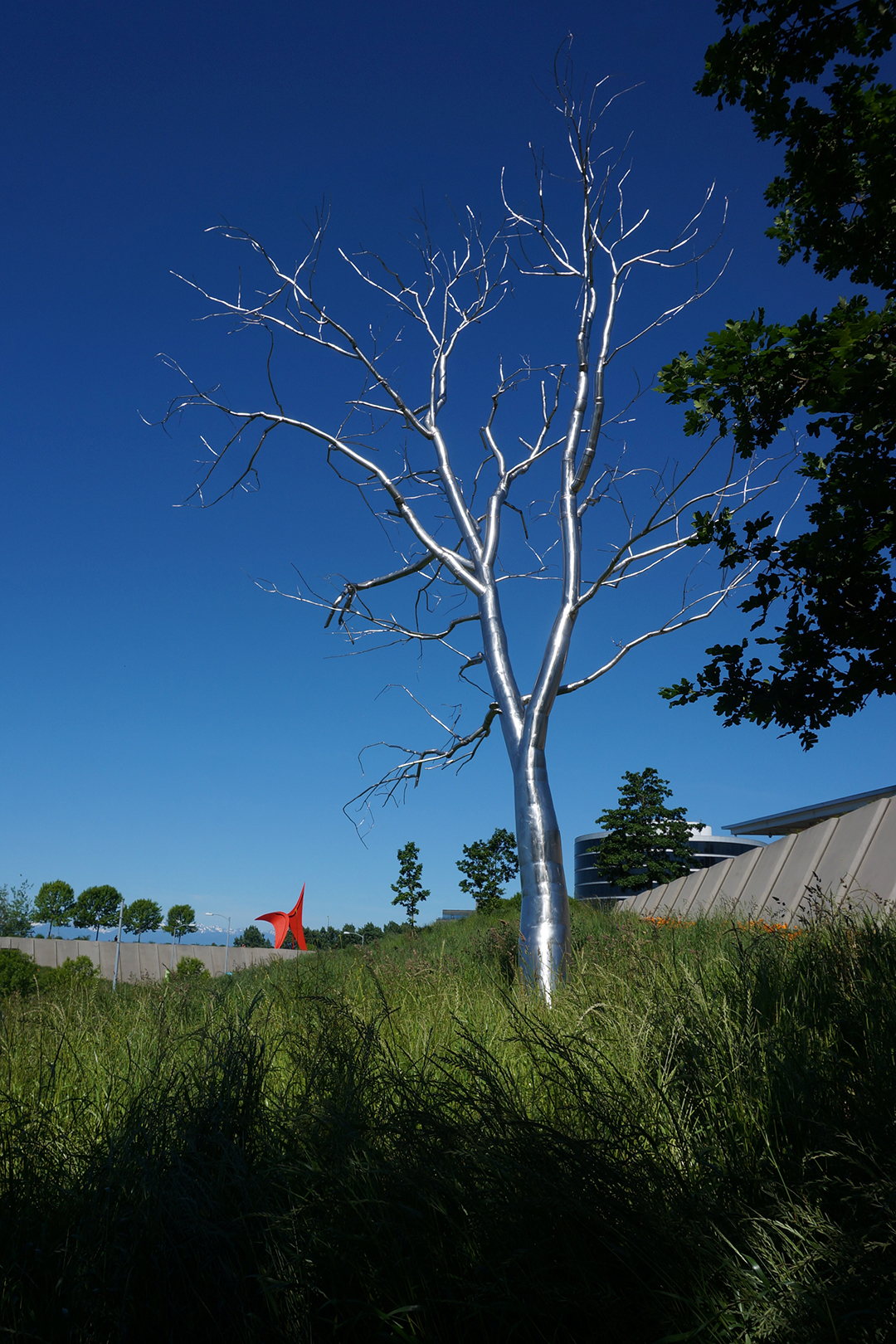
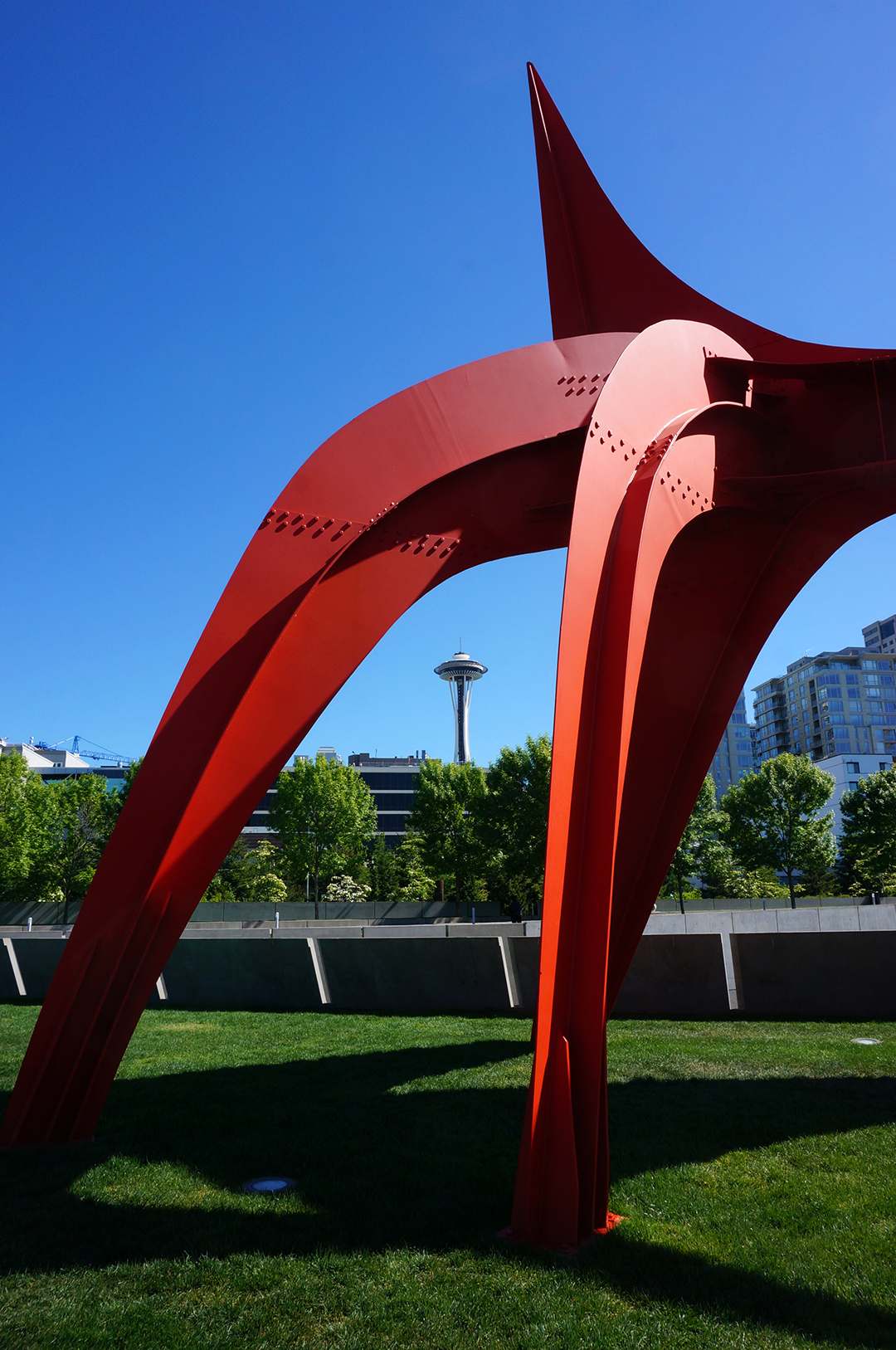
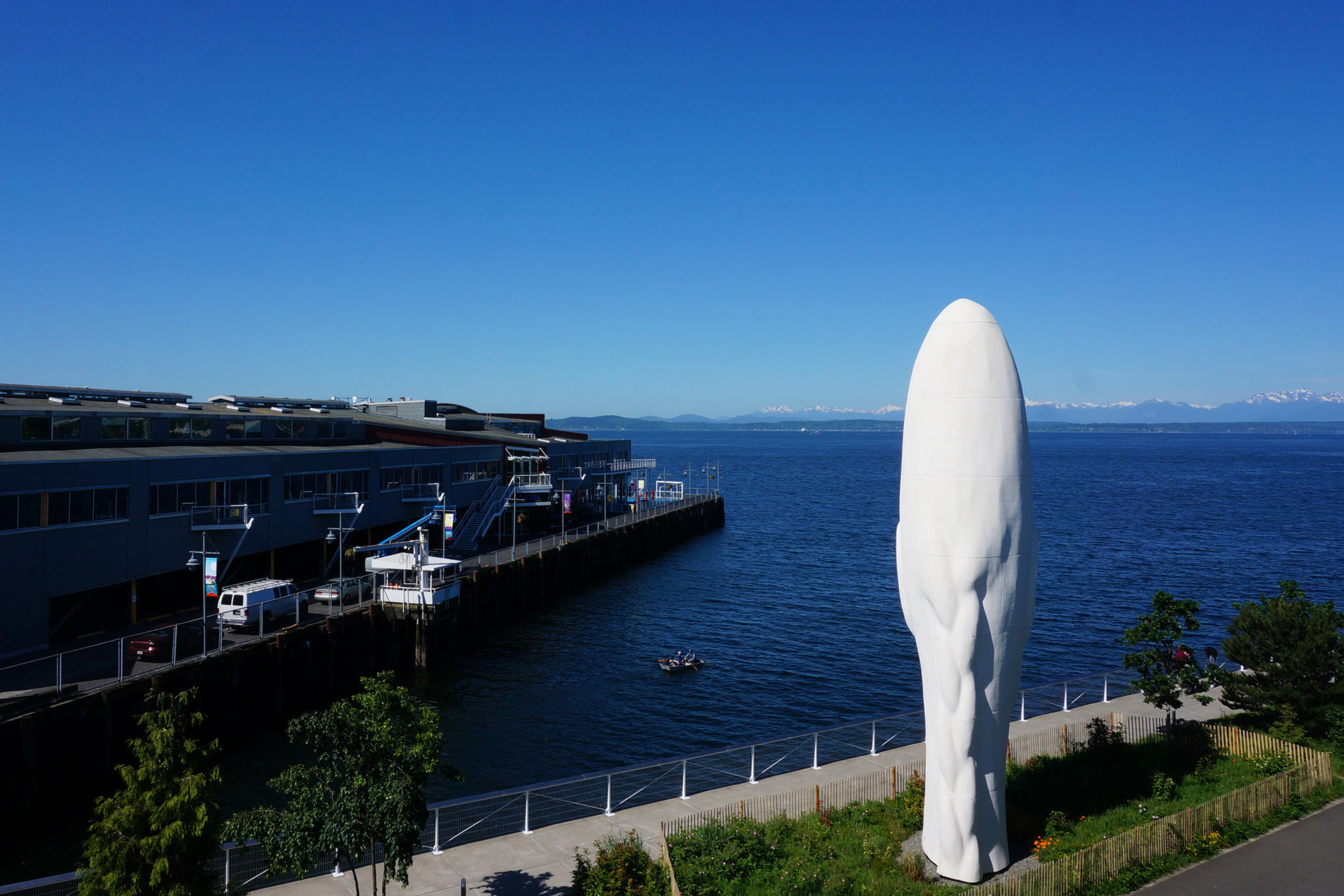
Since we were staying fairly far away from the city center, we decided to tour Seattle in one epic day, just as we did for other favorites like San Francisco and Savannah.  We started out early with some pastries from Pike Place, the famous fish market (it has lots of other types of shops as well), and then wandered around downtown for a bit, enjoying the quiet before the city woke up.  A particular favorite was the Olympic Sculpture Park.

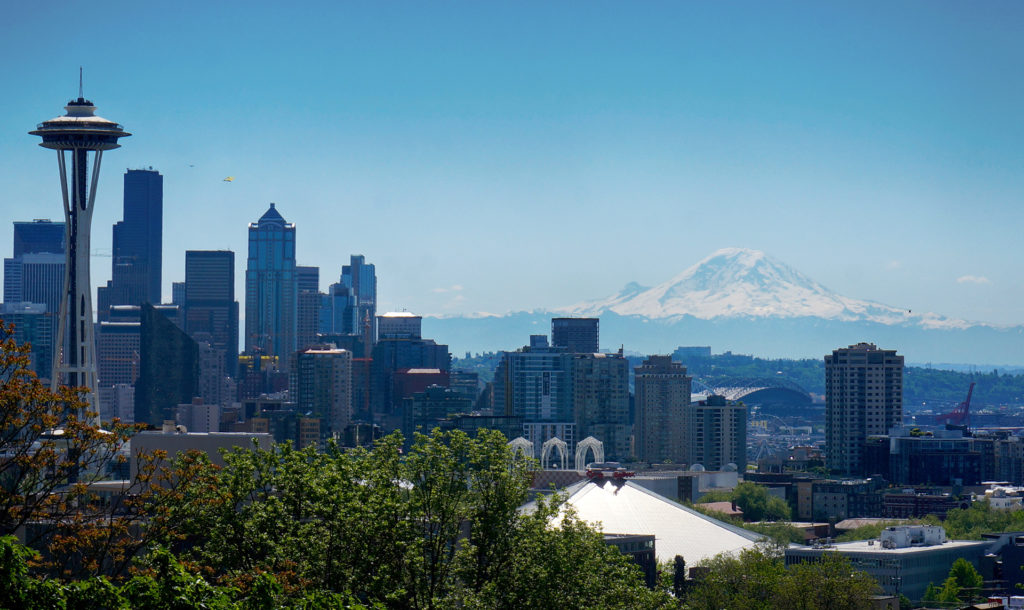
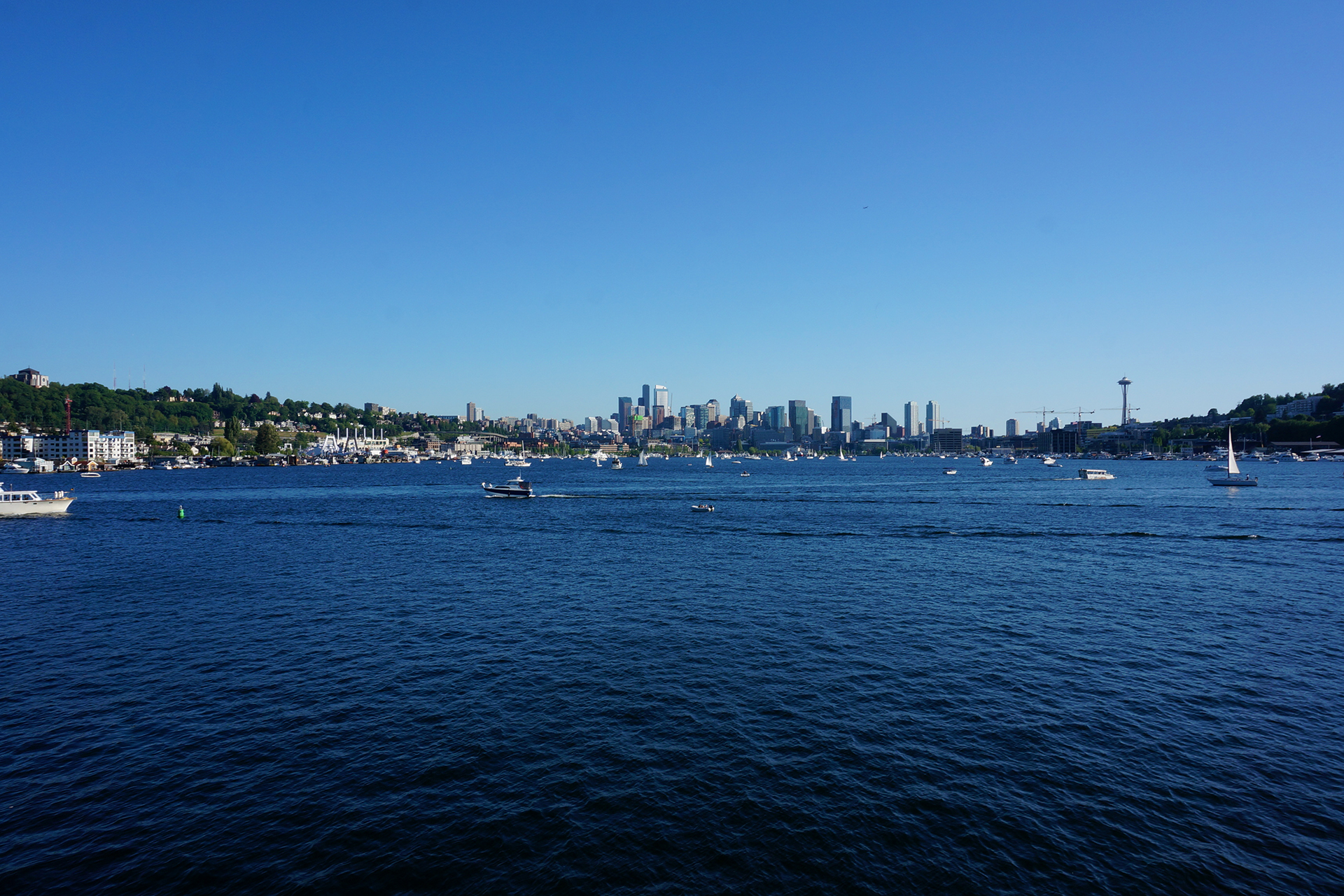
We then tried to stop by the Space Needle, but sweet zombie Jesus it was crowded.  So we bailed, and made up for at an excellent overlook in a tiny city park.  In the background, you can even see the iconic Mt. Rainier.

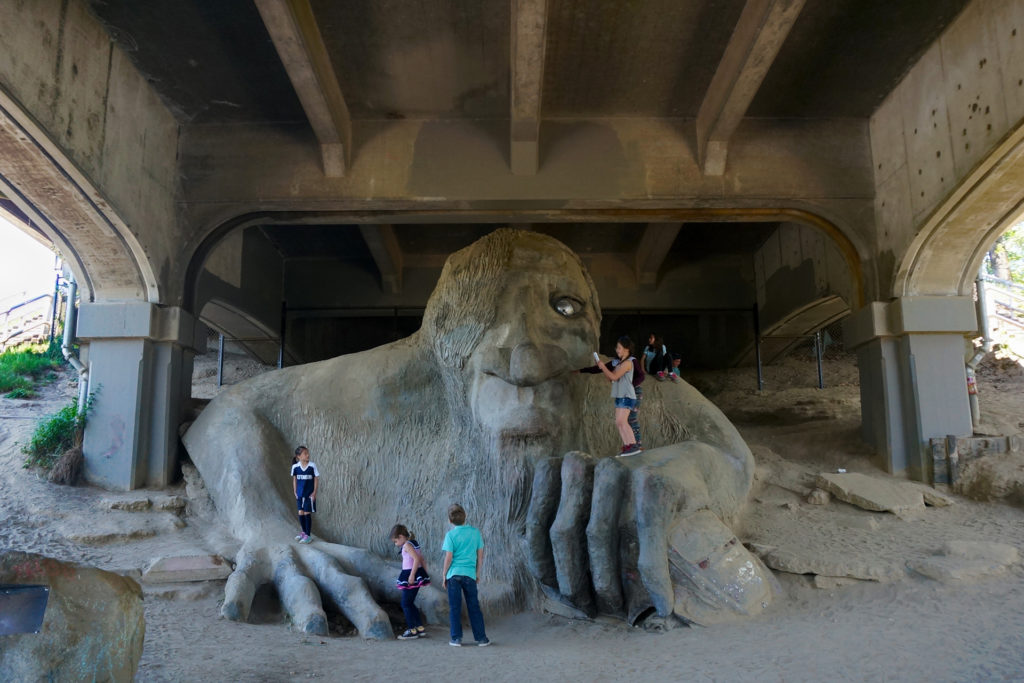
Soon afterwards, we met up with Eliz, Jake’s old law school classmate, and her husband Rick.  Rick and Eliz graciously volunteered to give us a tour of Seattle, and just like our “local’s tour” in Los Angeles, it was fantastic.  There was some touristy stuff, like the Fremont Troll (located under a bridge, of course), but we also enjoyed just wandering around the neighborhood and a local marina.

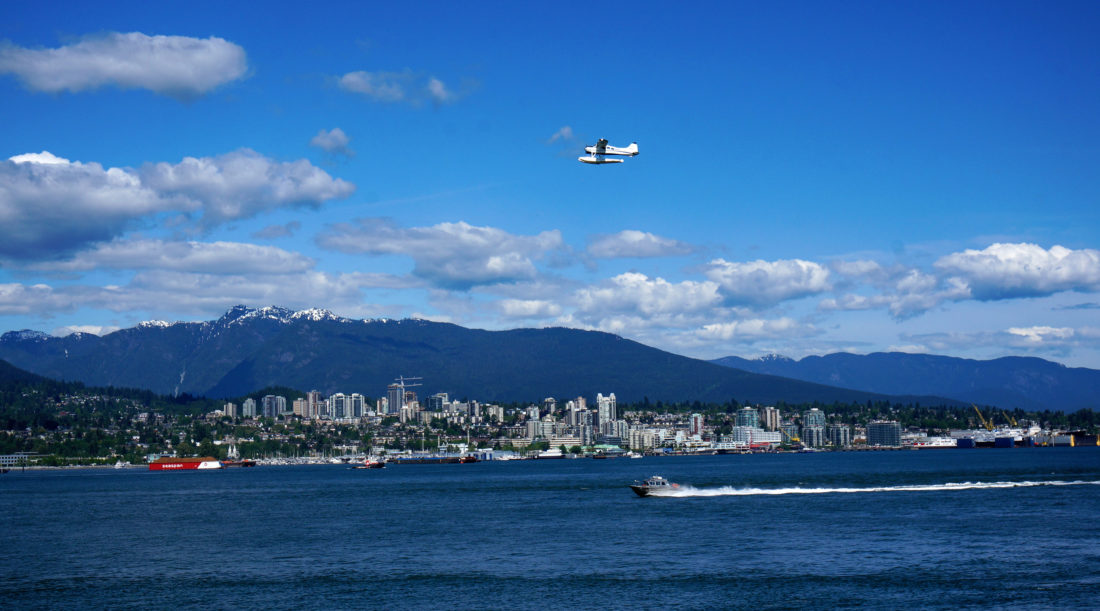
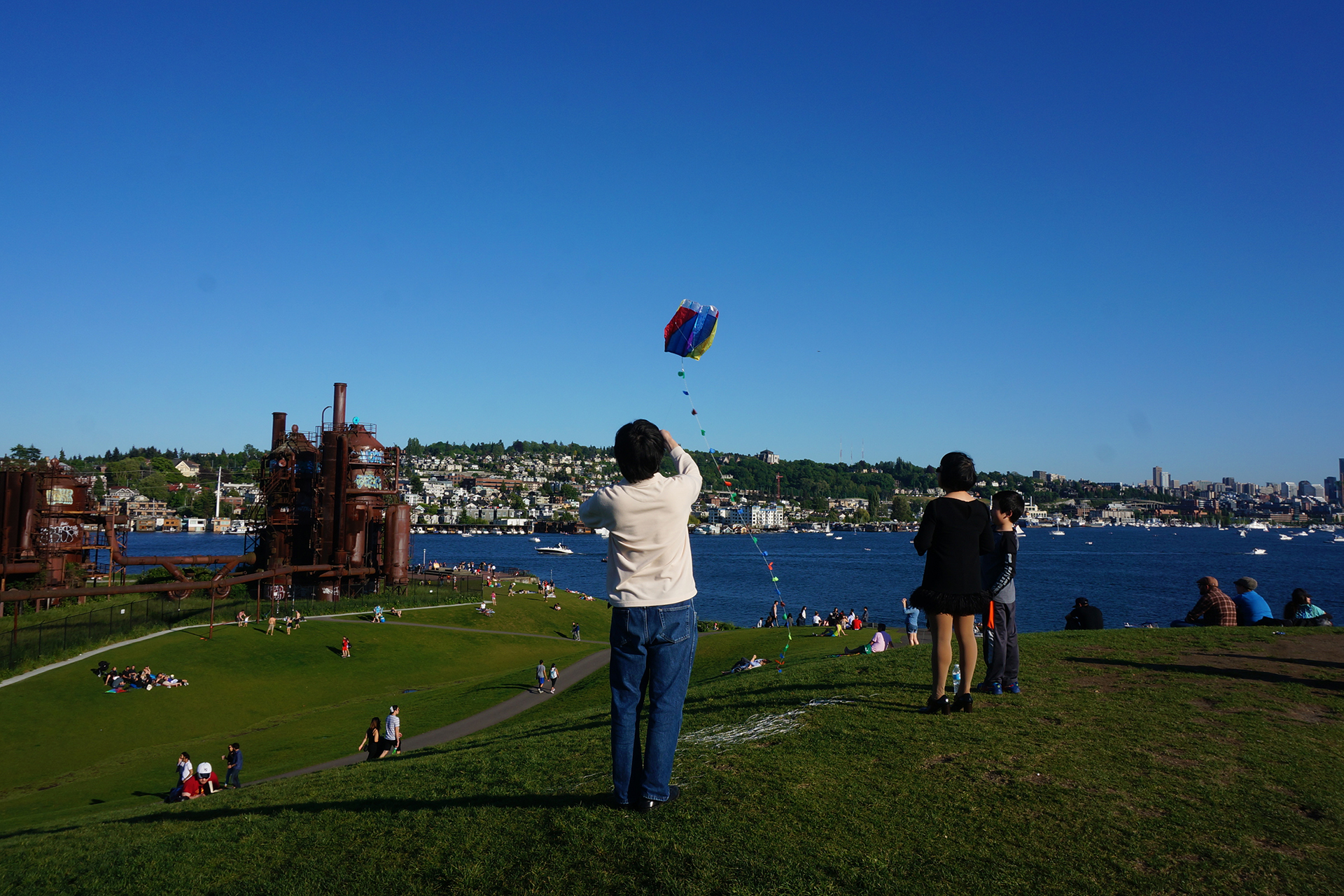
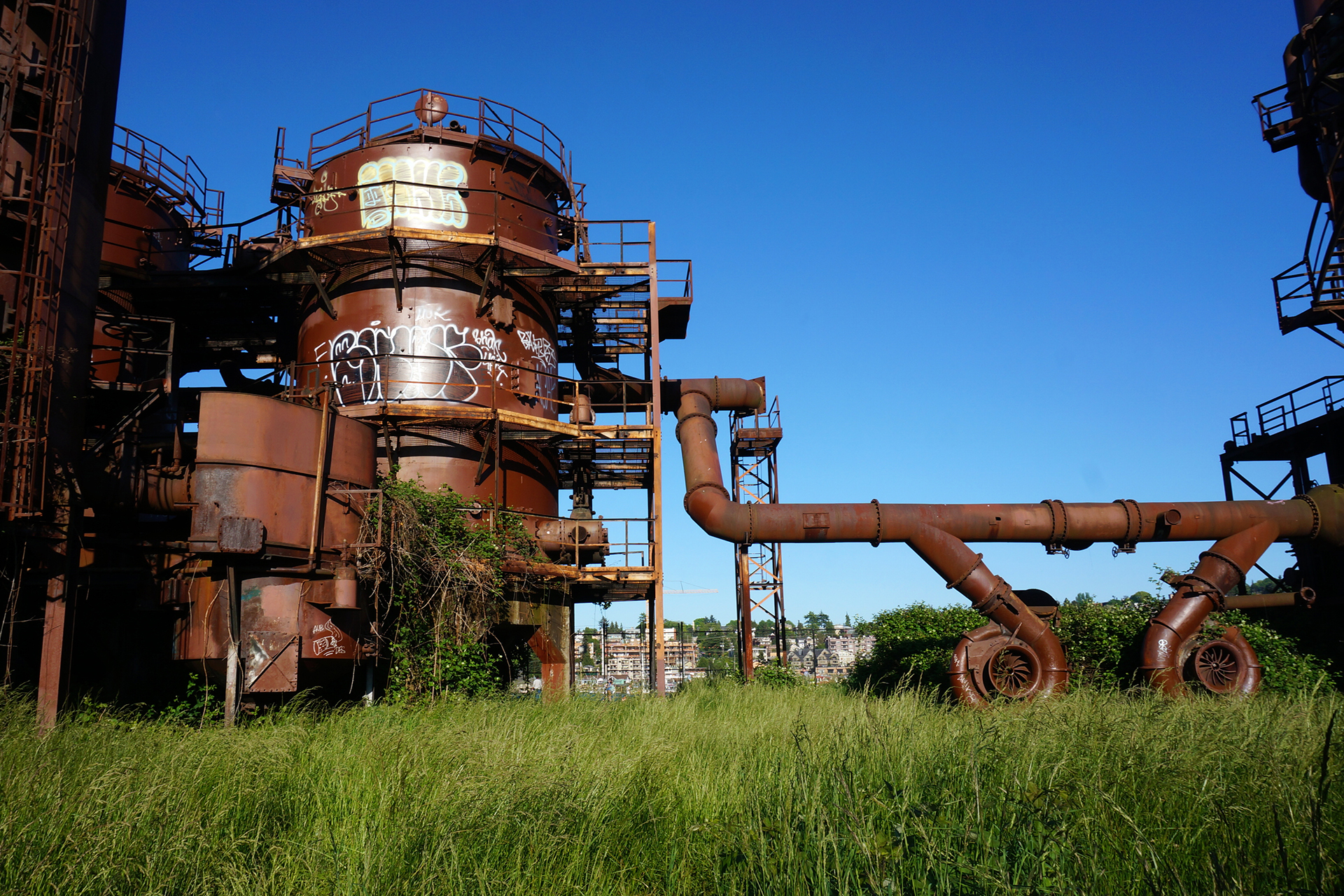
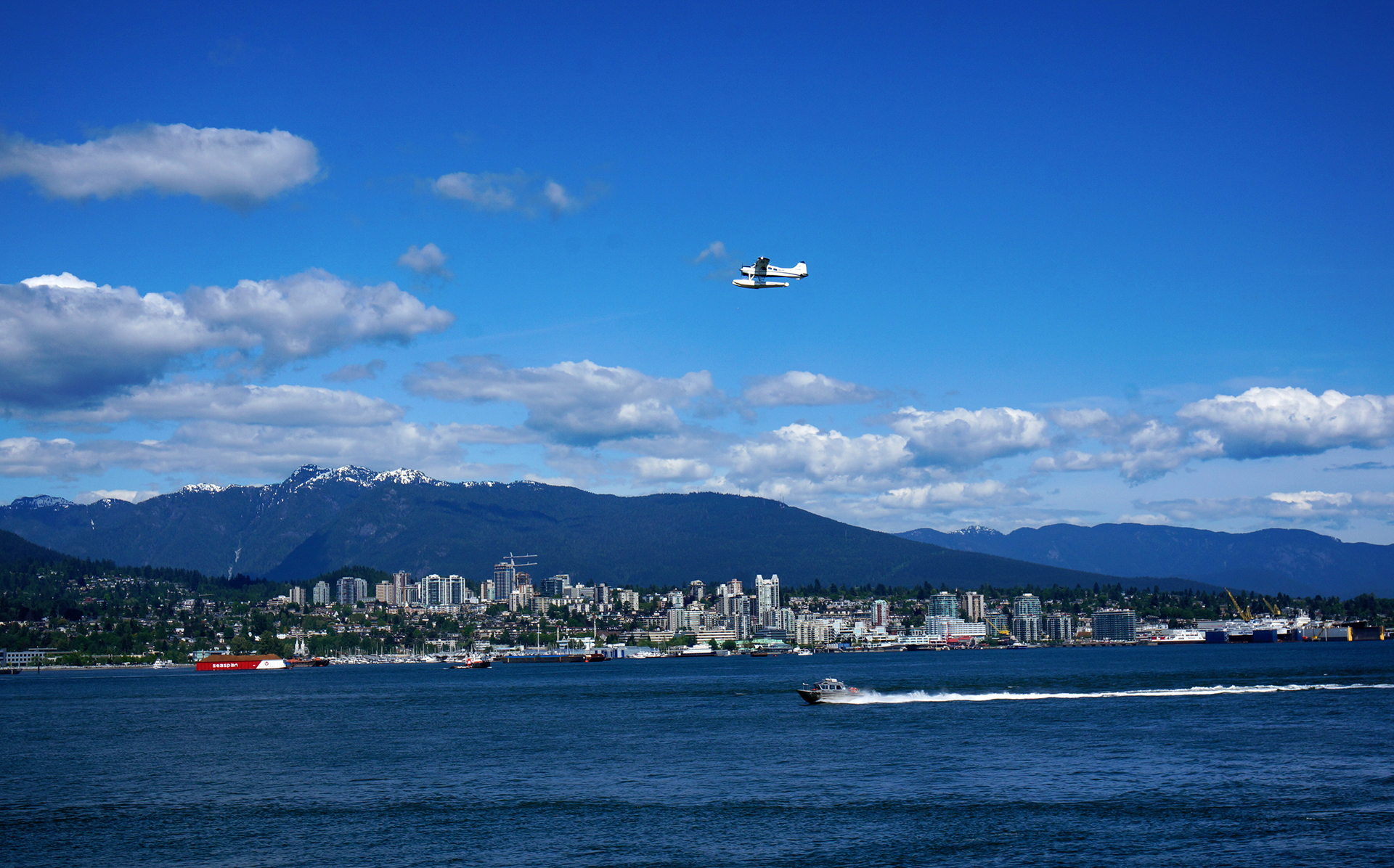
The weather was beautiful, so we picnicked on the beach with awesome Cuban sandwiches and freshly shucked oysters.  Later, we headed to a brewery – one of, like, fifty in a four-block radius – and the superb Gas Works Park, created on the site of an old industrial building.  On such a nice weekend, the harbor was busy with boats and kayaks, but we watched in amazement as a Tailspin-style seaplane nonetheless landed on a tiny patch of open water directly in the center of all the activity.

This is apparently pretty common, but, man – gutsy maneuver, for everyone involved.

We finished the day off with some incredible sushi and a drink that was, essentially, alcoholic green tea.  Thanks for showing us an amazing time, guys!

International Suspension

Speaking of day trips to big cities, we decided to hit up Vancouver while we were “in the area,” i.e., about ninety minutes away.  This was actually our first time leaving the country on this road trip, despite being within spitting distance to Mexico in both El Paso and San Diego, but everything went smoothly.

Well, mostly smoothly.  We stopped in Vancouver’s Chinatown to eat lunch, but when we went to pay at the parking meter, we suddenly remembered that… Canada has its own currency.  Oh, right.  Coincidentally, all of our debit cards had just expired and we hadn’t yet received the replacements, so an ATM was out, and Heather ended up circling the block while Jake made a quick exchange at a local bank.

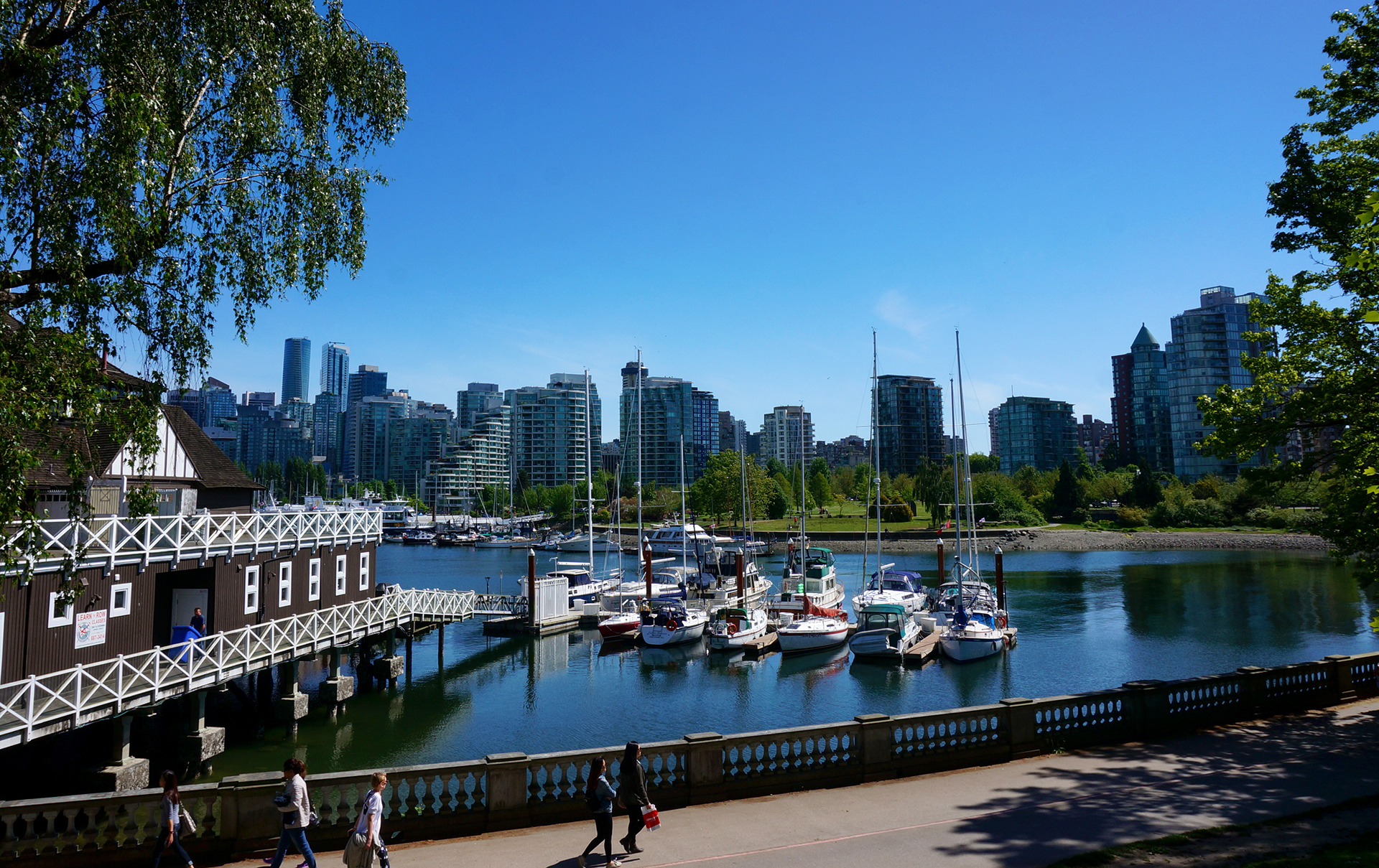
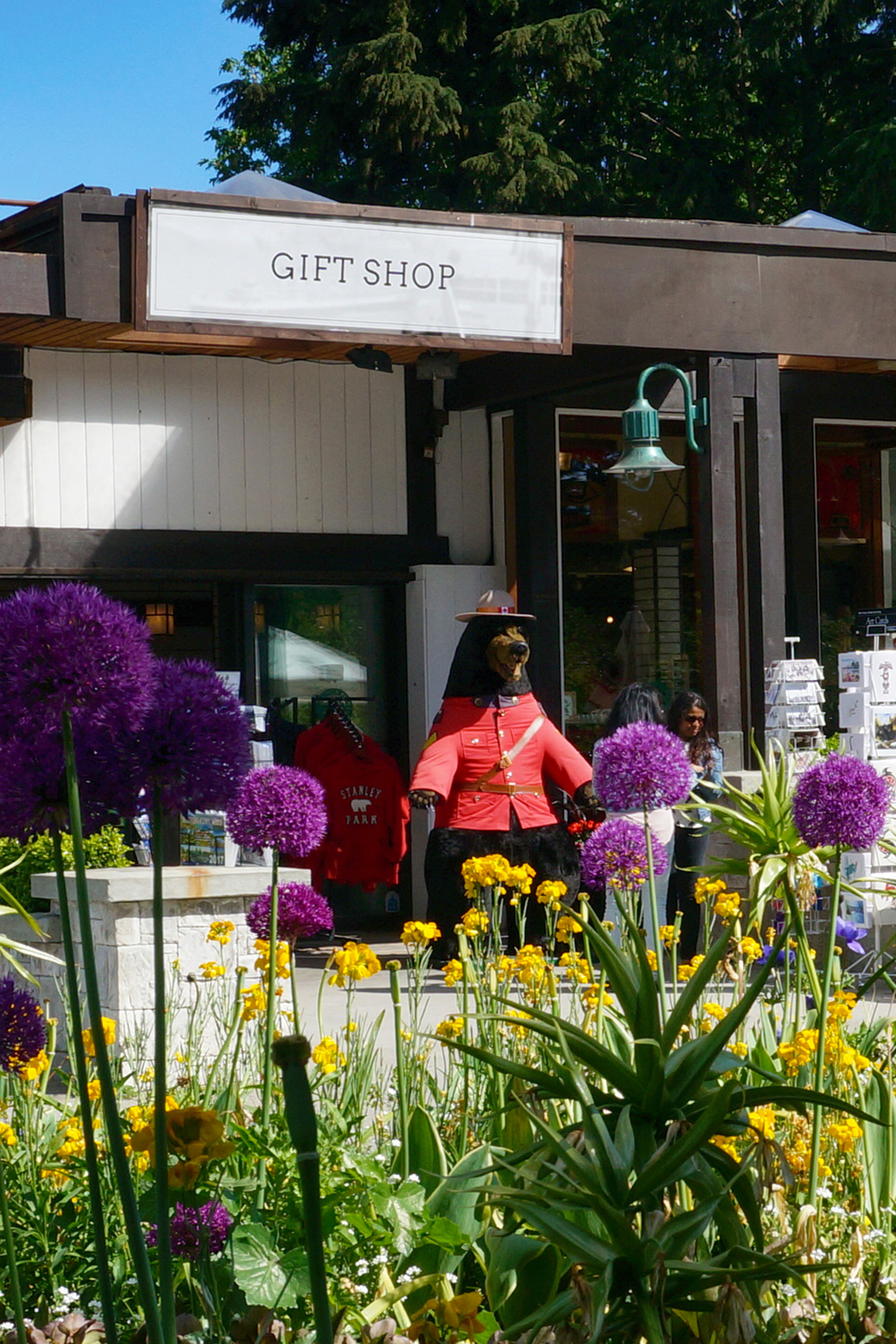
After lunch, we toured around downtown before checking out the Lions Gate Bridge and Stanley Park.  Stanley Park is a gorgeous area with a great view of the downtown skyline – a view that we got to see twice, since we totally missed the exit from the 15-minute, one-way scenic drive on our first attempt.

As we said… mostly smoothly.

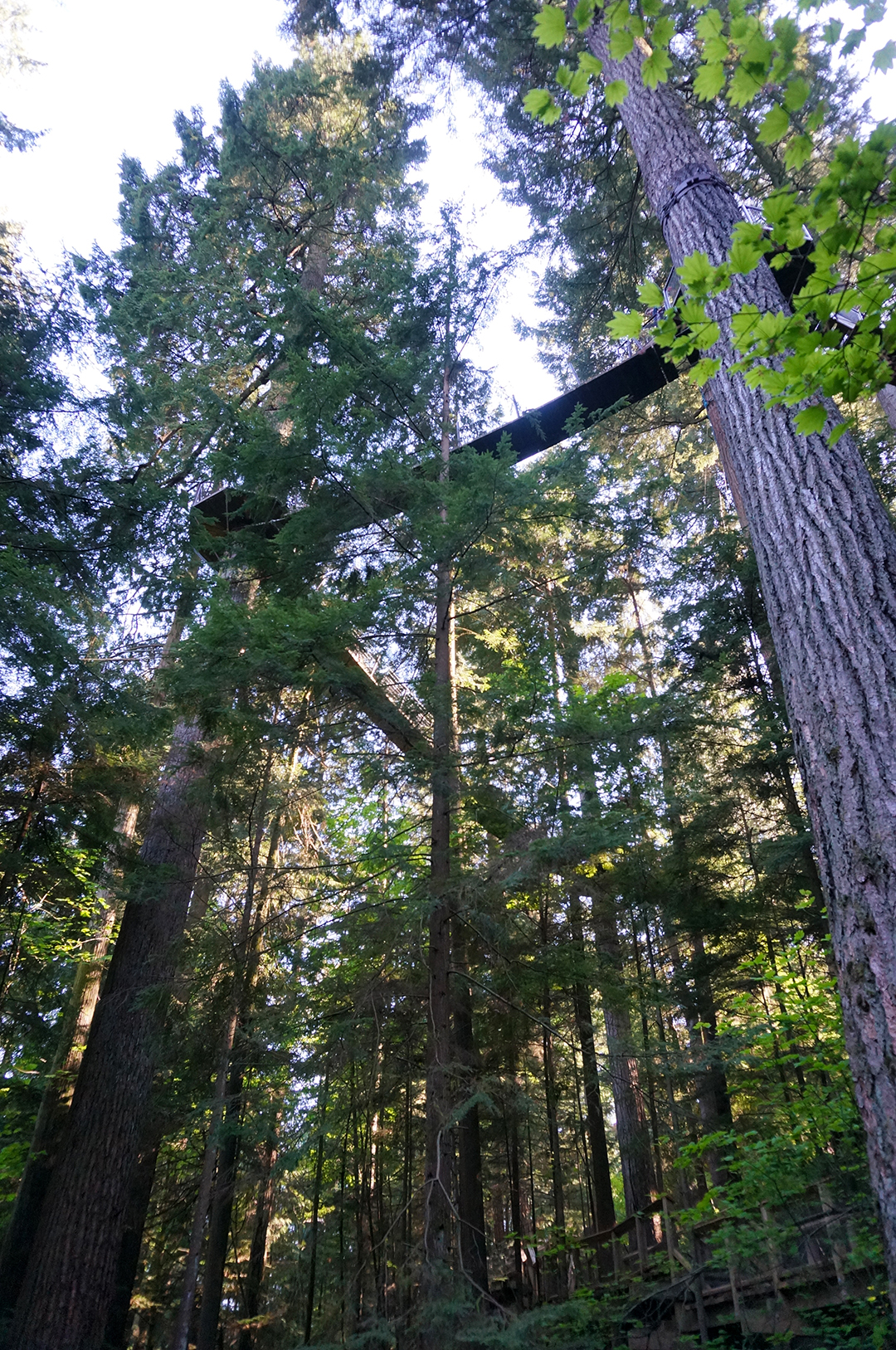
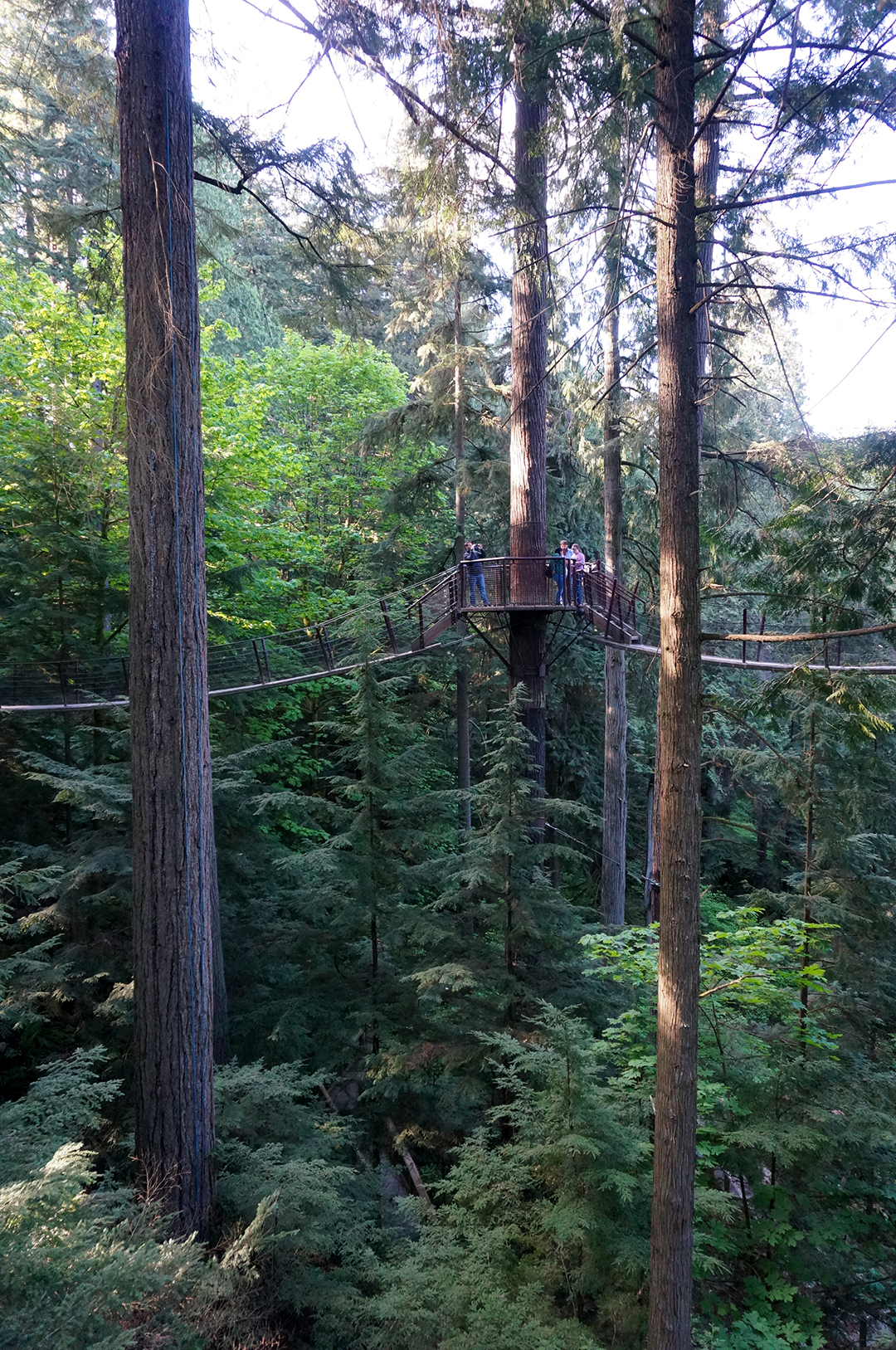
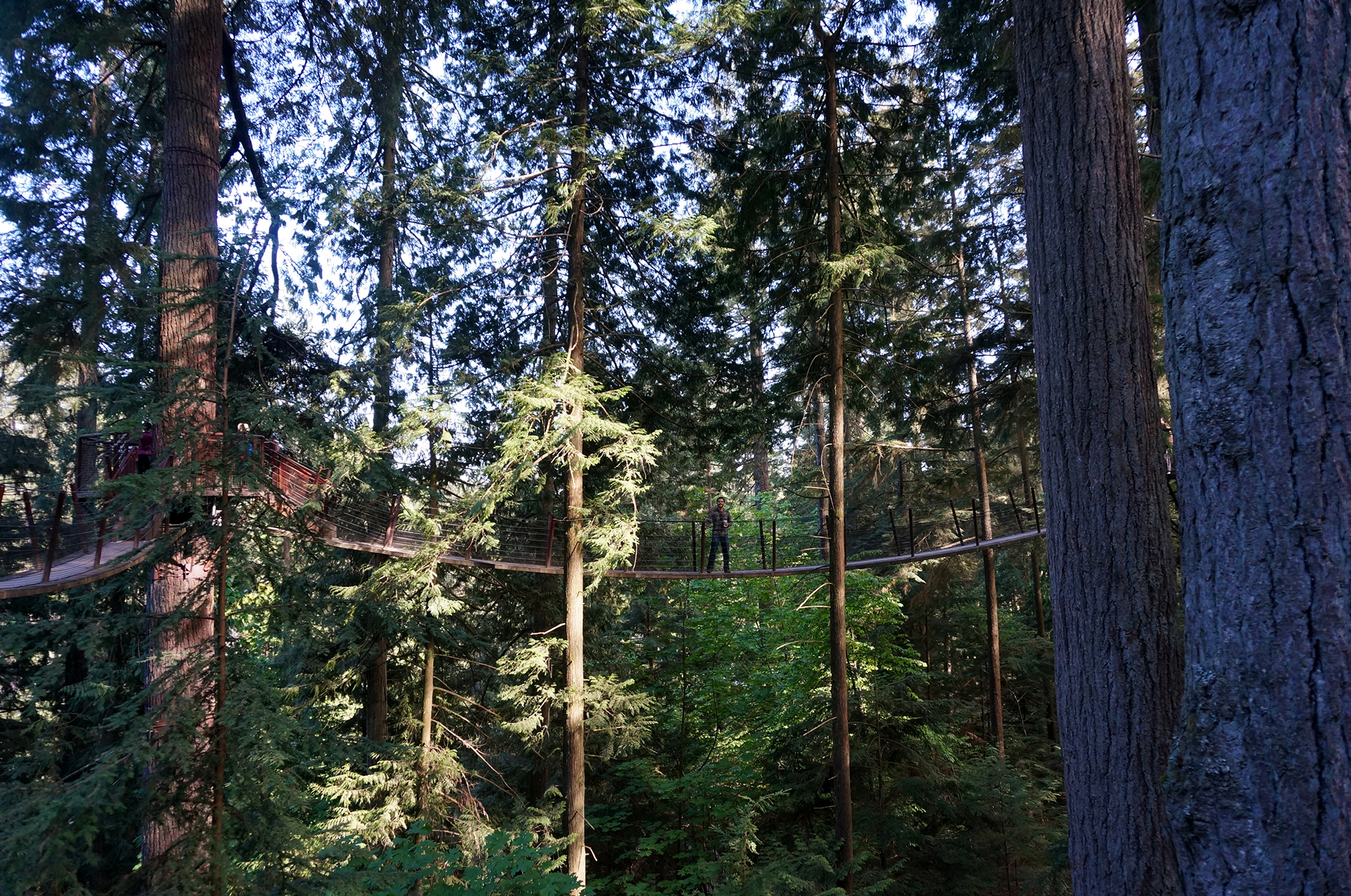
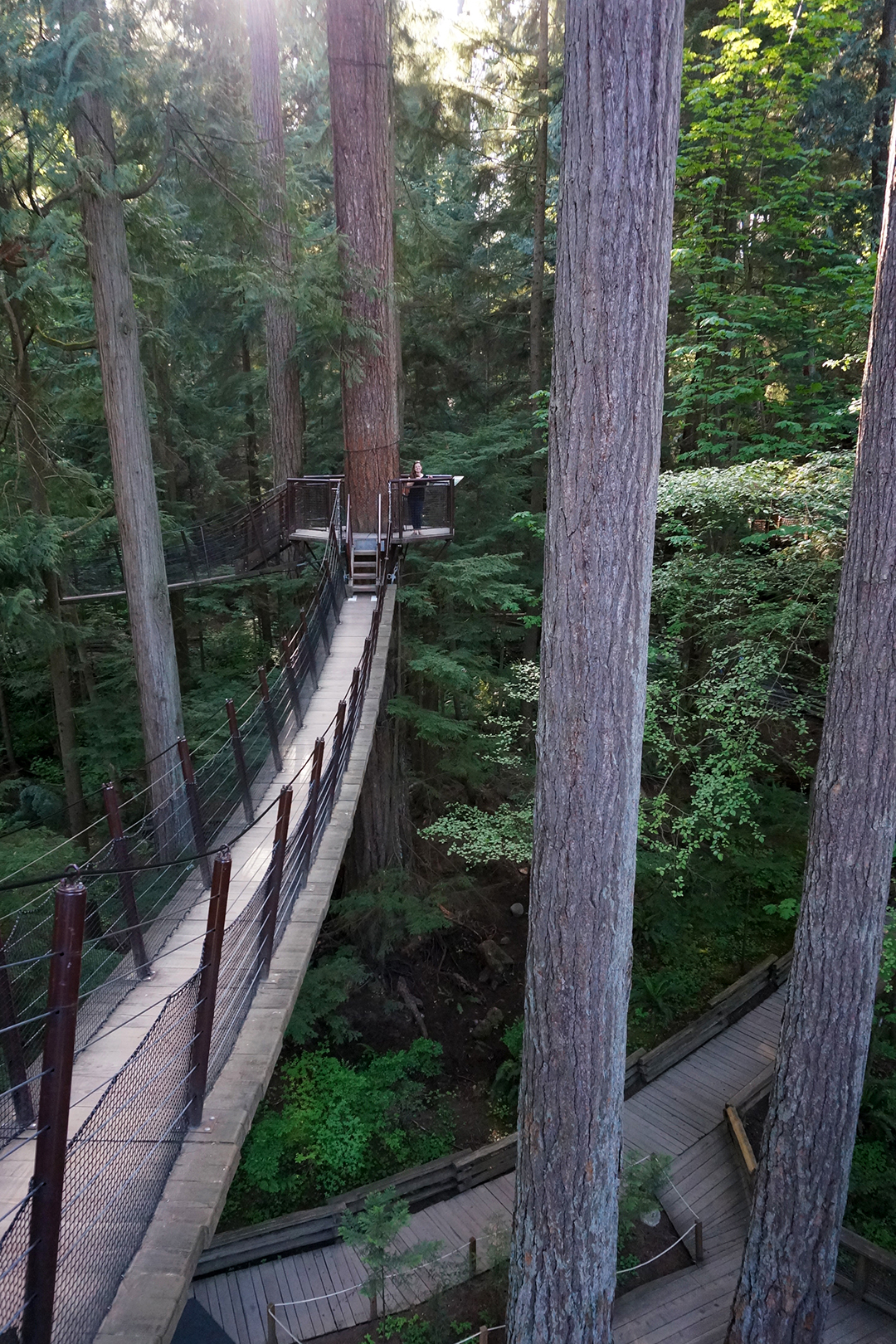
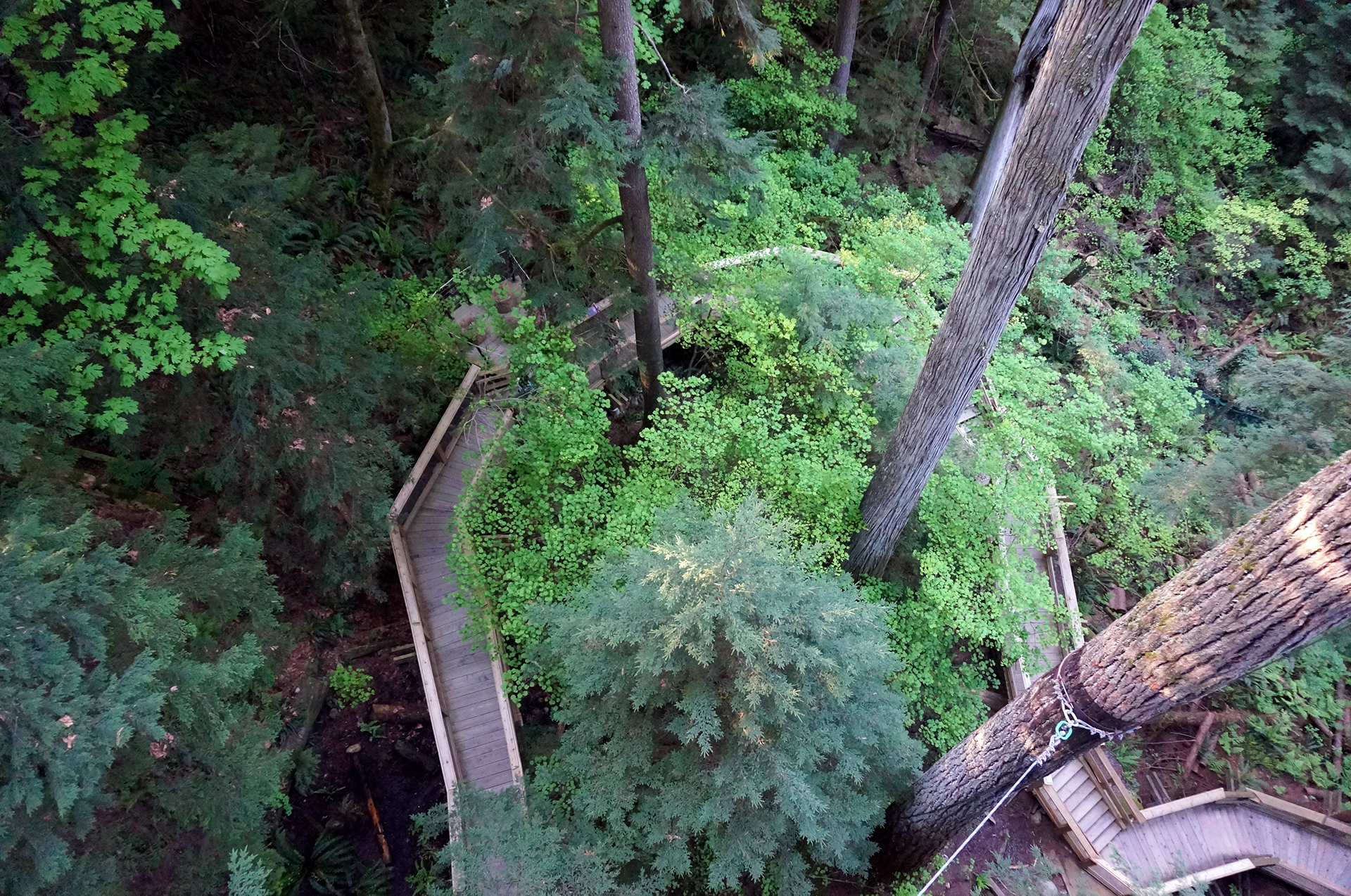
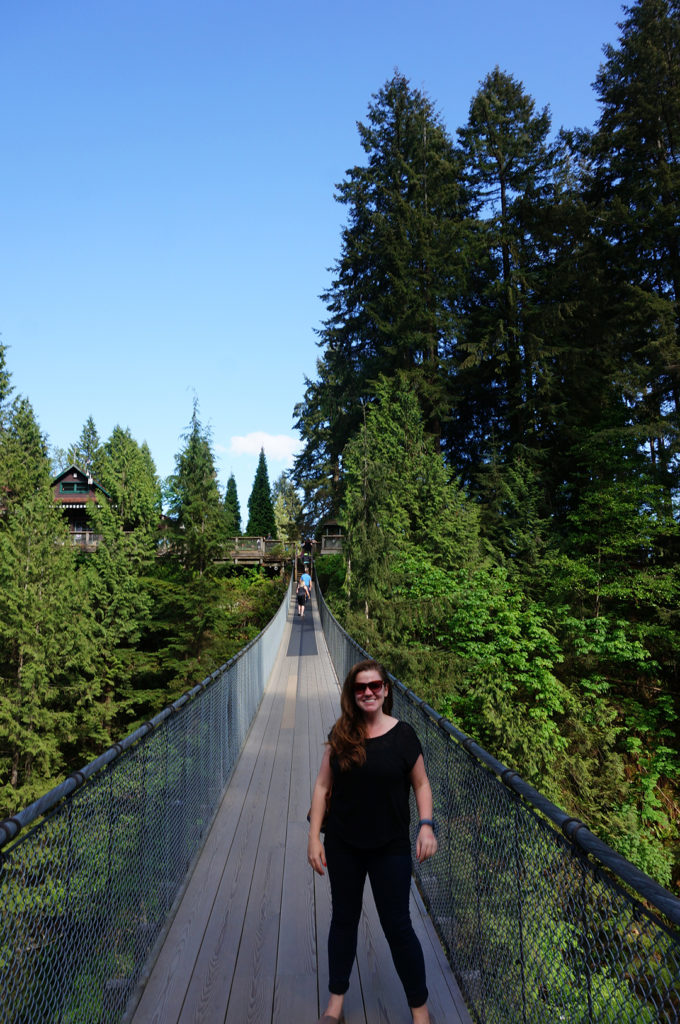
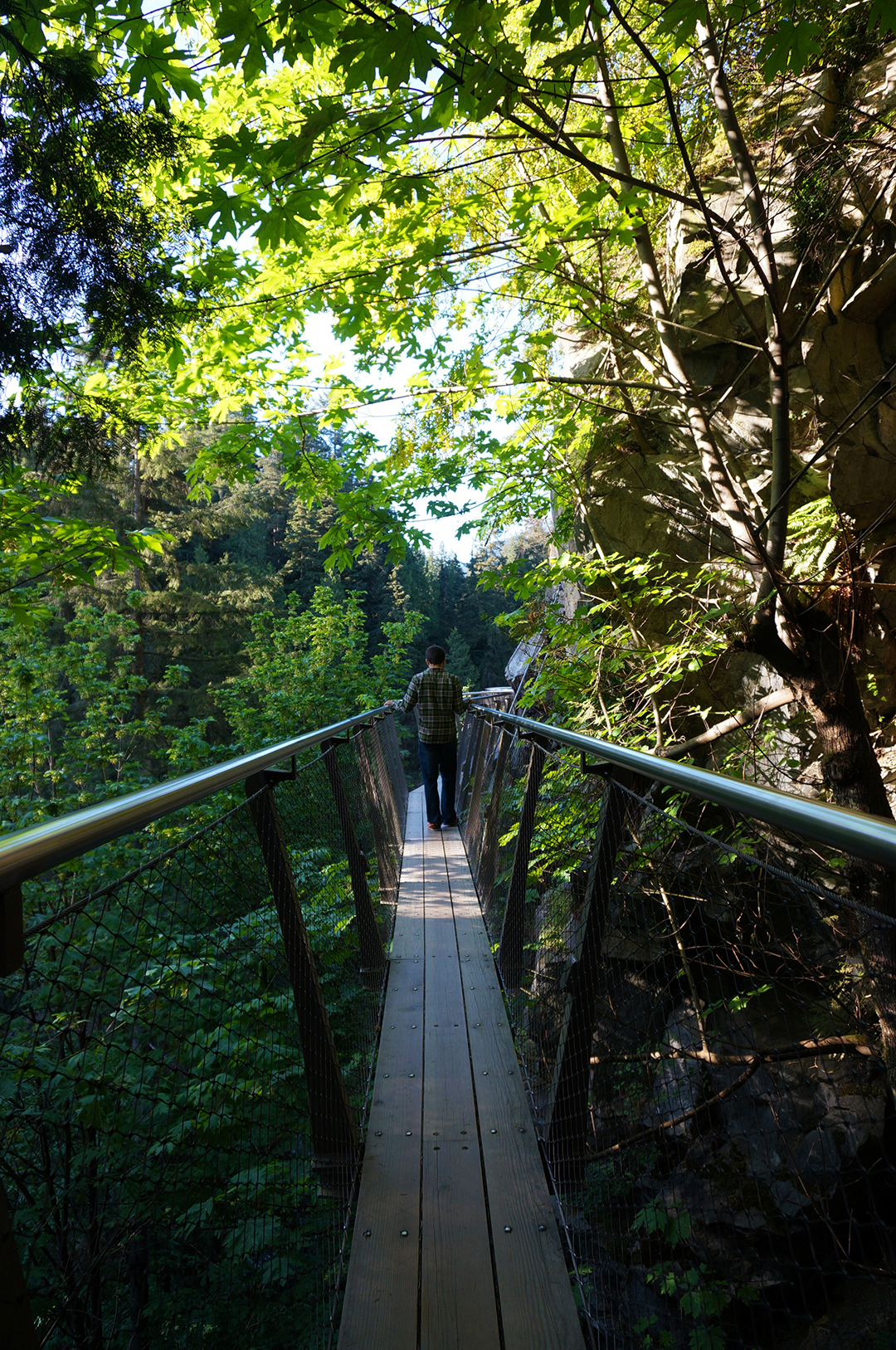
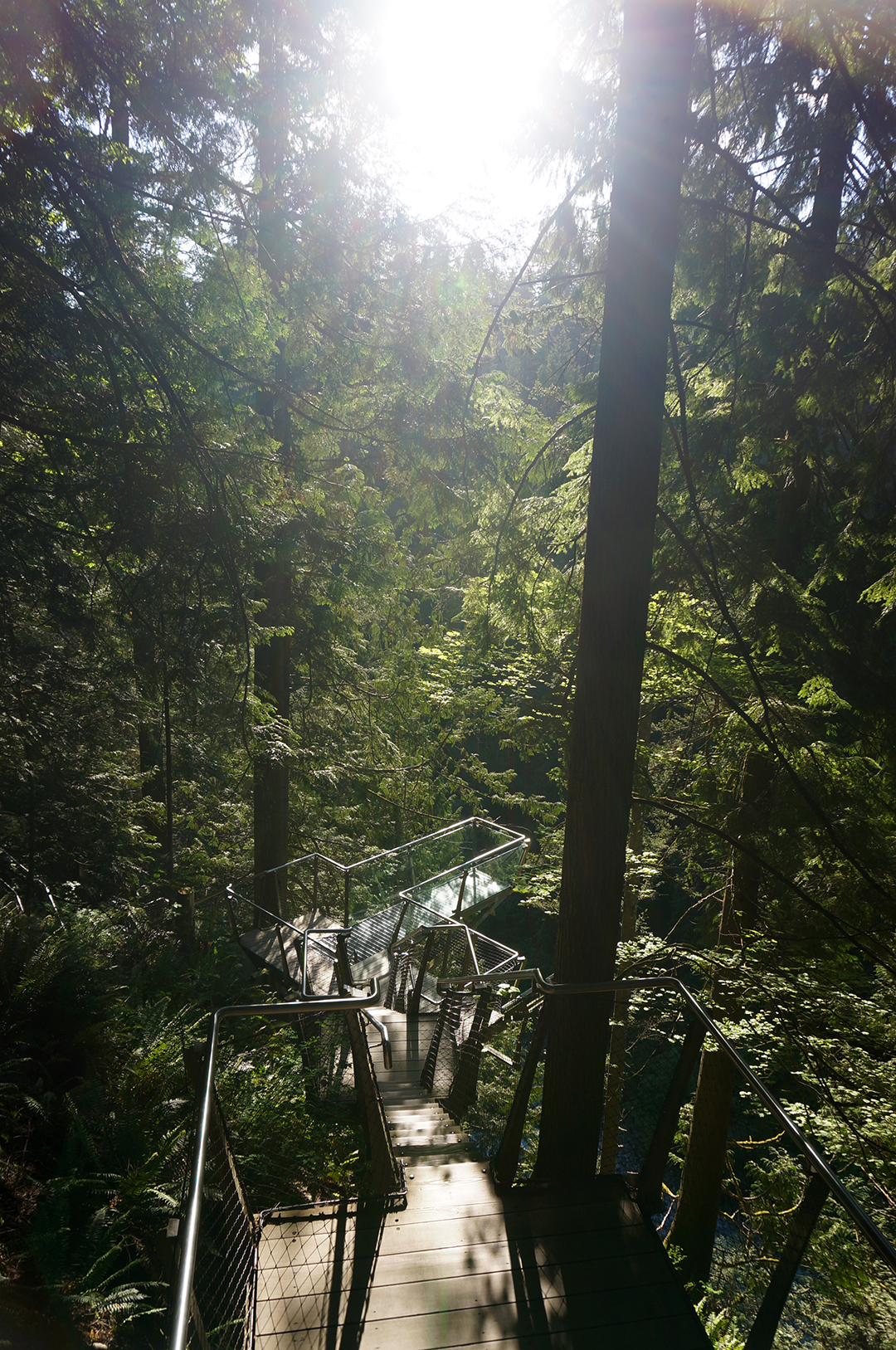
Our final stop made up for all the mistakes.  Capilano Suspension Bridge Park is one of the coolest theme parks we’ve ever been to, because the theme is “trees.”  It’s set in an old-growth forest, and numerous elevated walkways stretch between the ancient giants.  It was a very fun place to explore, and we were happy to see that all of the bridges are secured by pressure-fit collars, so nothing harms the trees.

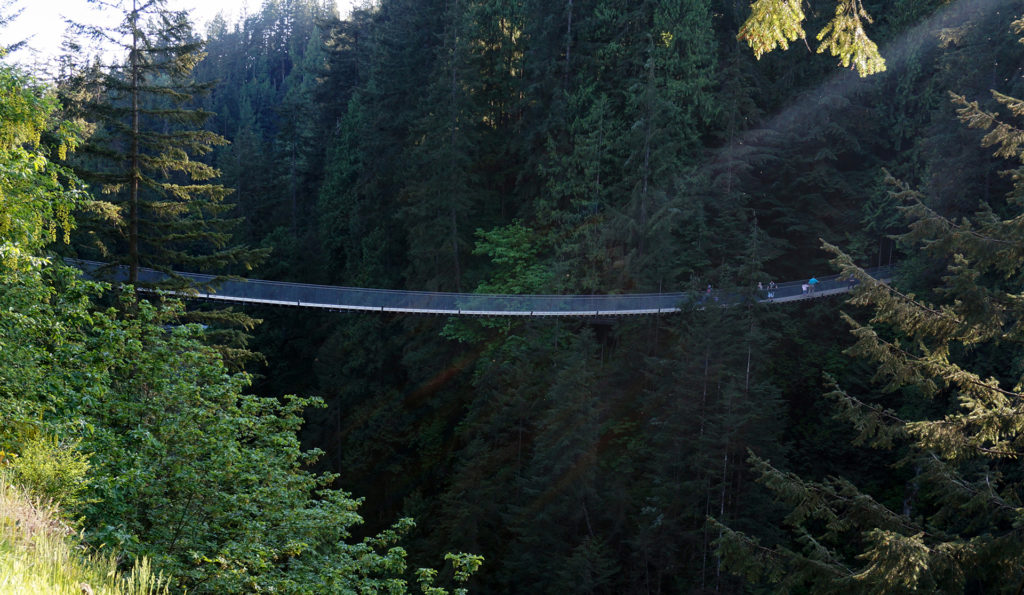
There was also a huge river gorge, crossed by the namesake Capilano Suspension Bridge.  It’s 450 feet long and pretty impressive in person – as well as, umm, bouncy.

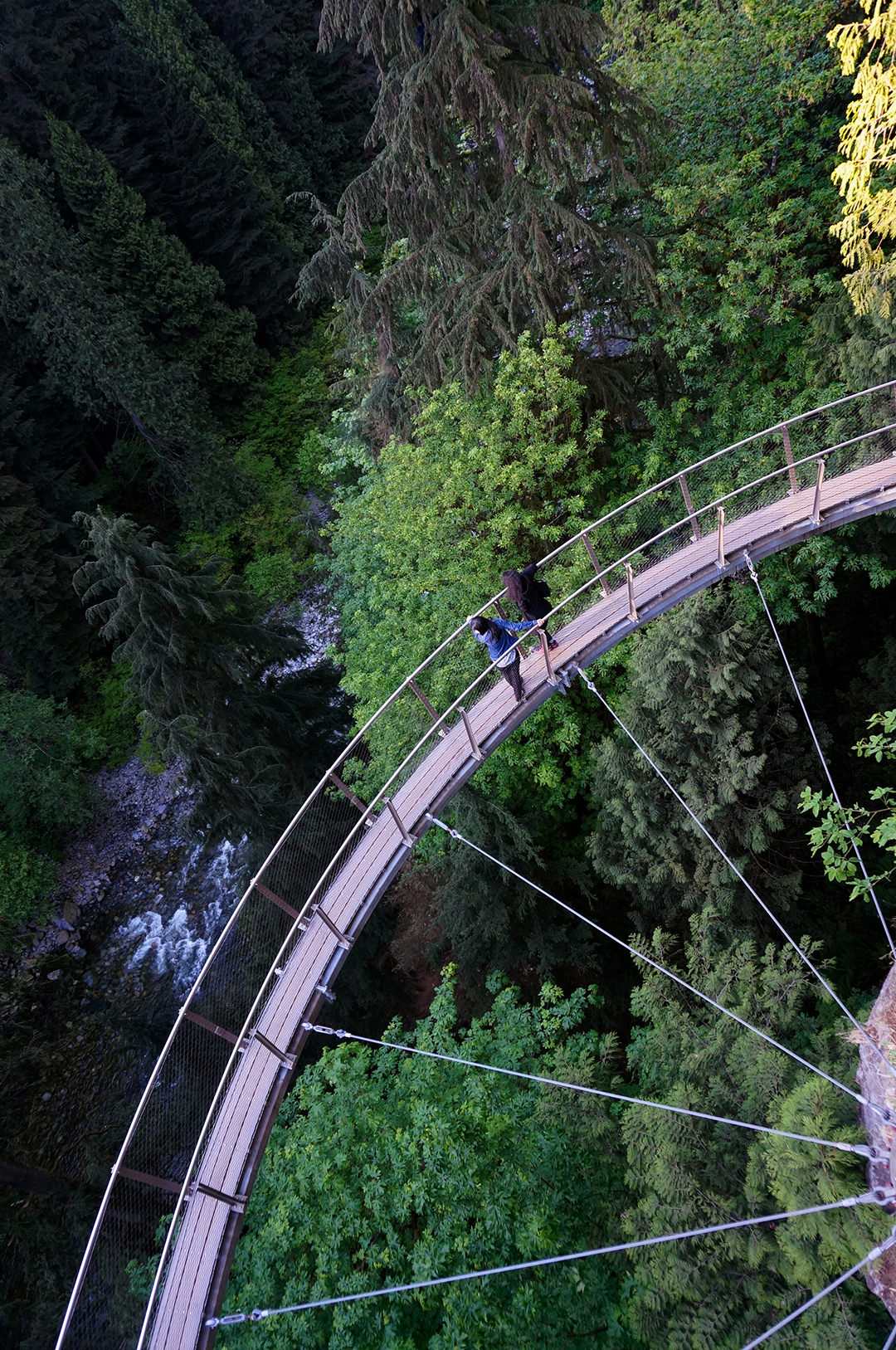
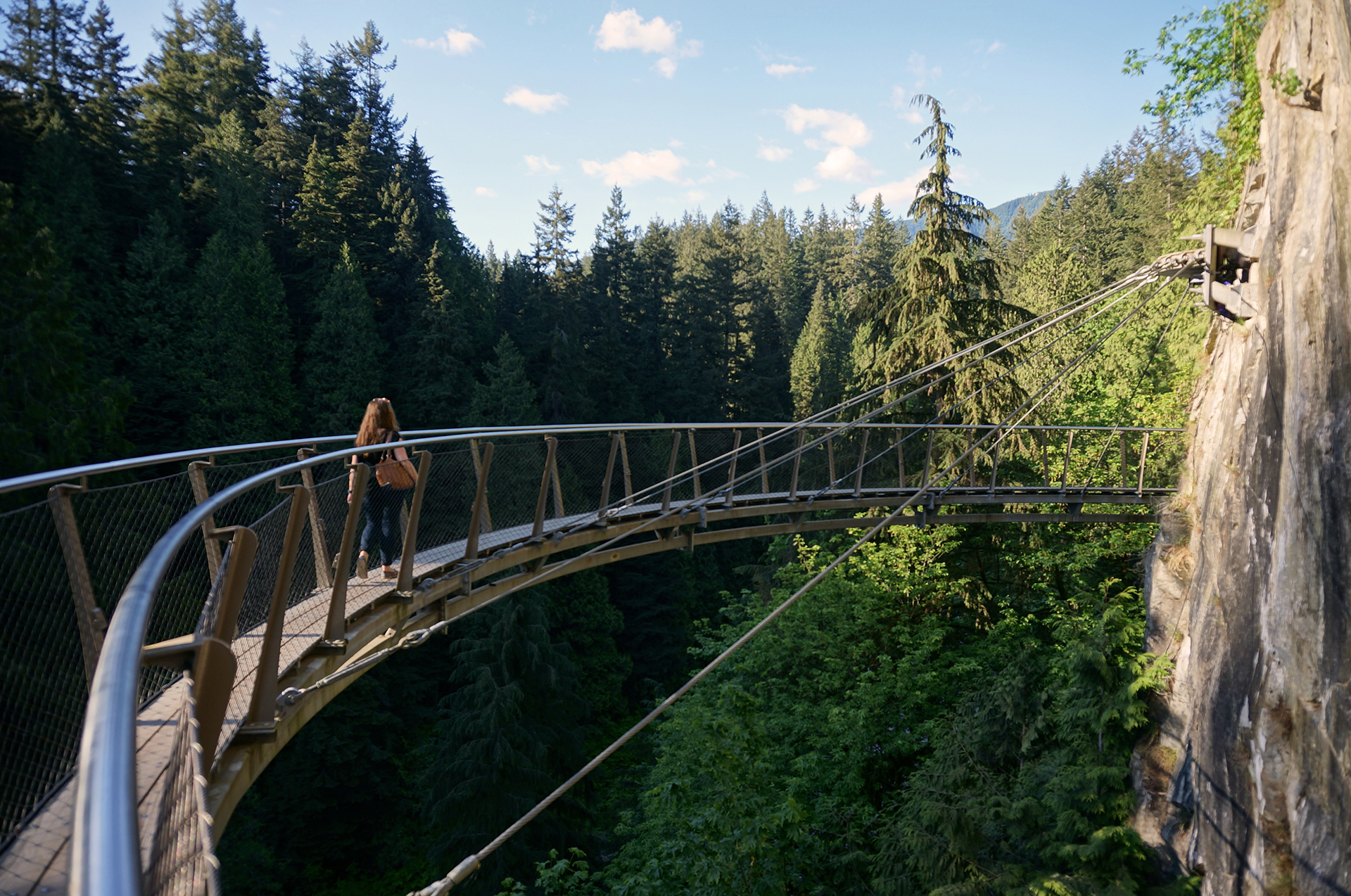
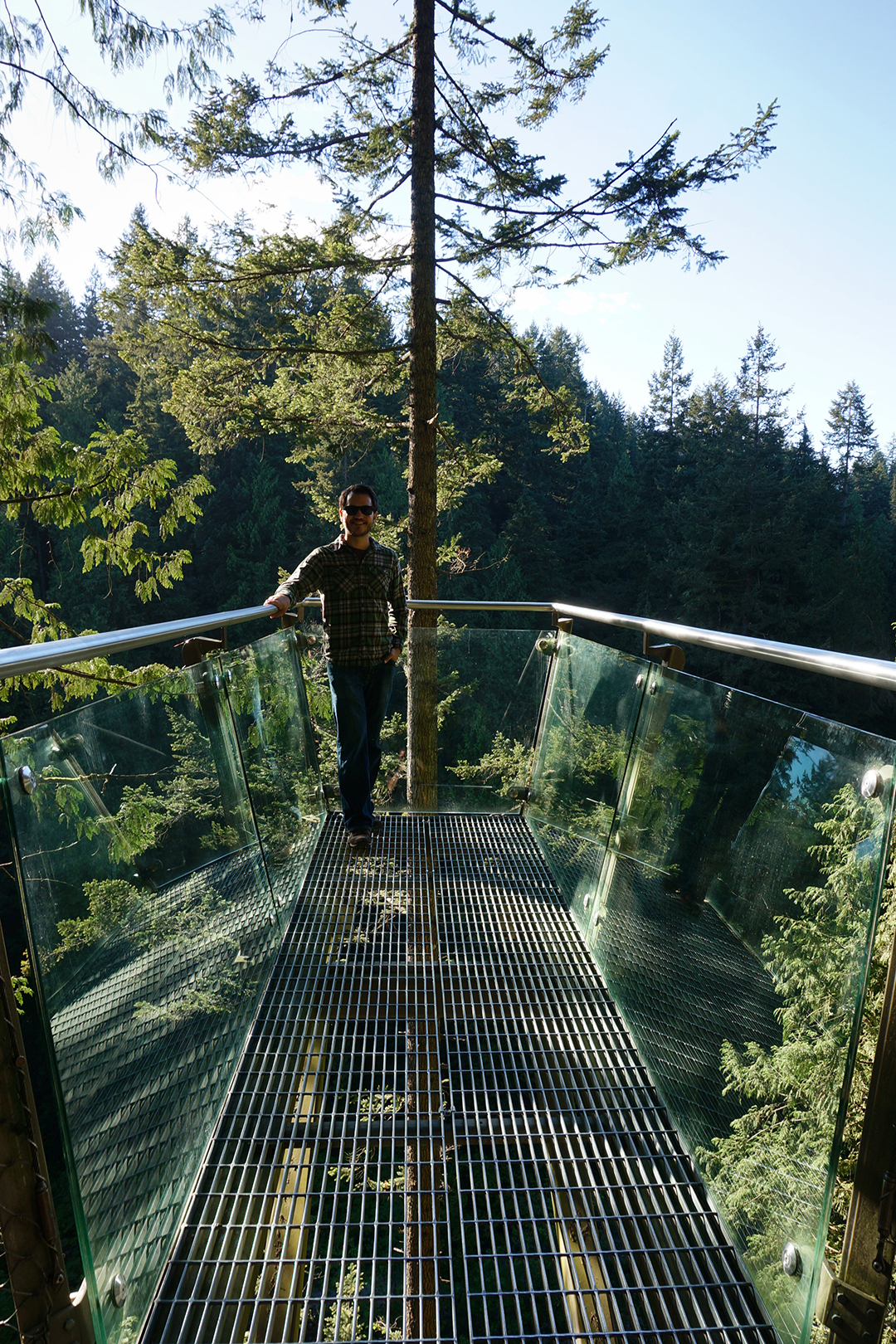
Even cooler was the steel-and-glass Cliffwalk, a beautiful architectural marvel that made us gulp just a little bit, despite being hardened by previous cliffside hikes like Camelback Mountain and Pinnacles National Park.  Luckily for us, the bolts held firm, and we have to say: this was one of the coolest things we’ve done on this trip.

Natural Selections

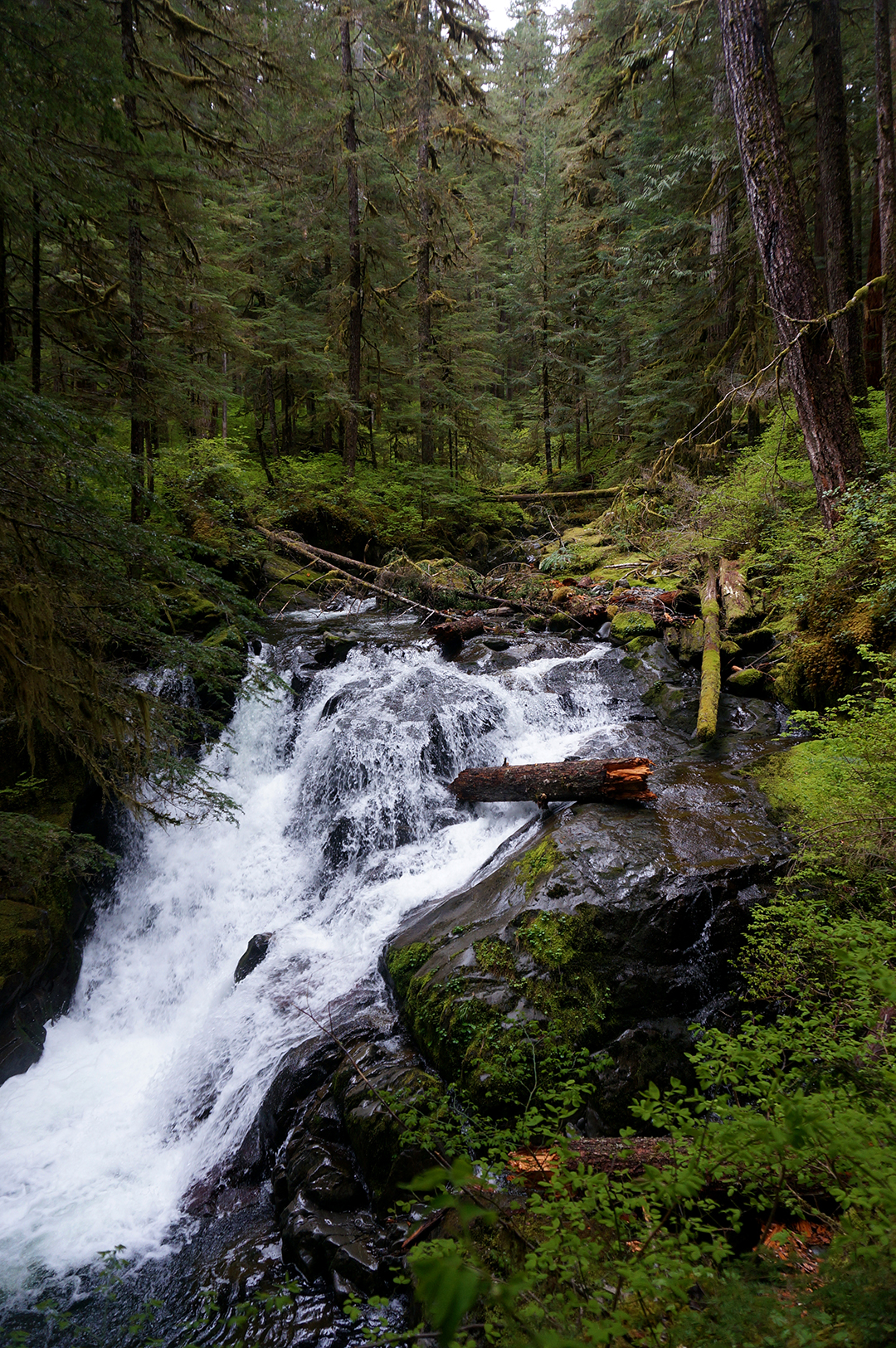
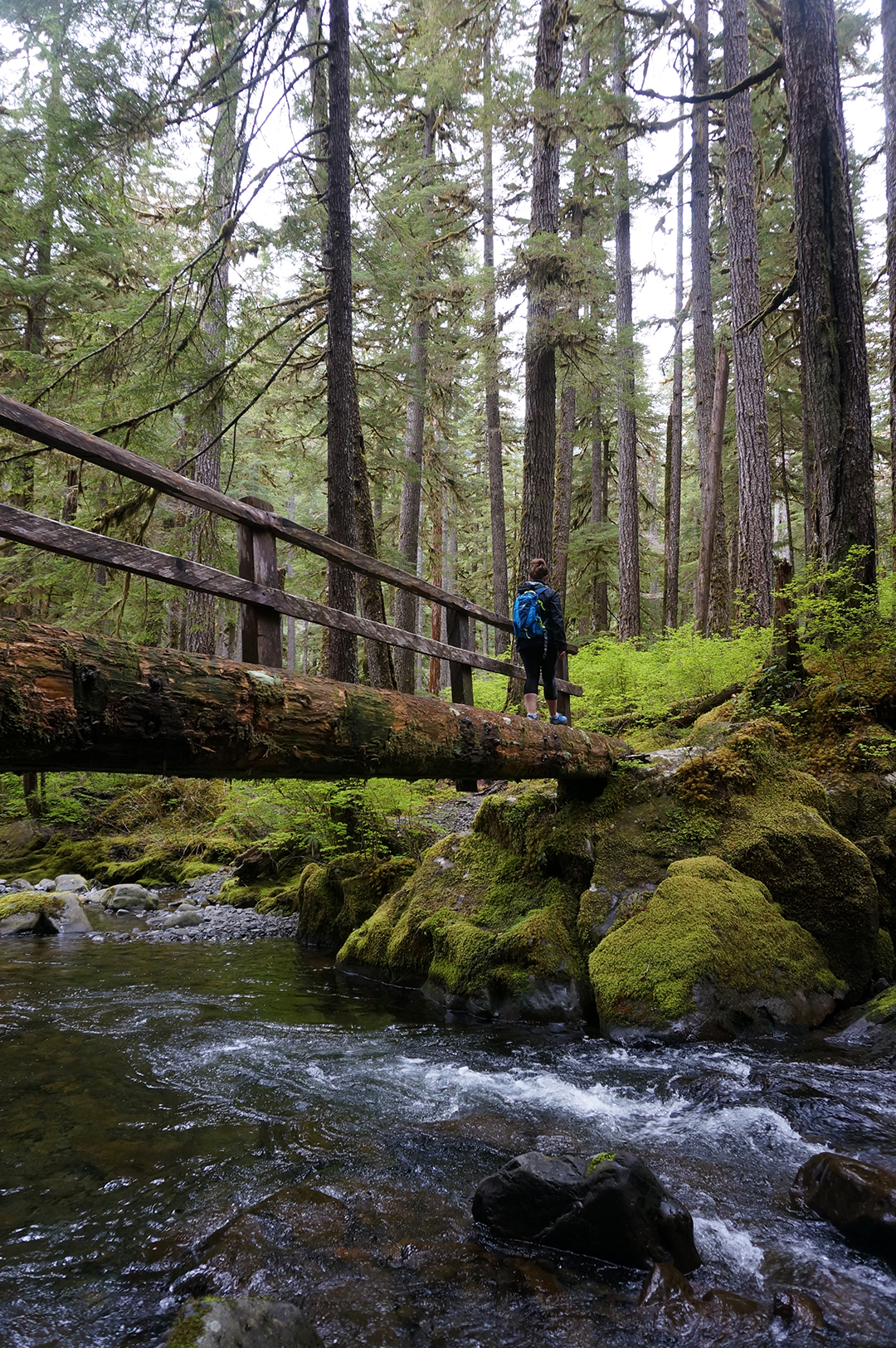
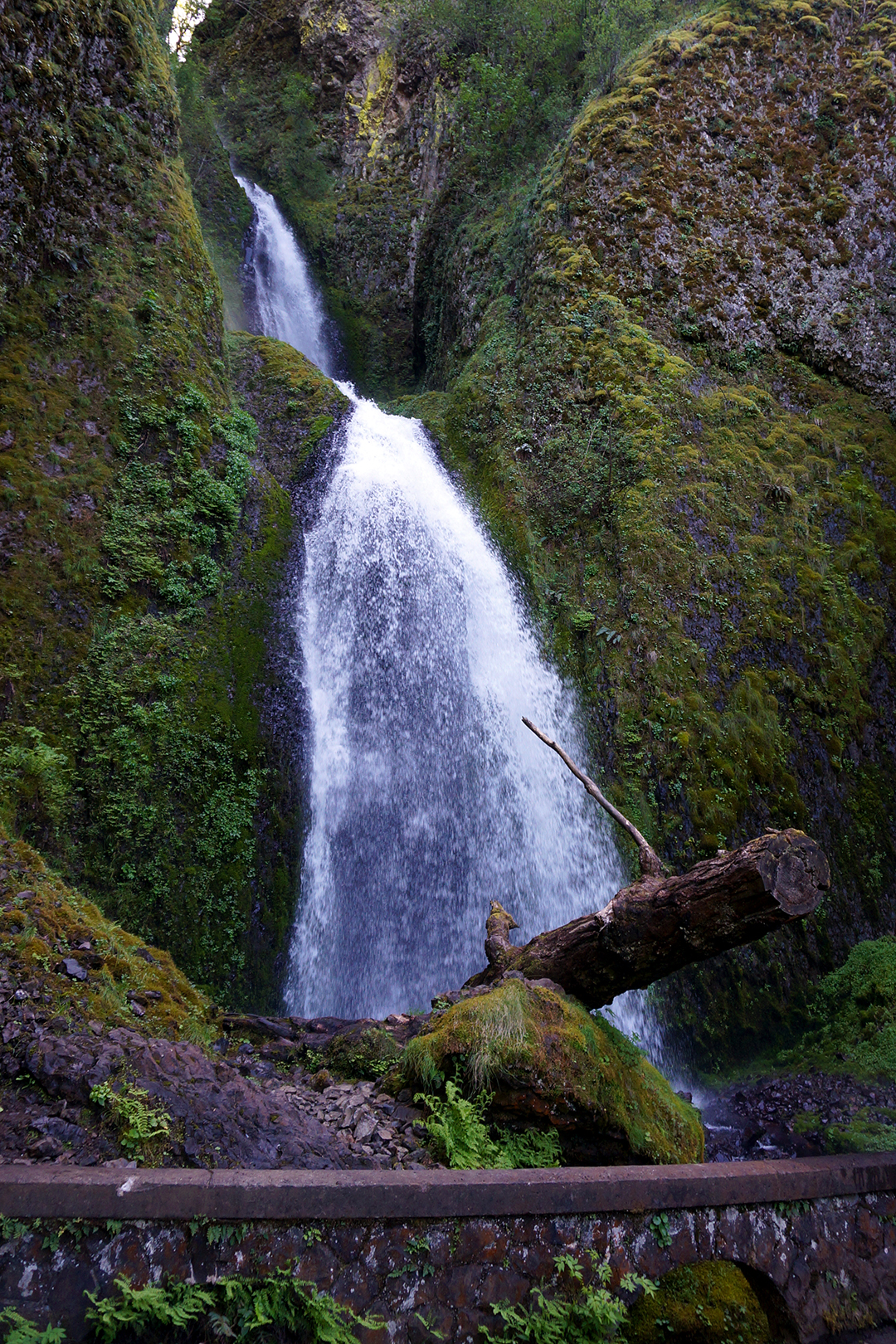
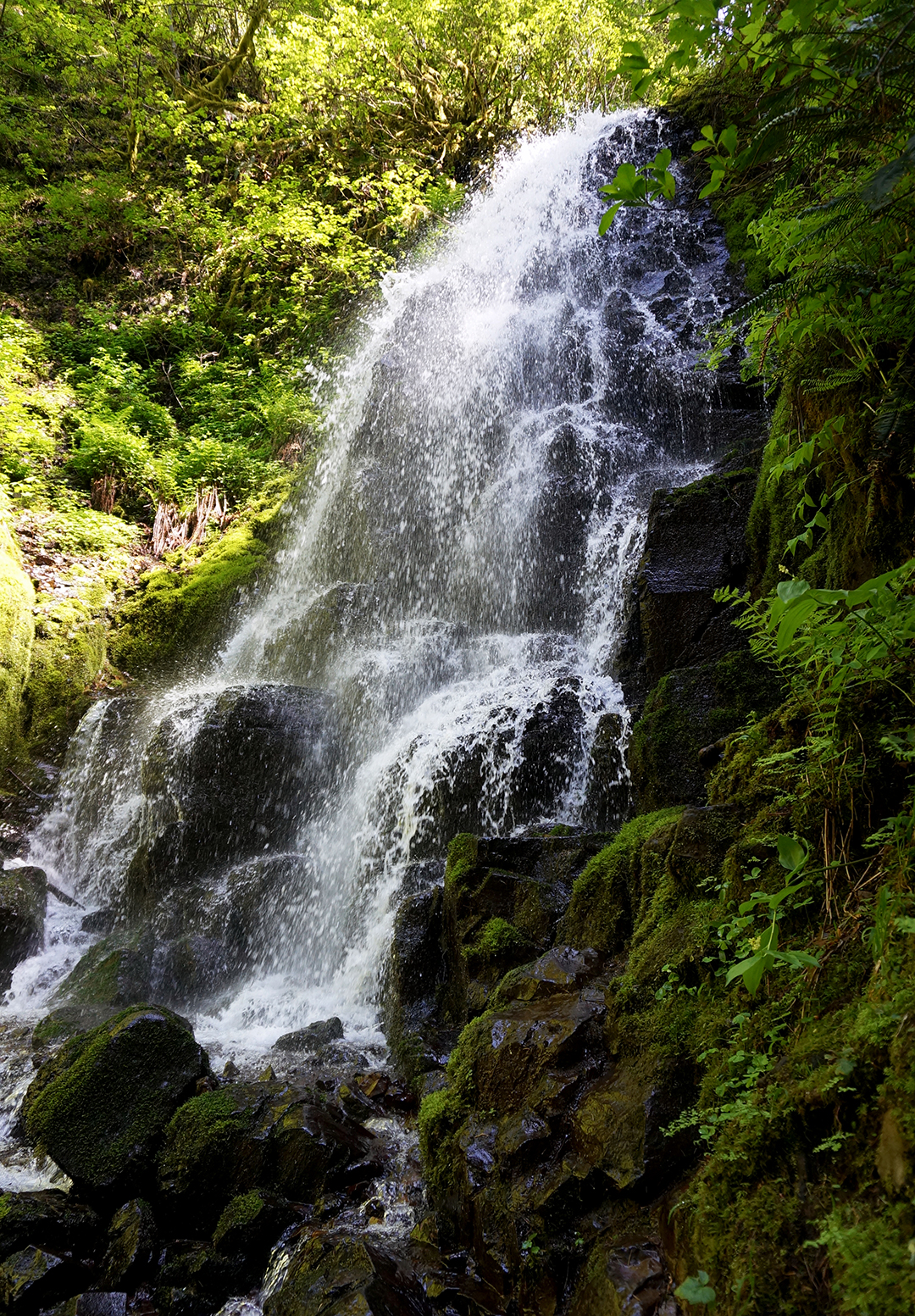
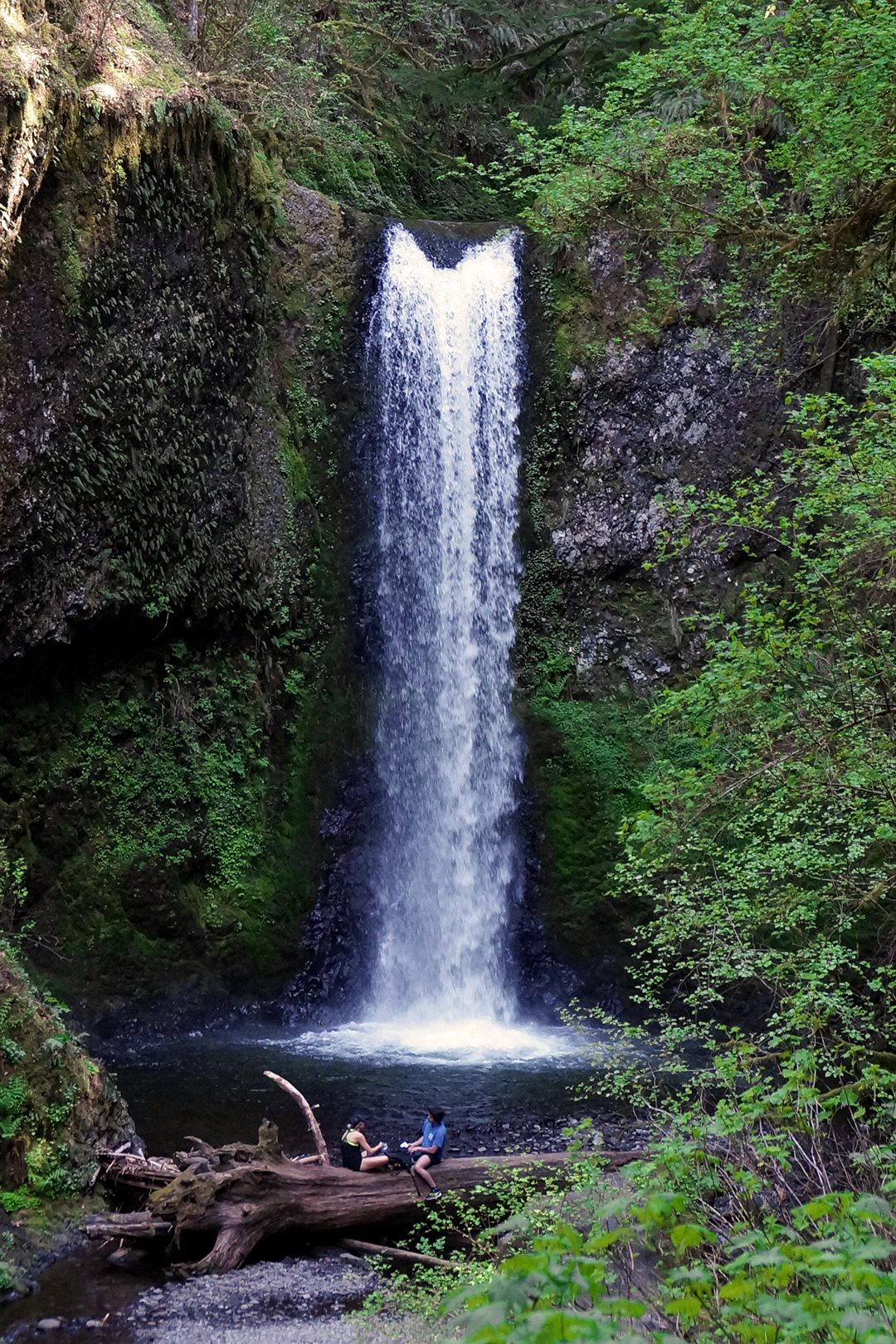
There was plenty more in the Seattle area, including a visit to the spectacular North Cascades National Park – blog post coming next – and a pretty hike to a local waterfall.  (If you’re read our prior blog posts, you may have noticed that the Pacific Northwest is big on waterfalls.)  We’ve collected a few pictures from the hike below.

Before we sign off, we’d like to note for posterity that the drivers we encountered in the Seattle area were exceptionally great – polite, patient, and careful.  In other words, the complete opposite of drivers in NYC, Boston, and Los Angeles.  Thanks for restoring some hope for humanity, Seattlers!

Roadtrip Time Travel

Roadtrip Status

Still alive?  Check.

Where are you now?  Madison, Wisconsin, donating an unhealthy amount of blood to the local mosquito population.

Next location?  Chicago!  And then… somewhere.

Follow Us On Social Media
FacebooktwitterinstagramFacebooktwitterinstagram

Latest Posts

0

Week 44: Olympic National Park

We left Portland near the end of April, driving sadly away from the land of food trucks and fast Internet to the far northwest. We made slow time along small, curvy, quiet roads, until we reached our destination: Washington’s Olympic Peninsula. The region is dominated by Olympic National Park, which fills the center of the broad peninsula with mountains, lakes, and rainforests.

It is stunningly beautiful.

Olympic is a wild place, yet. The forests feel ancient, like remnants of a more primitive time, and the waves crash onto the shore with fury. It won’t last – Seattle is not far, connected by large highways that will, in time, change the park irrevocably, smoothing the raw edges. The transition is inevitable. But right now, it still feels untamed, and we were thrilled to get to peek behind the curtain of civilization at the backdrop of the real, natural world.

It probably helped that it was the off-season.

Hoh Tell

The main draw at Olympic National Park is a scenic drive into the mountains at the heart of the park, particularly Mount Olympus. Unfortunately, because of snow and seasonal closings, that road was closed when were there, so you’ll have to wait until we get to the North Cascades to see some mountains. We did get to see something even cooler, though: the Hoh Rainforest, the wettest place in the continental United States.

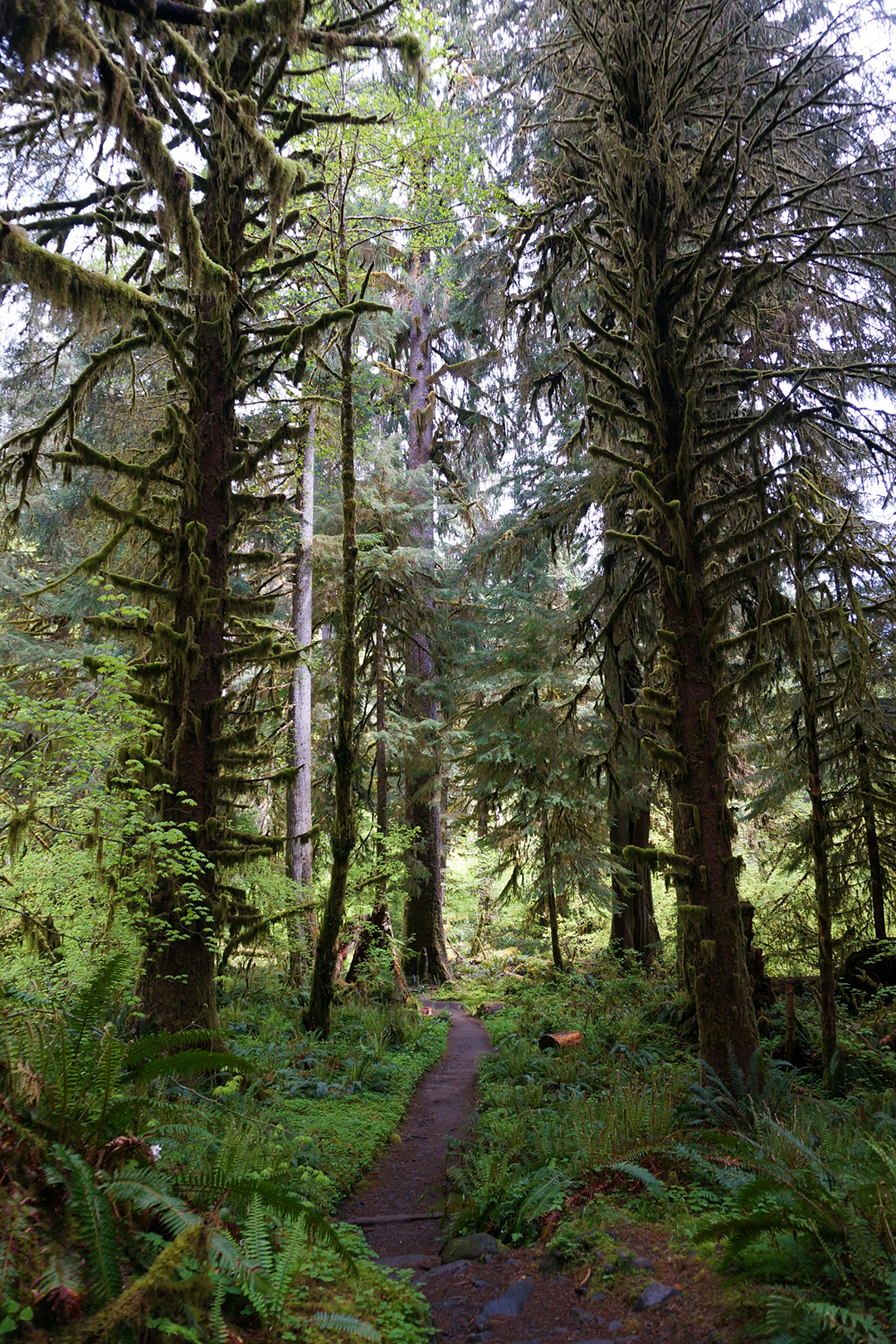
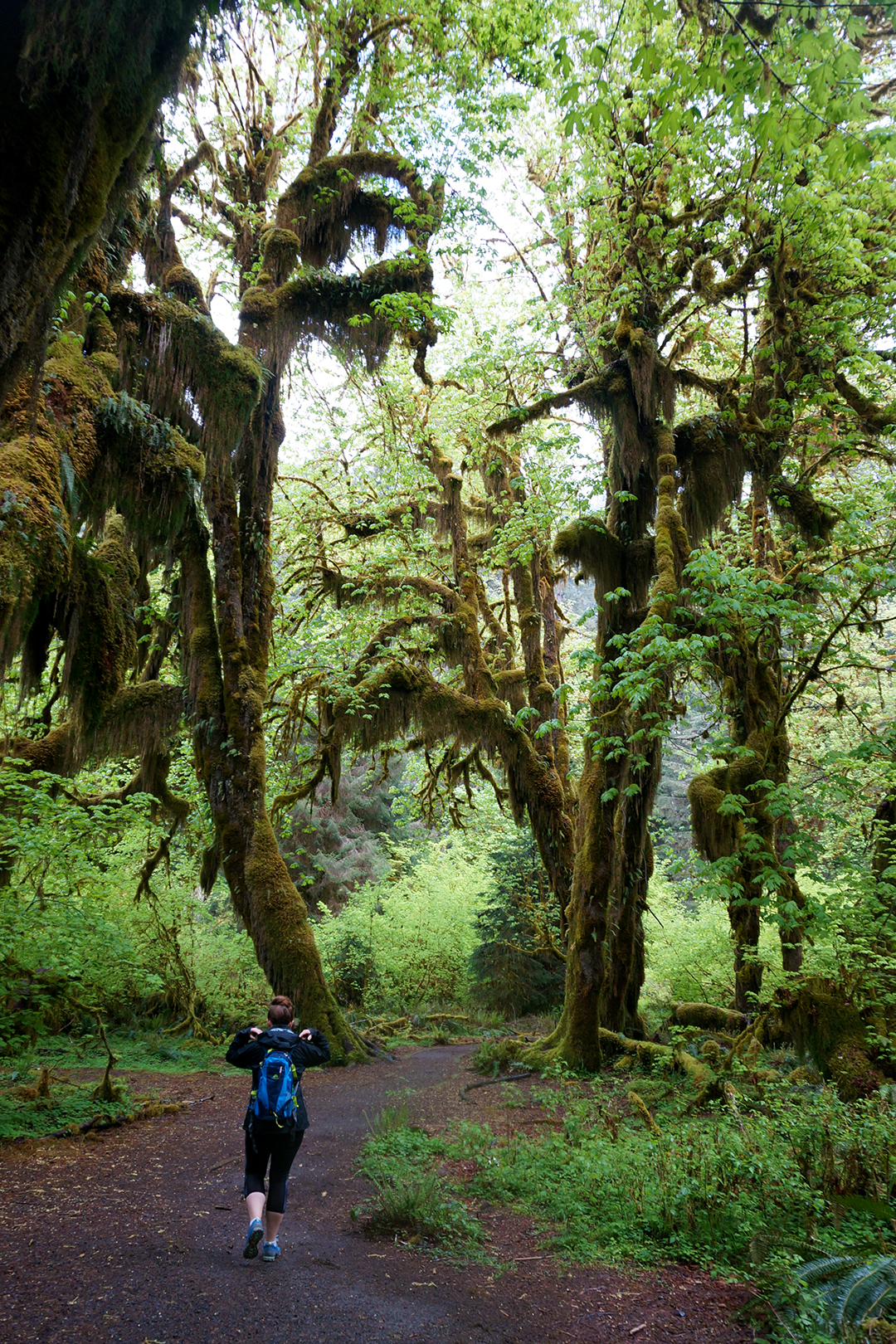
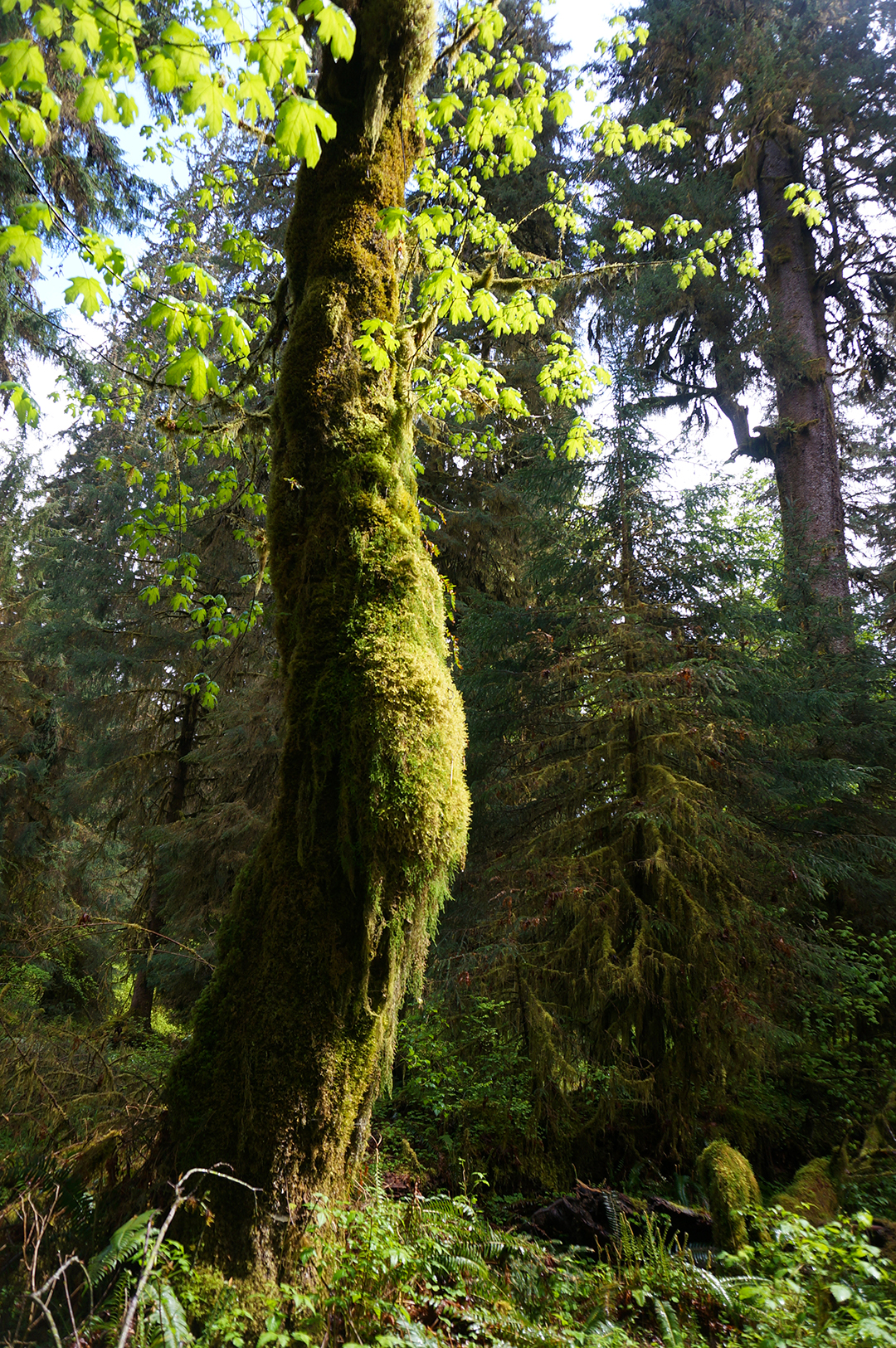
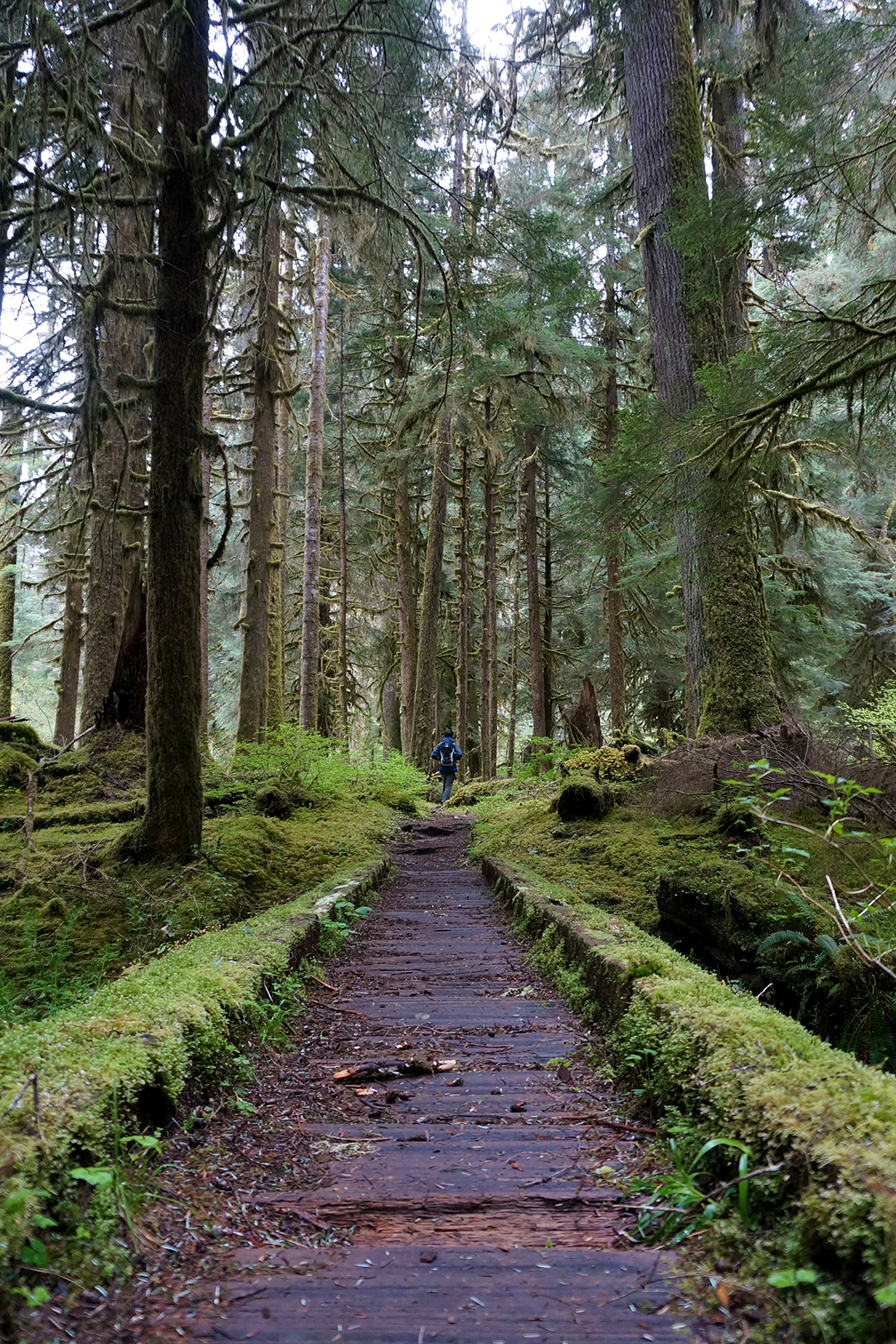
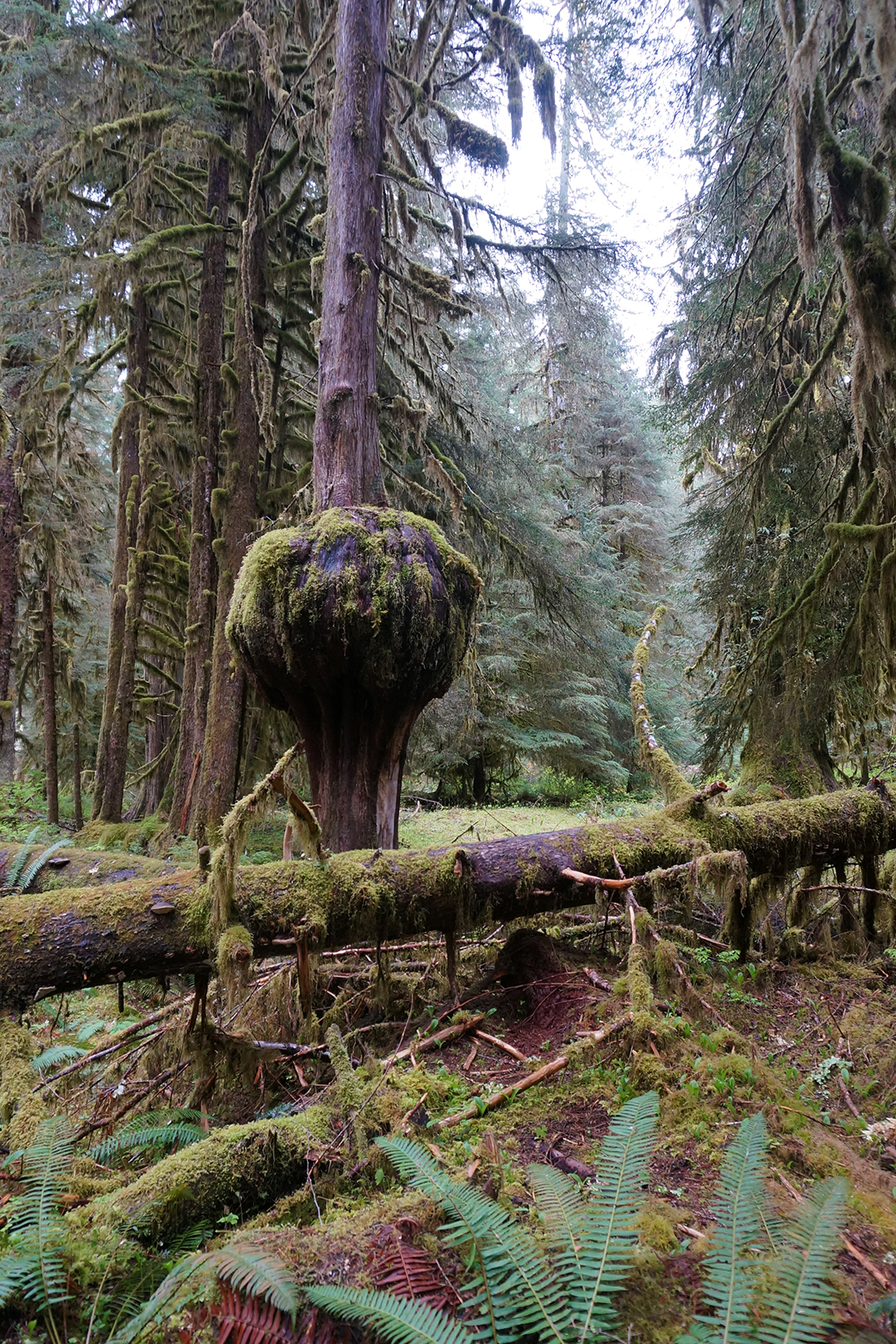
Hoh is an epic forest. The trees are covered with moss, huge ropes and blankets of it, and everything is deeply, deeply green – not the bright, kelly green of spring, but something darker and more mysterious. Out of sight of the other visitors, it felt a little spooky.

It was also wet, of course. We spent a lot of time taking off and putting on our raincoats, as rain came in short, steady bursts that always ended just after we got everything out of our packs. We could have left our raincoats on, but it was warm and the humidity was impossibly high, making hiking while covered up very unpleasant.

That said, it was a pretty amazing place to walk around. Like Fern Canyon, it felt positively Jurassic.

As we were leaving, the ranger on duty mentioned we could see Mt. Olympus from the road on the way out. We were a little bummed that the scenic drive was closed, so we followed his directions: drive 17.2 from the visitor center, stand on the painted spot on the asphalt, and look northeast. Well, we dutifully reset out trip odometer, drove 17.2 miles, found the paint spot, and looked northeast, but… no mountain.

Oh well. At least we got to see a lot of moss.

Twilight Beach

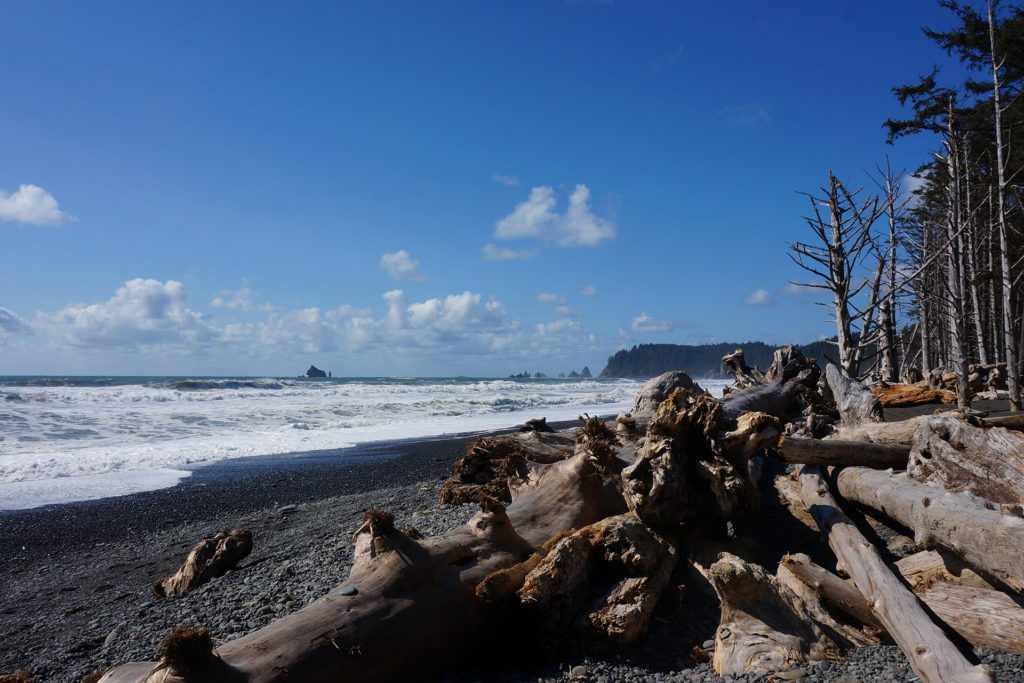
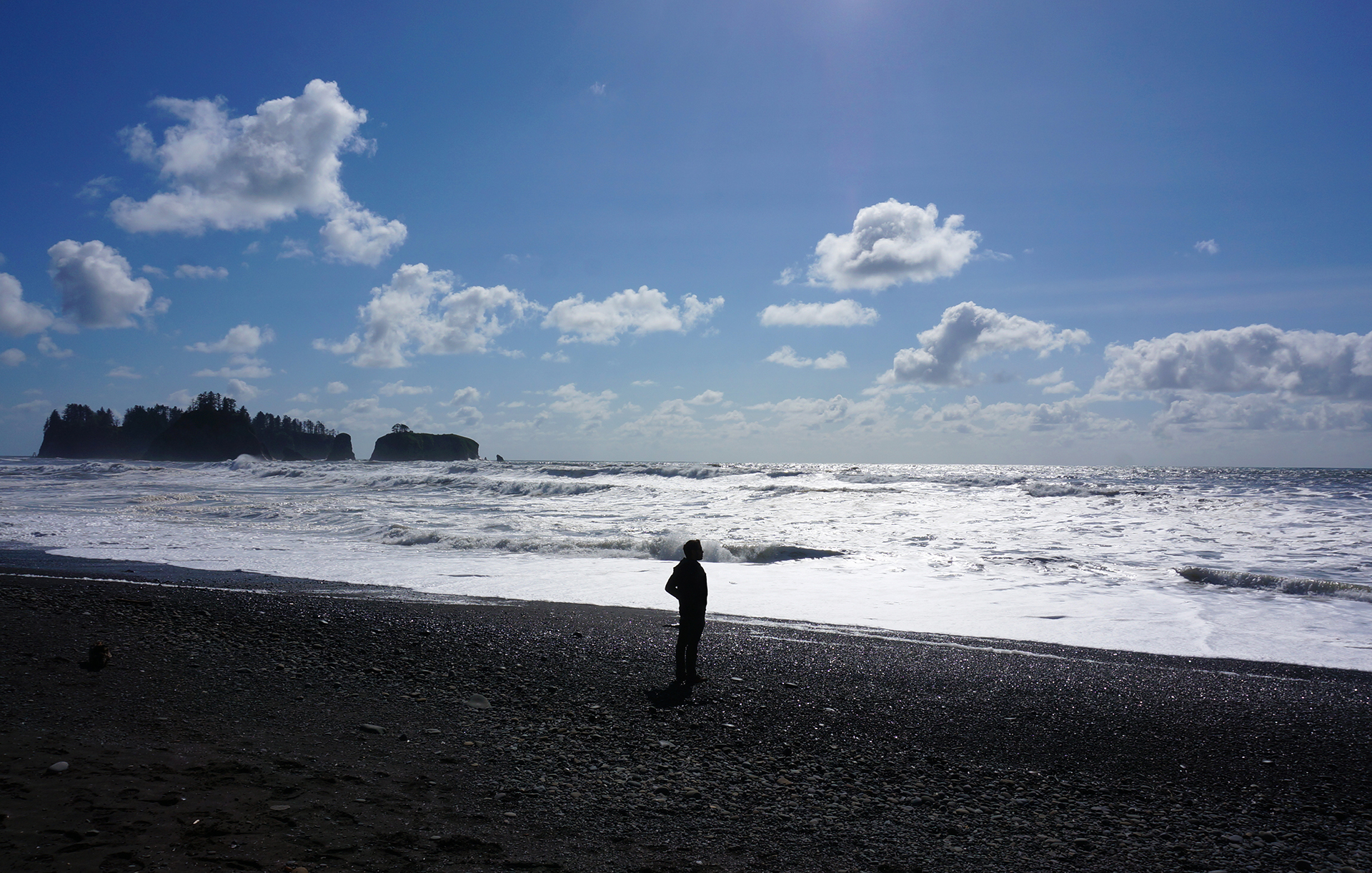
On the way back from Hoh, we stopped at a “beach” on the Pacific coast. The scare quotes are because the waves are wicked and wild here, and instead of sand, the beach is littered with giant logs.

How do the logs get there? So glad you asked! They fall over somewhere, get swept down a river to the ocean, then the waves launch them onto shore during storms.  Like the equally wild Cape Perpetua in Oregon, it’s certainly striking, and hey – if you like to tan dangerously, this is the beach for you.

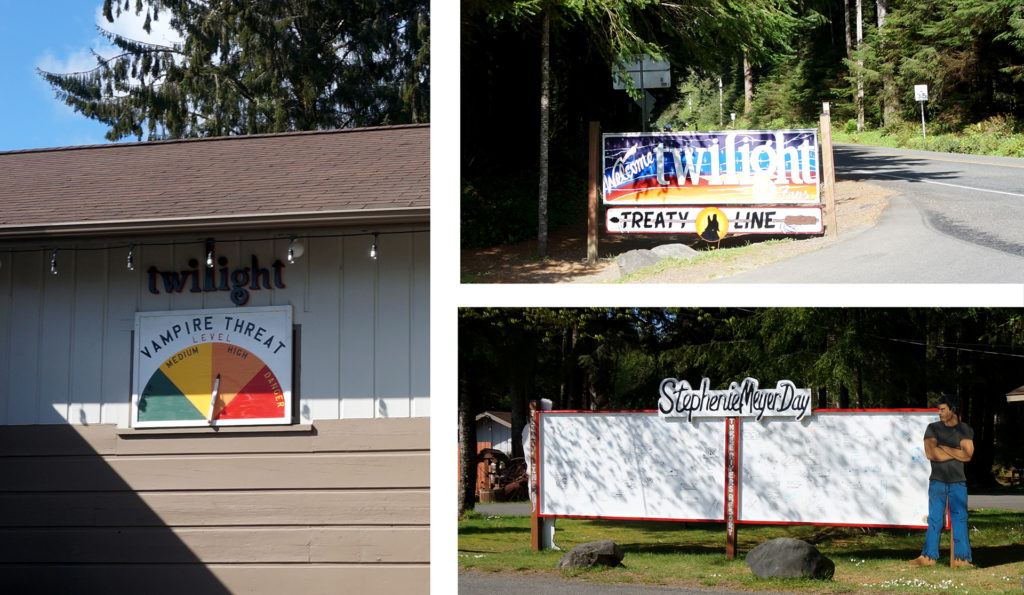
By the way, to get to the coast, we passed through the town of Forks, Washington.  The name sounded familiar, but we couldn’t quite put our finger on it. Then… we saw the sign, and it opened up our eyes.

Yes, Forks and nearby Three Rivers are the setting for the Twilight books and movies. In real life, there isn’t a lot going on – this is pretty remote country, almost as far north and west as you can possibly go in the continental United States. However, we did find the vampire / werewolf “treaty line,” along with a few scattered signs and banners that looked like they had seen better days.

Someday, when today’s tweens are older, this will be a nostalgic vacation getaway spot. For now, we’re sticking with Cabo – the vampire threat level is “high,” after all.

Potpourri

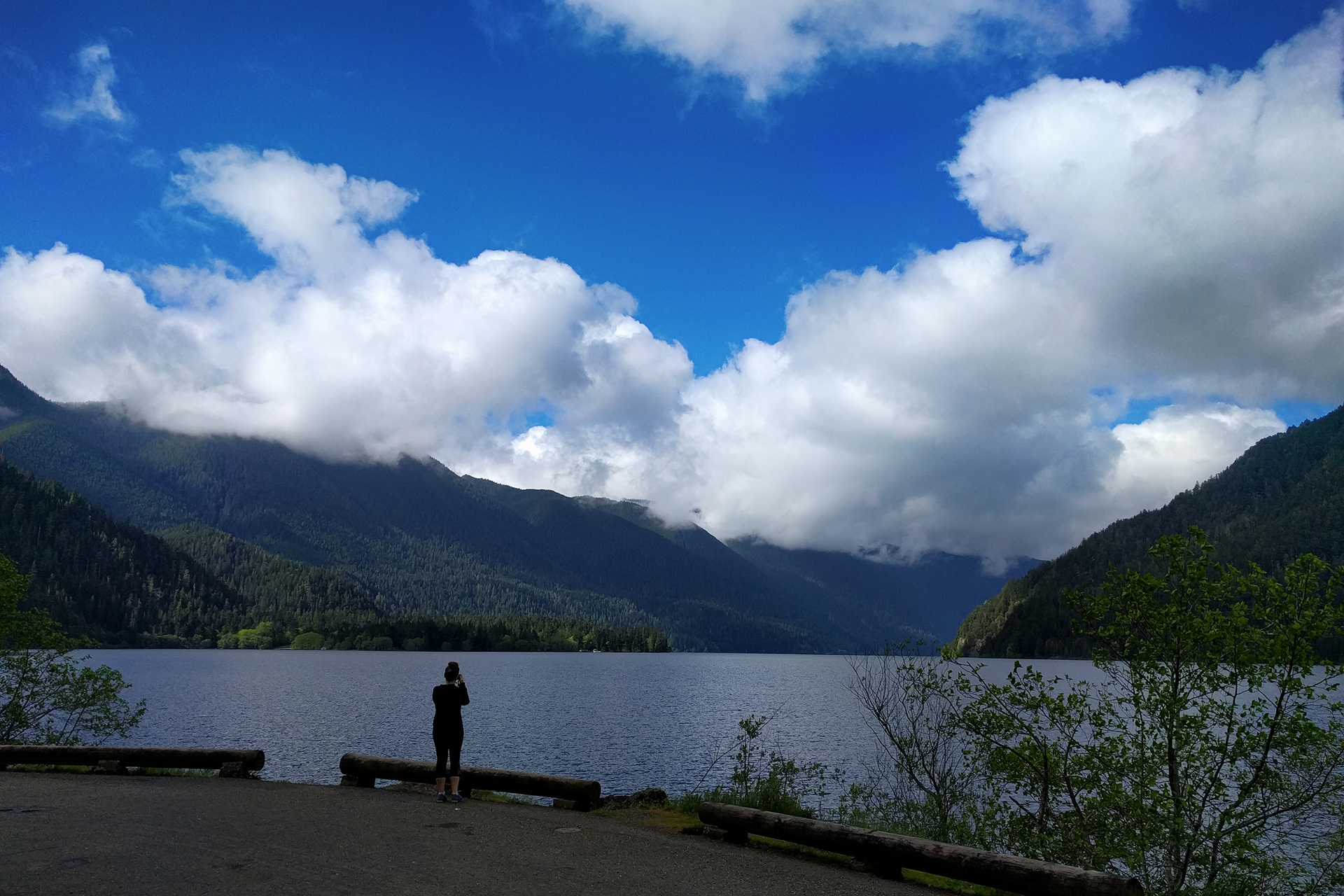
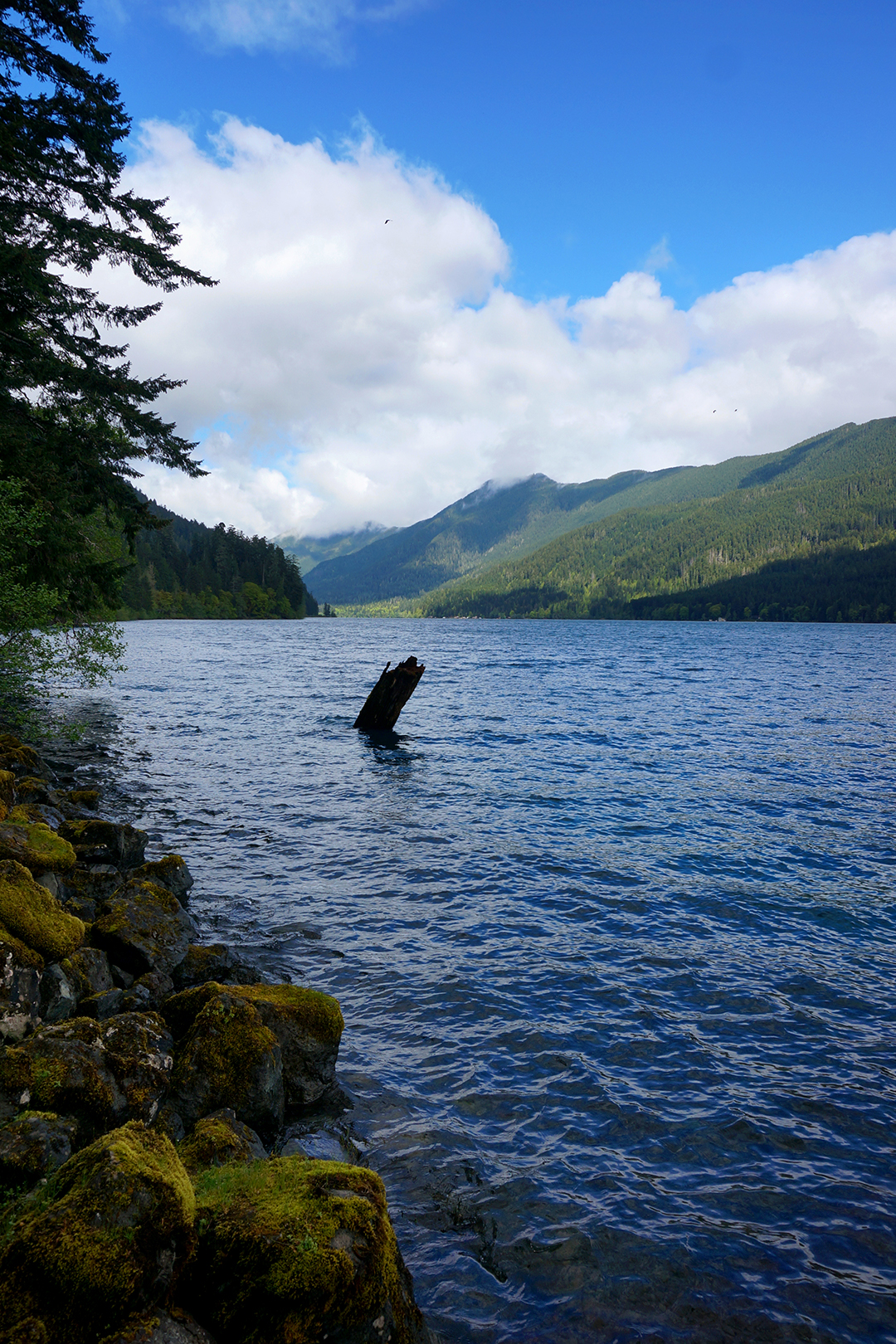
There was lots more to see at Olympic National Park, including the comely Crescent Lake. (Our thesaurus is running low on synonyms for “beautiful,” and we haven’t even hit Utah!) We passed by it every day on our drive, and every time, we just had to stop and take pictures.

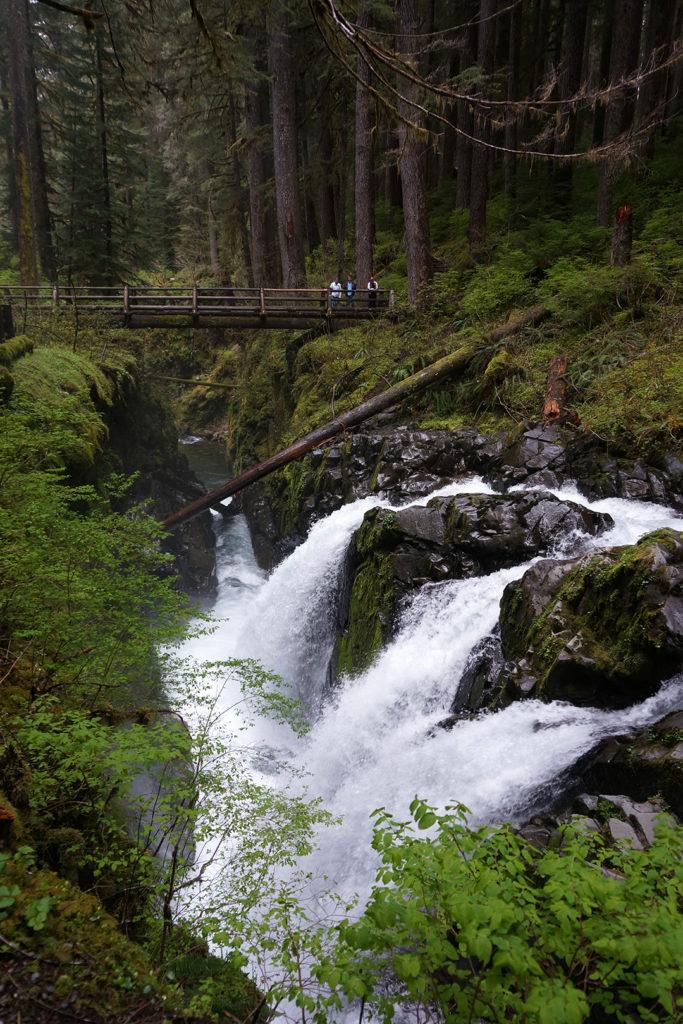
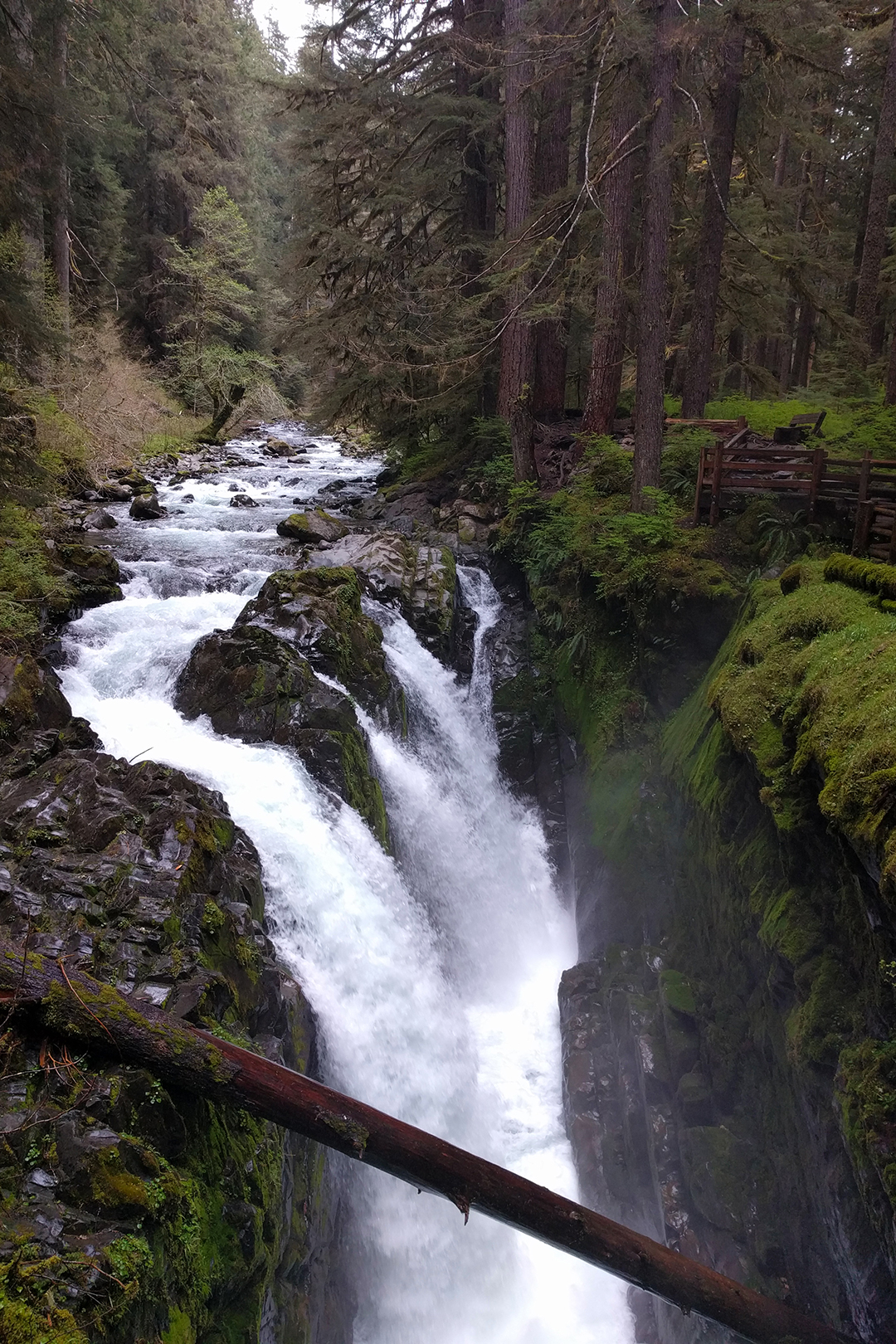
We also hiked to Sol Duc Falls, a… pulchritudonous… waterfall with an unusual three-fall design. Looks man-made, but it isn’t (we hope!).

And speaking of threes, we actually thought we found Sol Duc about three times before we go to the real falls – there are a lot of waterfalls here!

Our final visit was to Port Angeles, the big city in this area. We got some great burritos from Little Devil’s Lunchbox (great name) and watched unimaginably giant barges float into the harbor, bound eventually for Seattle or Alaska or Japan or who knows where. The Pacific Northwest is pretty cool like that.  Then, it was on to Seattle.

Roadtrip Time Travel

Roadtrip Status

Still alive?  Check.

Where are you now?  Fargo, ND, home of… something, probably.  We’re just happy our Sprint hotspot works again.

Next location?  Bemidji, Minnesota, and the headwaters of the Mississippi.

Follow Us On Social Media
FacebooktwitterinstagramFacebooktwitterinstagram

Latest Posts

0

Week 43: Portland, Oregon

Portland, Oregon is a pretty magical place, and the City of Roses immediately became one of our favorite cities. We had high expectations to start with, and it exceeded them all – at least, until it started raining.

PNW Fever

Hang on, we’re getting a little ahead of ourselves. We stayed in Portland for a while, by our standards (10 days), in no little part due to the fact that the RV park we stayed at had amazingly fast internet. For your wilderness-living correspondents, this was as exciting as having a chocolate fountain right outside our door.

Well, maybe not that exciting. But still, pretty exciting.

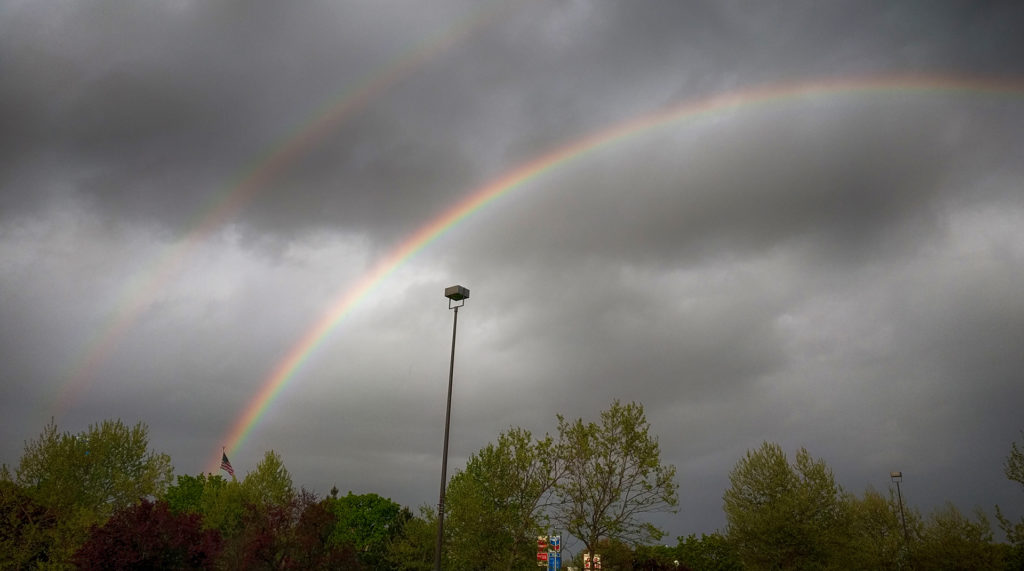
On top of the fast internet, the weather when we arrived in Portland was unusually beautiful – sunny, dry, mid-70 degree temperatures. The city itself is also very pretty – lots of trees, everywhere – so the whole experience was outrageously pleasant. In fact, on our first day in Portland, we saw a double rainbow in the grocery store parking lot.

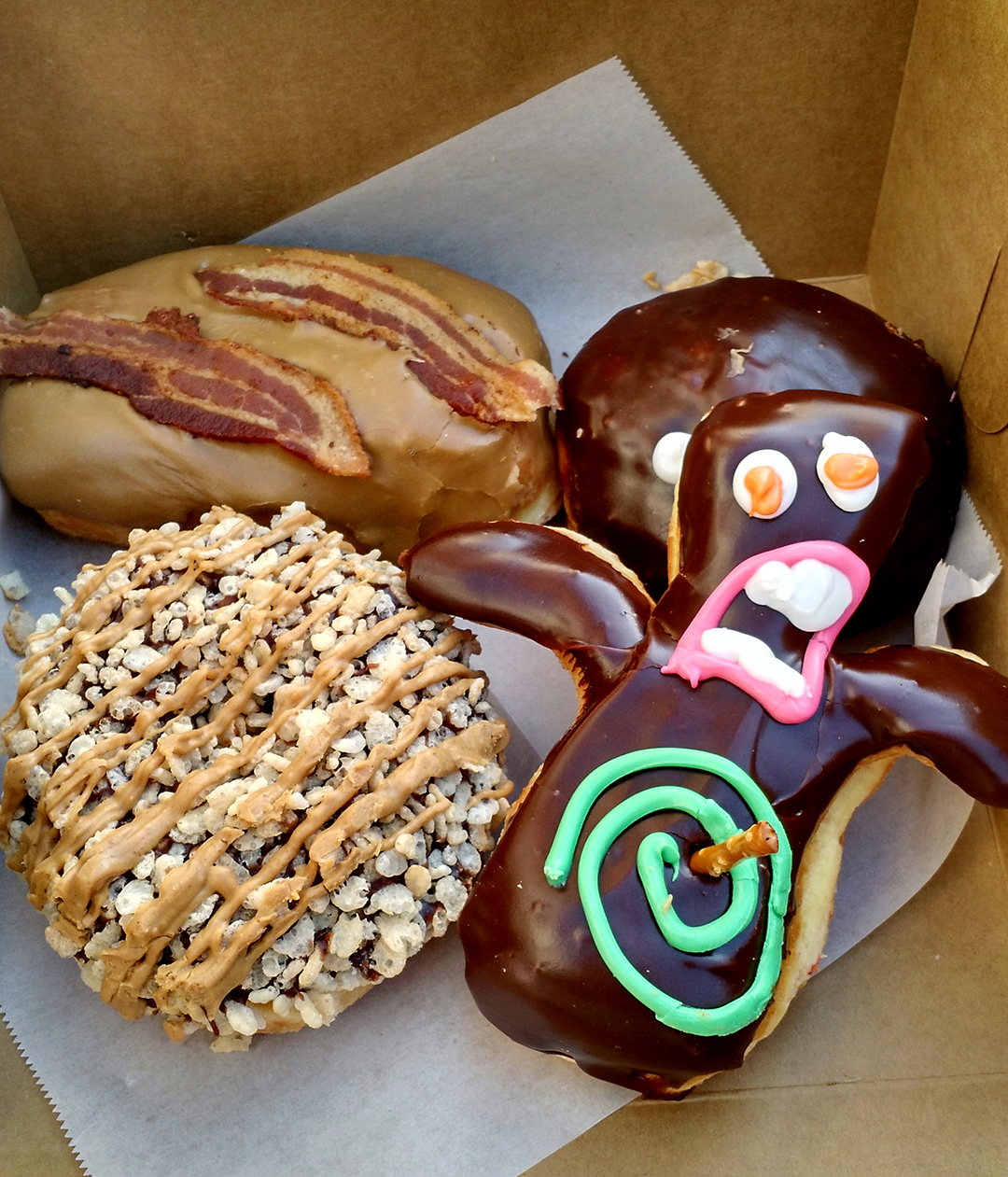
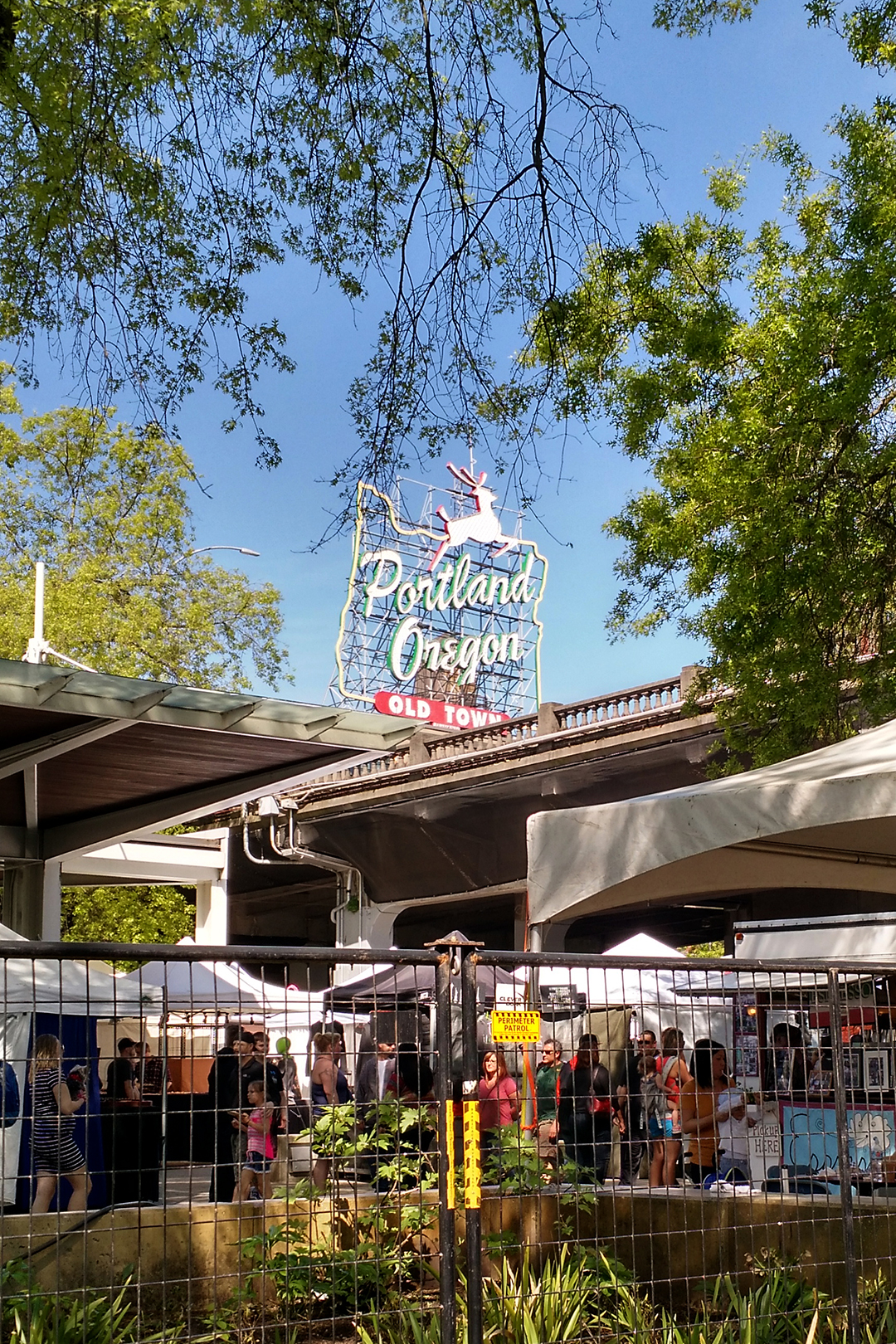
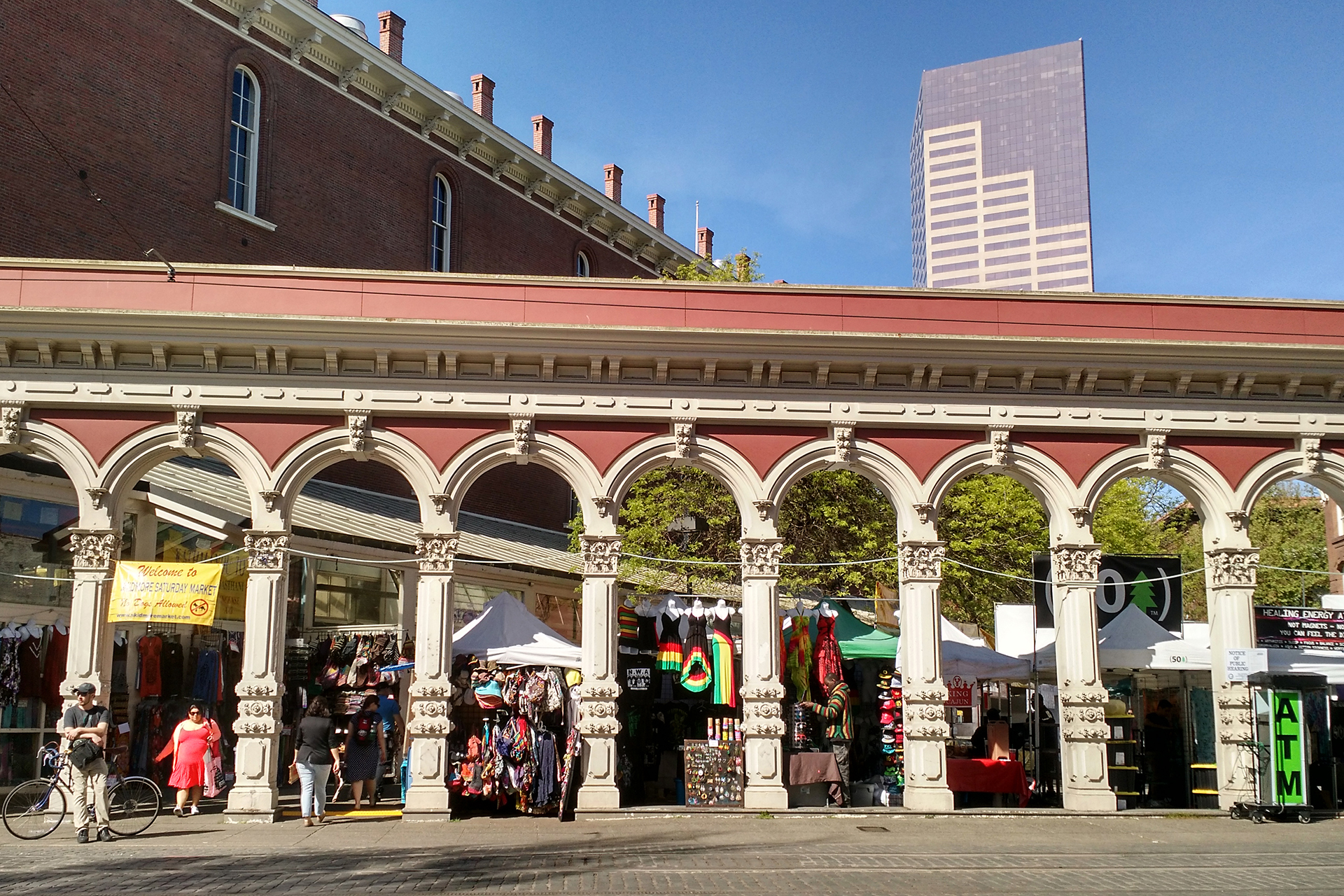
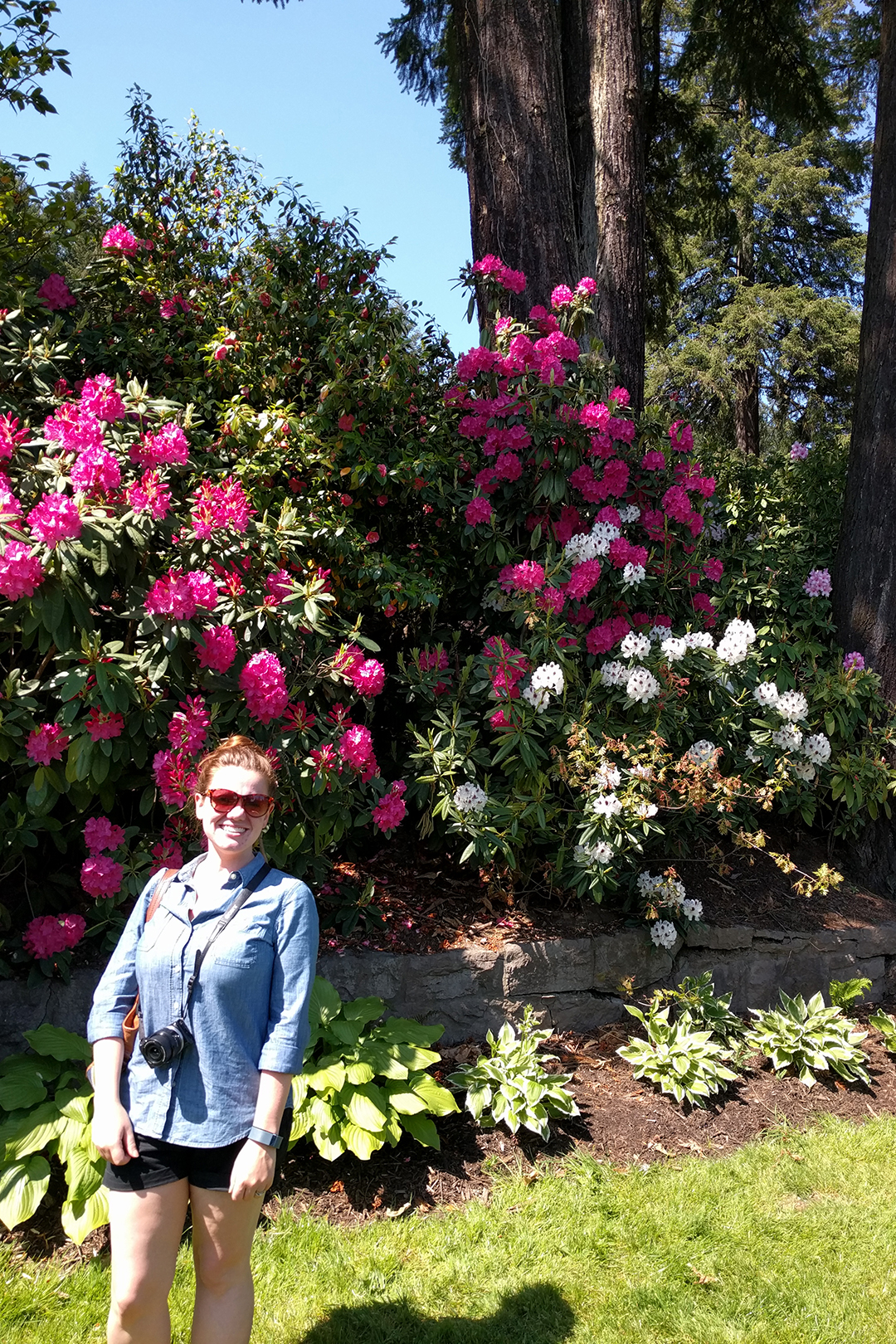
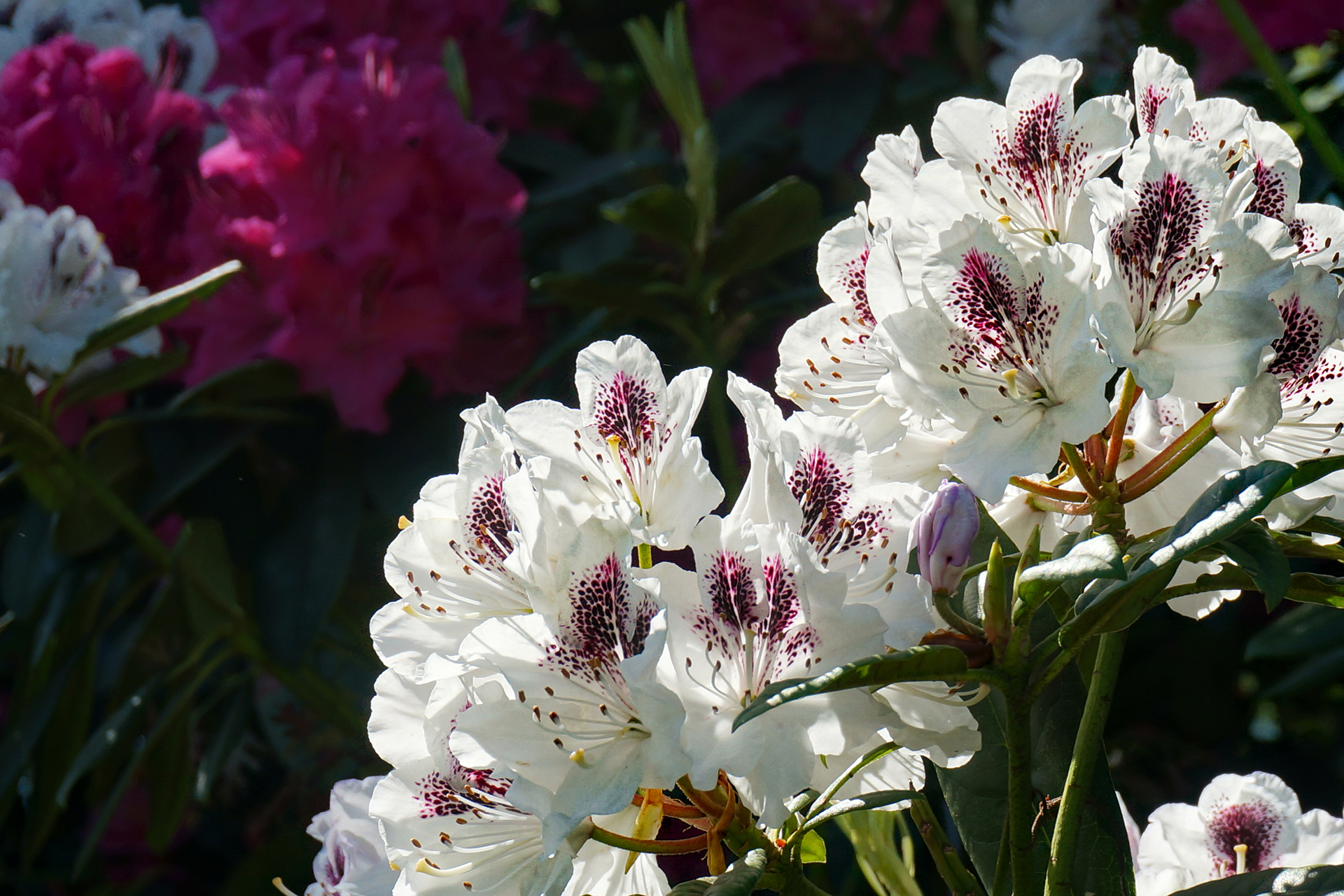
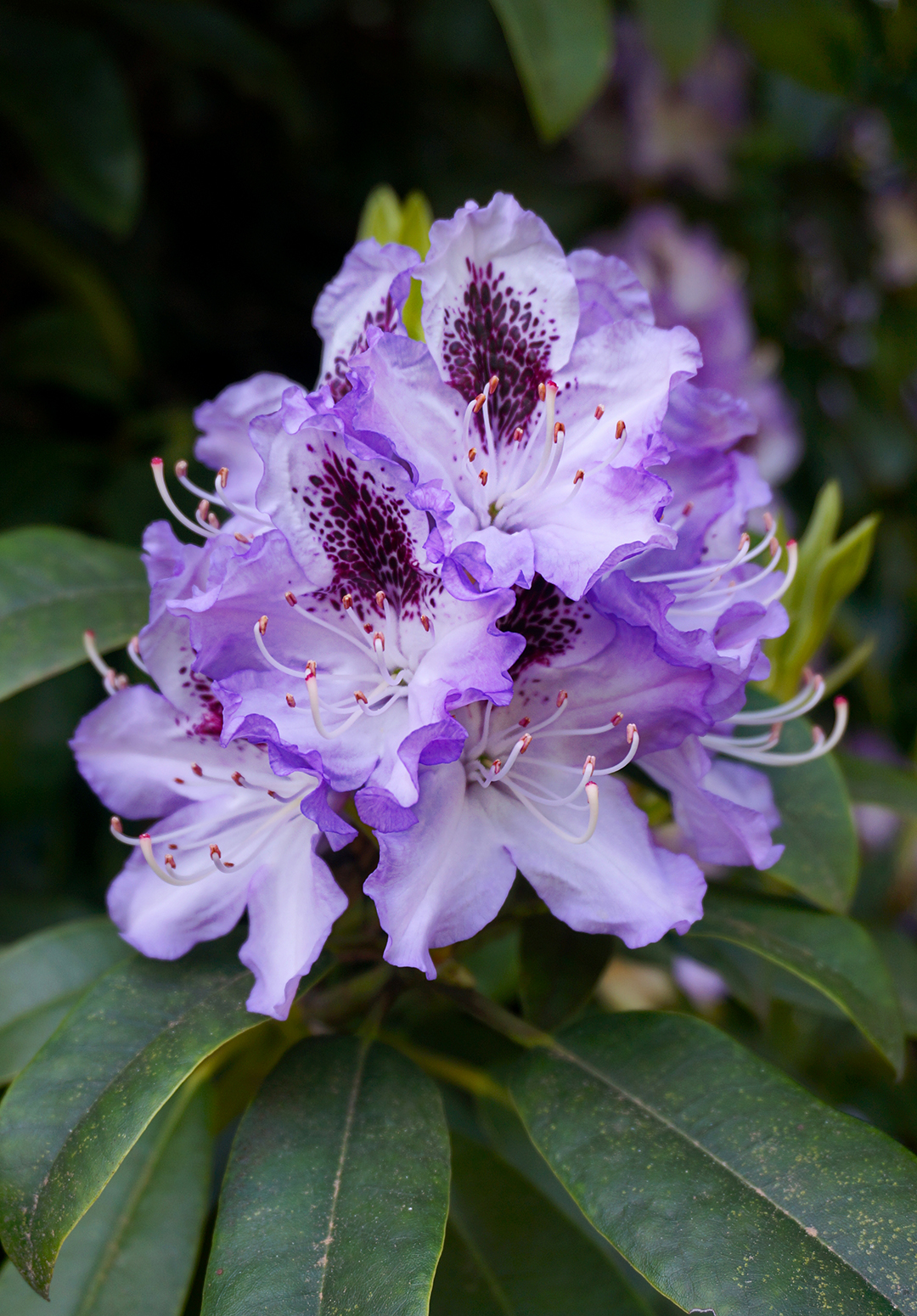
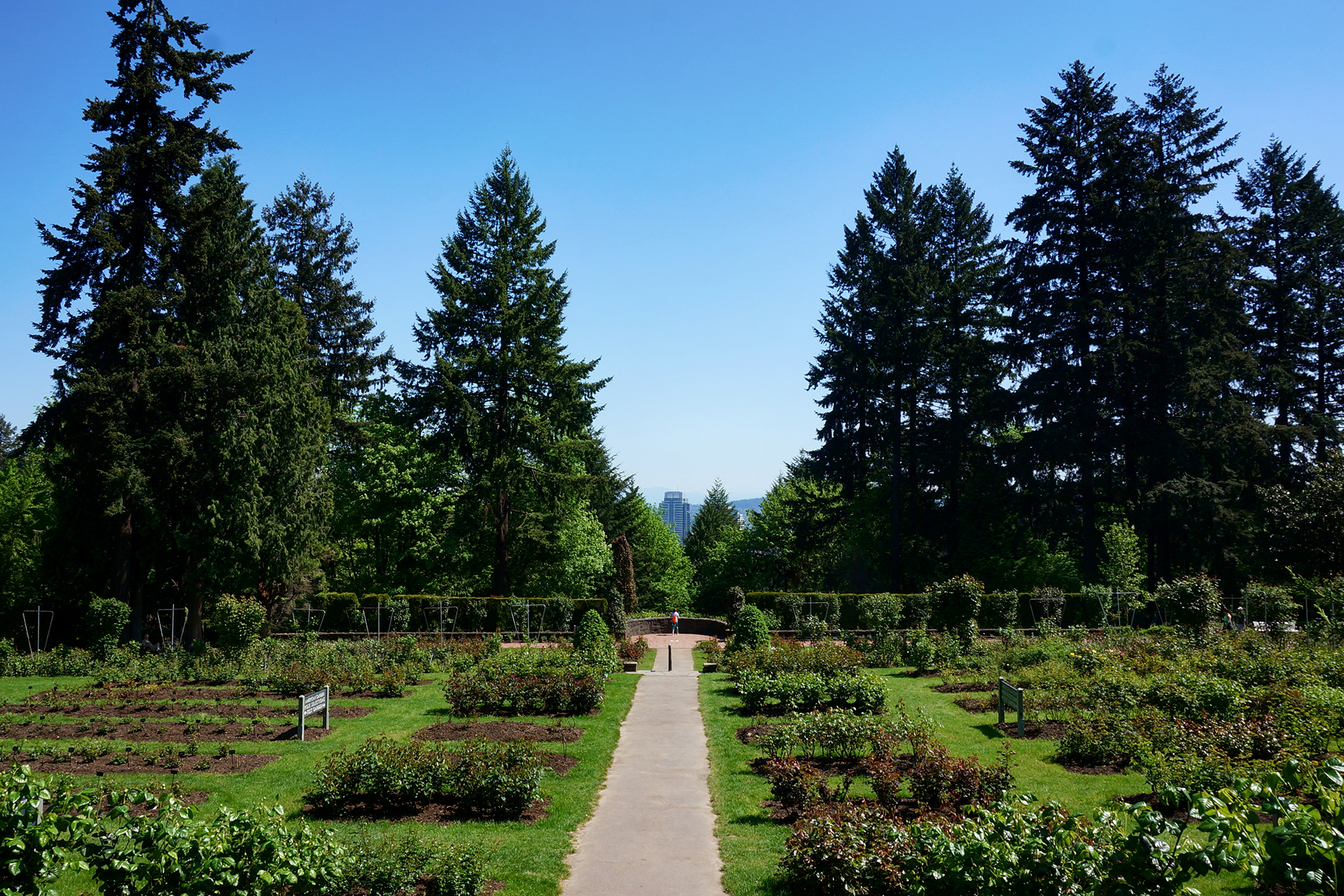
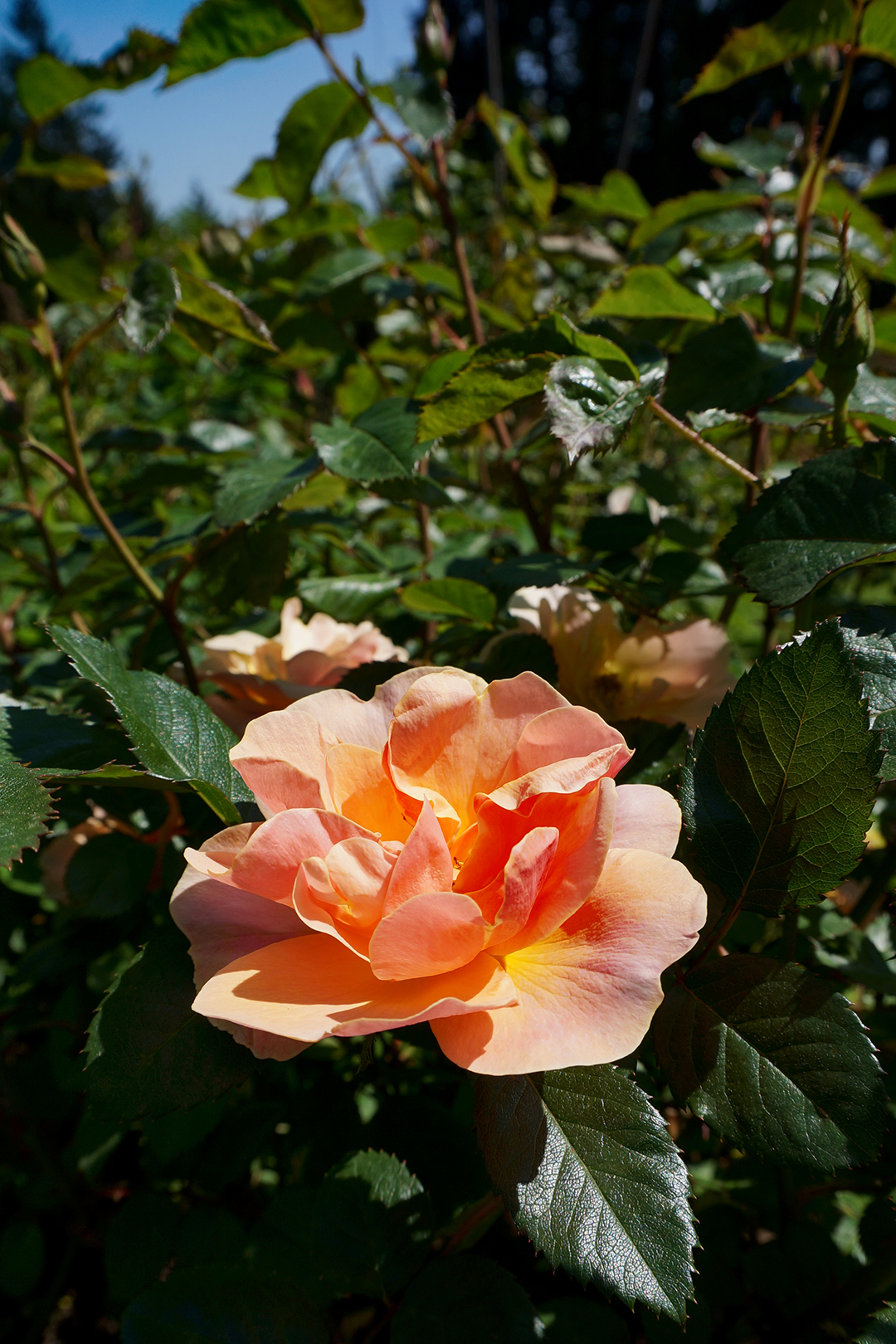
We took advantage of the beautiful weather to scope out the city, and our love kept growing. There were delicious Voodoo Doughnuts, a waterfront market, food trucks as far as the eye could see, and the International Rose Test Garden – a testbed for experimental roses, free to stroll.  We were a little early for the roses, but the rhododendrons were in full bloom.

On top of the great weather, everyone in Portland is friendly and laid-back. It must be mentioned that they’re also a bit eccentric – along with Brooklyn, Portland is ground zero for modern hipsterism – but we got along well with everyone we met. As far as we’re concerned, the more handlebar mustaches in this world, the better.

We finally got our Honda Fit fixed, for real (previous issues chronicled here and here), and the friendly mechanic mentioned that the pervading worry in the town was about rising rent prices and the influx of professionals. “They’re trying to turn us into a real city,” he said, sadly.

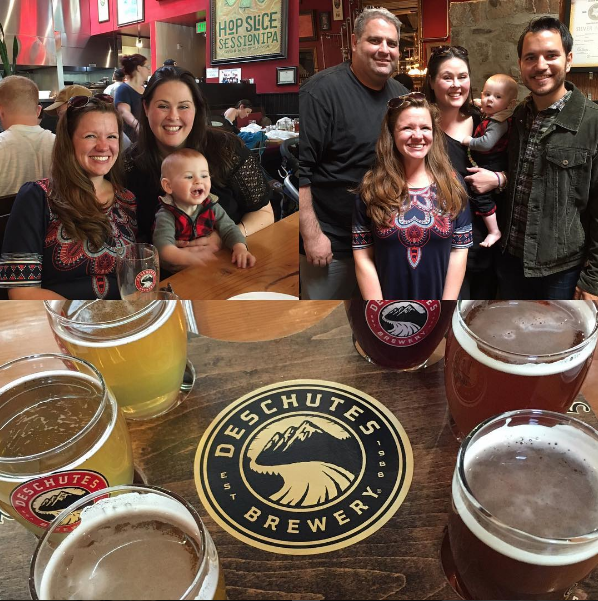
Real city or not, there is an abundance of fun stuff to do in Portland. Our friends Autumn and Aaron happened to be visiting, along with their cute baby and Autumn’s parents, so we met up with them for lunch at the Deschutes brewery (yum).

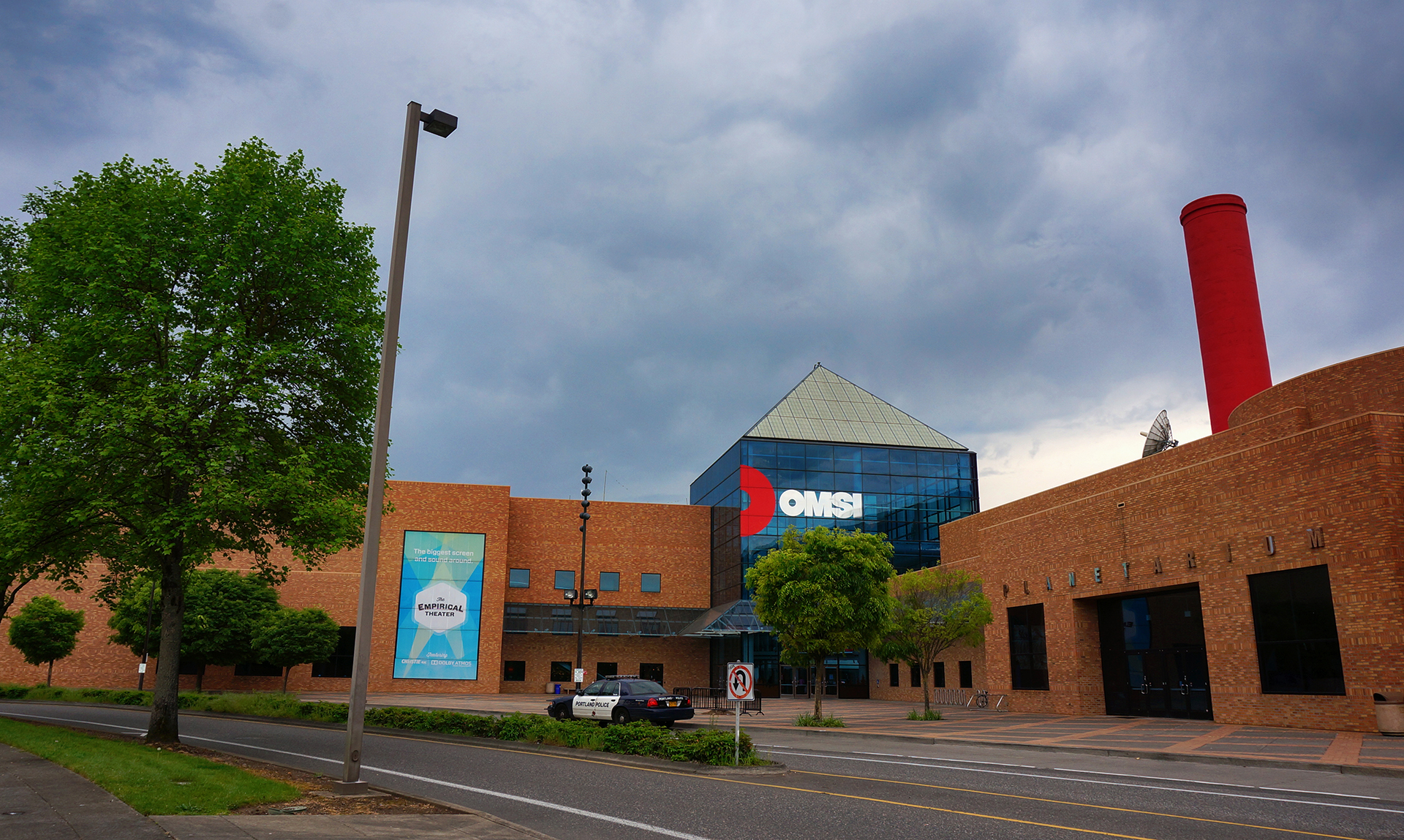
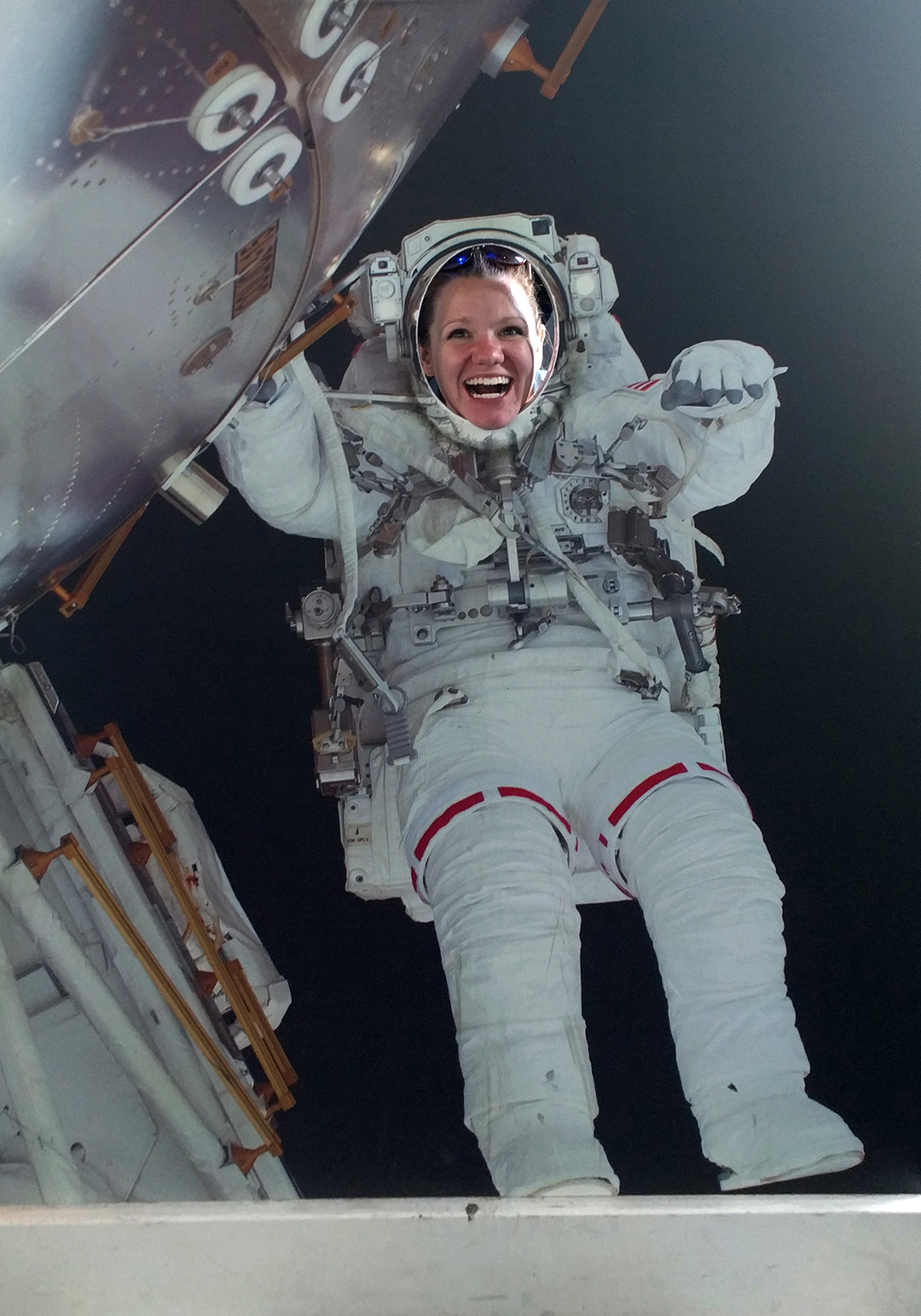
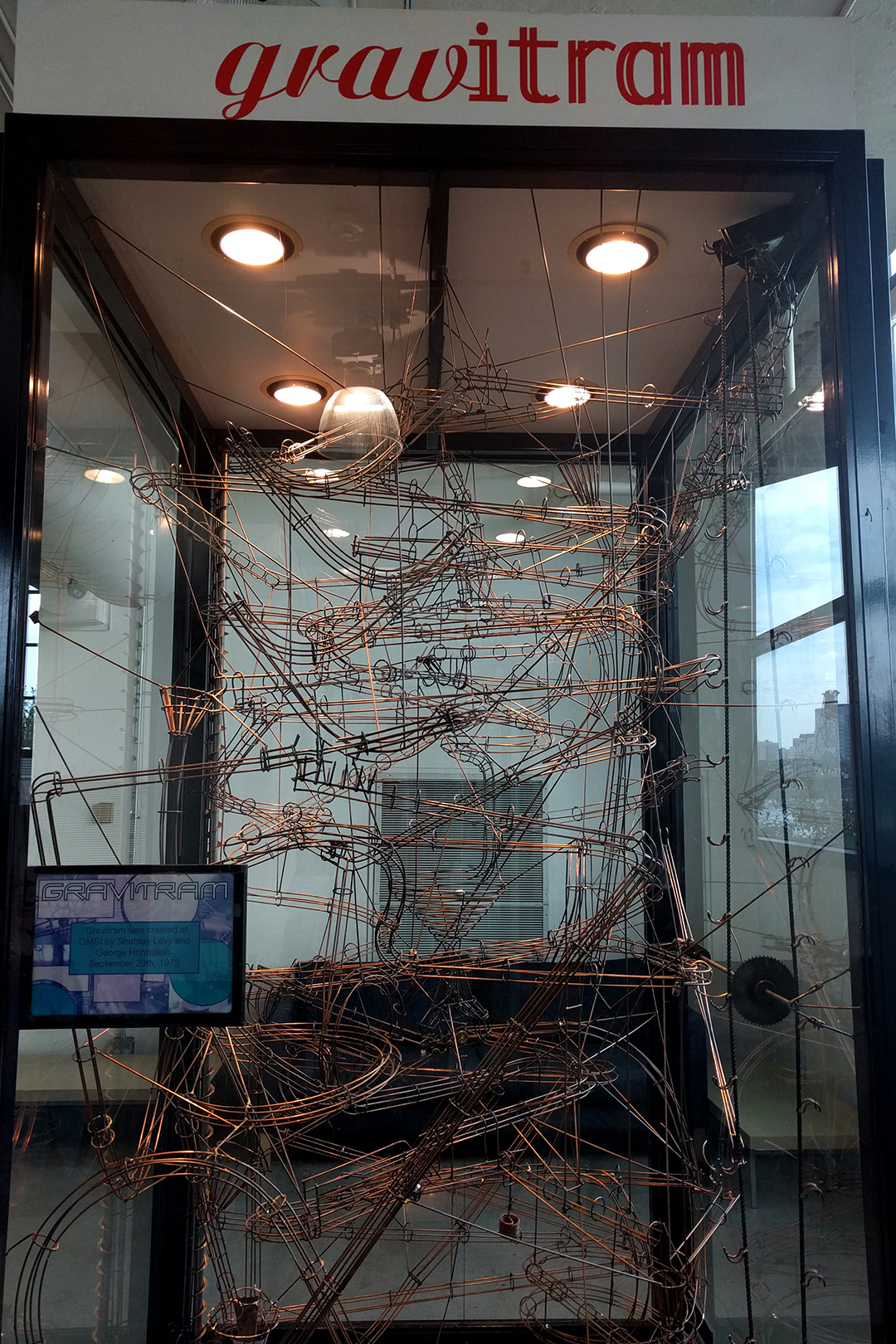
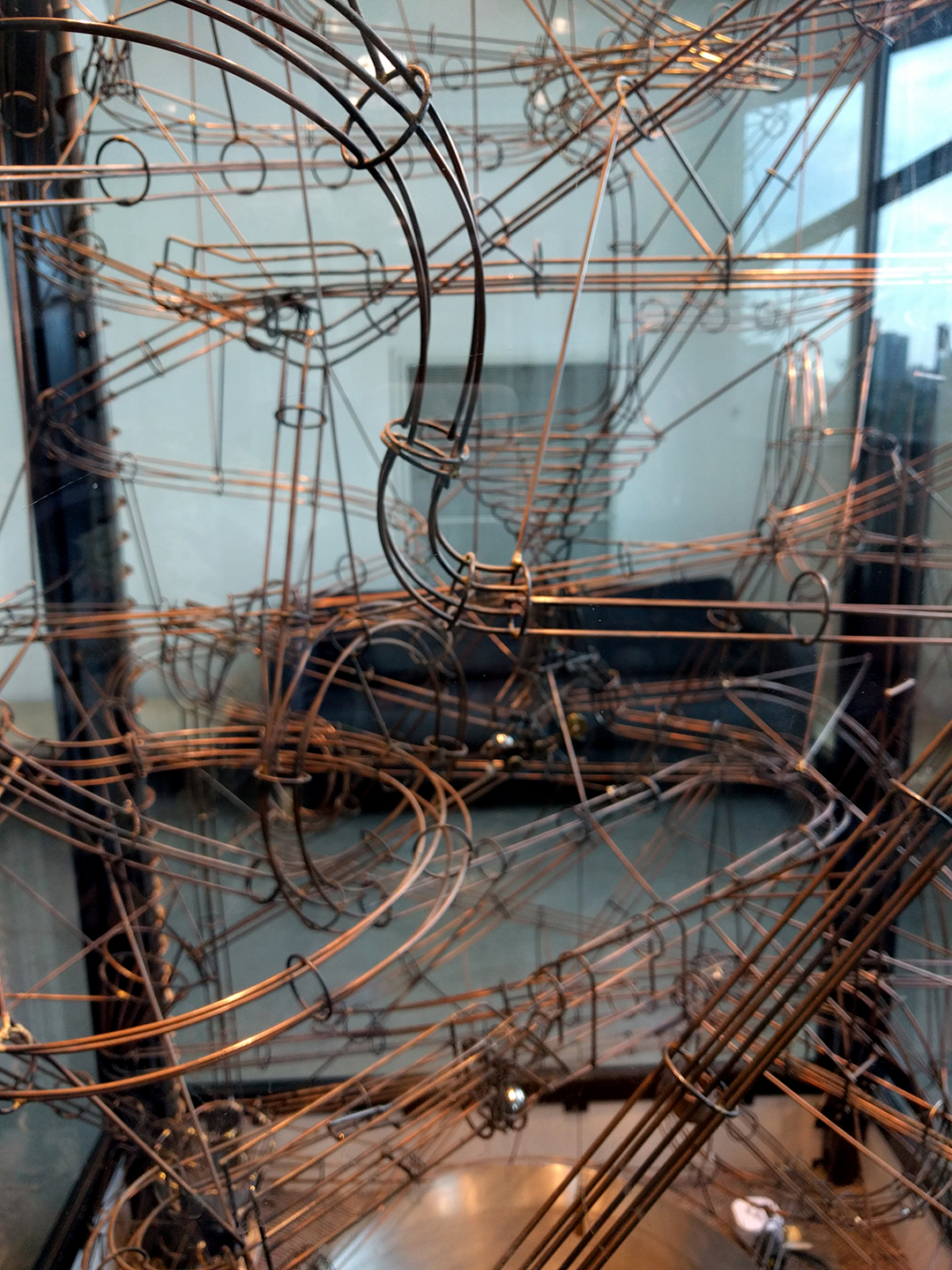
Later, we headed to the Oregon Museum of Science and Industry (“OMSI”), an awesome museum featuring an exhibit on video games (!) with dozens and dozens of playable games (!!). Pretty sweet, but the permanent exhibit was equally cool, with “hands-on” science toys like a Van de Graaf machine, water-pressurized soda bottle rockets (Heather was good at those), a chemistry lab, a vertical wind tunnel for paper airplanes, a crazy kinetic sculpture, and much more.

Science is just the best, isn’t it?  The friendly and knowledgeable volunteers were even kind enough not to mention the fact that we were adults playing with exhibits clearly intended for children.

Oregon is Gorges

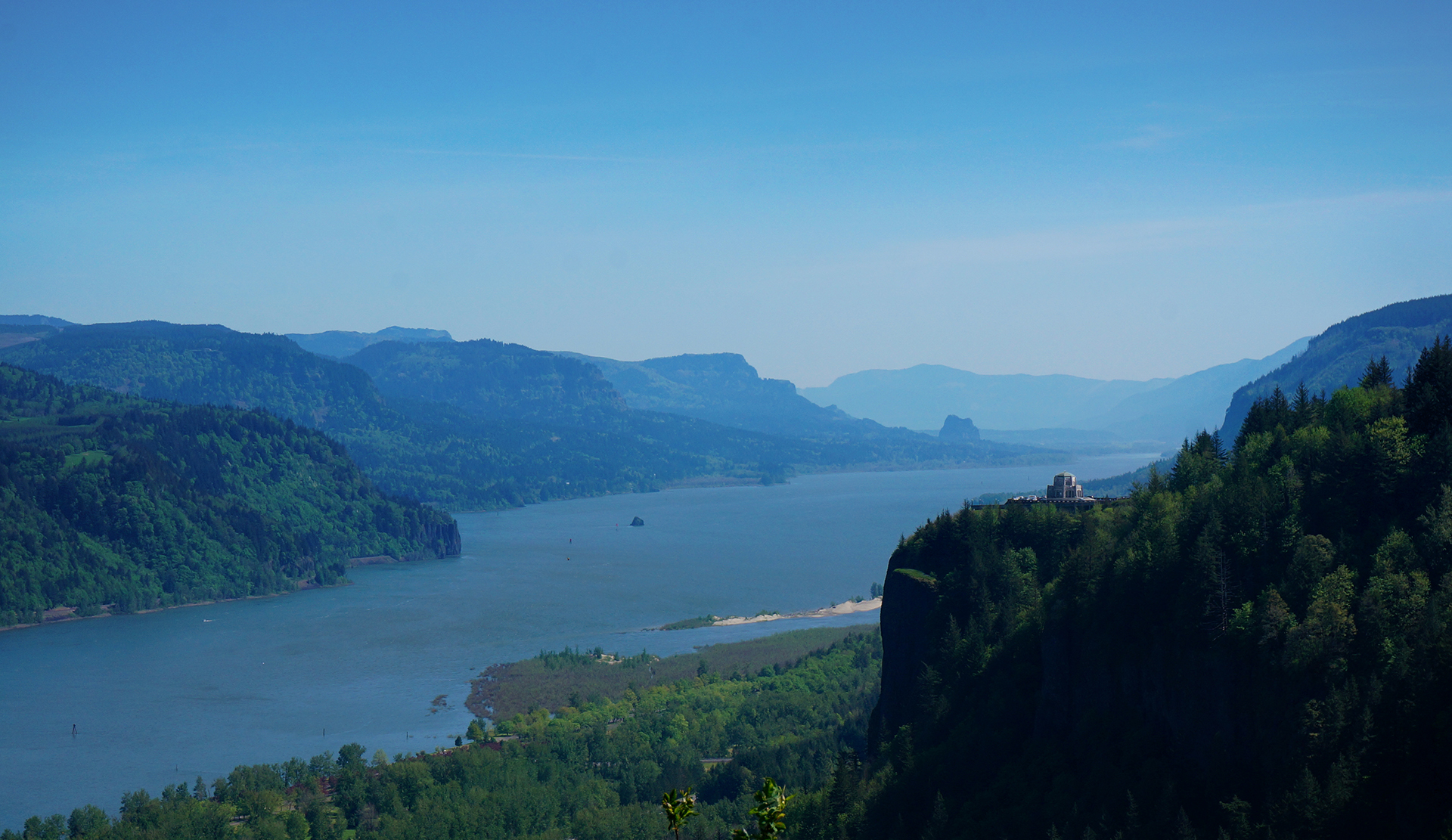
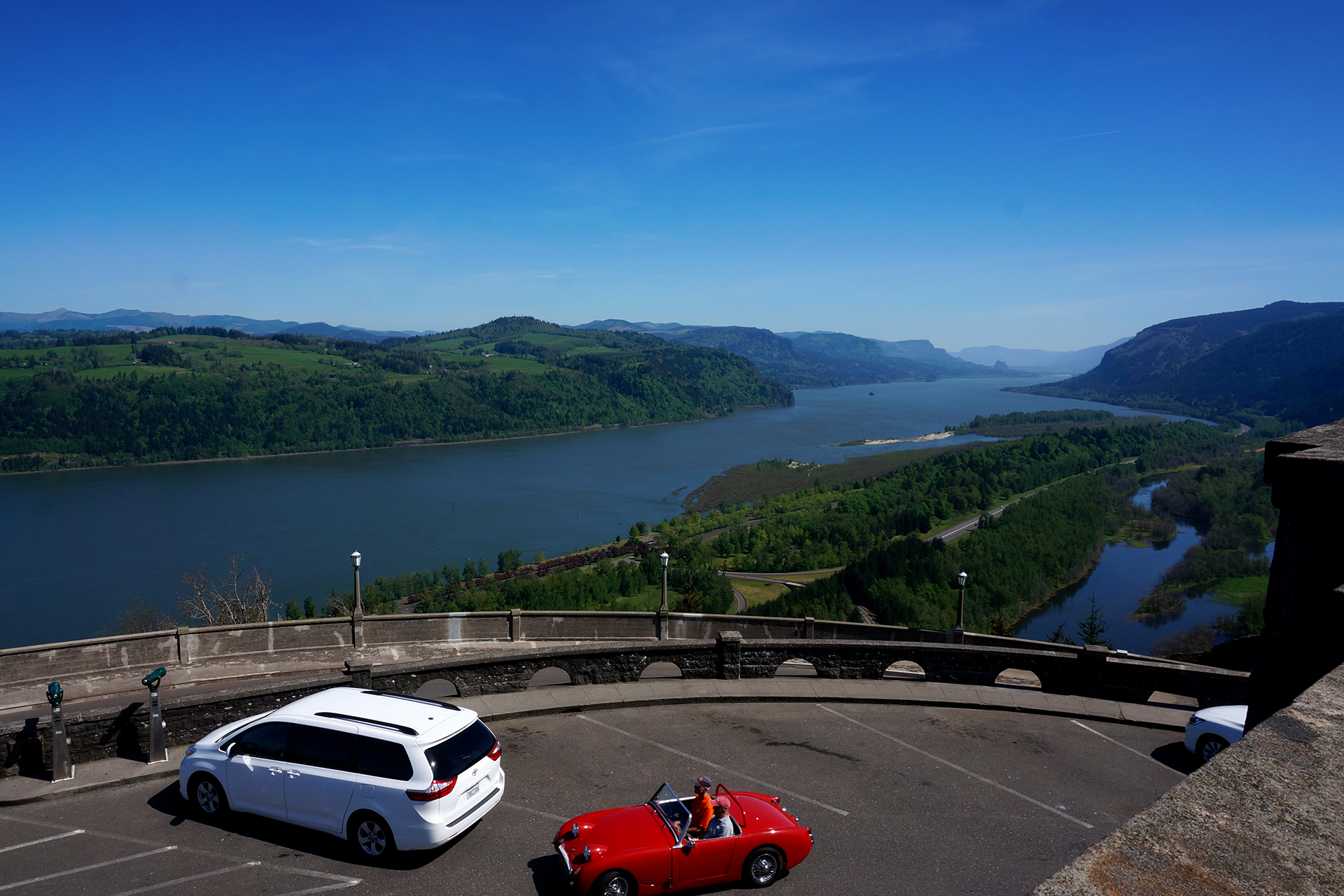
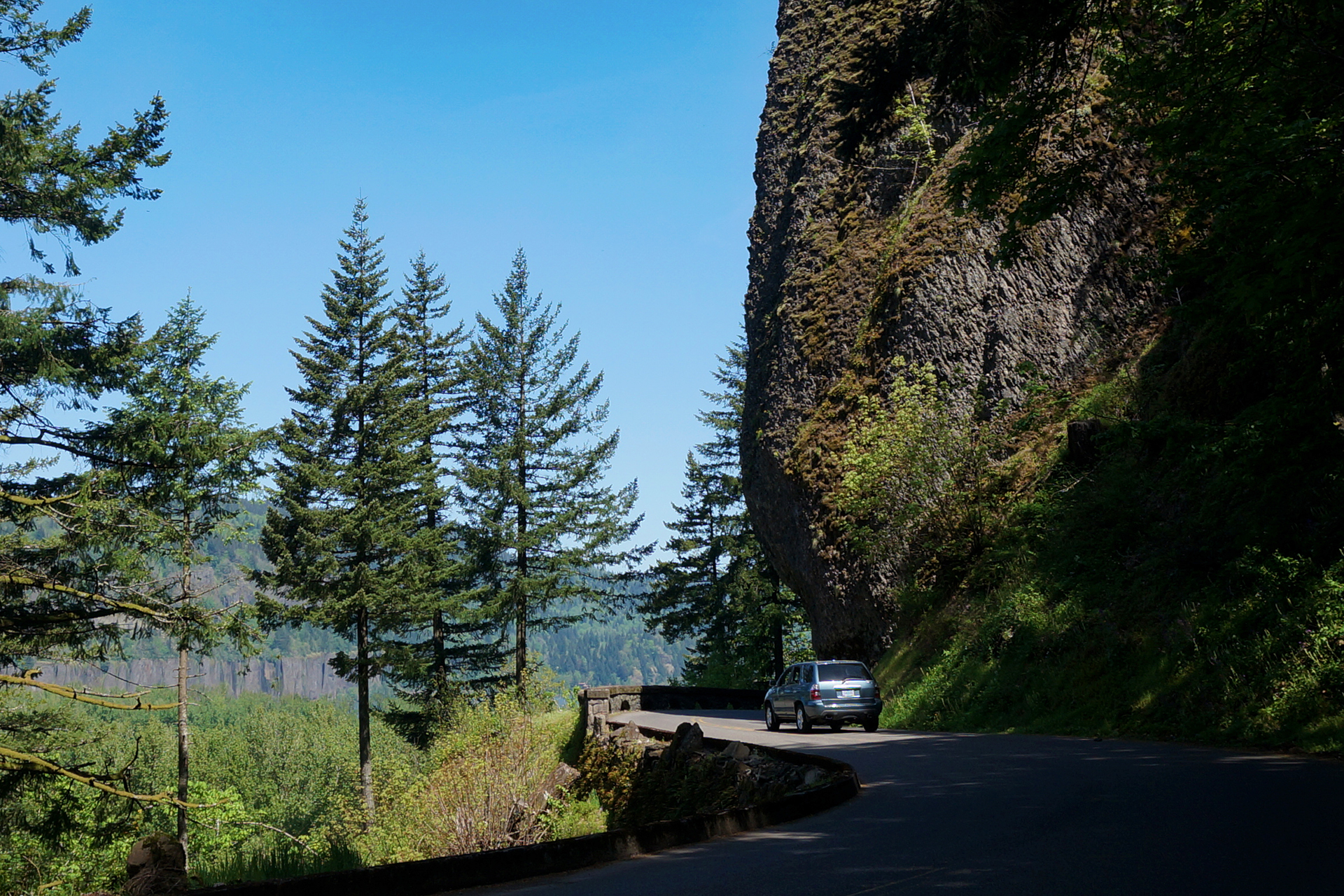
While staying in Portland, we explored the nearby Columbia River Gorge. A crucial but treacherous path to settlers on the Oregon Trail, the gorge cuts through a lush and mountainous region just north of Mount Hood. Years later, an excellent-but-narrow scenic drive was created that follows the river past numerous waterfalls. (Seriously, there are an unreasonable number of waterfalls here.)  Want to see some pictures? Of course you do.

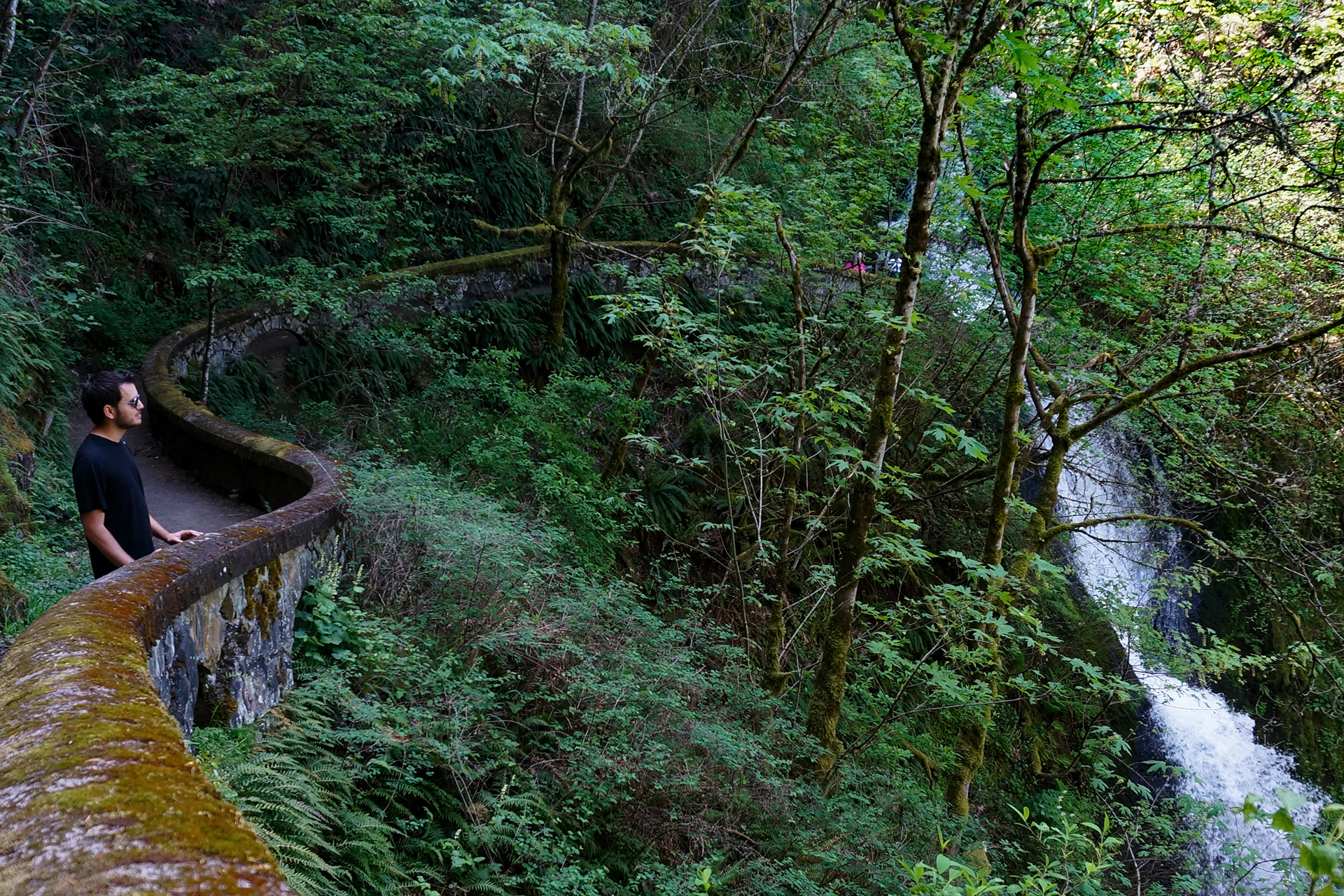
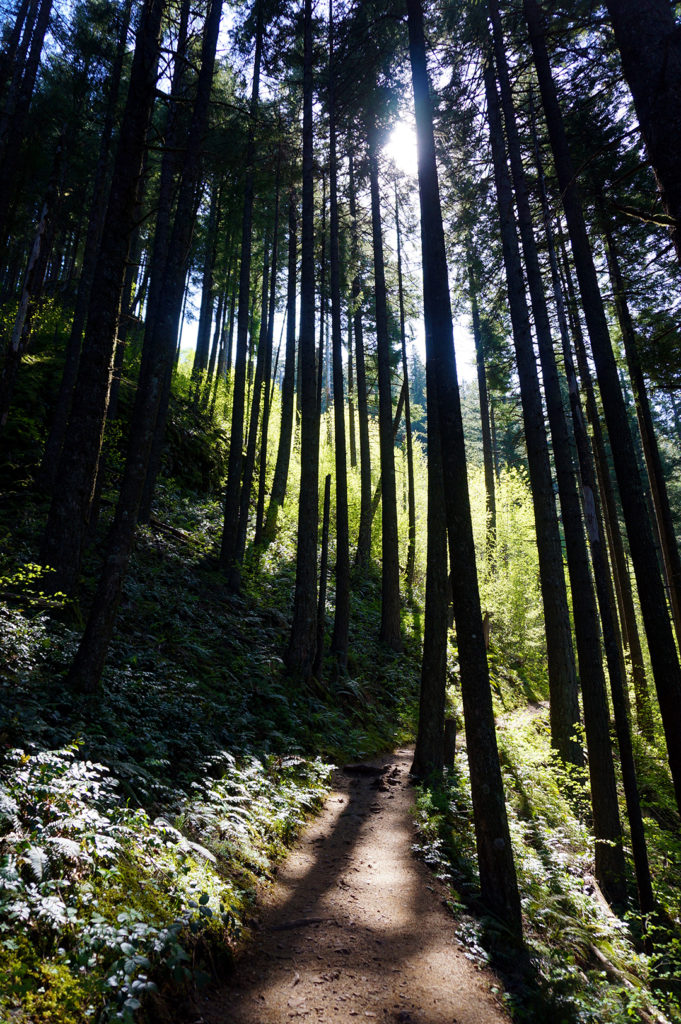
At the end of our drive we hiked up the hill behind Multnomah Falls. It was a tough climb, but the half-dozen beautiful waterfalls and striking views of the gorge were well worth it. Jake was particularly enchanted with a section of trail that passed through a high forest, lit by late afternoon sunbeams filtering through the canopy overhead. It remains one of our favorite hikes.

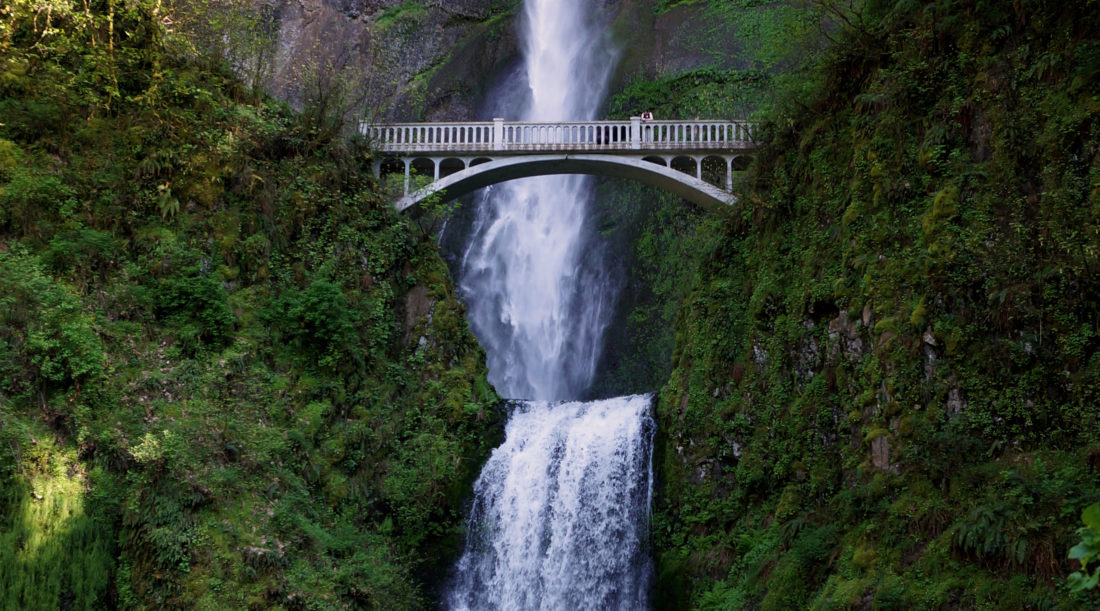
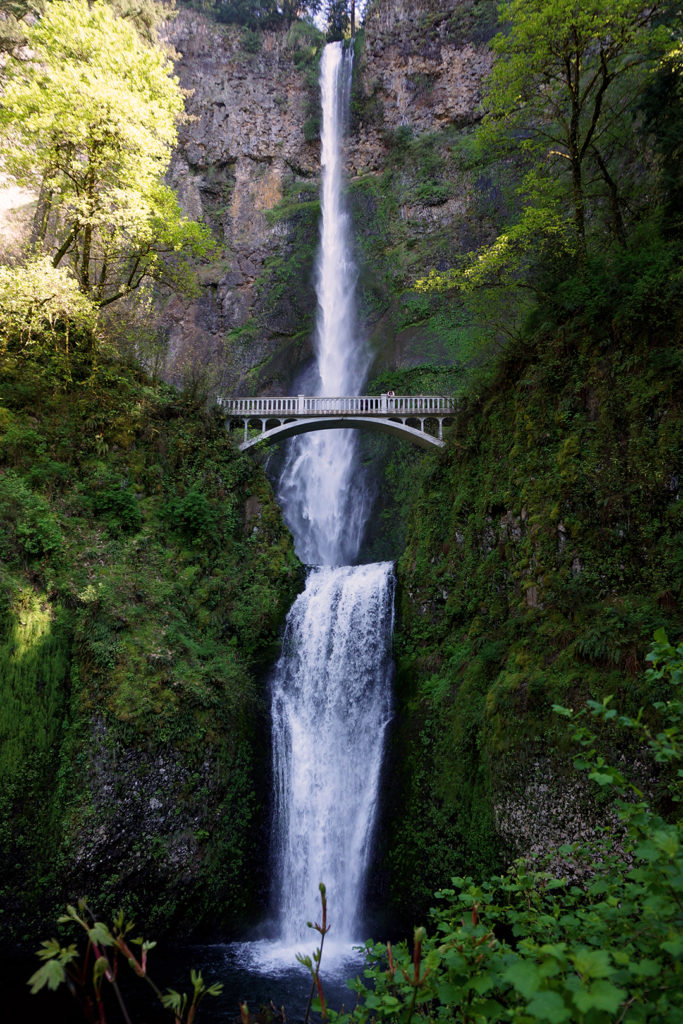
The icing on the nature-cake was Multnomah Falls itself, a towering waterfall with a picturesque viewing bridge installed in front of it. After the quiet of the woods, it was tough to deal with the crowds at the base of the falls, but we can’t really blame them – this is one of the most scenic waterfalls in the country.  Selfie away!

The Hood

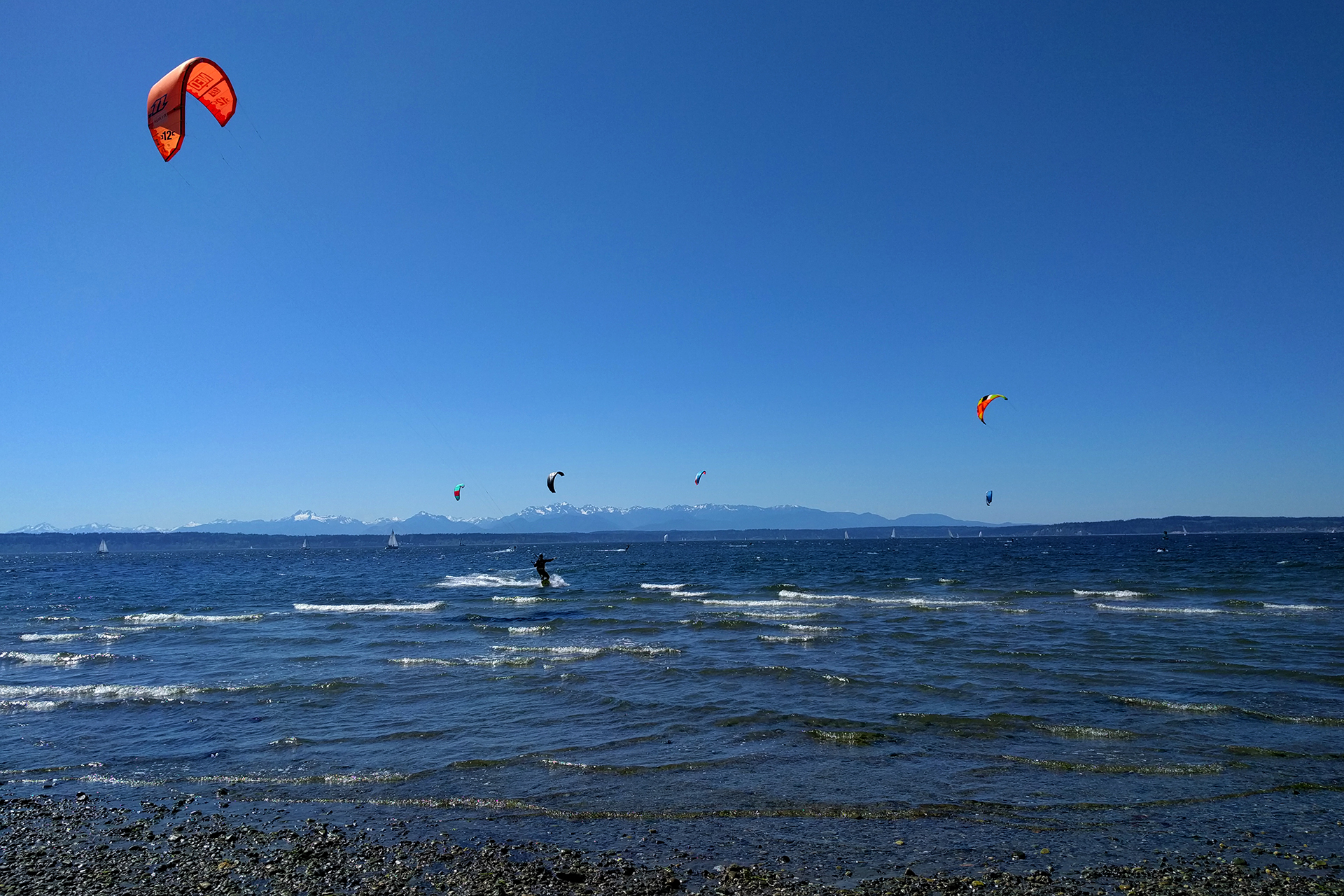
Our final visit in the Portland area was to Hood River, a small town to the east situated on the Columbia River gorge. It’s a town known for two things: its extreme sports activities, and its beer. We killed two birds with one stone by eating lunch on the patio at Full Sail Brewing, which overlooks the river.   While we feasted, we watched dozens of windsurfers swoop, glide, and even flip across the water, an intricate and endlessly fascinating dance.

Pretty amazing. We have to say, based on our visit, the Portland area truly seems like a great place. After three days of sunshine, we were ready to live there forever… and then there were about six straight days of cold, constant rain. It was a chilling reminder that Portland’s mild winters can still be, well, chilling.

So Portland might not be perfect – but it’s still on our post-trip shortlist.

Roadtrip Time Travel

Roadtrip Status

Still alive?  Check.

Where are you now?  The great and empty state of North Dakota, exploring some cool badlands at Theodore Roosevelt National Park.

Next location?  Fargo, then Minneapolis, as we head east towards Chicago!

Follow Us On Social Media
FacebooktwitterinstagramFacebooktwitterinstagram

Latest Posts

0

Week 42: The Wild Oregon Coast

We left California for good in mid-April, headed towards Oregon, after having spent just shy of three months in the Golden State. We had a lot of great adventures in California, and we were pretty sad to leave.

That said, the gas in Oregon is extraordinarily cheaper than in California, which made things a little more palatable.  (Unsurprisingly, the RV uses a lot of gas.)  Speaking of palatable, our next stop was a quick 2 nights along the Oregon coast. After our last, redwoods-sized redwoods post, a bite-sized blog sounds just right.

Dino-mite!

The drive up the Oregon coast on Highway 101 was spectacular, winding along the Pacific Ocean. The area is definitely hilly, and we feared a white-knuckle drive, but Oregon turned out to be a very RV-friendly state. The grades and curves were relatively gentle, and there were plenty of pull-offs, offering scenic views and a respite from angry tailgaters. We probably saw more RVs per mile on this stretch than anywhere else in the country (except Quartzsite!).

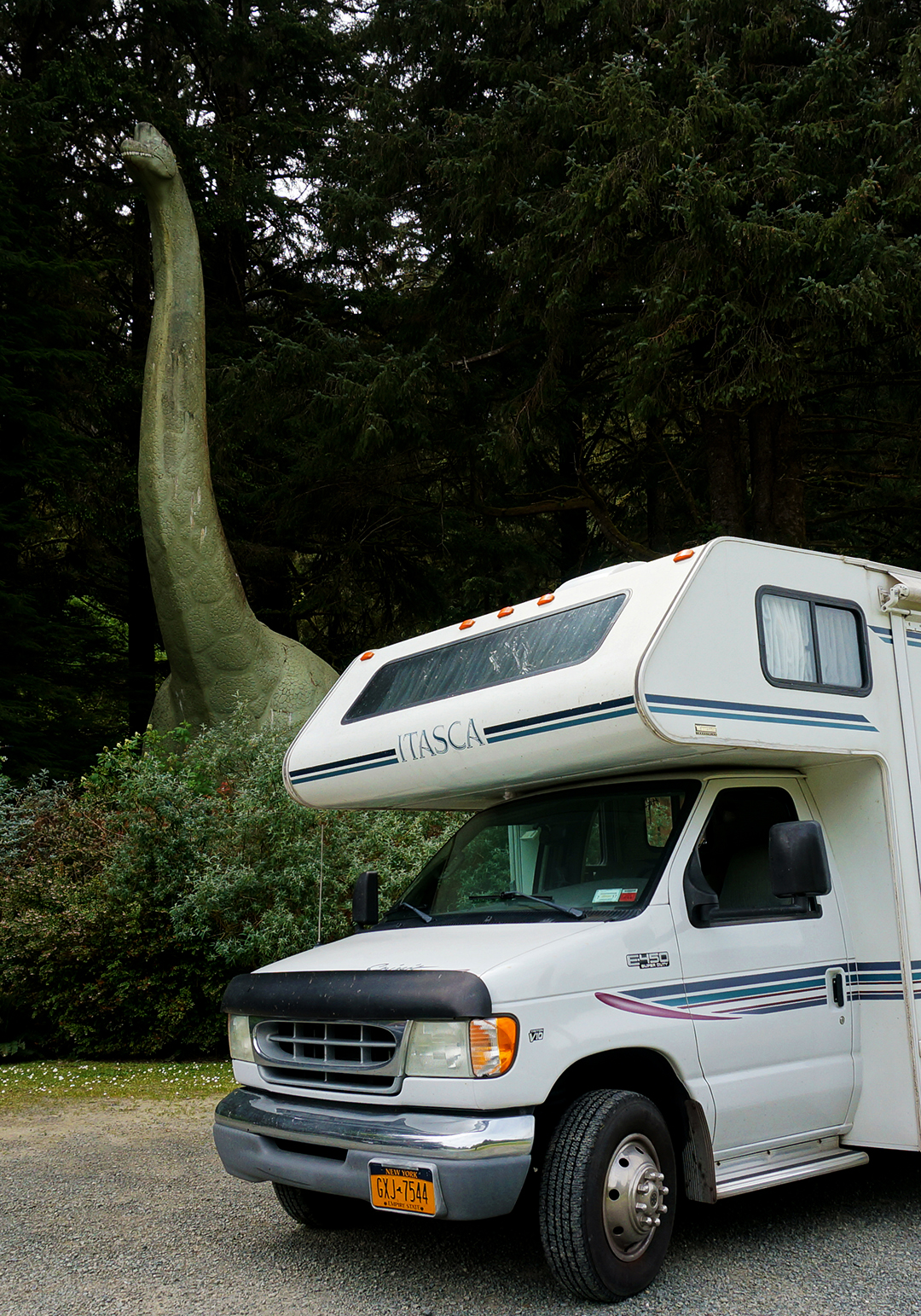
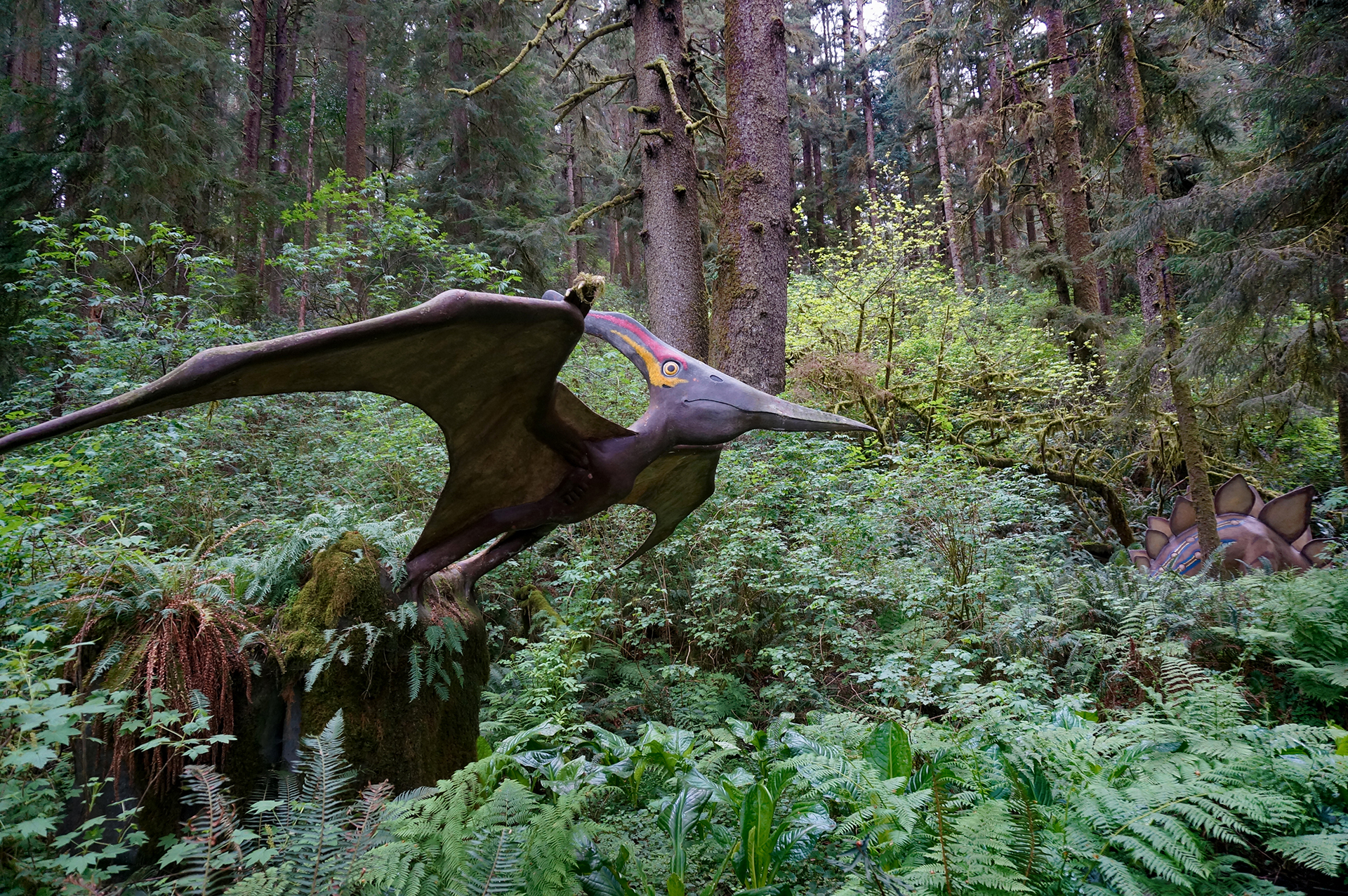
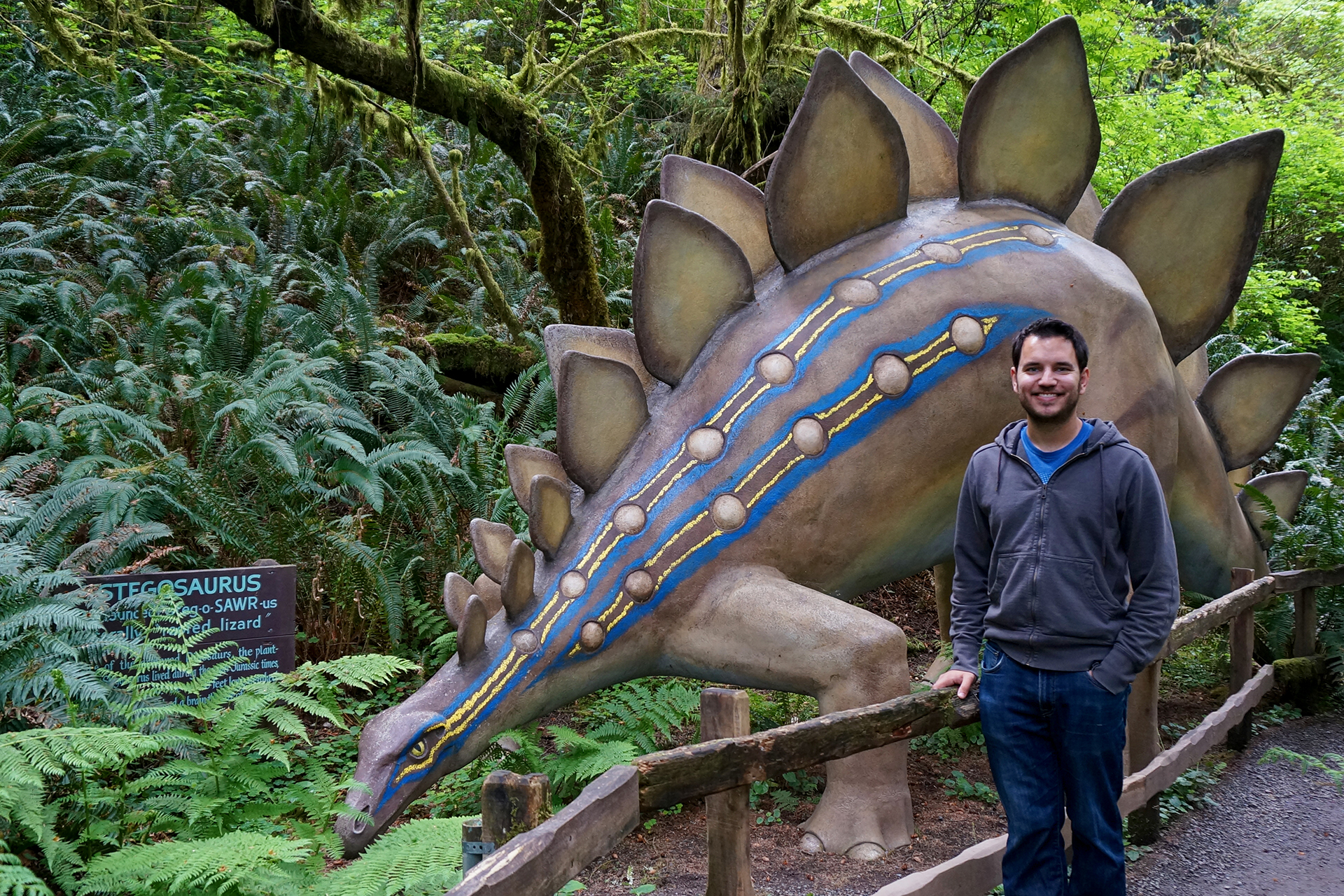
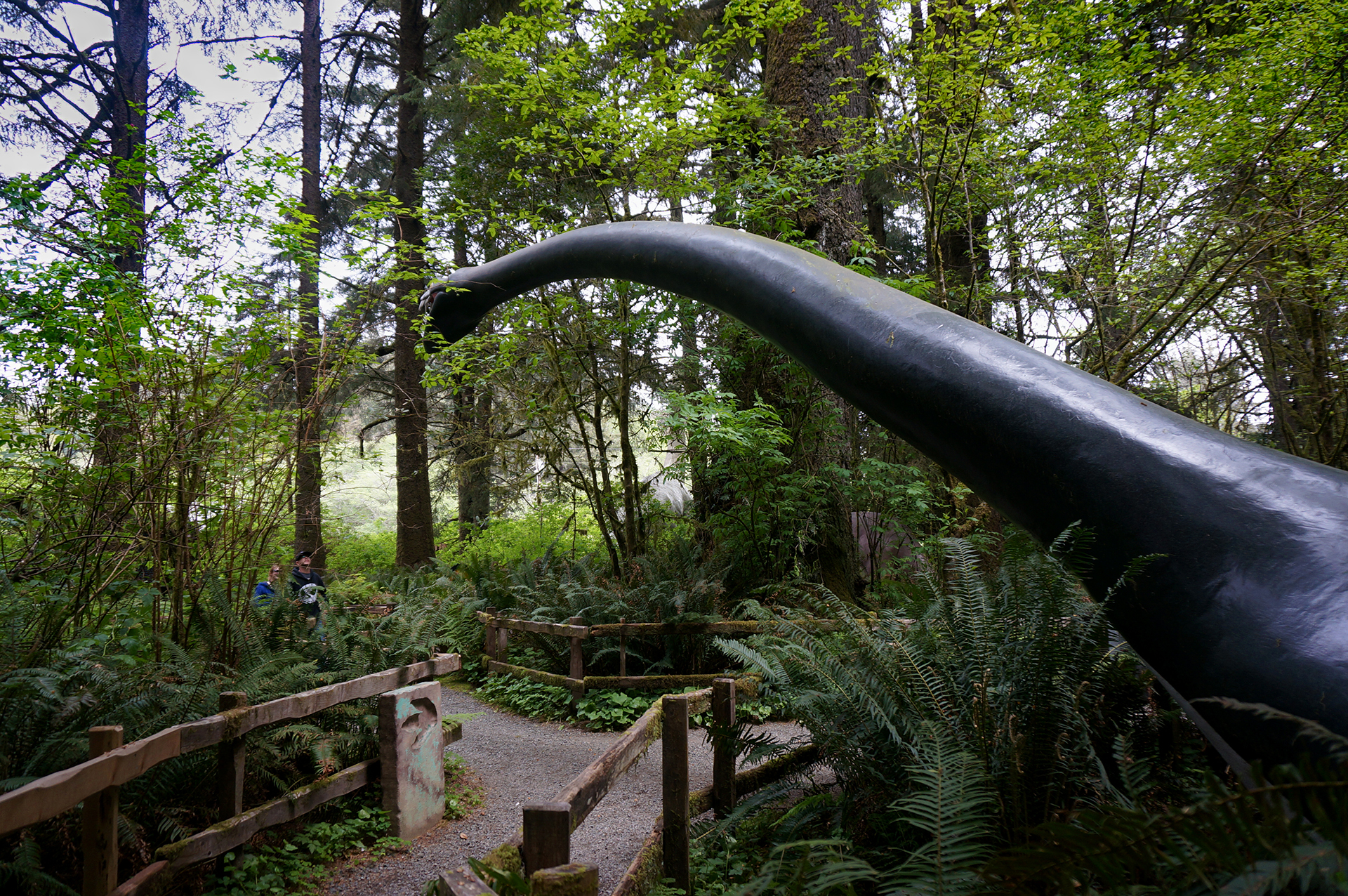
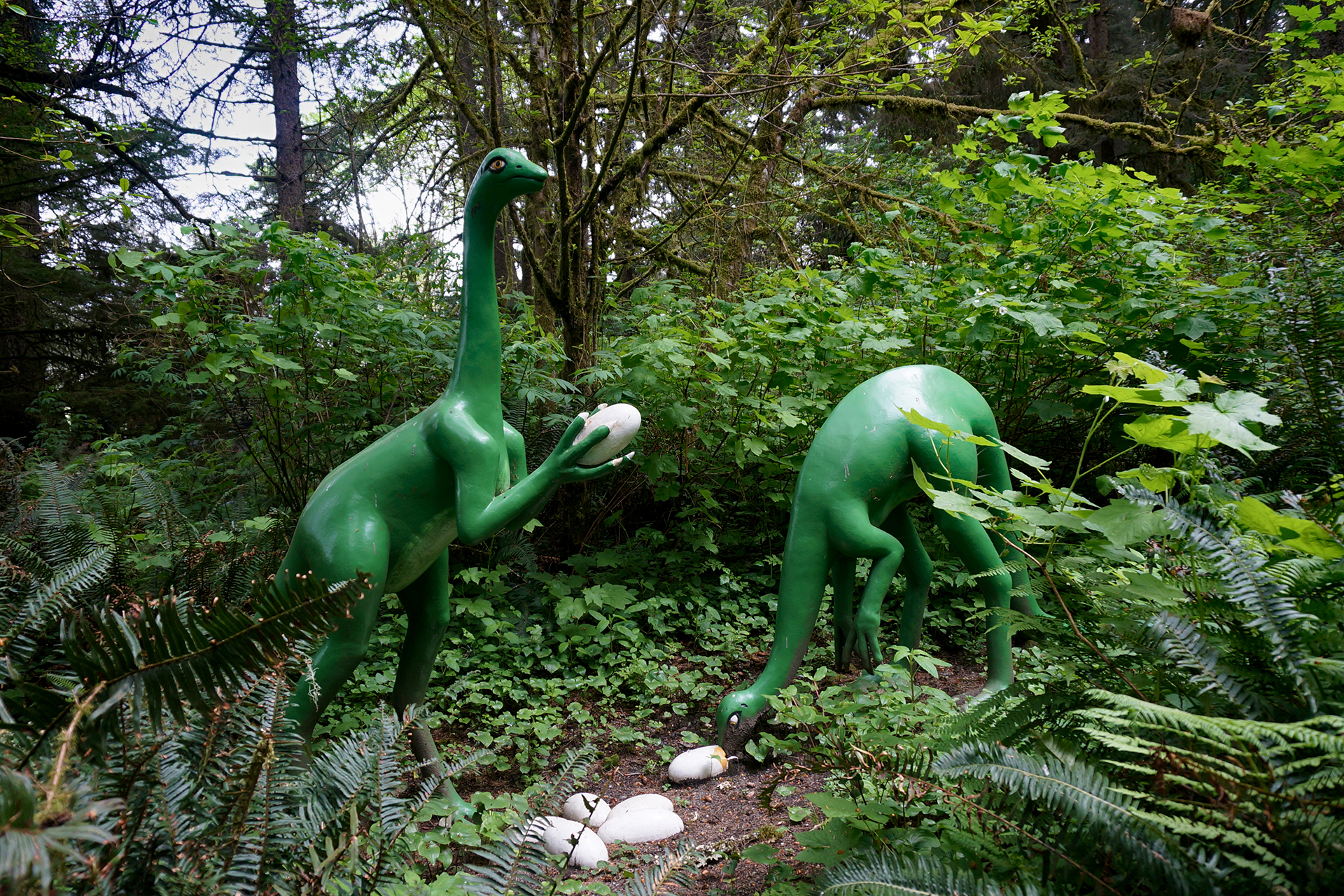
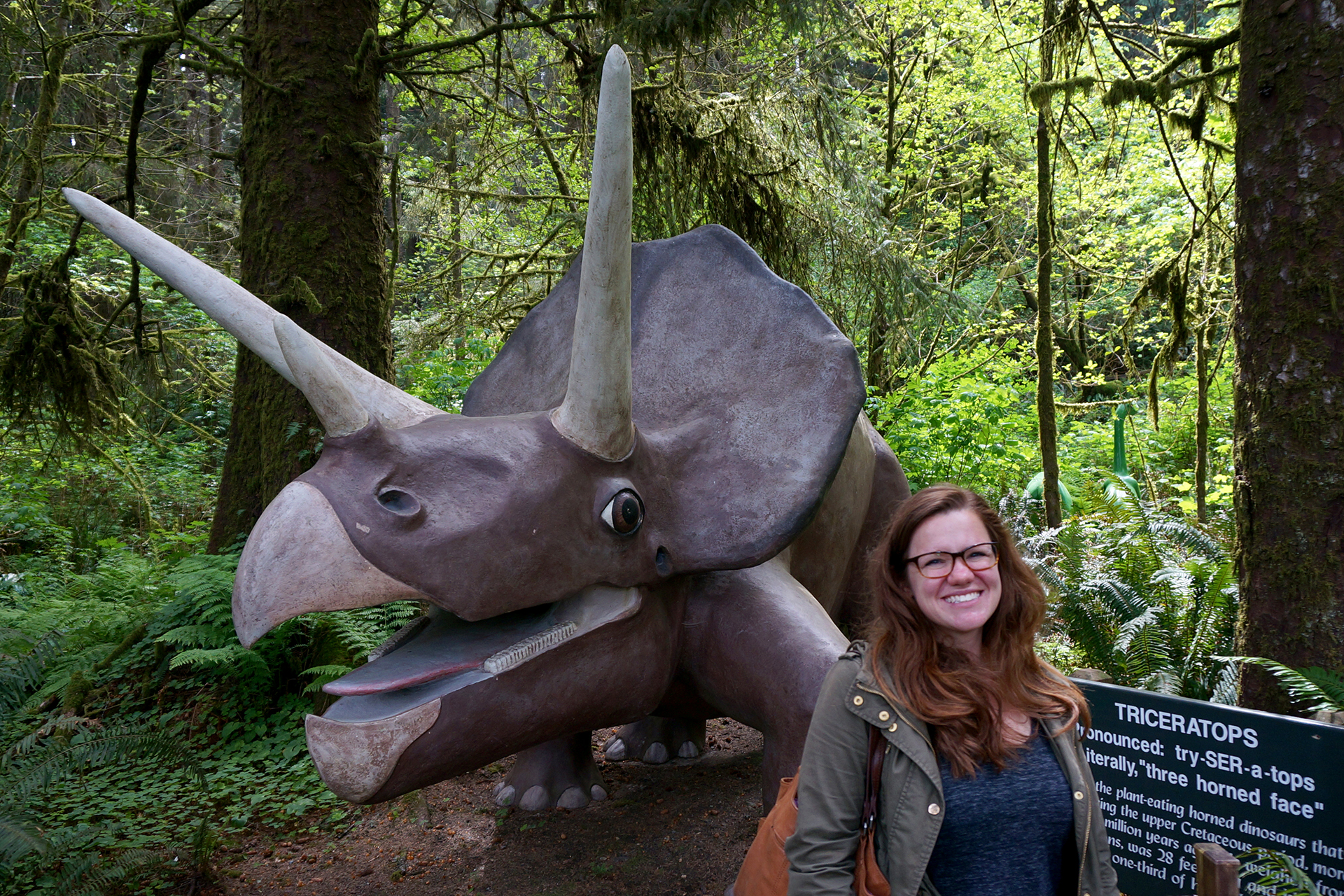
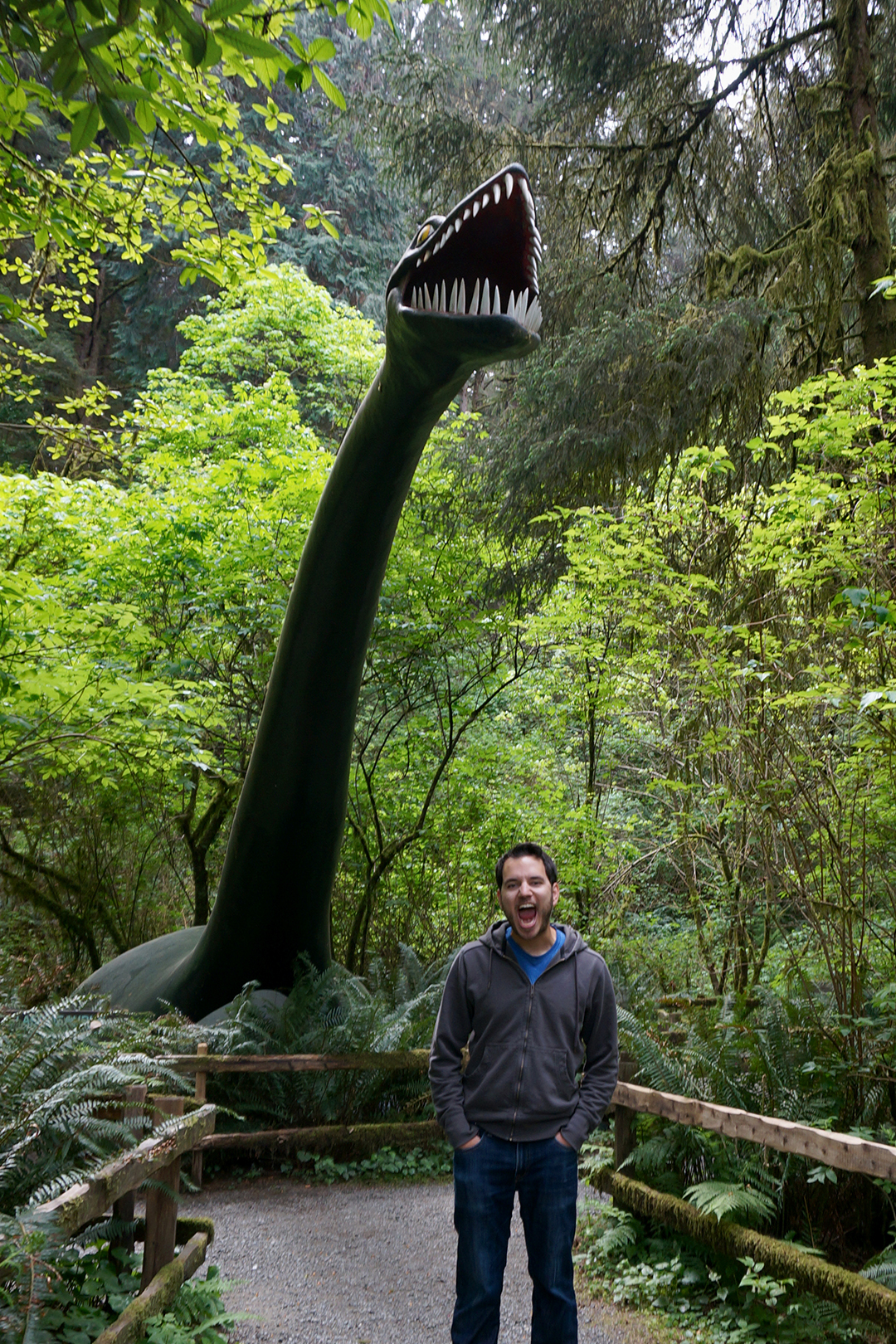
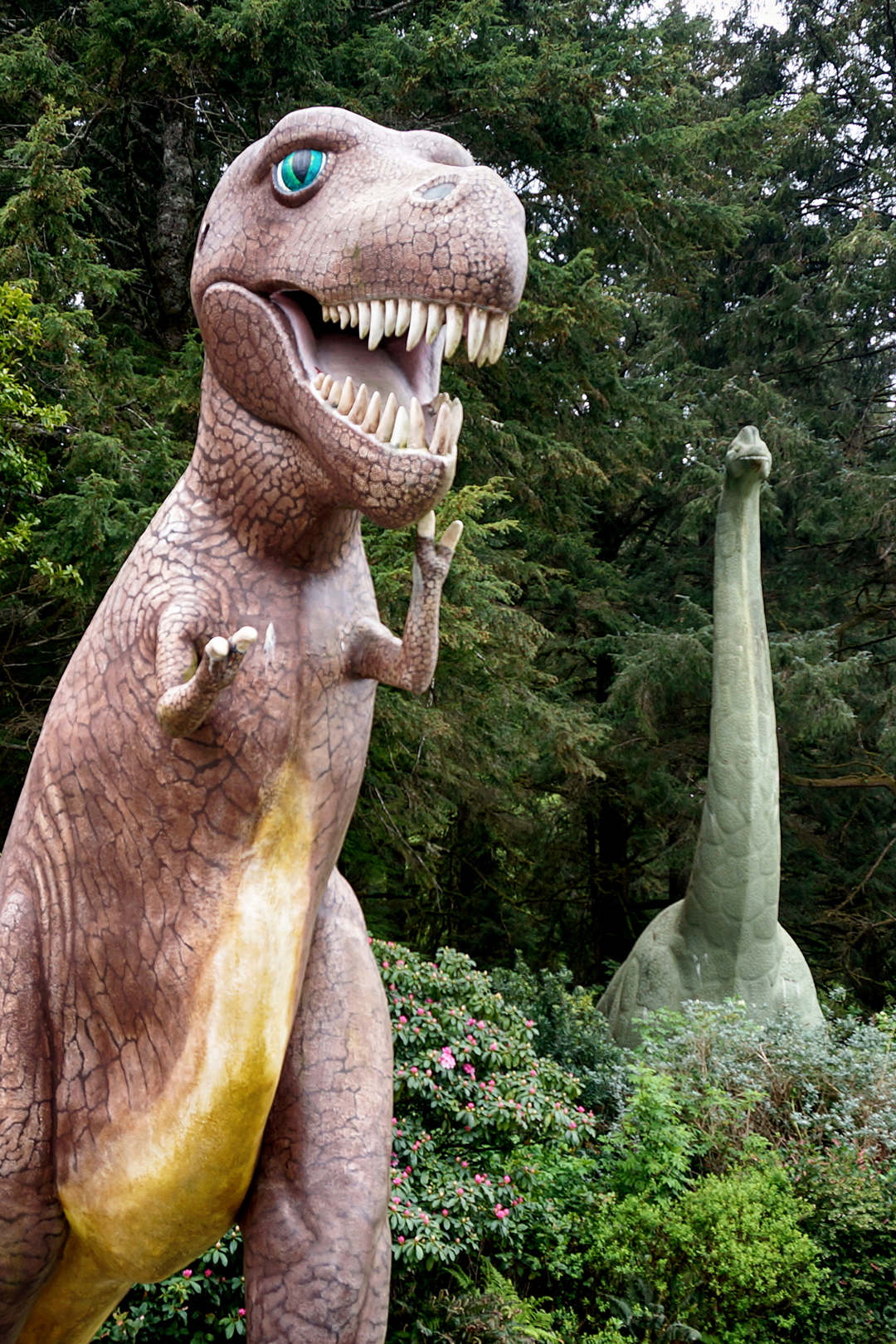
We stopped along the way to our destination to visit the Prehistoric Gardens, a quirky roadside attraction of local fame. The turn into the Gardens was pretty white-knuckle, due to… let’s call it, “user error regarding the amount of braking required,” but it was all worth since we got to take selfies with 23 life-size dinosaurs.

At the time they were built, the displays and the statues were all scientifically accurate, which we appreciate.  Of course, since the oldest statues here were almost sixty years old, you won’t find anything about feathers or avian evolution here. Nonetheless, the whimsical coloring and beautiful foliage more than made up for it, and overall, it was an A+ roadside stop.

Quick Sand

After our visit to the Jurassic, we pulled into our campground at the awesome Jessie M. Honeyman State Park. This was about the sixth state park with RV spots we passed in 50 miles; as we said, it’s a very RV-friendly state. The next day, we started out by exploring a very surprising Oregon find: sand dunes!

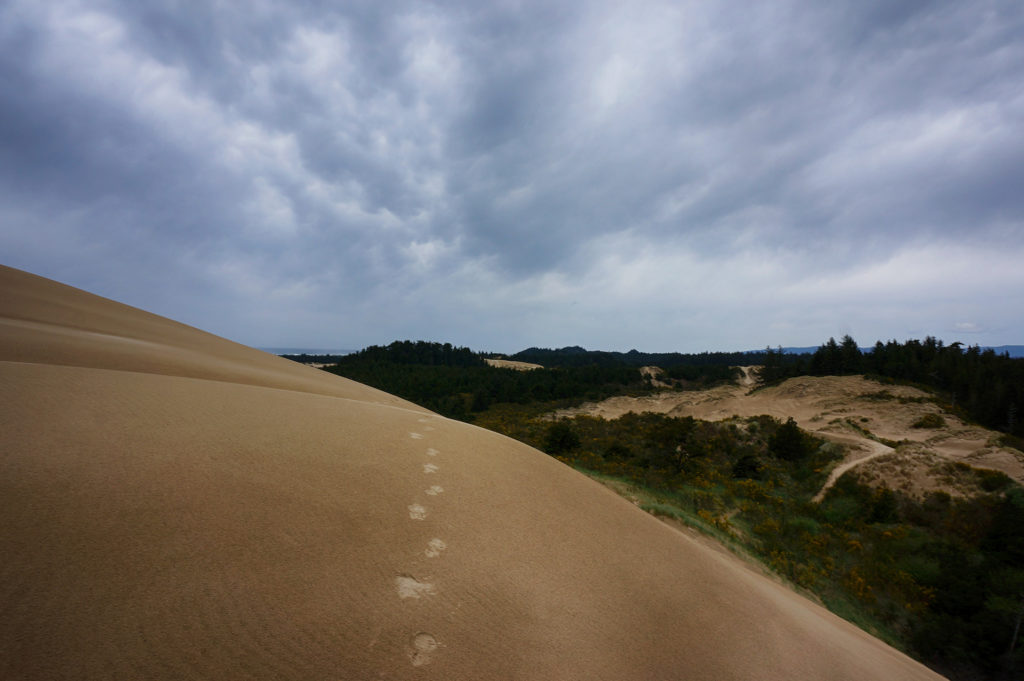
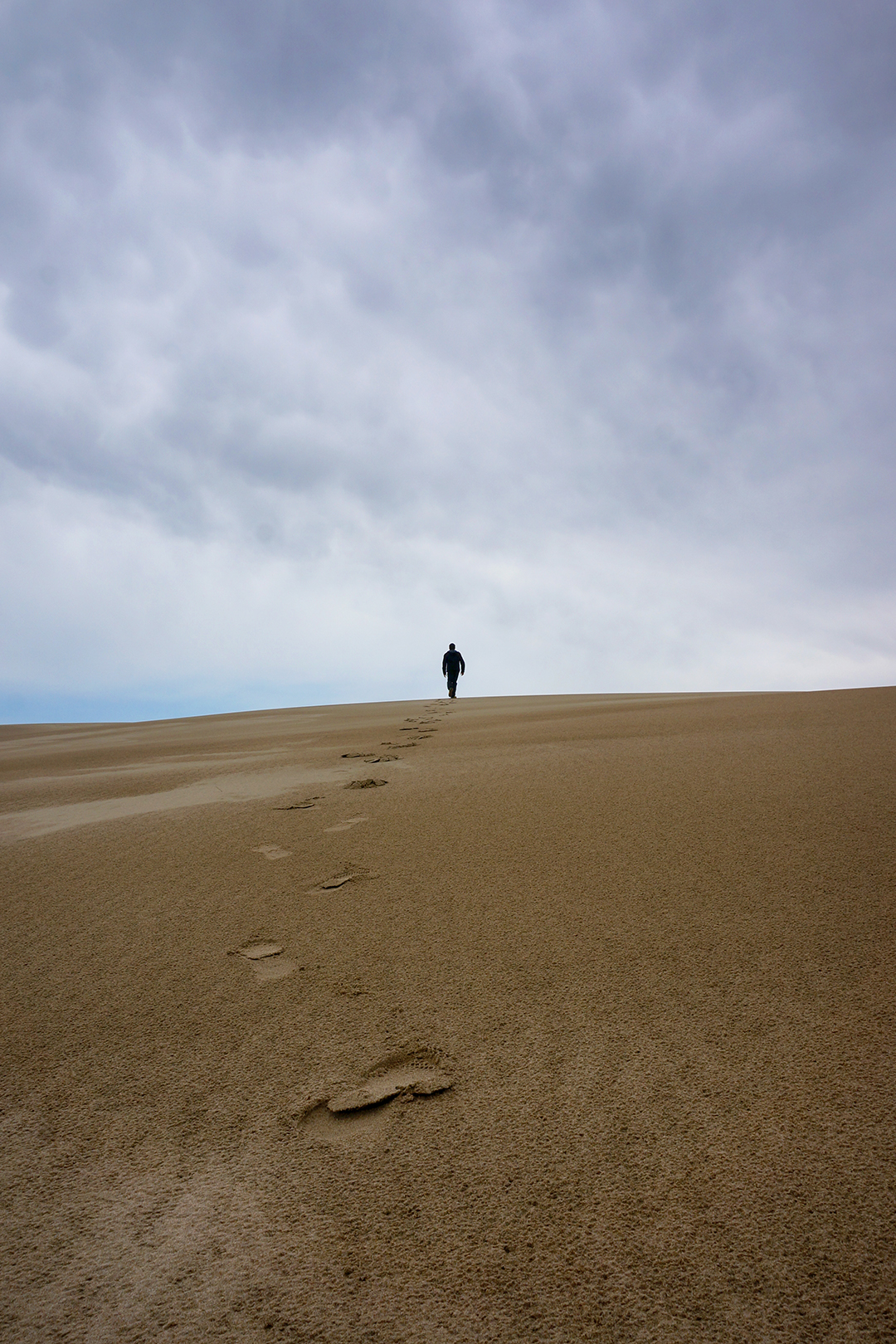
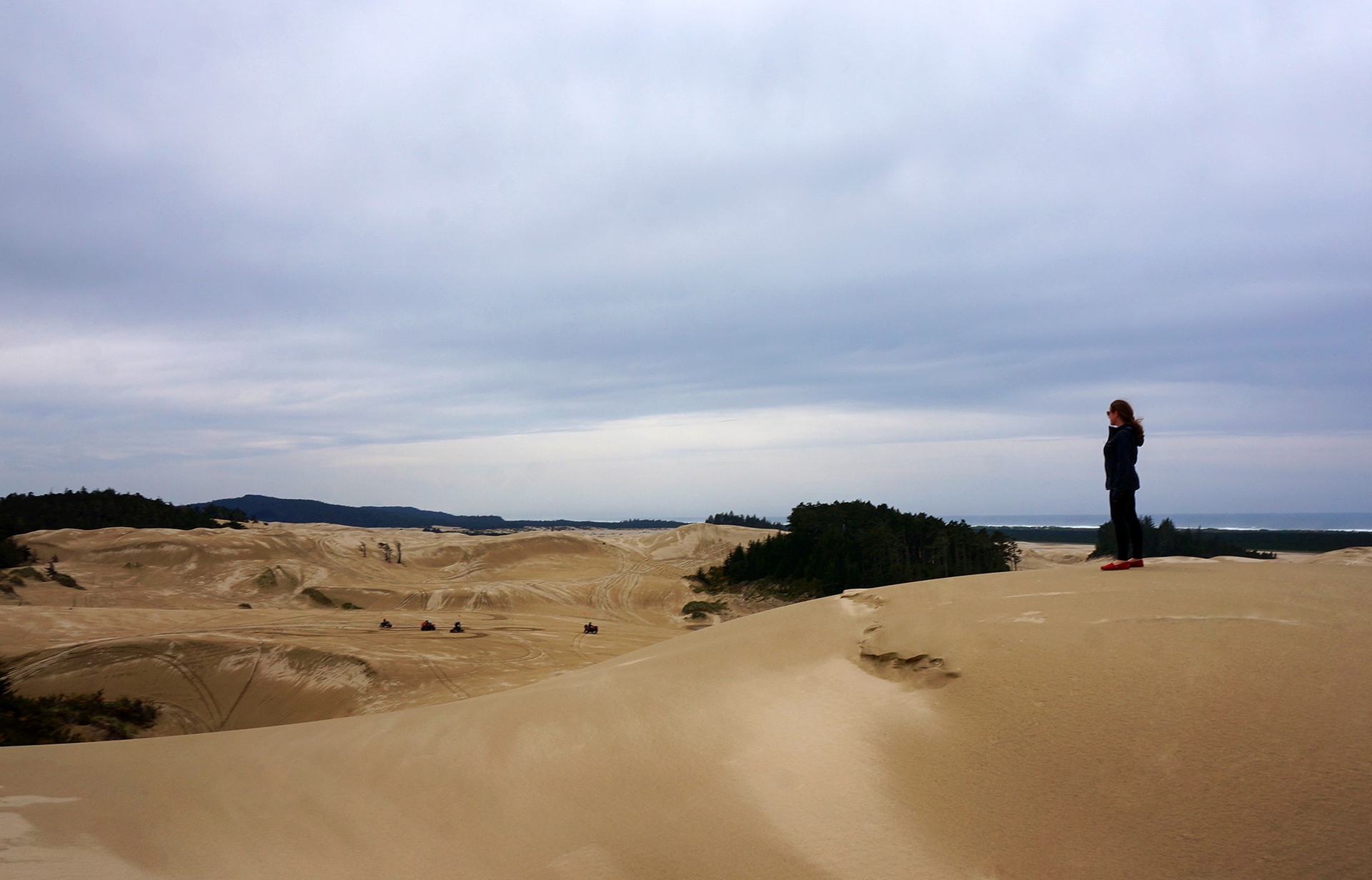
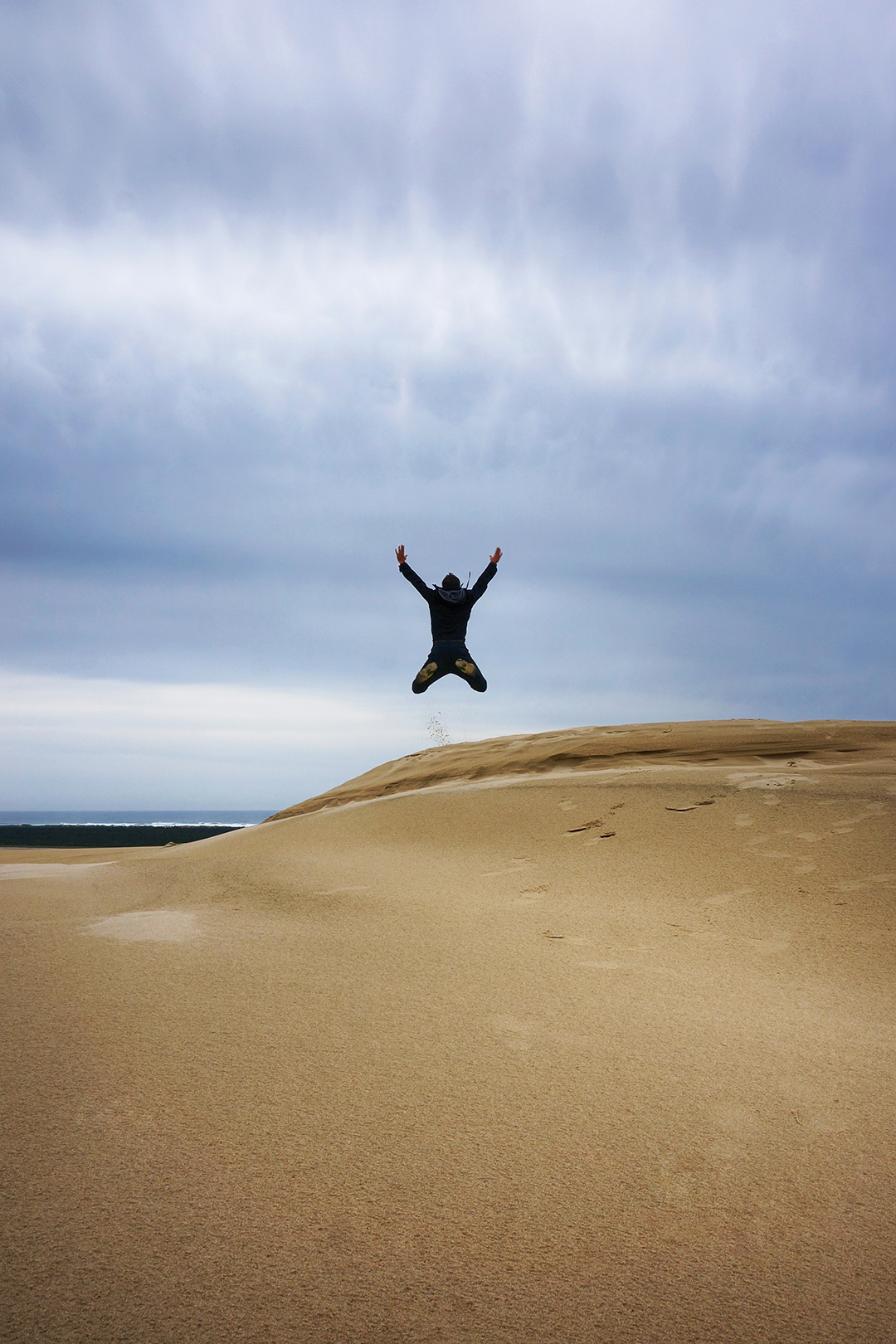
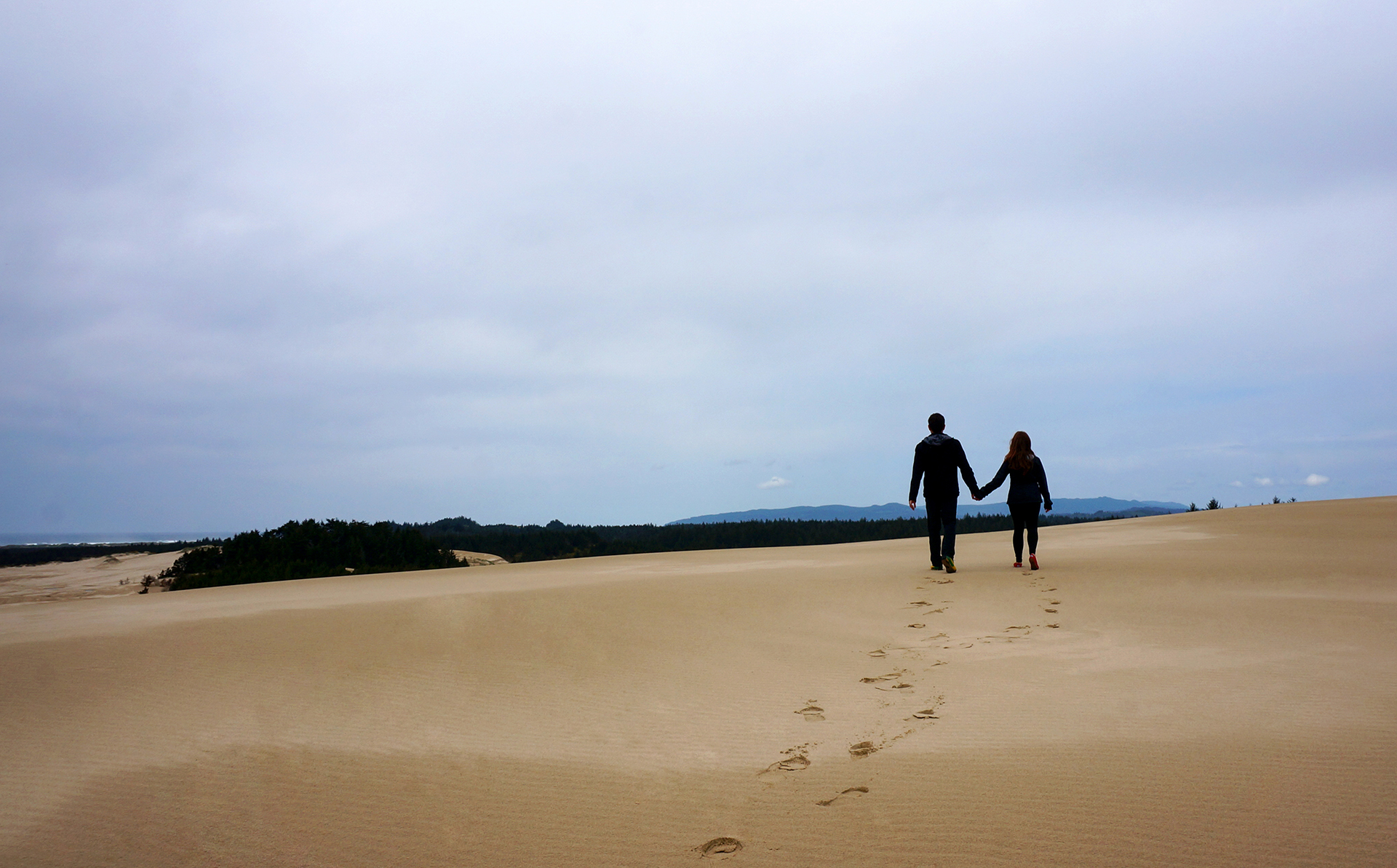
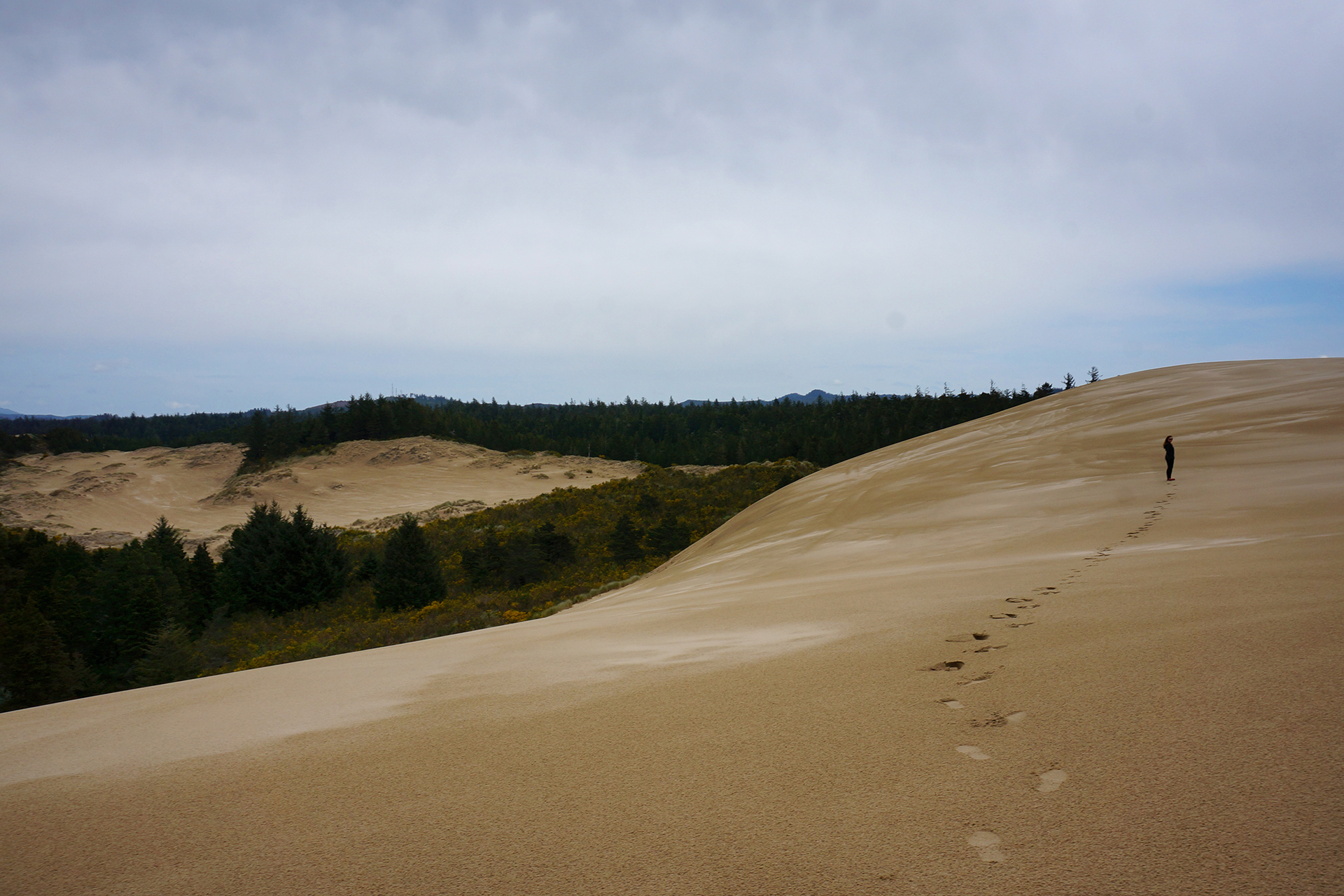
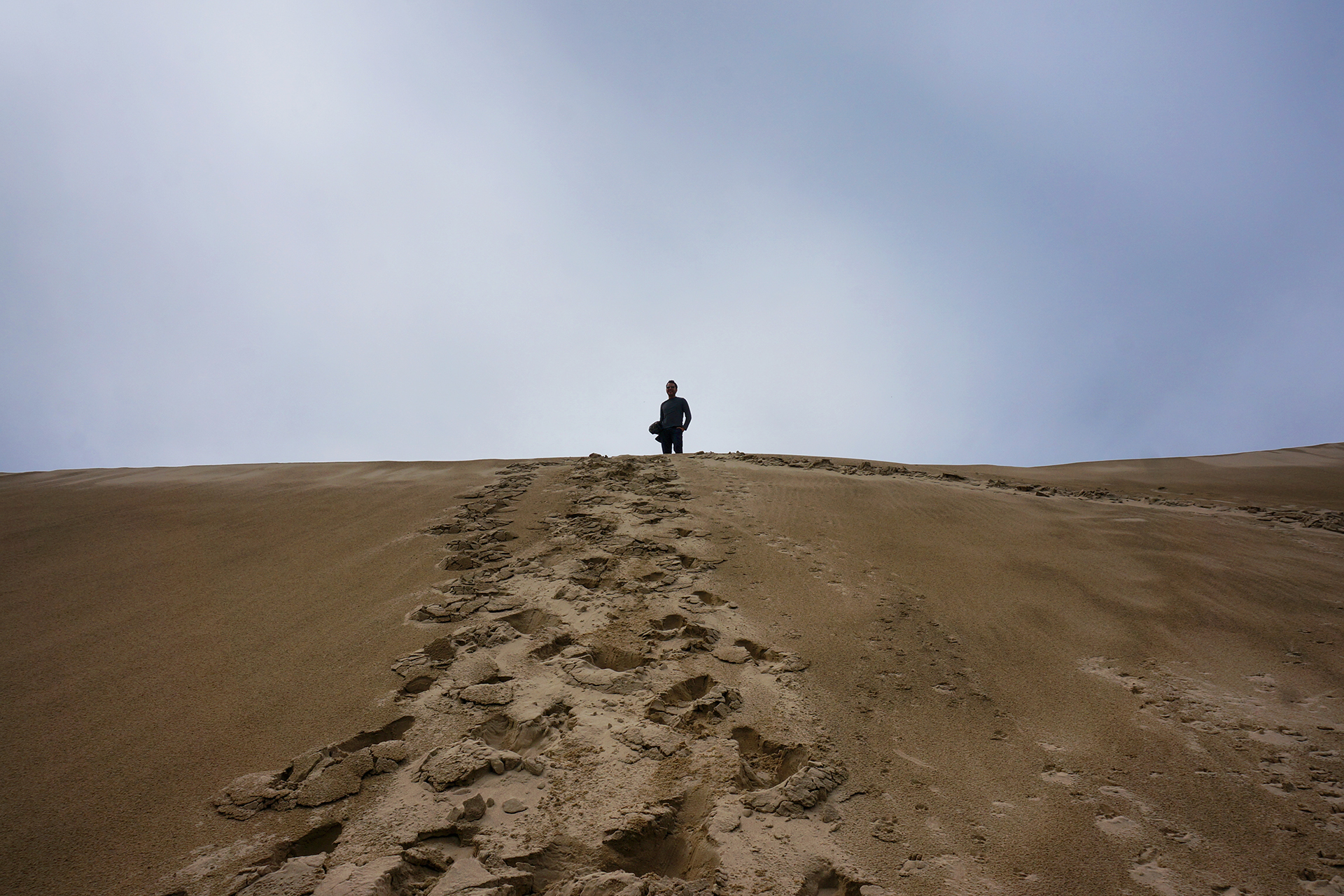
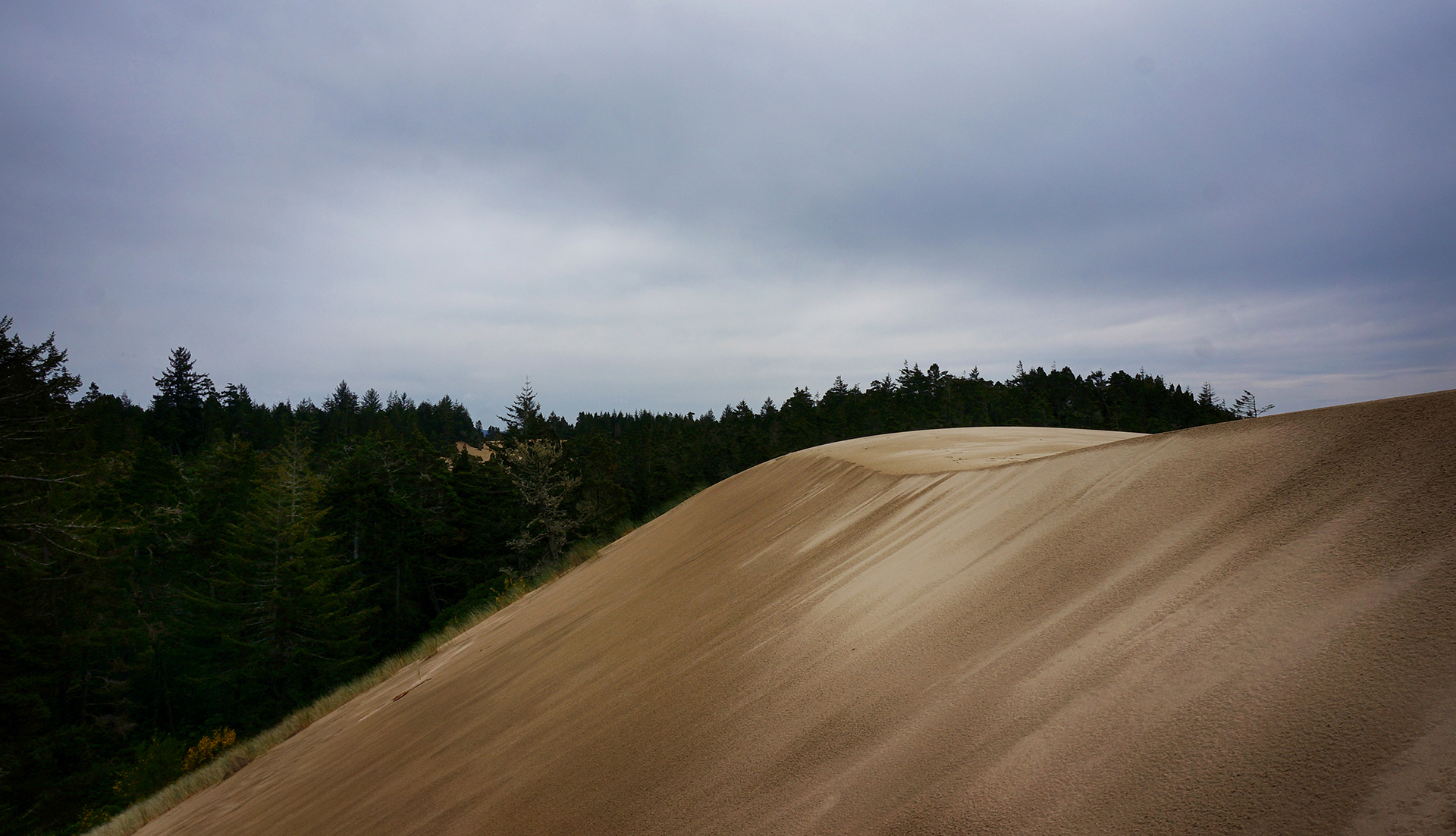
We had no idea until we got there, but it turned out the whole southern Oregon coast features massive sand dunes, 80+ feet high! It seemed like every other place we passed offered dune buggy rentals or tours, but we kept things simple and just walked around the dunes behind our campsite. This pedestrian approach turned out to be rather exhausting, as the shifting sand made every climb three times harder than necessary, but we ended up with some awesome photos.

Guess all our practice in White Sands and Death Valley paid off.  Or did it…

Making Waves

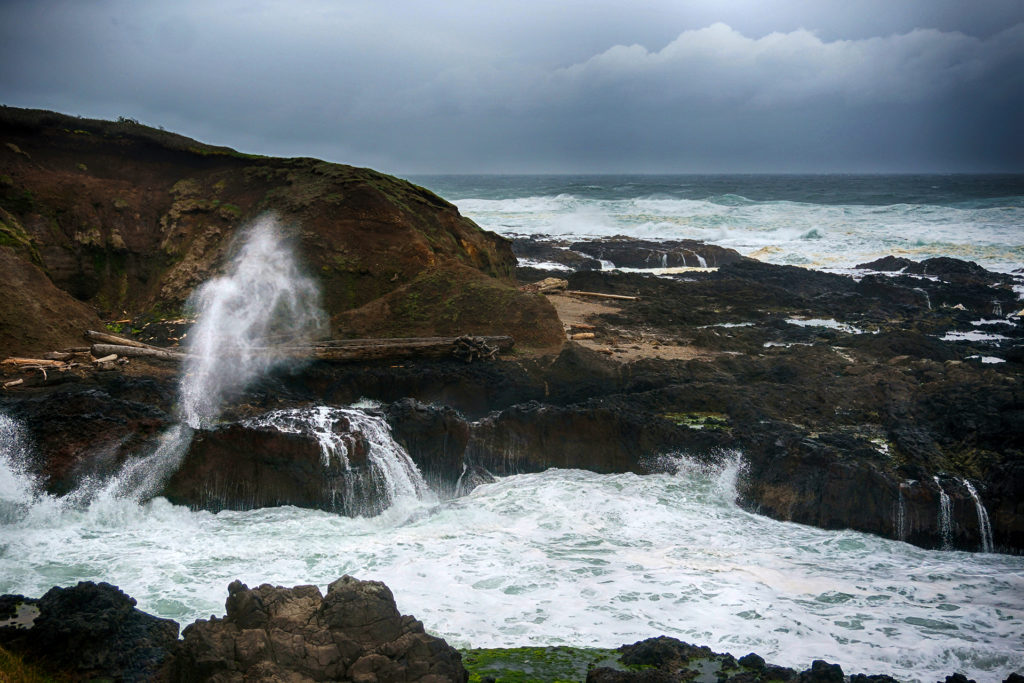
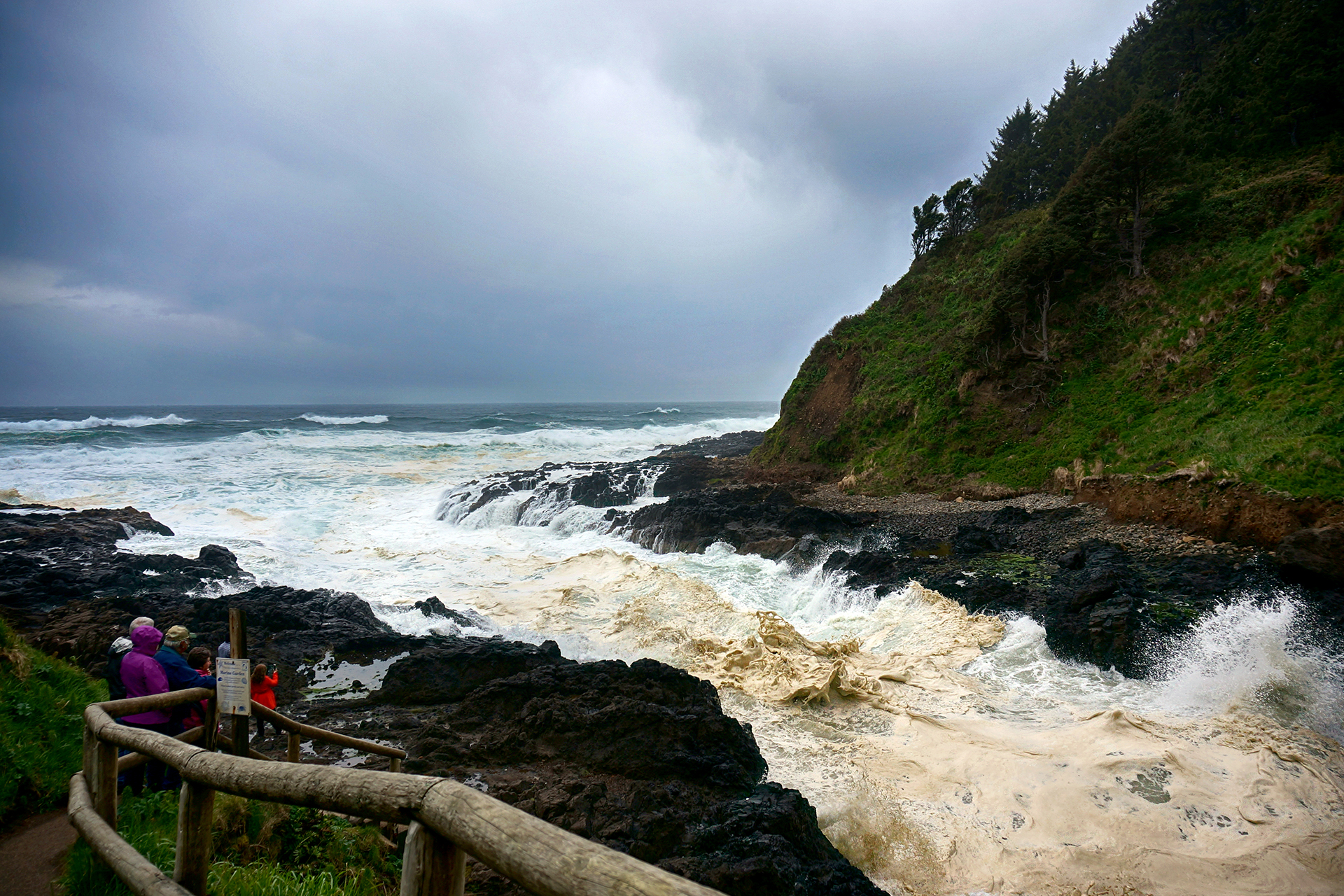
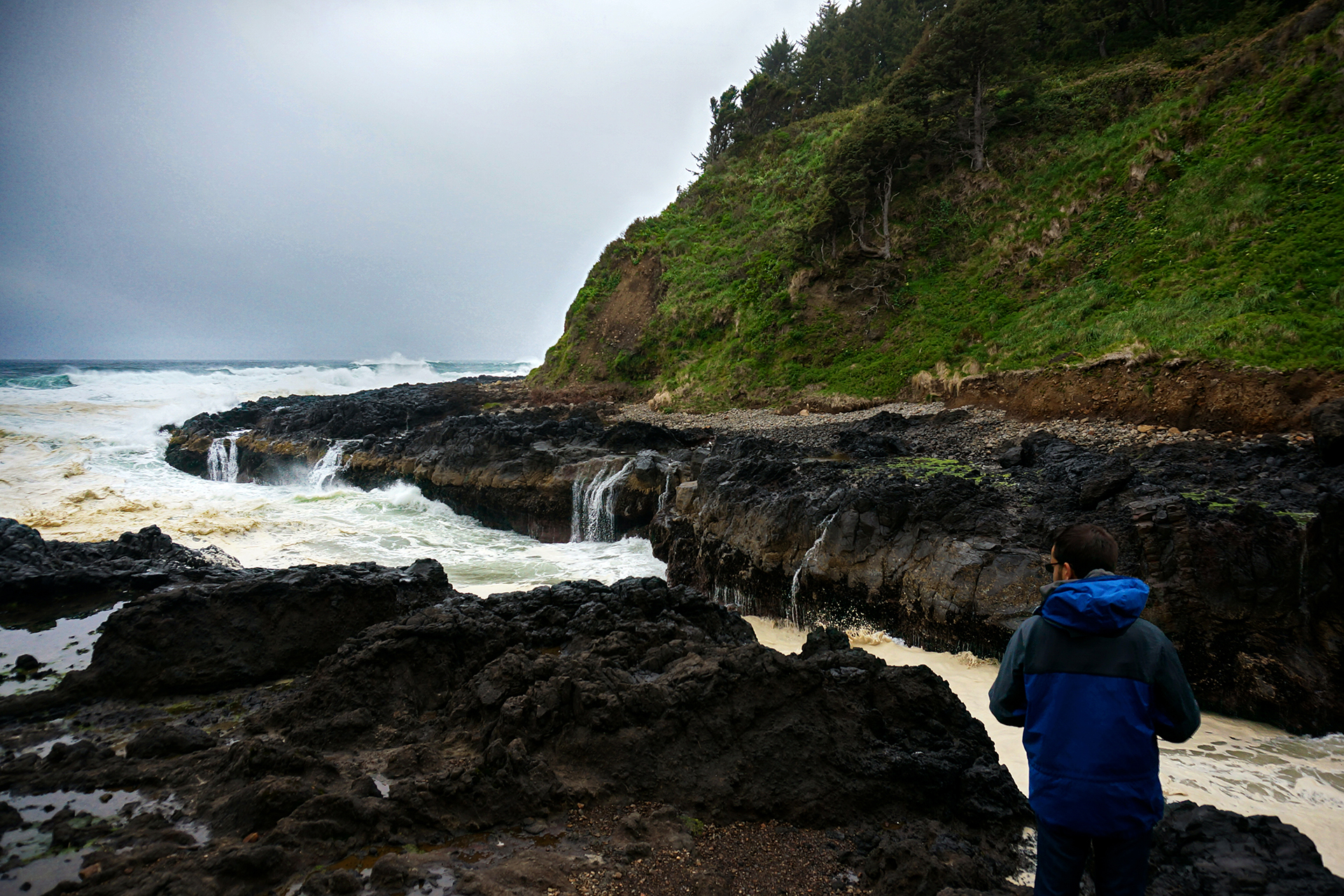
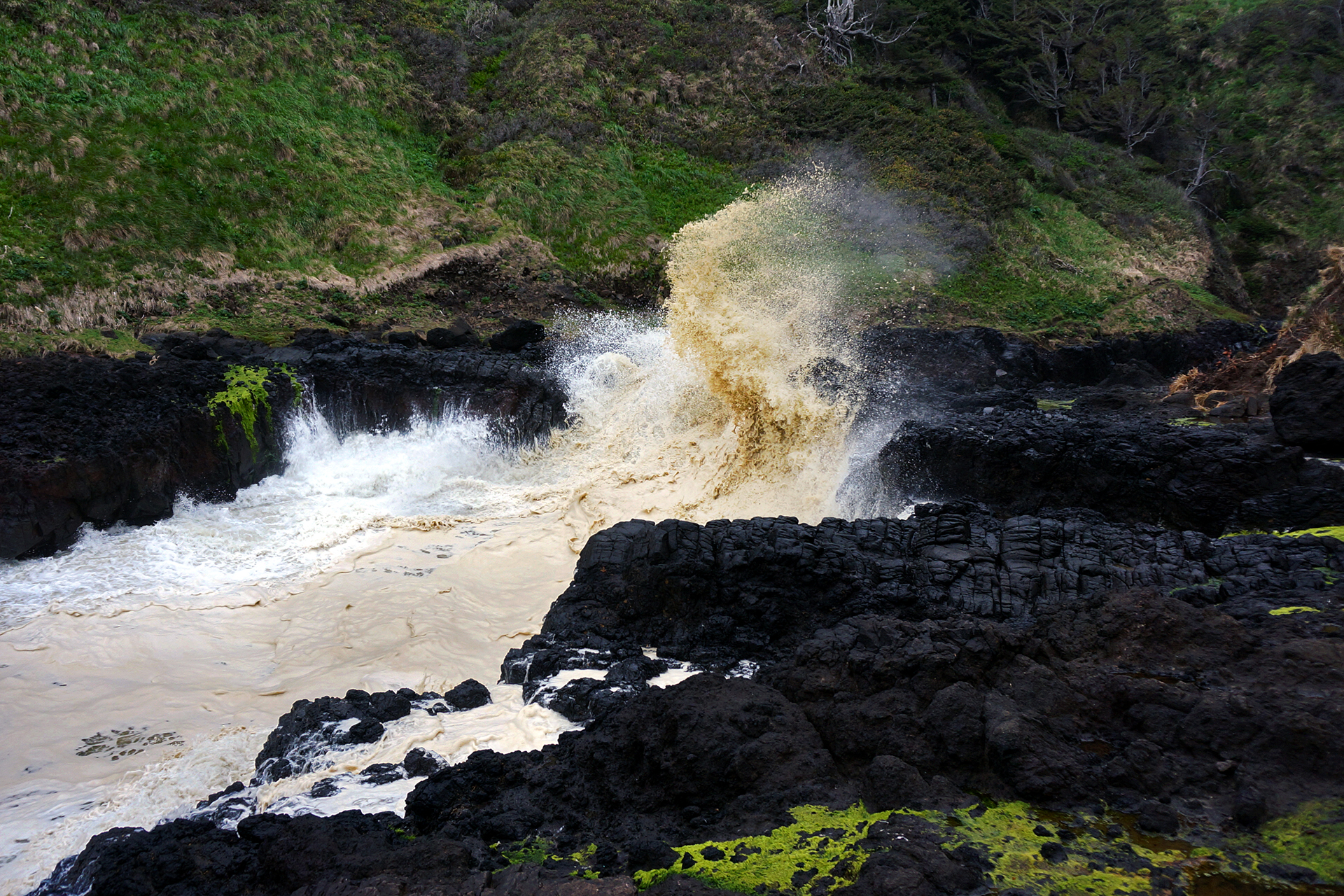
The real reason we came to the Oregon coast was to visit Cape Perpetua, a narrow bit of coast with some unusual properties. The waves here crash hard, and they have eaten away at the rocky shore with spectacular results. There’s the Spouting Horn, a narrow crevice which launches water into the air with each wave:

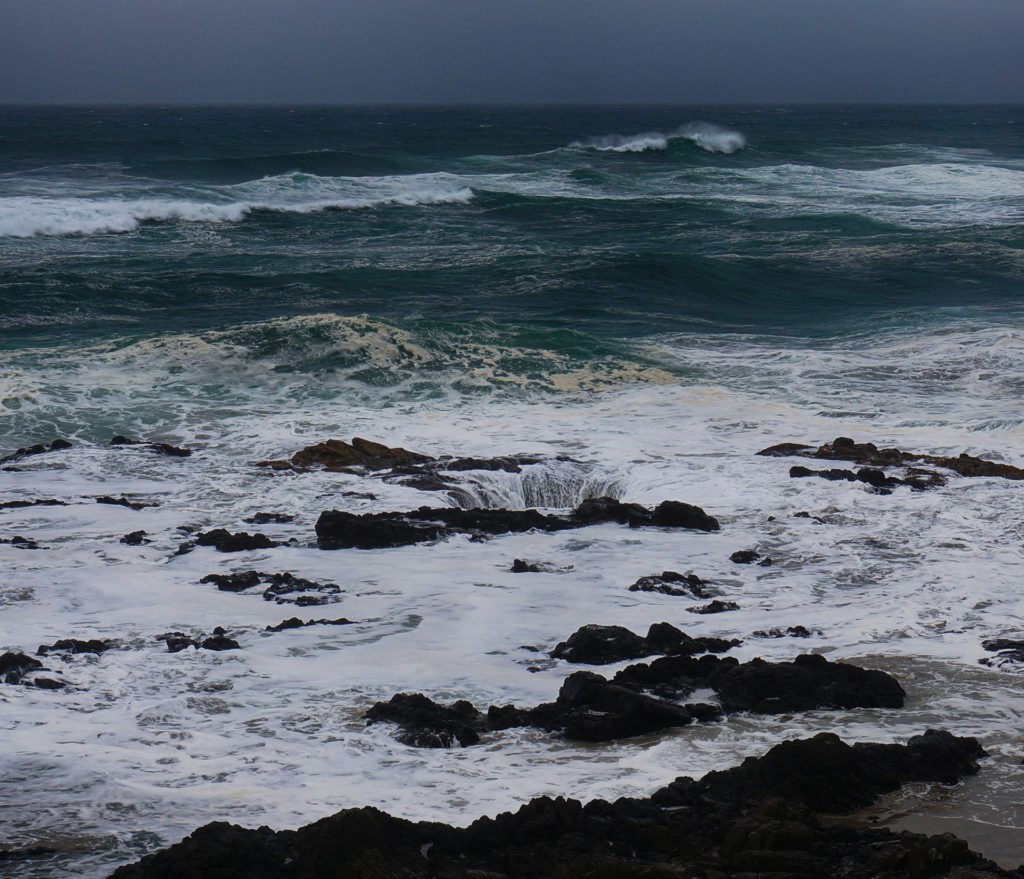
Here’s a video of the Spouting Horn in action.  A few feet away is Thor’s Well, a literal hole in the ocean that fills and empties with the pounding surf.

Just a few hundred yards further is the Devil’s Churn, a long, narrow crack in the coastal rock.   Water enters and drains from the crack with each wave, as at Thor’s Well, but the result is far more explosive.

Pictures can’t possibly do it justice, so we took a video.  Unfortunately, the video doesn’t really do it justice either, so just imagine the world shaking with each wave!

If you’re curious, we visited Cape Perpetua just before high tide, as is recommended.  It was during a lull in a pretty fierce thunderstorm, so the waves were powerful. However, as we were photographing Thor’s Well, the wind started gusting, first lightly, then with increasing power. The lull was over, and the wind quickly ramped up towards gale-force.  In seconds, the entire place cleared out of people.

We wisely – and quickly – retreated to a nearby pub to watch the storm howl over the ocean.  Cape Perpetua is definitely an exciting place to visit, but we wouldn’t recommend going swimming.

Roadtrip Status

Still alive?  Check.

Where are you now?  A little coffee shop in Rapid City, South Dakota.  The Black Hills are beautiful, but a little light on the Internet…

Next location?  Heading up north to Devil’s Tower, then Teddy Roosevelt National Park in North Dakota!

Follow Us On Social Media
FacebooktwitterinstagramFacebooktwitterinstagram

Latest Posts

0