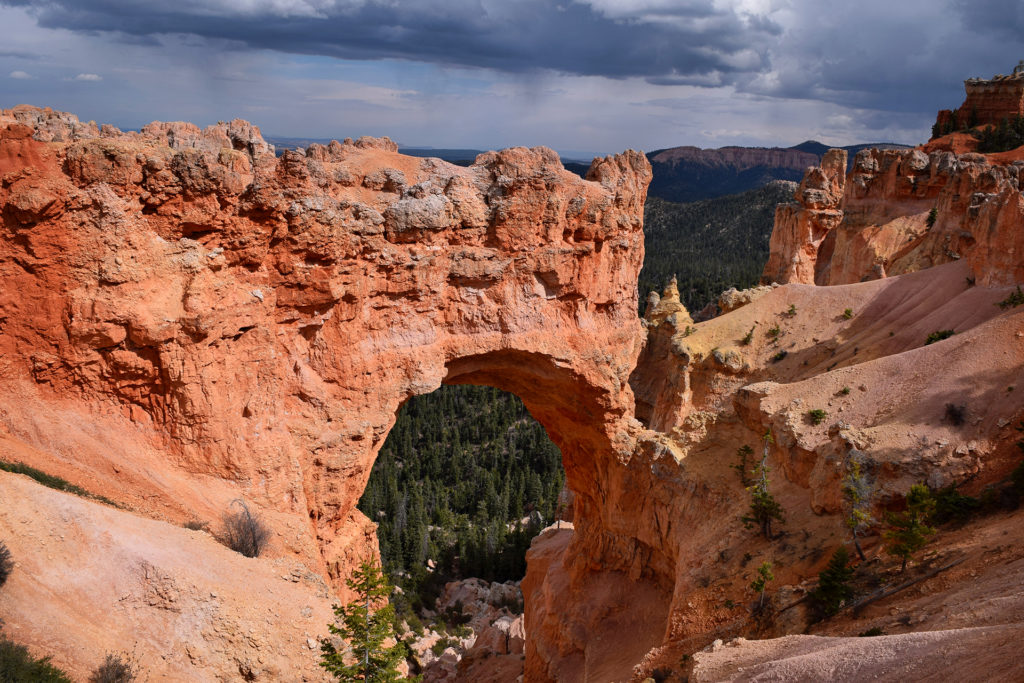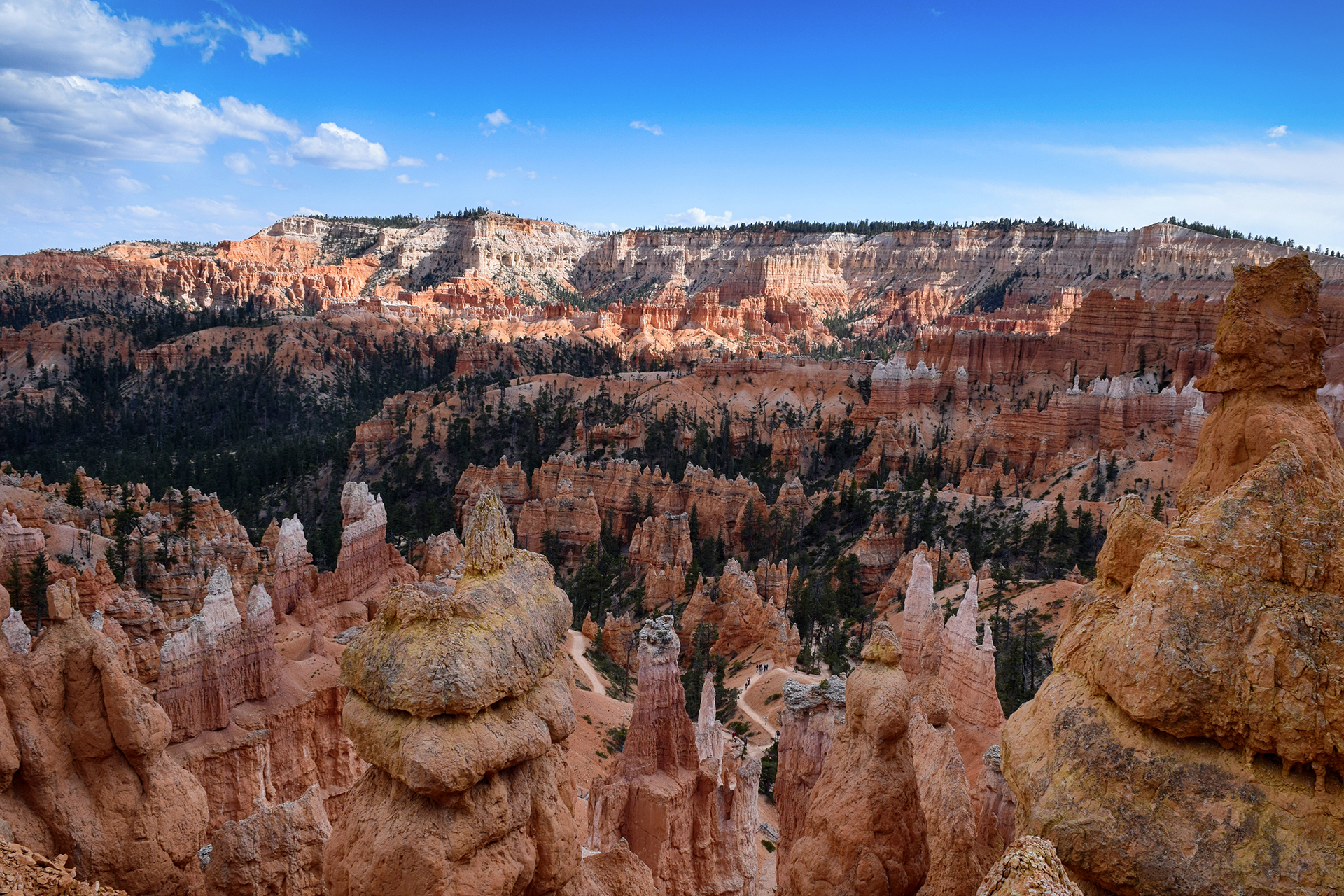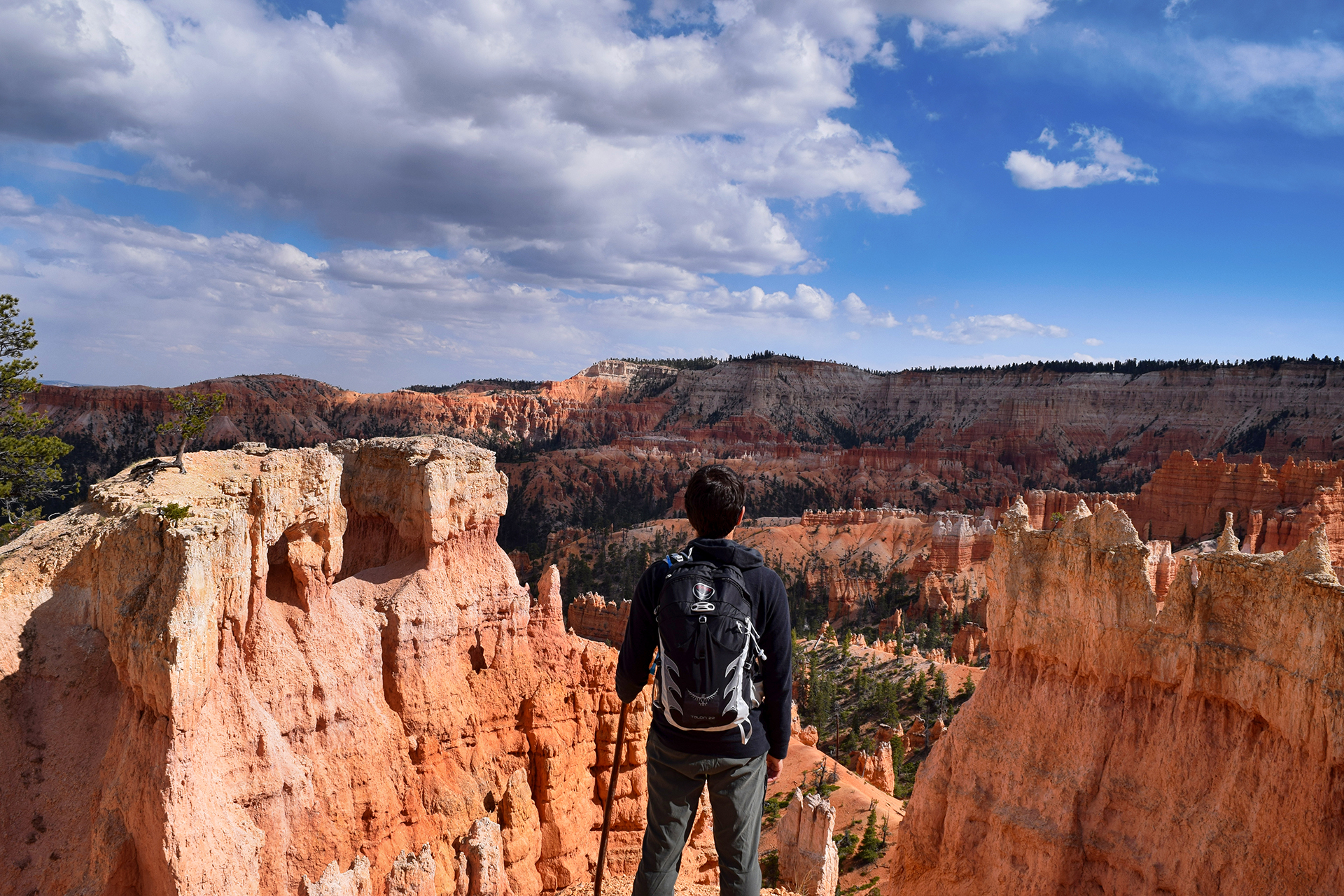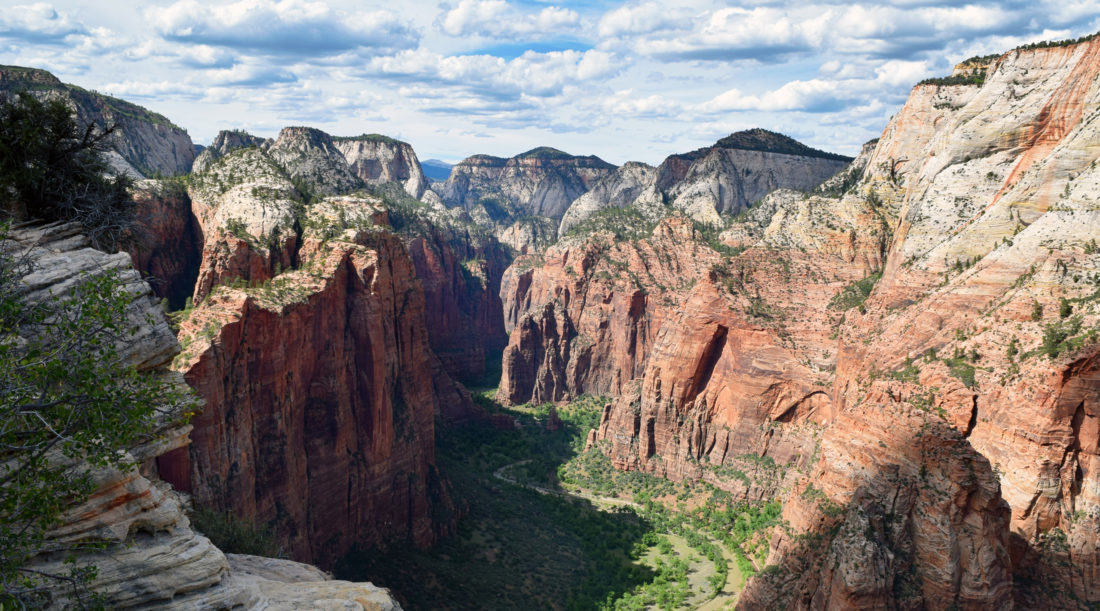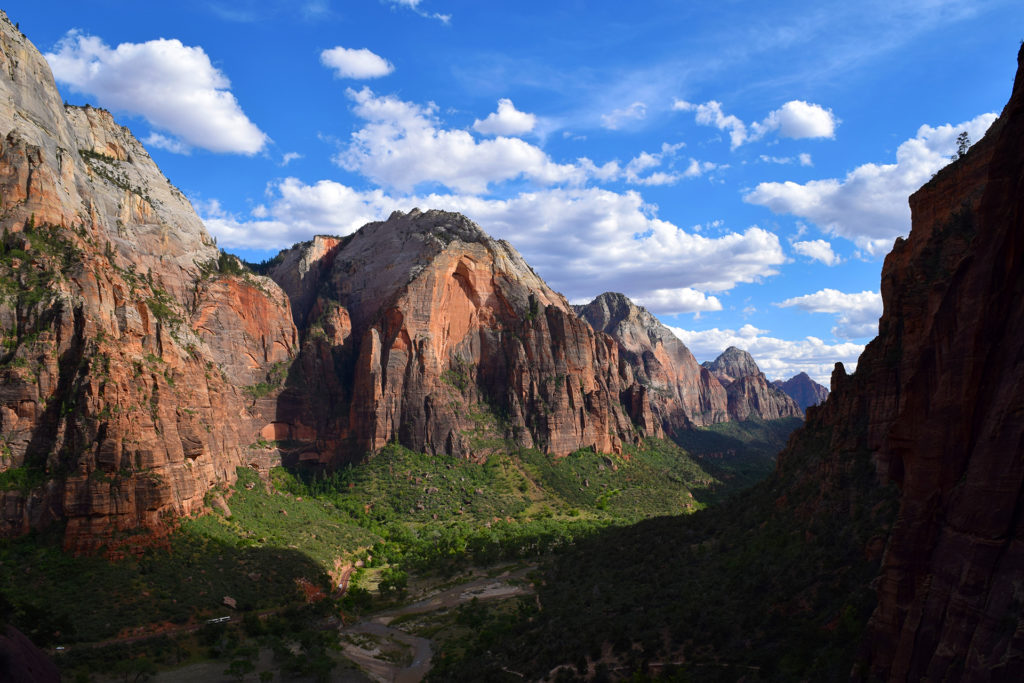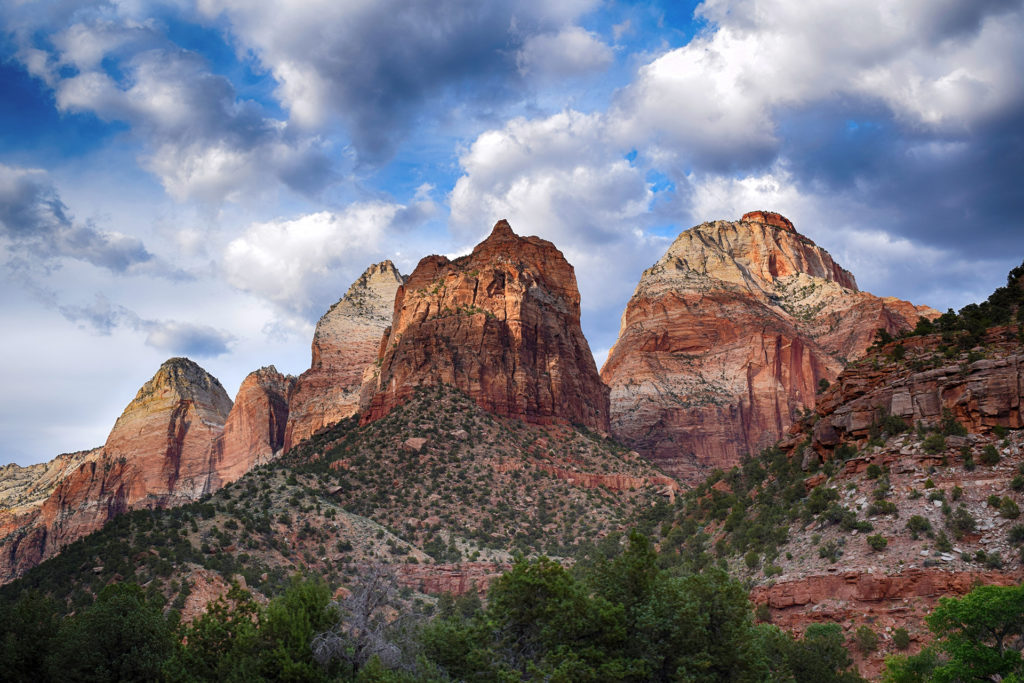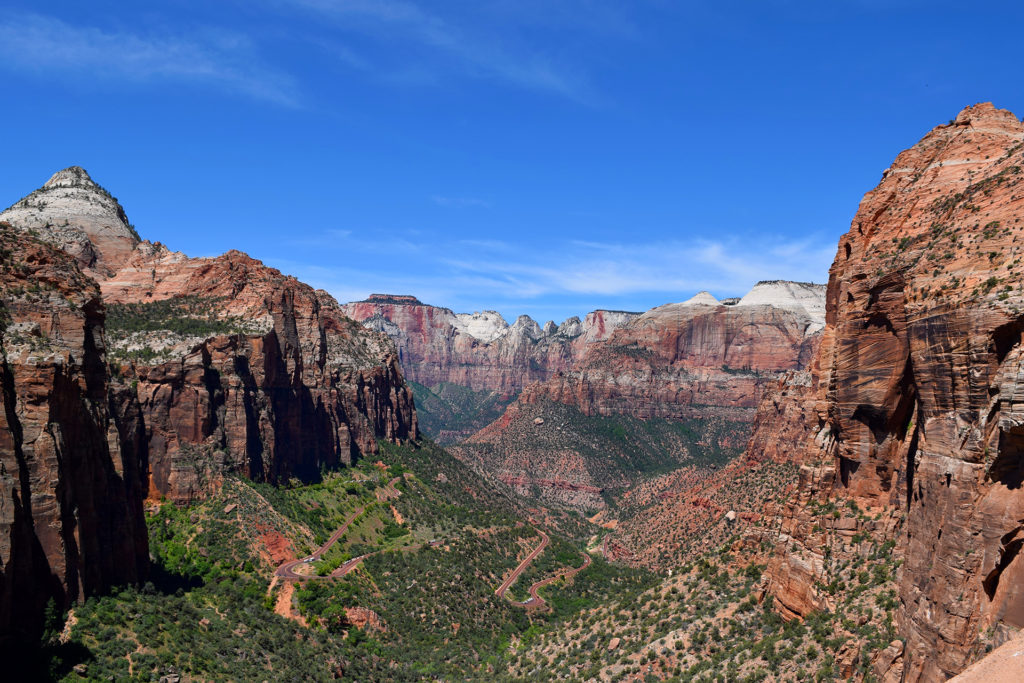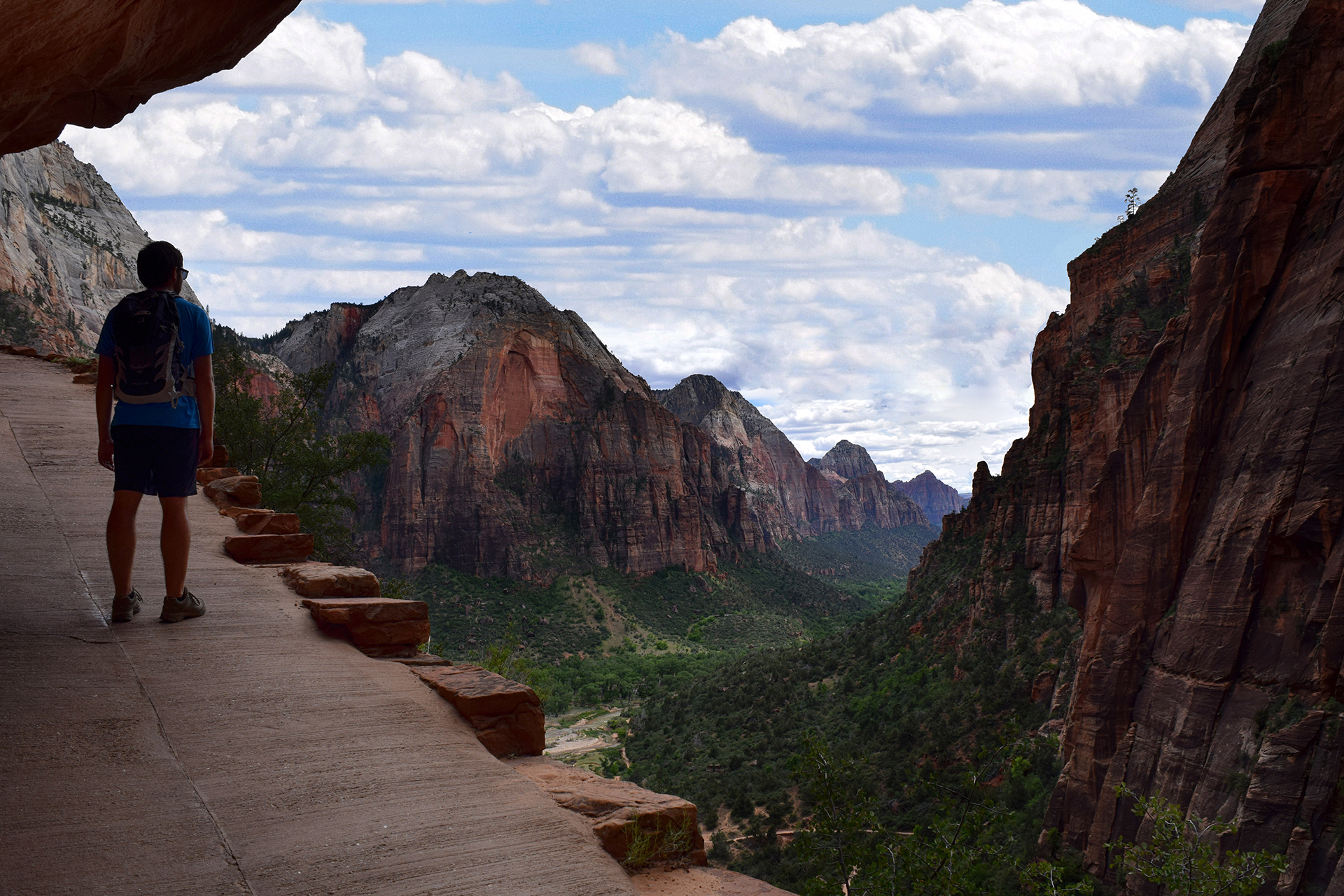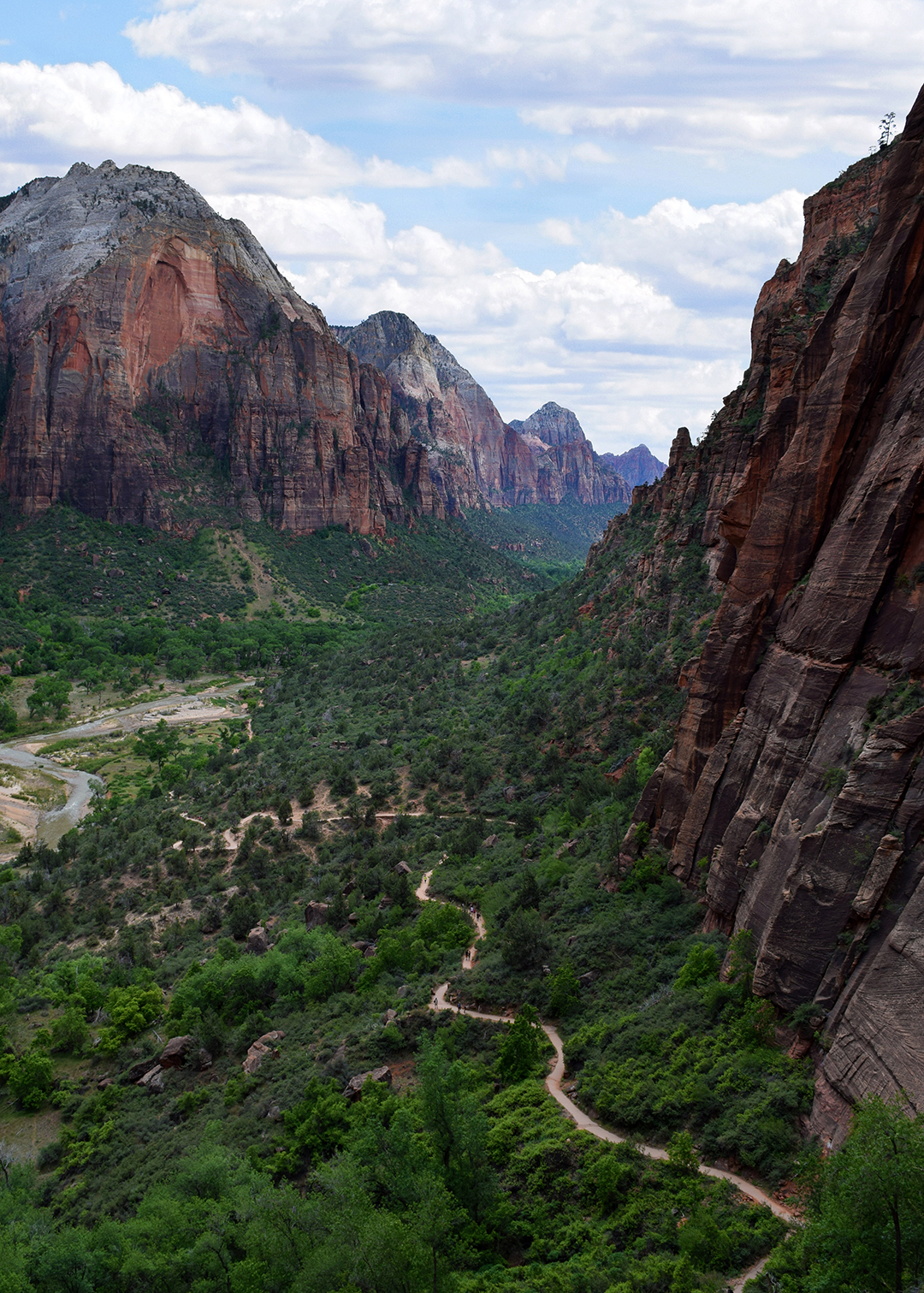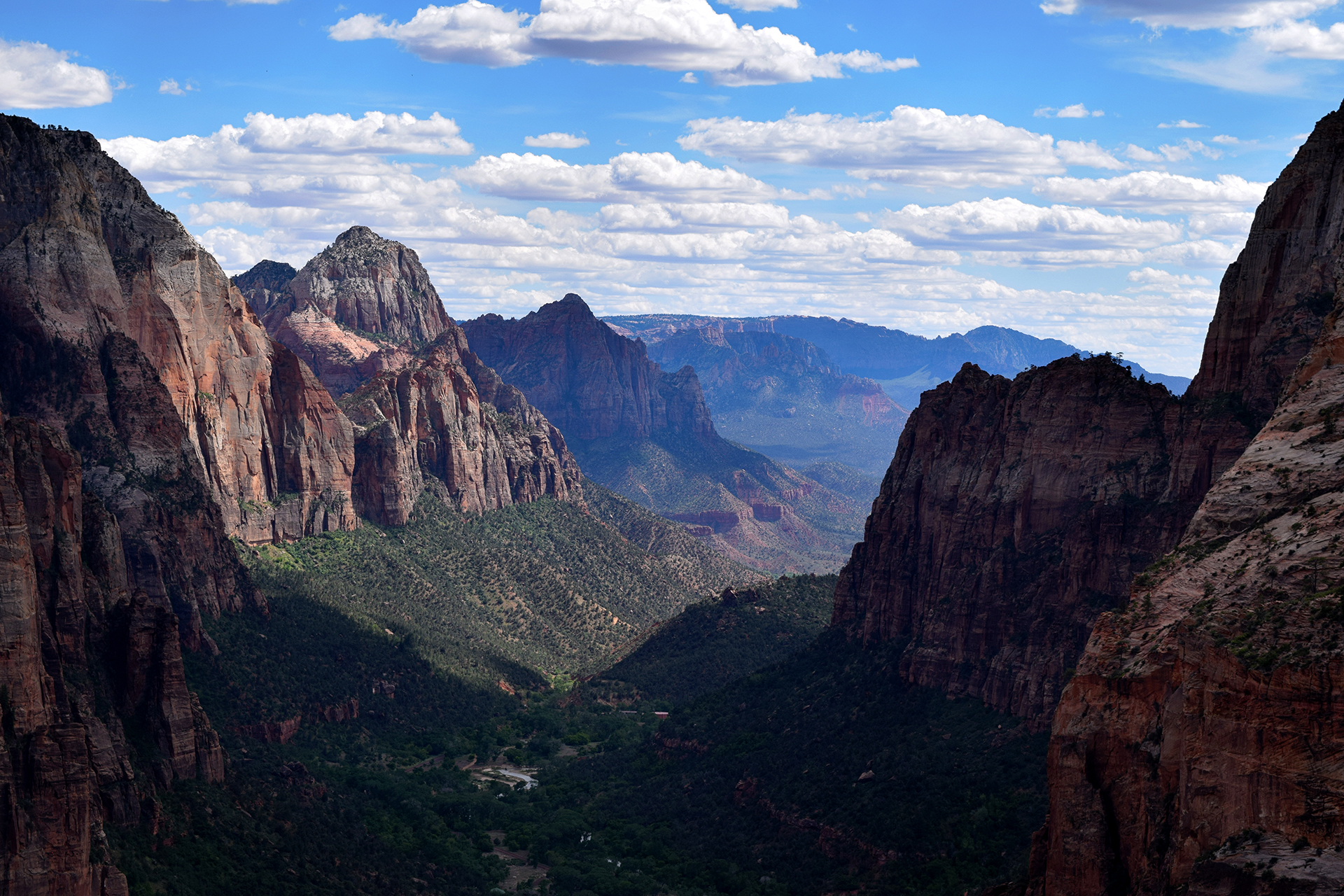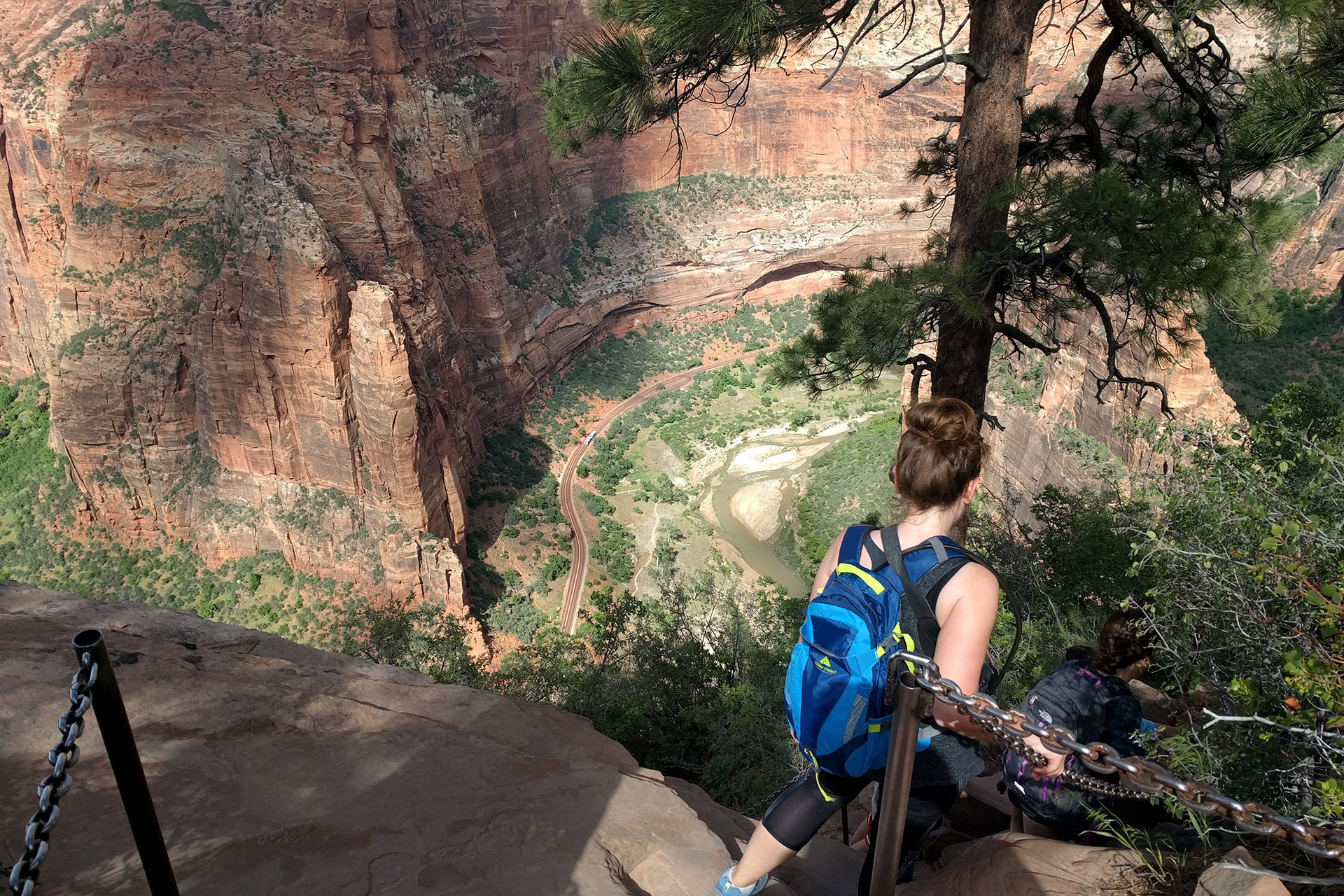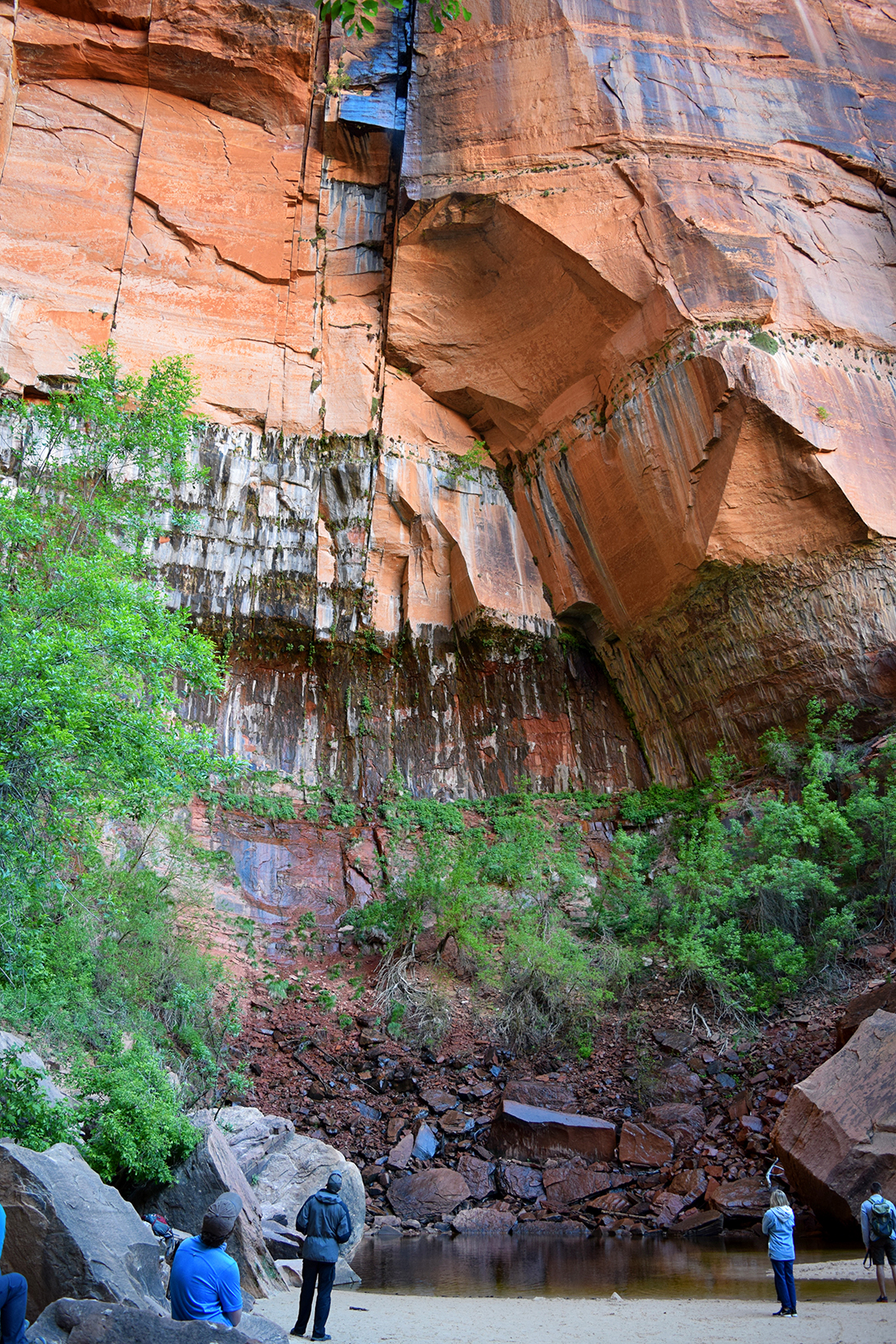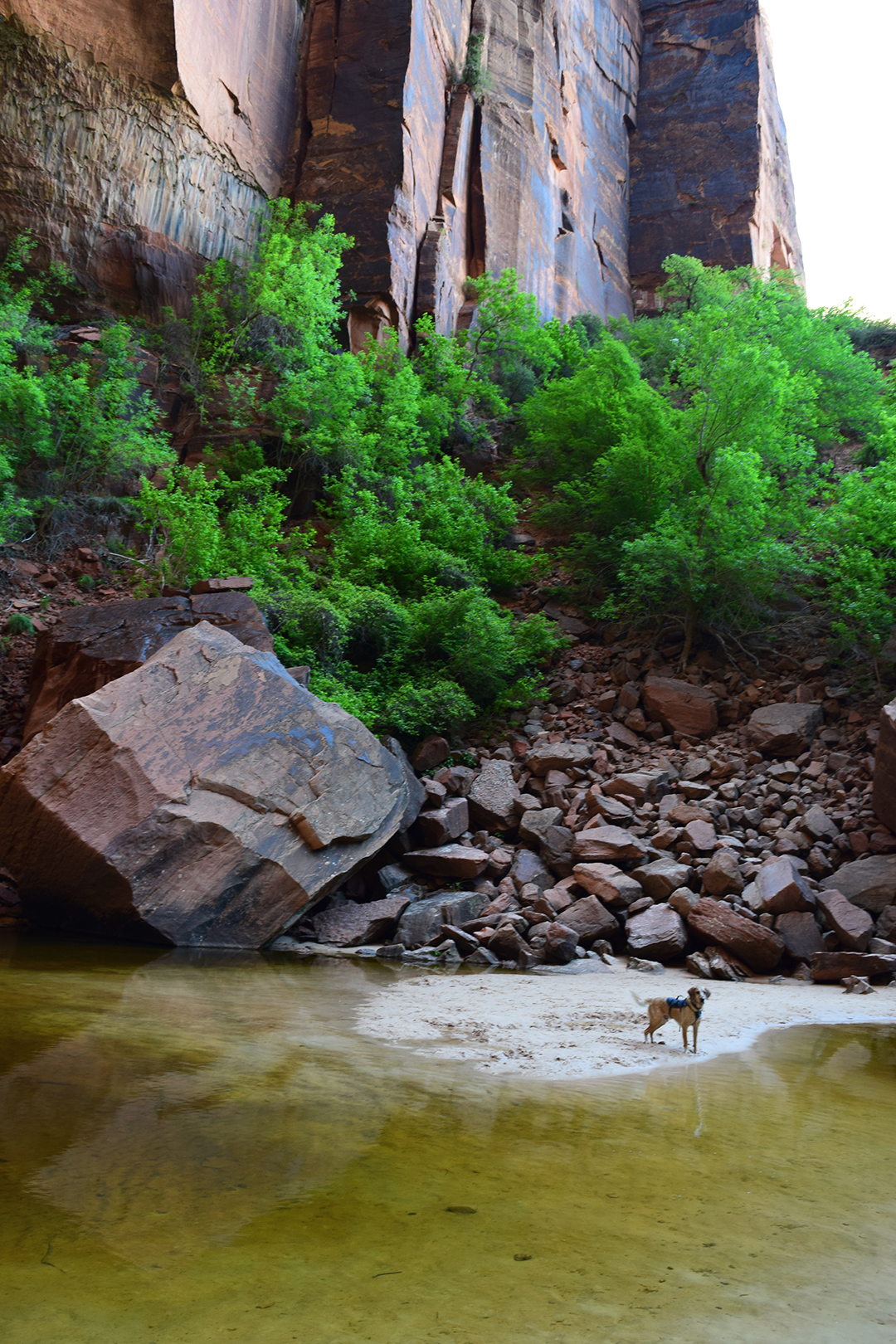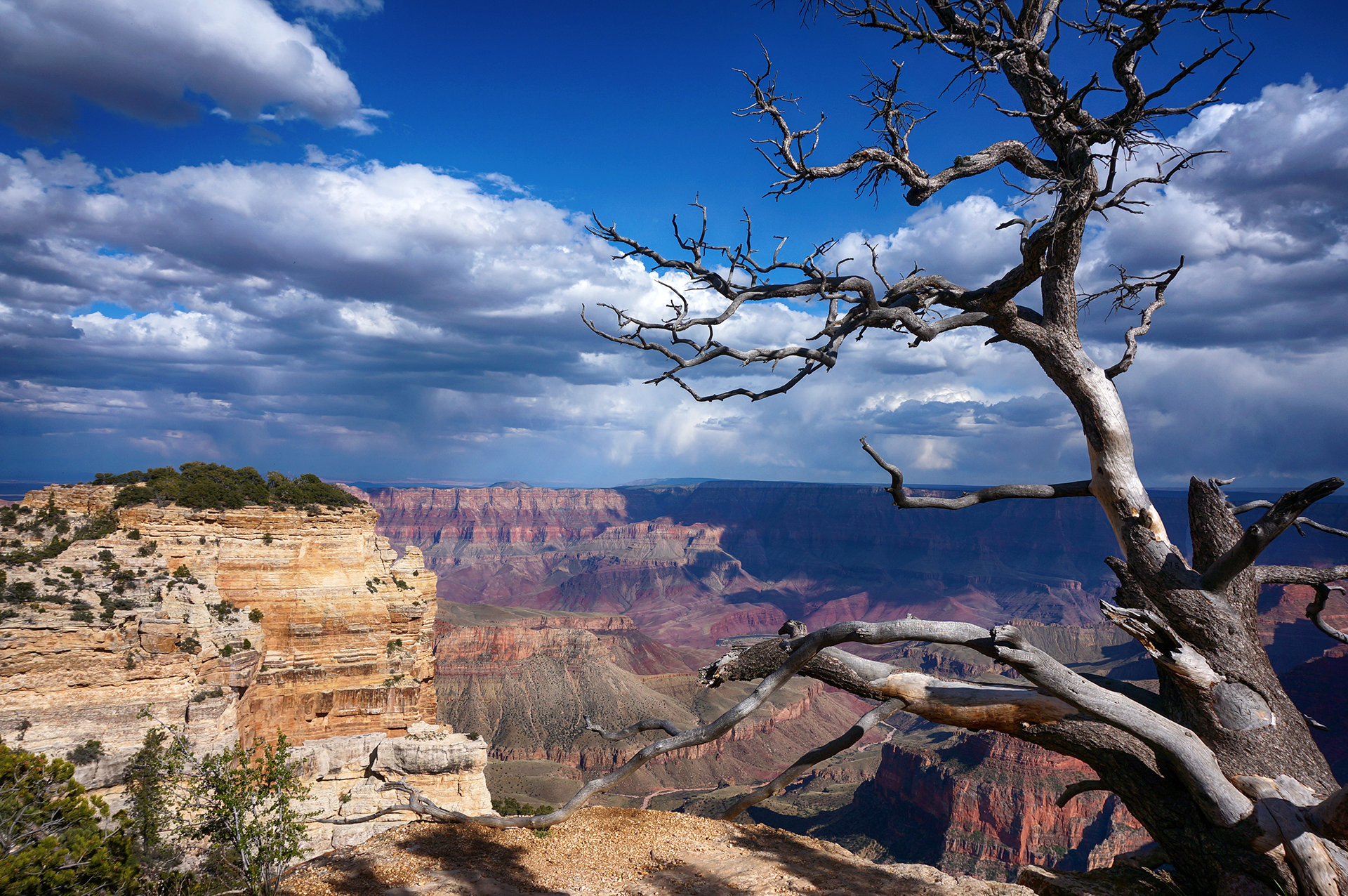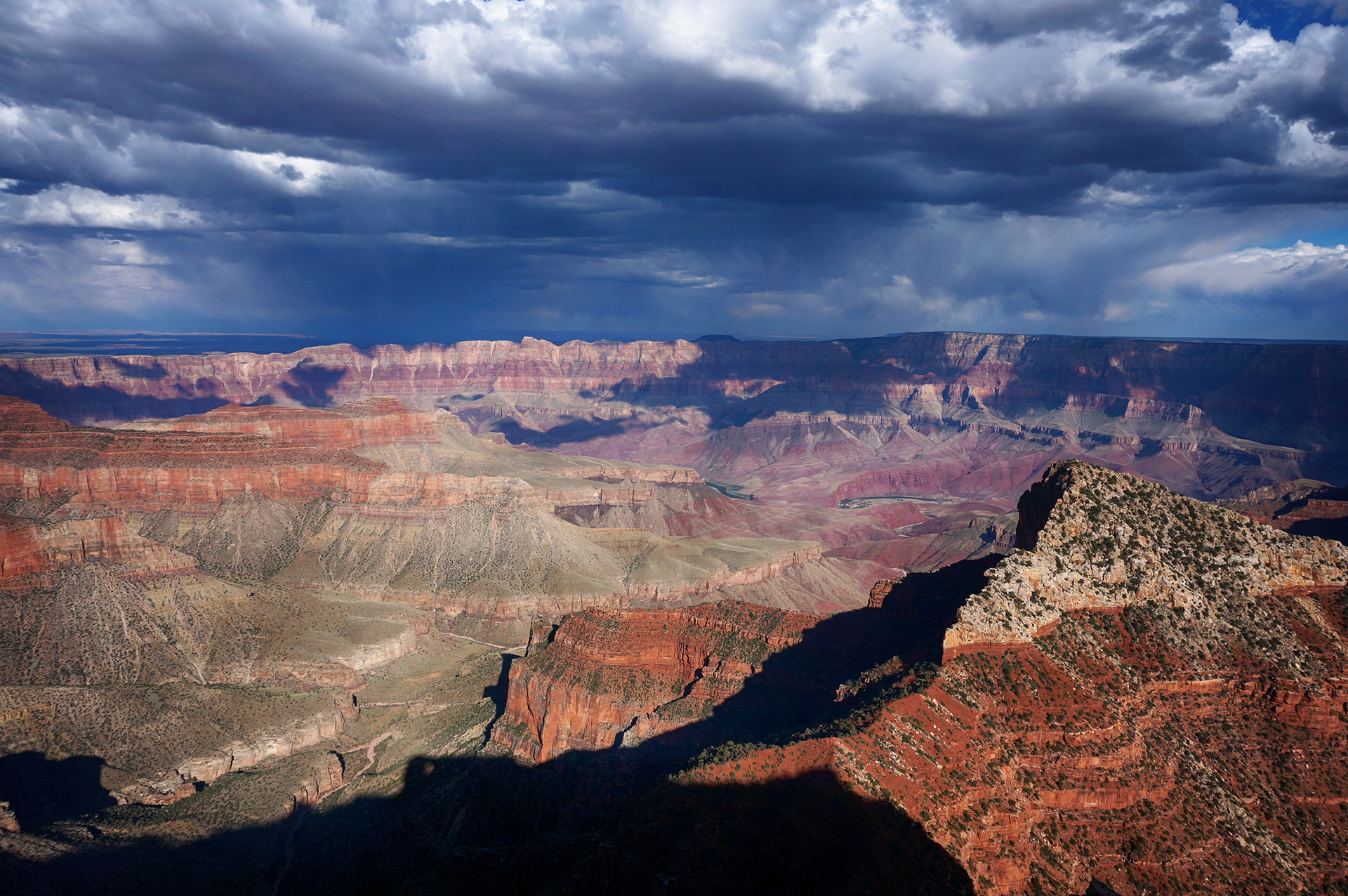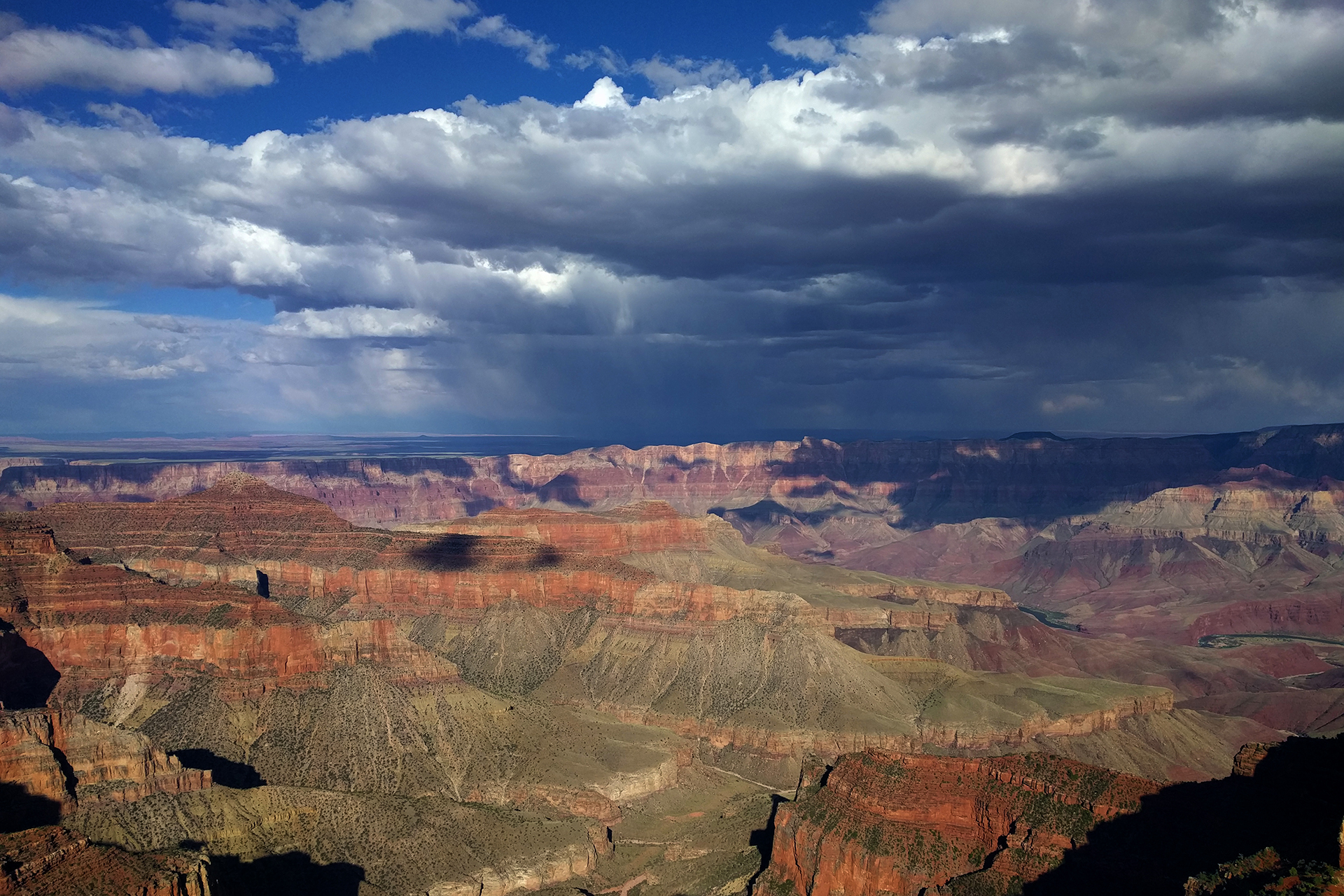
Week 48.2: Wild Horses & Goblins

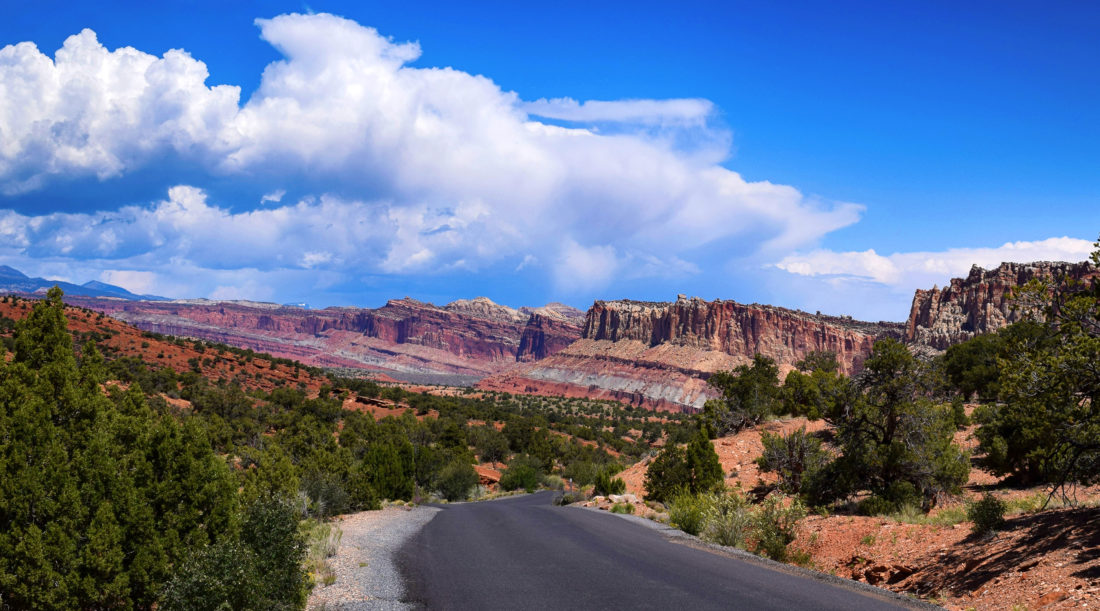
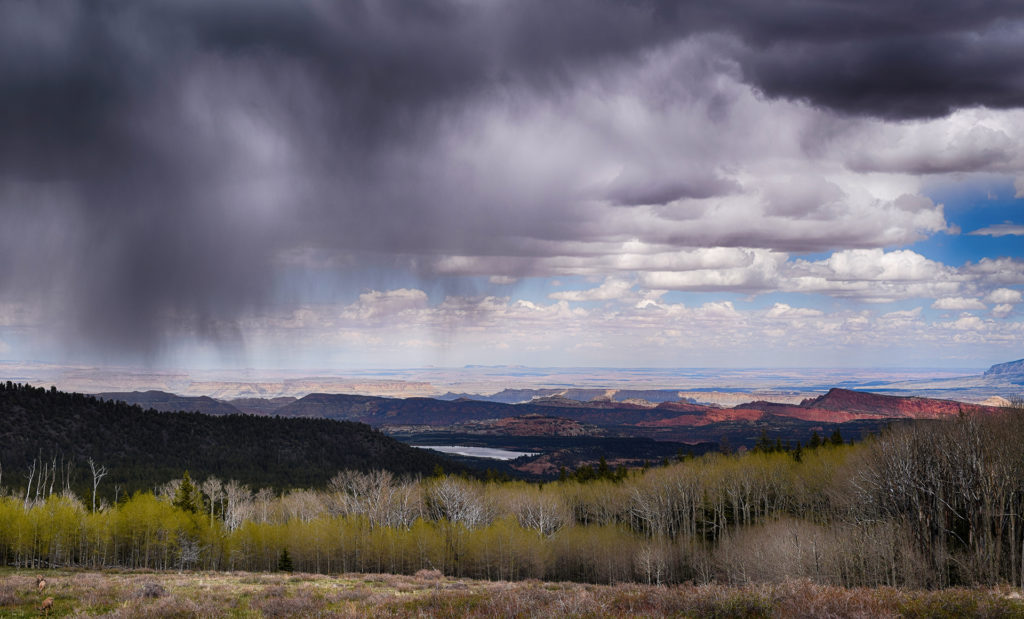
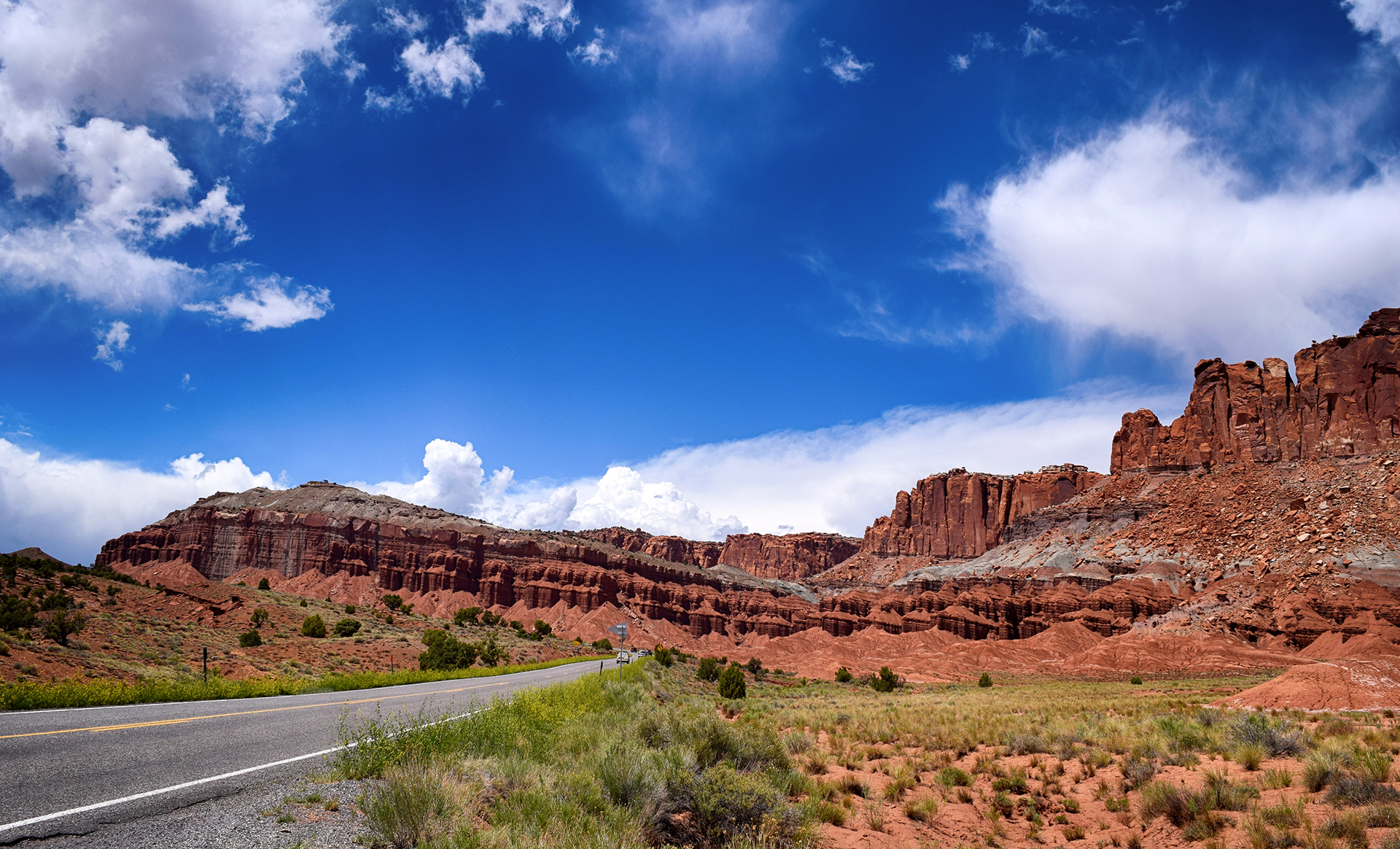
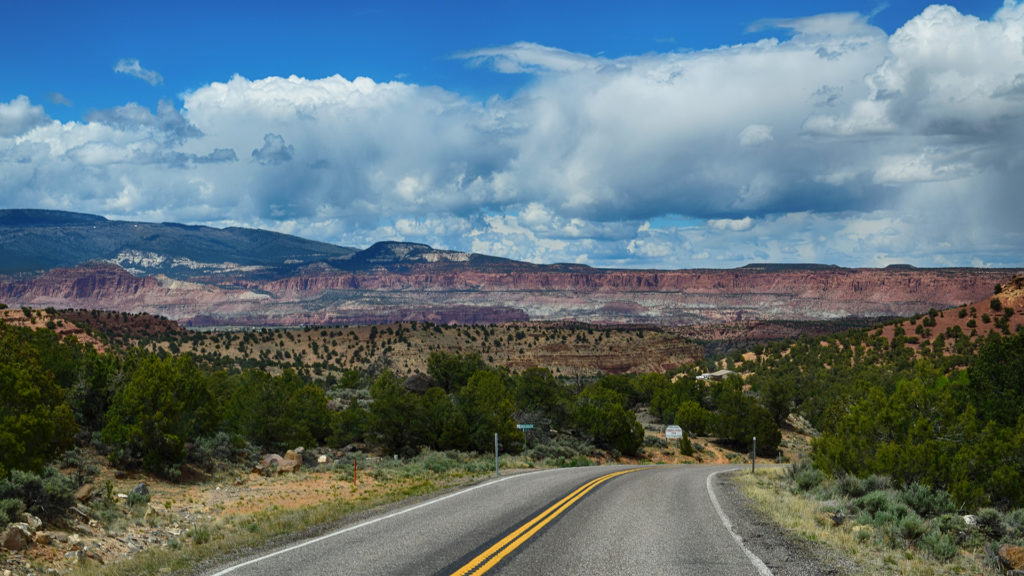
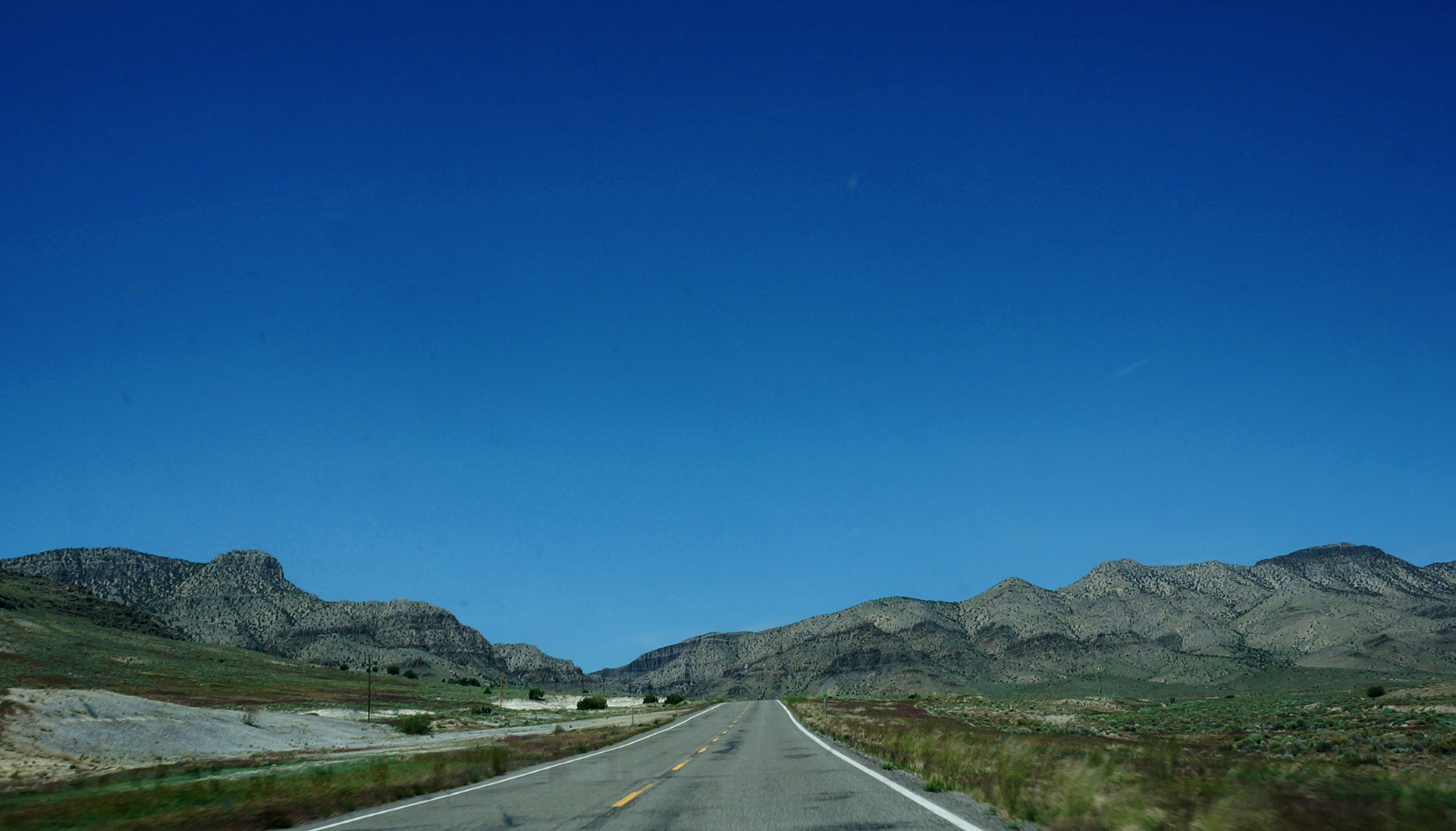
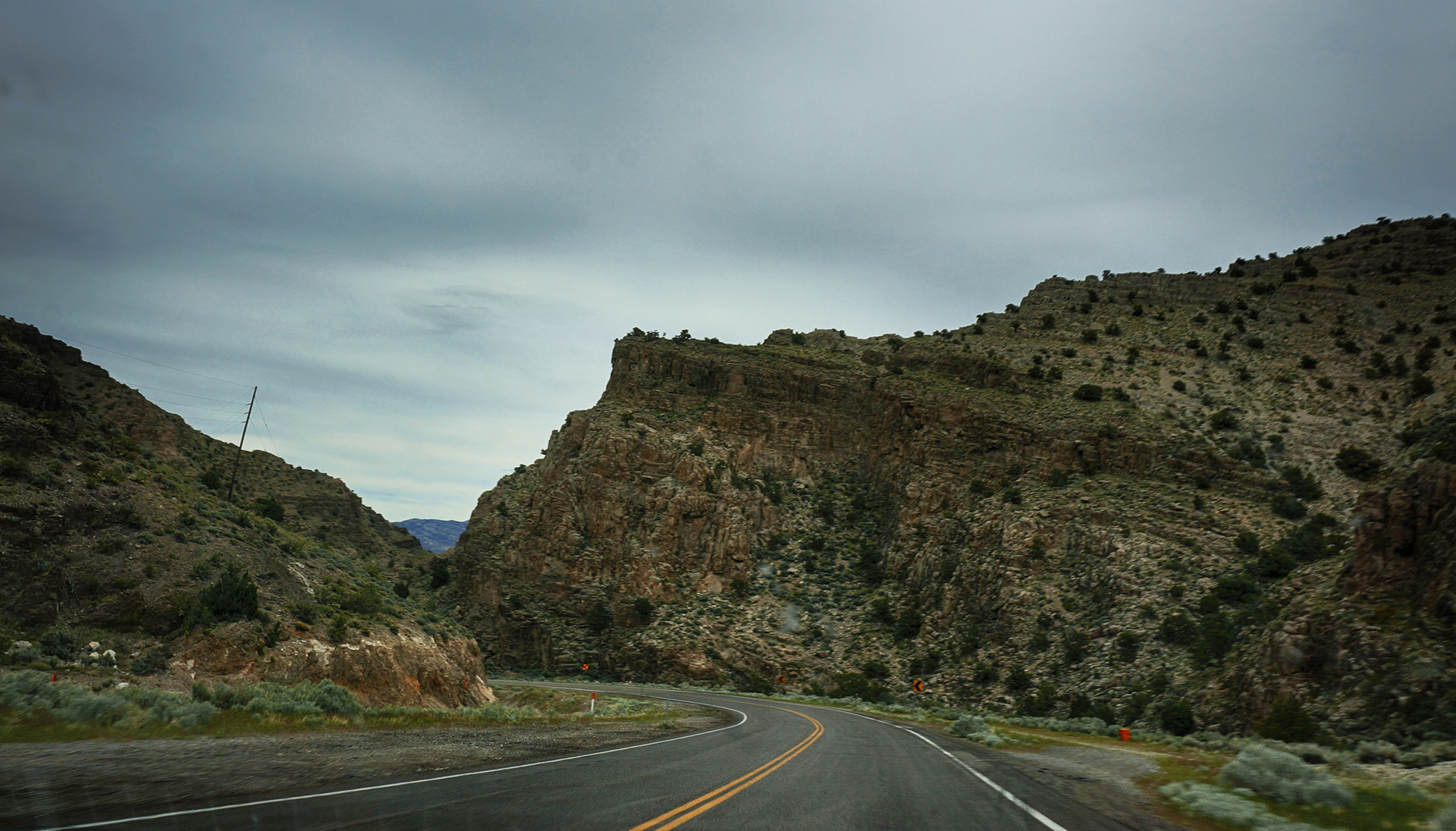
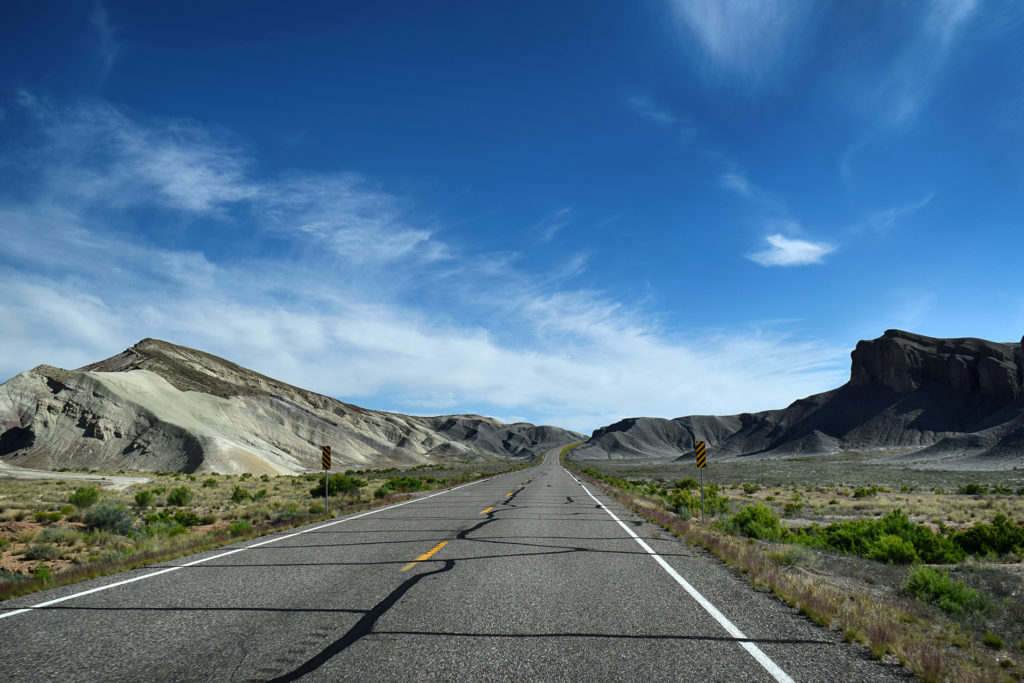
We last left off at Capitol Reef National Park, in the terrifically tiny town of Torrey (say that five times fast).  We headed northeast from there, through a part of Utah you might call “lightly settled.”  One town marked on Google Maps appeared to contain a total of six houses…

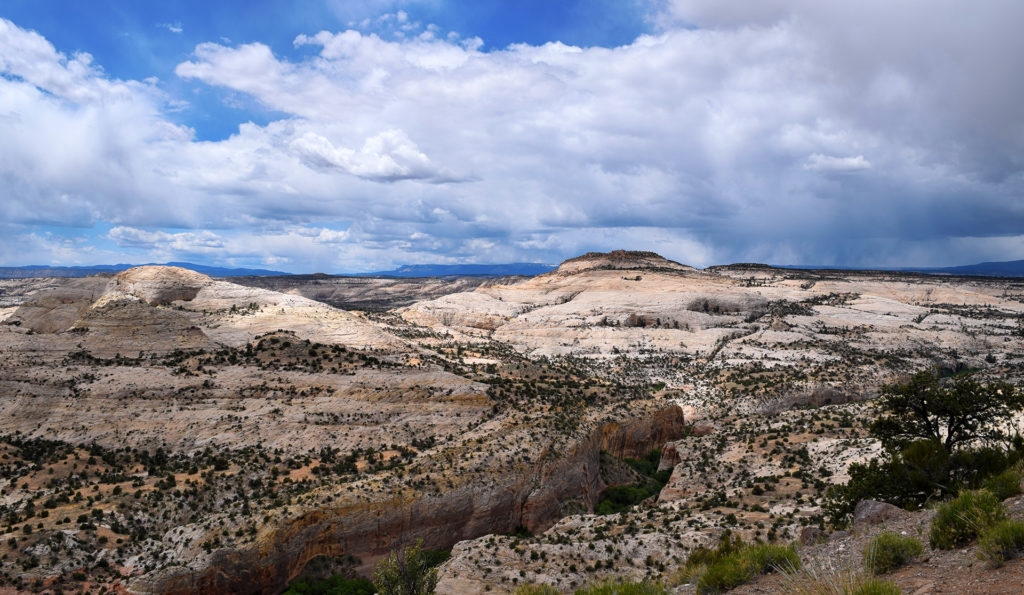
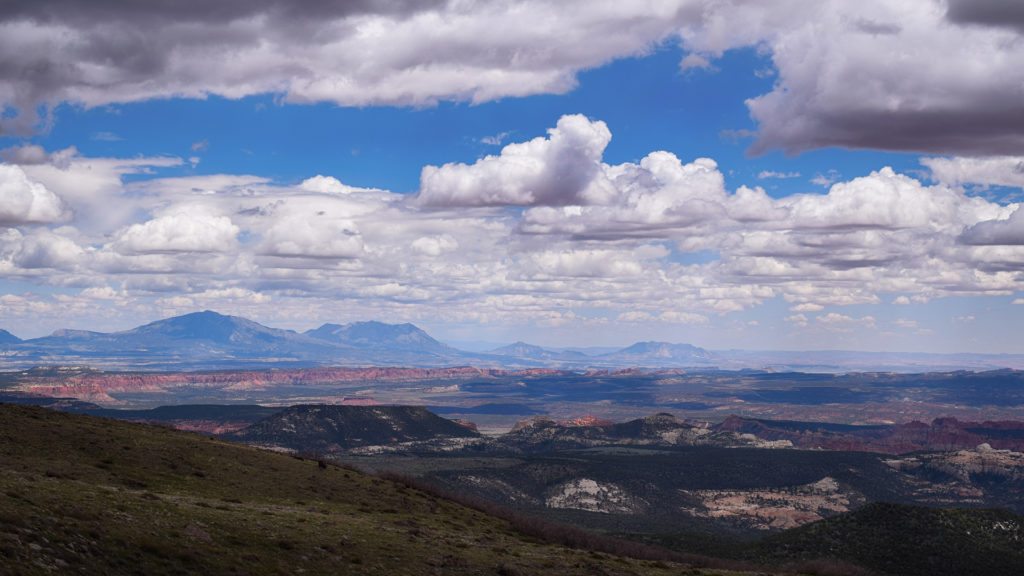
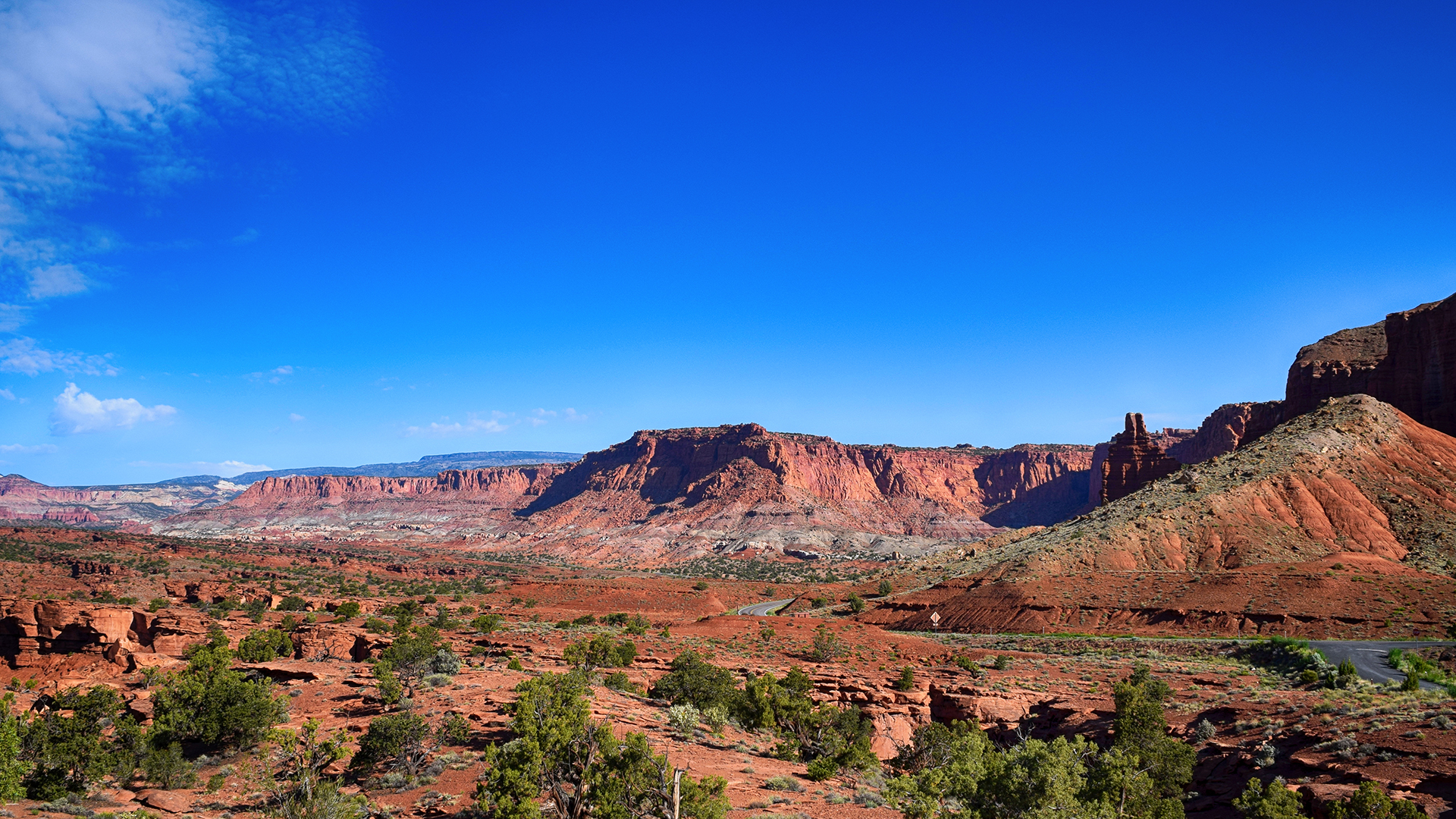
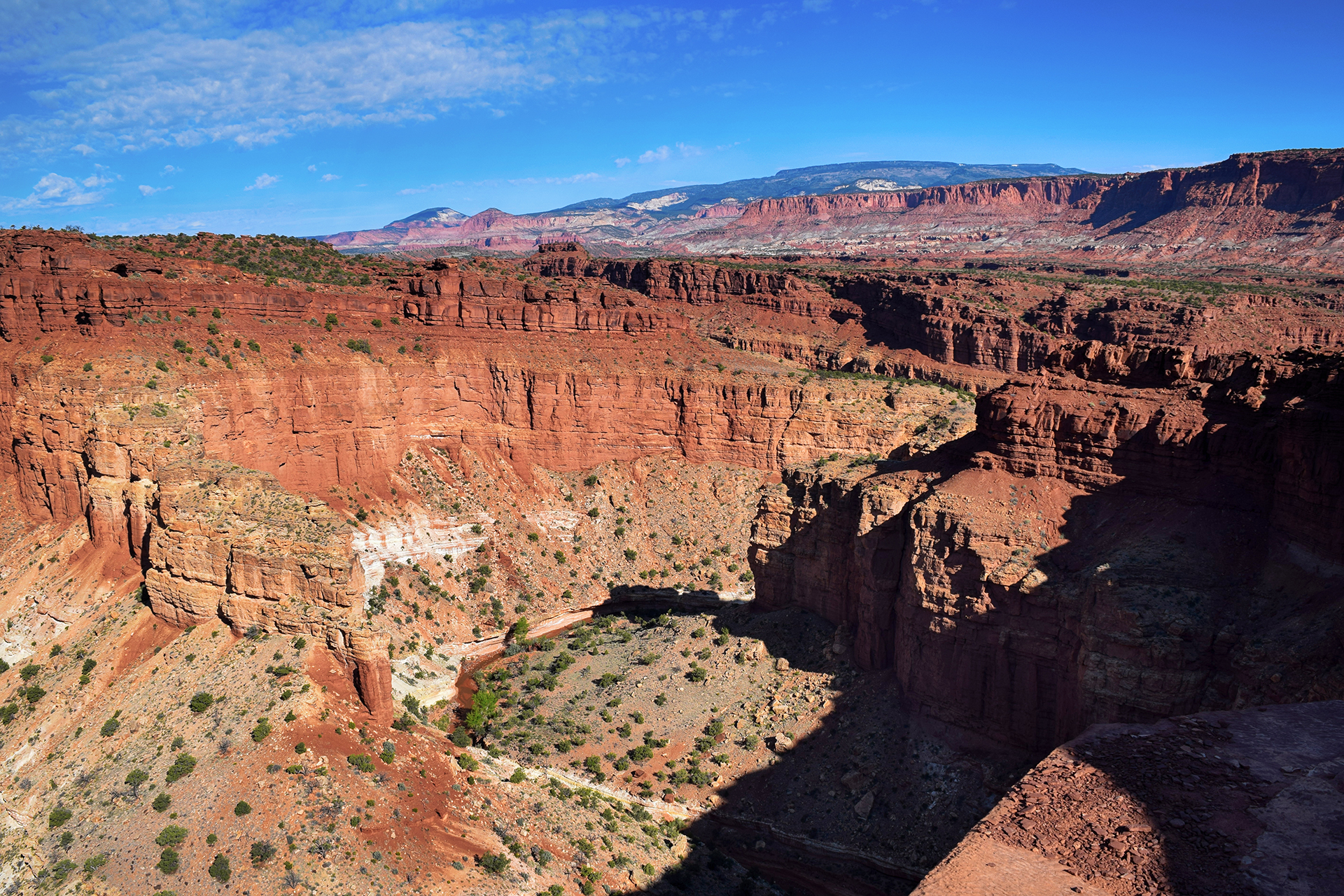
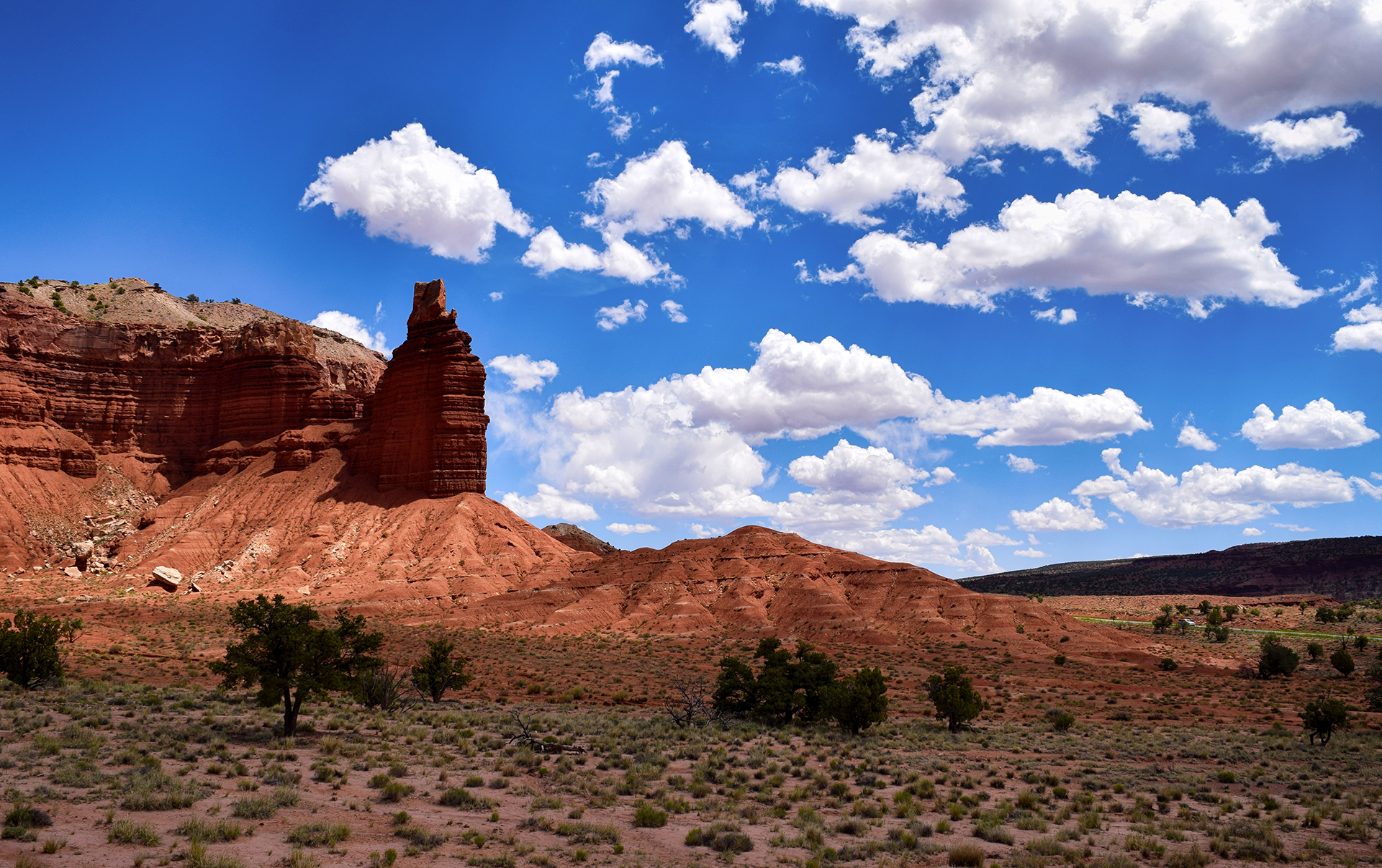
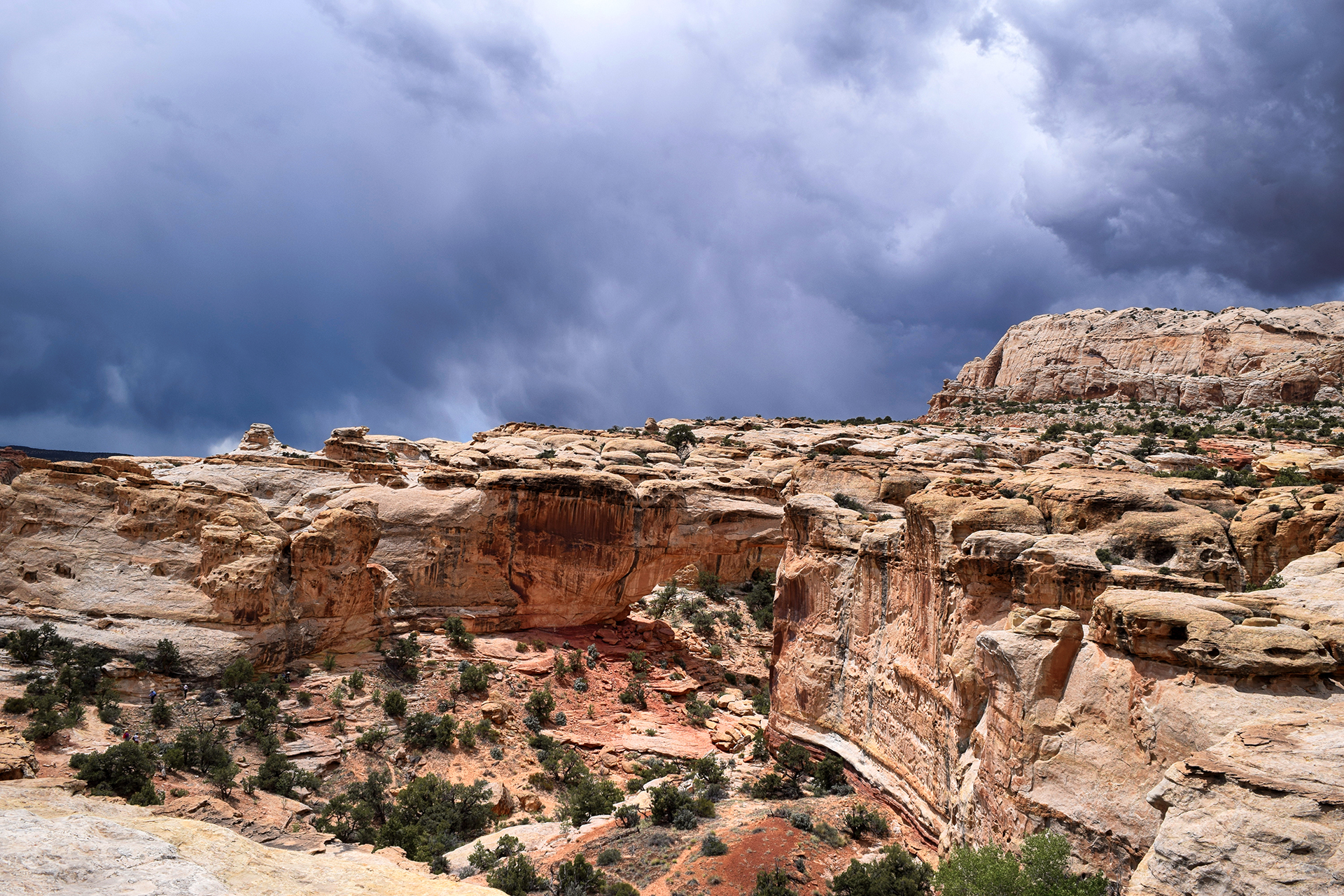
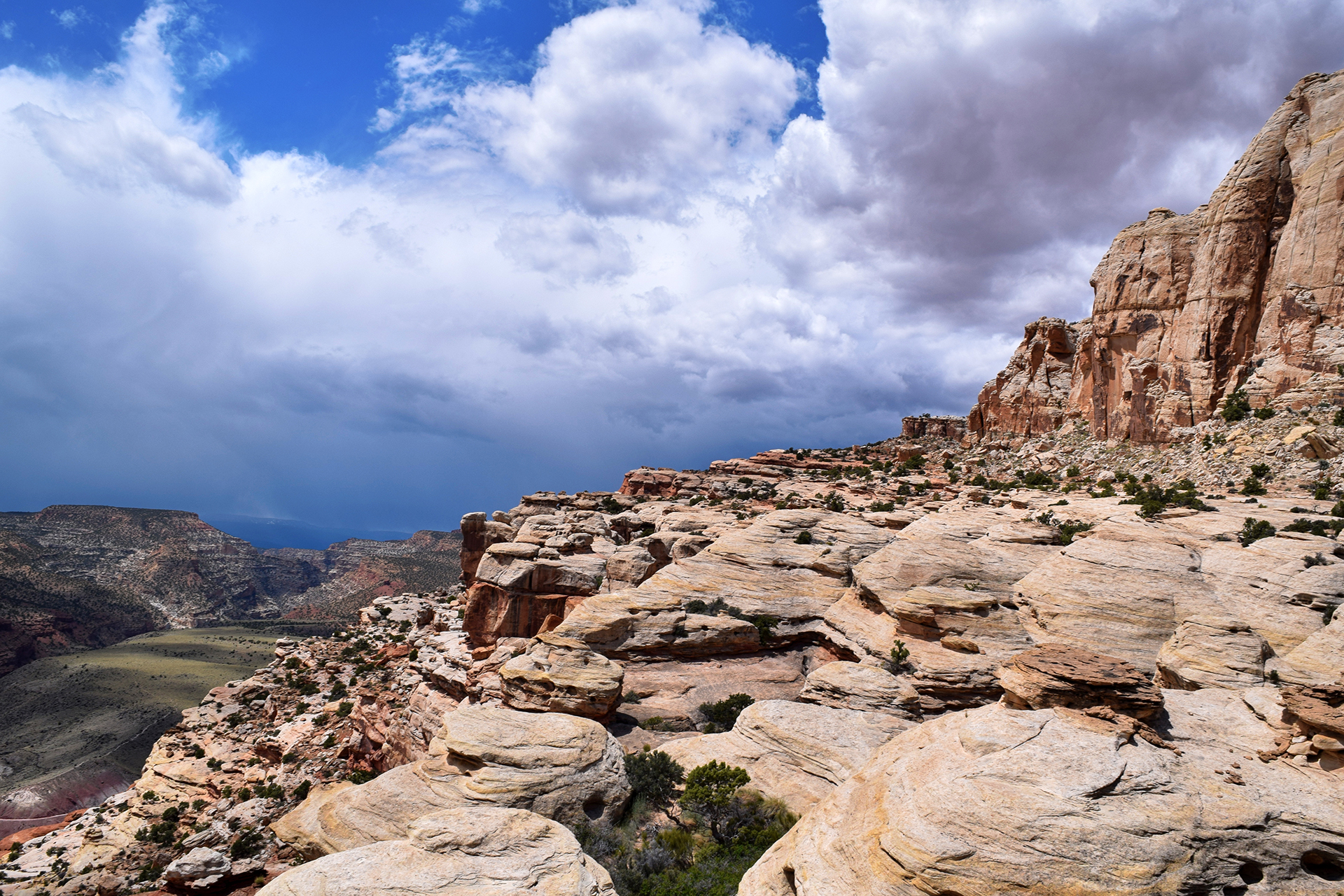
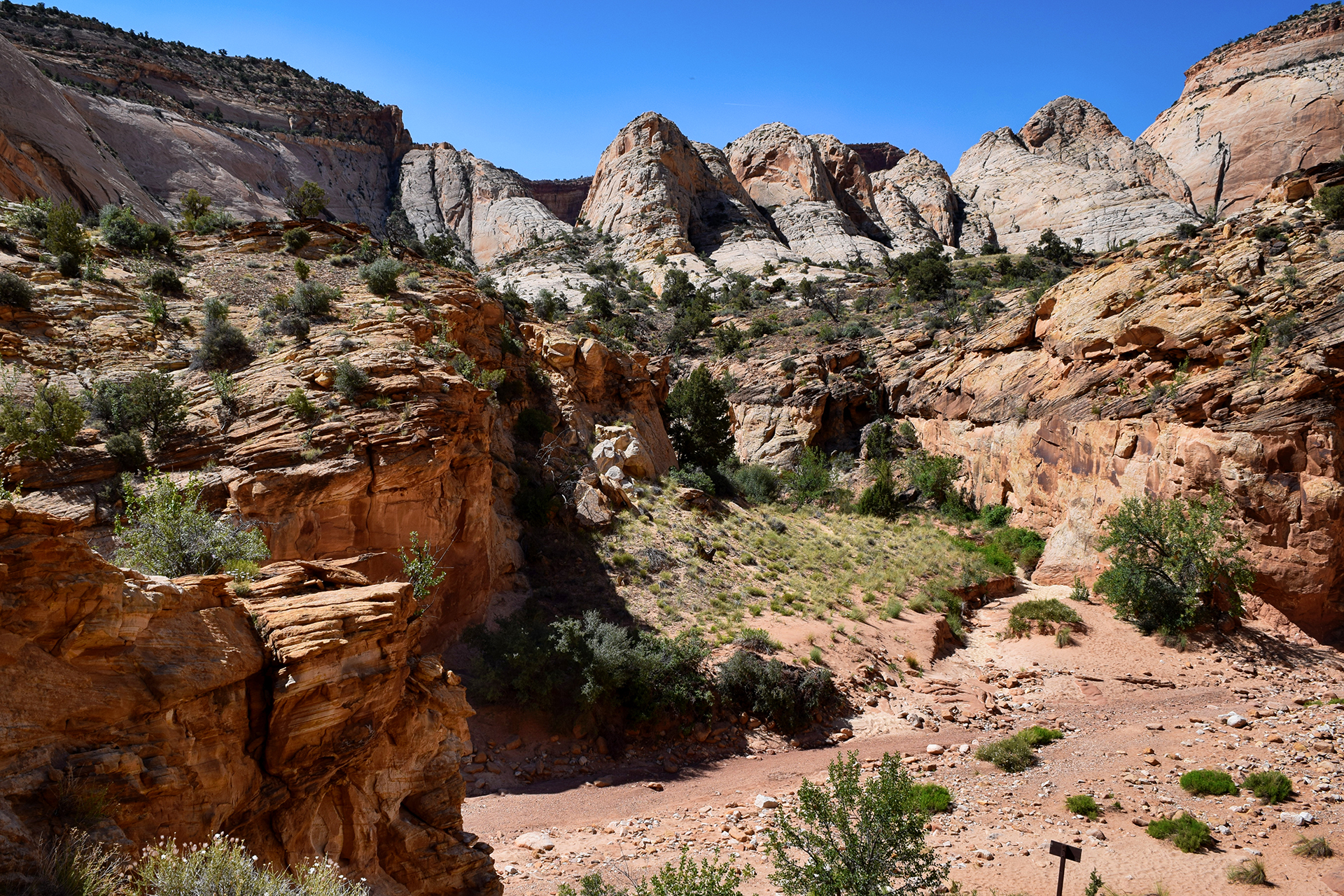
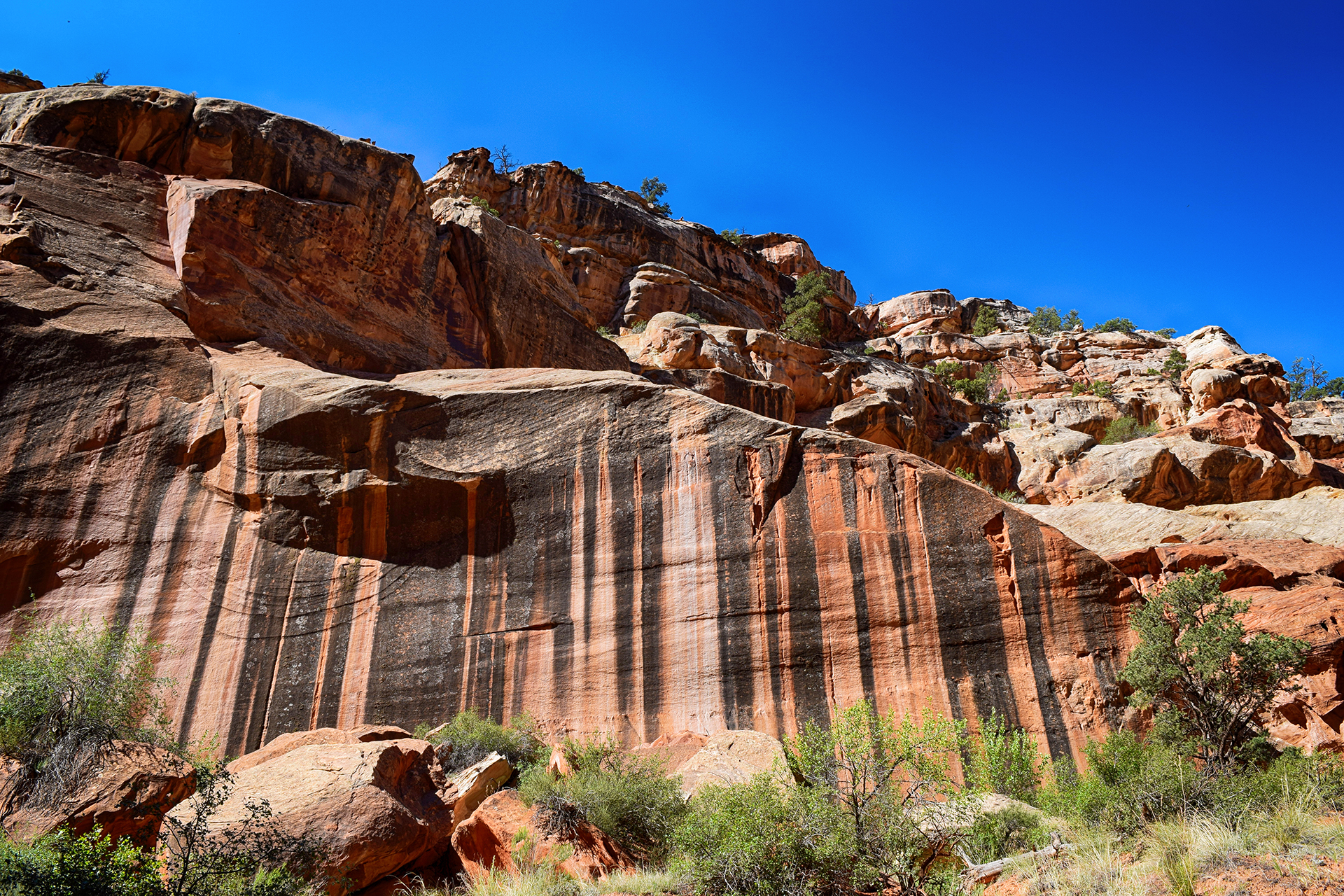
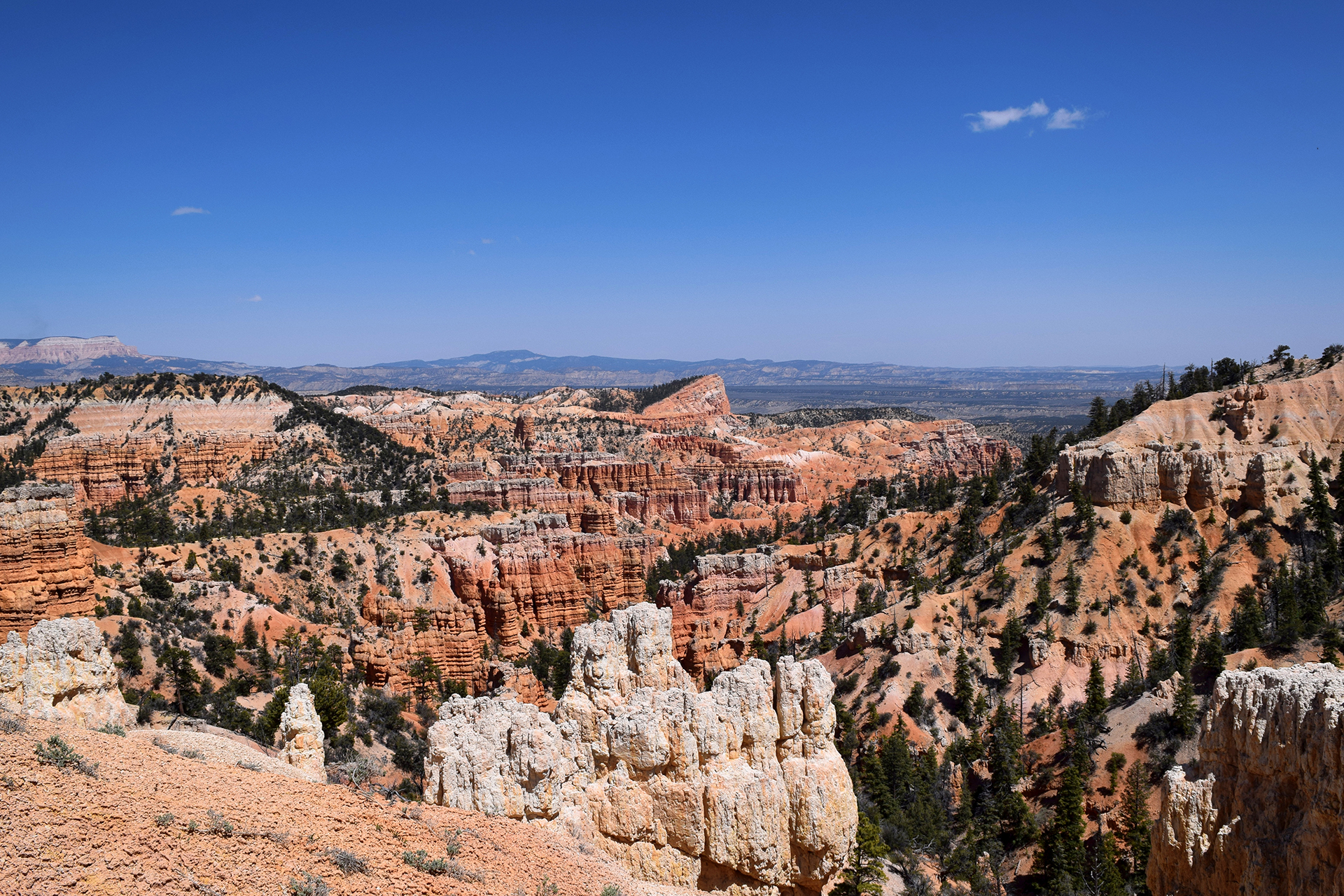
After about an hour and a half, we pulled off the highway in an area known as the San Rafael Swell.  Even in a state with crazy geology, the Swell is an area known for its crazy geology.

Things are going to get weird.
Into the Crevasse

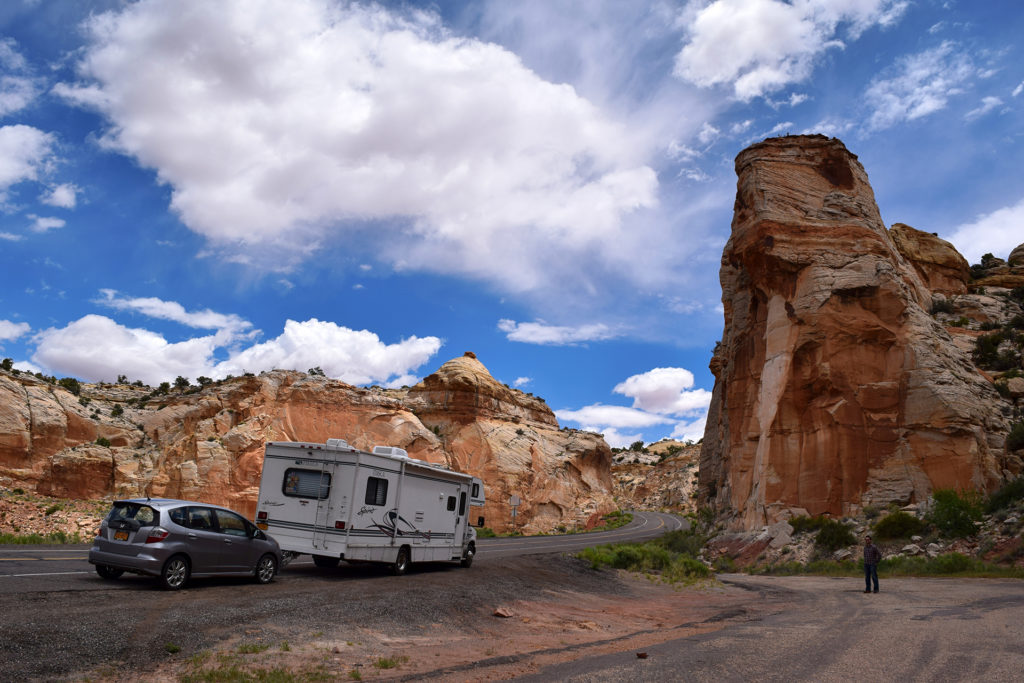
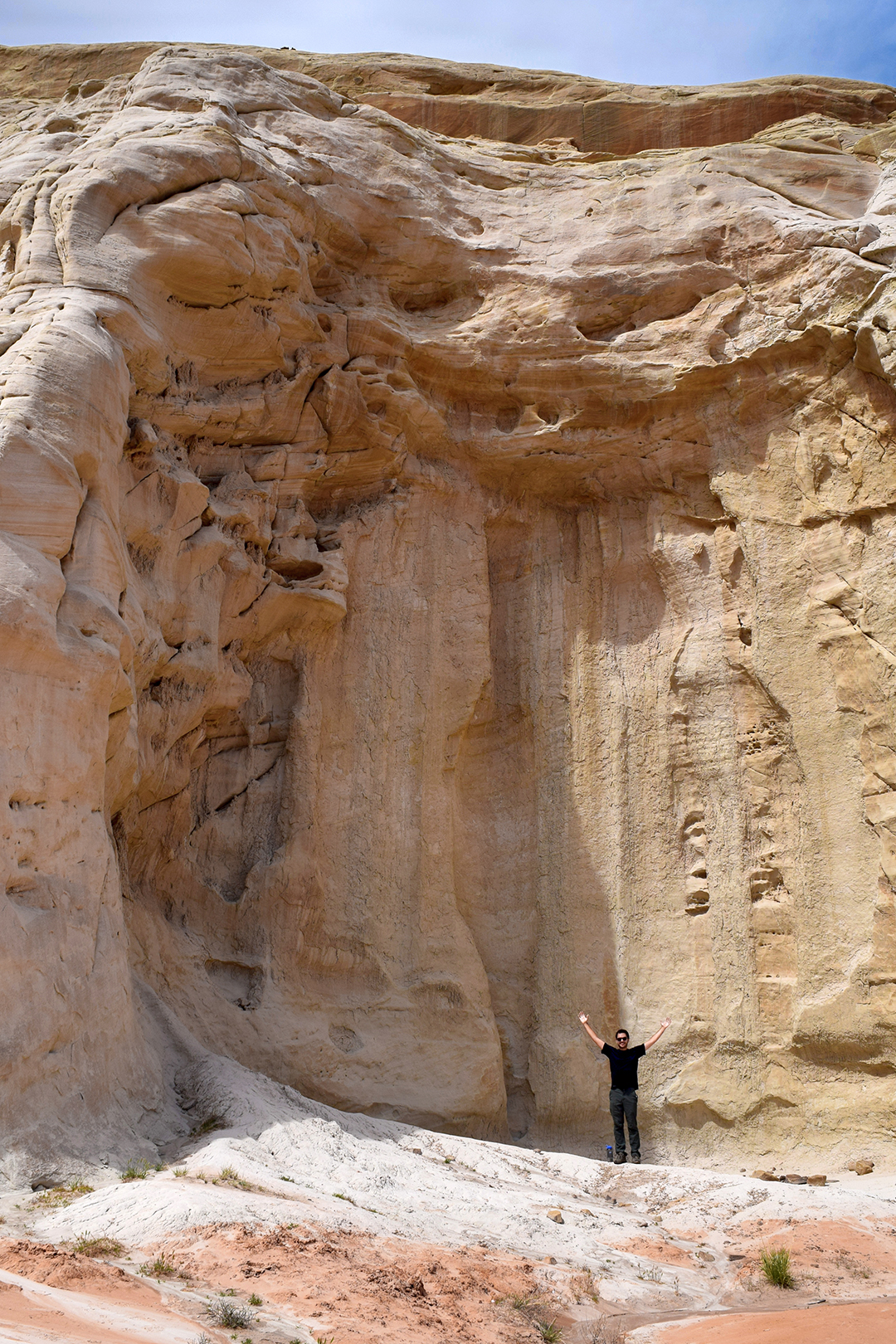
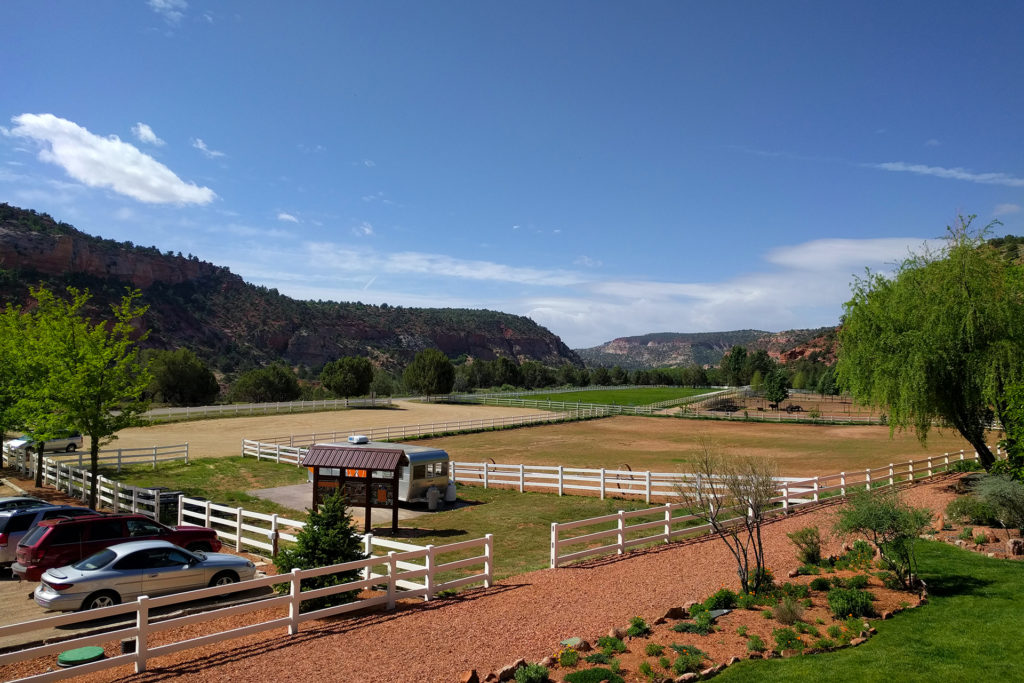
If the previous area was lightly settled, the place we stopped was downright empty.  There were no signs of civilization aside from the long, straight roads cutting through the southern Utah desert.  But when we pulled off, we found something cool: the government has established a number of free campsites here. There’s no hookups, but there are vault toilets (read: permanent port-a-potties) and trash cans, and you can park in one of several dirt lots for as long as you like. As it was Memorial Day, there were quite a few RVs.

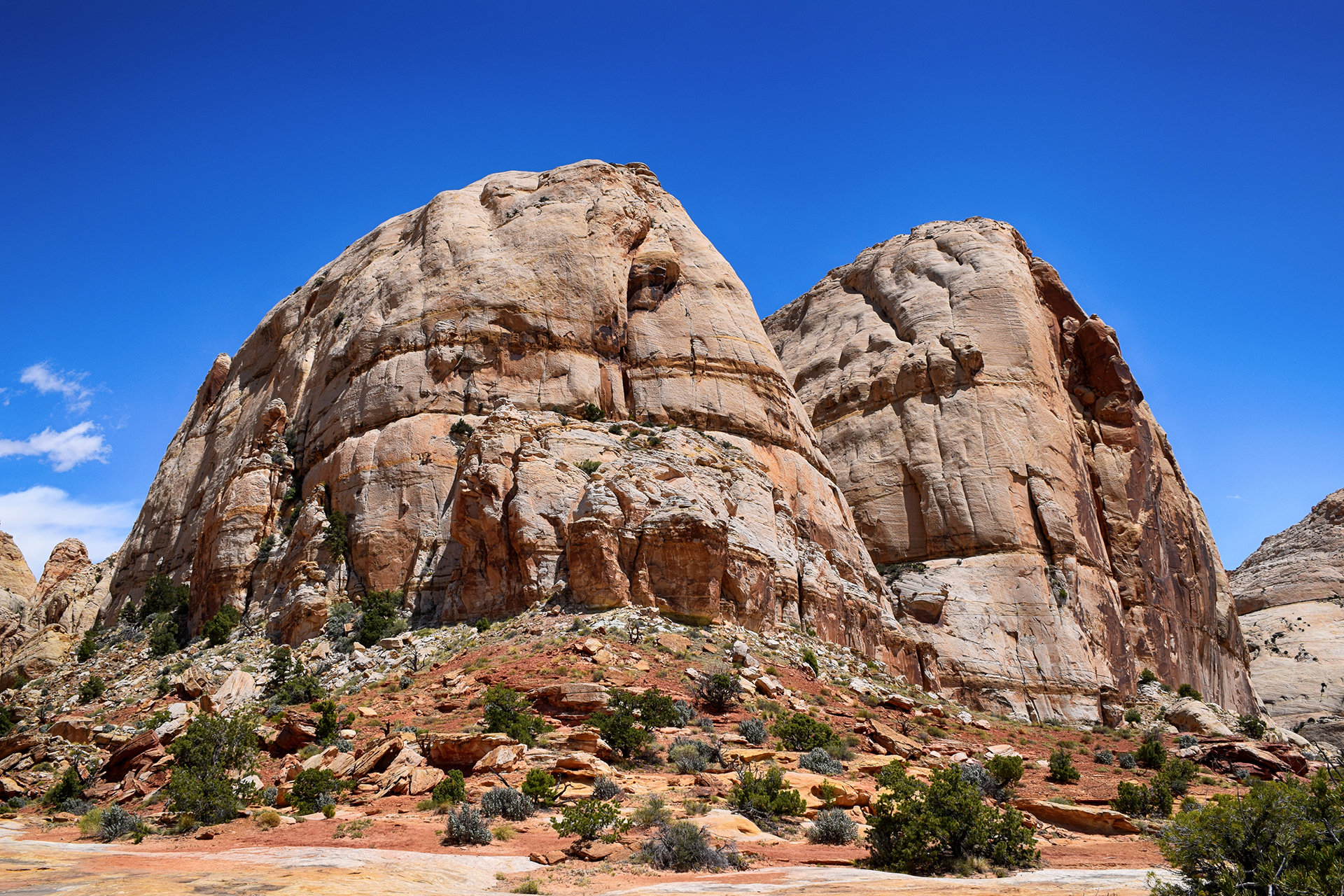
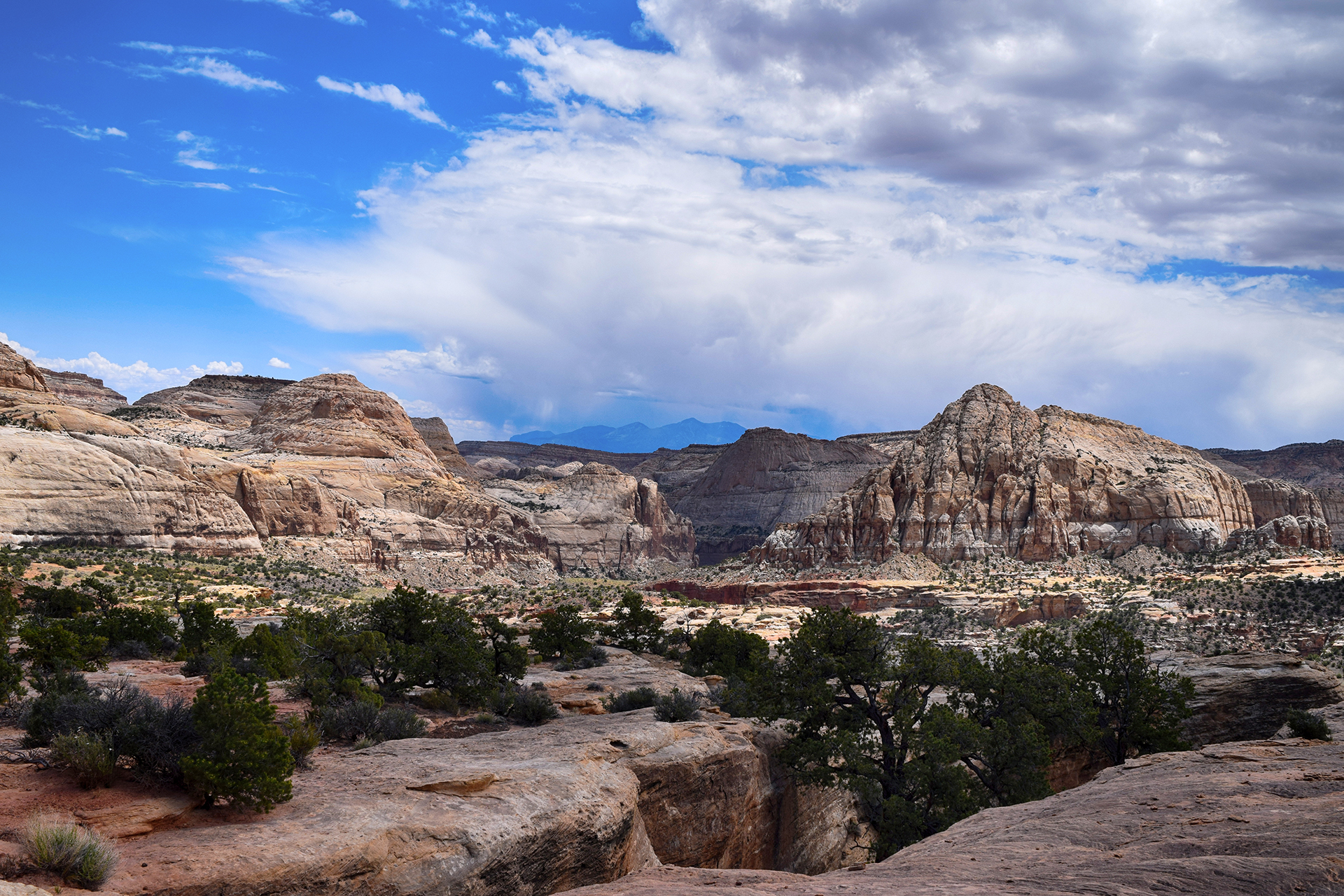
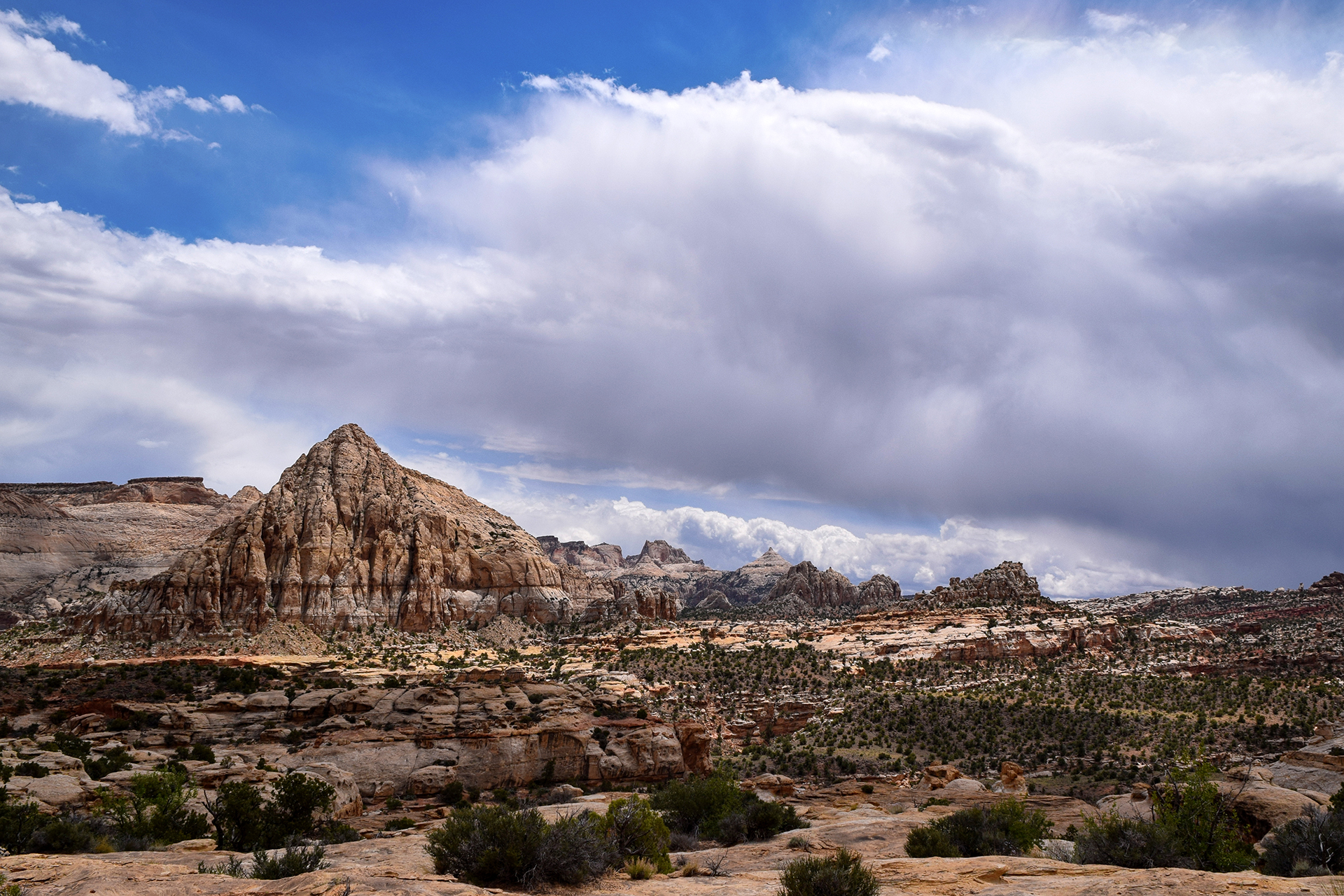
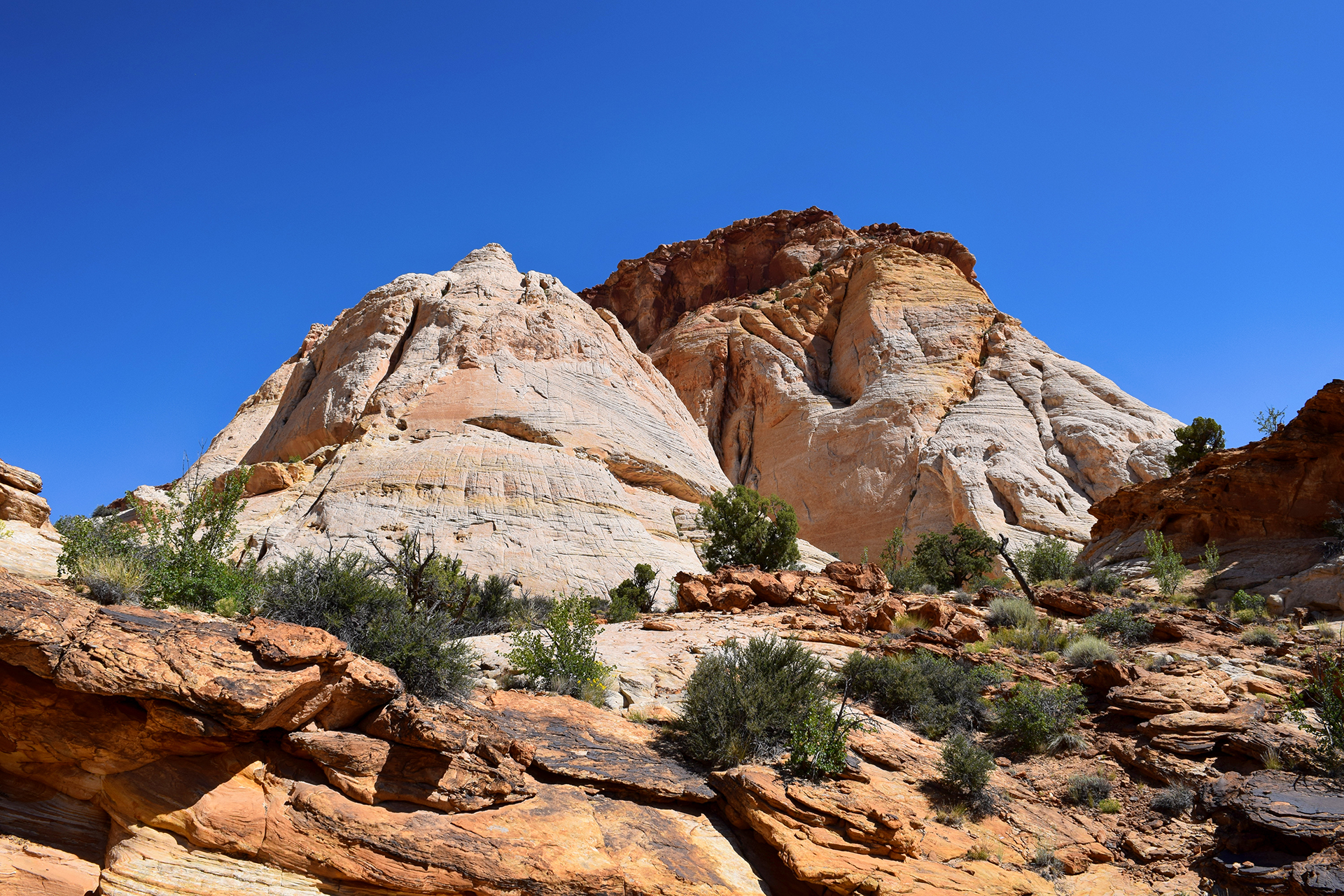
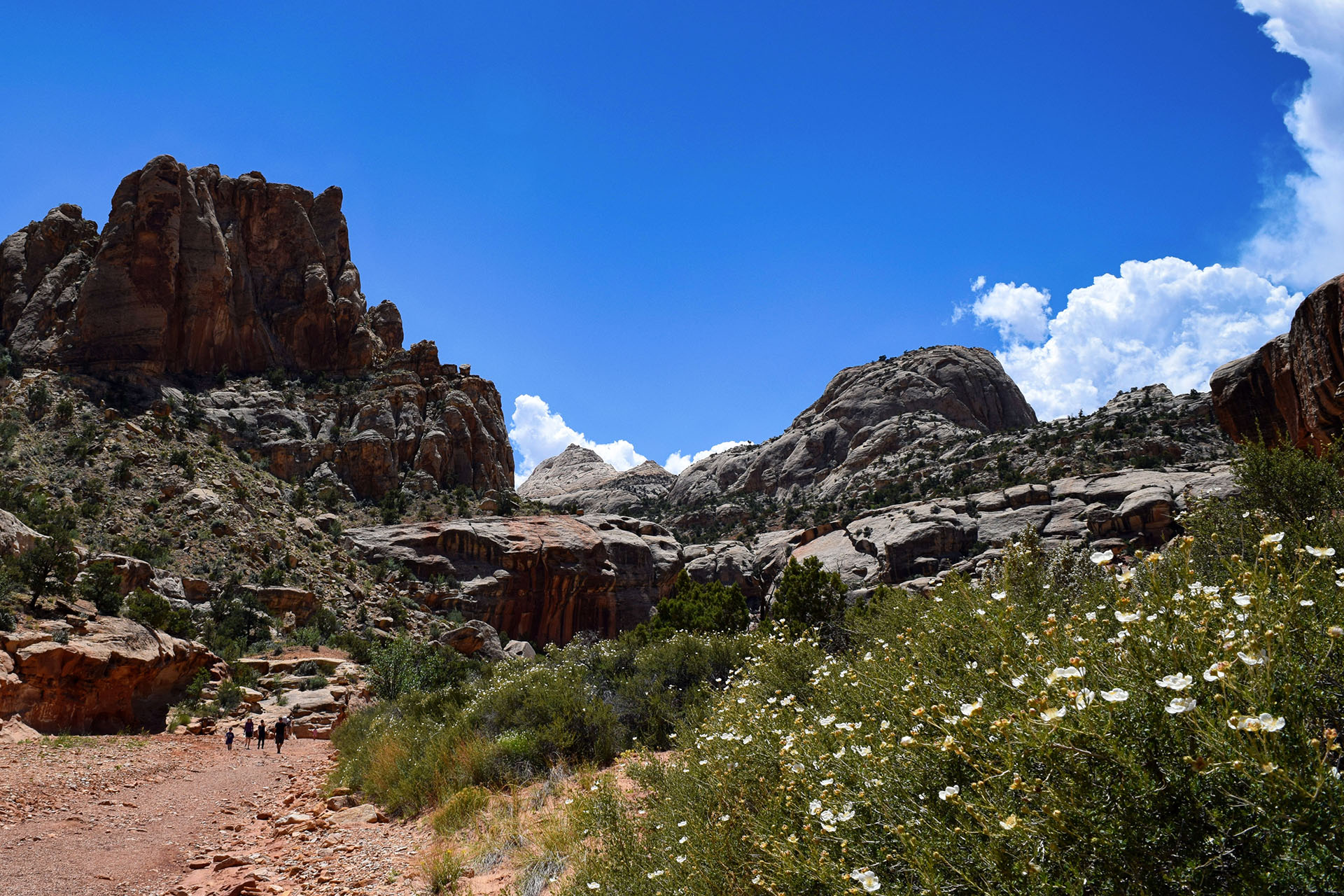
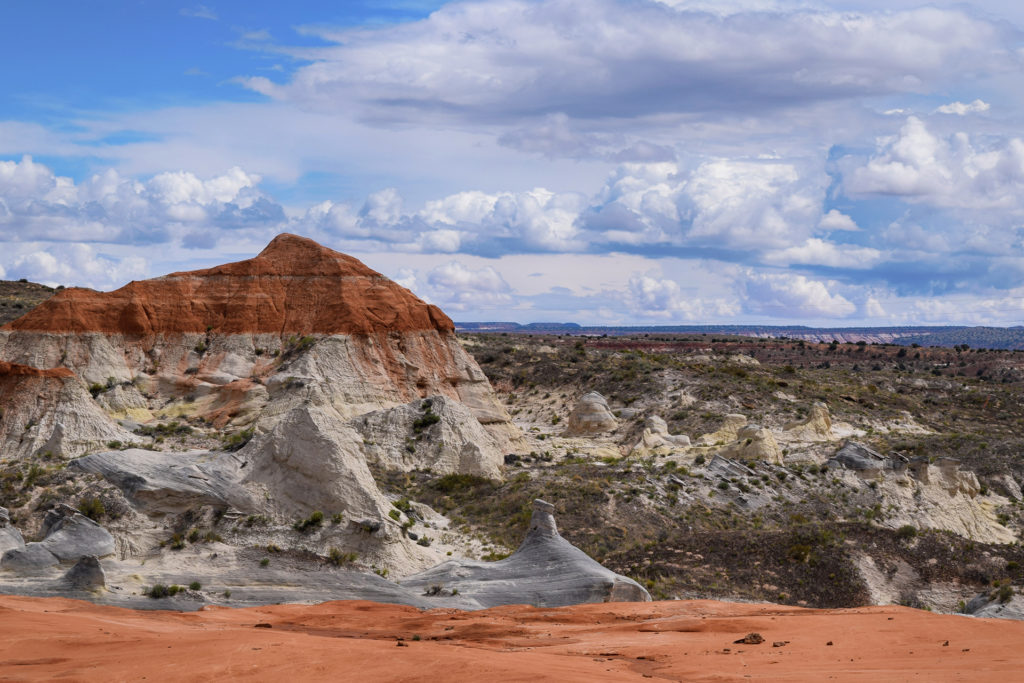
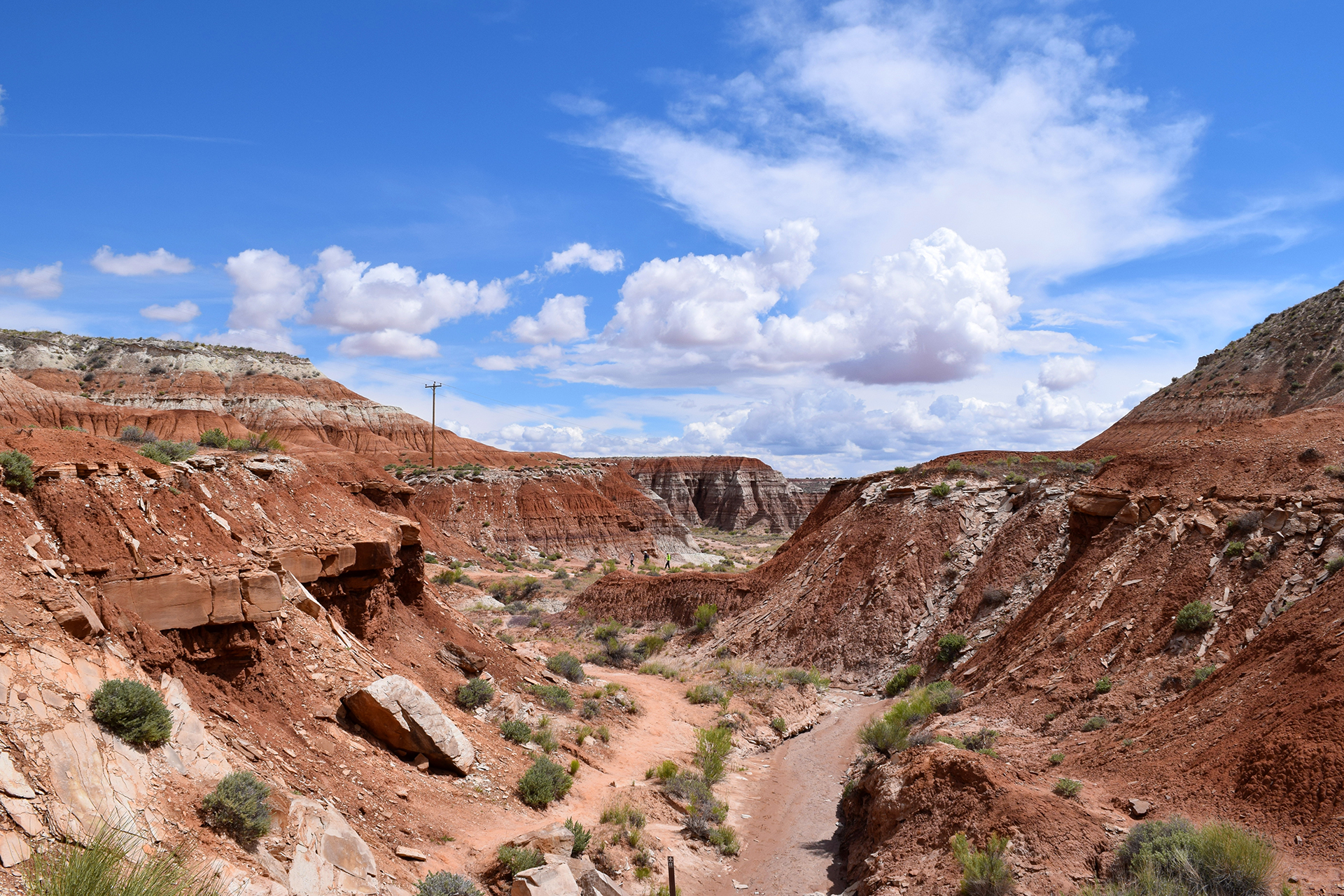
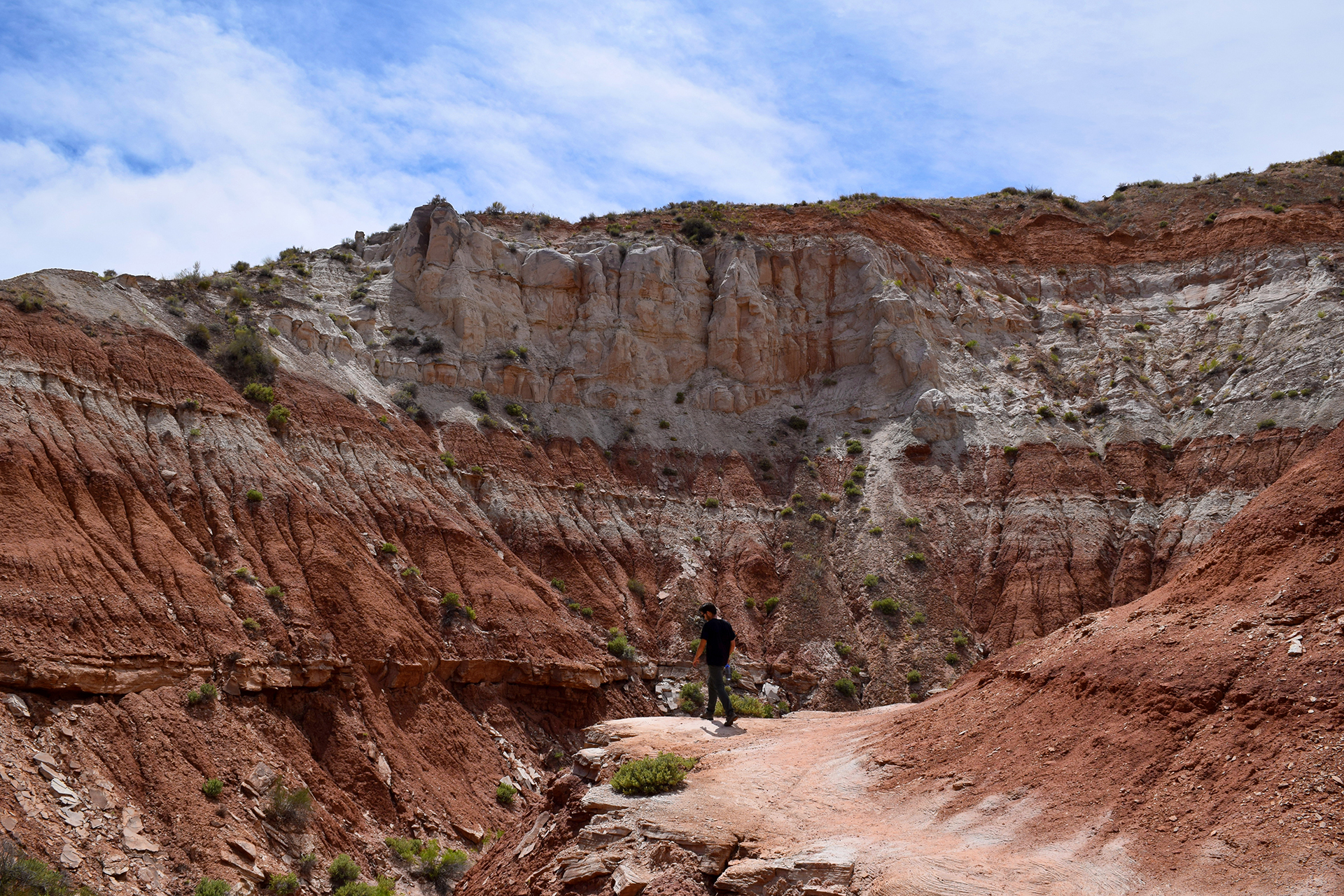
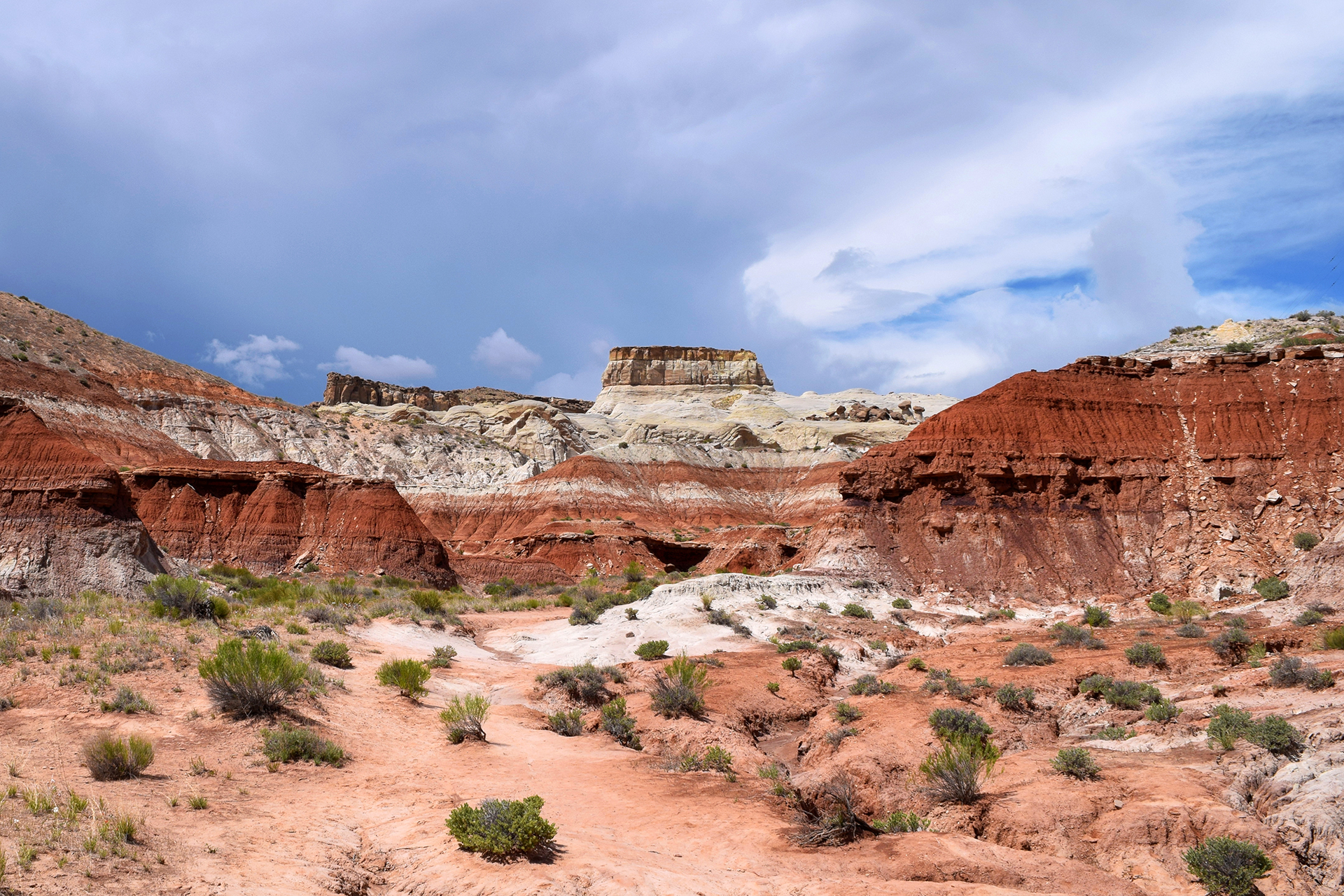
We parked our RV in one of these lots and drove our car about 10 miles towards – into? – the Swell. This area is almost completely unknown, but it is incredibly cool, full of towering rock formations banded with bright colors. Far back near the hills, we spotted many RVs and tent campsites – it struck us as the kind of place you could go and live undisturbed for a decade.
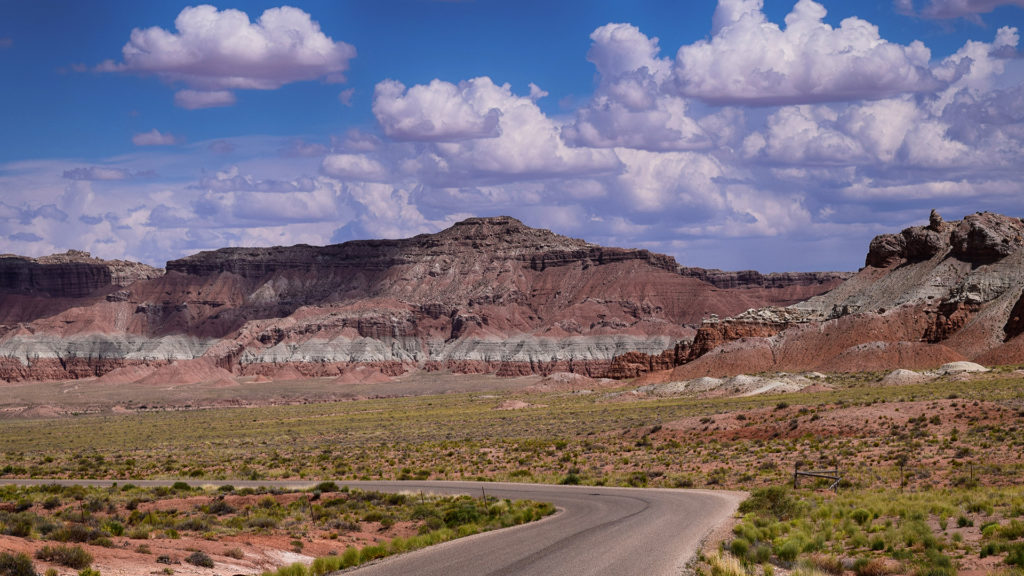
We nervously followed our directions deeper and deeper into the Swell, concerned that we might be lost, until finally we stumbled onto… a completely full parking lot.  Oh right – Memorial Day.

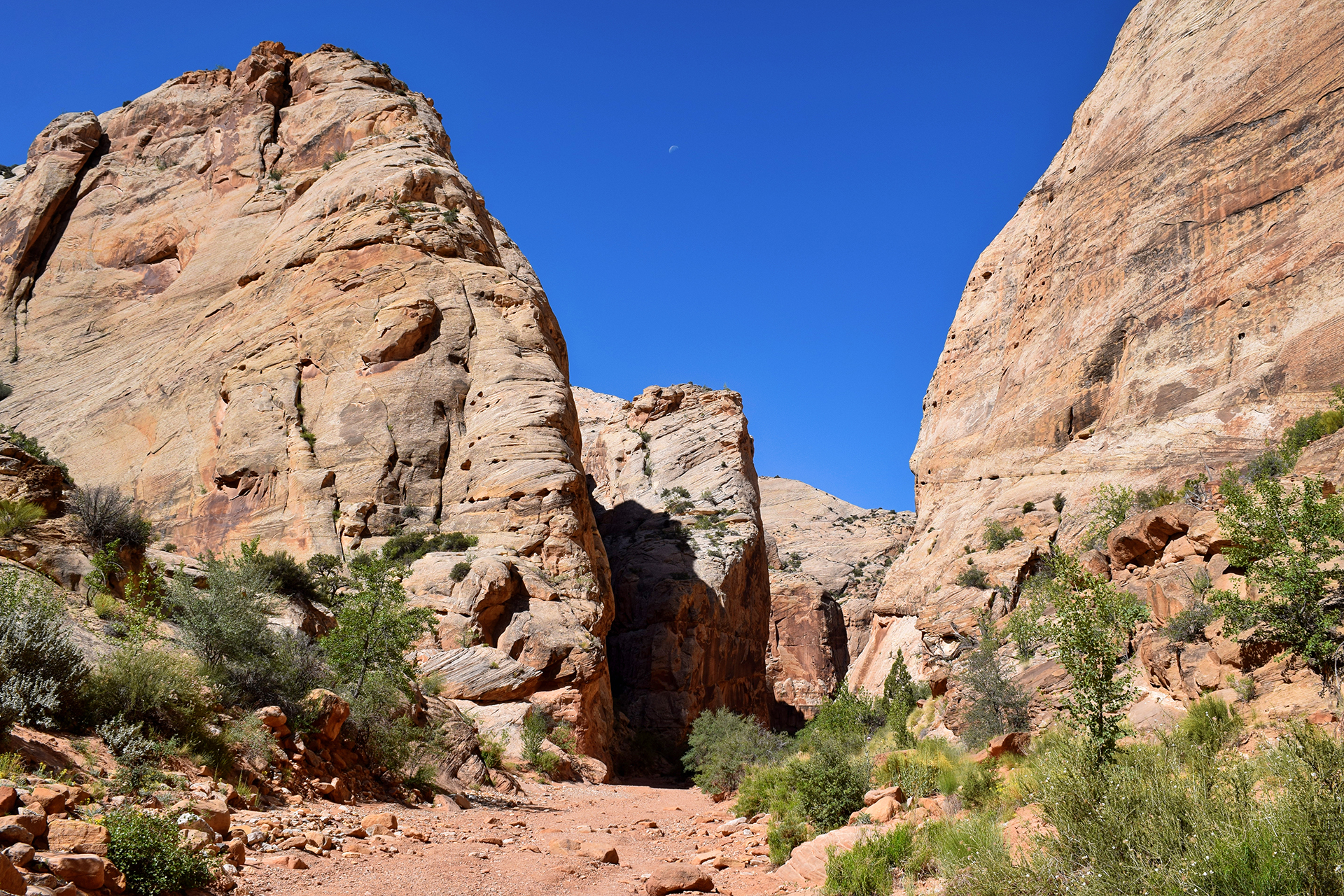
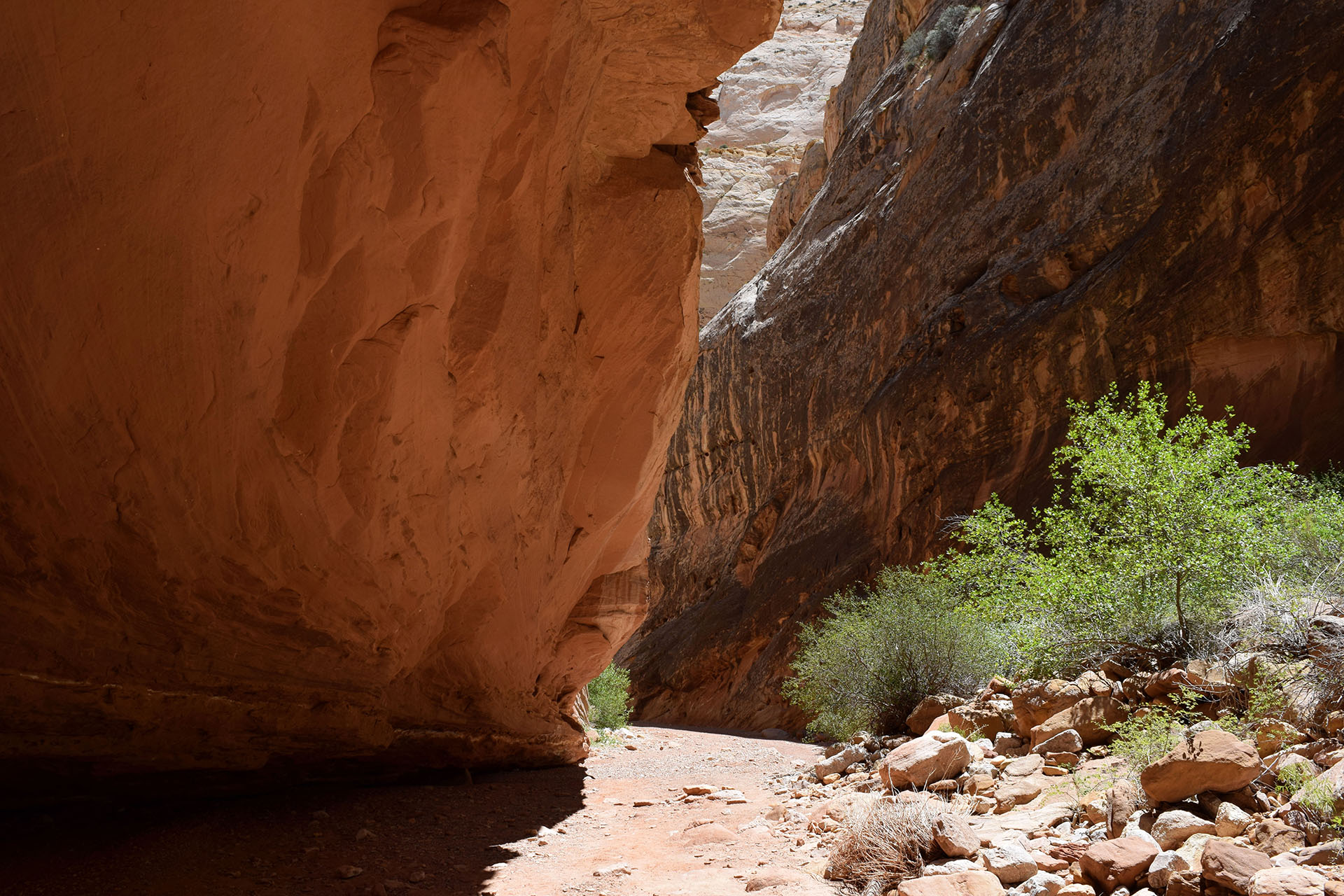
Well, it’s the desert, so we just kind of found some dirt and left our car there. Then we headed into Little Wild Horse Slot Canyon.

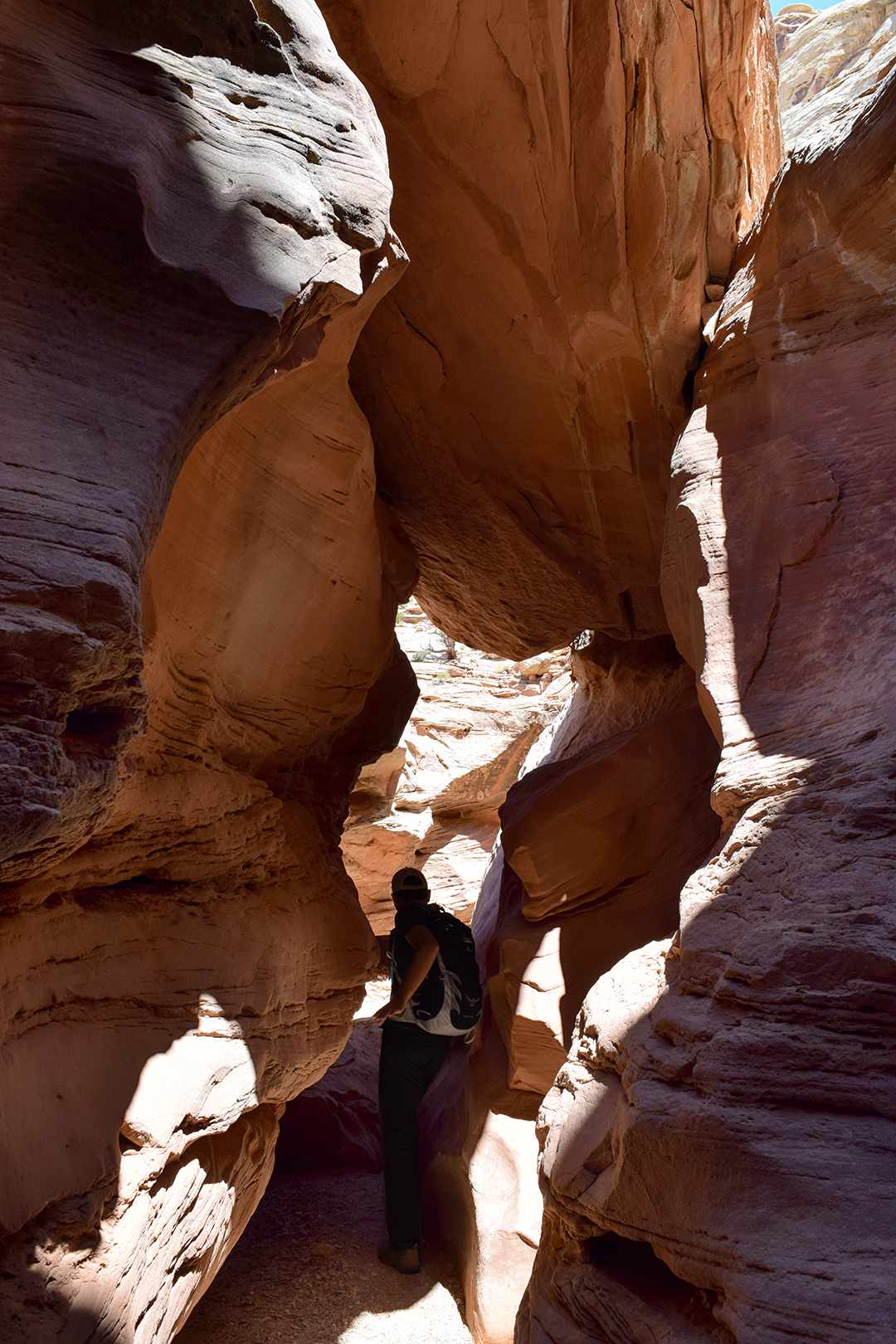
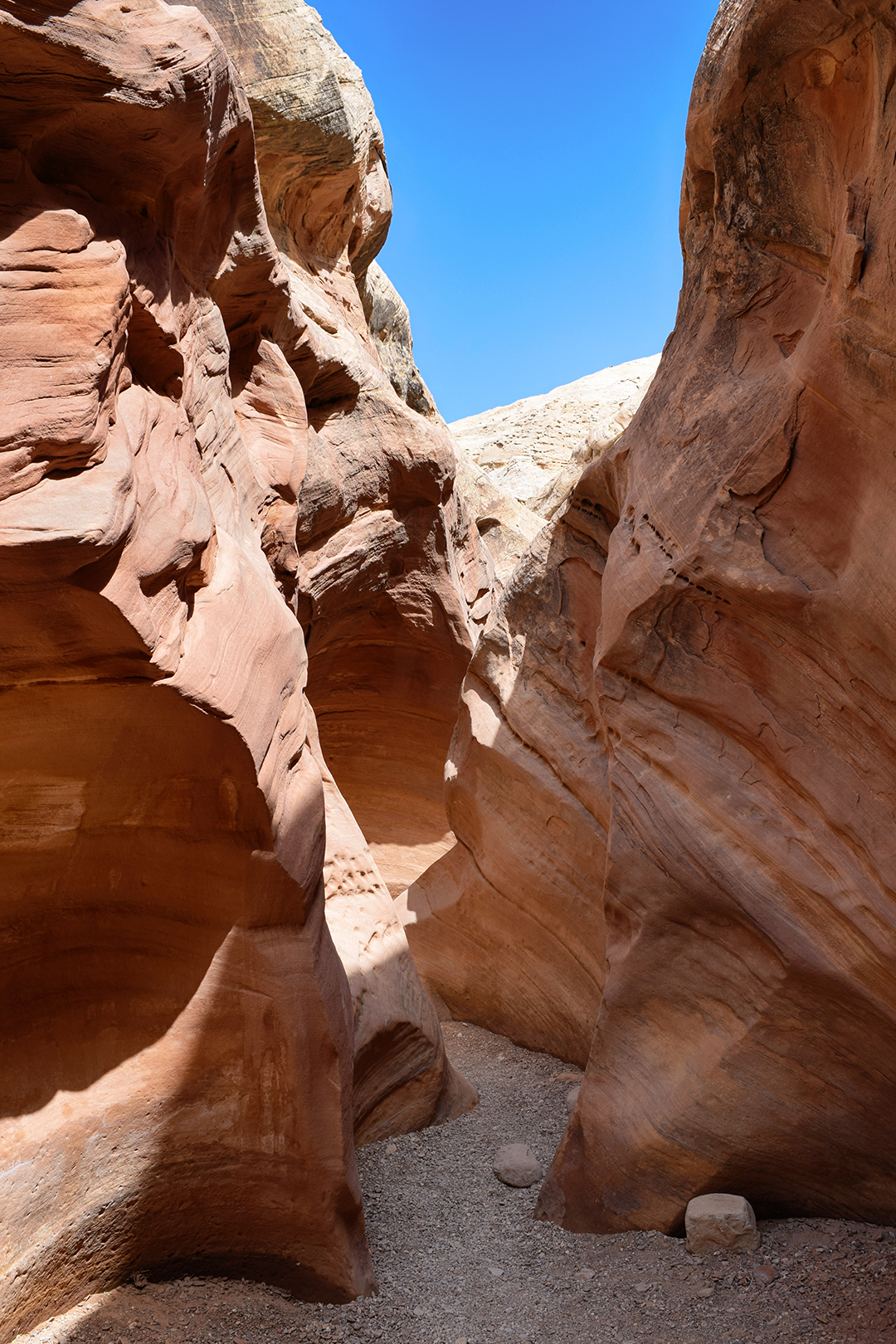
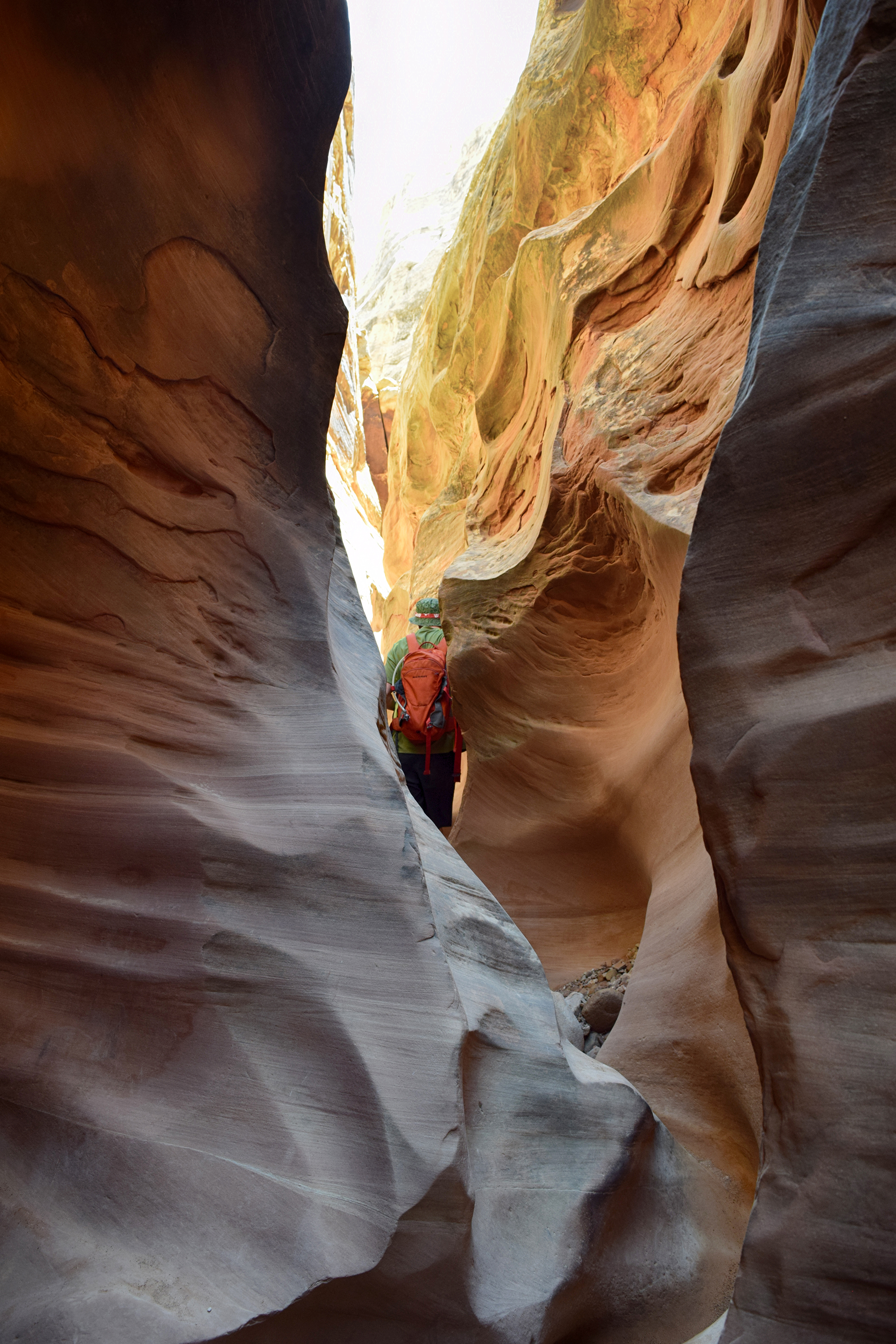
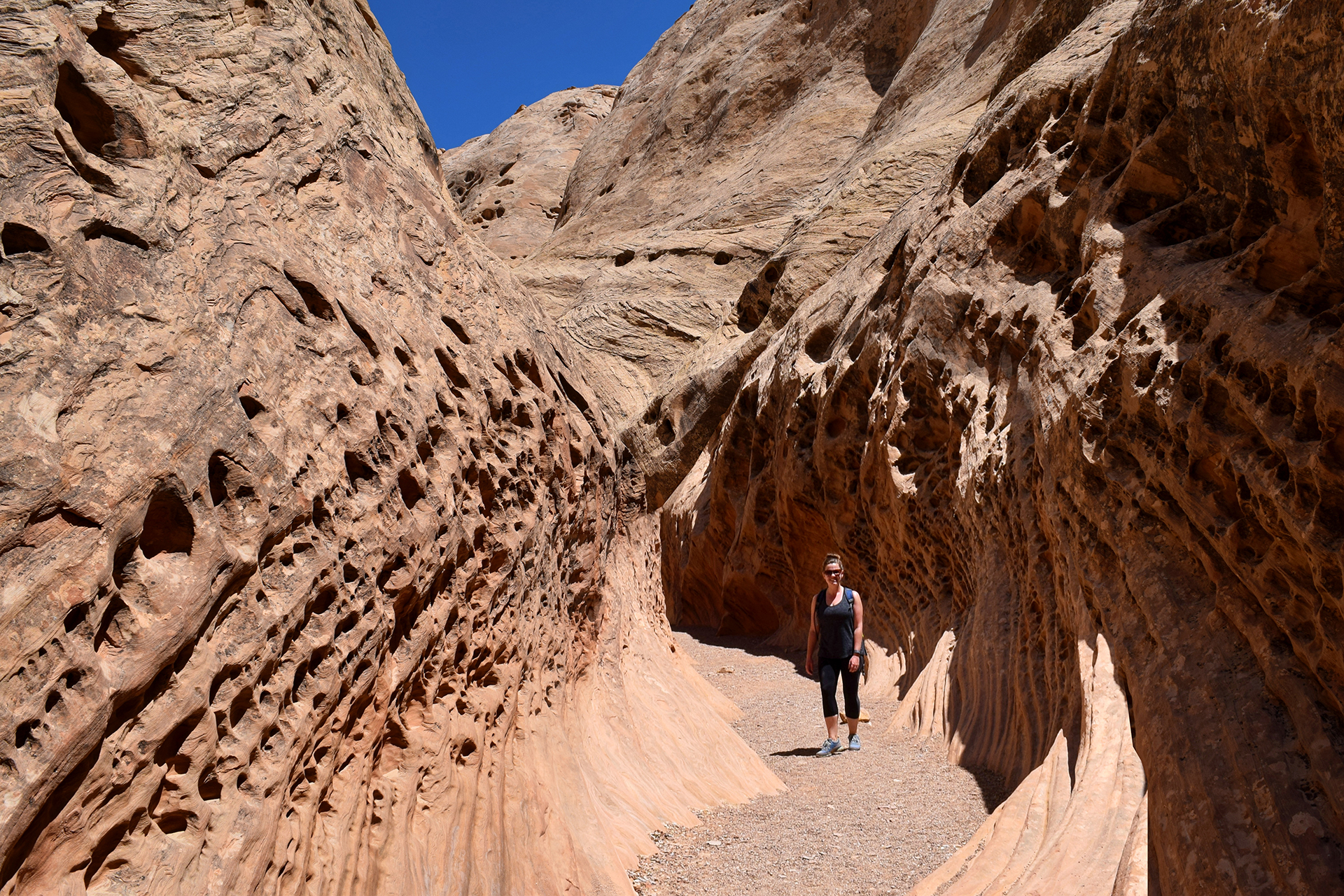
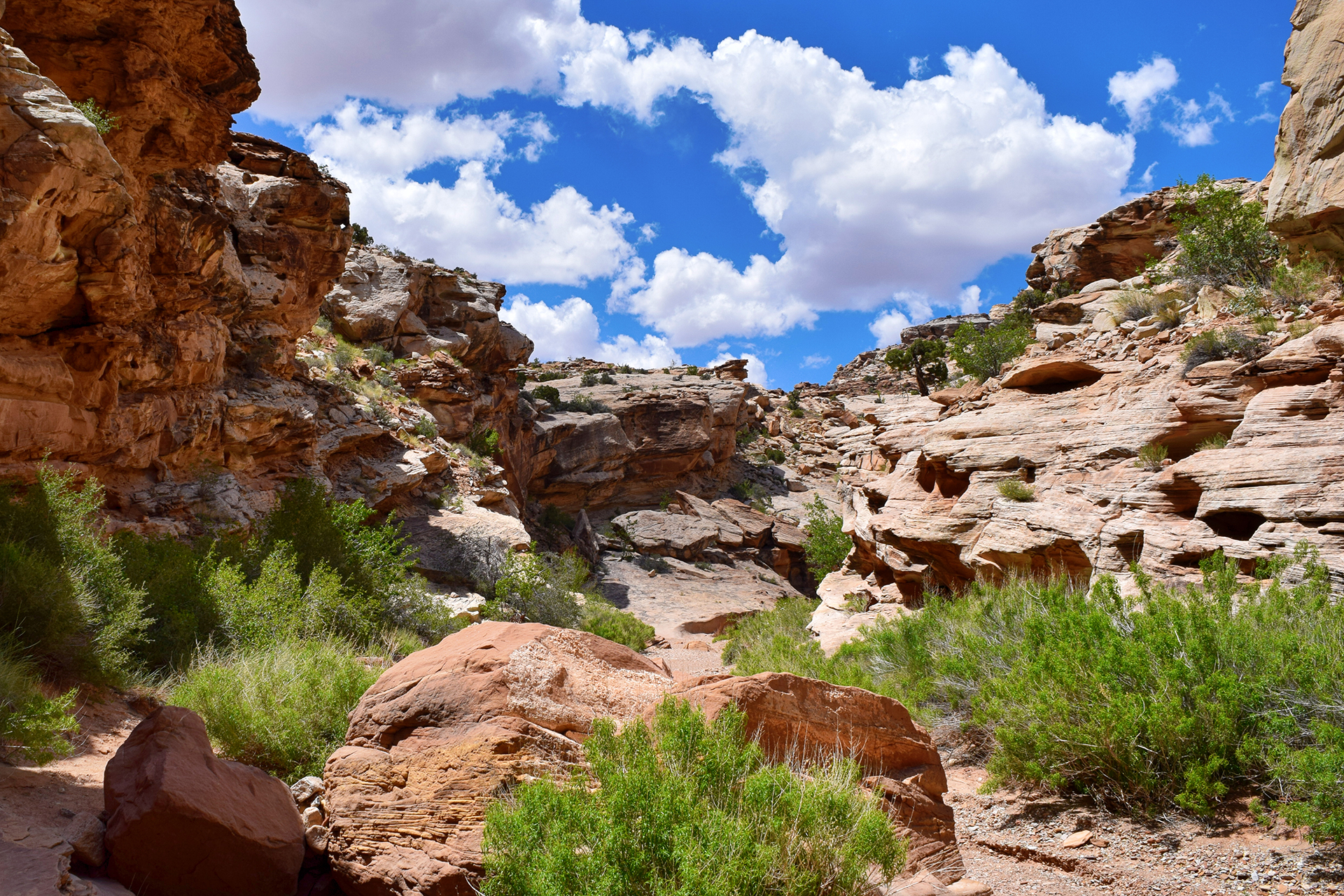
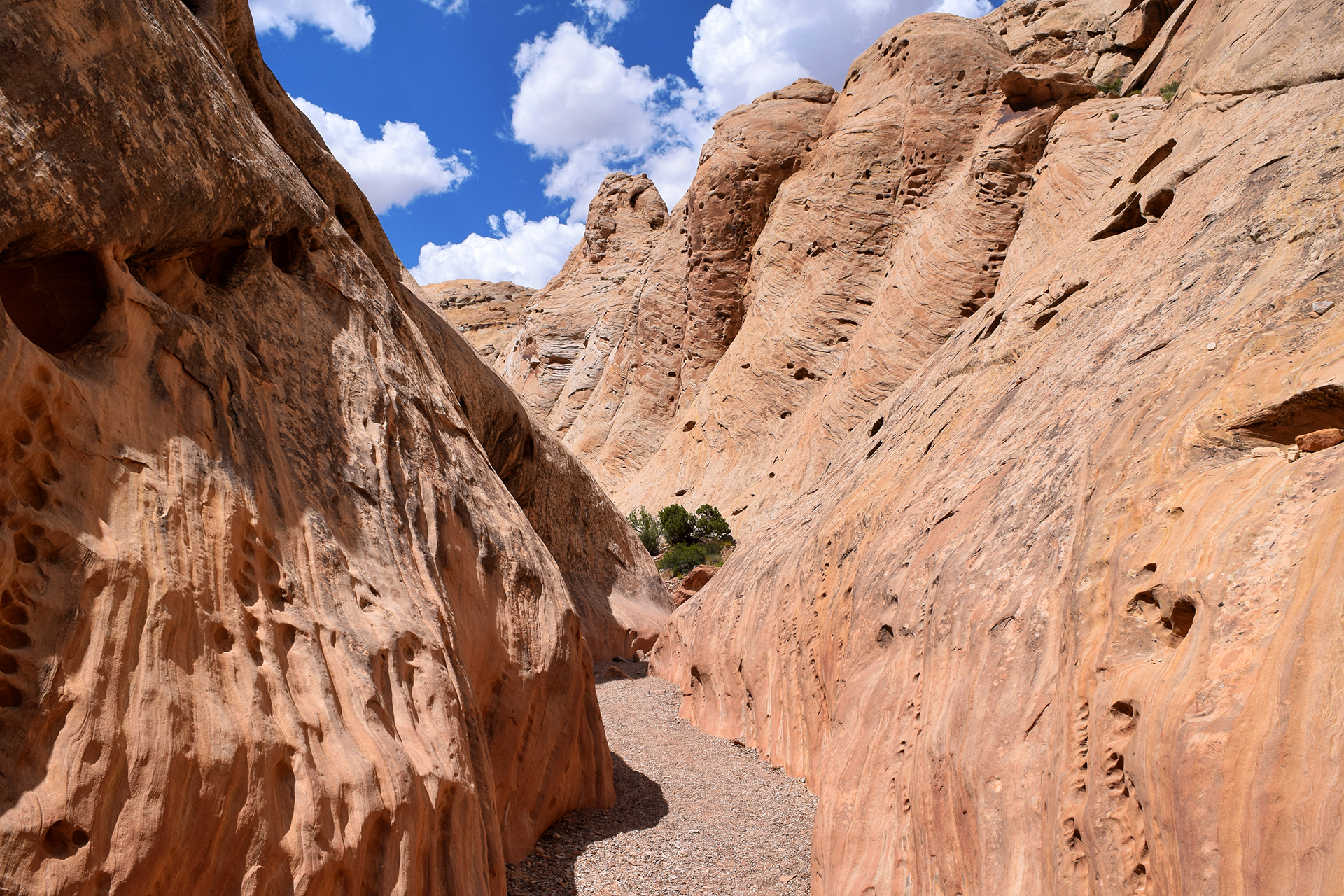
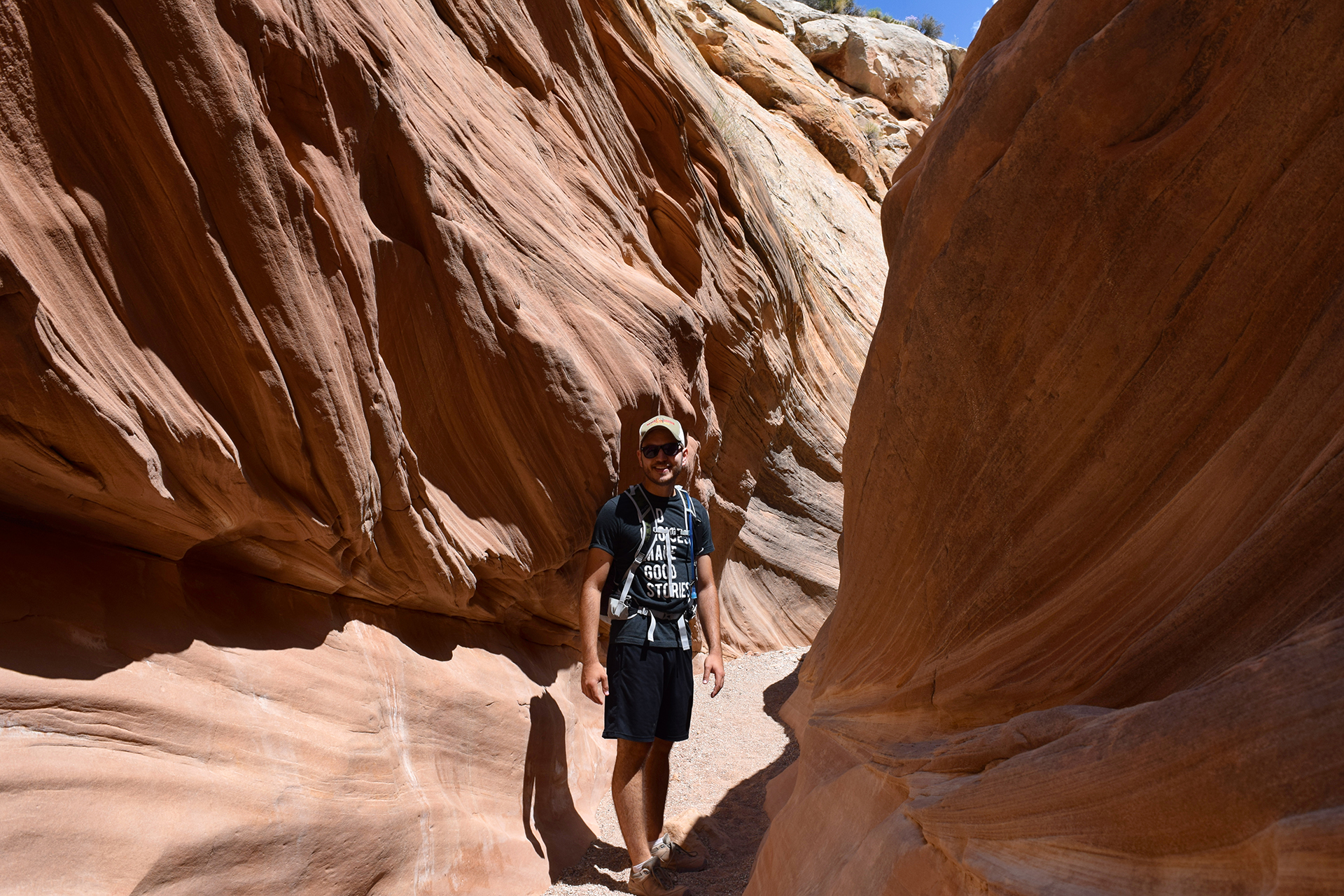
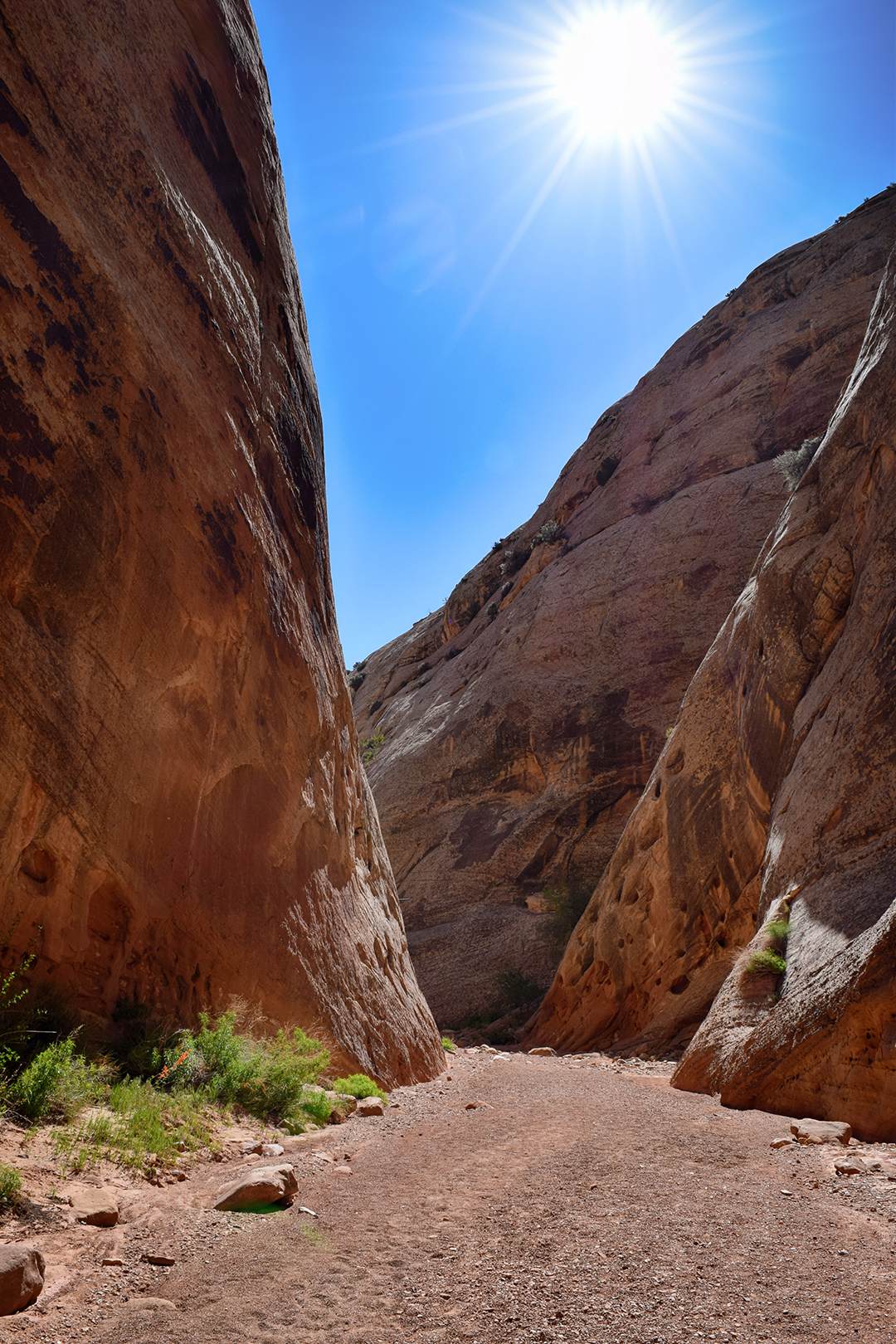
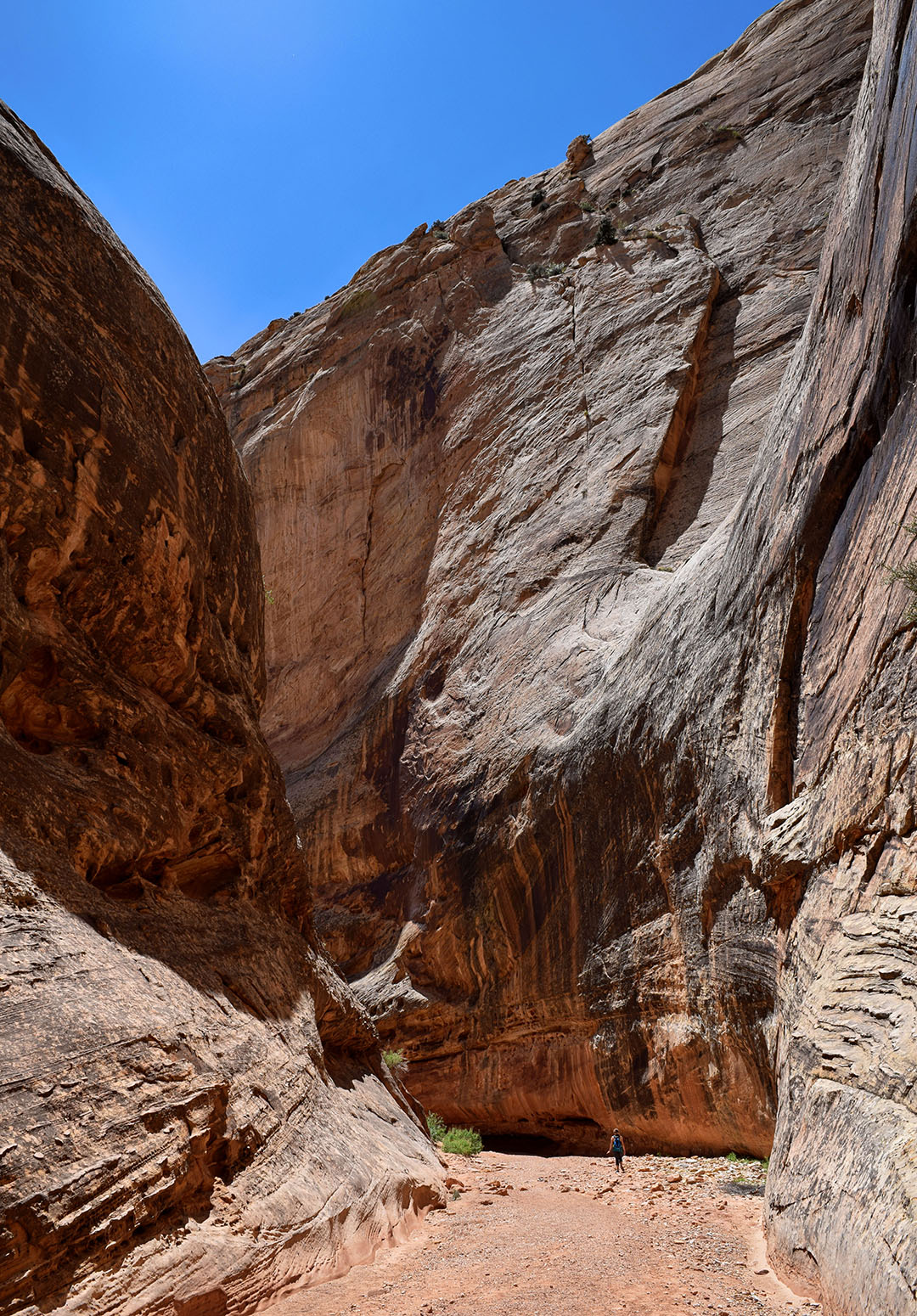
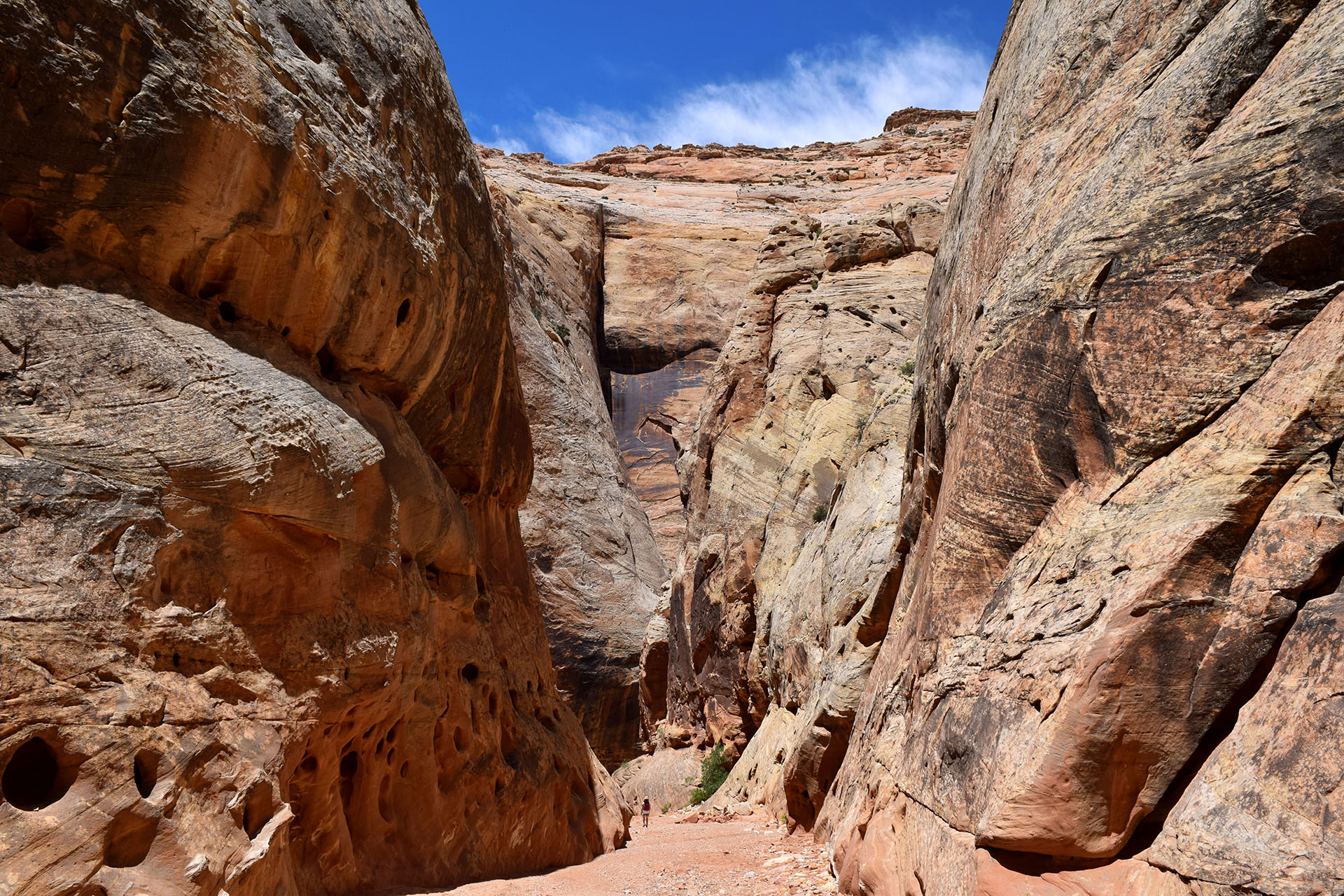
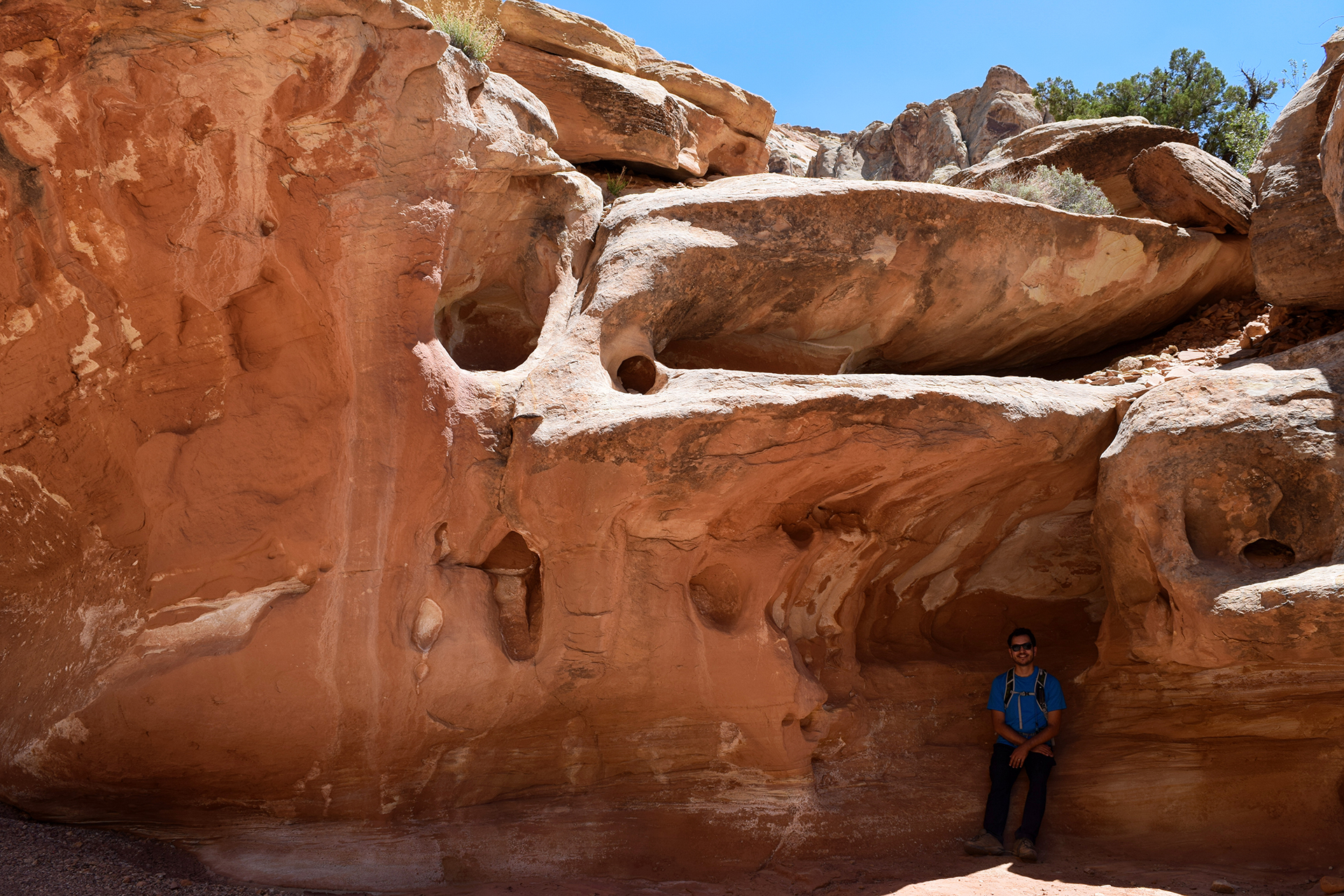
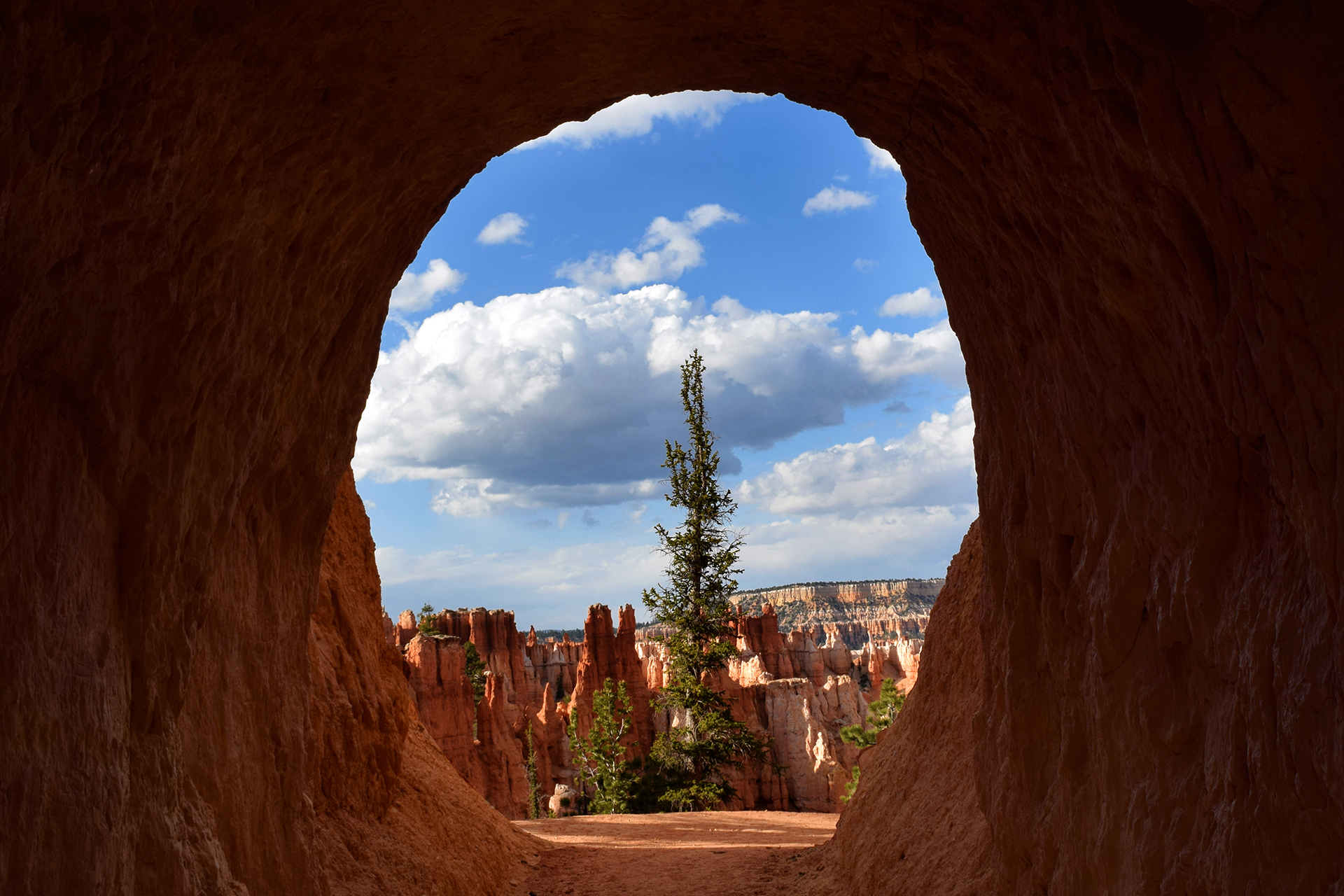
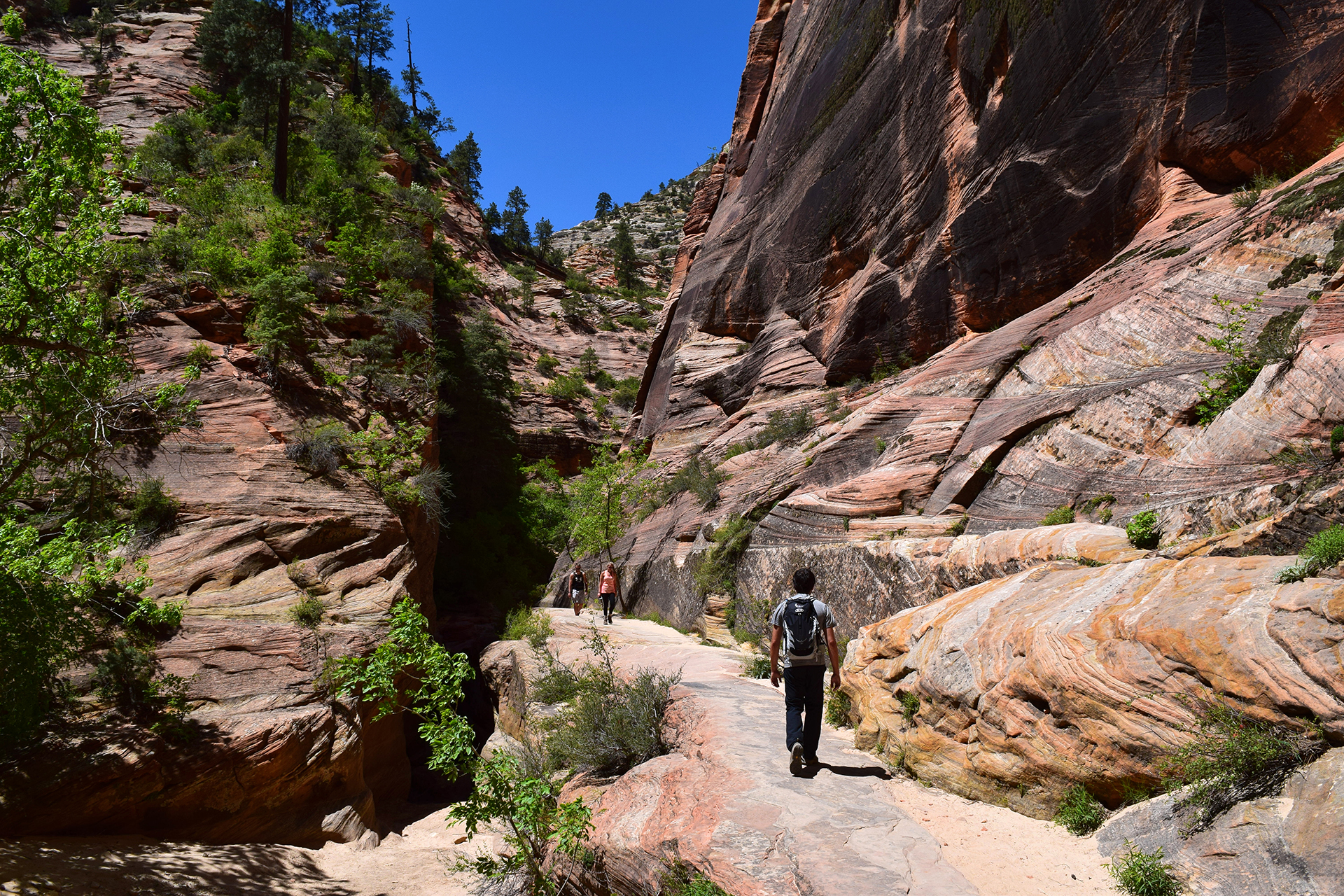
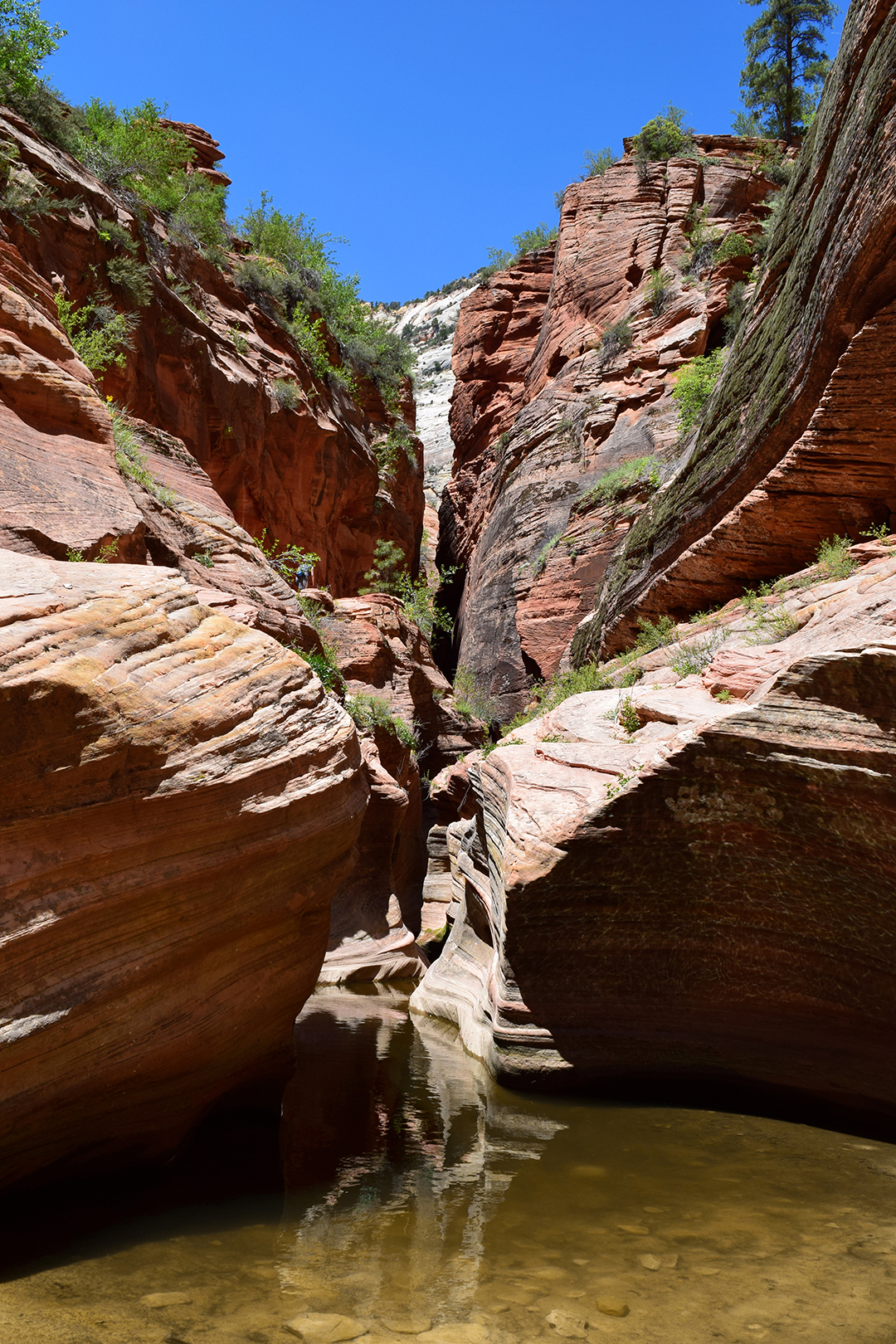
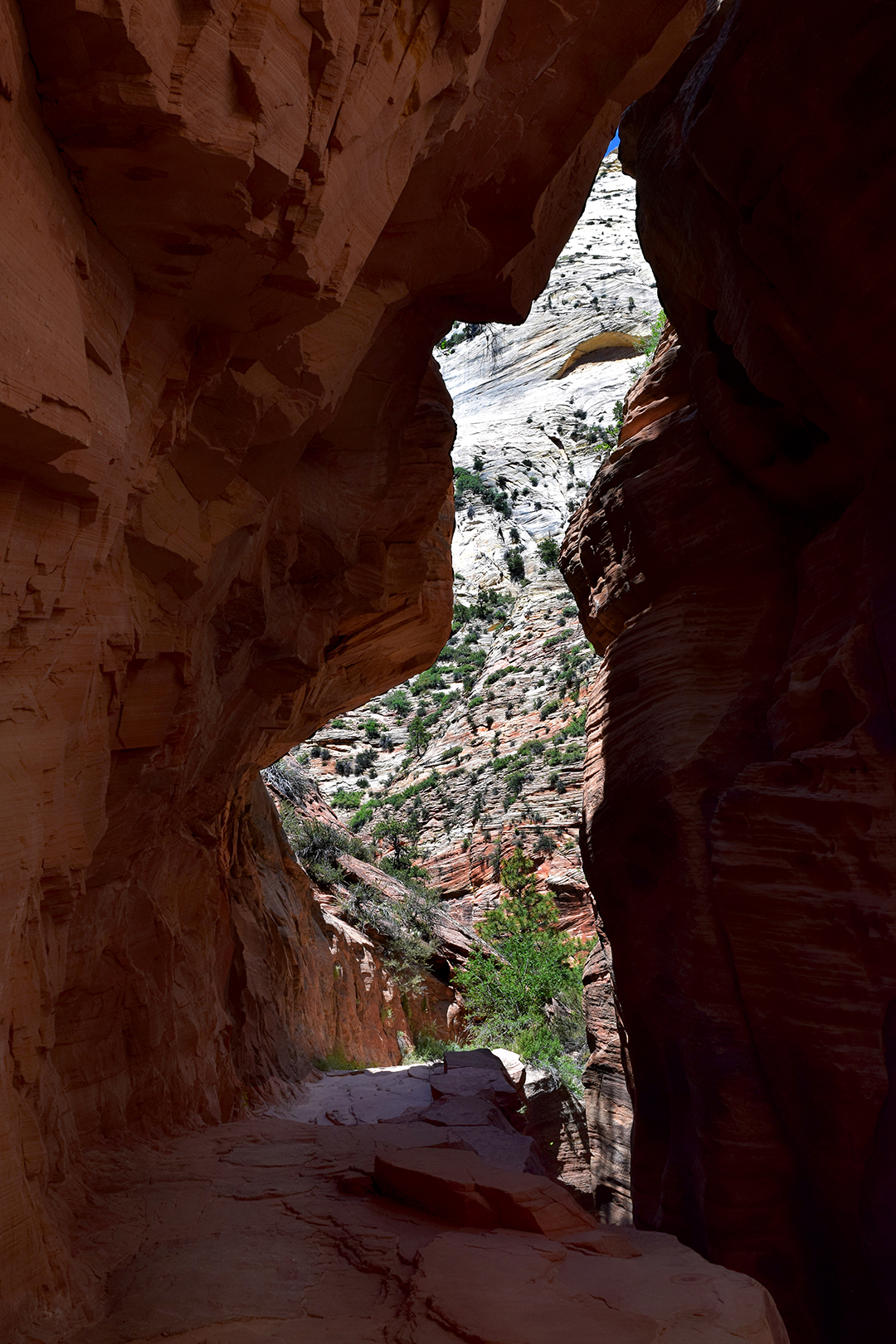
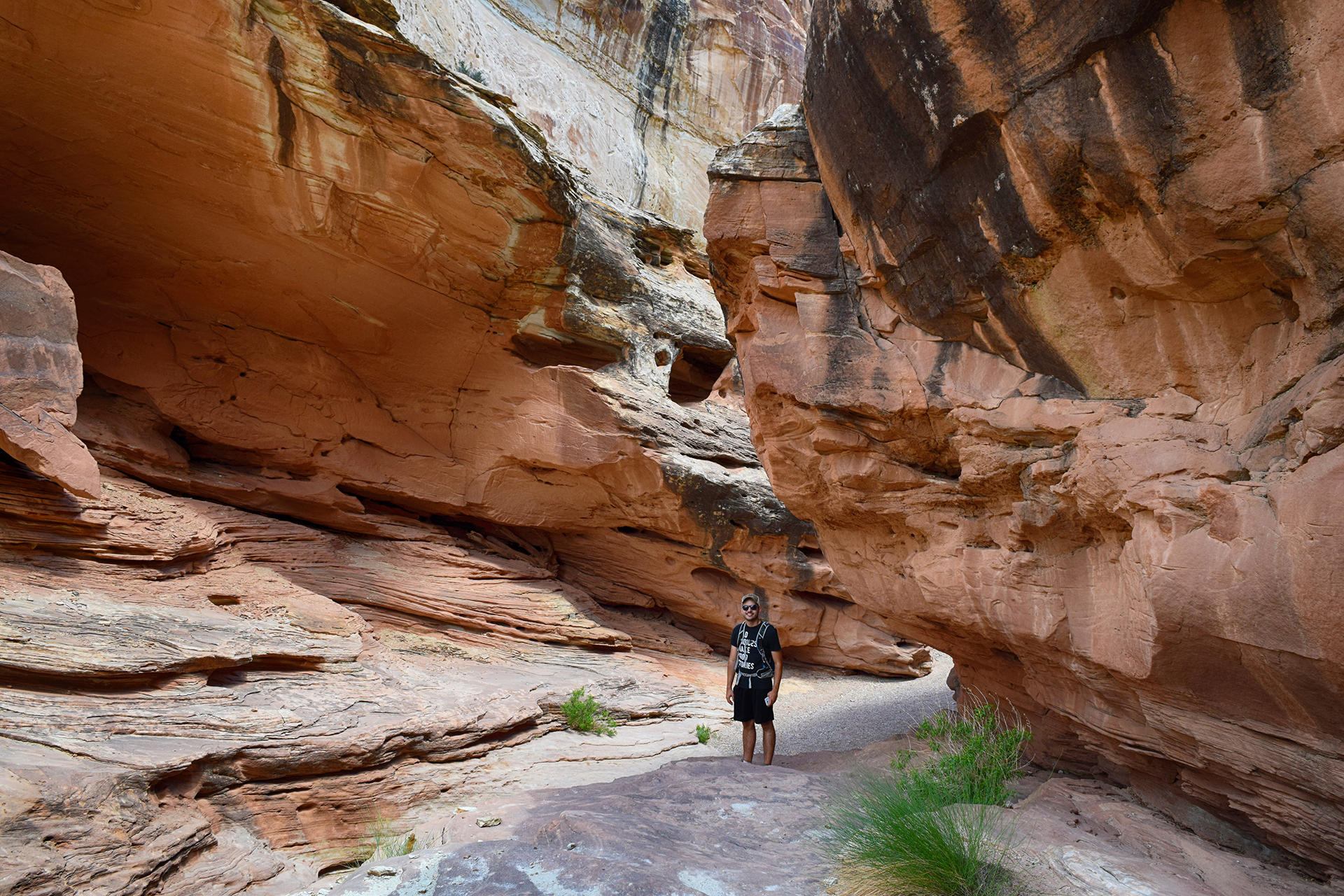
Walking through a tight slot canyon is a thrilling and unique experience.  It’s also pretty rare, and something we otherwise only really got to do at the Kasha-Katuwe Tent Rocks in New Mexico. Little Wild Horse is much tighter and much longer, however, and at times we had to literally climb the walls to pass over obstacles – or, more commonly, to get around people who walked in part-way before turning back.
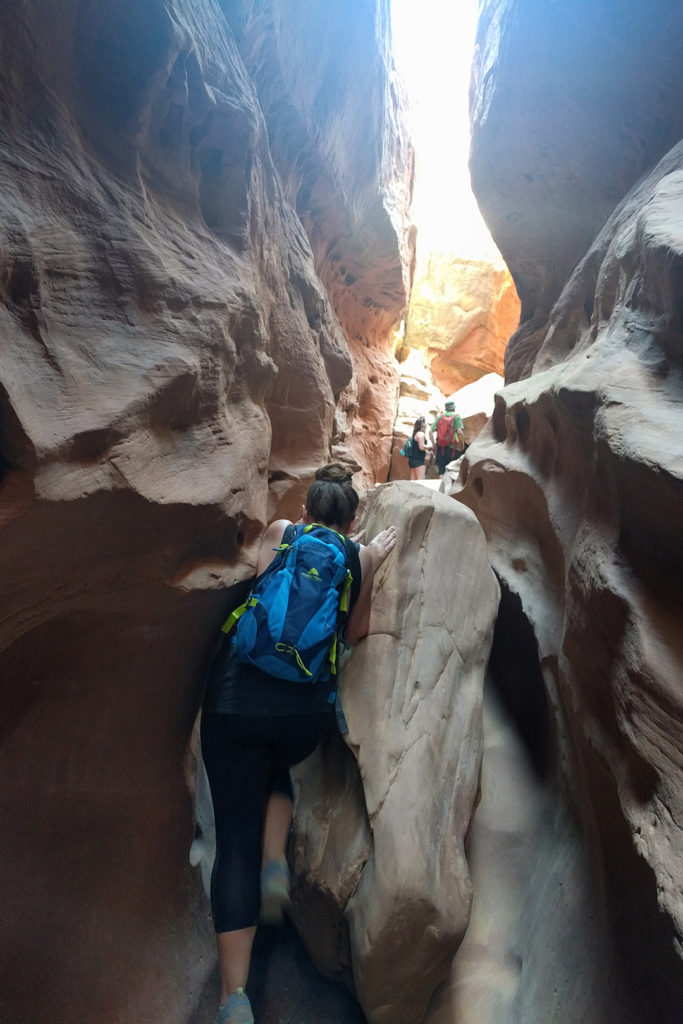
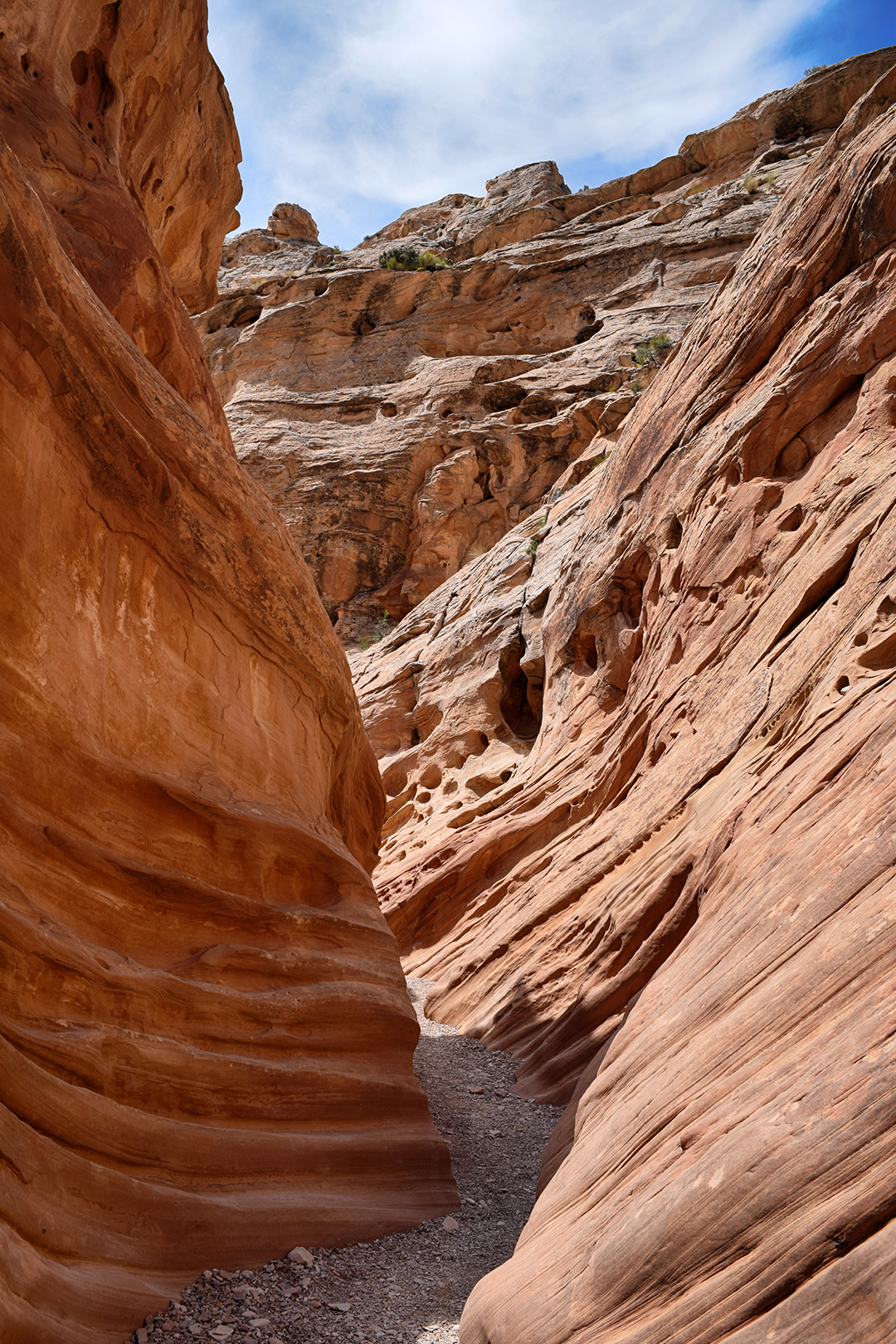
At times, we had to haul ourselves up onto rock ledges, or pick a trail over fallen boulders. Occasionally, the slot canyon opened up into hugely wide areas, still bounded on both sides by rock walls. Then, just as mysteriously, it would compress itself back into a tiny crack.
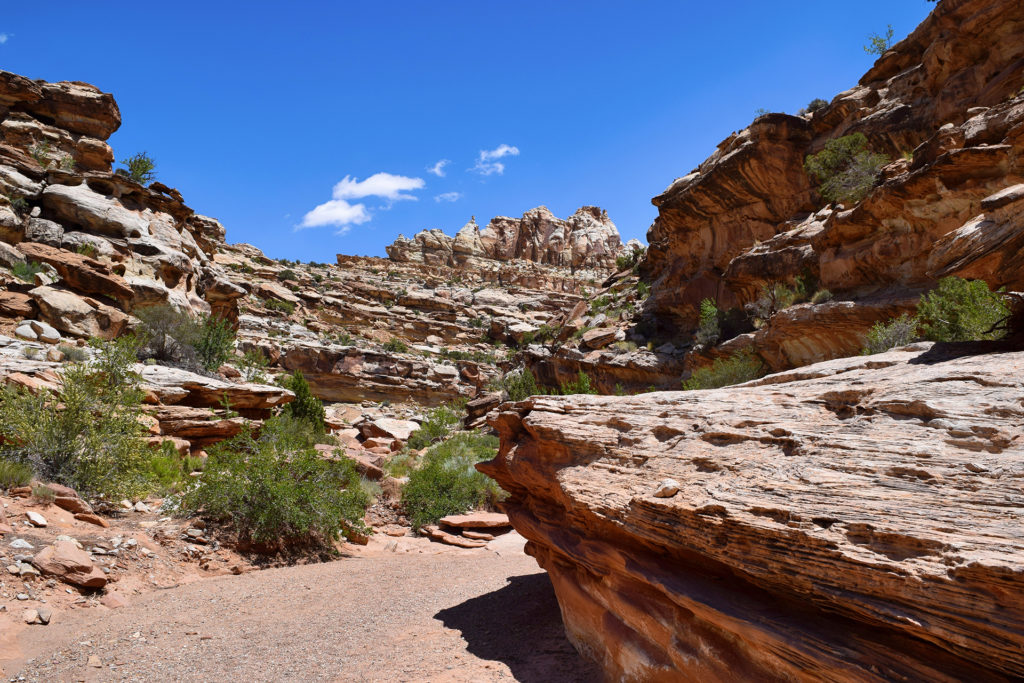
This is not a good place for the claustrophobic.  Similarly, as this incredible story attests, it is not a good place to be when it rains.  Luckily for us, the skies stayed clear.

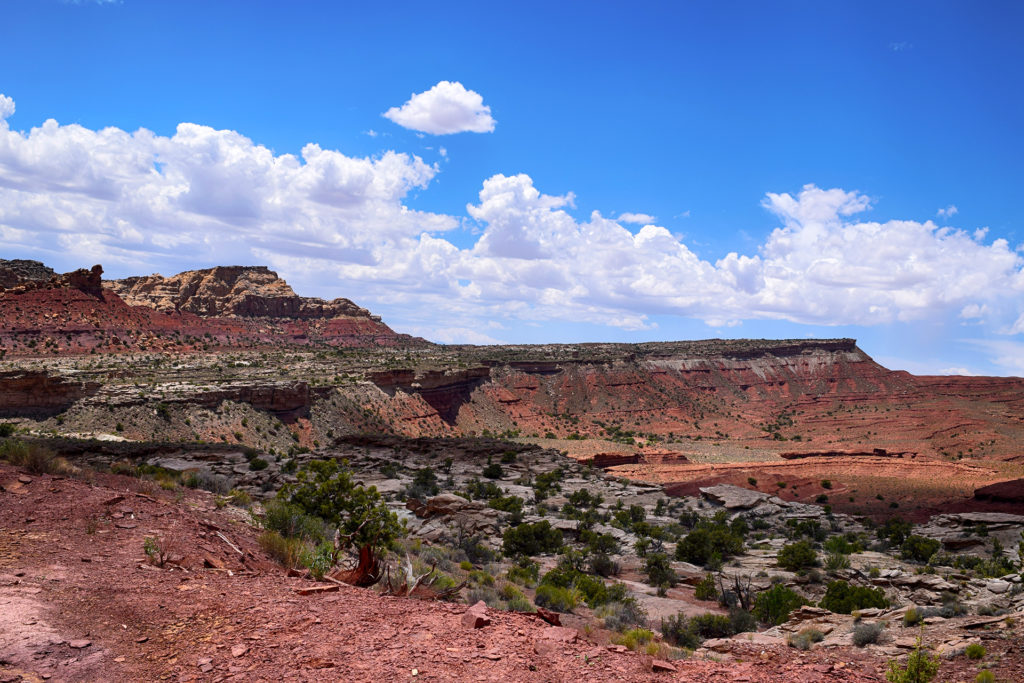
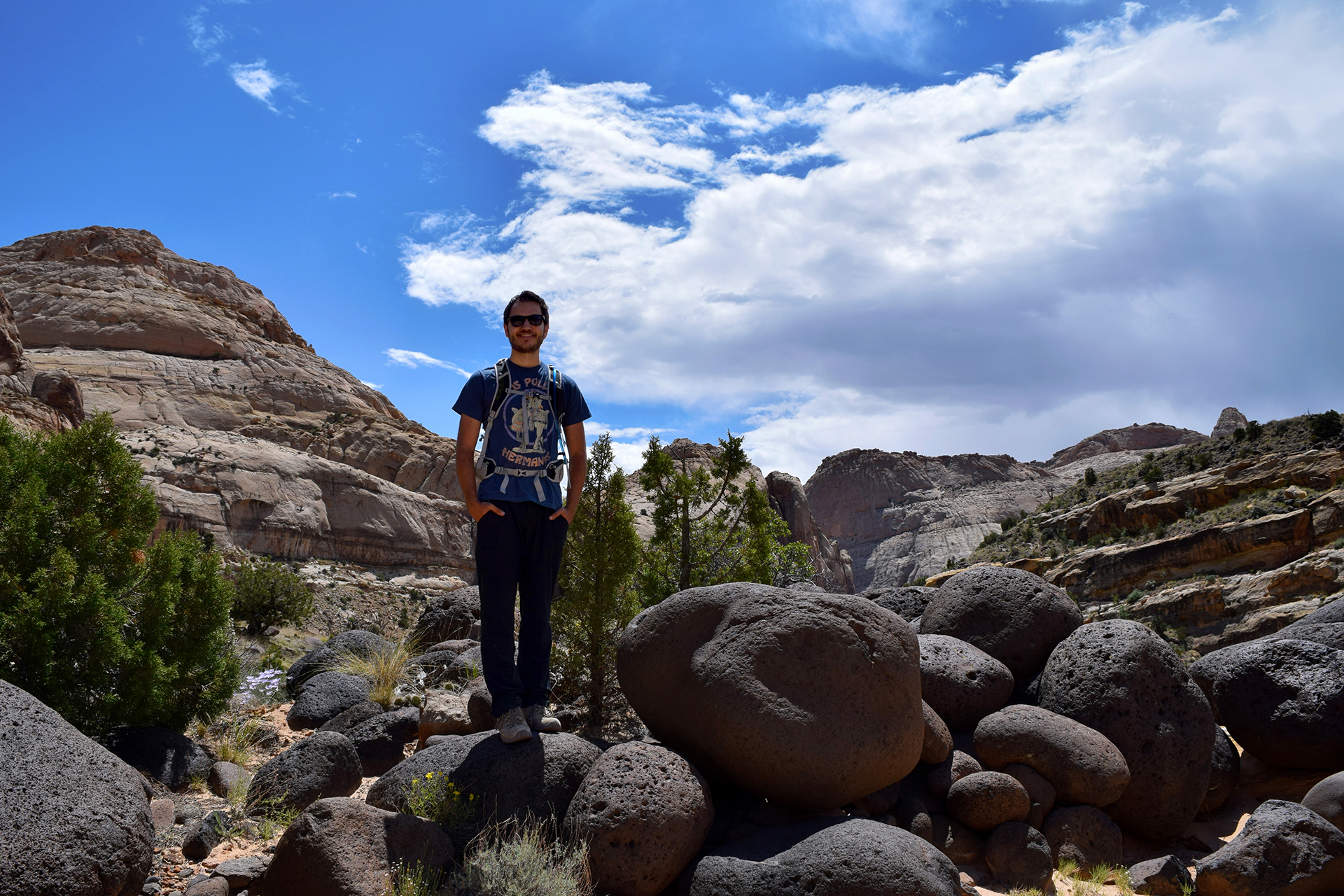
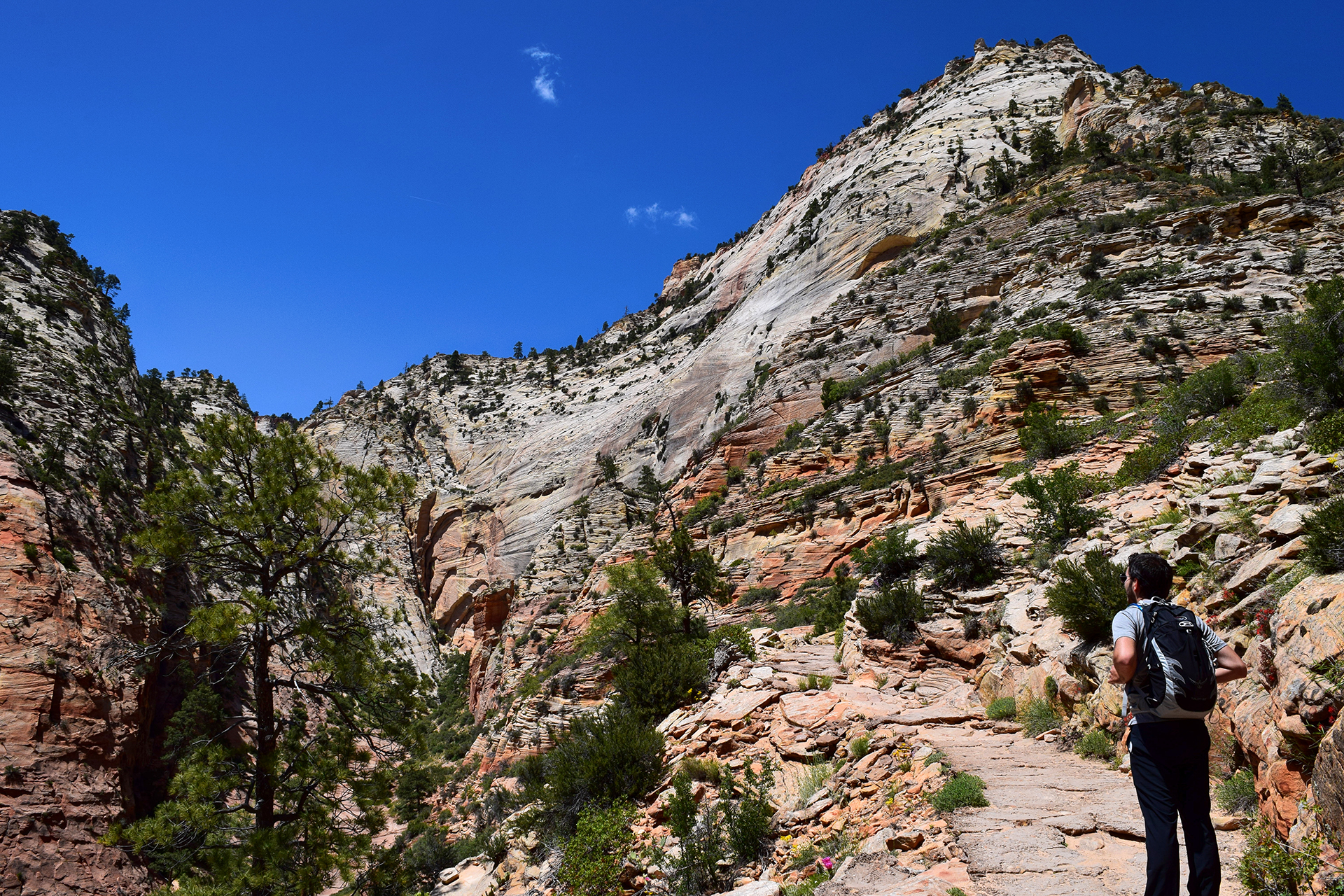
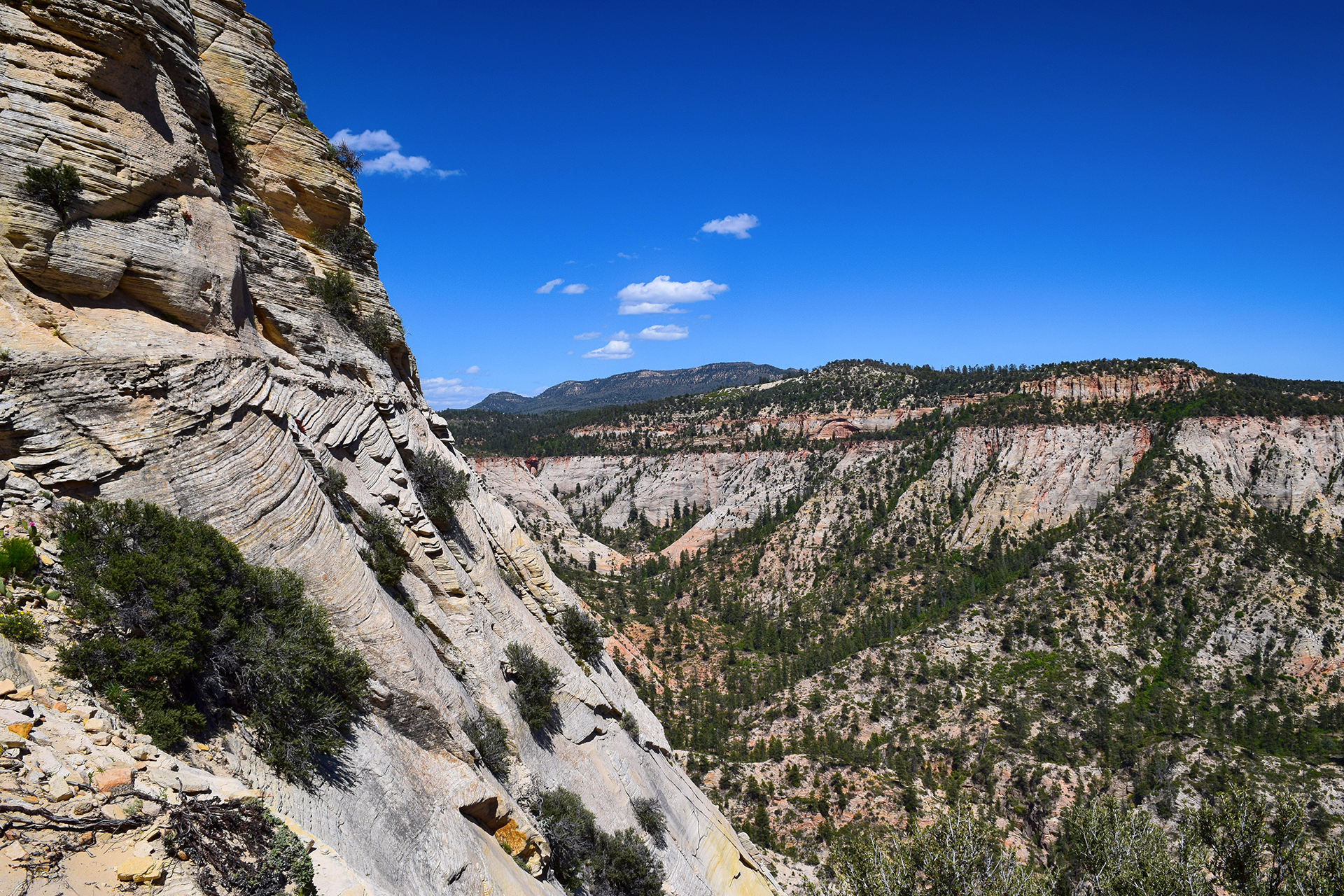
After about two extraordinarily slow miles, we reached the end of the slot canyon. We could have headed back, but in the spirit of adventure, we took the opportunity to walk through some Utah back-country and return through a different slot canyon.
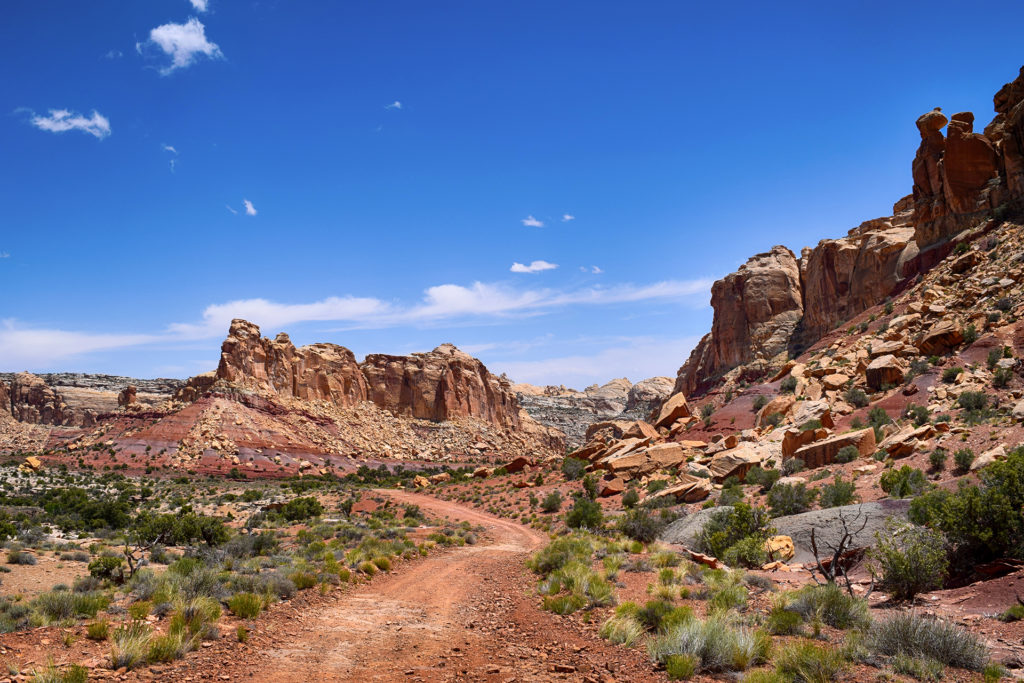
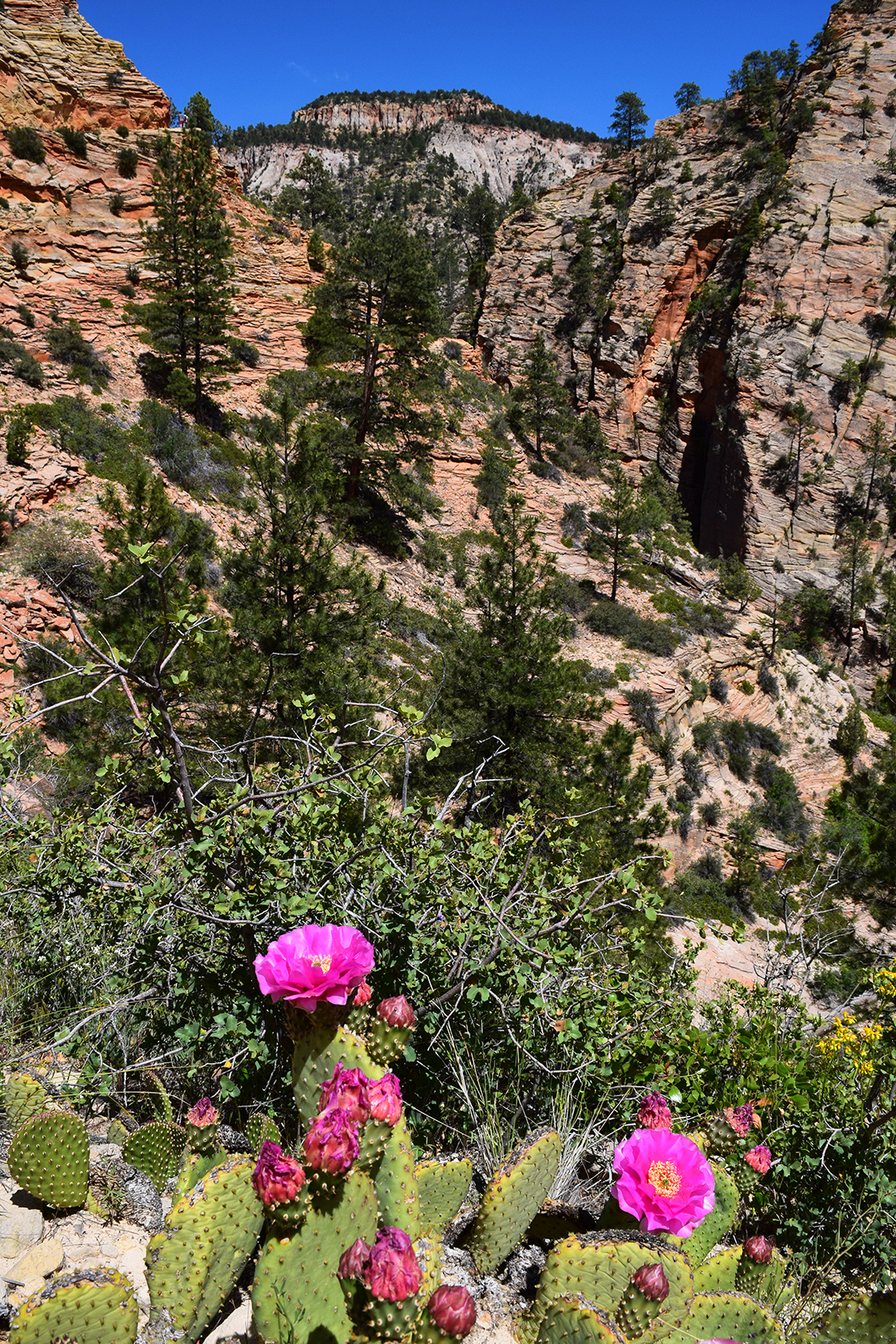
It was pretty, although the images don’t completely capture the fact that it was 90-plus degrees out and the baking desert sun was now directly overhead.  Fortunately, we had learned well from our dehydrating visit to Big Bend National Park, and we brought plenty of water. Still, it was shocking how tiring it was to hike under that sun, even over mostly flat terrain.

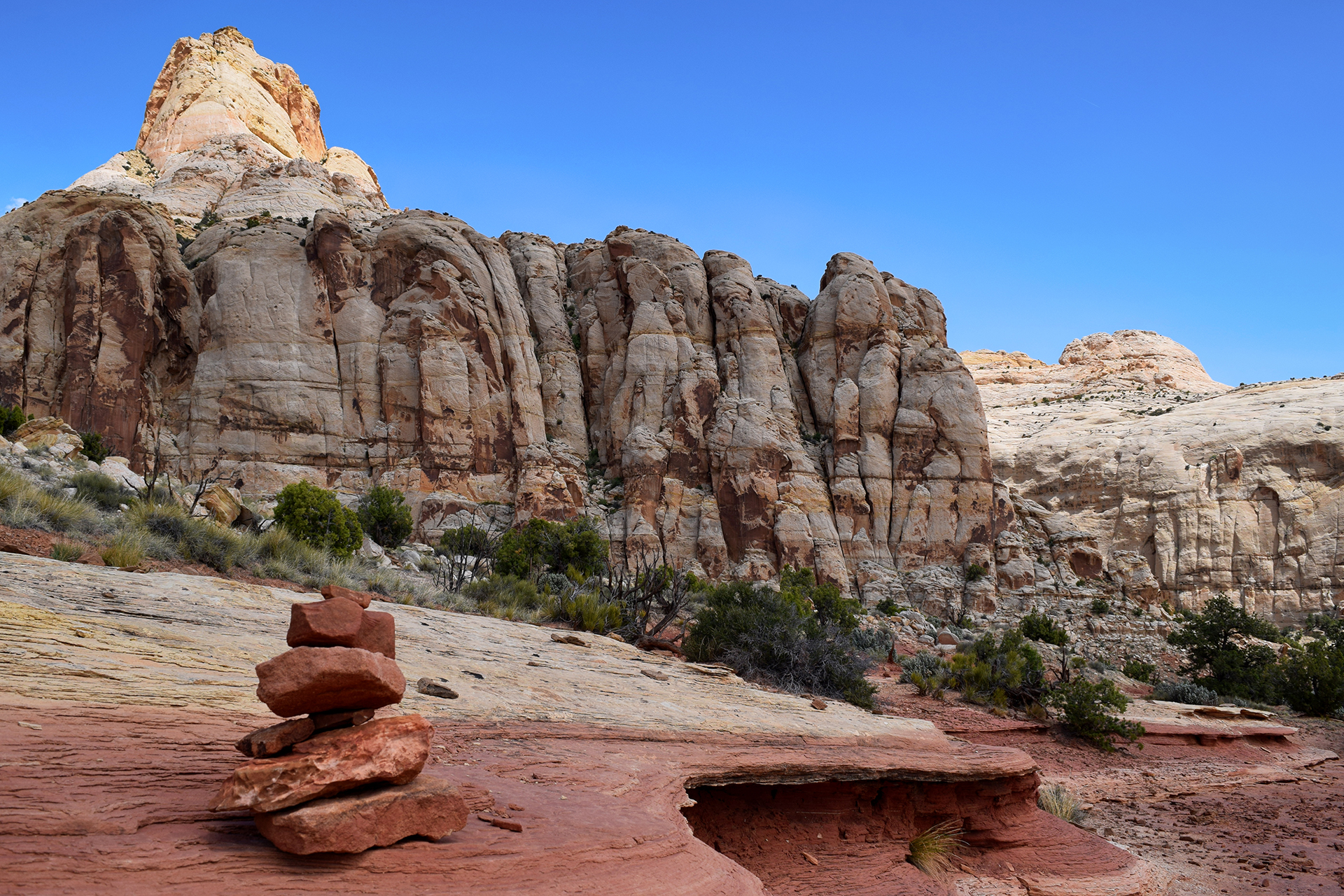
Friends, do not get lost in the desert! We actually almost did, until we noticed the large rock arrow pointing towards the trail we had nearly missed.
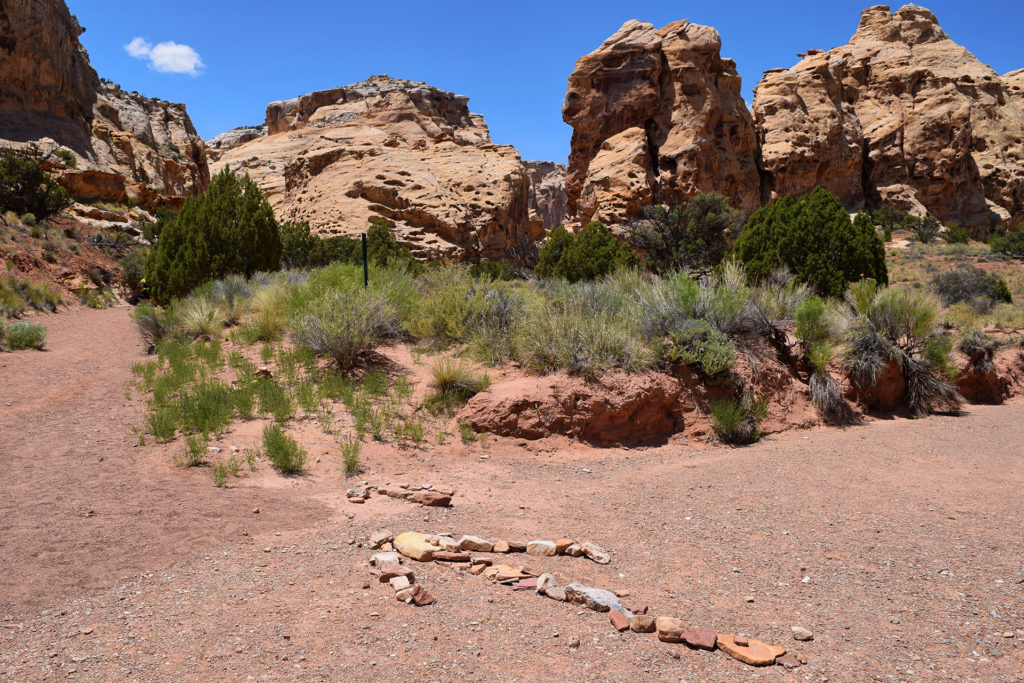
Eventually we did reach the other canyon, named Bell Canyon, and things got much cooler once we were back in the shade.  This canyon wasn’t as tight, and so it was relatively quick work to get back to our car – and its sweet, sweet air conditioning.
The Power of the Voodoo Hoodoo

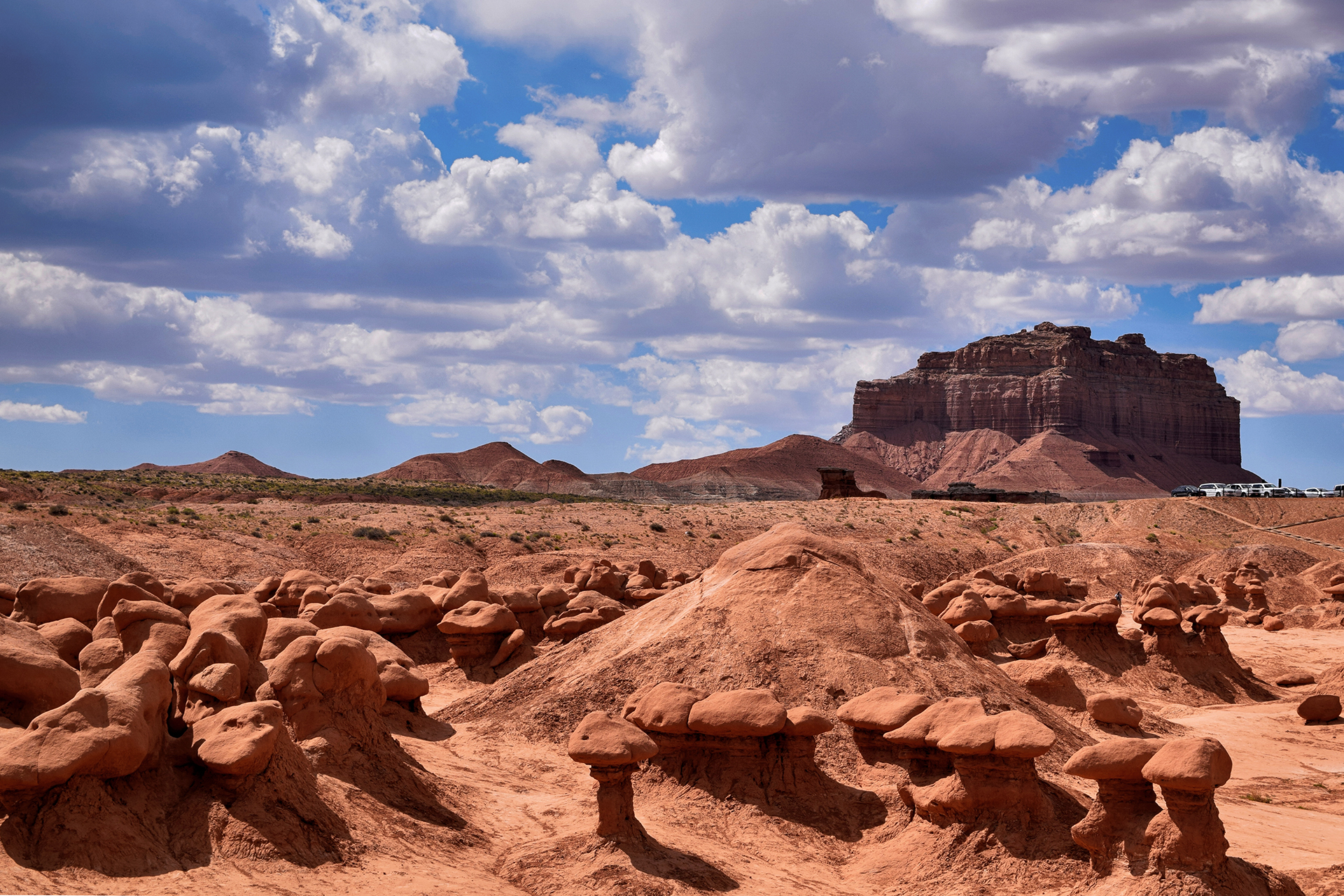
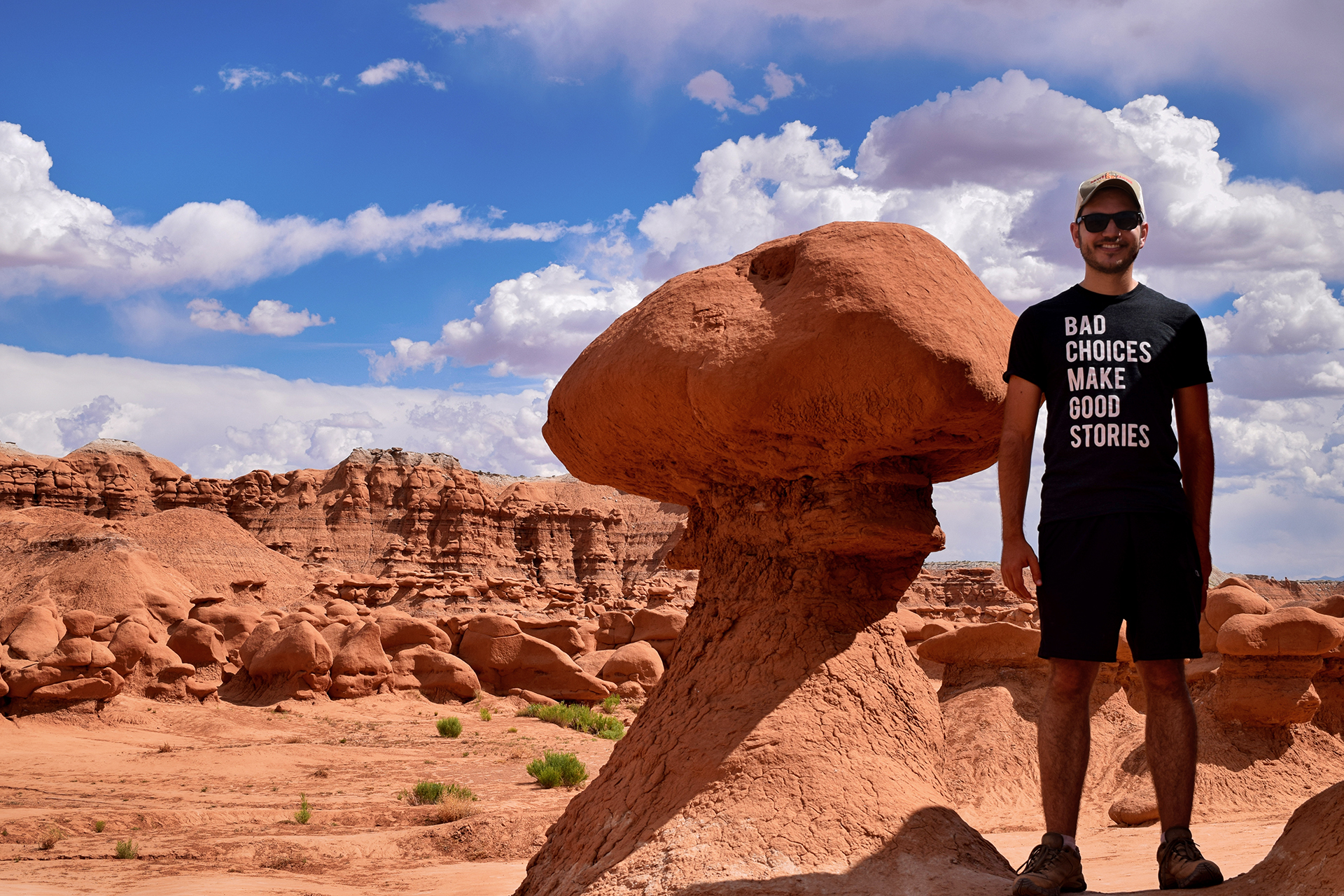
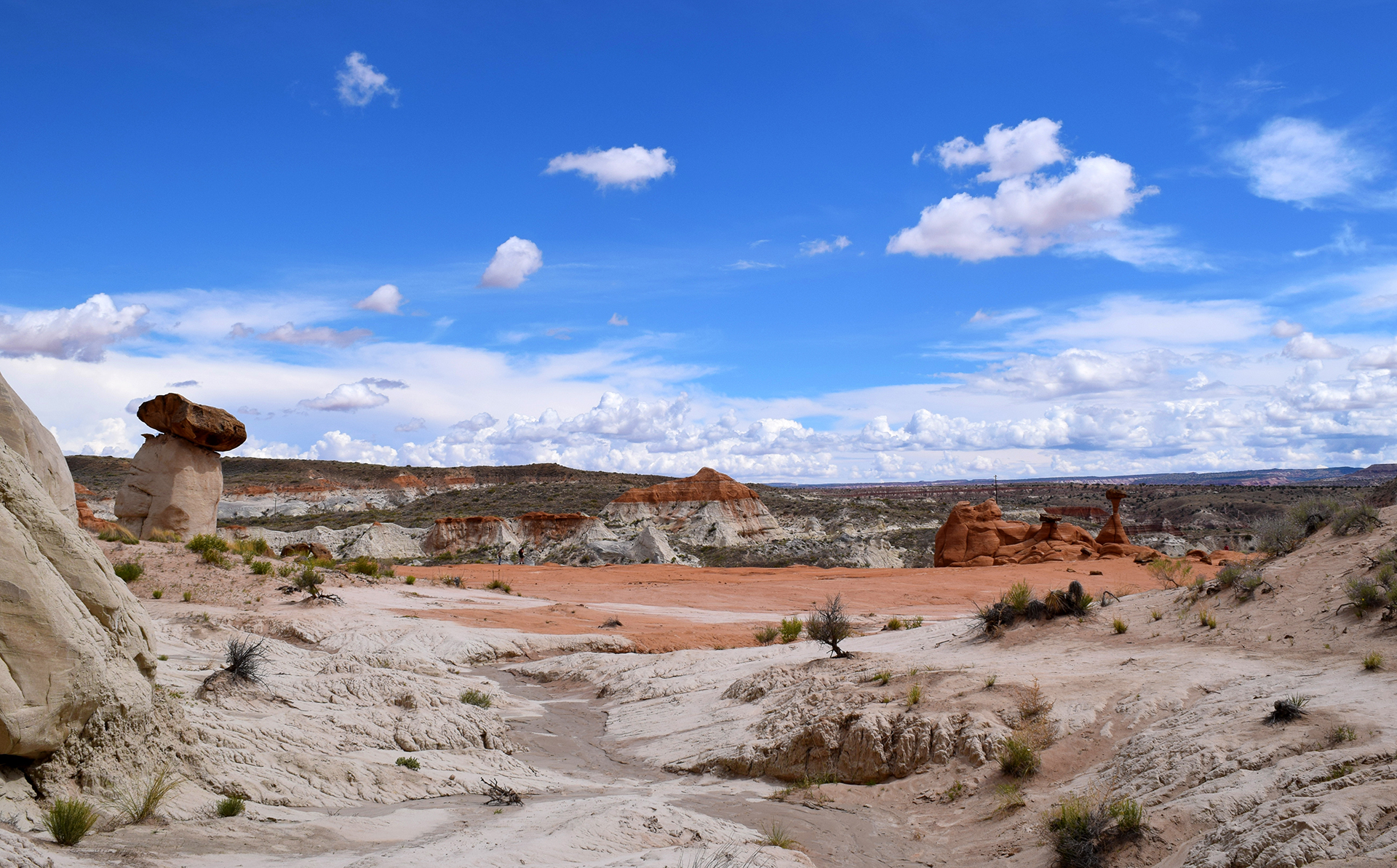
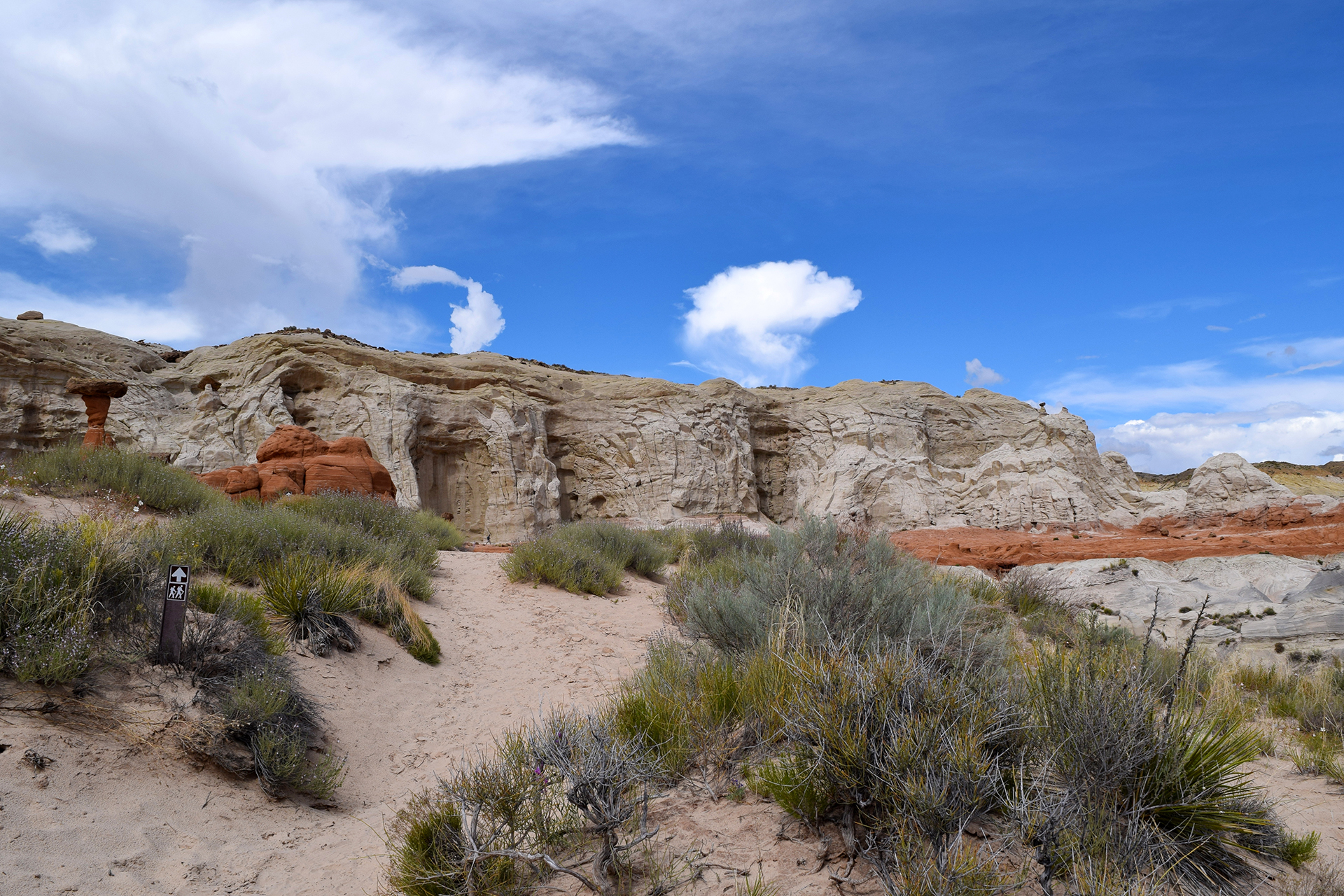
Little Wild Horse Slot Canyon was sweet, but we have been burying the lede here a bit, since that’s not really why we stopped. The main draw for us was something else entirely: Goblin Valley State Park.  It is strange in the best possible way.
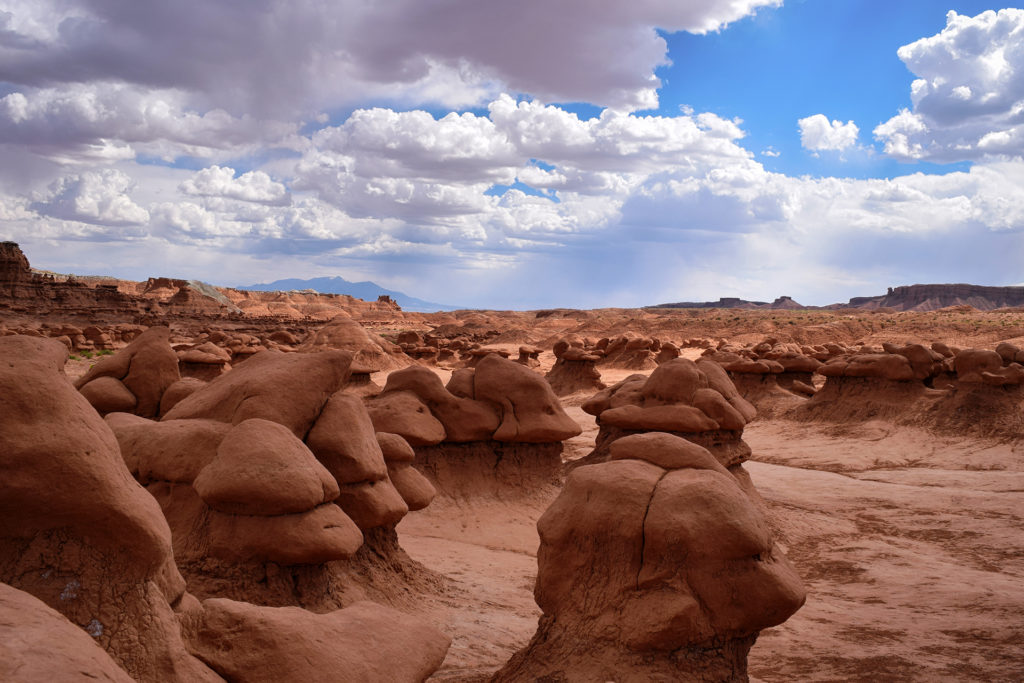
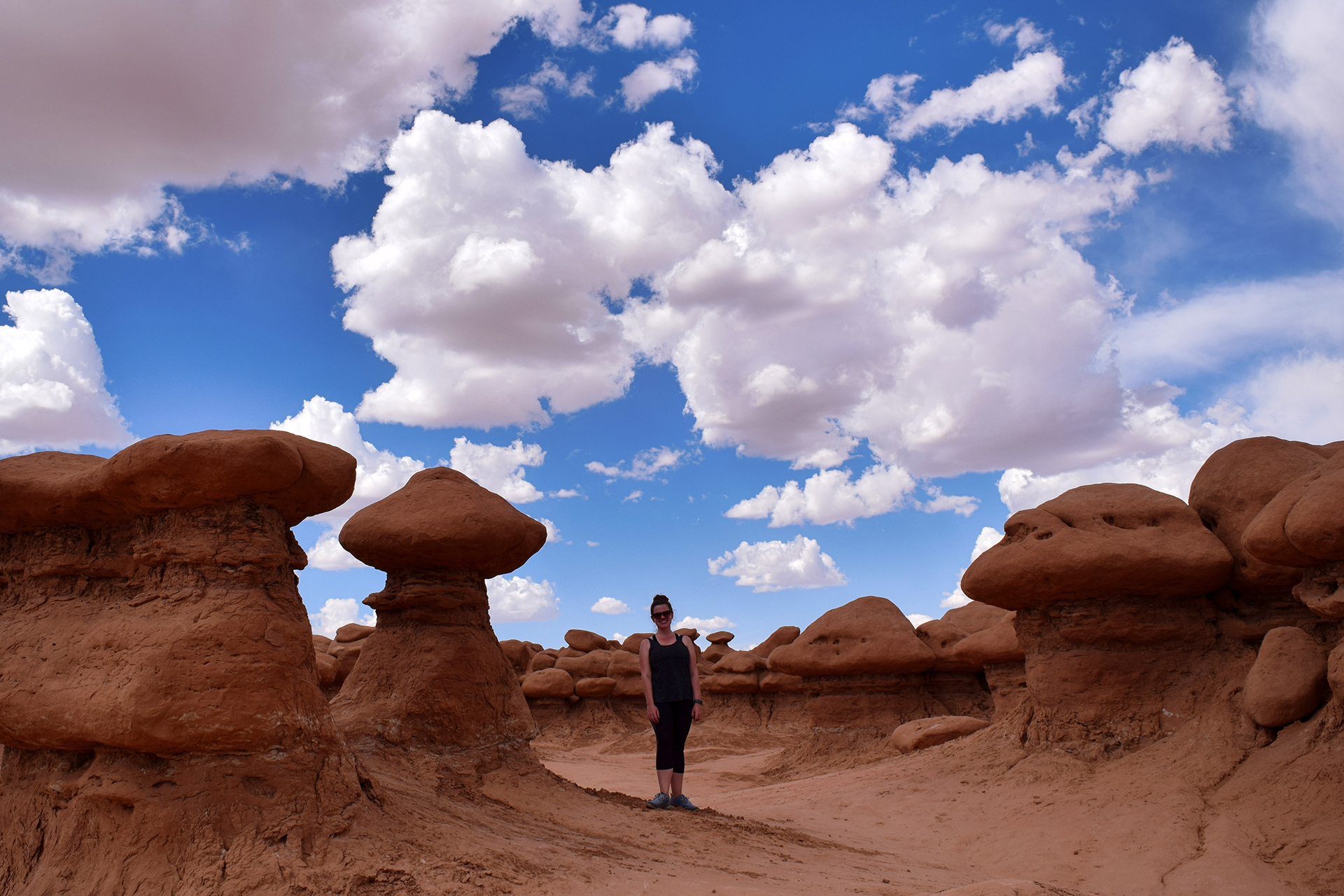
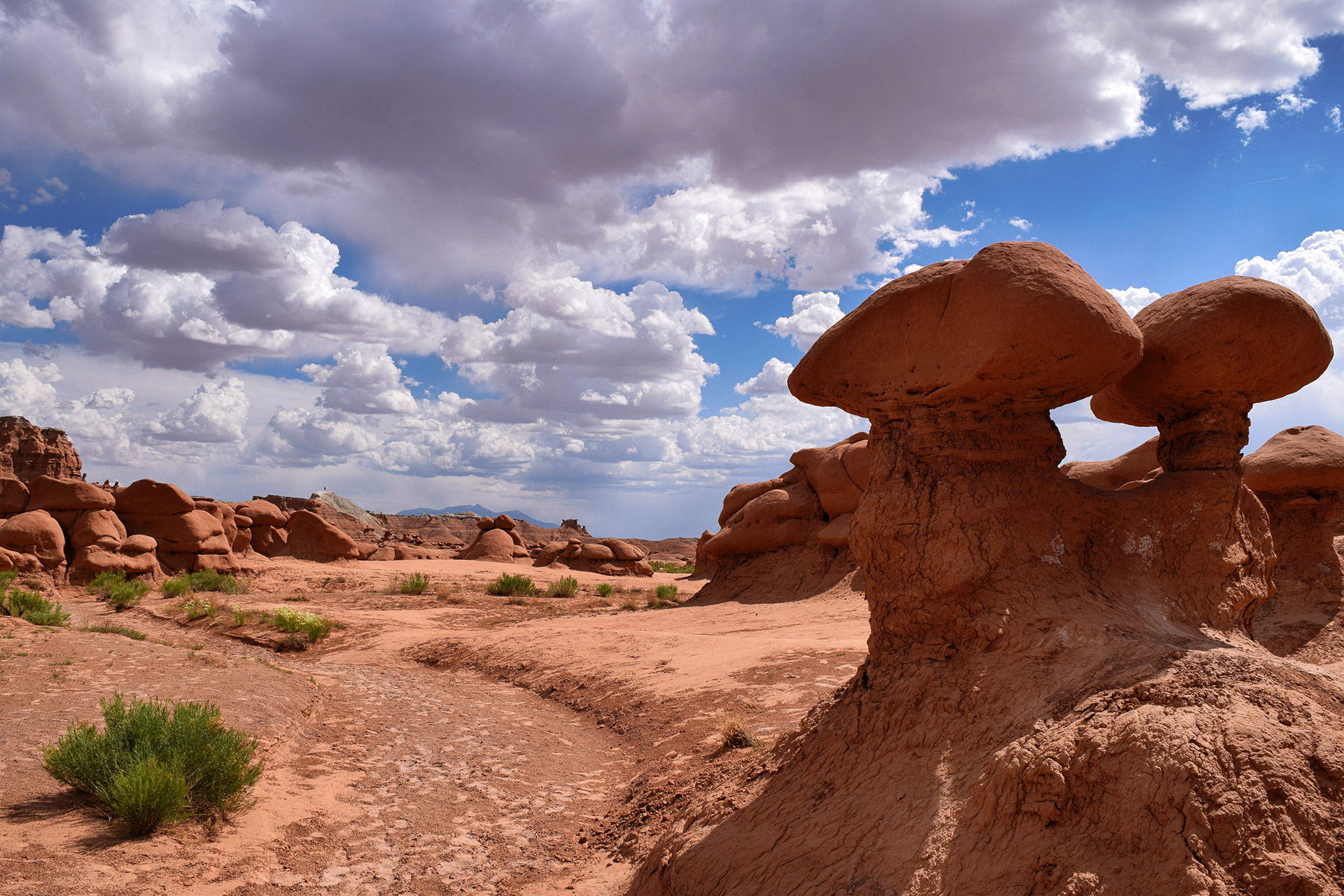
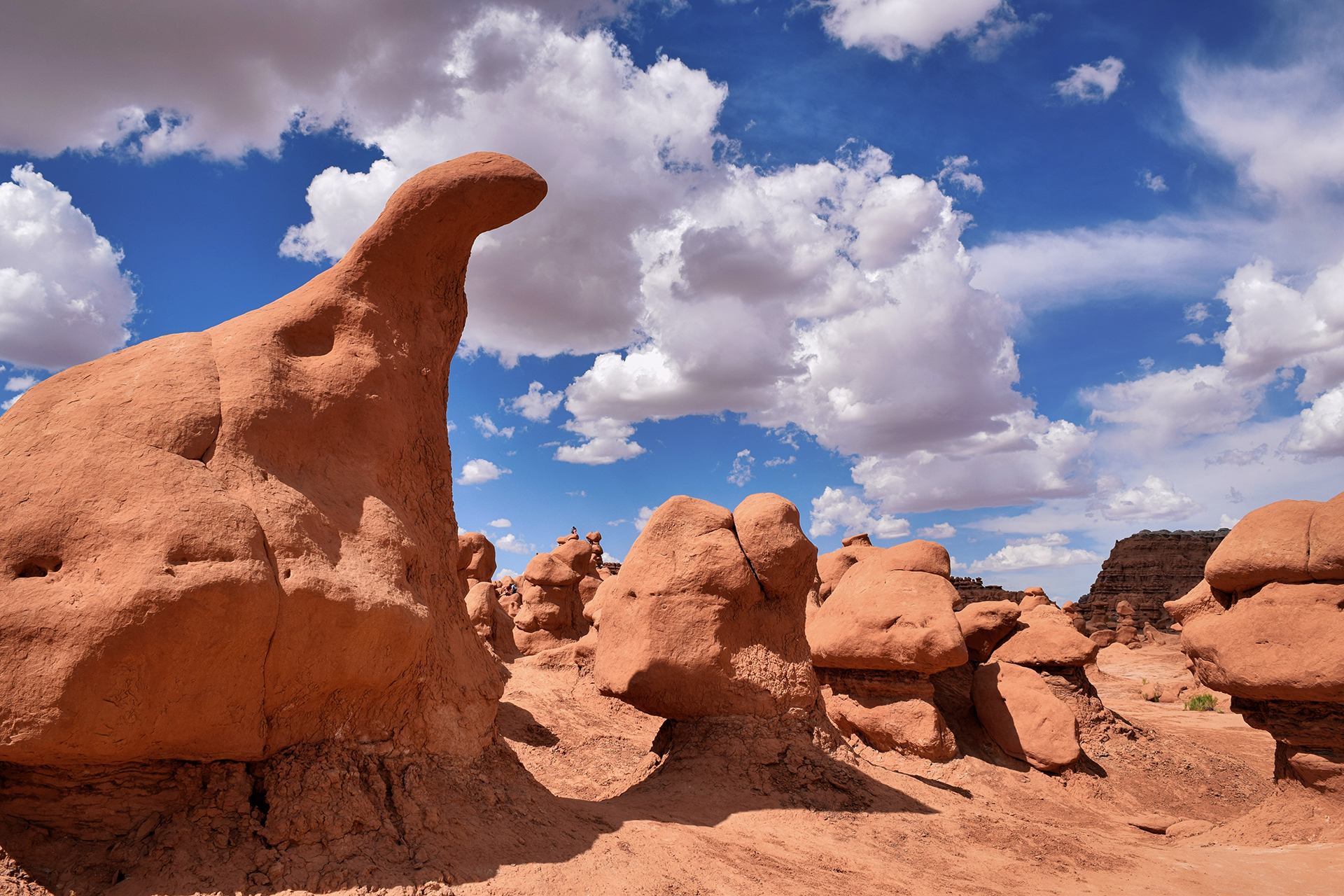
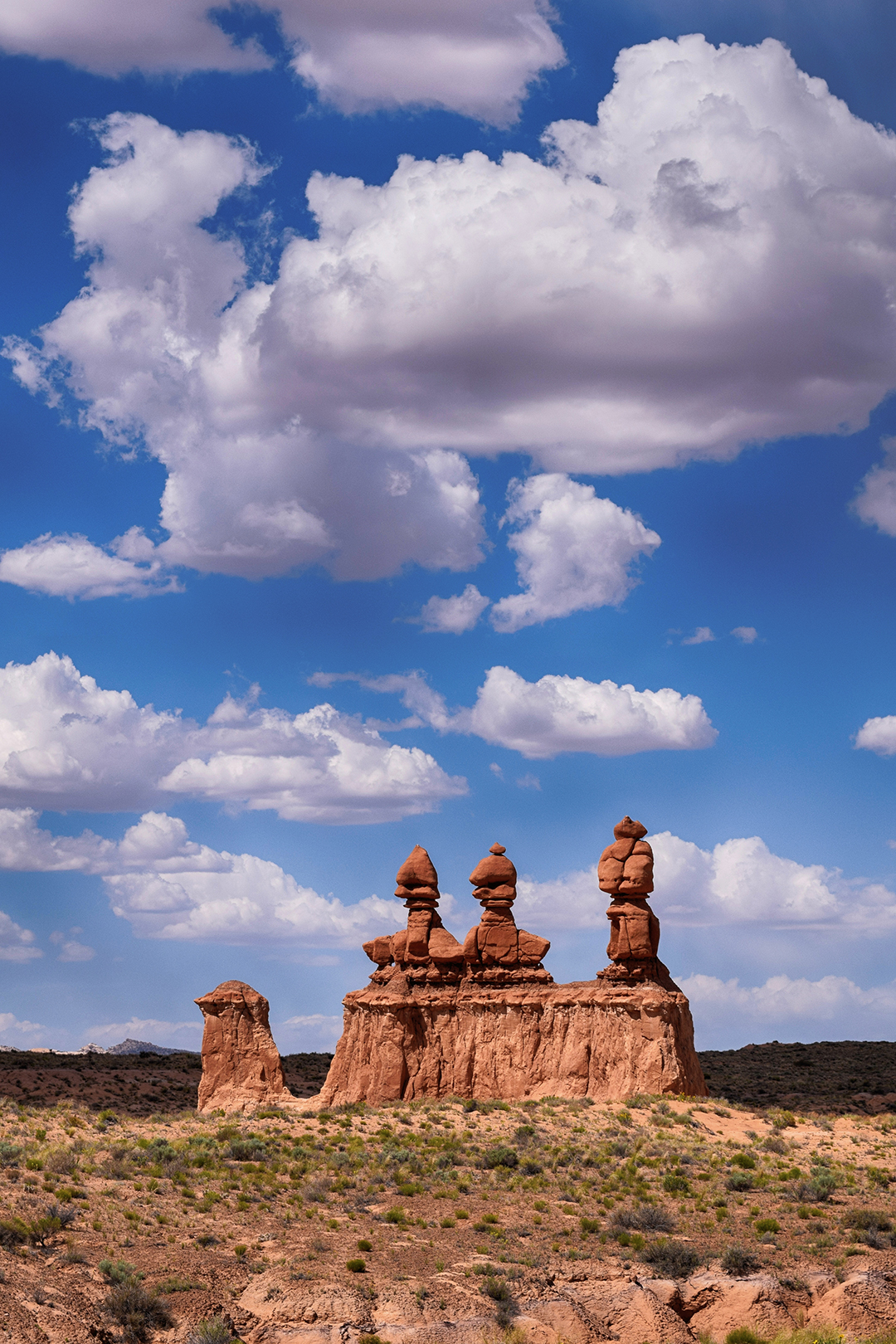
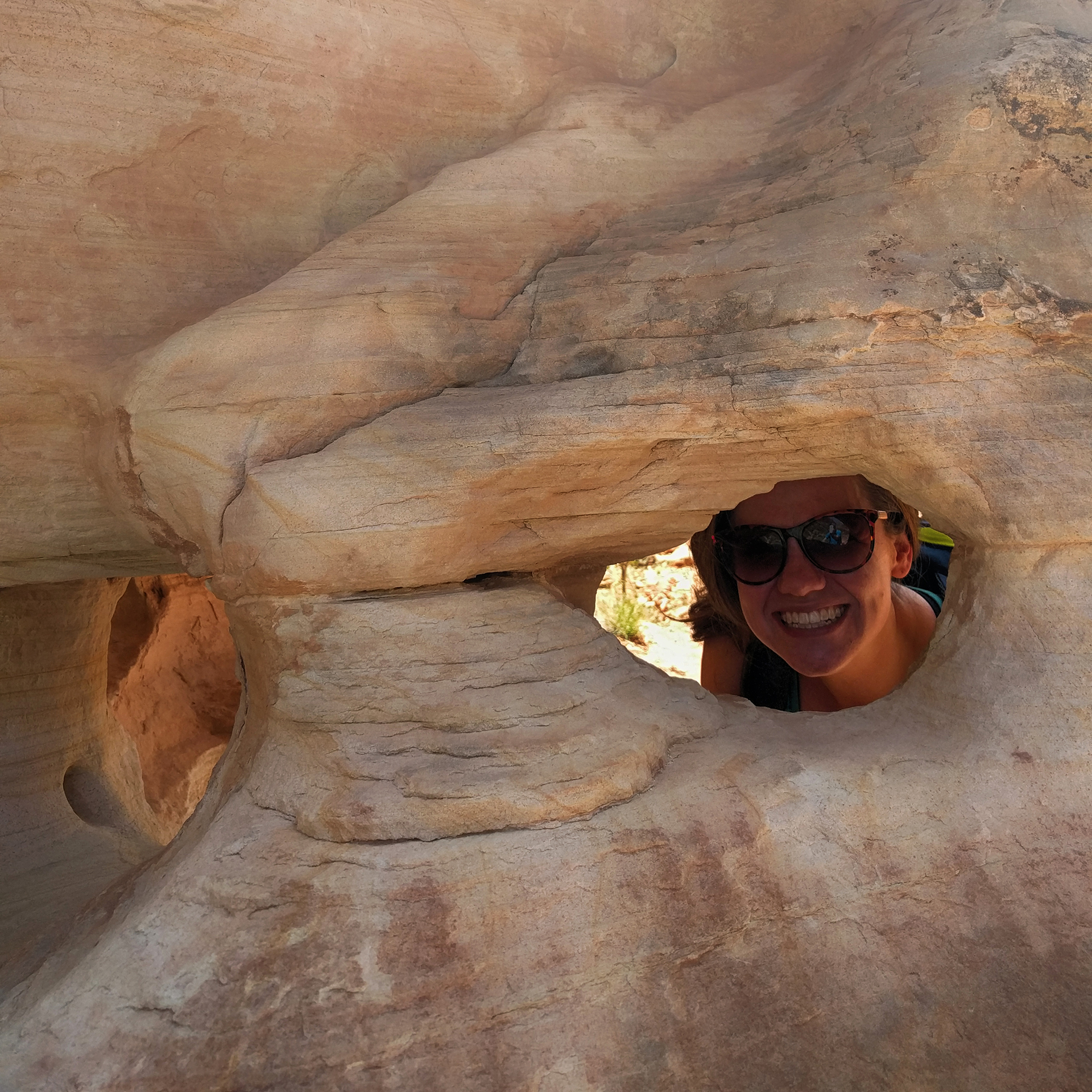
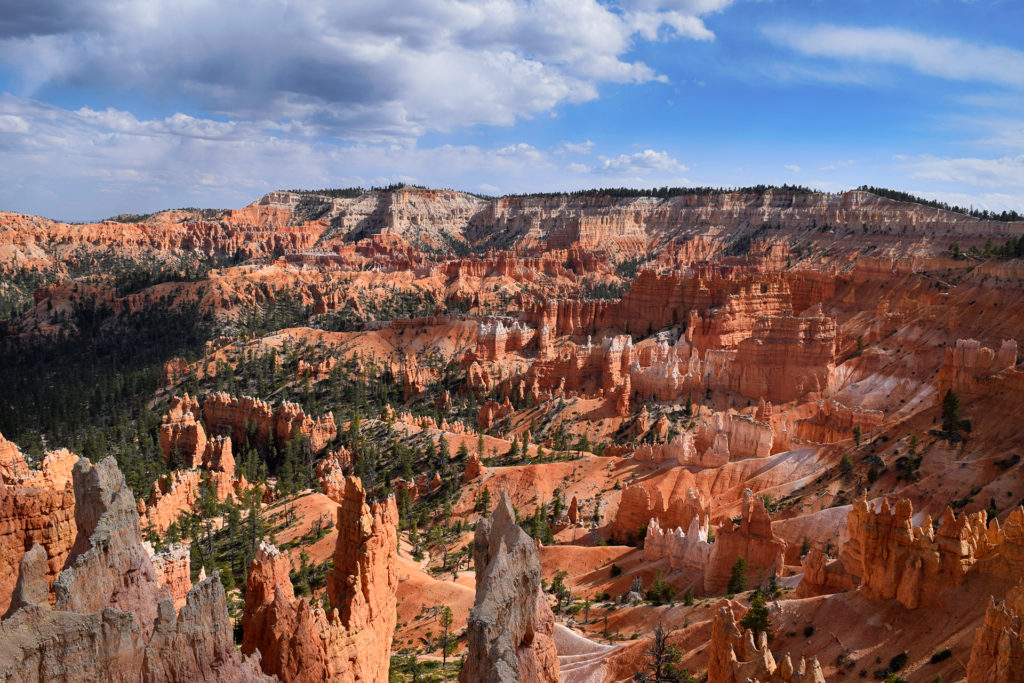
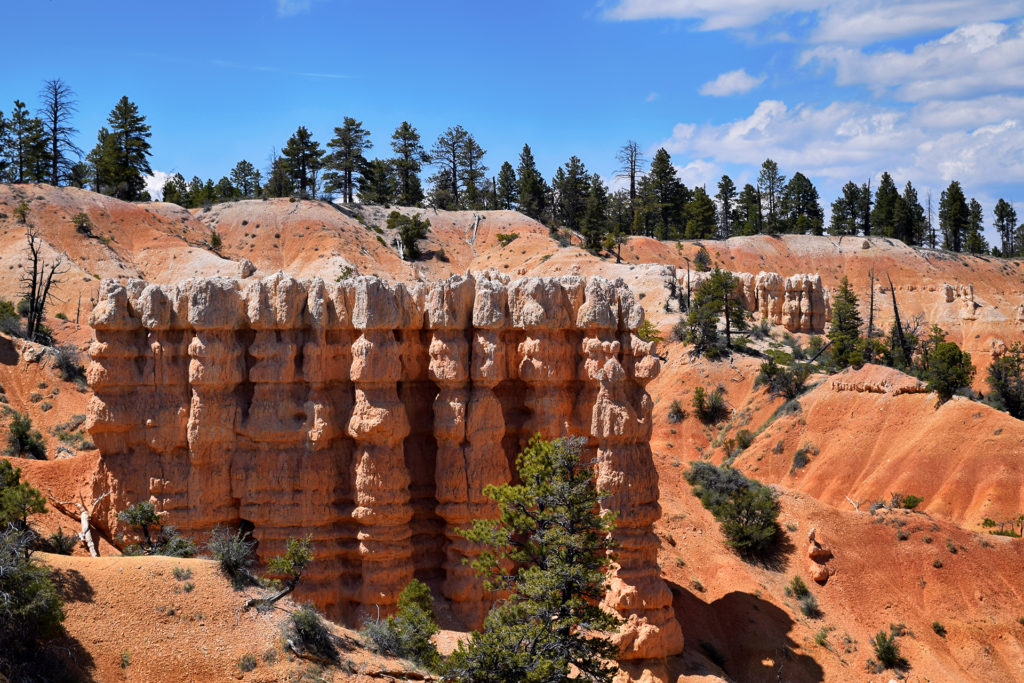
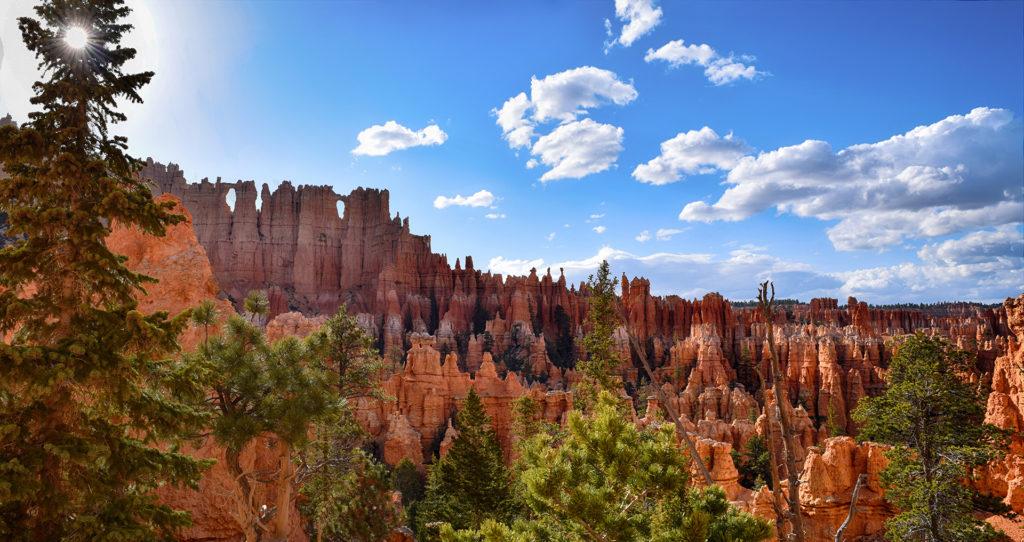
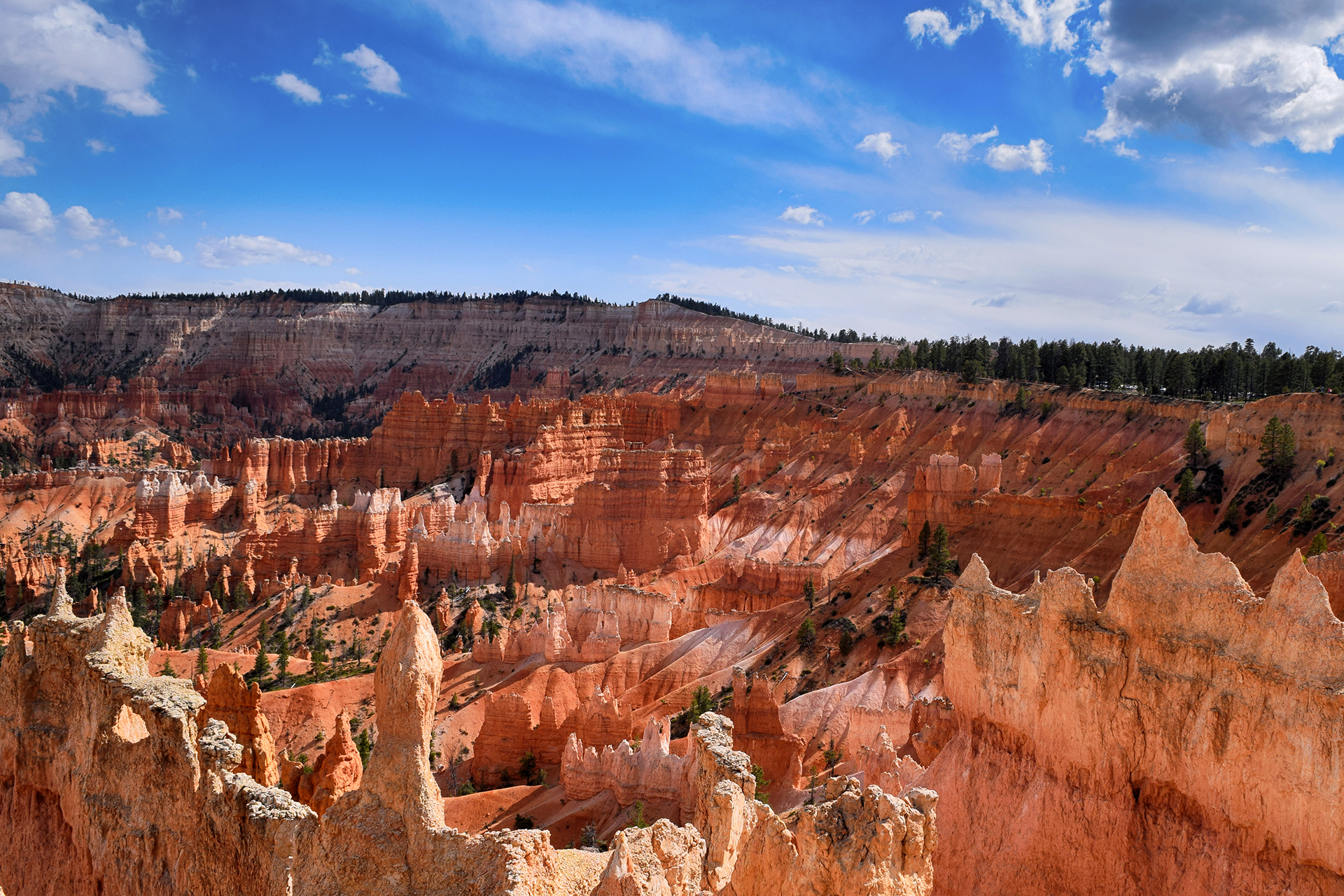
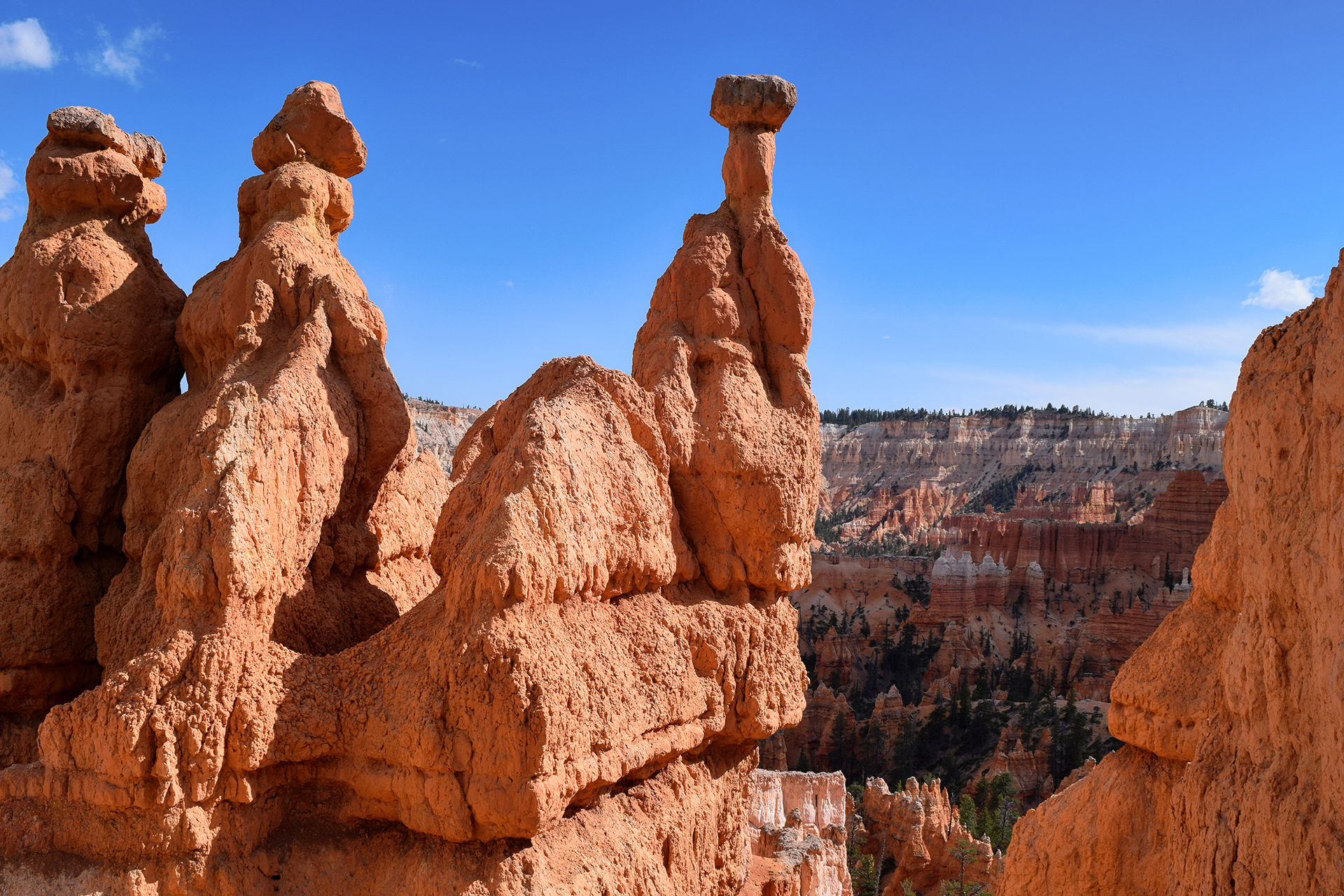
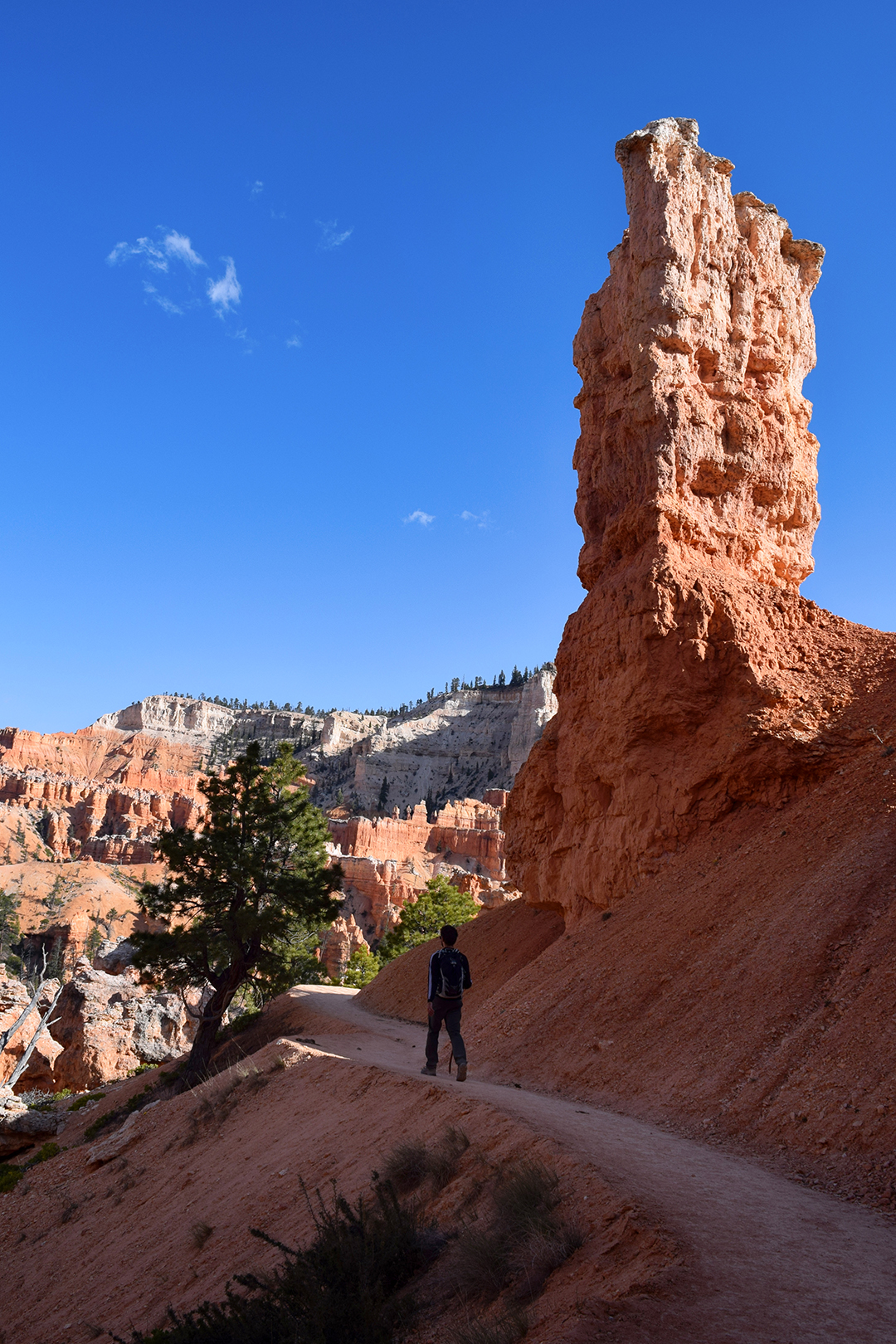
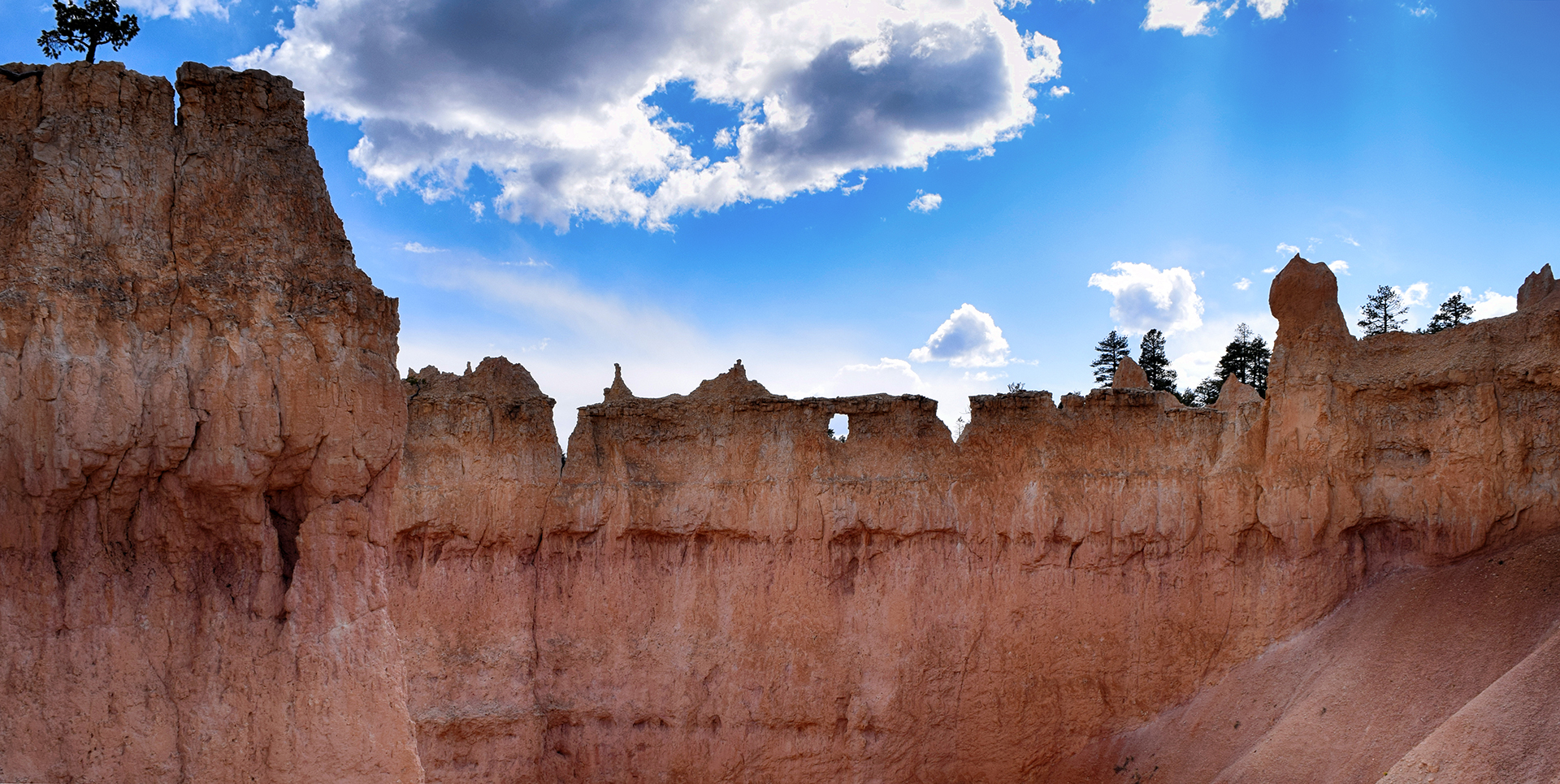
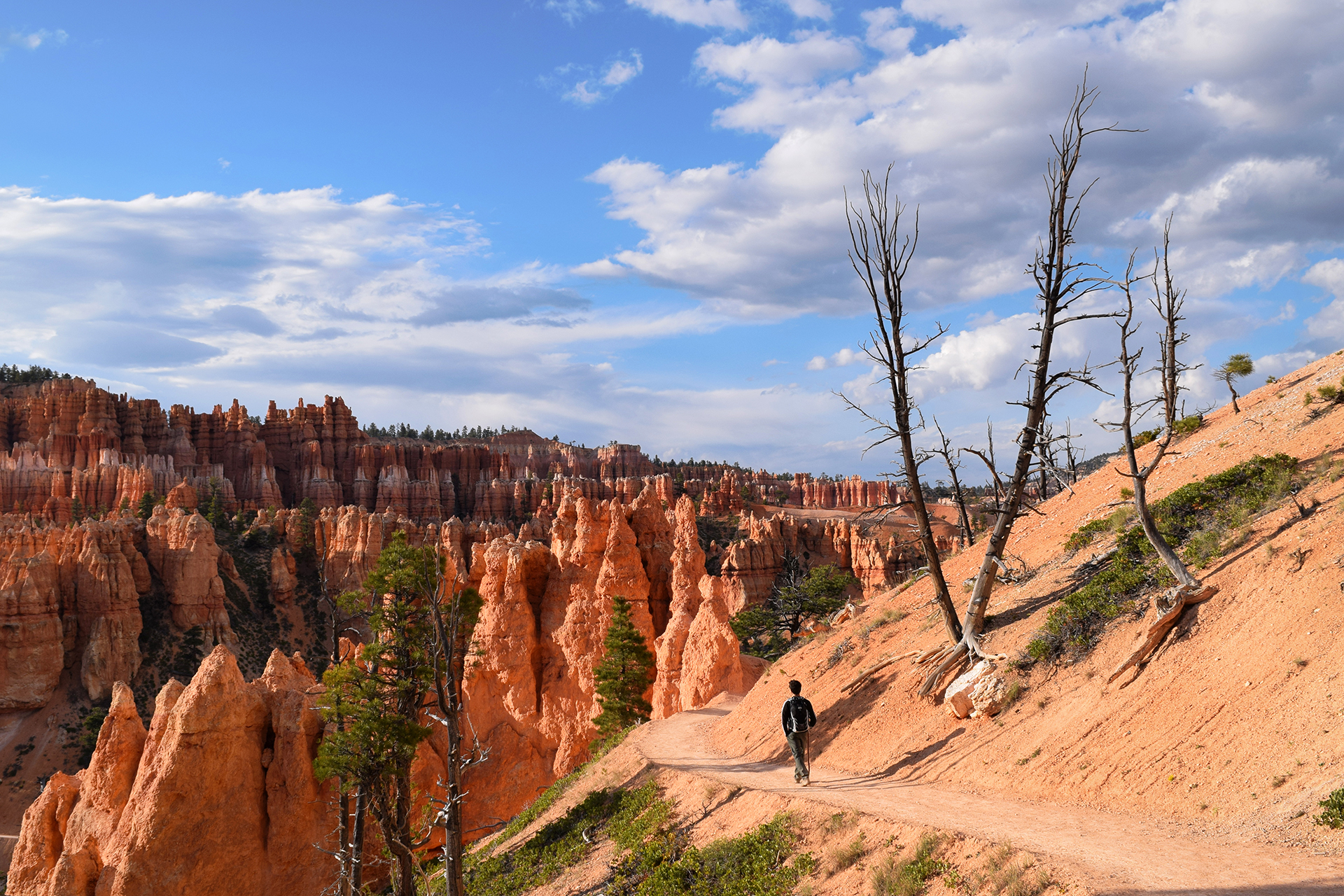
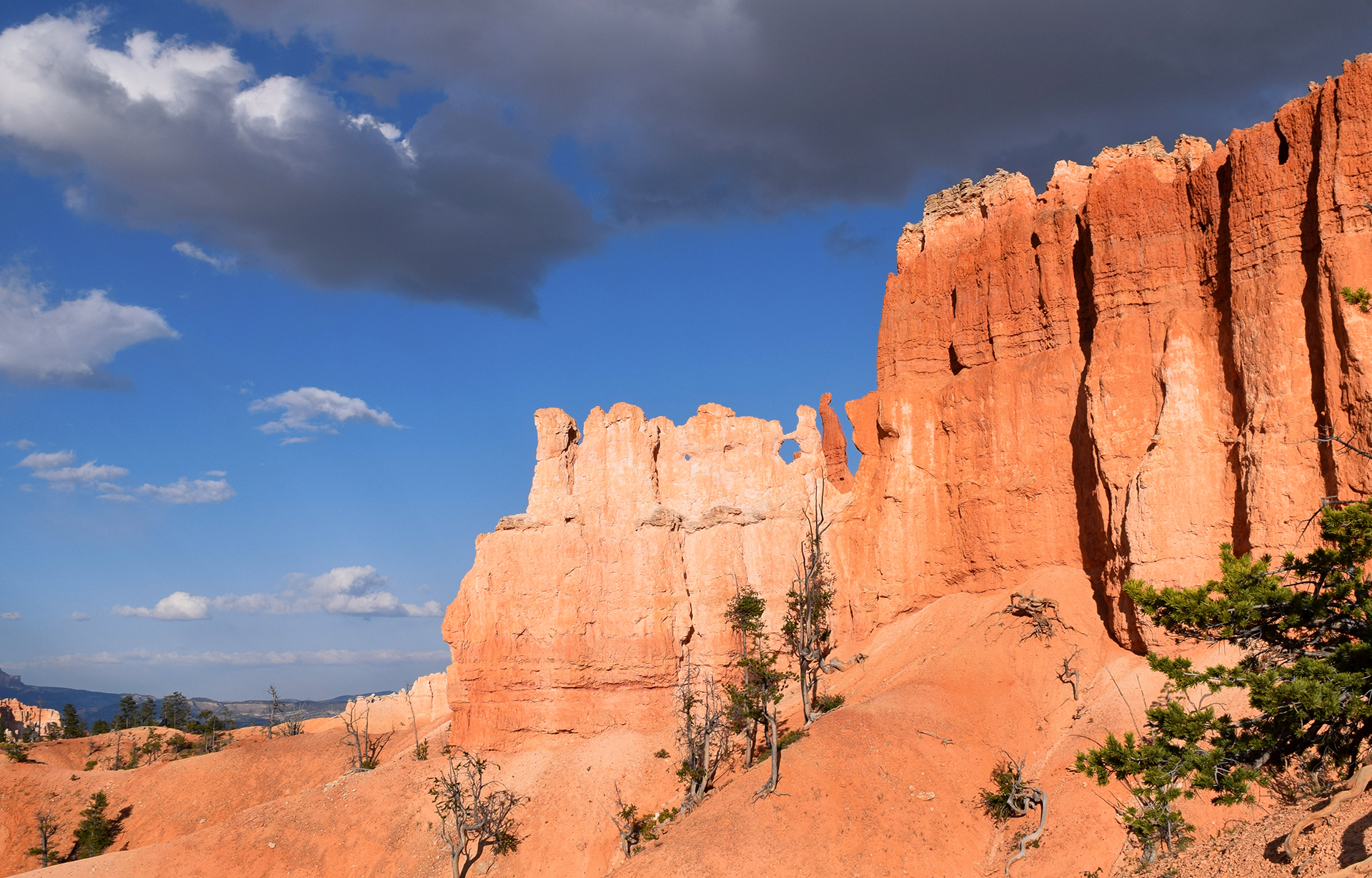
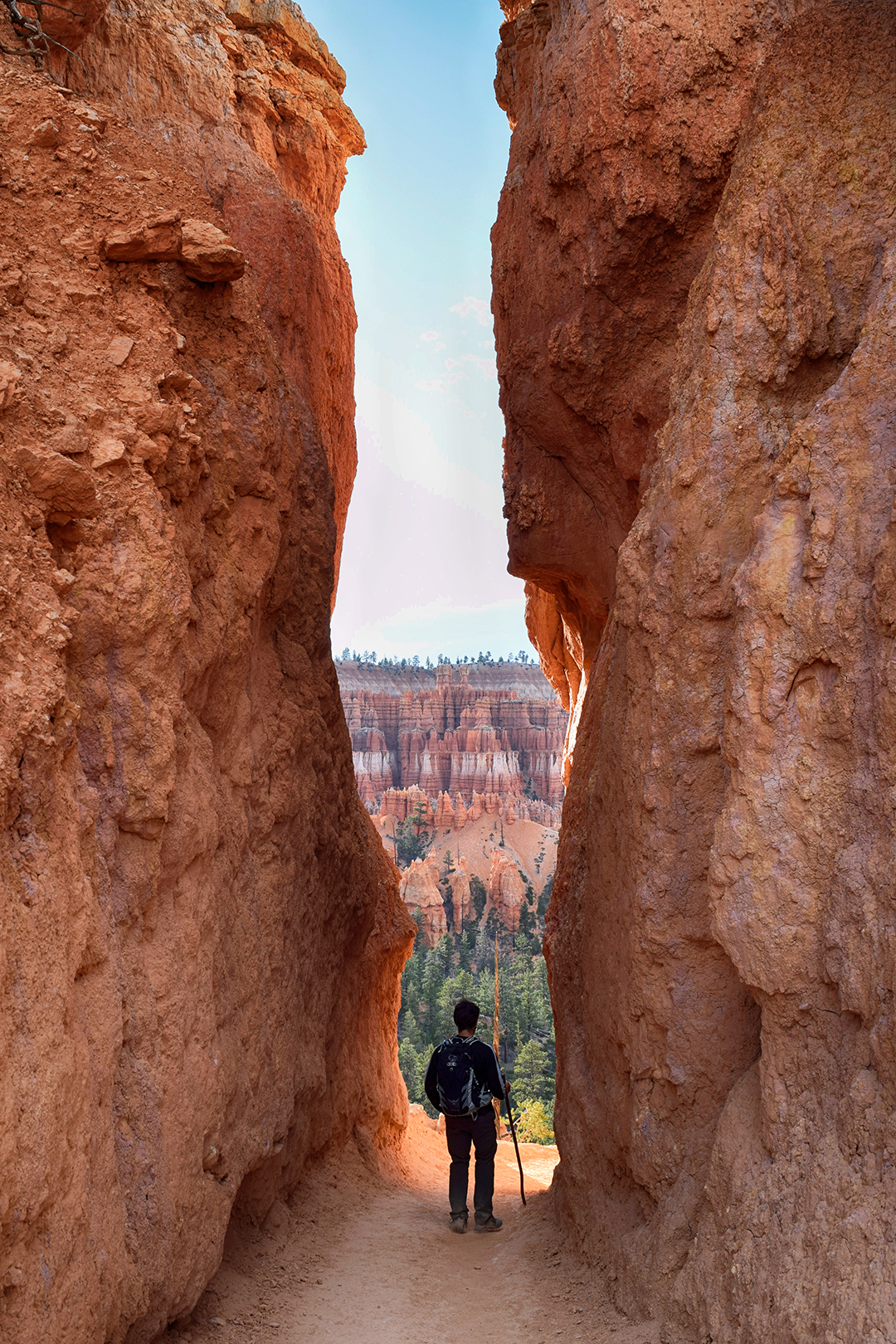
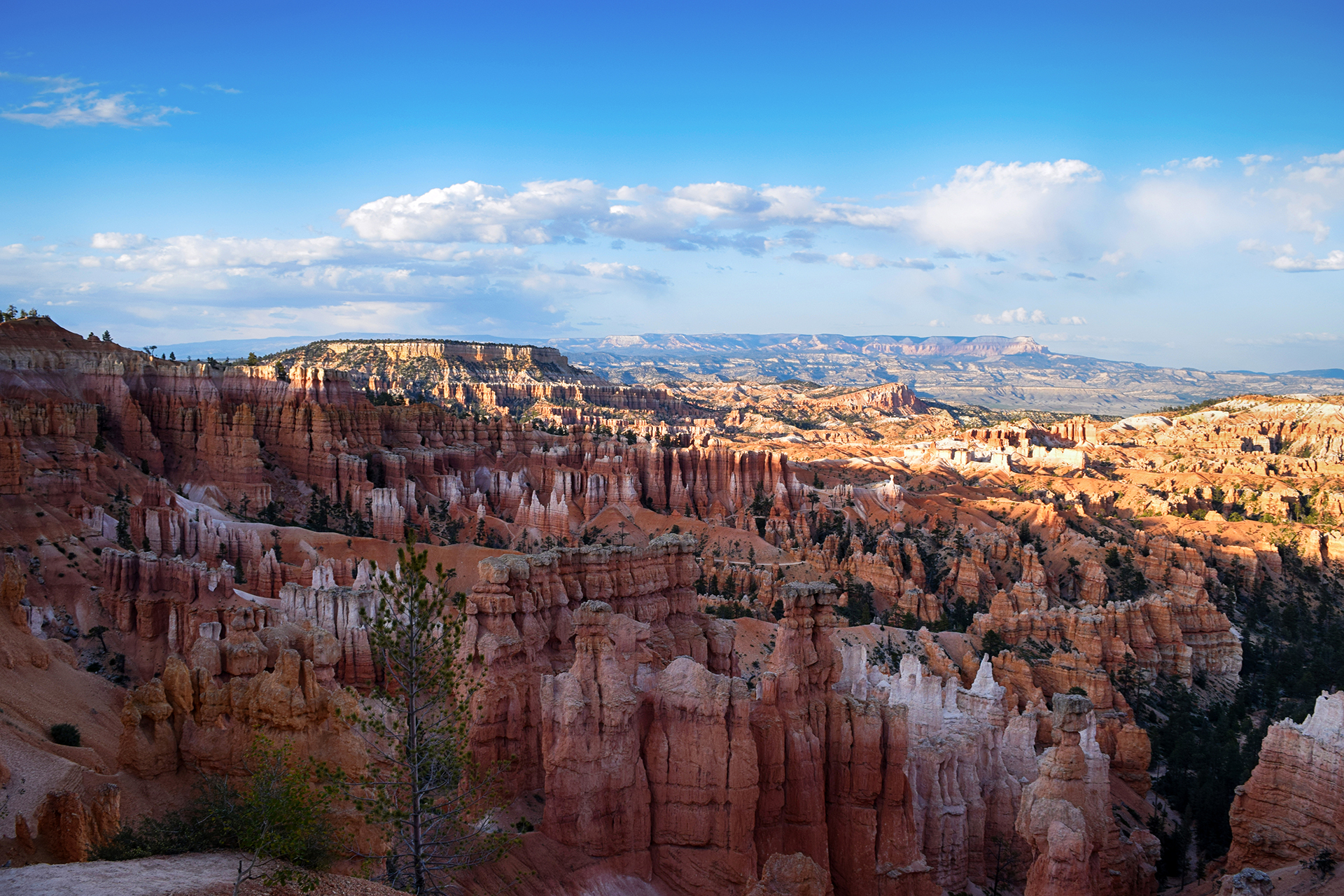
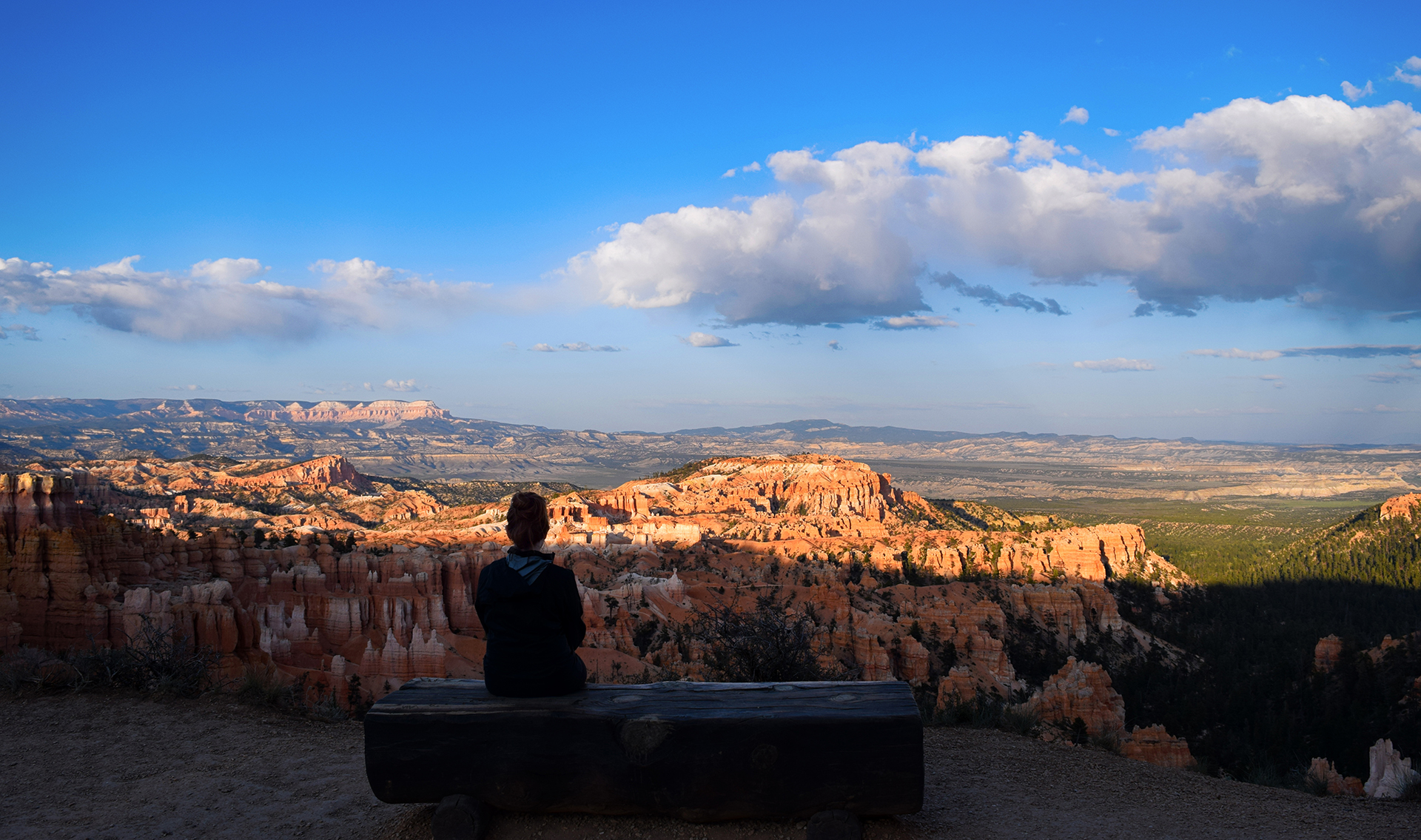
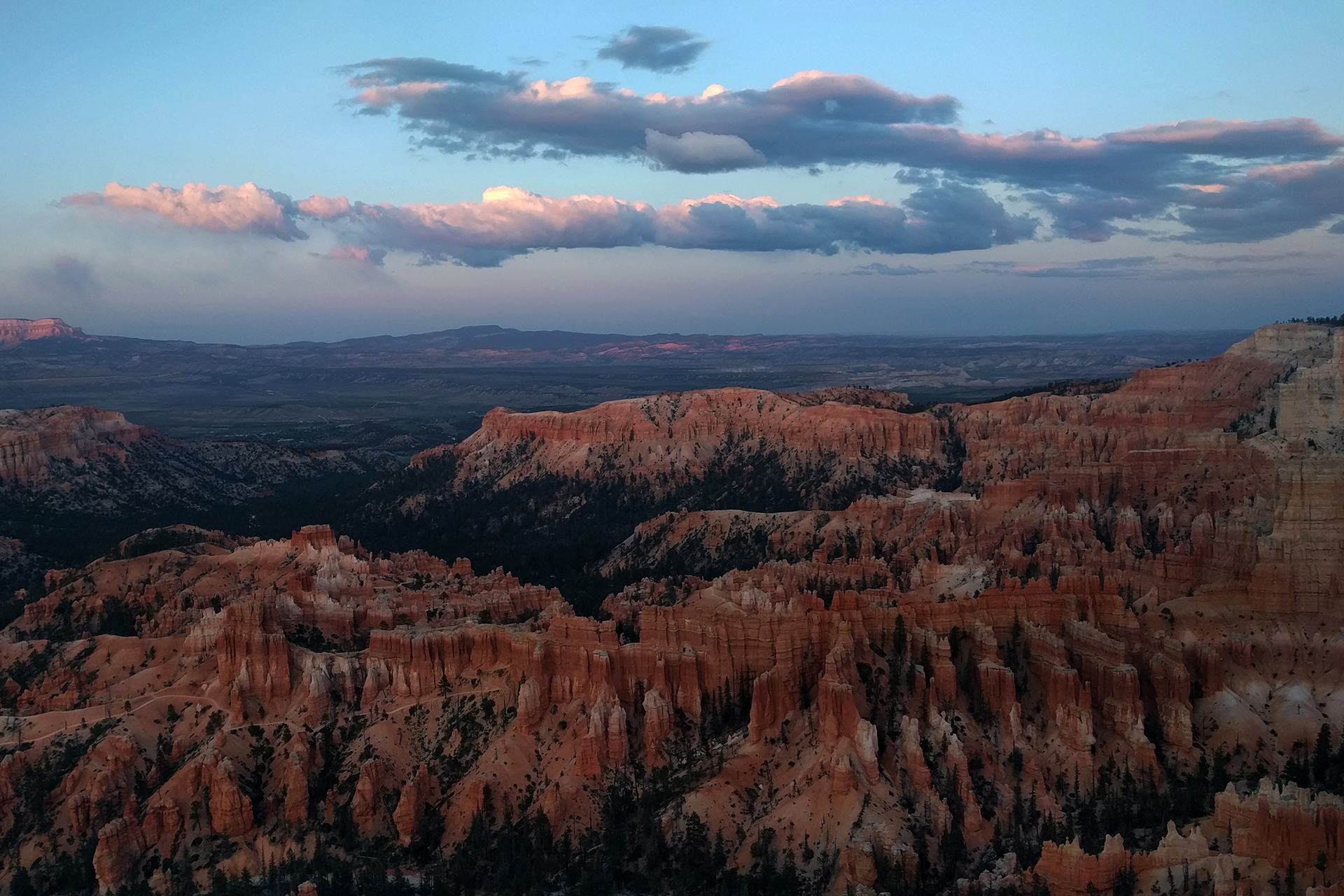
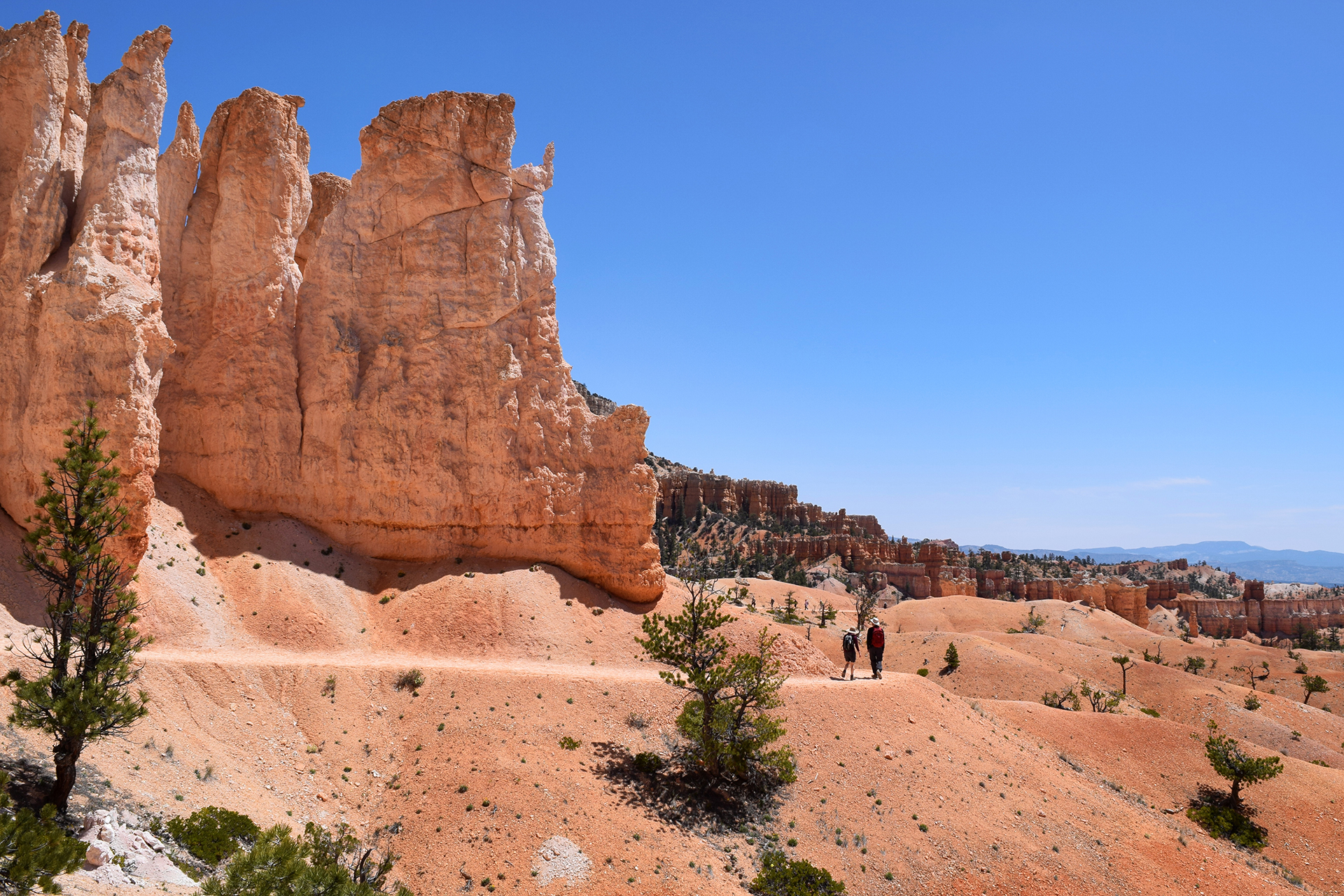
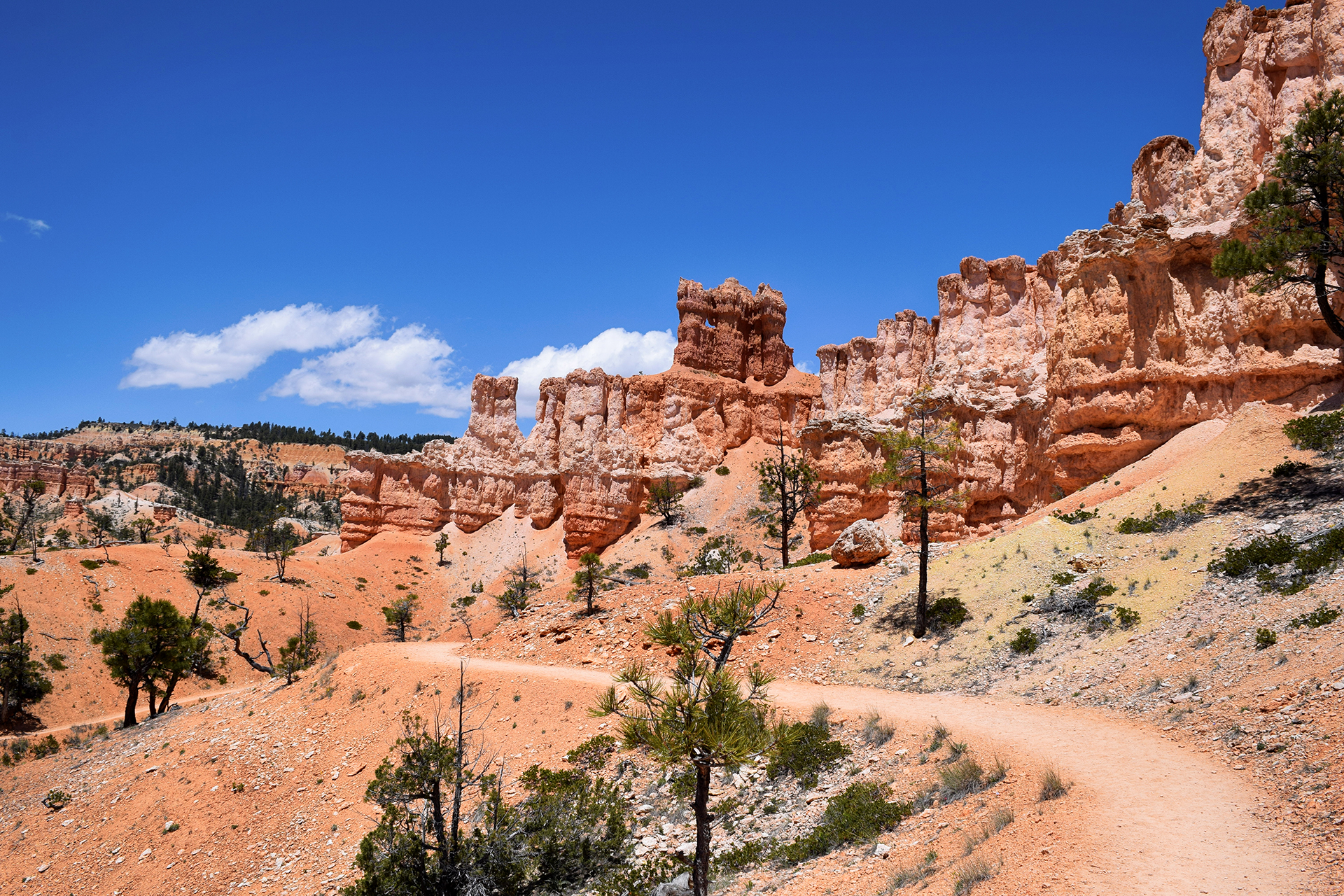
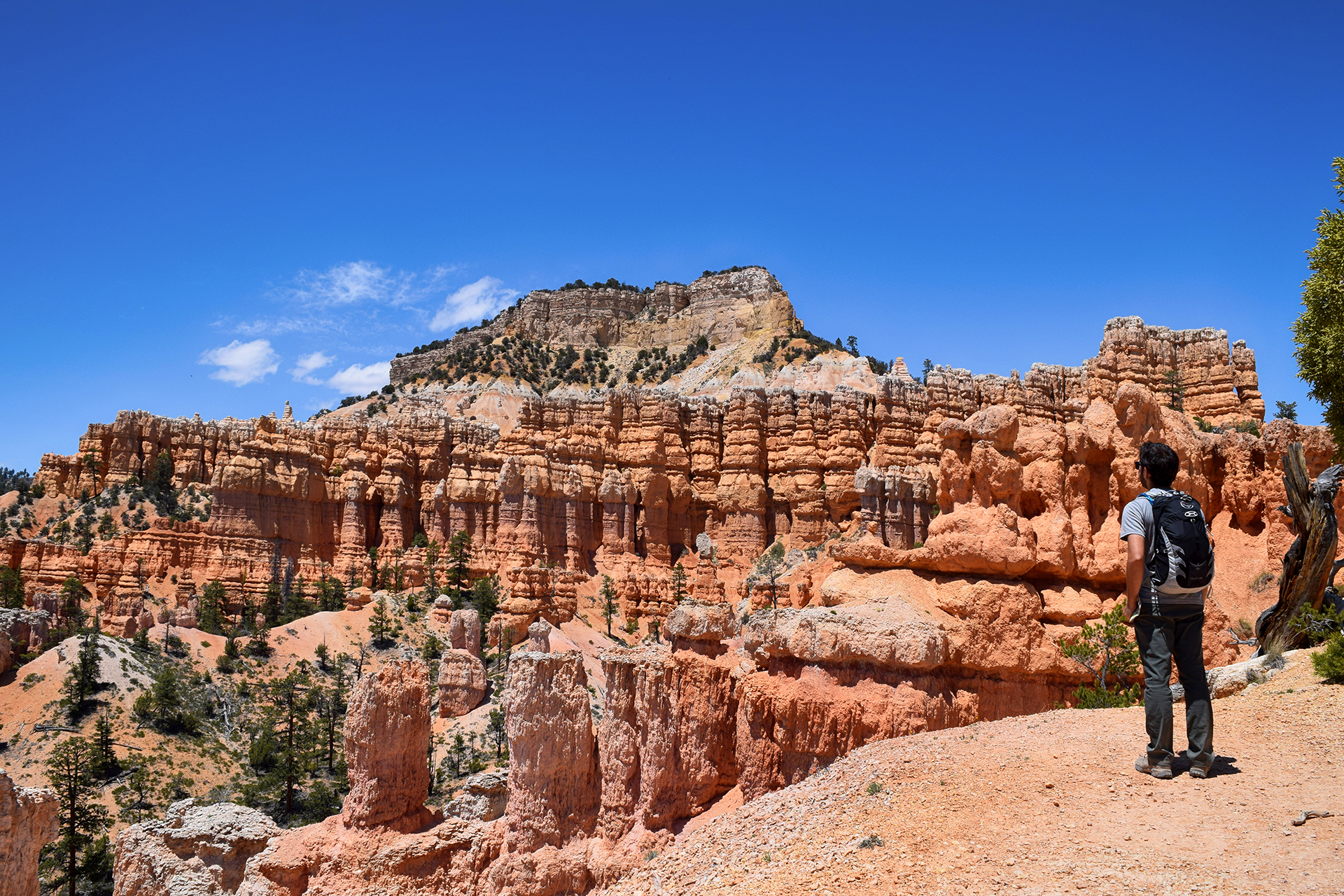
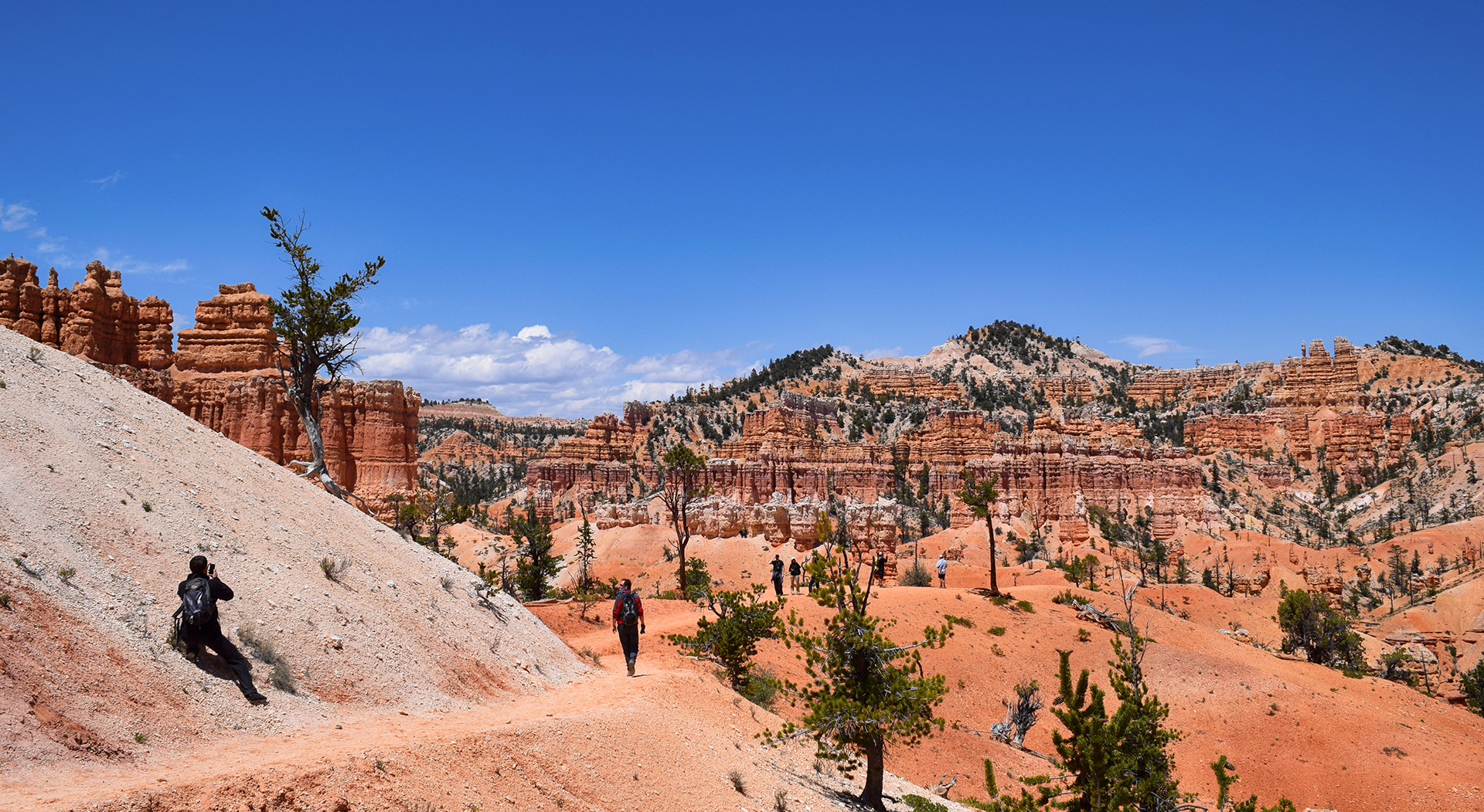
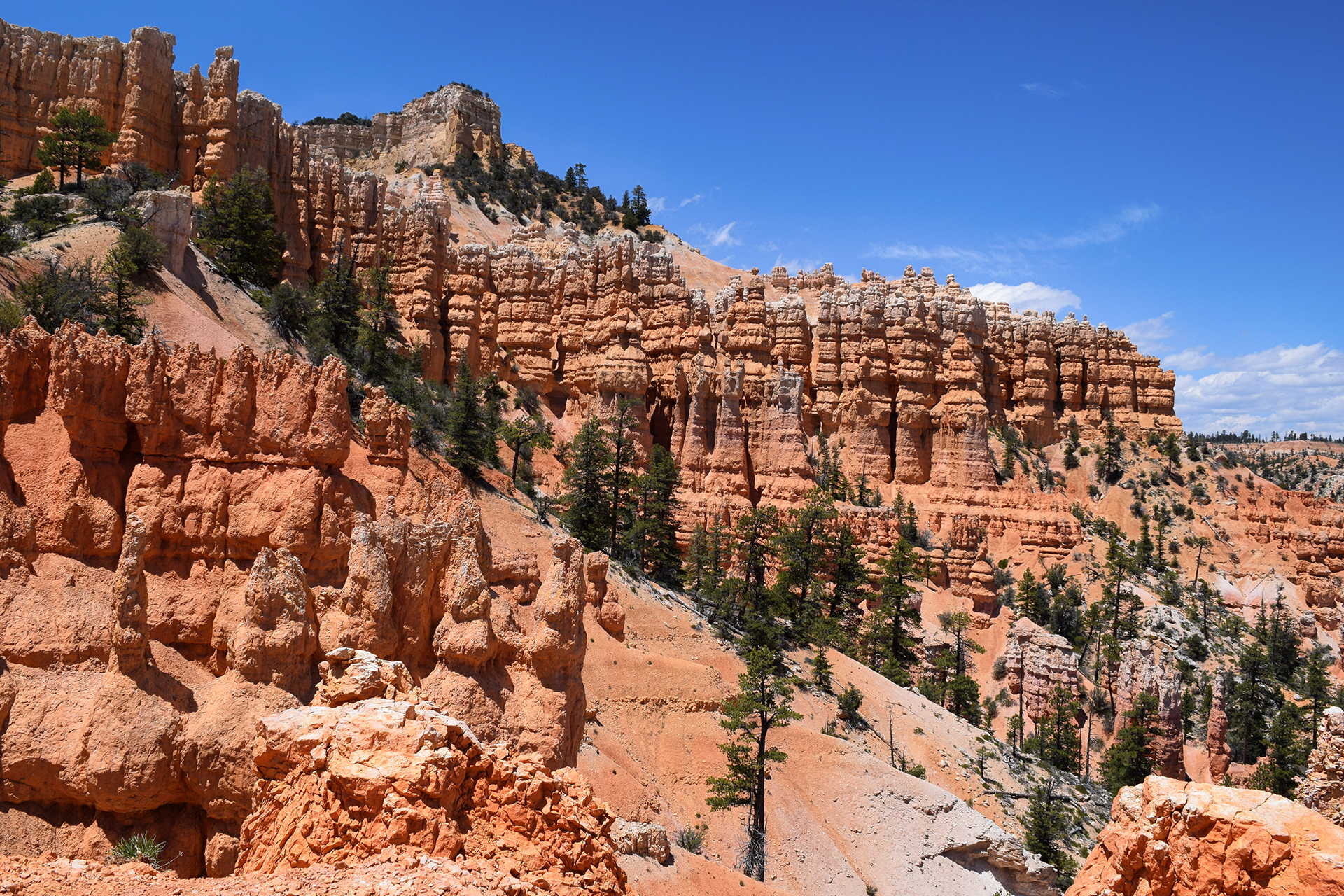
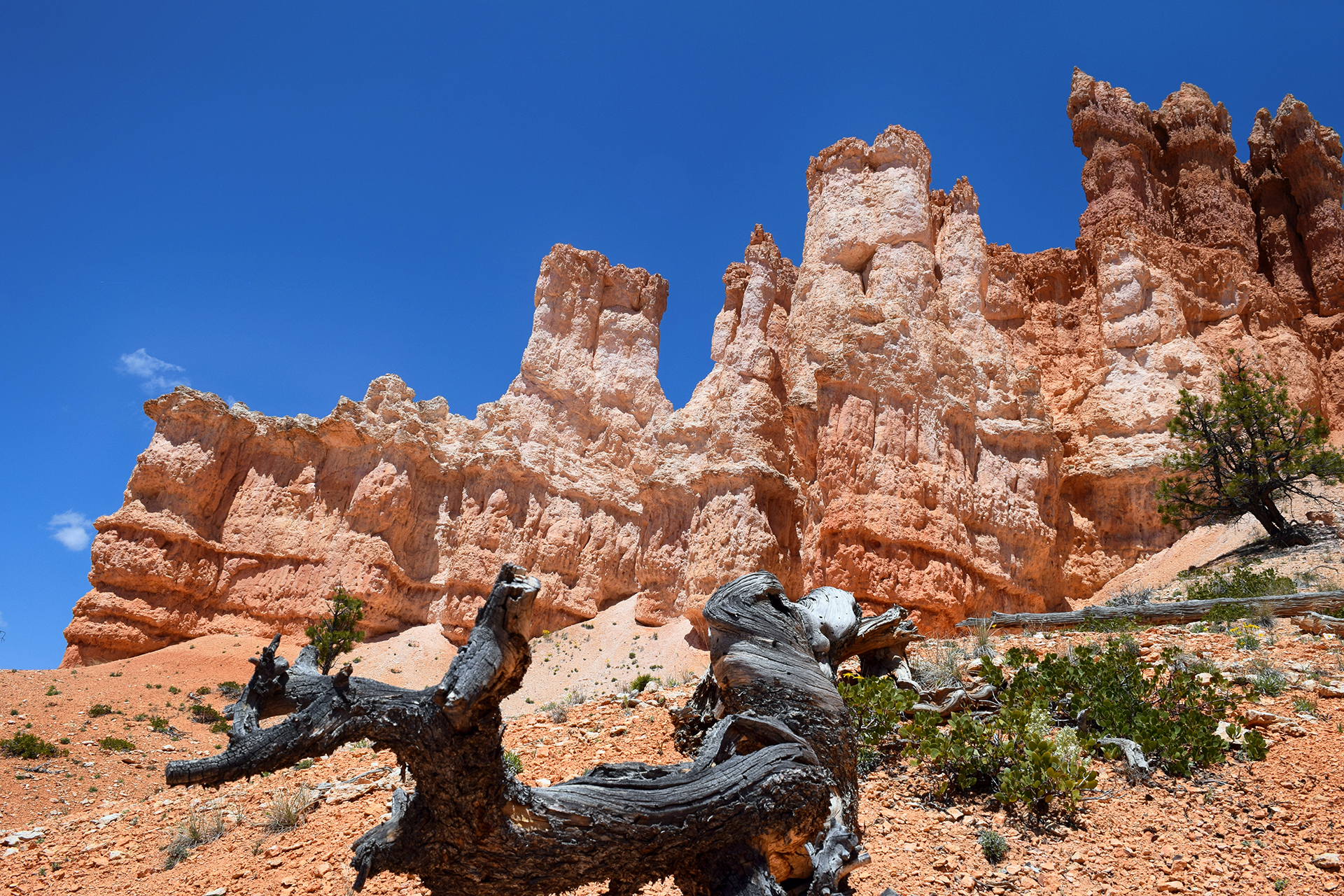
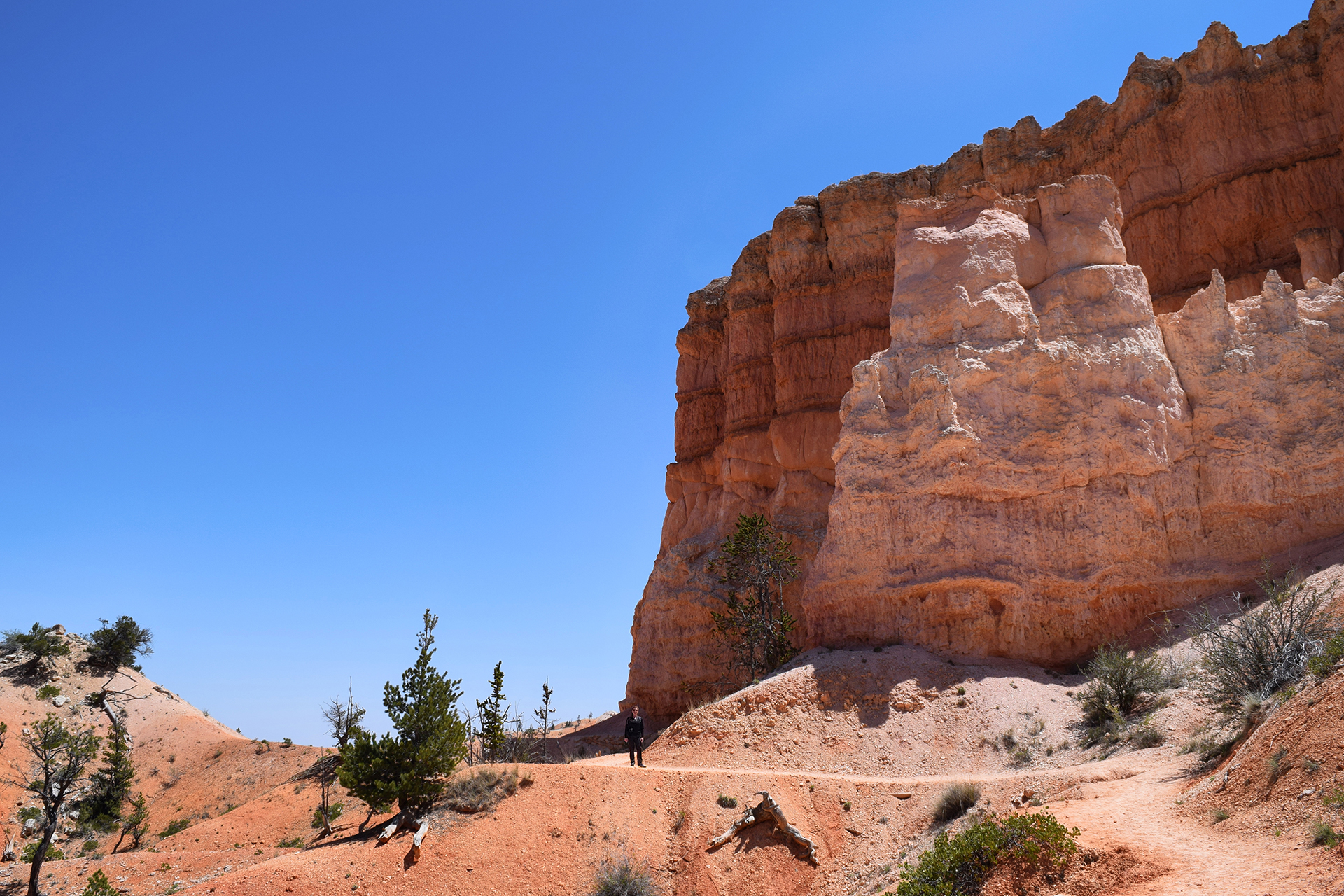
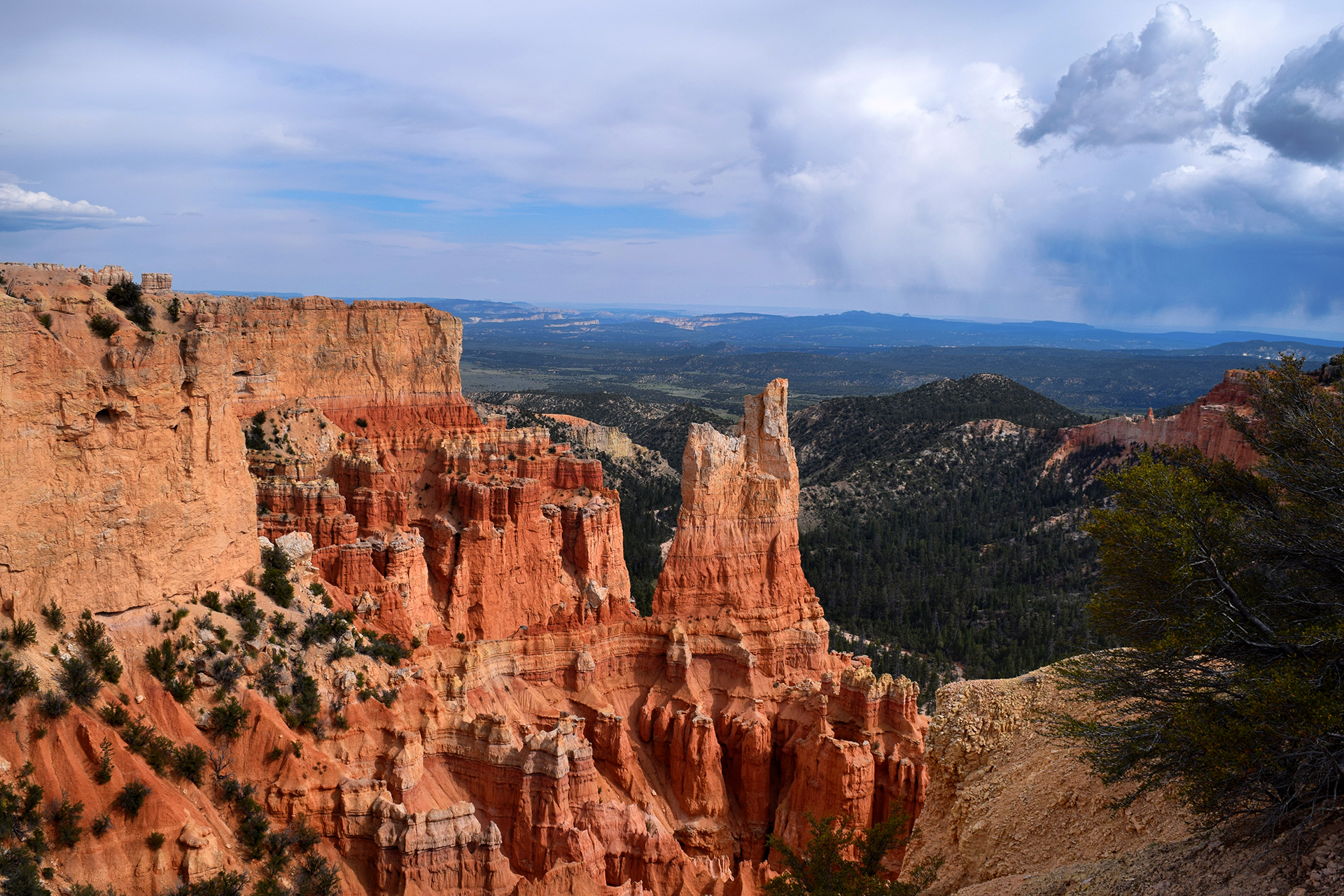
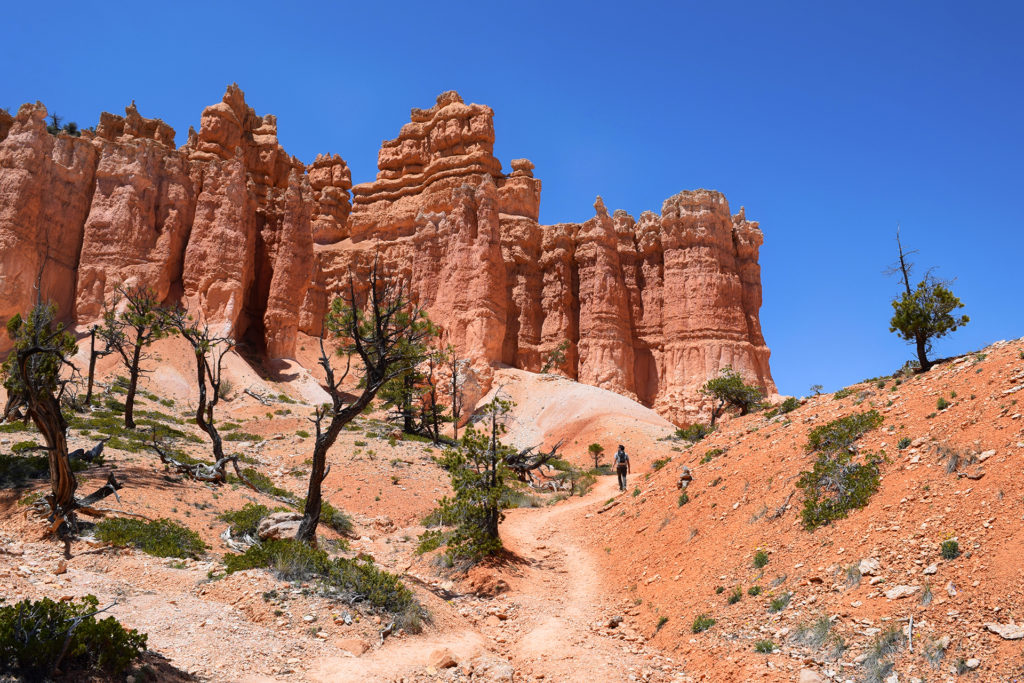
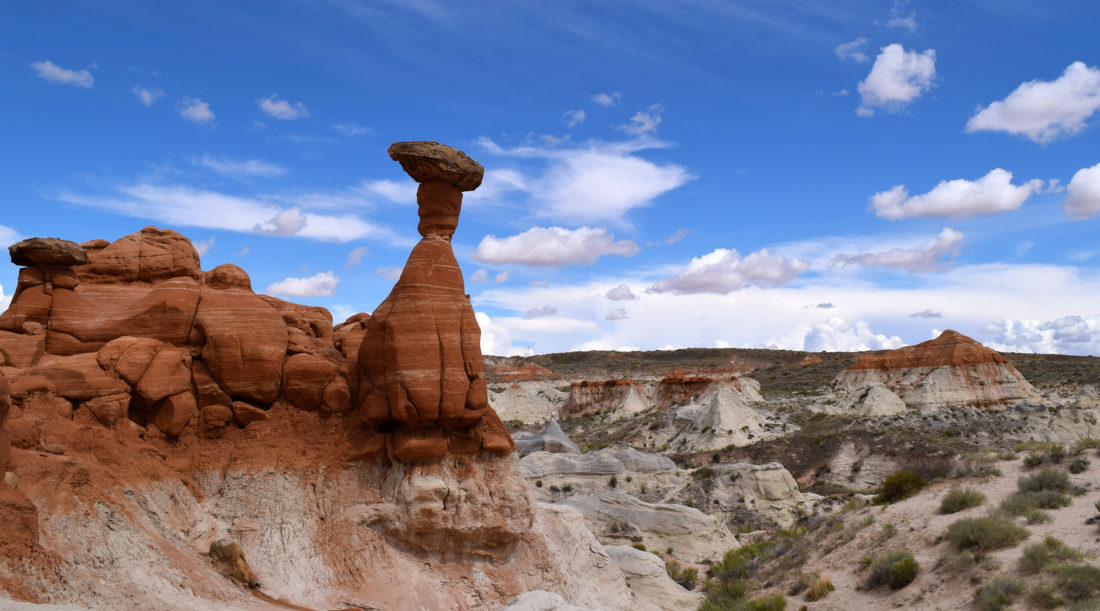
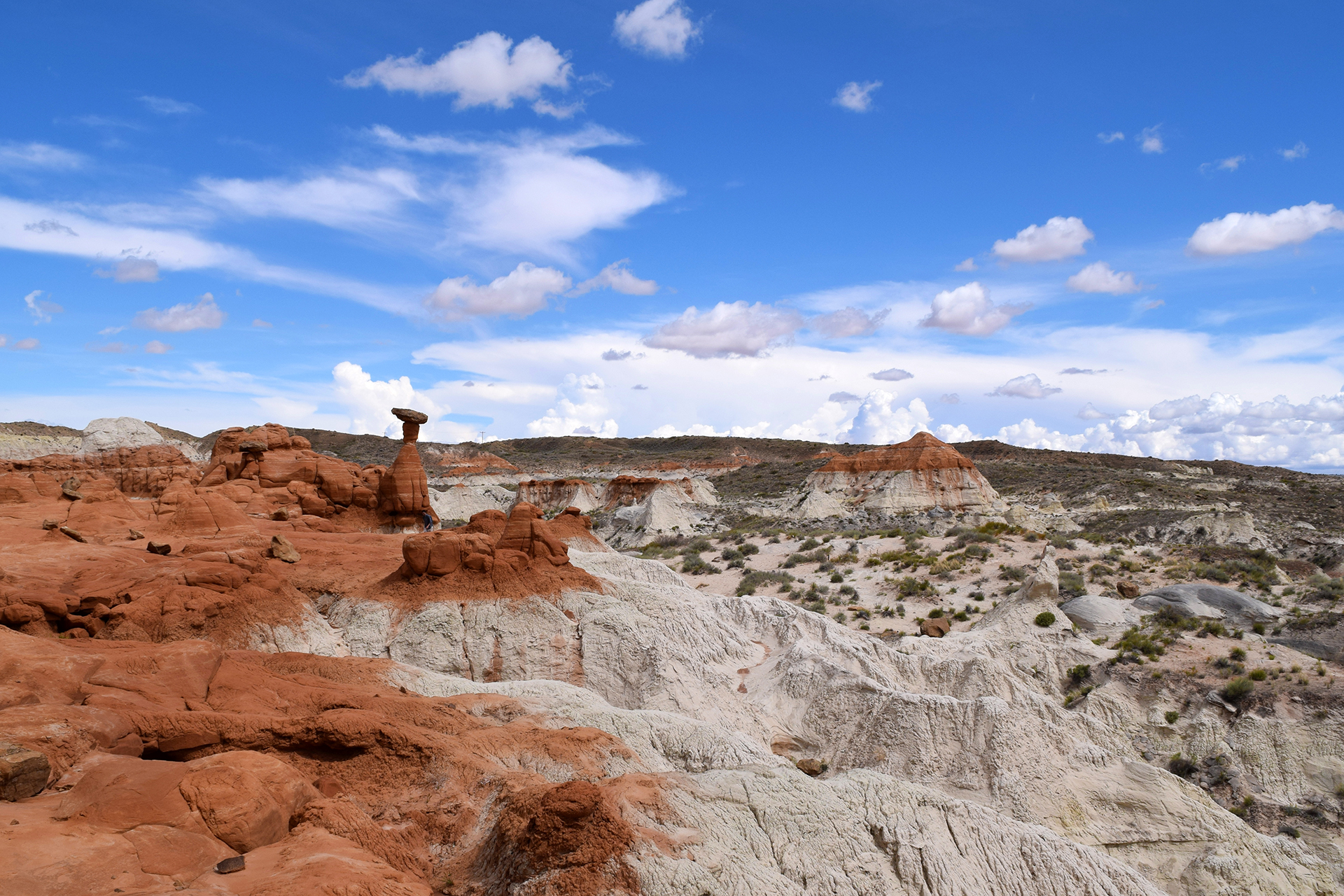
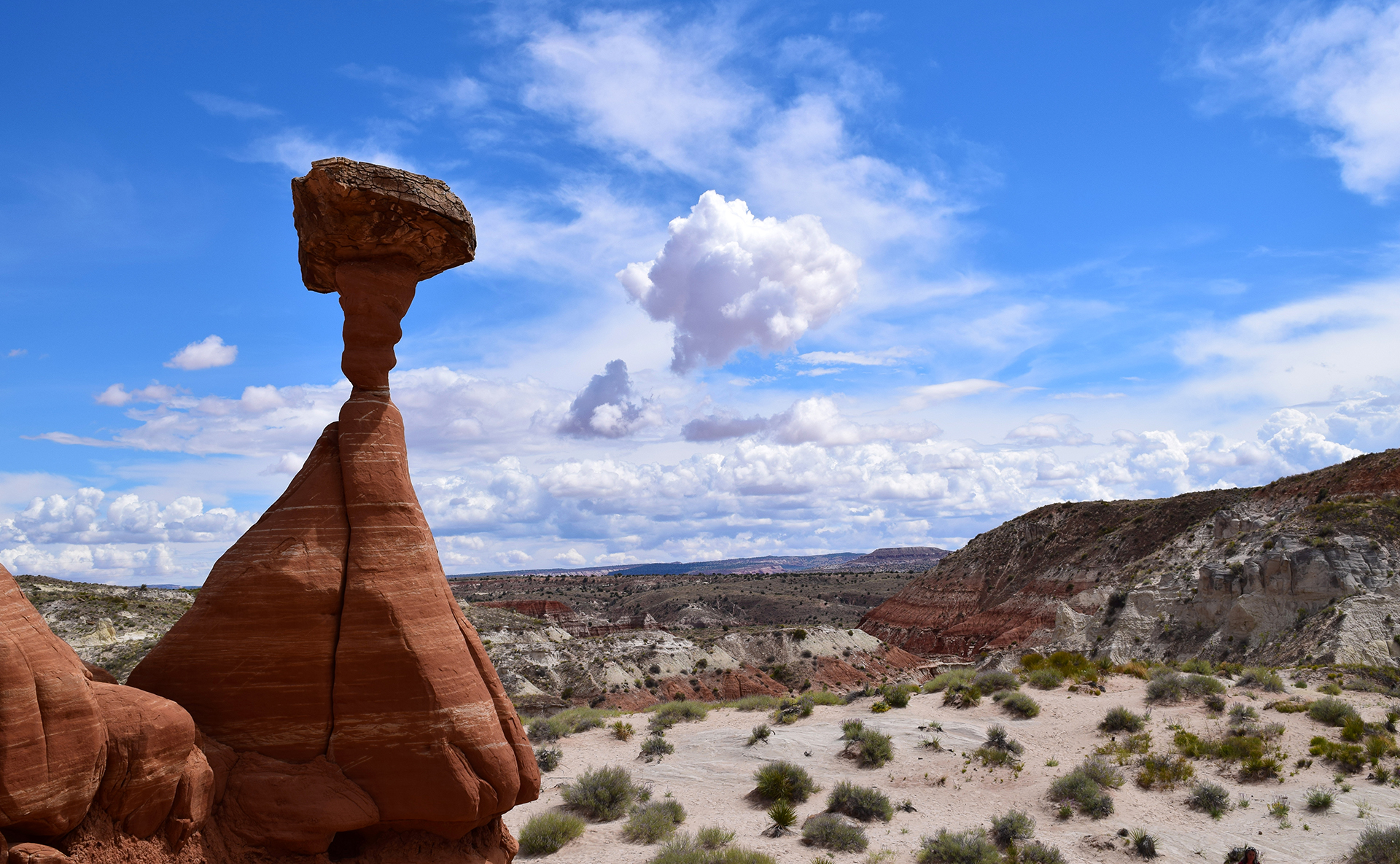
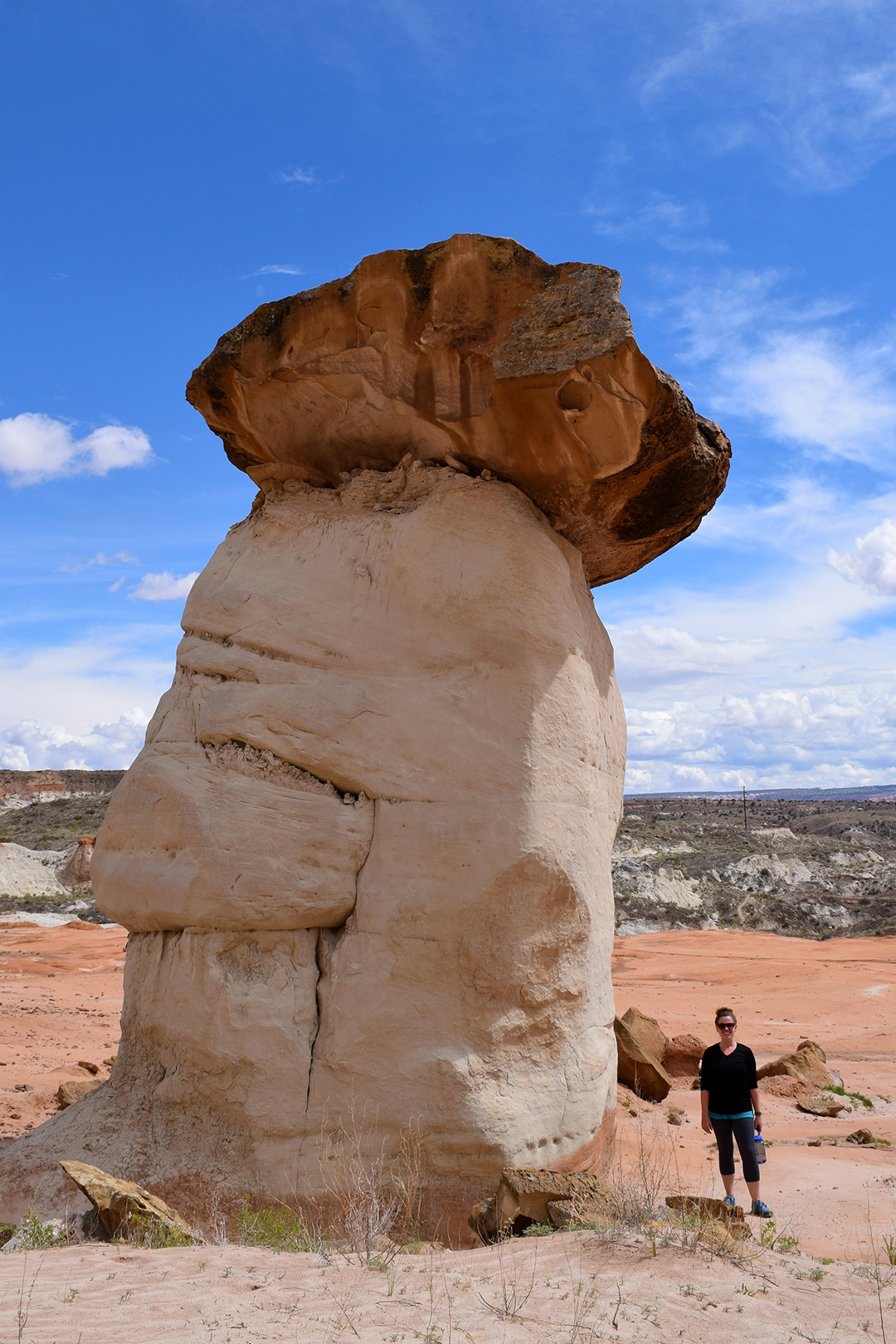
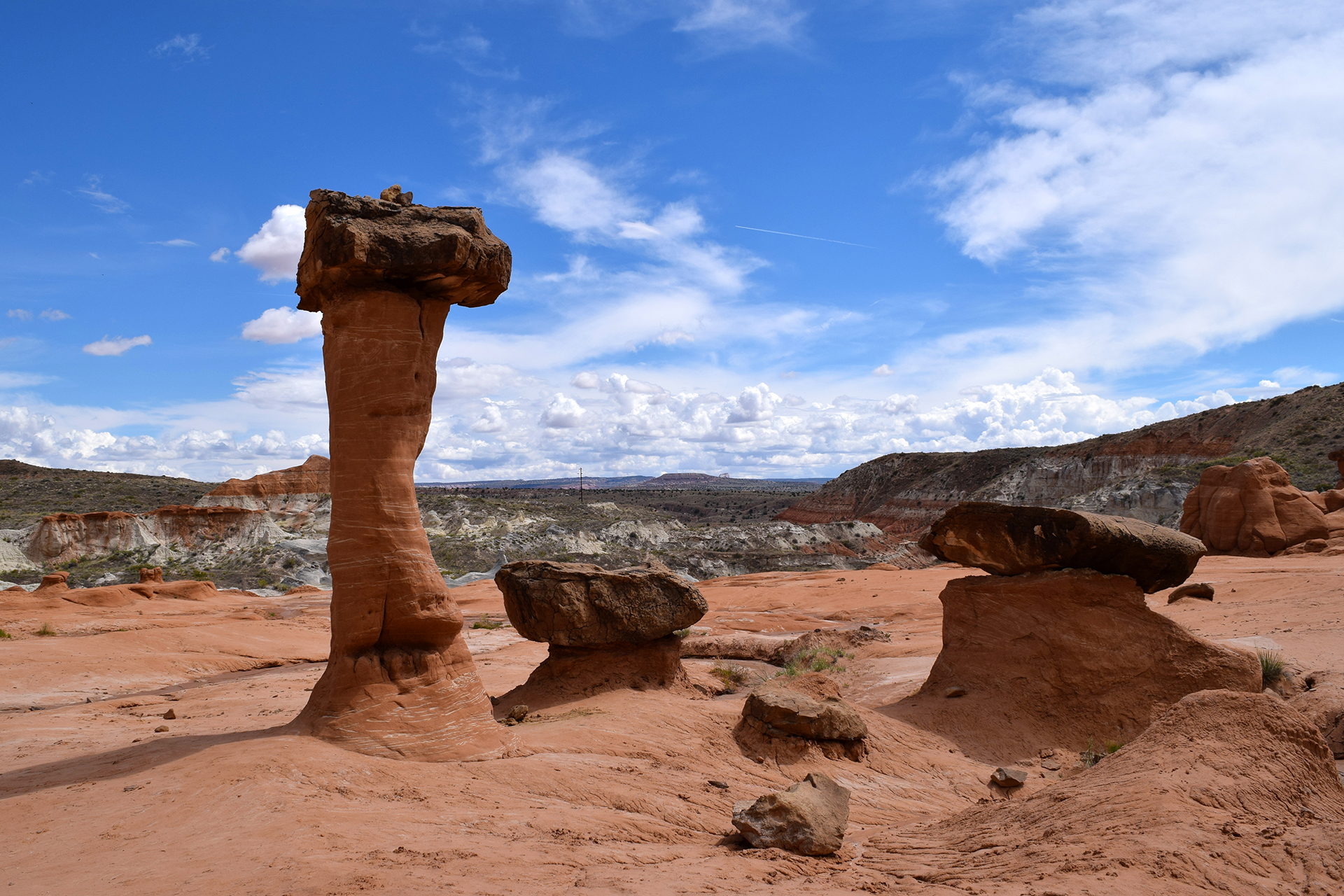
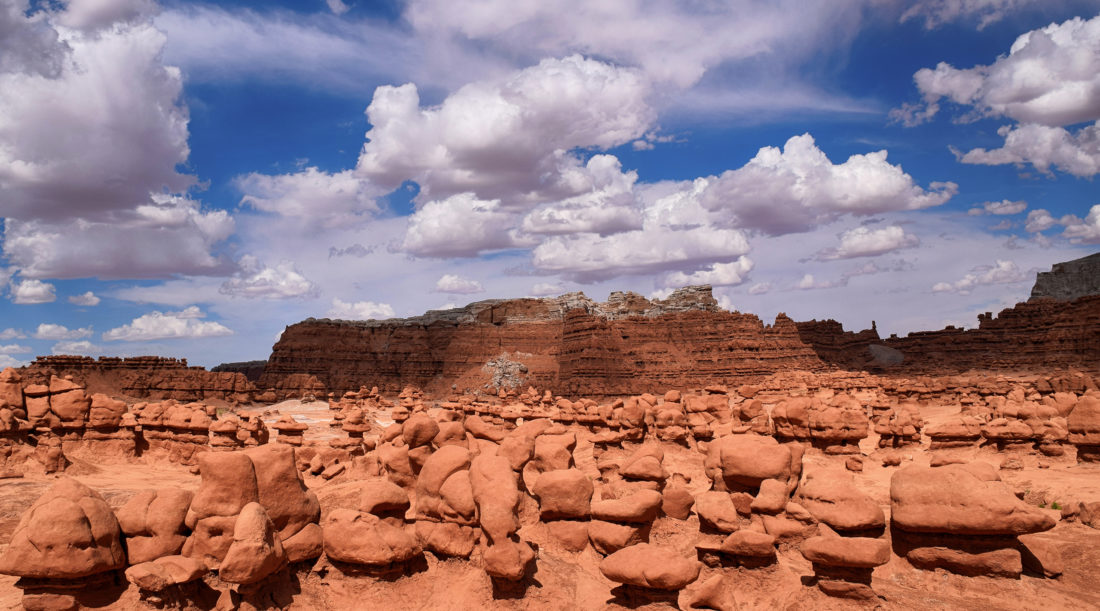
We talked a lot about hoodoos in our post about Bryce Canyon National Park, and Goblin Valley has a lot of them too.  Unlike the tall, beautiful spires at Bryce Canyon, however, the hoodoos at Goblin Valley are short, squat, and kinda… melted.
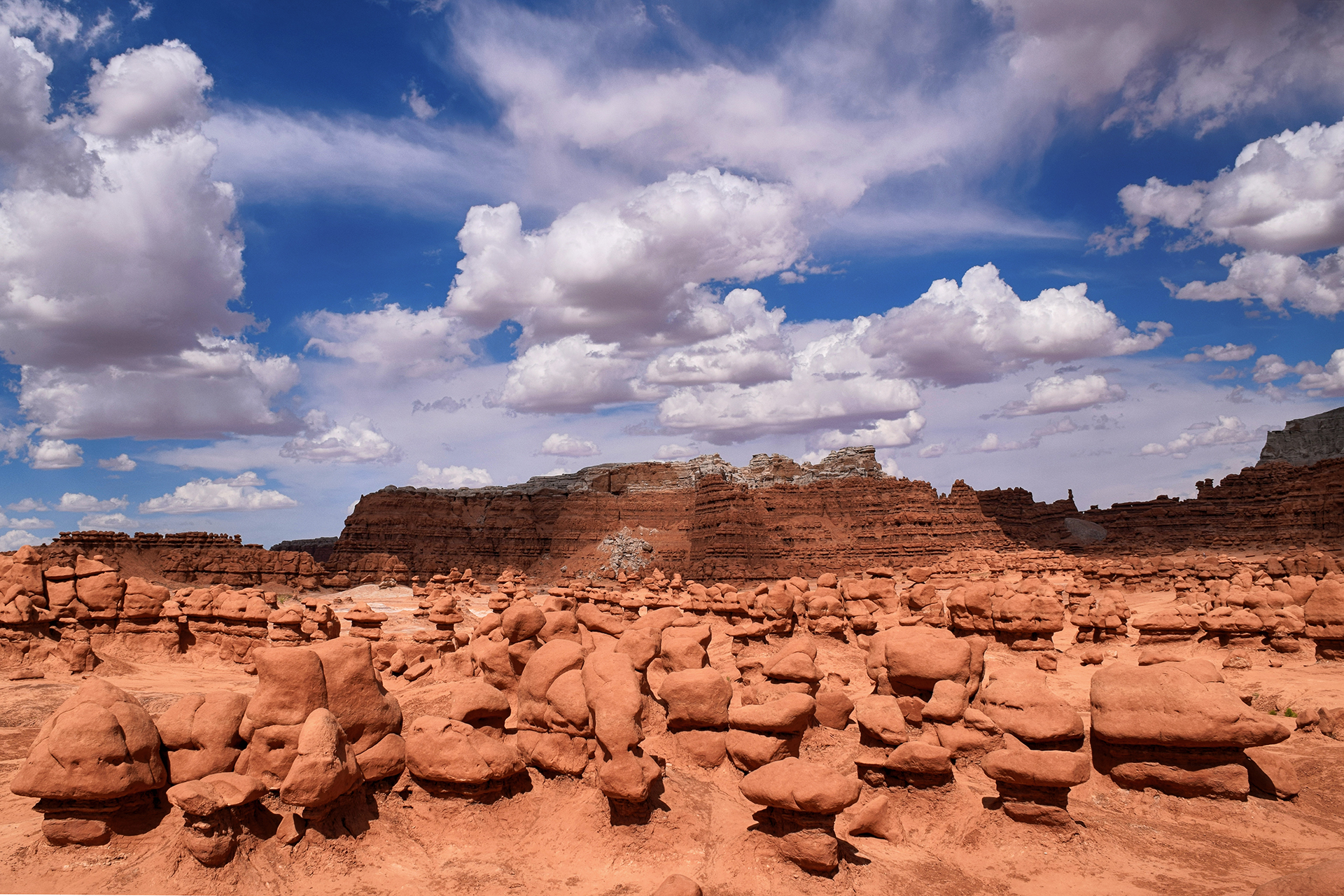
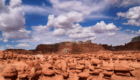
There is a near-endless sea of these weird little formations, so-named because early settlers imagined them as goblins. Having canvassed much of the United States, we can say confidently that Goblin Valley is one of the strangest places we have ever been.

The goblins are a lot of fun to photograph, but due to the crushing heat, we didn’t stay long.  We would have loved the chance to see them at twilight, but Moab awaited.

By the way, you may remember the story a few years ago about a Boy Scout troop leader who pushed over a natural rock formation. Well, that was at Goblin Valley.  Incidentally, the man’s claim that he did a good thing because the rock was going to fall over soon is just preposterous.  The rocks here took millions of years to form into these crazy formations, and we sincerely hope that future visitors leave the goblins alone to fend for themselves.

Roadtrip Time Travel

Roadtrip Status

We’ve reached the end of our roadtrip!  We’re settling down in Denver, but we’re going to keep making blog posts and posting our favorite photos from the trip, so stay tuned for more.

Follow Us On Social Media

FacebooktwitterinstagramFacebooktwitterinstagram

Latest Posts

0

Week 48.1: Capitol Reef National Park

Howdy, friends!  We’re back with another blog post, after an unexplained, 10-day downtime for our website caused by our hosting provider.  It wasn’t fixed until we tweeted at them, marking the first time Twitter has actually been useful.  That said, we can’t lay the blame entirely at our host’s digital feet.  We’ve been updating slowly for a couple of reasons of our own, the first being that we took a LOT of pictures at these national parks.  Heather has been doing heroic work in identifying the good photos and making them look pretty, but it’s a slow process.

The second reason is that we have been traveling once again.  We’ve just finished our most recent cross-country trek, from New York all the way to Denver!  This time there’s no follow-up, since we’ve reached the end of our roadtrip at last.  We’re in it to win it in Colorado, and we’re looking forward to its friendly people, sunny days, and apartments that don’t require “emptying the tanks” (especially that!).

Not to fear, we’re still committed to finishing these blog posts, even if they’re sadly falling further and further behind.  We hope you still enjoy reading about our untimely adventures as much as we enjoy sharing them.  So without further ado, let’s start our stationary life off by relating one of our biggest driving blunders.

Scenic Deathway

We last left off at the stunning Bryce Canyon, and from there it was a relatively short drive to our next destination, Capitol Reef National Park.  After reading about it online, we decided to get there via Utah’s Scenic Byway 12.  Now, if we weren’t piloting an RV, we would have loved this drive.  The terrain was rugged and beautiful; according to some informational plaques, this was the last uncharted region in the continental United States. In other words: this place is truly remote. An Army explorer surveyed it in 1871, and the road follows their route exactly, since there really is only one way through these mountains.

Wait, mountains?  Oh yes.  The road goes up and down constantly, through twisting canyons and along the long, exposed spine of a mountain ridge – a section called, fittingly, the Hogback. Imagine an elevated roadway with cliffs on either side; we were a little busy for photos, but here’s an awesome picture we found on the Internets.

In other places, just to keep things interesting, the stone alongside the road was Utah slickrock, which looks and feels exactly like it sounds.  The views were awesome, but this was a very bad drive to make a mistake.

The online discussions we read said that this road was fine for RVs, but good lord, it was not. We soon found ourselves in a nightmare drive, the road twisting and turning while ascending and descending steeply.  This is bad news if you’re in a 12,000 pound vehicle pulling a car behind it, and although our motorhome is a total beast, we had to pull over several times to let its brakes and engine cool down.

Finally, we reached the highest point on the drive, well over 10,000 feet.  This high up, a light drizzle had turned into a fierce hail storm.  At least it cooled the engine!  We stopped at an overlook for a quick photo of the view, and since the entrance was narrow, Heather hopped outside to check for oncoming vehicles before we returned to the highway.  Given the all-clear, Jake drove up to Heather and stopped the RV to let her back in.

That’s when a sheet of slushy ice slid off the roof directly onto Heather.

Luckily, we were nearly to our destination, because the atmosphere for the rest of the drive was a little… chilly.

Capitol Reef

At last, we made it to the tiny town of Torrey, Utah, population about 300. There were a few restaurants, but unfortunately for your hungry correspondents ,there was no grocery store.  So, we walked across the street to a gas station convenience store to see what we could find, and came away with some sliced turkey, ice cream, and Combos: the dinner of champions.

OK, on to the park, which we had frankly never heard of.  Capitol Reef is the least visited of Utah’s “Mighty 5” national parks, by far, and apparently it’s normally pretty empty.  But unfortunately for us it was Memorial Day weekend, so the crowds were out in full force. We had to skip a few of the more popular spots because there was no parking left – and woe be to the poor few rangers in the visitor center, at times literally surrounded by questioning visitors.

Capitol Reef is cool, but perhaps not quite as eye-popping as Zion or Bryce Canyon.  Nonetheless, it has plenty of charm.  The park covers the most scenic part of the “Waterpocket Fold,” which is basically a 100 mile long uplifted rock wall. It’s unclear whether the Fold has played any part in keeping out wildlings, but it does make for some interesting terrain.

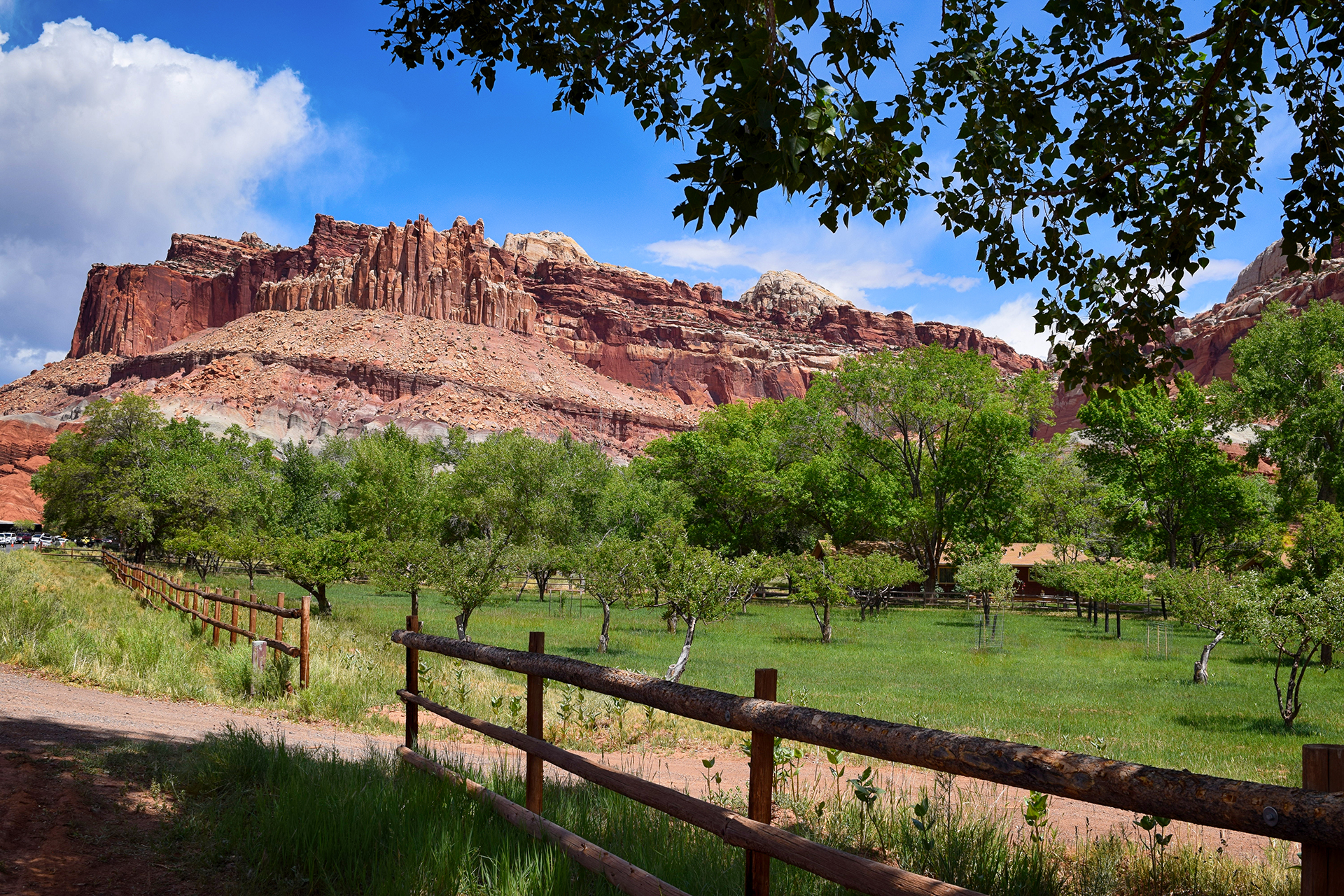
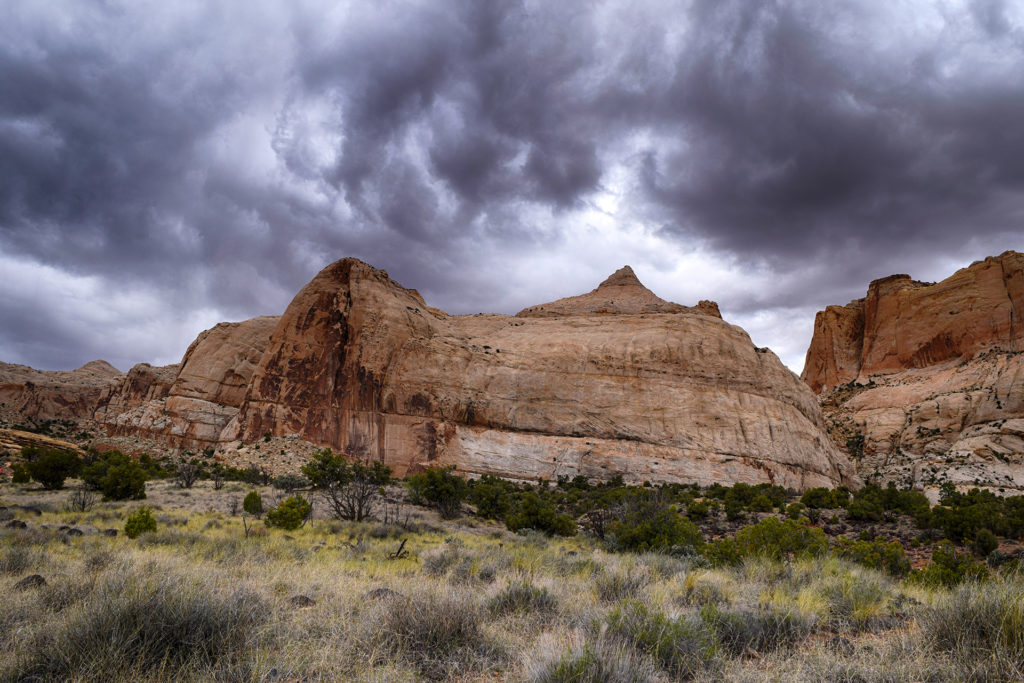
The most well-known feature here is a large rock dome that early settlers thought looked like the U.S. Capitol in Washington, D.C. “Capitol Reef” is a combination of that, plus the ocean reef-like Waterpocket Fold.  Unfortunately, our photo of the Capitol Dome doesn’t capture the most “capitol” angle of the rock, but you can see its pointy peak in the background – along with a fairly ominous sky.

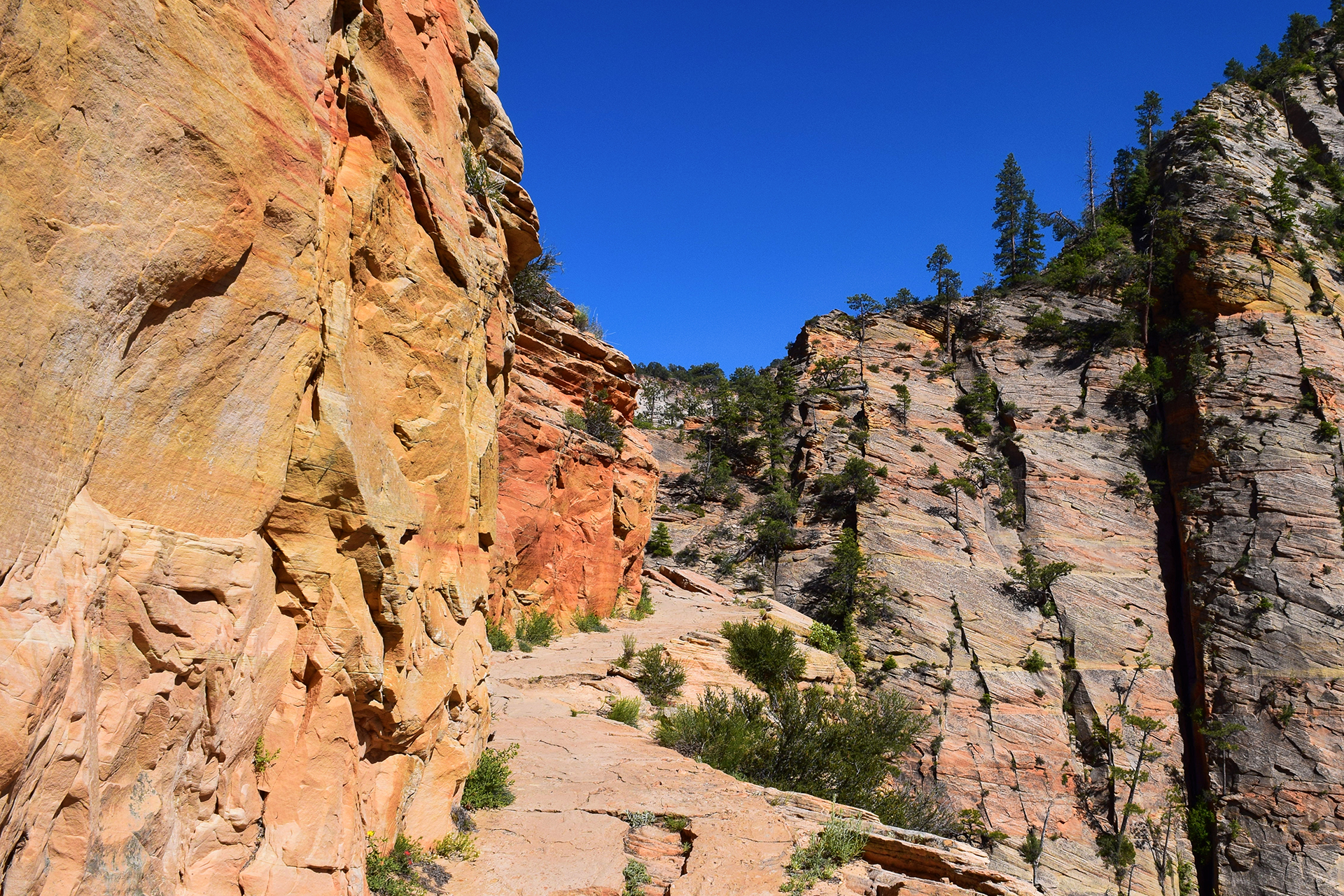
On our first day, we took a hike up over the aforementioned slickrock.  There’s no real “trail” to speak of here, just occasional rock cairns (piles) suggesting a route over the dusty stone.

We got lost about 15 times in 20 minutes.

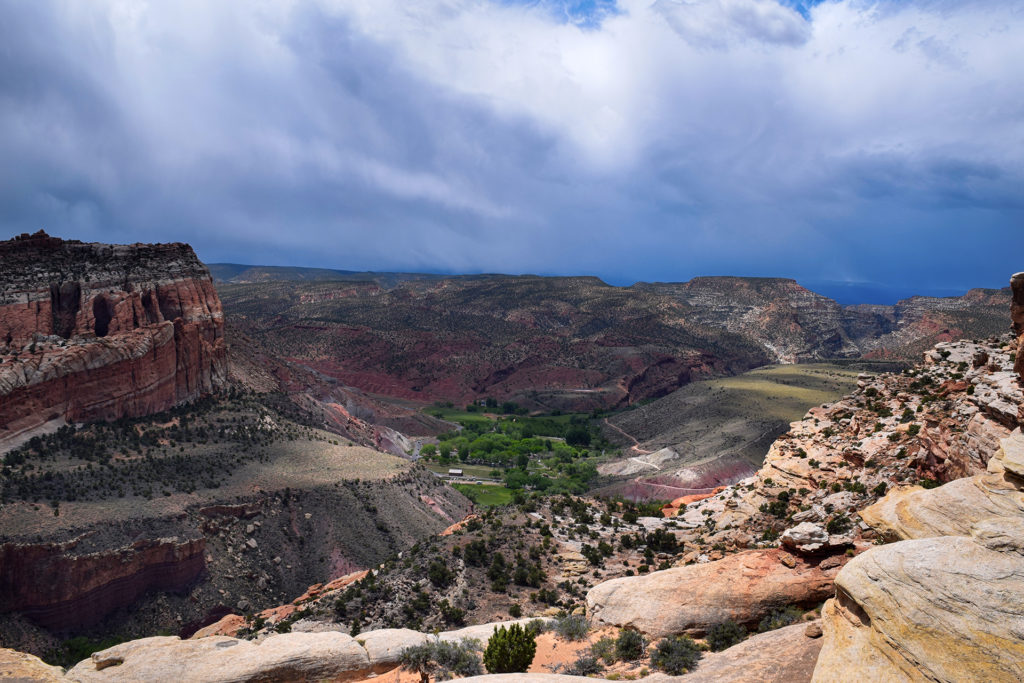
It was worth it, though, as we got a really cool view of the valley.

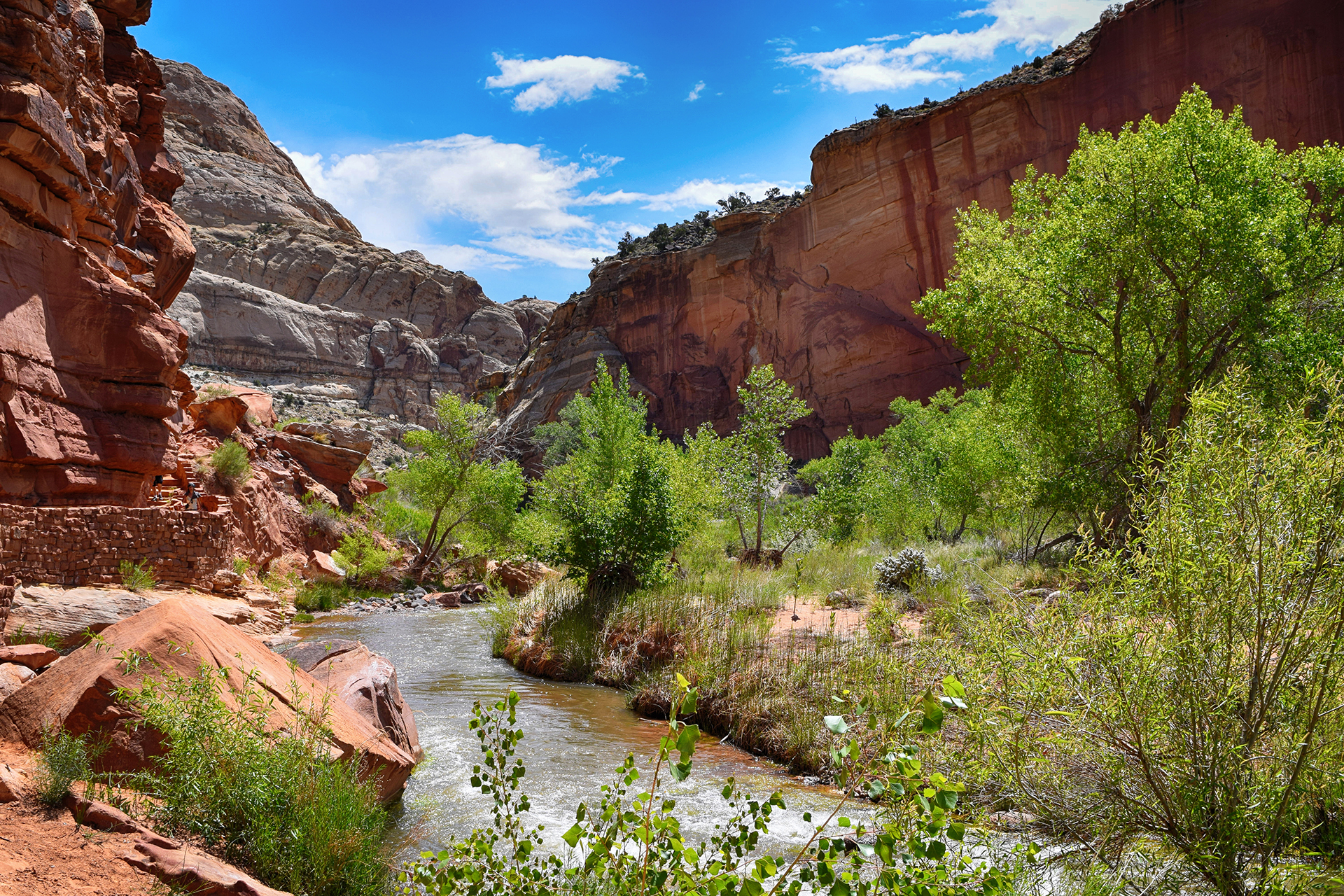
You can see how shockingly green it is in that valley below.  The river that carved that canyon still flows, and early pioneers took full advantage by planting numerous fruit trees, orchards of which still exist today.  We’ll get to them later.

You can also see an oncoming thunderstorm, and so could we, which is why this particular hike ended a bit early.

Into the Fold

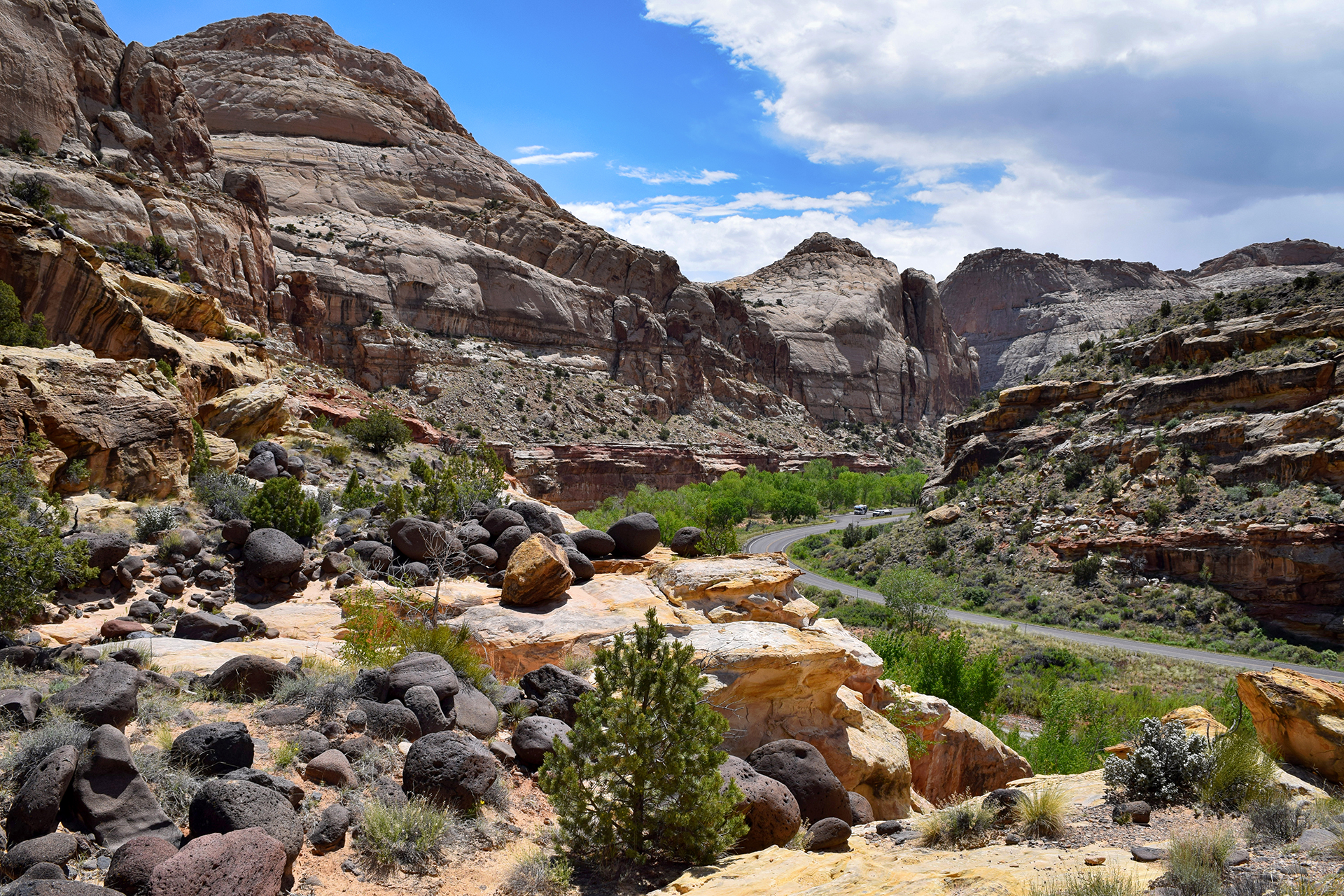
The next day, we explored some of the area’s many natural canyons. The first one we visited was actually a former road, and once the only way through the Waterpocket Fold. We got there by driving through a slot canyon, an experience as epic as the Hogback but without the risk of falling off a cliff.

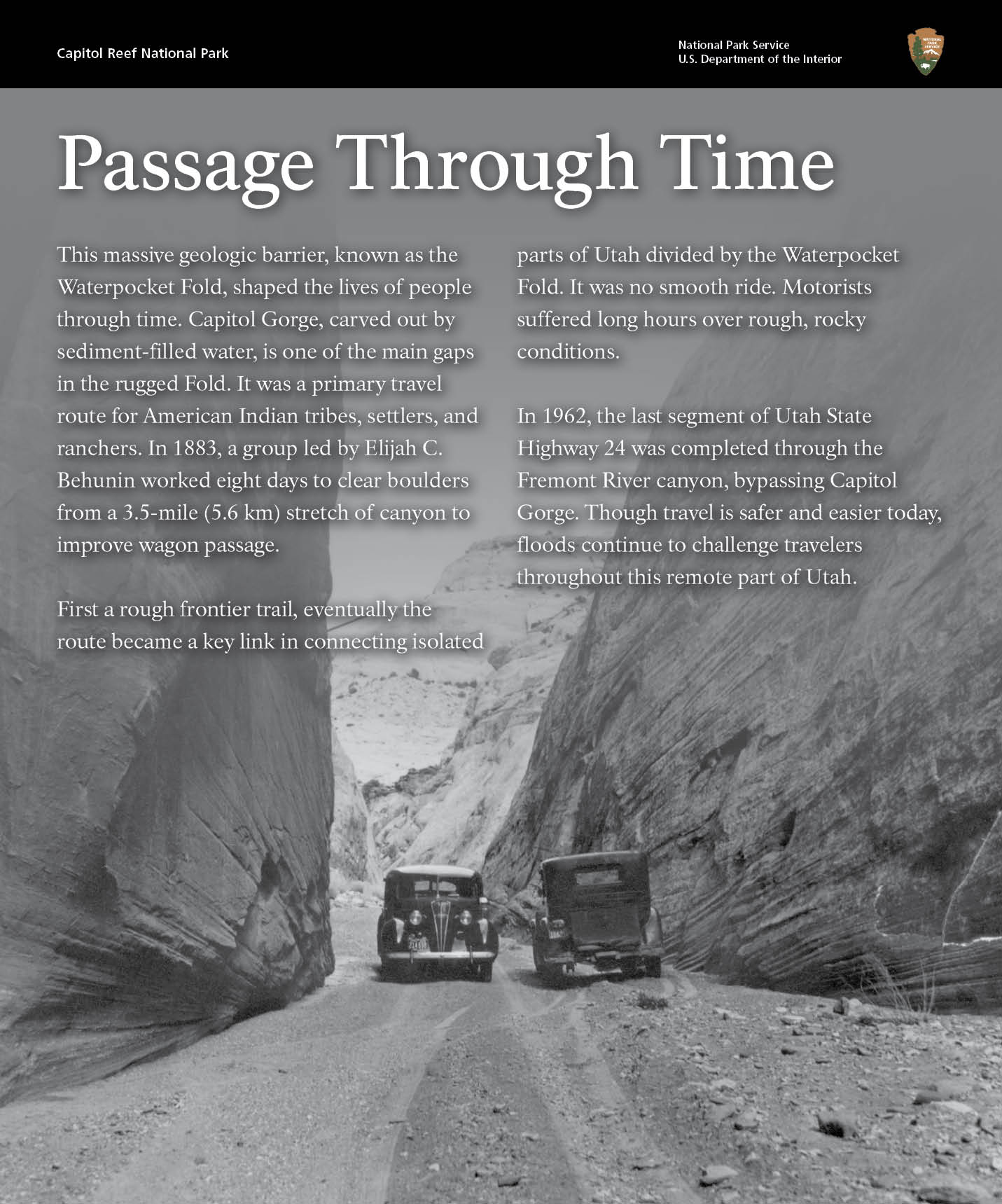
Early pioneers spent untold numbers of back-breaking hours removing boulders from this canyon to ease wagon travel. It’s a good reminder of how insanely difficult it was to settle Utah, and the incredible obstacles that early settlers somehow overcame… sometimes literally.

Speaking of early settlers, one feature of this canyon is a large number of pictograms drawn on the rock walls by Native American inhabitants. Later, Mormon pioneers created their own “graffiti wall,” tagging their name and the date. Our favorite was the person who signed their name using bullets, a method of which cartoon 1920s gangsters would surely approve.

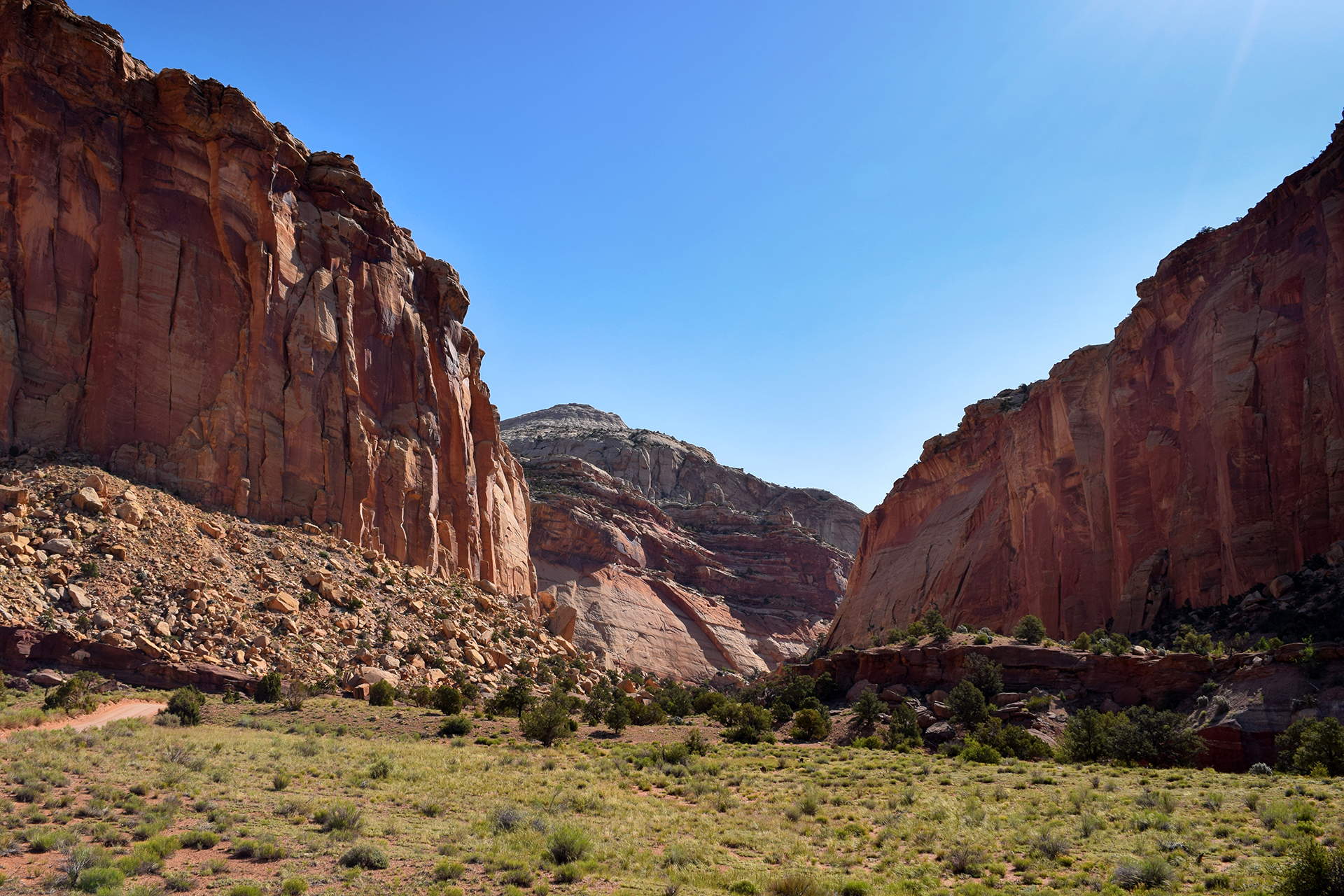
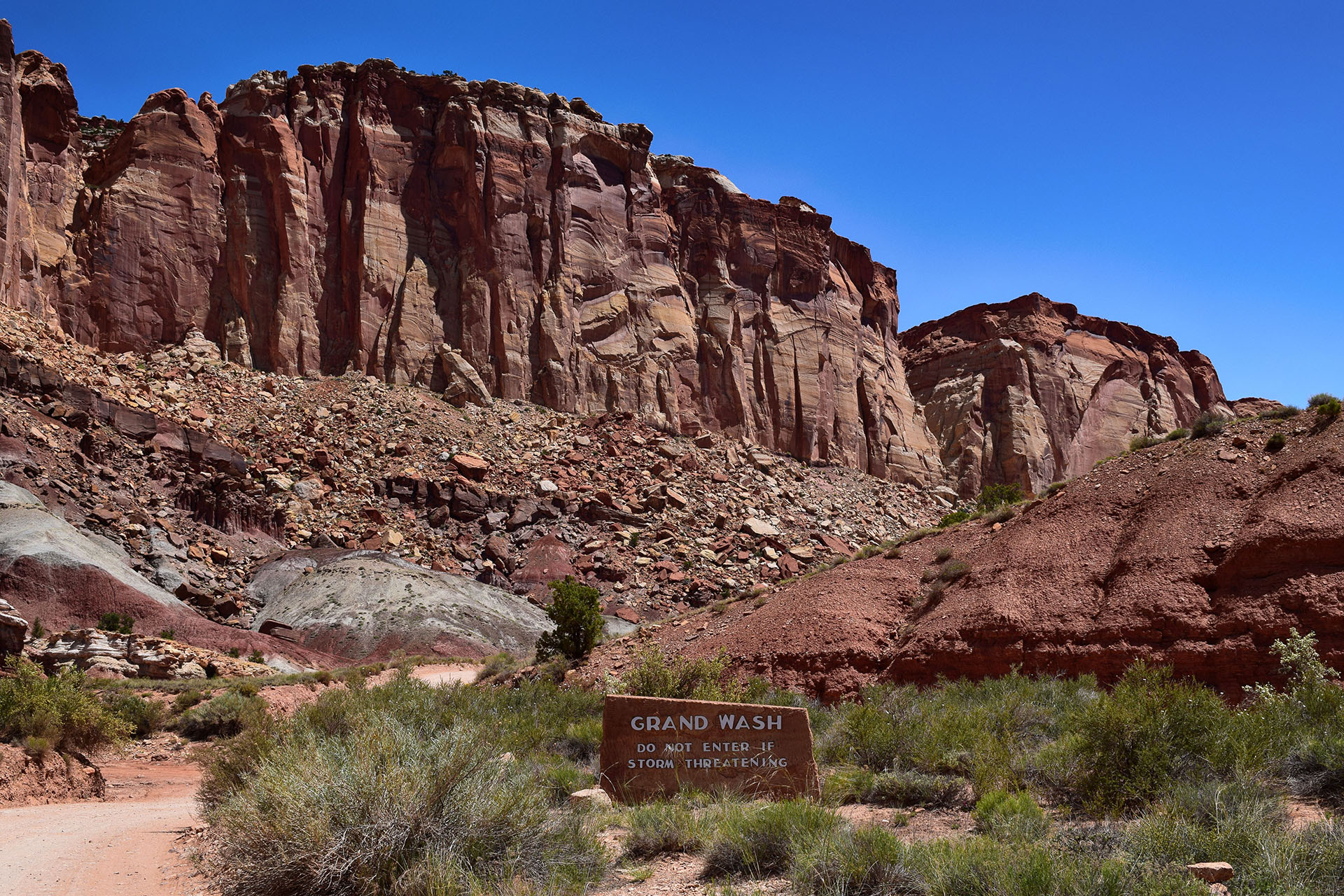
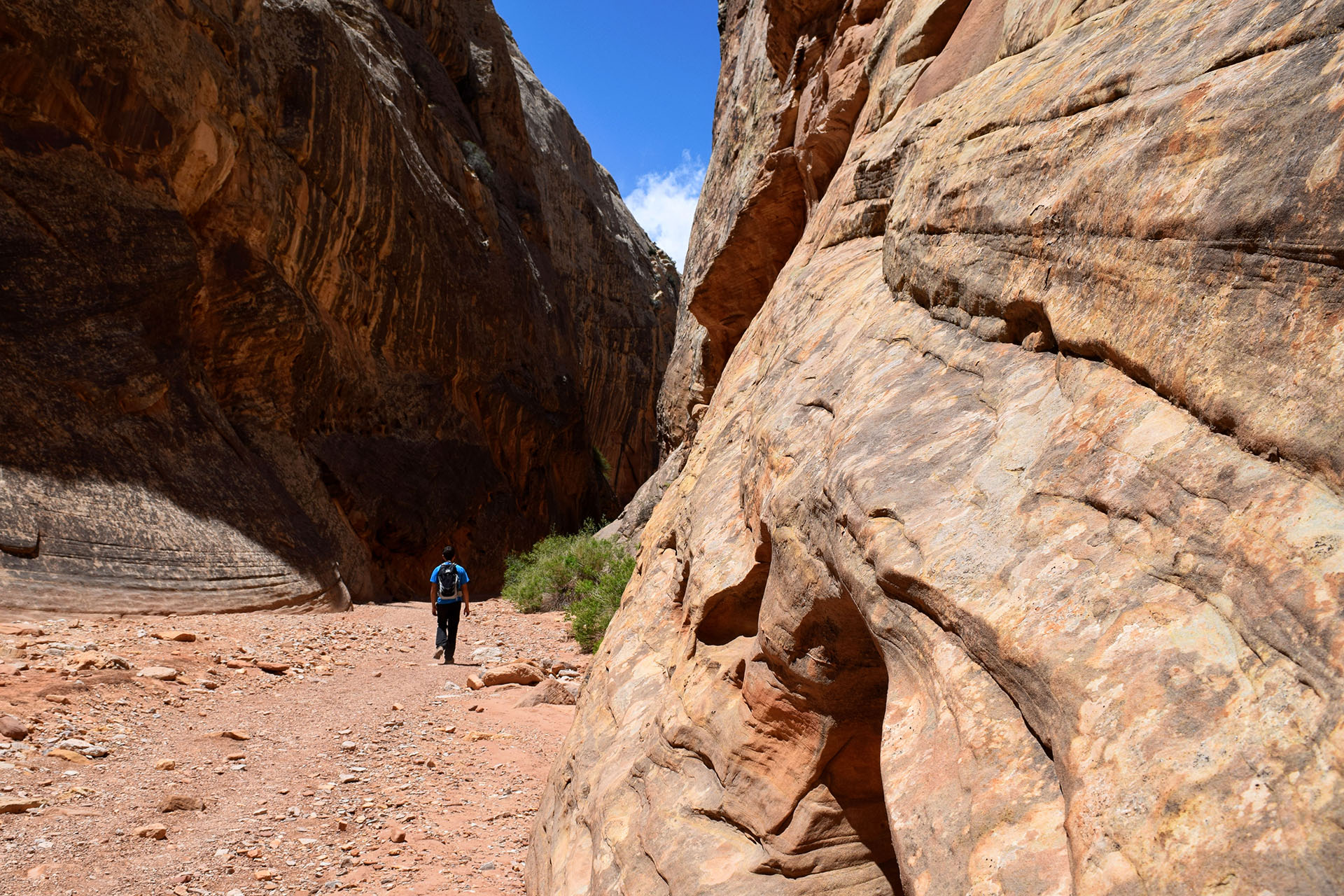
Next, we headed to the Grand Wash, a huge slot canyon carved away by rushing floods. It’s absolutely stunning in person, just these gigantic rock walls on either side with almost nobody else around.  We recommend taking a look for the people in these pictures to get a sense of how massive this canyon really was.  Few things have made us feel more awed or insignificant.

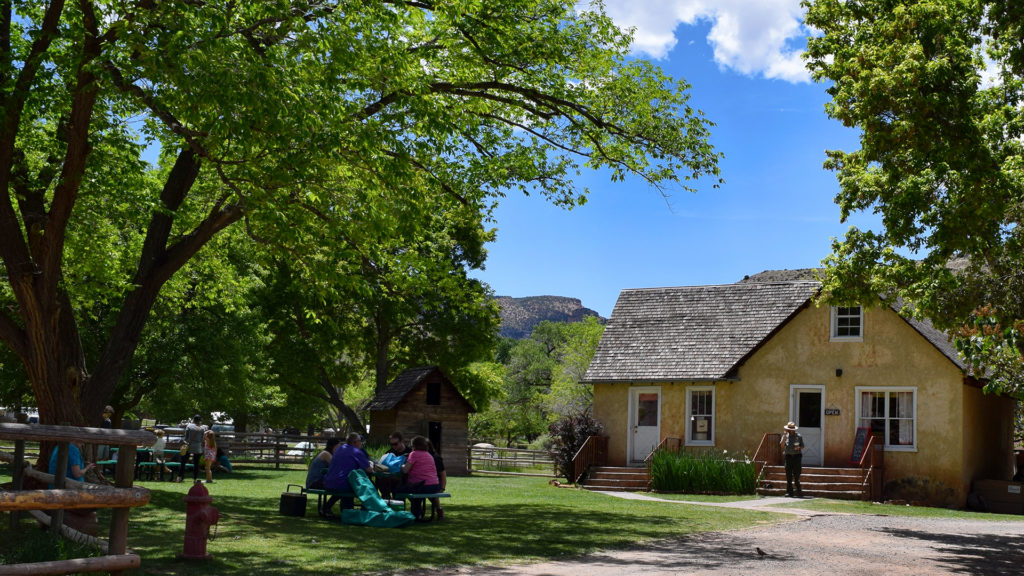
Our last stop was equally exciting, but very different.  We mentioned that the orchards in this area still bear fruit, but it doesn’t go to waste. You can pick it yourself (although we were out of season), and the National Park Service actually harvests the rest for use in baked goods, sold in an adorable little house on-site.

Pie proved to be a southern Utah obsession – we had just had some in Kanab (lackluster) Bryce Canyon (amazing) – and we are happy to report that the pie and cinnamon rolls we got here were delicious.

We saw a lot of great stuff on our road trip, but seriously: a pie stand in a national park!! Life just doesn’t get any better than that.

Roadtrip Time Travel

Roadtrip Status

We’ve reached the end of our roadtrip!  We’re settling down in Denver, but we’re going to keep making blog posts and posting our favorite photos from the trip, so stay tuned for more.

Follow Us On Social Media

FacebooktwitterinstagramFacebooktwitterinstagram

Latest Posts

0

Week 48: Bryce Canyon National Park

We stayed for a while (for us) in Kanab, Utah – visiting the Grand Canyon and Zion National Park – but eventually, it was time to move on.  Our next destination was Bryce Canyon National Park.  It was only about 80 miles away, but it felt like another world.

Hold the Door

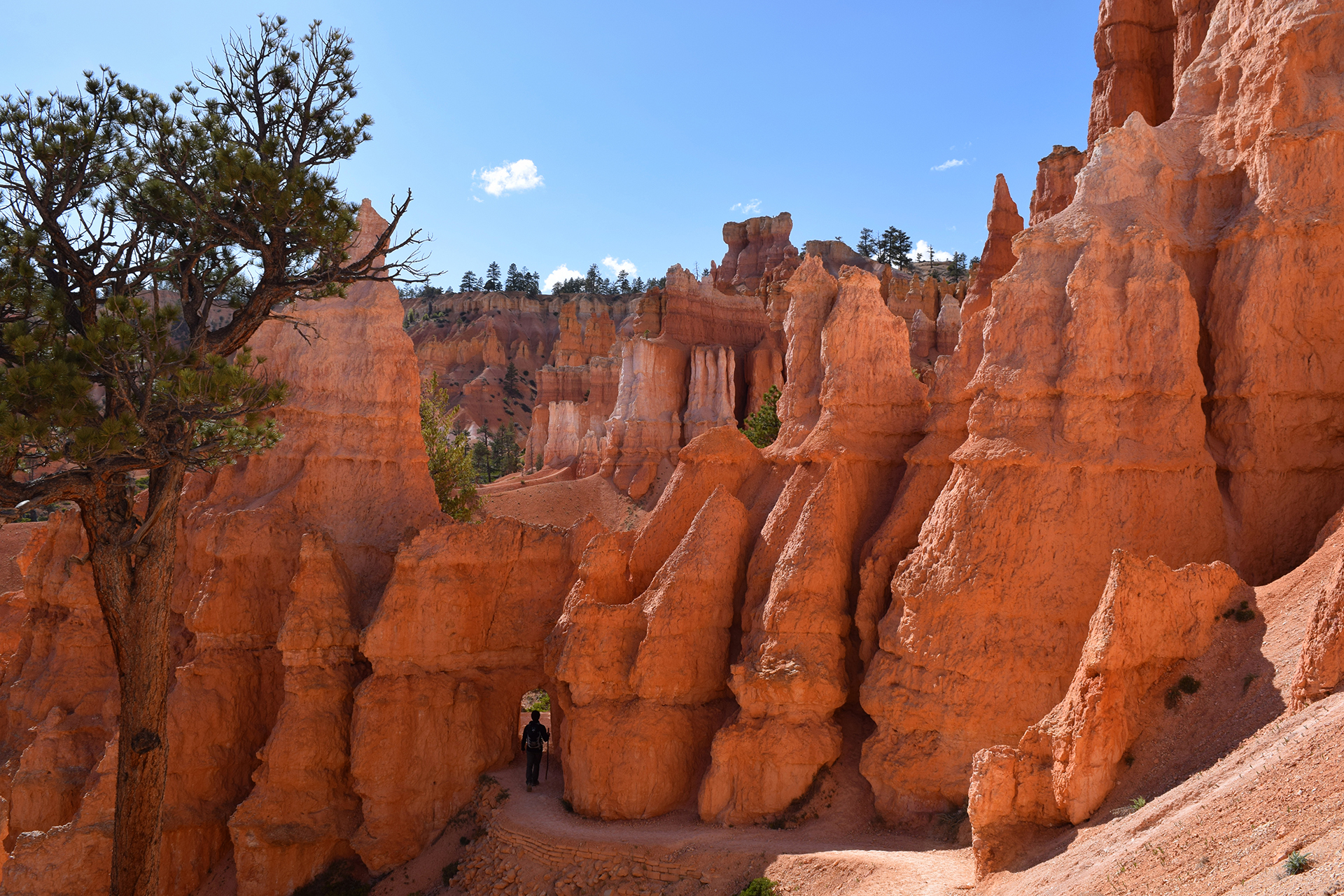
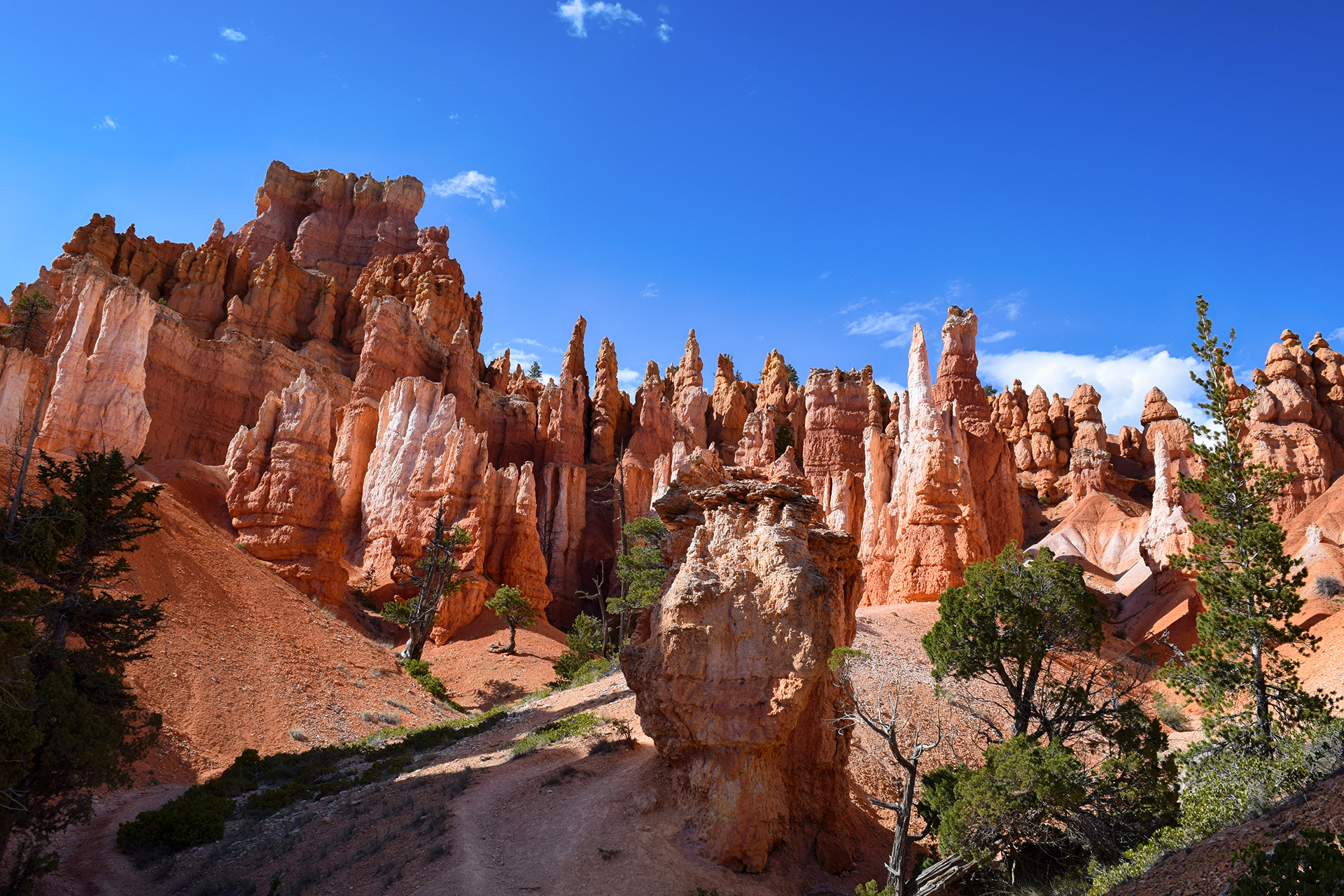
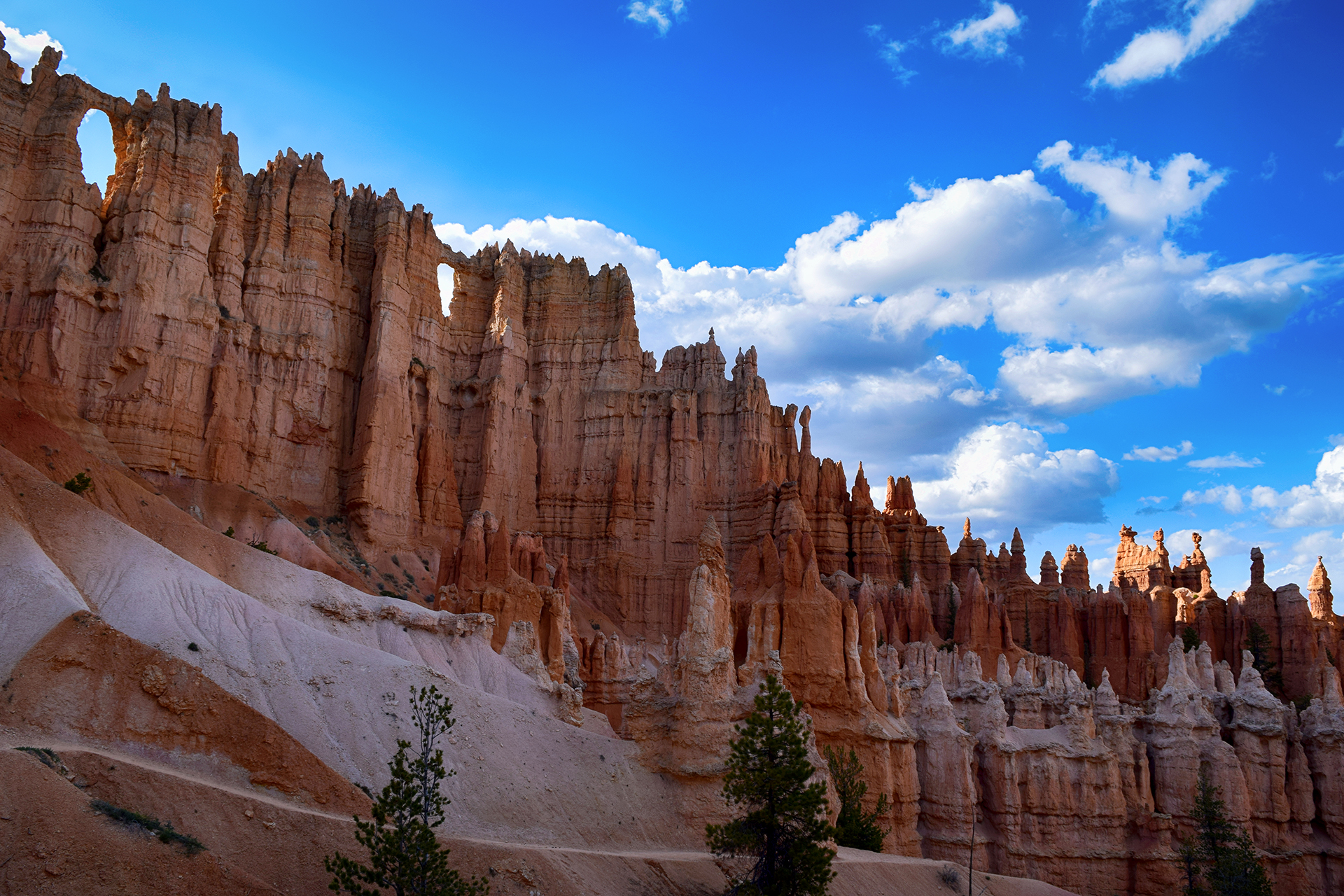
Bryce Canyon National Park really is otherworldly, and it was one of our top-3 favorite places from the entire trip.  It has some really unusual geology – Bryce Canyon sits at the top of Utah’s “Grand Staircase” of brightly layered rock formations (described in our Zion post).  The rock at Bryce is a beautiful pinkish-orange color, and it is very soft, which causes it to weather in a unique way.  Essentially, the region’s wild temperature swings cause overnight snows that melt during the day, cutting away a tiny bit of rock each time.

The end result is an eroded rock pillar, narrow and very tall, called a hoodoo (although we usually called them hodors).  The astonishing thing is that they form in massive formations as entire sections of mountain are cut away, creating row upon row of pillars.  These formations are often mind-bendingly uniform, like soldiers standing at attention.

They are especially pretty when a formation is banded with rock layers.

Although hoodoos can be found in many places in the desert, Bryce Canyon has more hoodoos than anywhere else in the world.  In addition, the formation process results in the mountain being carved out into a curved shape, like an amphitheater.  The most famous of these is Bryce Amphitheater, where the view from the rim is as cool as the other side of the pillow.

Walkie Talking

Many people just view Bryce Amphitheater and the short scenic drive, but the entire area is amazing.  We actually overheard a young man in a gigantic pick-up truck bragging that he was going to see the entire national park in “under twenty minutes.”  To each their own – *coughdbagcough* – but personally, we were head over heels for hoodoos, so we took a different approach, hiking everywhere and trying to see everything.

Bryce Canyon is relatively small, so unlike Zion, we were able to do every major hike in just a few days.  It is also much, much less crowded than Zion, and venturing down the trails even a quarter-mile often left us in complete solitude.  This was national park heaven, and we hiked in quiet amazement for miles past hundreds of fantastic rock formations – not just hoodoos, but rock curtain walls, windows and archways, even something that looked like a sinking ship.

Some of the hikes were tough, but we were basically mountain goats at this point.  In fact, the night we got in, we planned to do one short, 3 mile hike, starting around 5:30 p.m. (the best lighting for photos at Bryce is at dawn and dusk).  Once we started, though, we couldn’t bear to stop, and we decided to tack on another 5 miles as the sun began to set.

One the one hand, it might not have been the smartest idea to hike 8 miles at sunset in a place known for its freezing temperatures at night.  But on the other hand… hoodoos.

Game Changers

The next day, we hiked another 8 miles, this time through the area known as Fairyland.  There were a lot of cool sights, but unfortunately Tinkerbell was nowhere to be found.  We did have an amusing encounter at the end, however, when Jake spotted a woman with what looked like a large iced coffee and wandered over to ask her where she got it.

“Oh, this isn’t coffee, it’s just soda,” she said, and told us where to find the store.  Then, she leaned closer and whispered conspiratorially, “but the soda does have caffeine in it.  It’s a game changer!”

Oh, right.  We were in Utah, and many Mormons consider caffeine to be forbidden.

“We’ll just keep it between us,” Jake said, and winked.

And then we left to get some god-damned caffeine.

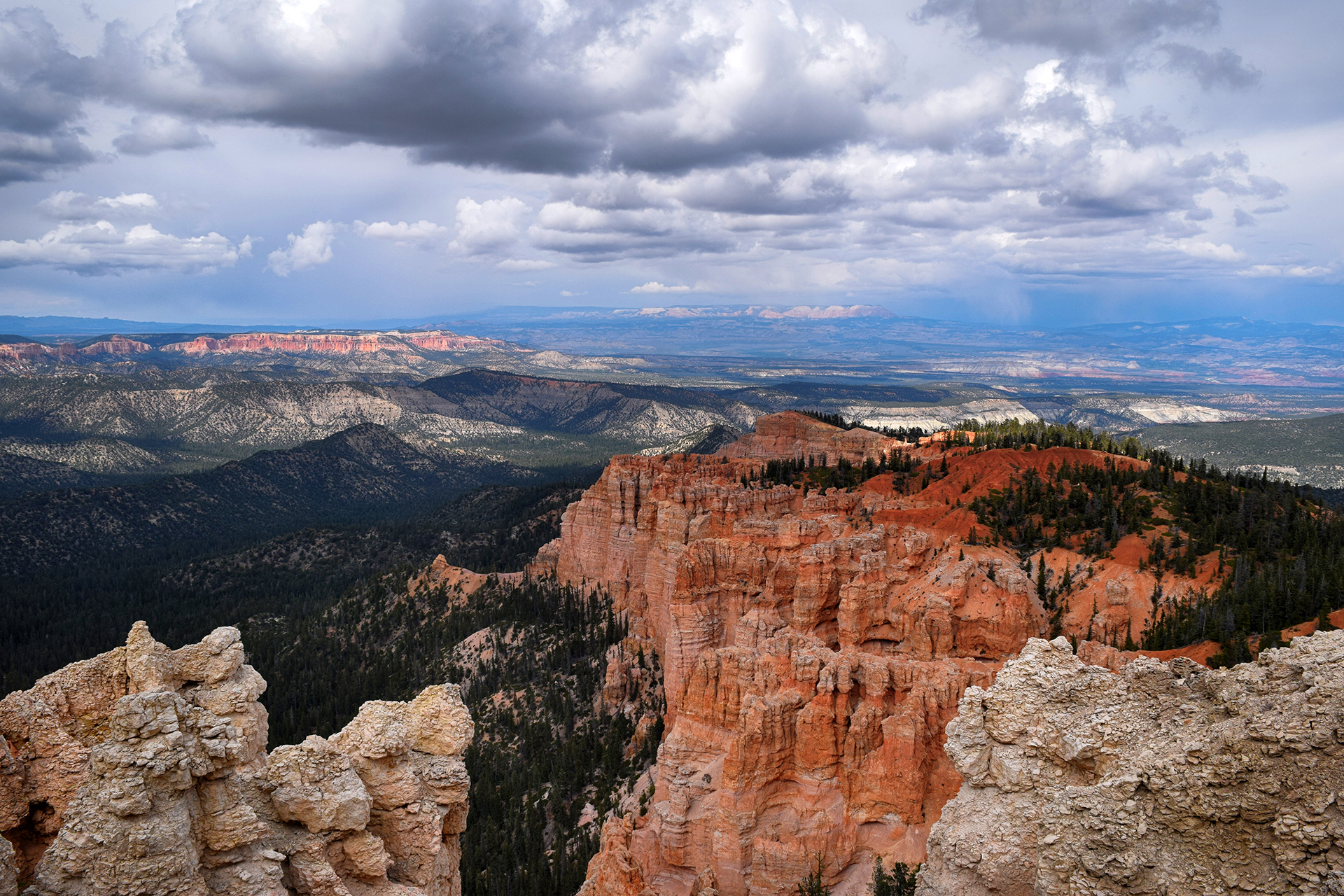
Religious taboos aside, friends, if you ever come to Bryce Canyon (and you should try), please, please, please try a hike down among the hoodoos.  The views from the top are great, but once you get down to the hoodoos’ level, you realize how incredible they really are.

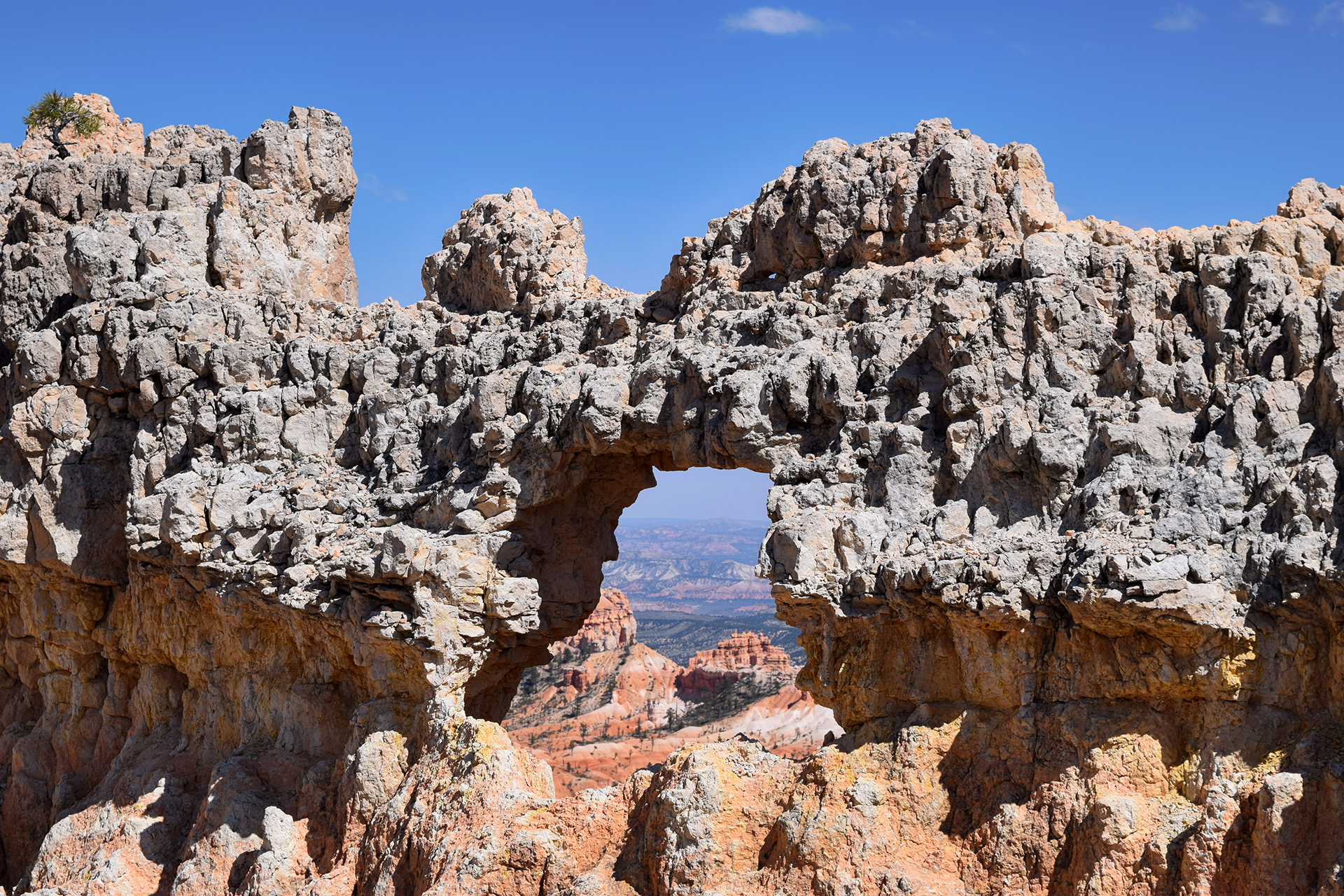
Plus, you never know when you might encounter two other tourists attempting to cram themselves into a single rock window for a photo.

You might even get to take a picture of them while pretending not to notice.

Gnarls Barkley

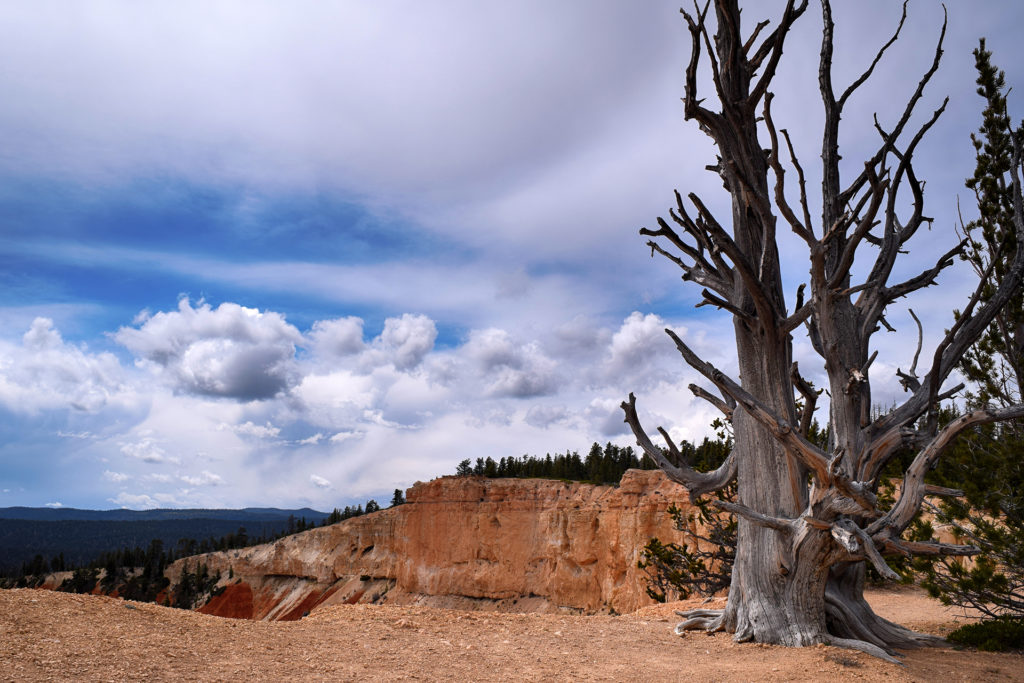
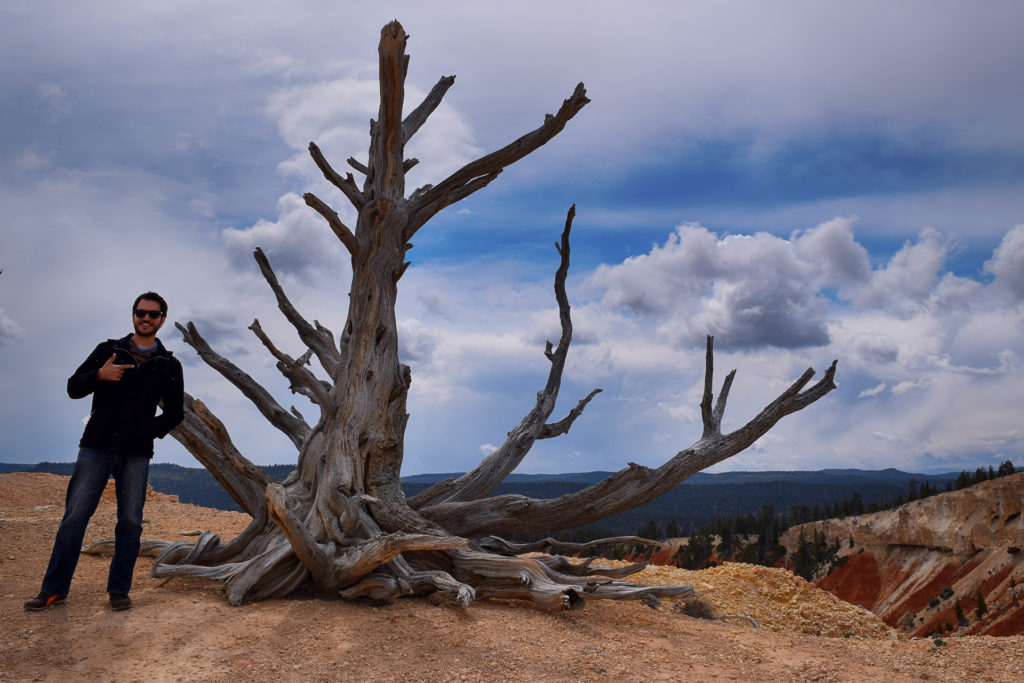
Aside from the hoodoos and the generally beautiful landscape, there is one more awesome thing about Bryce Canyon.  It contains a few bristlecone pines, one of the world’s longest-lived trees.  They are quite rare, and we attempted to see some (without success) at Great Basin National Park. The only place we actually saw any bristlecone pines was at Bryce.  While the Great Basin pines can be up to 5,000 years old, these are only (!) about 1,800 years old.

Stunted, twisted, and with weird bottle-brush needles, they are… not the world’s best-looking tree.  To be fair, we’d all probably look a bit worse for wear if we were nearing the end of our second millennia.

Notes from Bryce Canyon City

We didn’t realize it at first, but Bryce Canyon is very high – the elevation is over 7,500 feet.  The days were sunny and warm, but true to form, it snowed every night.  After spending an entire winter above freezing, we had to get out our winter hat and gloves.  In late May.

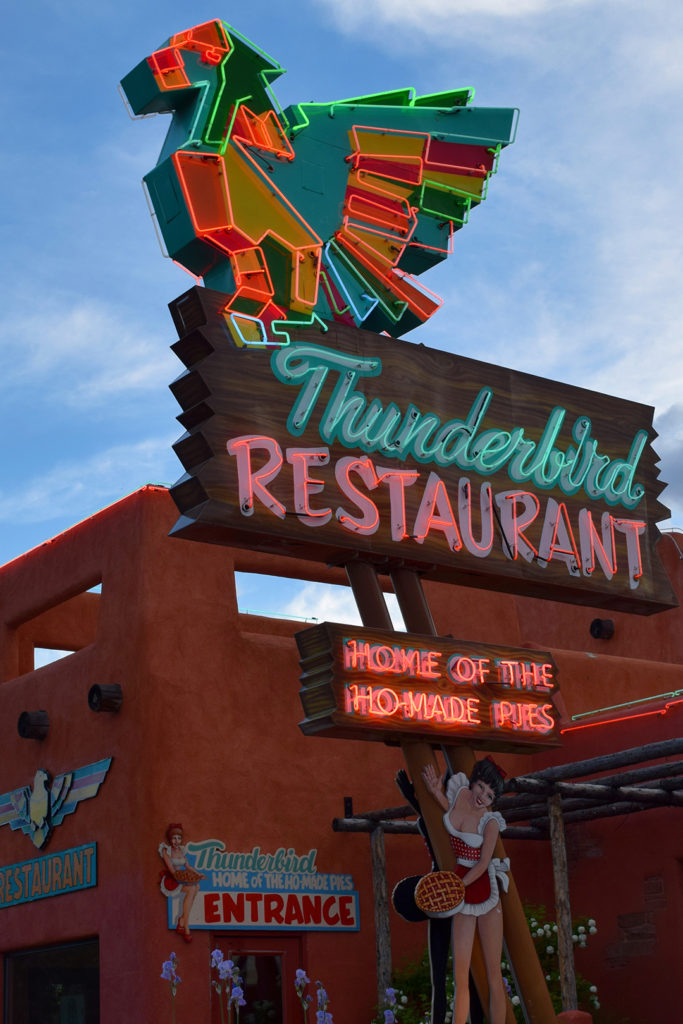
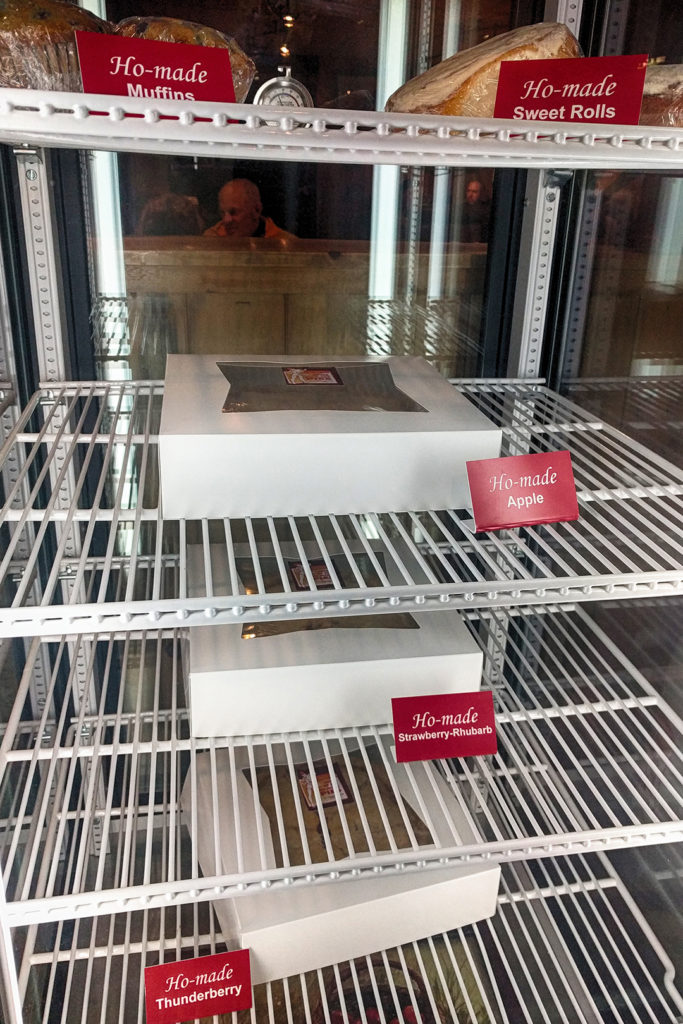
The owners of the combination campground / gas station we were staying at also own a restaurant, and based on internet reviews, we stopped for some pie.  At first, we were distracted by the fact that every worker at the busy restaurant appeared to be directly related.  Then we tried the pies, and we have to say: they really were incredible!  Some of the best we’ve ever had.  They really put the ho-made pies at the Thunderbird to shame.

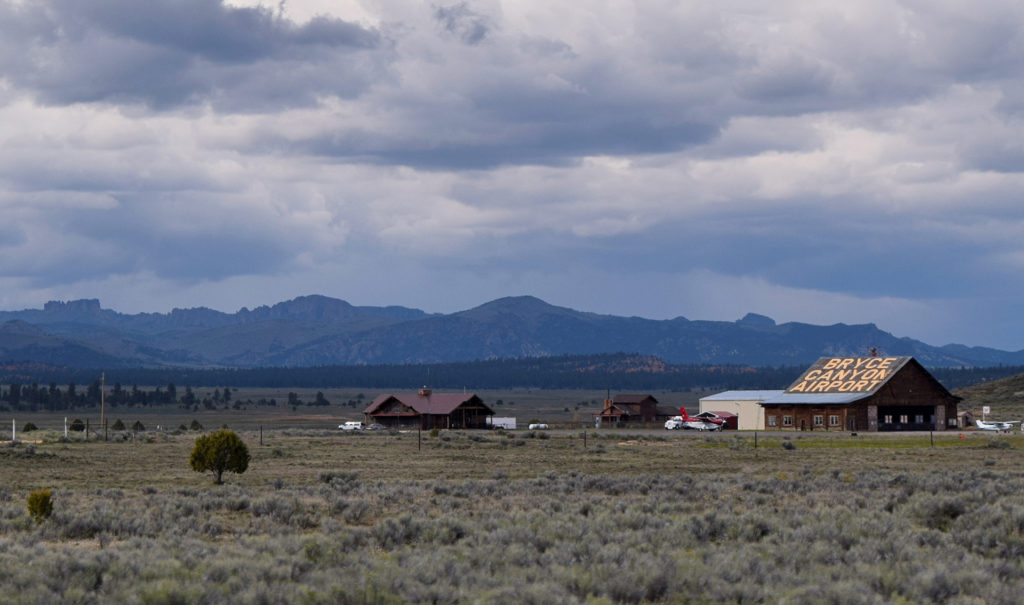
As a final note, the town of Bryce Canyon City itself was only incorporated in 2007, and the population is only 198 people, making it possibly the smallest town we ever stayed in.

But it does have an airport…

Roadtrip Status

Roadtrip Time Travel

Still alive?  Check.

Where are you now?  Upstate New York.

Next location?  Heading westward one last time, towards Colorado.  Time to have jobs again!

Follow Us On Social Media

FacebooktwitterinstagramFacebooktwitterinstagram

Latest Posts

0

Week 47.2: Zion National Park

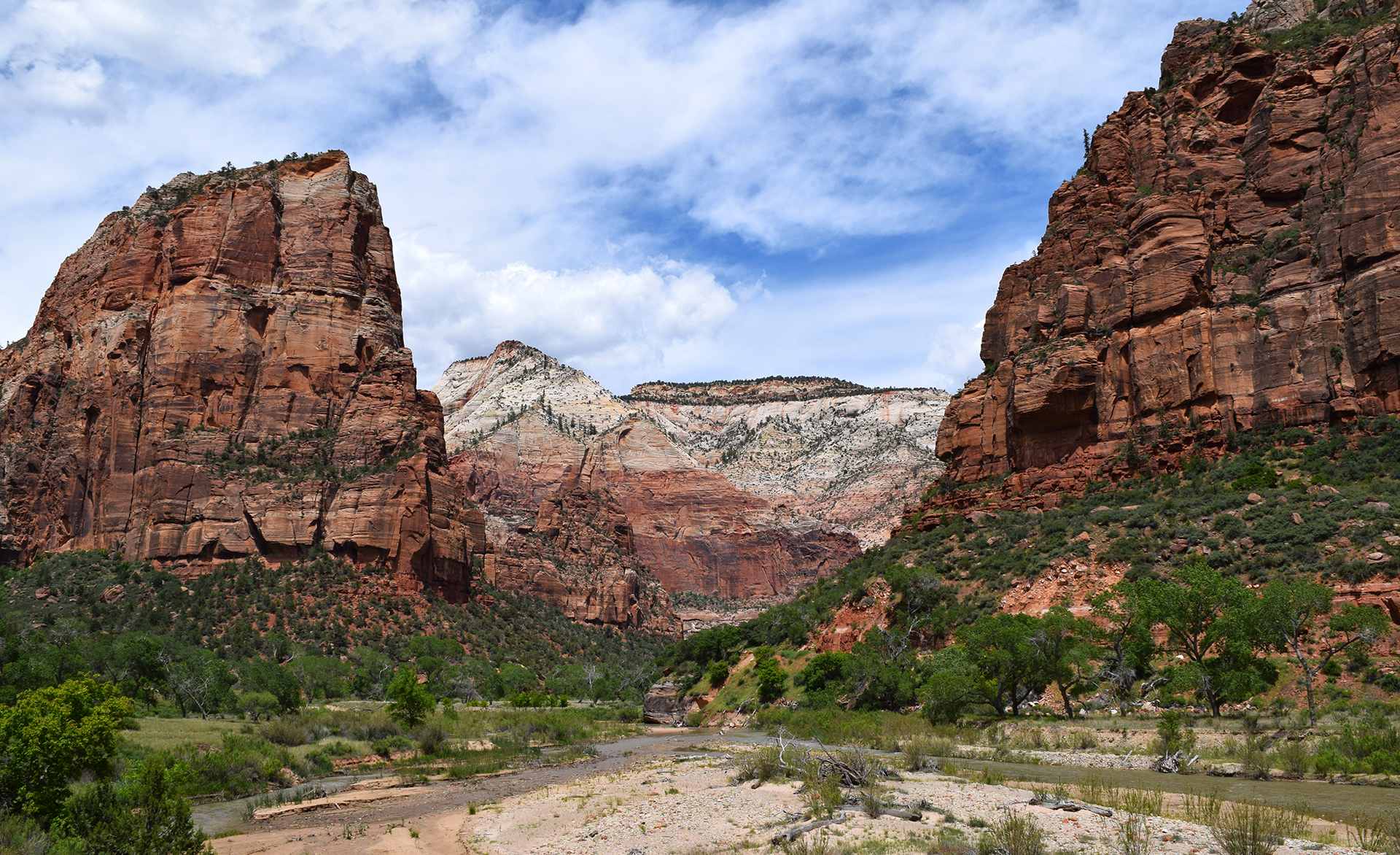
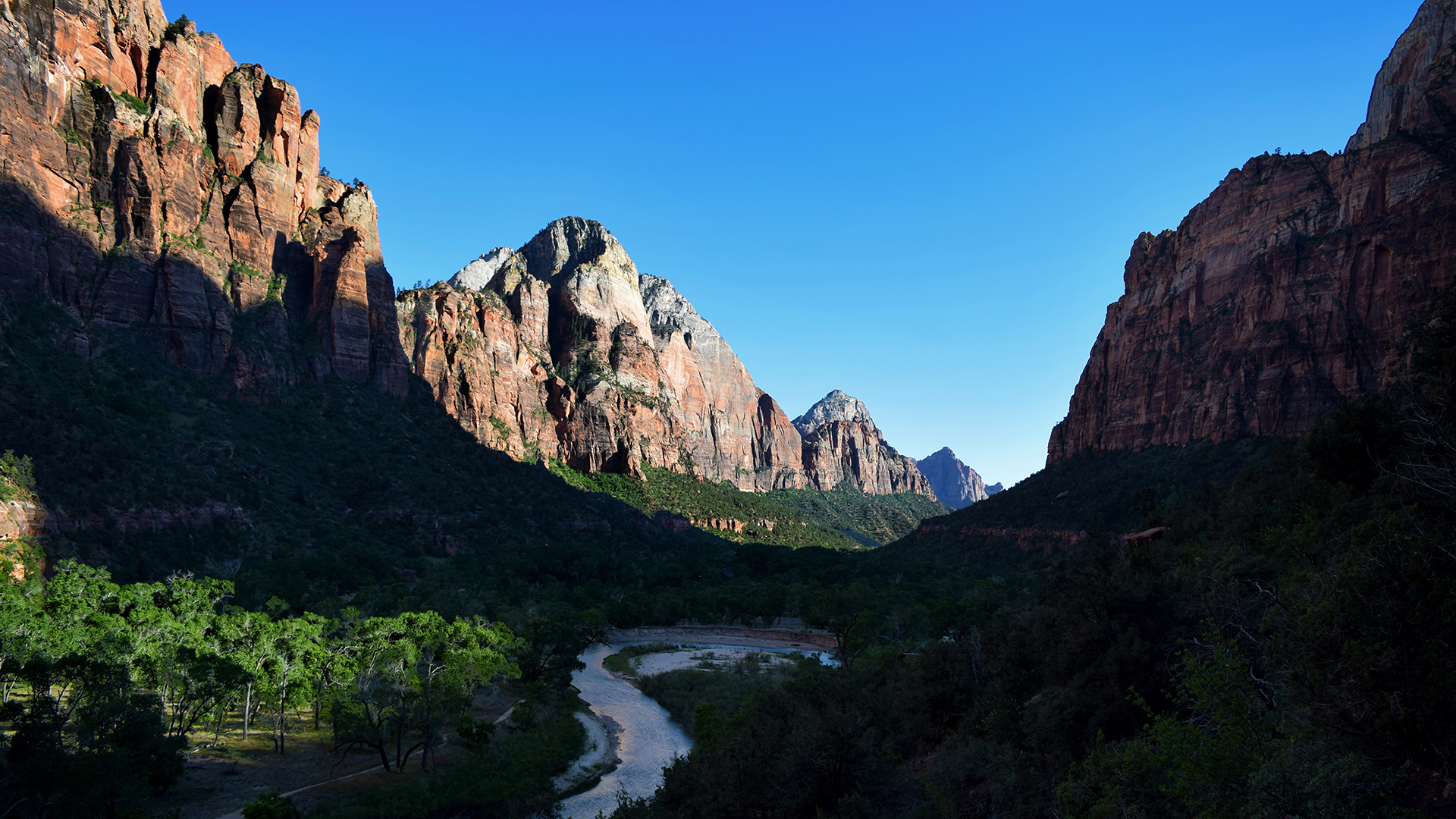
Zion National Park is often rated as one of the most beautiful national parks in the country, and with good reason.  Zion is a canyon, or series of canyons, but unlike at the Grand Canyon, you enter from the valley floor.  The valley is lush with greenery, since the Virgin River that cut it still flows through, and if you stand in just the right places, the mountains curve away into the distance in the most breathtaking way.

Our favorite part of Zion were the many beautiful cliffs.  Incredibly tall and sheer, each showcases a stunning gradient of fantastically varied colors.  Zion sits in the middle of what is known as the “Grand Staircase,” a vast rock formation (recently protected as a national monument) which stretches across Utah and Arizona from Bryce Canyon to the Grand Canyon.  The “steps” to the staircase are rock layers – the oldest (bottom-most) rocks at Zion, a dusty vermillion red, are the youngest (top-most) rocks at the Grand Canyon.

As you look up towards the top of the canyon walls, you see ever-changing bands of color that terminate in a beautiful white stone.  In the tallest places, we could even see an eye-popping yellow.  On the top of the Grand Staircase, at Bryce Canyon (coming up next), these white and yellow colors are at the bottom of the deepest cliffs.

Stop – Transit Time

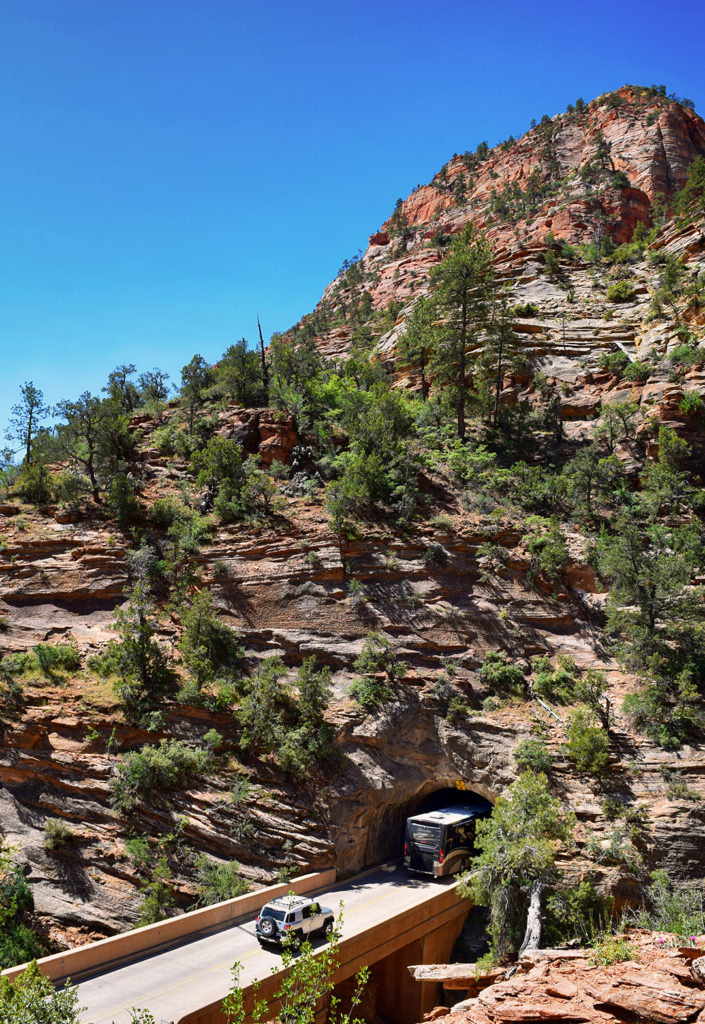
We visited Zion from Kanab, which is a short but not easy drive.  The route requires traveling through the park’s east entrance, an old, mile-long tunnel blasted by the CCC.  The tunnel is quite low and narrow, and it has to be closed to one-way traffic every time an RV or bus goes through, because they only fit if they can drive in the exact center of the lanes.

We were in our car, so we fit fine, but we often had to wait for an RV to pass through.  In retrospect, we wish we had stayed in the town of Springdale, where you can walk directly into Zion. Once you’re in the park, it’s pretty easy to get around – like many heavily-visited national parks, Zion has a free shuttle system to take you to the main sights.  Unusually, use of the shuttle is actually mandatory from spring to fall.  The road into the canyon is closed, and you park on the outskirts and take the shuttle to different spots inside.

Getting around via shuttle can be a little slow, but we didn’t mind.  Zion is a delicate place, and we were happy to help preserve it. As a bonus, we really enjoyed watching the palpable horror some of our fellow Americans felt at having to use public transit.

Razor Thin Margins

There is an incredible amount to see at Zion, with overlooks all over, and it’s a hiking paradise.  We went three times and barely scratched the surface.  In particular, we never got to hike the famous Narrows or the Subway, slot canyons still being carved by the Virgin River.  We really wanted to try them, but the routes were closed.  The river essentially is the hiking (“wading”) trail, and the spring melt had left the water level and flow rates dangerously high.

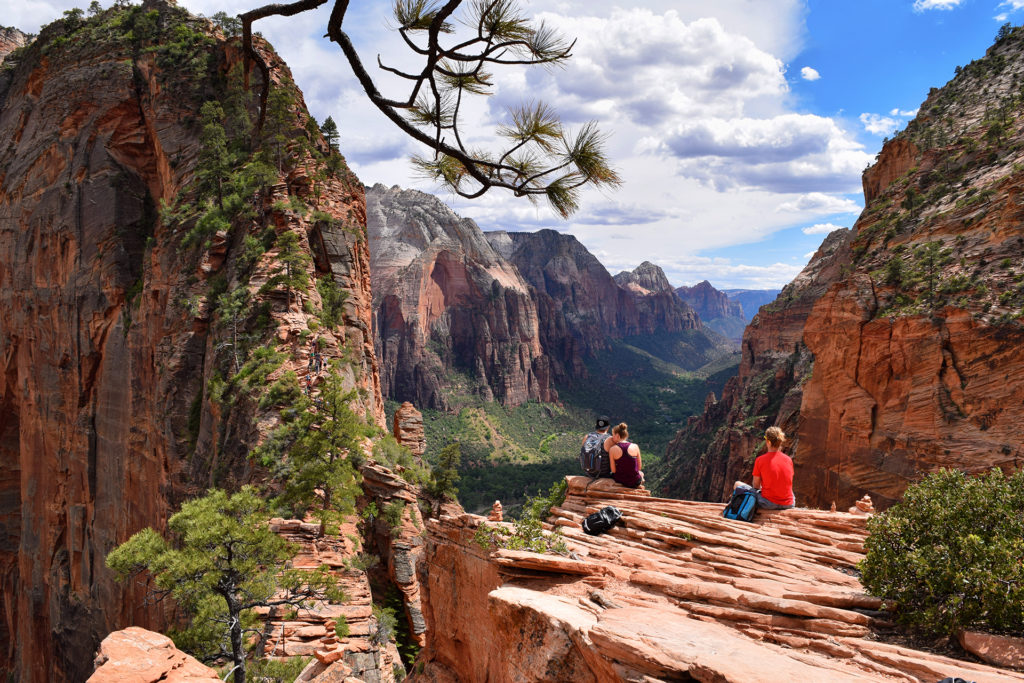
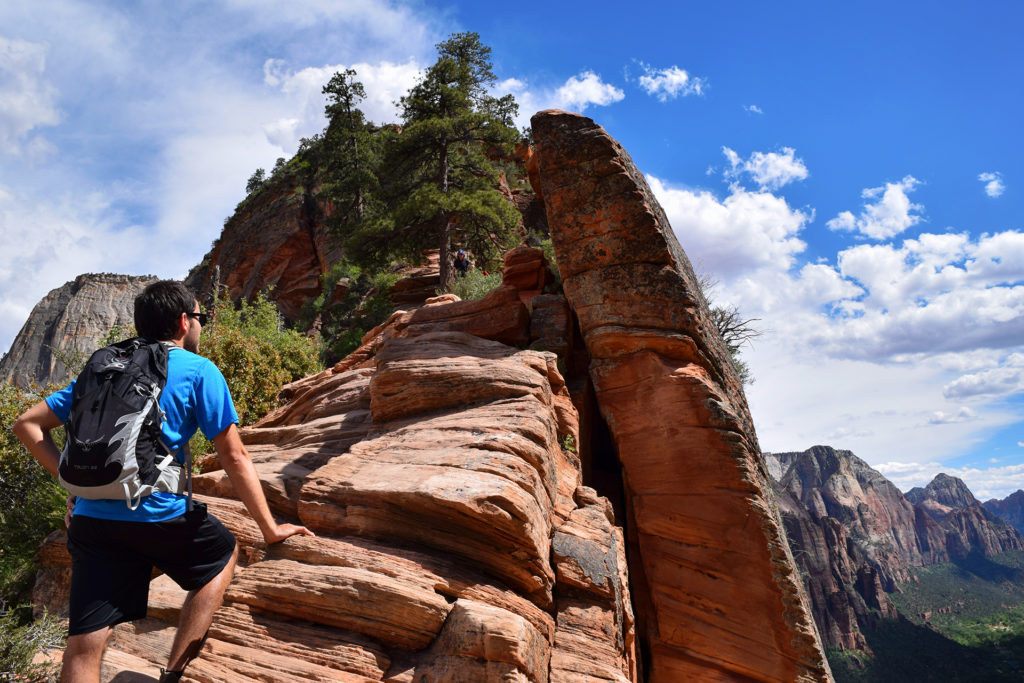
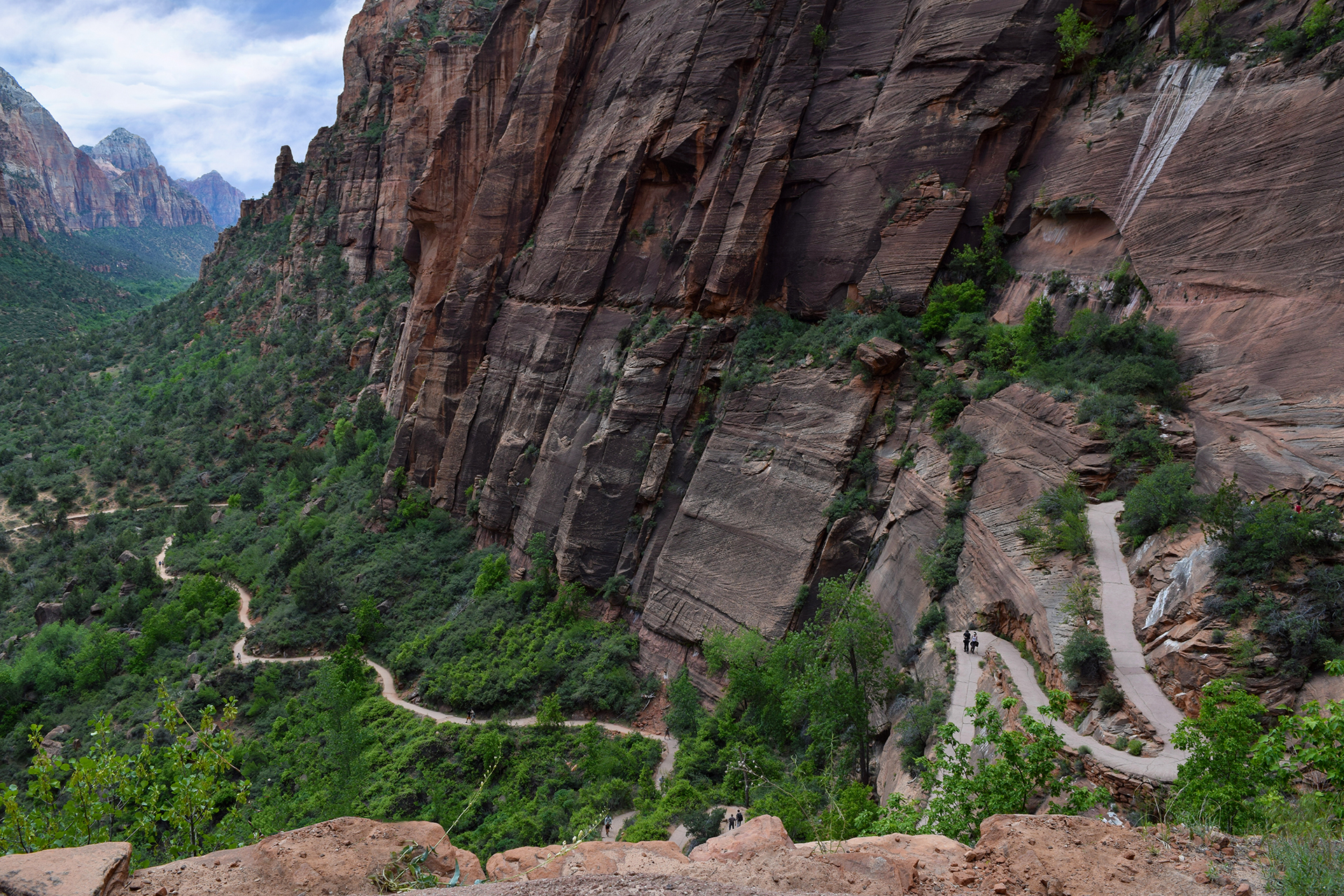
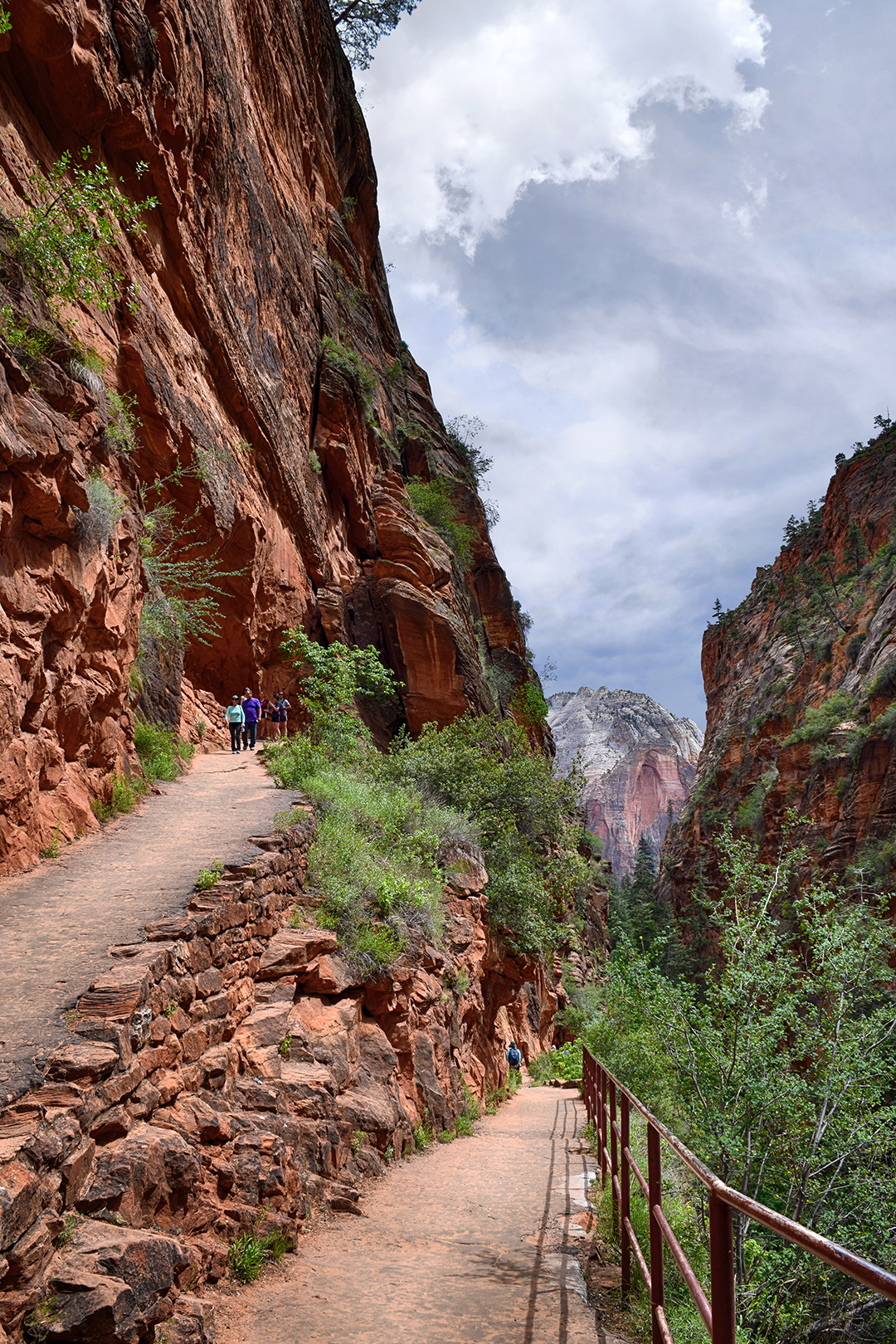
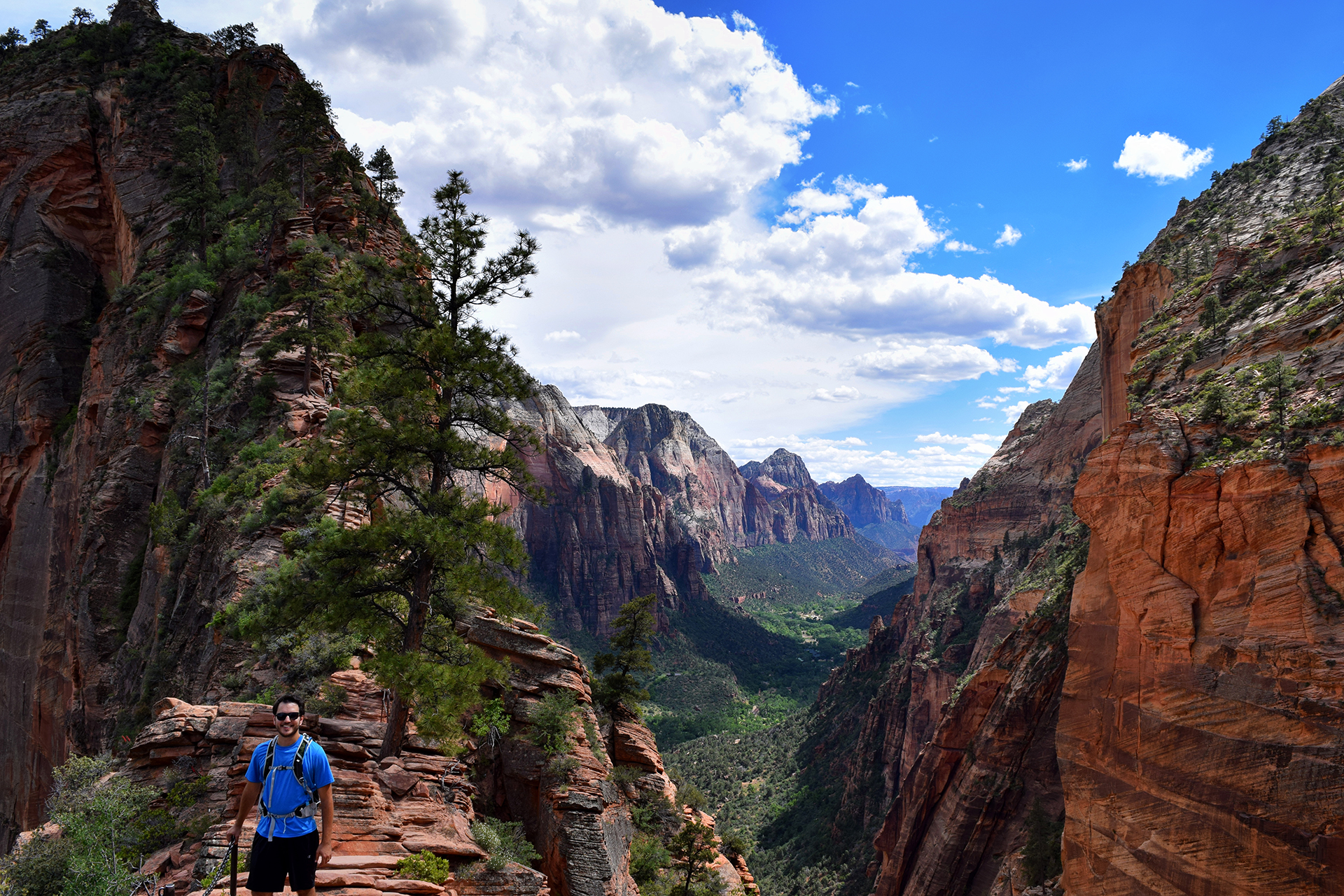
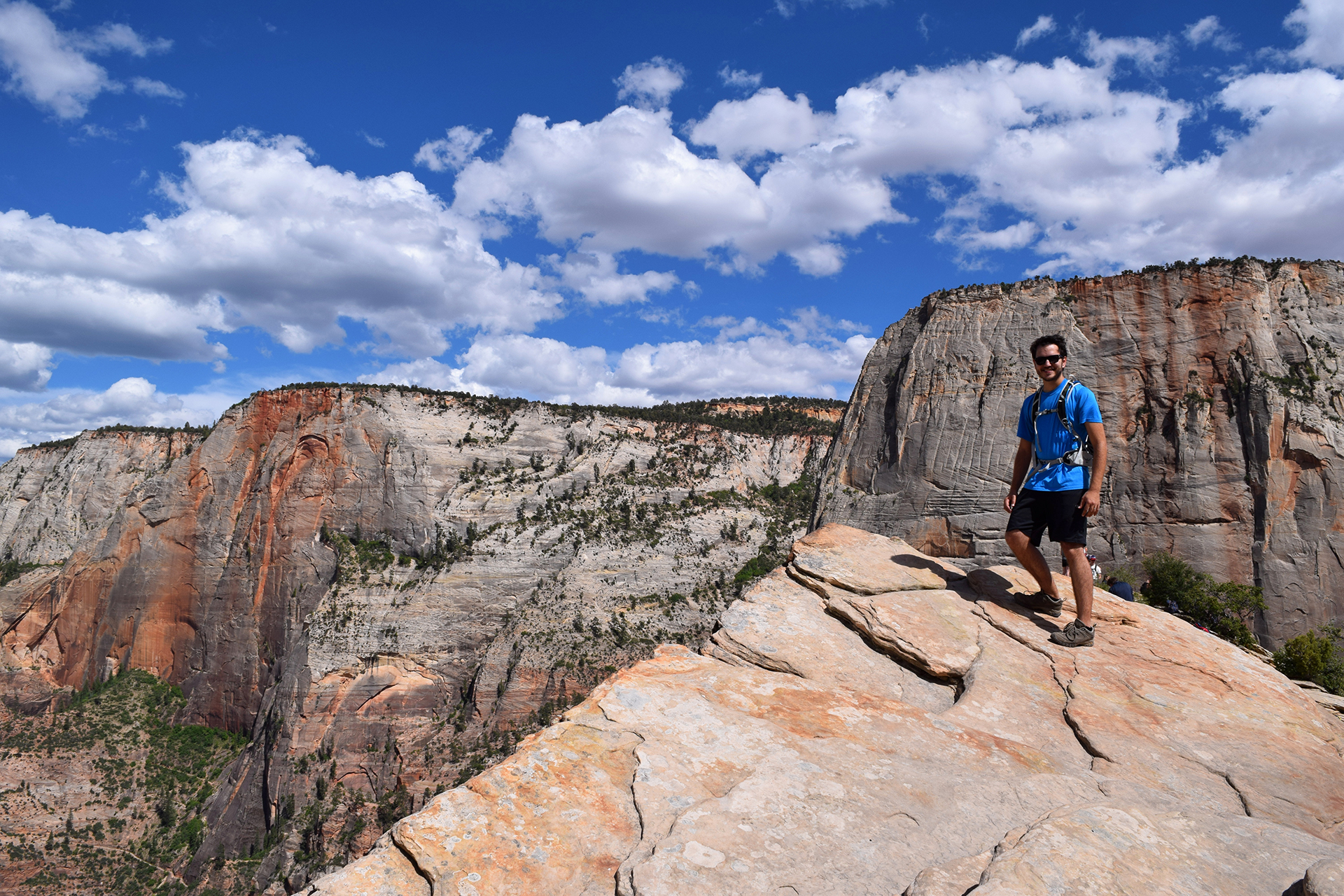
Don’t worry, we still found plenty of ways to risk life and limb.  We kicked things off with a bang by hiking the also-famous Angels Landing trail, which we knew little about before we started (familiar territory for us).  It starts with a steep, 1,000 foot climb before reaching a plateau with some nice views, and for the adventurous, you can go another half-mile to an incredible viewpoint.

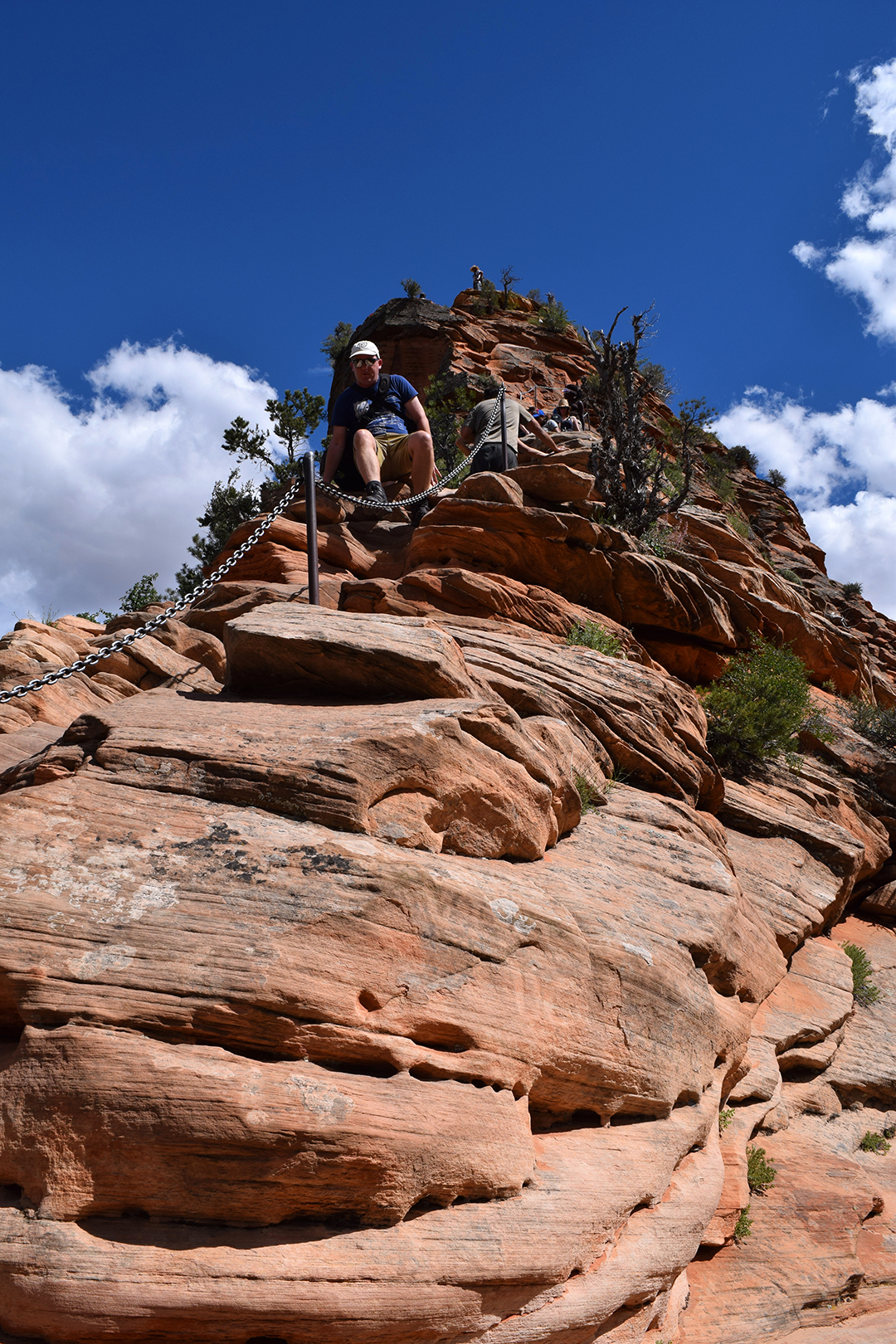
The only catch?  That last half-mile involves hiking on a knife’s edge, with the trail sometimes just a few feet wide, and 1,000+ foot cliffs on either side.  In mountain hiking terms, this is called “exposure,” as in, “you are exposed to dying.”  A single chain acts as both a guard-rail and handhold, but it’s two-way, so you constantly have to let go so people can pass.

Holy hell, that was crazy.  It turns out quite a few people have died doing the Angels Landing hike, something we were happily ignorant of before we started.  It was definitely scary – Jake has spent much of this trip working on his fear of heights, but Angels Landing was desensitization treatment in the extreme.  Even once we reached the top, which was mercifully flat, there was one last walk between cliff-edges, with the wind gusting unpredictably as it tried to push us off.

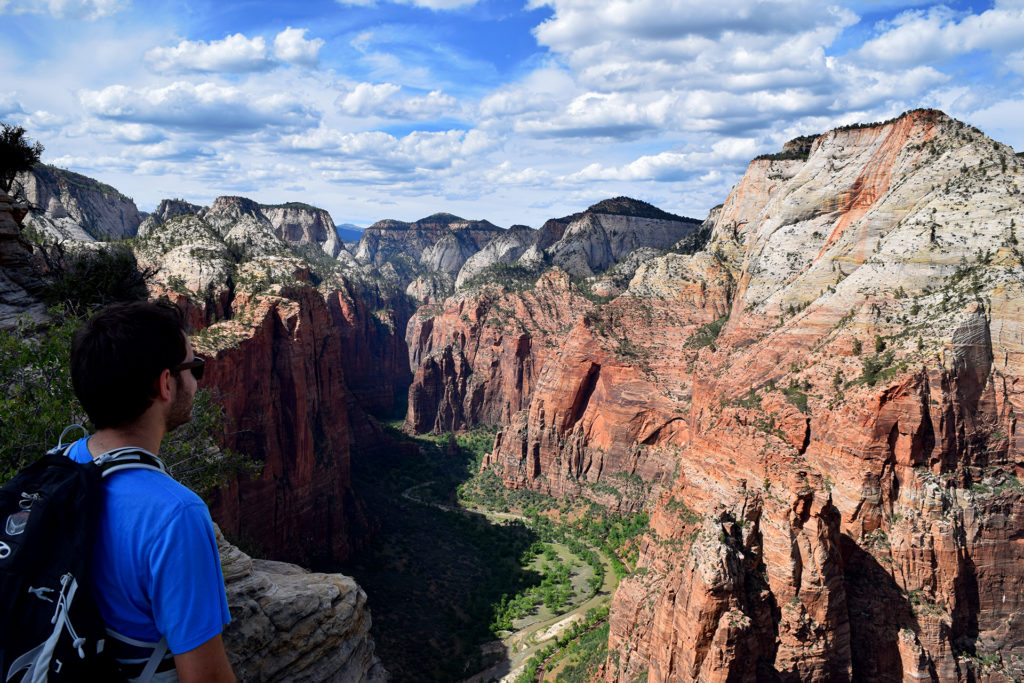
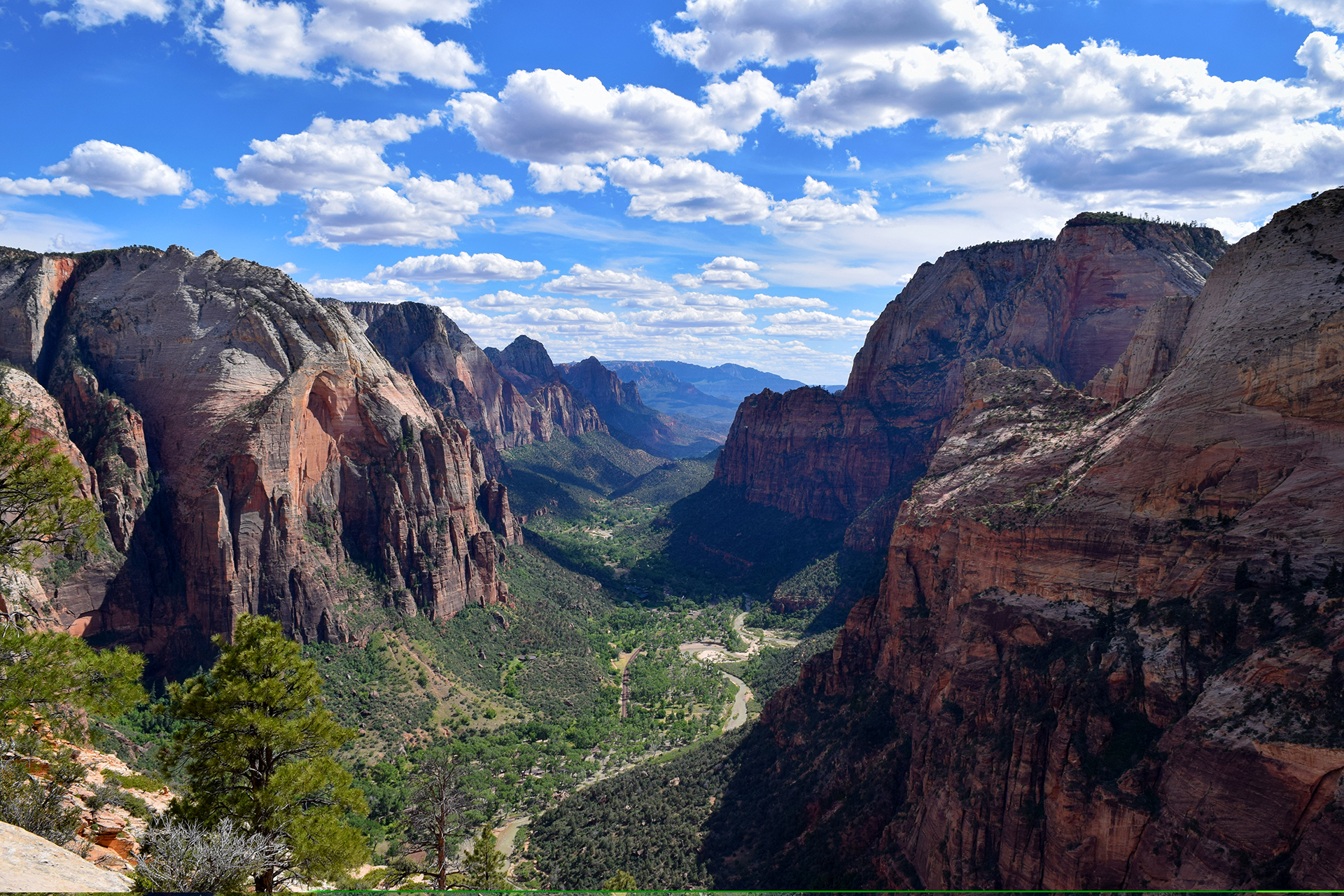
It was all tiring, and terrifying, and occasionally flat-out insane, but those views…

All worth it.

Bonus story that will make your blood boil: as we headed out into the terrifying chains portion, we passed a family with FOUR TODDLERS coming back the other way.  Like, 3-5 years old, max.  Each one was wearing, essentially, a dog harness, with the leash tied to an adult in the group.  So, points for safety, but we still wouldn’t recommend it.  The kids were clearly exhausted – this was a tough hike for us, and we were pretty much professional hikers at this point – and kept asking when their nightmare death climb would be over (paraphrasing).

Their parents just told them to stop complaining.

Taking It Down a Notch

After our Angels Landing adventure, we decided to lower our risk of death by exploring the canyon floor.  There was plenty to see, most notably the Emerald Pools, a series of waterfall-fed pools that couldn’t possibly kill us.

Except… while looking up the Angels Landing death statistics for this post (5 official, many more unofficial), we discovered that the National Parks Service lists 7 deaths for Emerald Pools, more than for Angels Landing!  The lesson: never go anywhere.

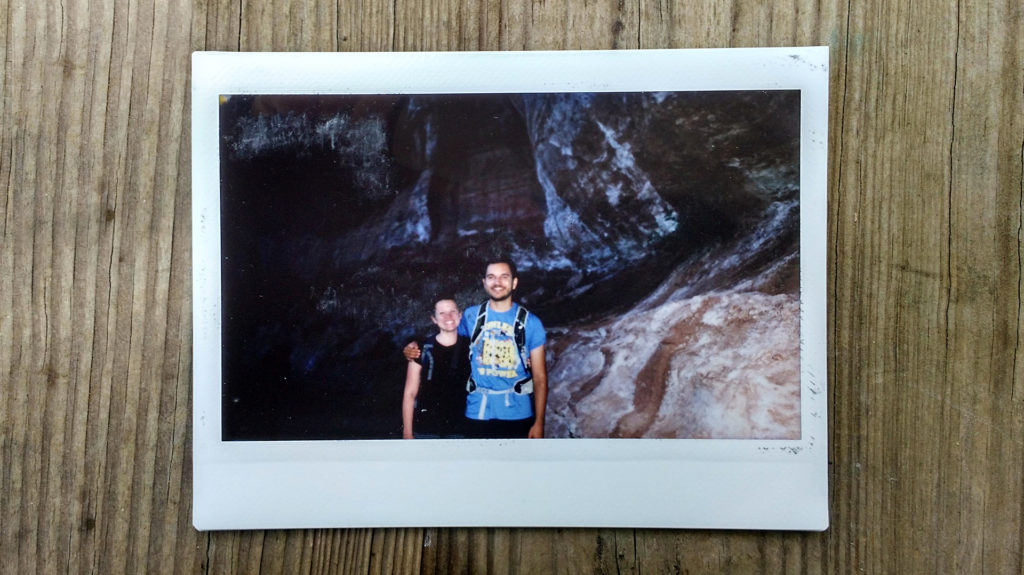
The Emerald Pools weren’t even that photogenic, which is why we aren’t featuring pictures of them here.  We did have a fun encounter, however, when a group of college kids asked us to take their pictures using a ridiculous Polaroid-style camera.  To sweeten the deal, they offered to take a Polaroid of us in return.  So we took their picture and had ours taken in return – and it turns it’s still pretty fun to get a physical picture, even if has an image quality somewhere between “prehistoric cave painting” and “mud stain.”

Up And At’em

For our final experience in Zion, we decided to try another long hike, this time climbing up the side of the canyon wall towards the rim.  It was tough, but the terrain was constantly changing, keeping us entertained.  There were valley views, different valley views, sand, switchbacks, a (sort of gross-looking) reflecting pool, and even a small slot canyon with a talus cave!

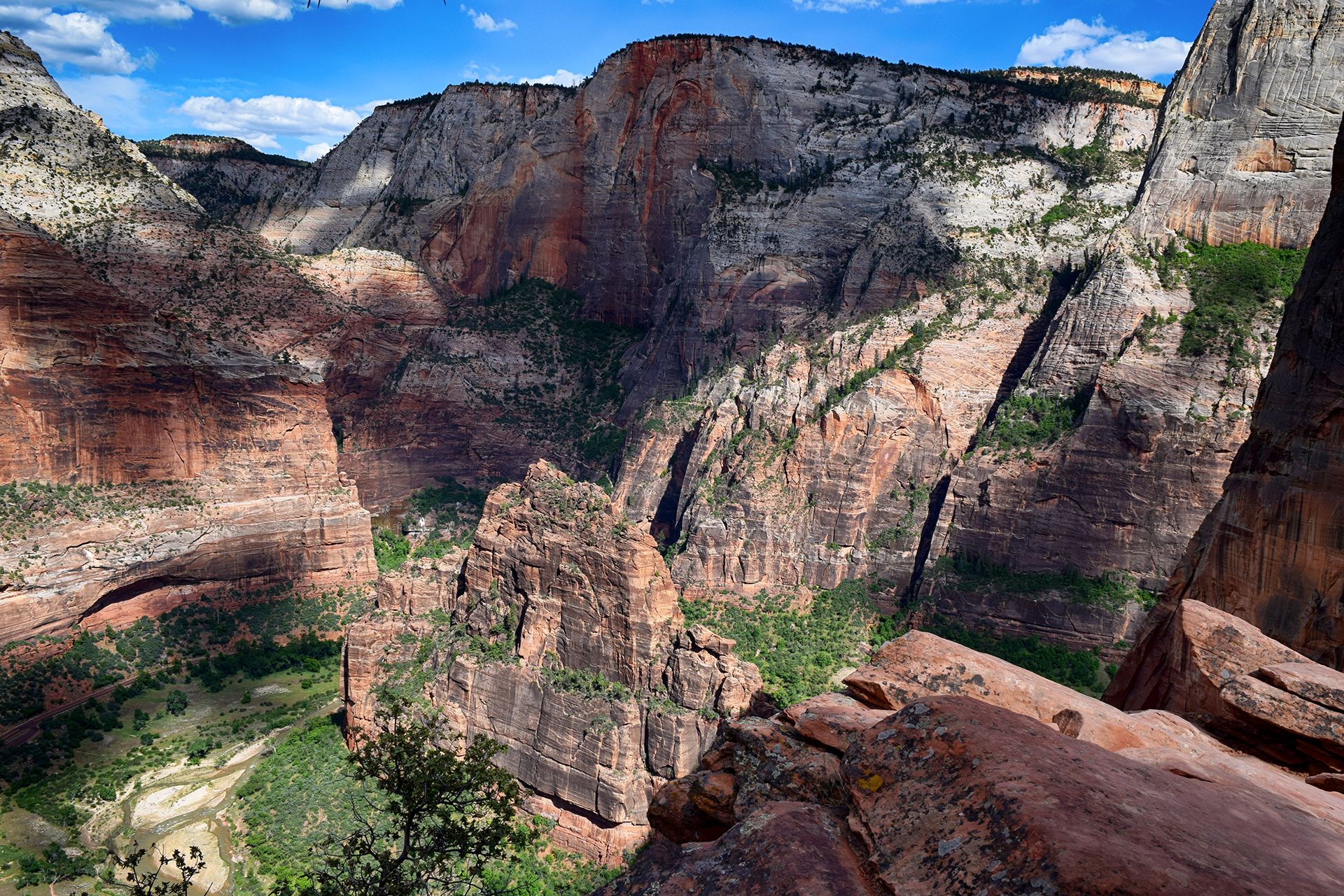
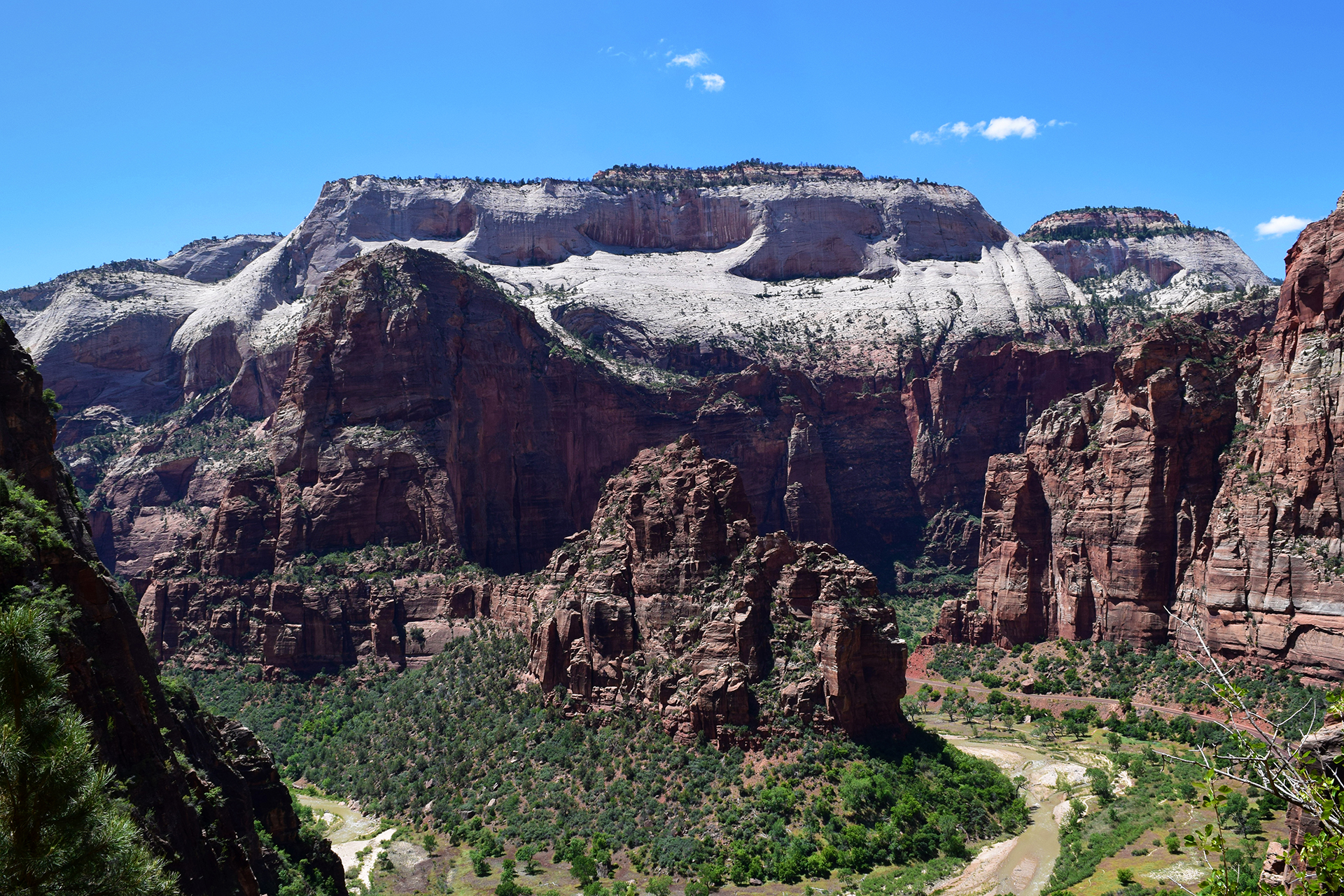
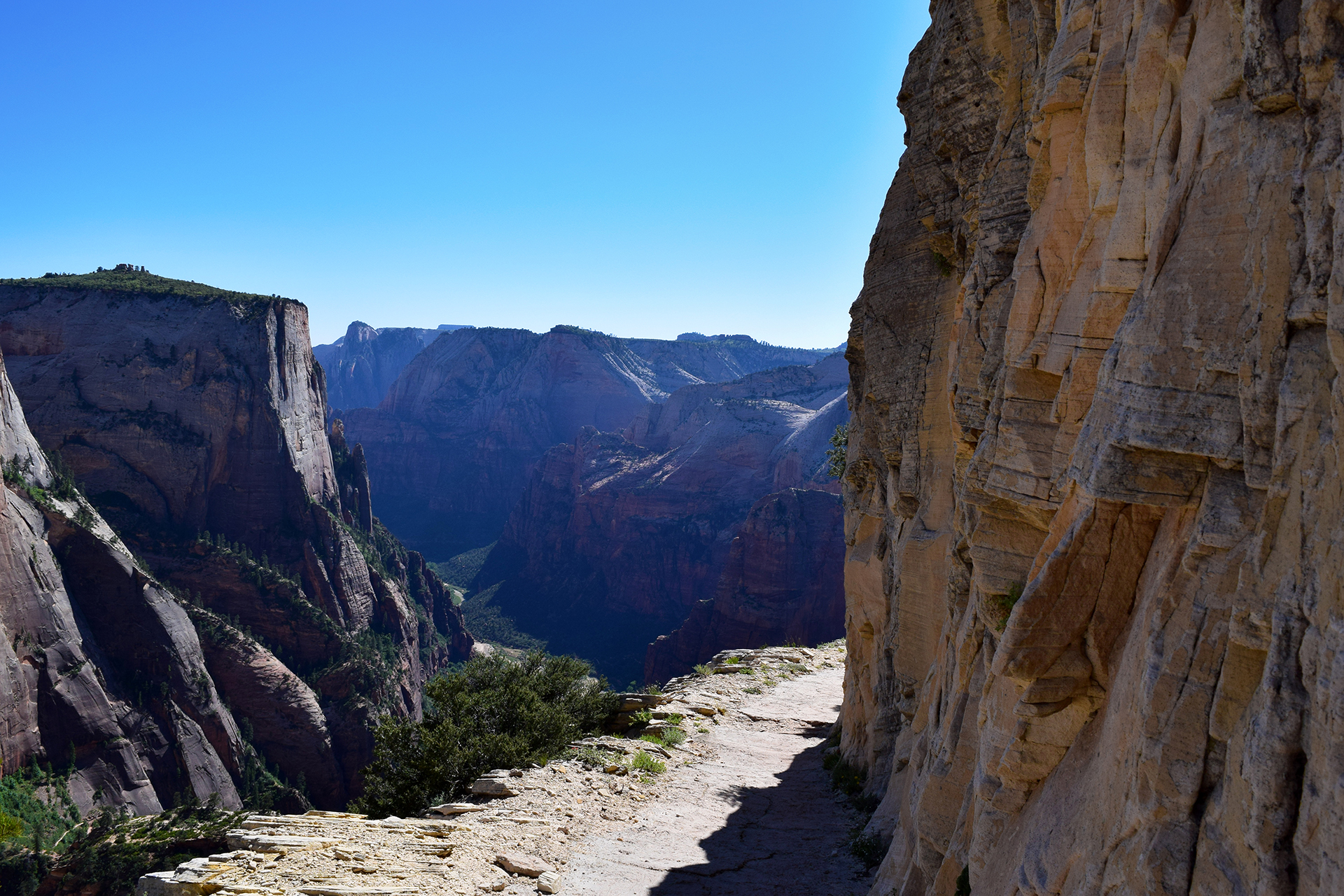
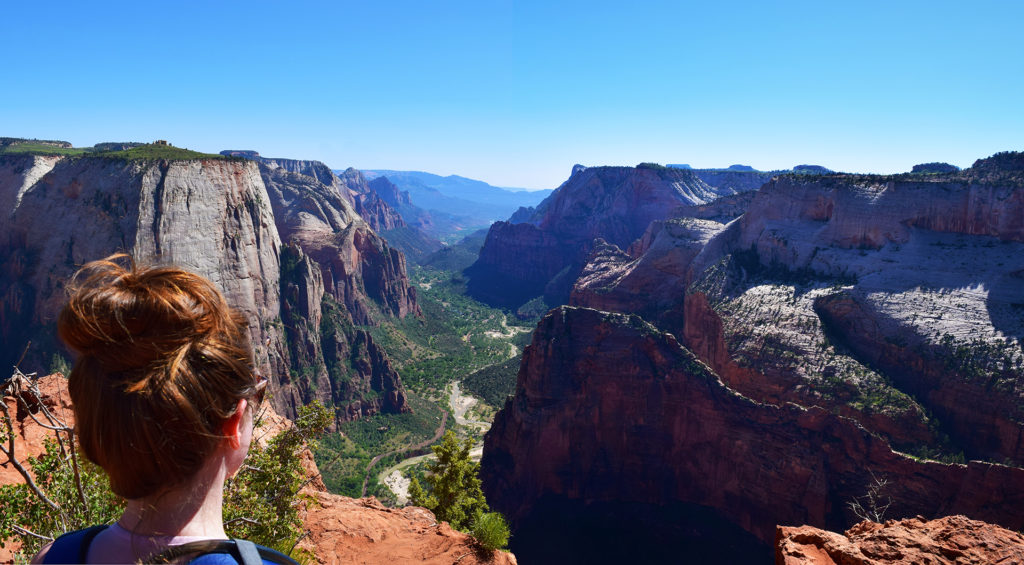
After we made it to the top, we walked about a mile along the rim, passing the yellow stone we discussed earlier.  We also took a lot of pictures, snapping them whenever the view down Zion Canyon changed ever so slightly.  (We took over 1,400 photos during our three days here!)  We ended up on a large promontory – the literally-named “Observation Point” – which juts out into the canyon like the prow of a ship.

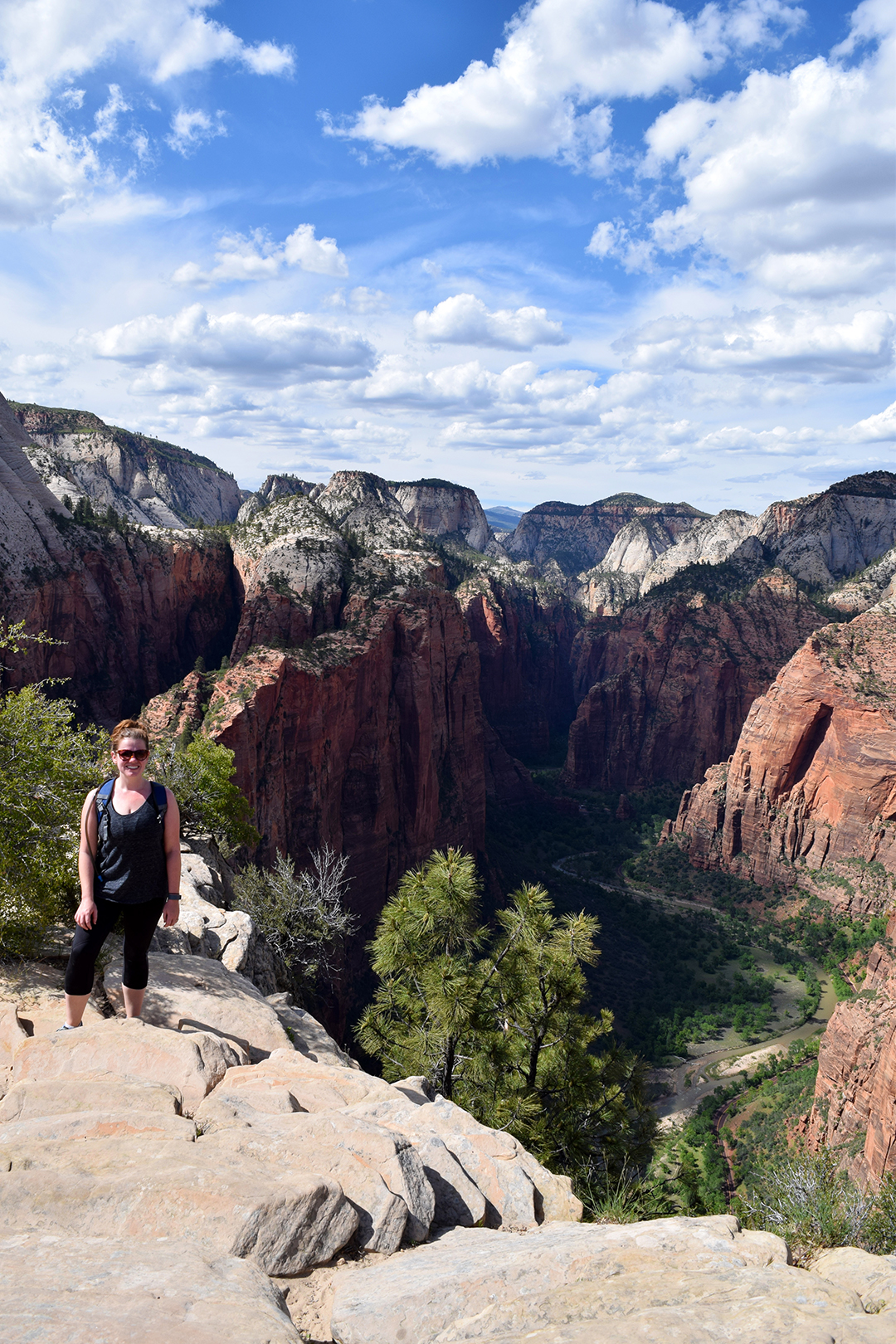
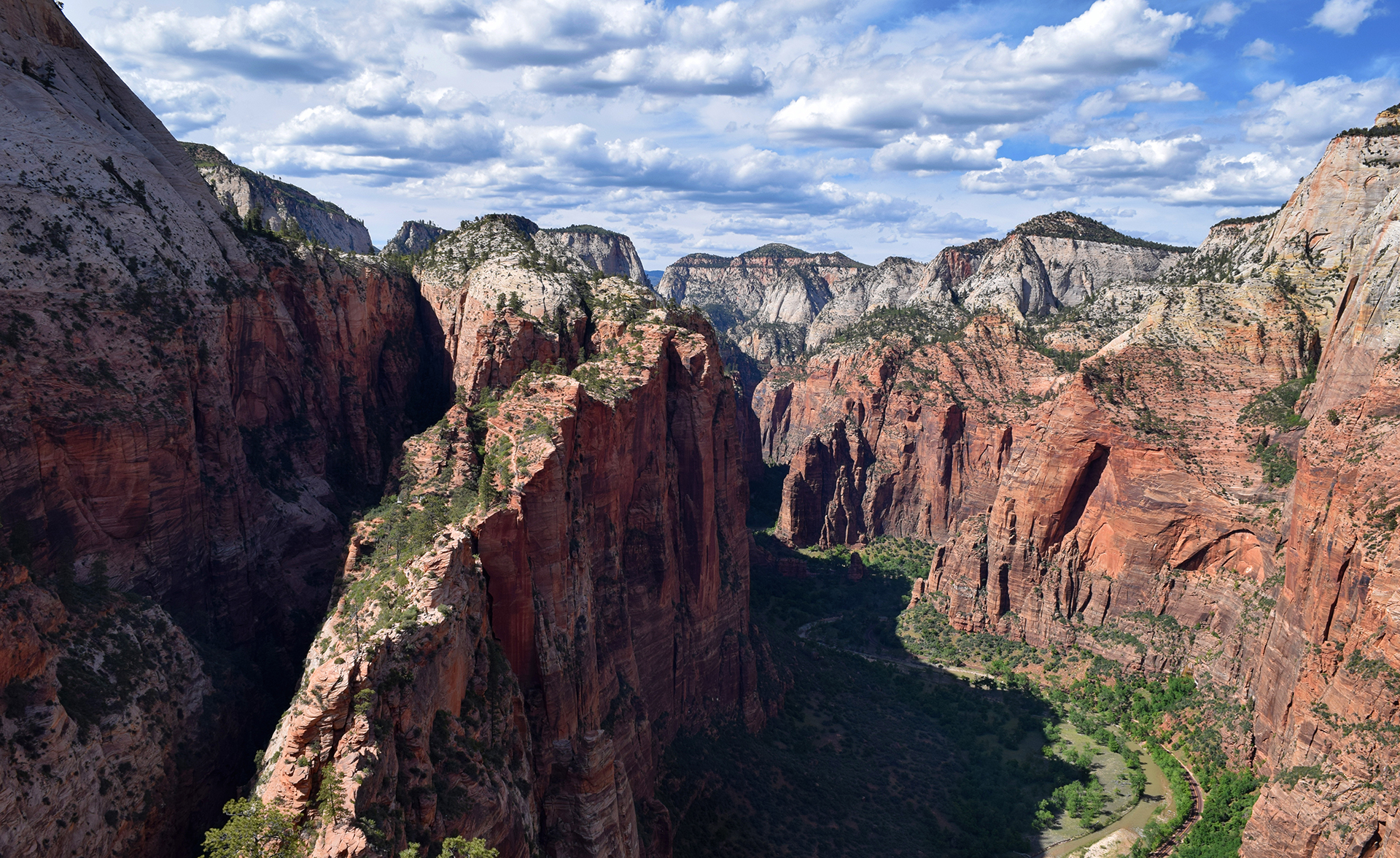
Standing on one of the highest points in the area, we had an incredible, 360 degree view.

You can see Angels Landing in these photos – it’s the large, fin-like “island” in the valley below.  That’s where we hiked with the chain and the exposure and the toddlers-on-leashes.

Someday, we really hope to do it again.

Roadtrip Time Travel

Roadtrip Status

Still alive?  Check.

Where are you now?  Ithaca, NY, seeing about a million waterfalls.

Next location?  Going down to visit NYC!

Follow Us On Social Media

FacebooktwitterinstagramFacebooktwitterinstagram

Latest Posts

0

Week 47.1: The Grand, Grand Canyon

The Grand Canyon has been the focus of innumerable road trips, and it’s been at the top of our “to-see” list for ages.  In mid-May, we finally got the chance, and we drove 70 miles from our campground in Kanab, Utah to the North Rim.  To be more precise, we went on May 16, which was fortunate, since the road to the North Rim had only opened for the 2016 year on May 15.  We had no idea.

If you ever get to choose, “clueless but lucky” is our recommended way to travel.

Aw, hail

Our drive to the North Rim traveled through beautiful desert landscapes – there are a few national monuments here – and then up, up, up, past grassy meadows and through a pristine alpine forest.  It turns out the road closes because it gets covered with snow: the North Rim is really high.  Like, 8,000 feet in the air high (the better-known, 10x more visited South Rim is about 2,000 feet lower).  There were only two towns in the entire 70 miles, one of which was just some campgrounds and a gas station / general store.

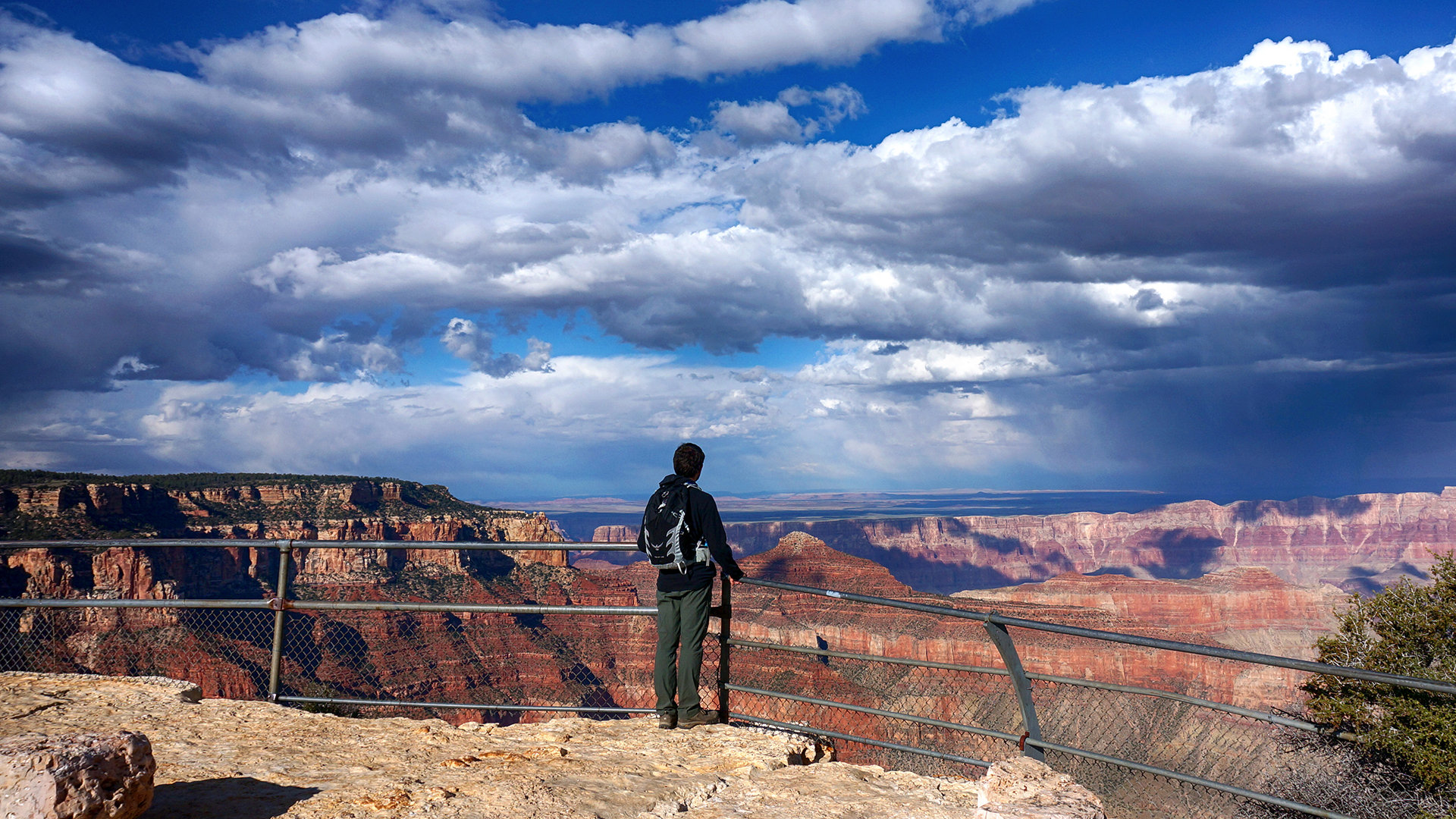
We finally made it to the Grand Canyon just before noon, straining to catch glimpses of the canyon through the trees as we drove.  We parked, walked down, and finally made it to the rim, and…

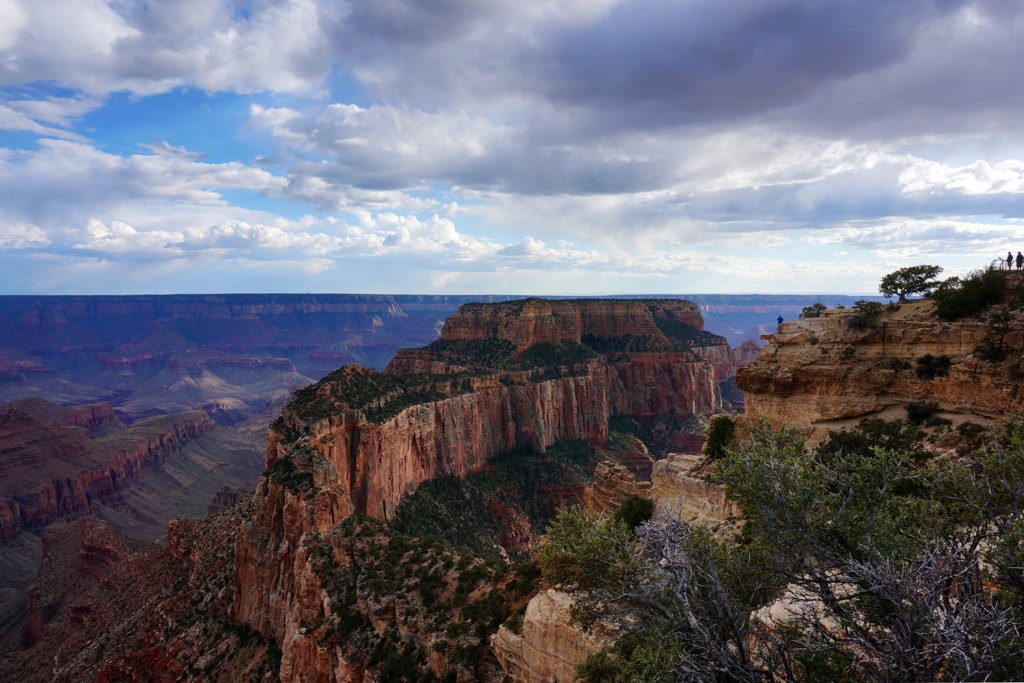
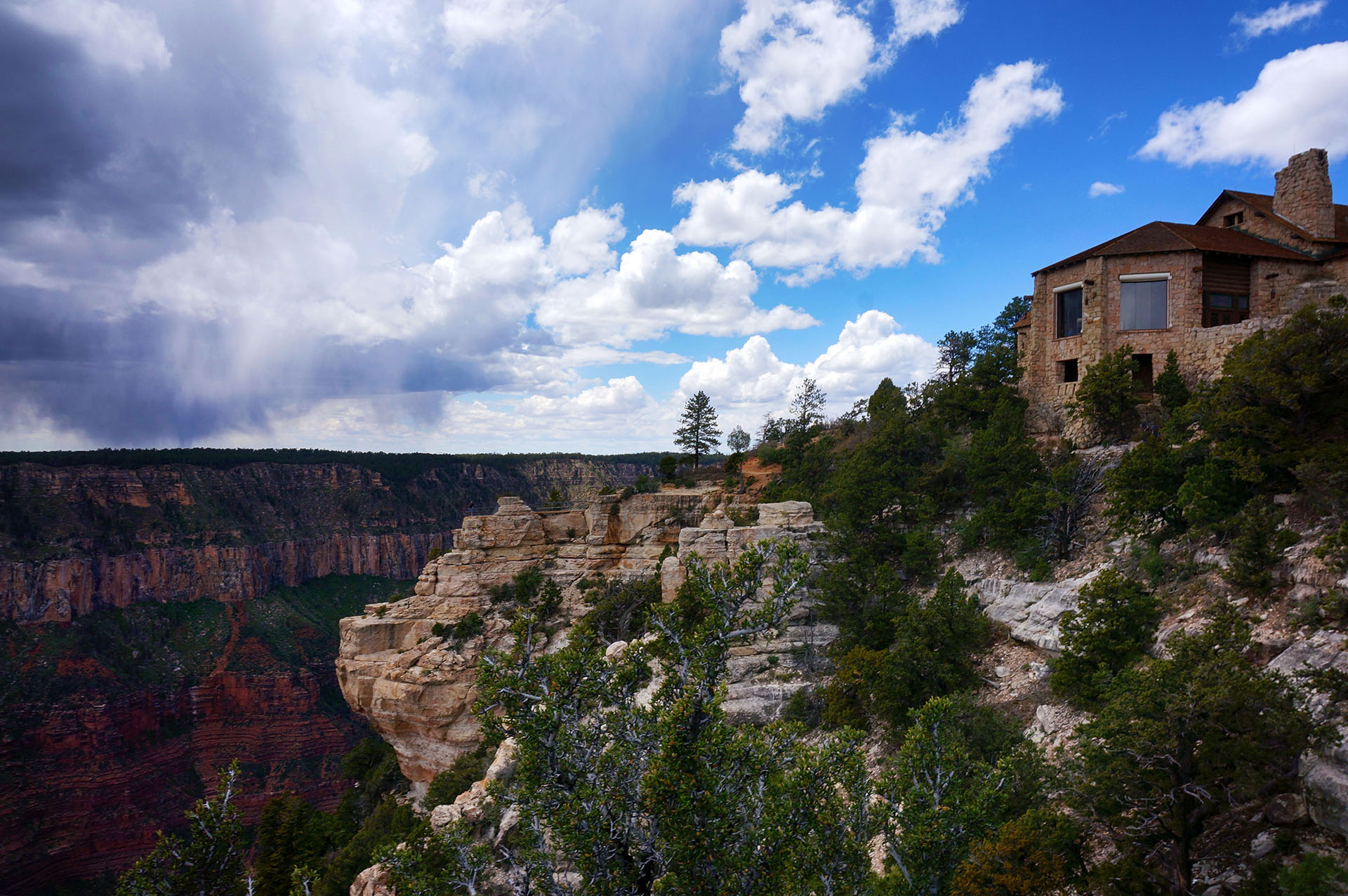
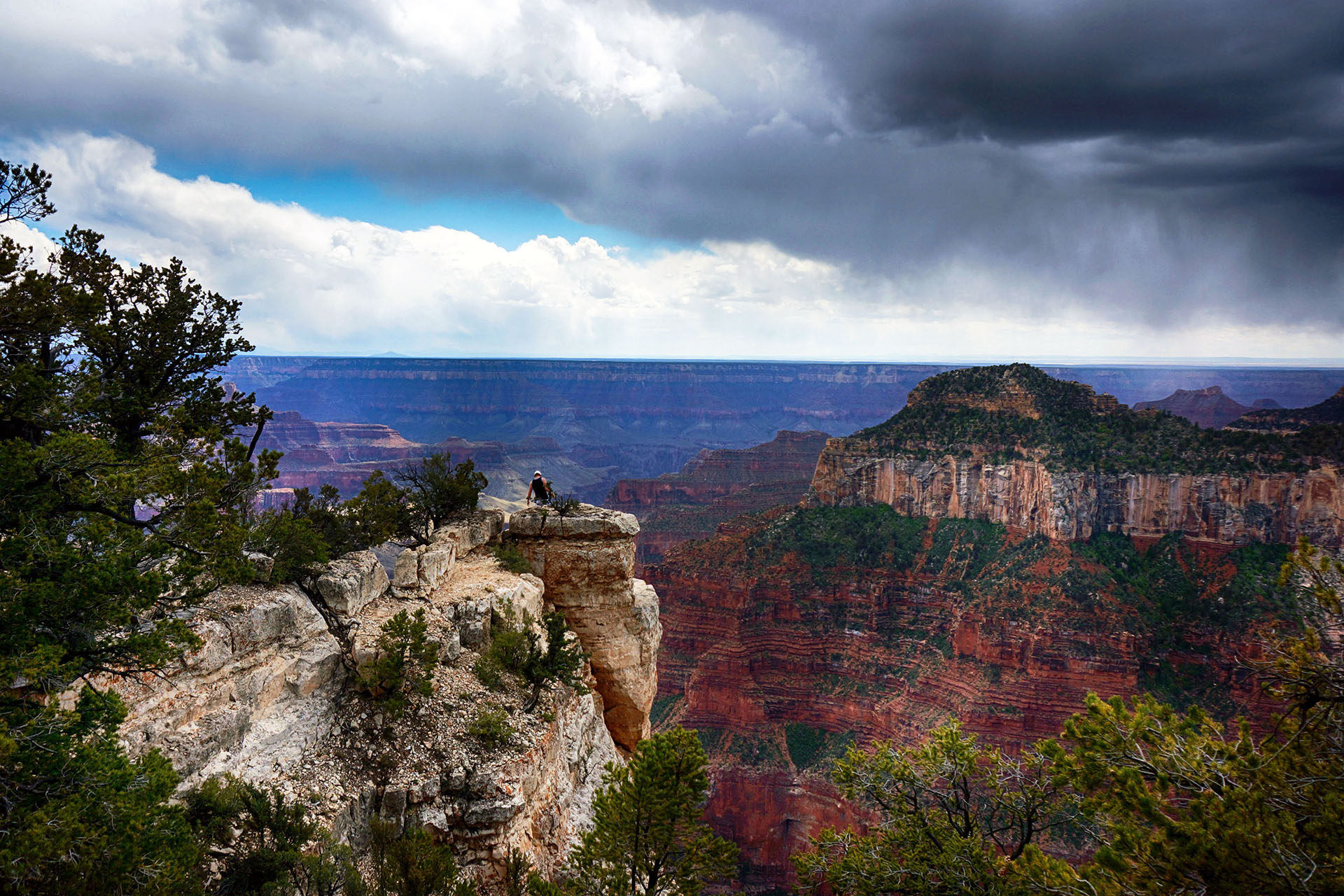
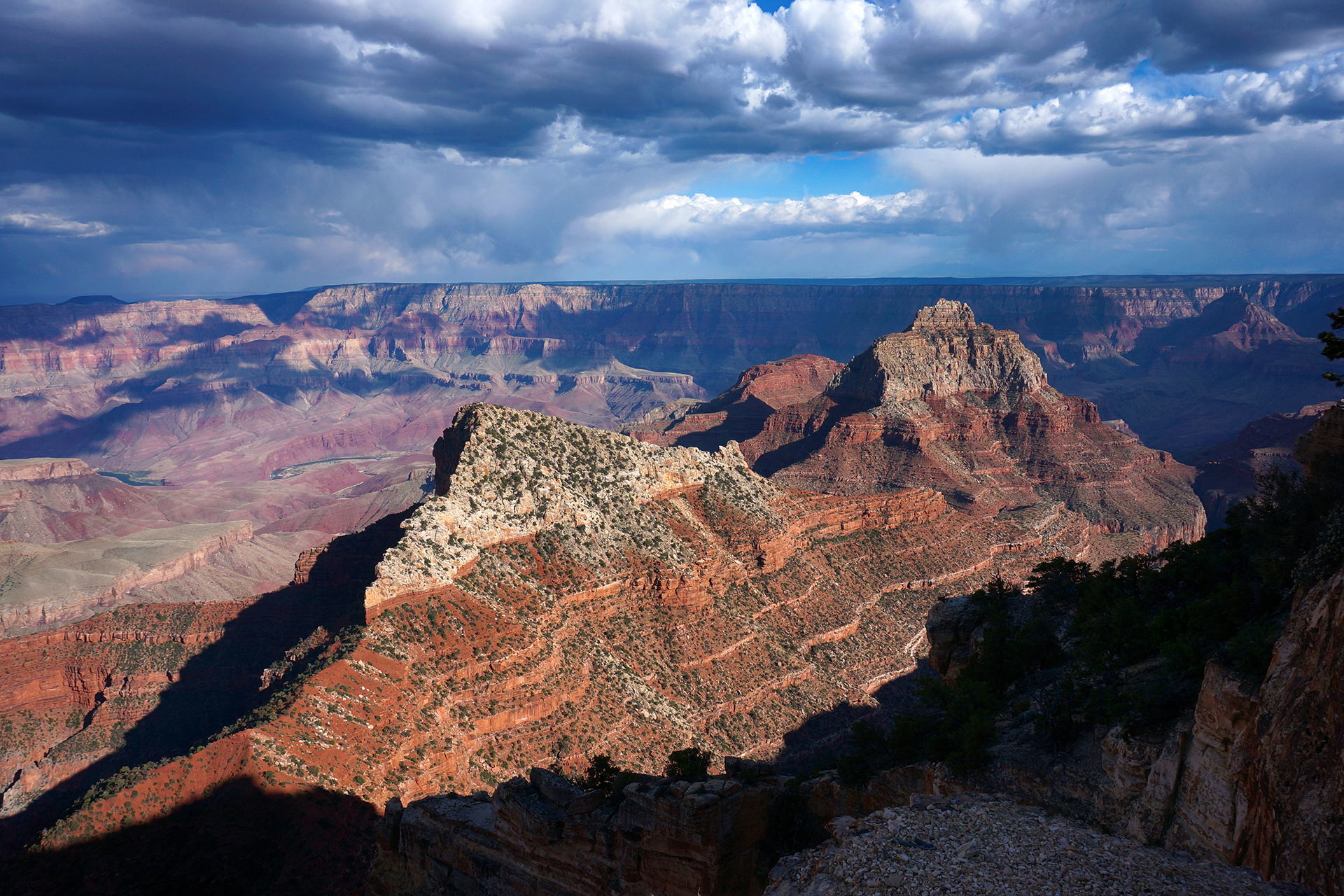
Holy crap.  It’s incredible.

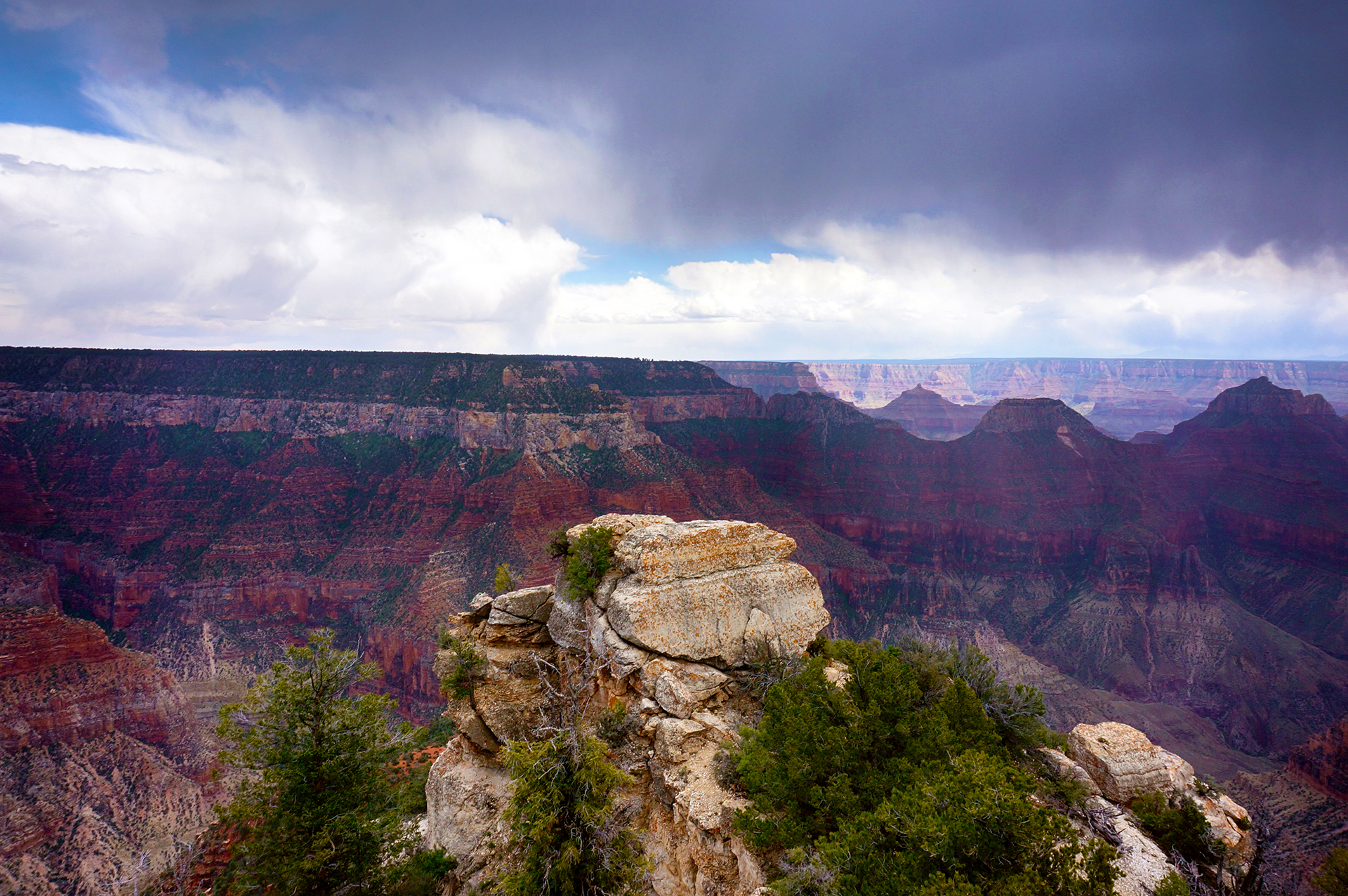
The canyon is so wide, and it’s so shockingly… colorful.  We’ve seen a lot of amazing sights on our road trip, but the view left us in awe.

We took pictures along the canyon rim for a few minutes, ignoring the light drizzle.  Then, suddenly, black clouds began rolling in.  We were at 8,000 feet, on an exposed, rocky outcropping with sheer cliffs in multiple directions.

“Time to go,” Jake said.

“Just a few more pictures!”  Heather said.

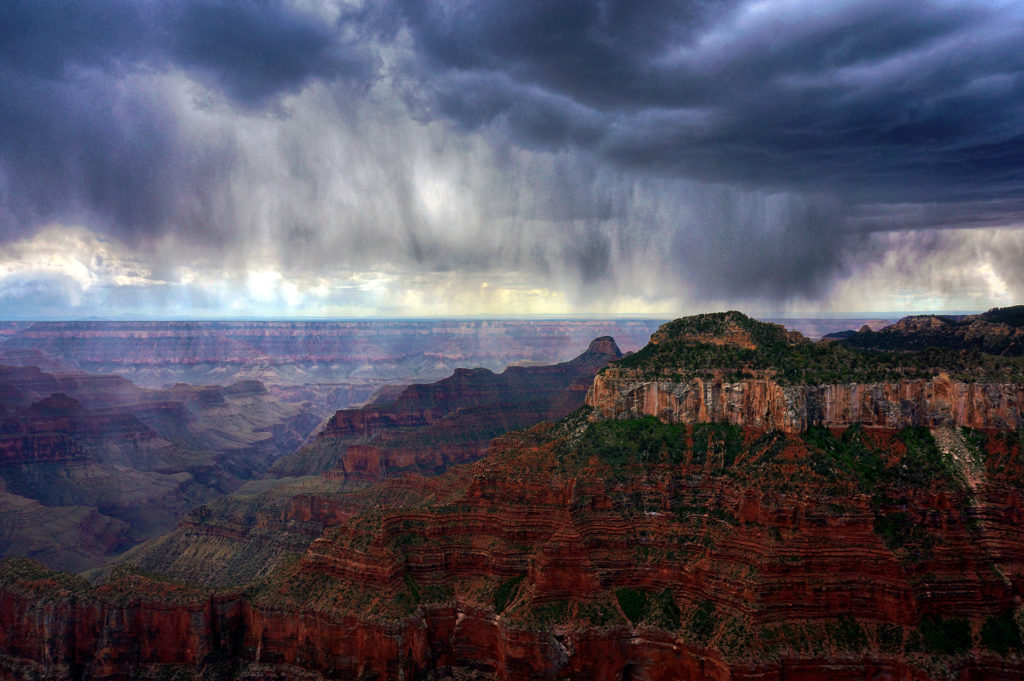
“No,” Jake said again, as the menacing cloud rapidly moved towards us, lightning bolts crashing, “it’s really, really time to go.”  We managed to get back into our car just seconds before a huge, spectacular lightning-hail storm ripped through the area.  It was so fast and furious, we actually got several inches of hail built up on our car like snow!

Now, we normally try to eat our lunch in scenic spots as opposed to, say, the parking lot of the visitor’s center, but something about not being pounded with lightning-hail made our Honda Fit feel like the best place in the world.  As a sweet, cynical bonus, we got to watch a worker across the street spend several minutes trying in vain to cover up a catering cart full of food he was delivering, until he finally gave up, hid under a doorway, and reconsidered his life choices.

Rim Shot

After lunch, full of food but thirsty for hiking, we drove over to the trailhead for the Kaibab Trail, which leads down and across the canyon to the South Rim.  After a mile or so of hiking down the trail, the views were breathtaking.

There were lots of donkeys on the trail, which was fairly entertaining, even though they can make the footing for hikers a little… treacherous.

We talked to a fellow hiker at an overlook, and it turned out he was hiking rim to rim – a 24 mile, single-day death march.  He was part of a tour group, apparently for crazy people, and he was really looking forward to the top, where he had been promised they would have beer.

“Almost there,” we said.

“Everyone says that,” he said.

Then we had to head back.  At 8,000 feet, that meant hiking steeply a few miles back up the canyon, leaving us breathless yet again.

Too many pics

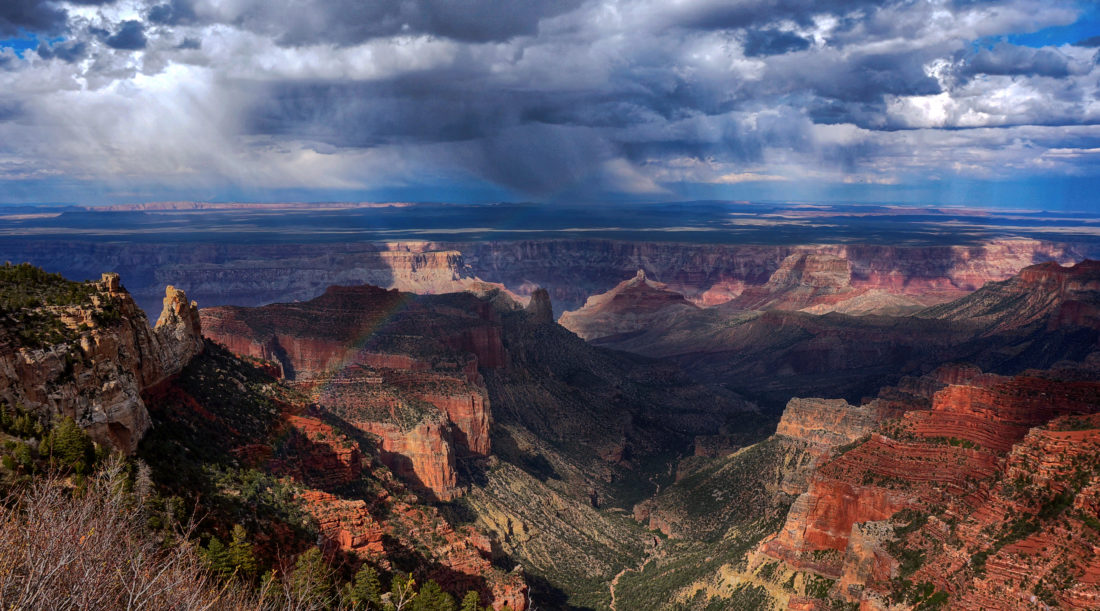
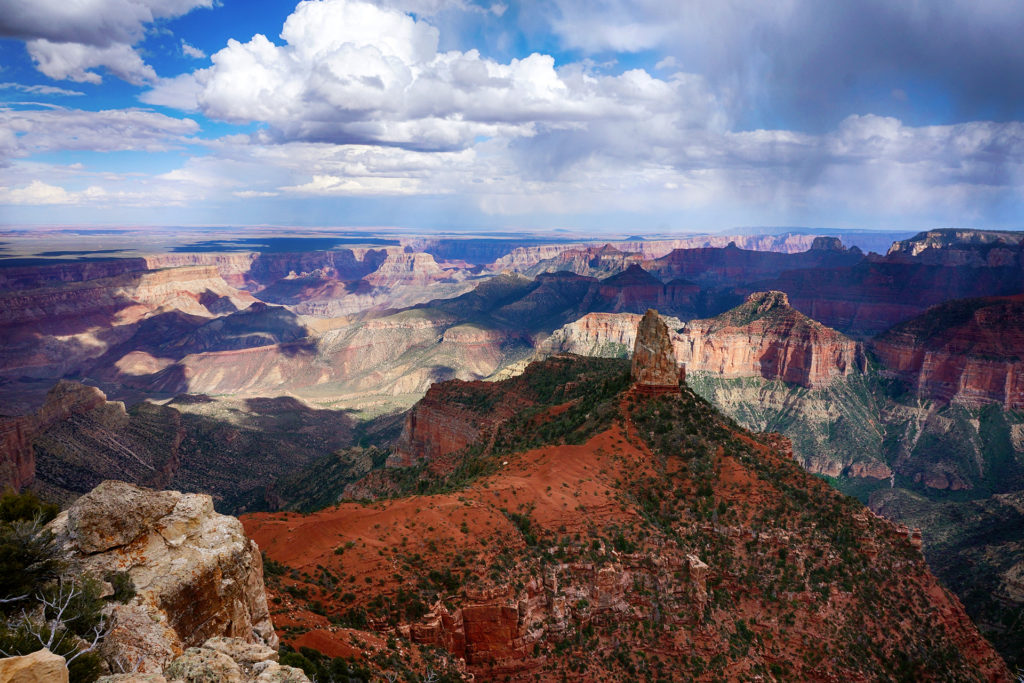
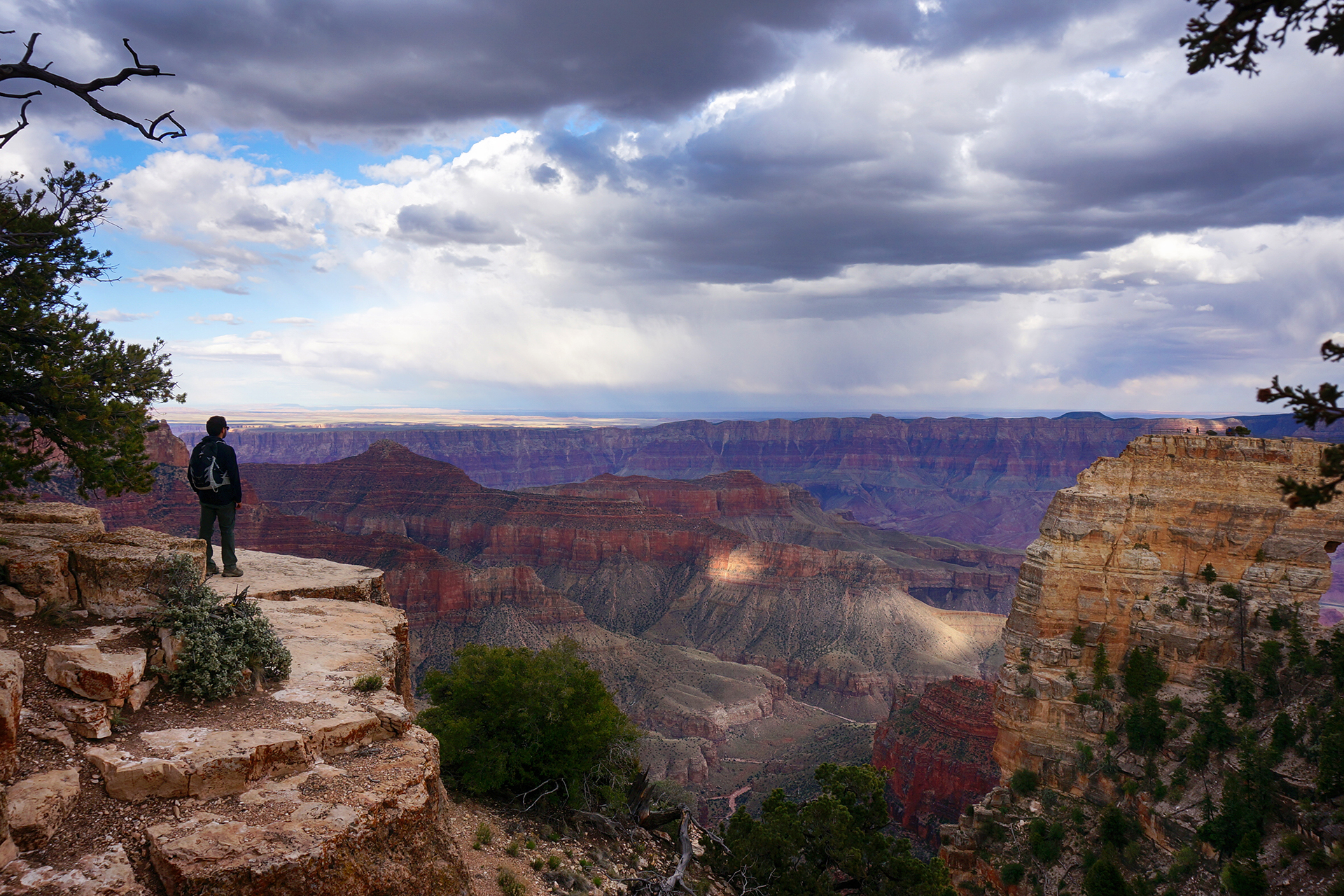
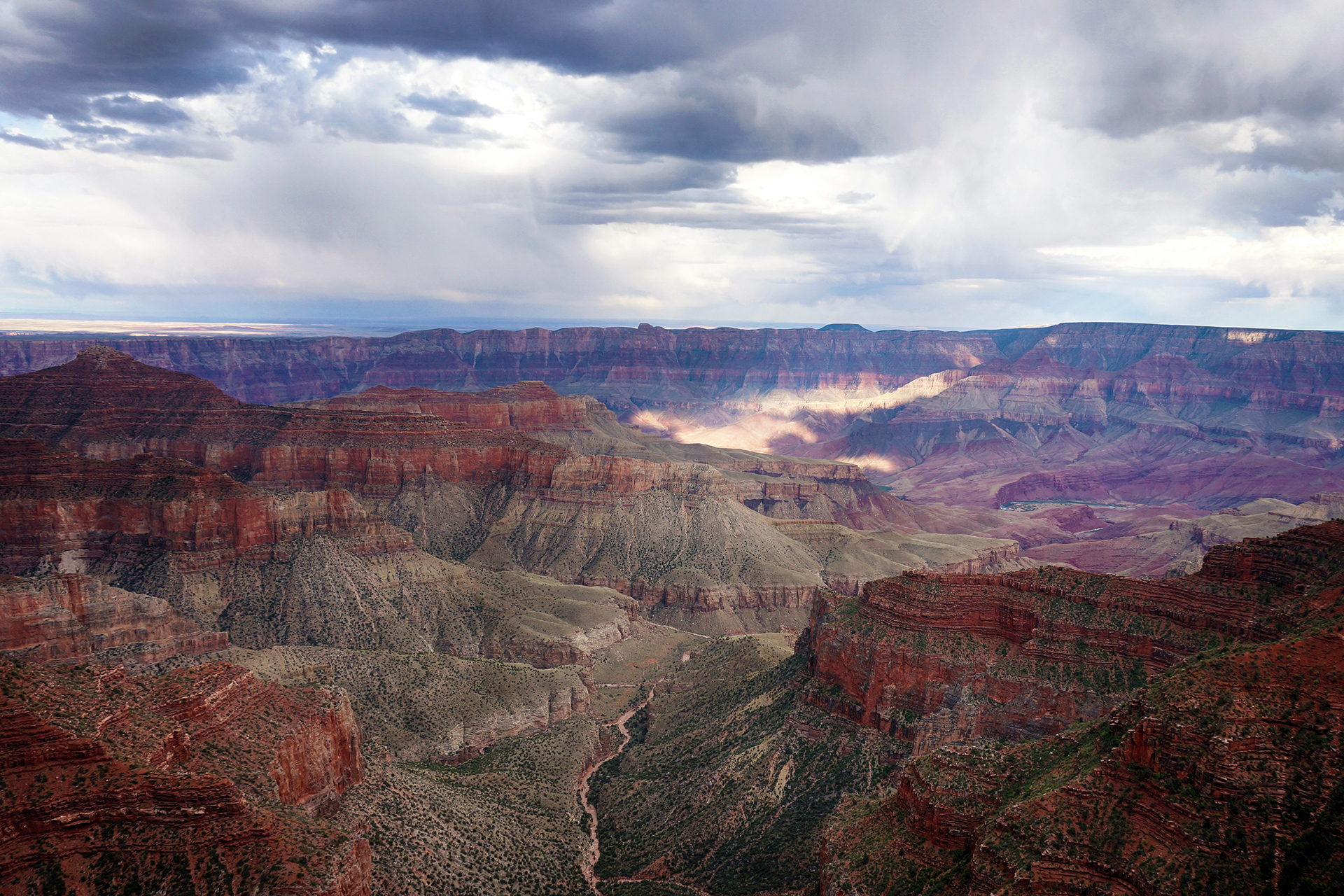
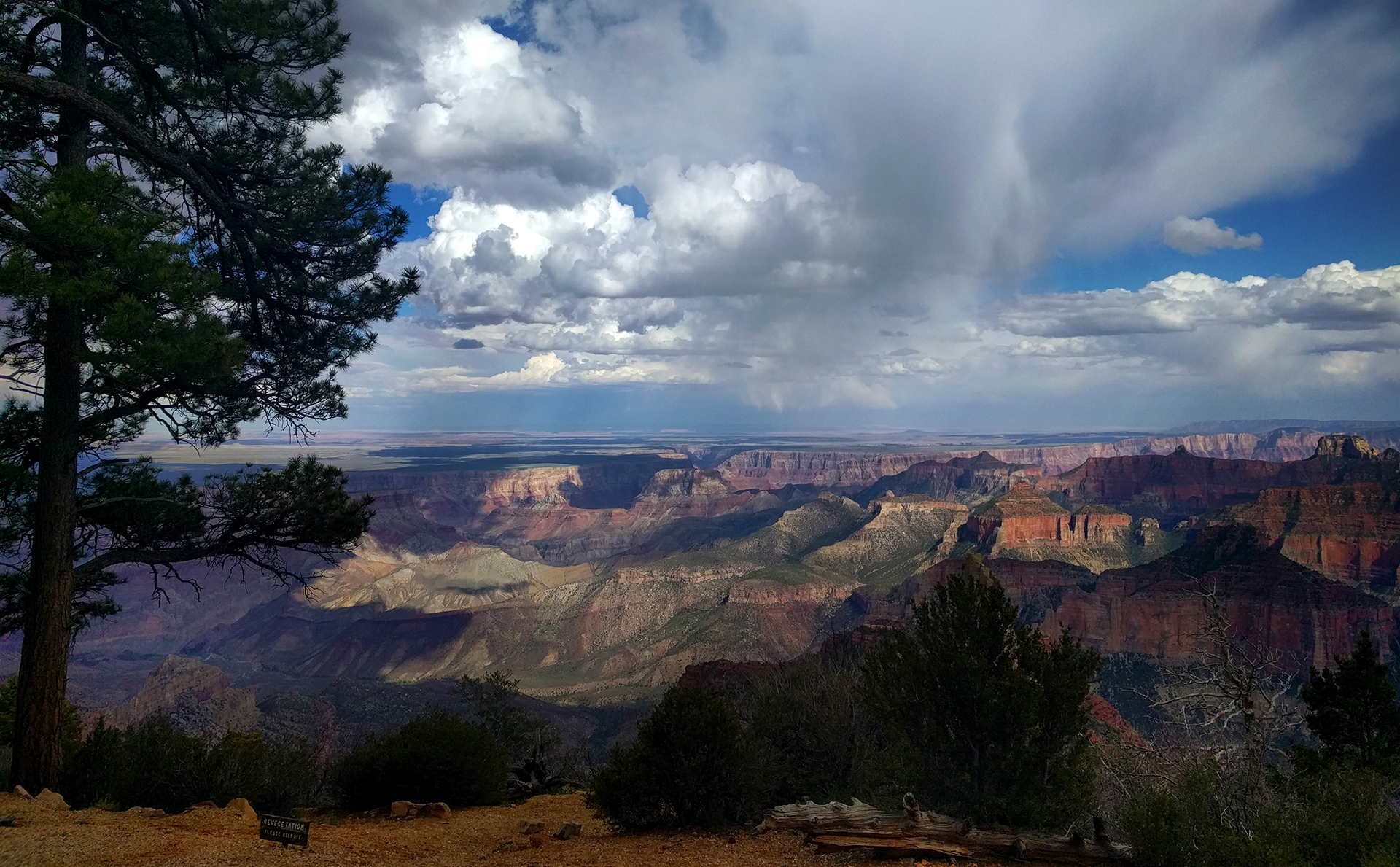
Writing can’t do justice to the Canyon, so we’ll mostly leave the rest to Heather’s pictures.  (She goes through a heroic number for each blog post, but especially for this one.)  Touring the canyon mostly involved driving around and stopping at viewpoints, so here’s Point Imperial, at nearly 9,000 feet the highest point in the canyon.

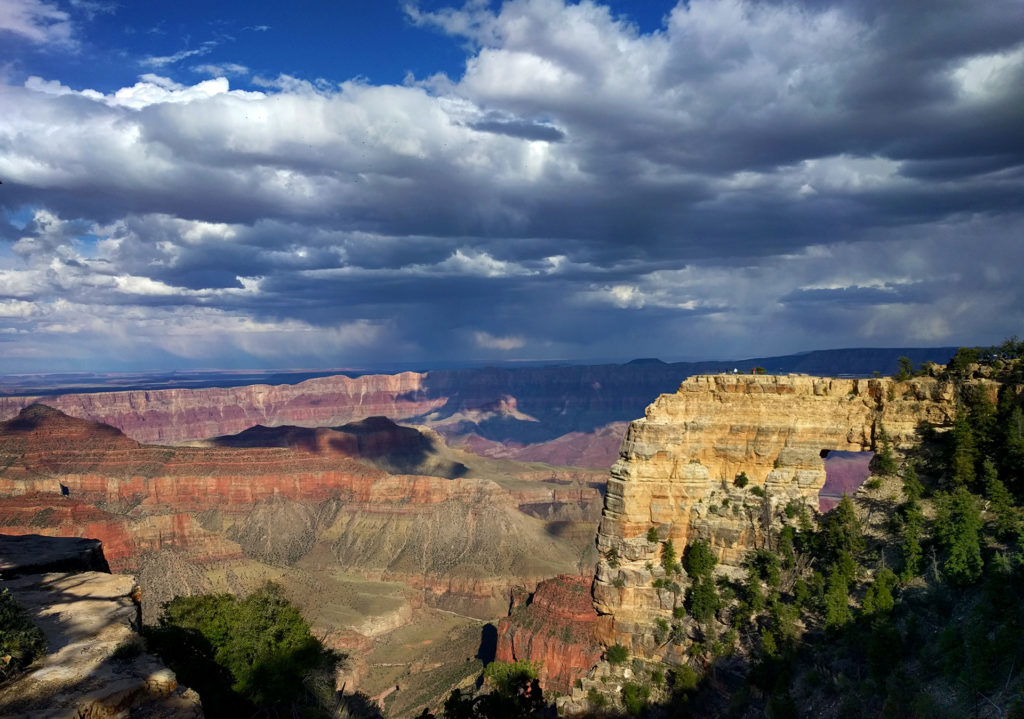
Eventually, we reached the end of the scenic drive at Angels Window, a hole in a rock outcropping with a viewing platform built right on top.

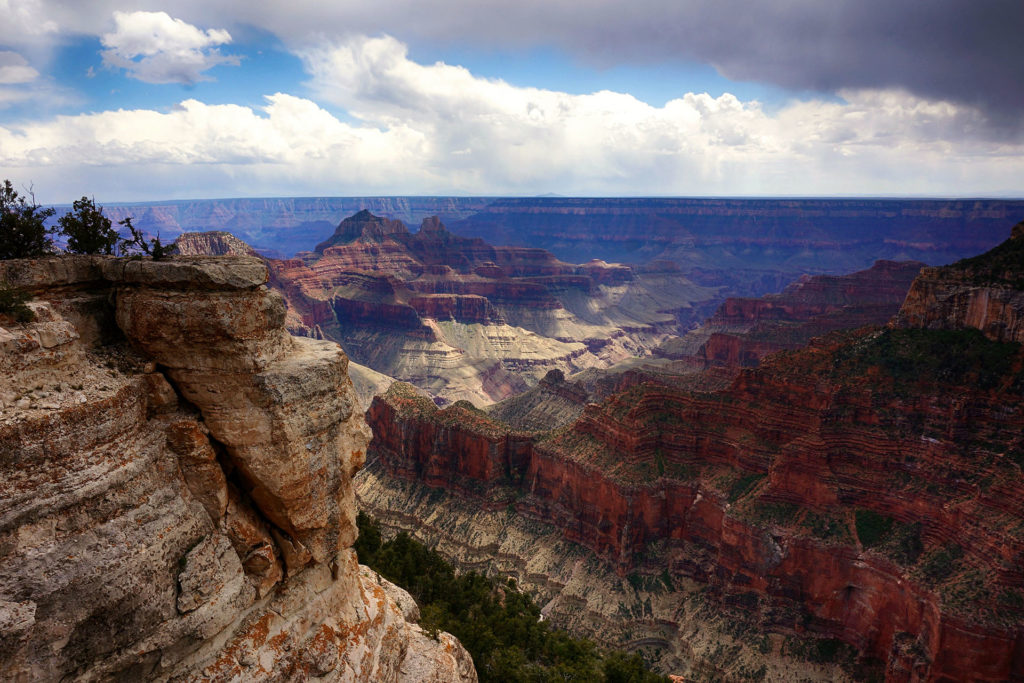
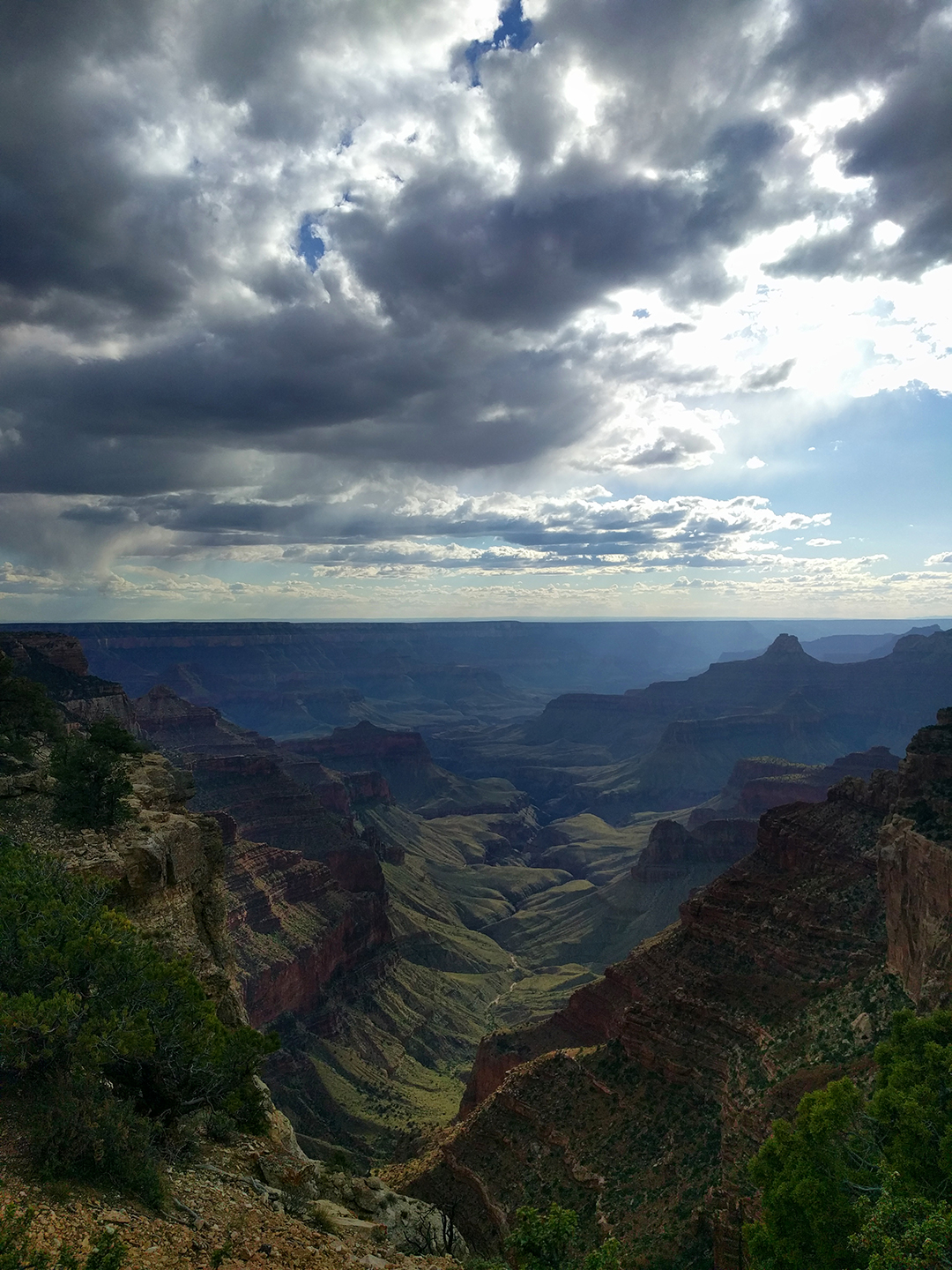
We walked all around the rim of the canyon here and came away with some truly epic photos.  (Bonus: if you haven’t already, click here to check out a 360-degree photosphere of the Grand Canyon in all its glory!)

We finally headed back to Kanab near twilight.  There were deer everywhere along the road – we probably saw 100 in total – along with lots of tourists, stopping to take pictures of such an exotic animal.  We also nearly ran over a coyote, which trotted halfway across the road, checked us out for a moment as we skidded to a stop… then it just kept going, unimpressed.

Guess it was hoping we were an Acme delivery truck.

Roadtrip Time Travel

Roadtrip Status

Still alive?  Check.

Where are you now?  Pittsburgh, PA.

Next location?  Somewhere else?

Follow Us On Social Media

FacebooktwitterinstagramFacebooktwitterinstagram

Latest Posts

0

Week 47: Kanab, Utah

After a slightly weird caving experience at Great Basin National Park, we continued south through Utah, quickly leaving the interstate behind. Southwestern Utah contains some very rolling hills, and it was a bit of a tense drive before we finally made it to Kanab, Utah. We stayed for nine days in mid-May, mixing some amazing sightseeing with more everyday tasks like laundry and trip planning.

Nothing mundane, of course.  Never that.

Kanab is a small but busy town of only 4,300 people.  As any real estate agent can tell you, it’s all about location, location, location, and Kanab has that in spades. Situated between three national parks (Zion, Bryce Canyon, and the north rim of the Grand Canyon – all coming up next) and numerous state parks and national monuments, the scenery around Kanab is breathtaking. As a result, it’s a touristy place, but in a low-key sort of way, and we found the vibe more charming than annoying.

Kanab UT 1

As in most tourist towns, the residents are enterprising. For example, there is a local newsletter with detailed write-ups on all the area activities, and it runs close to 50 full-length pages. It was quite helpful, but we didn’t realize until later that every article was written by the same woman! Ms. Dixie Brunner, thanks for all the advice.

By the way, despite staying for more than a week, we didn’t even come close to seeing everything.  Touristry in Utah requires some serious time-management triage.

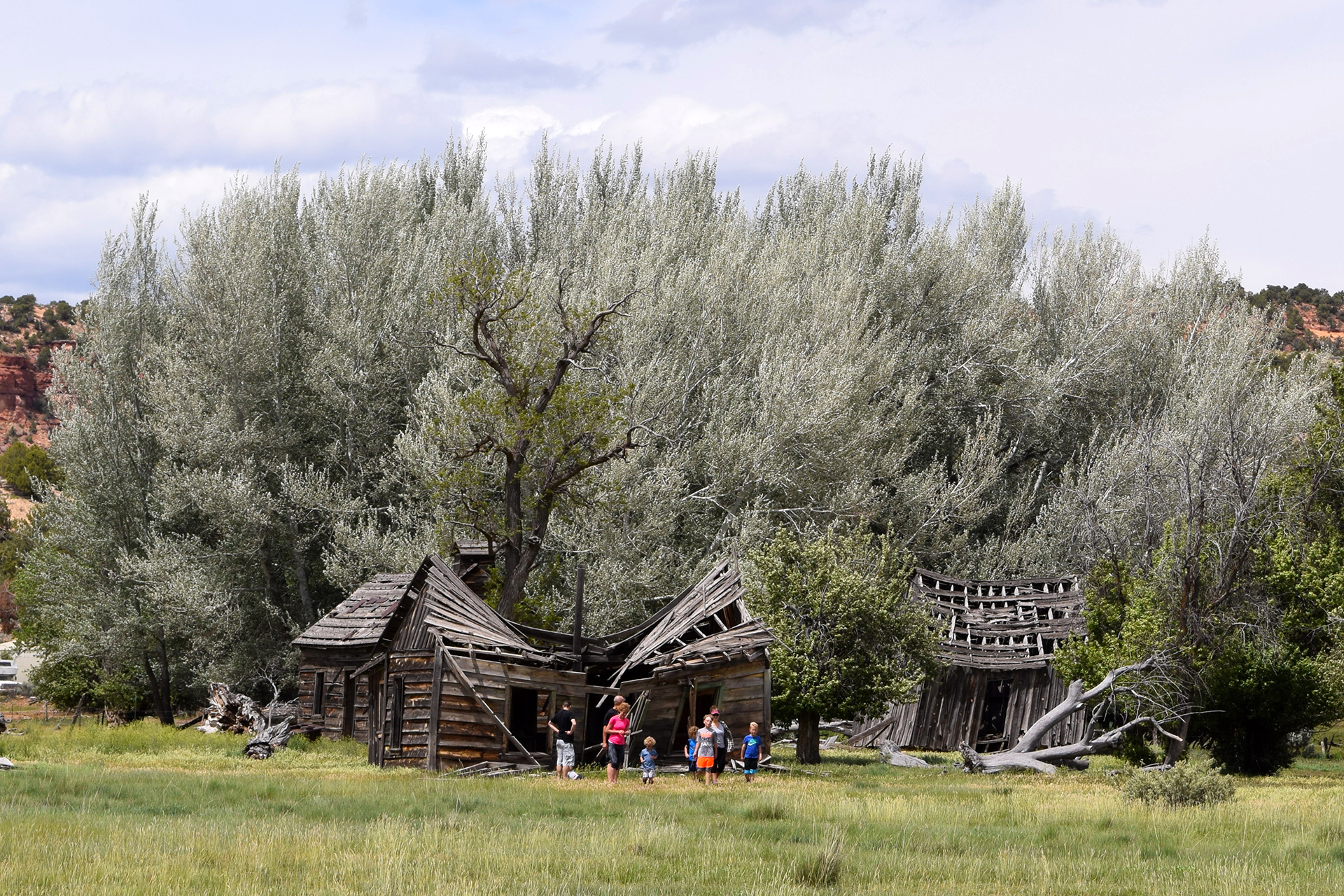
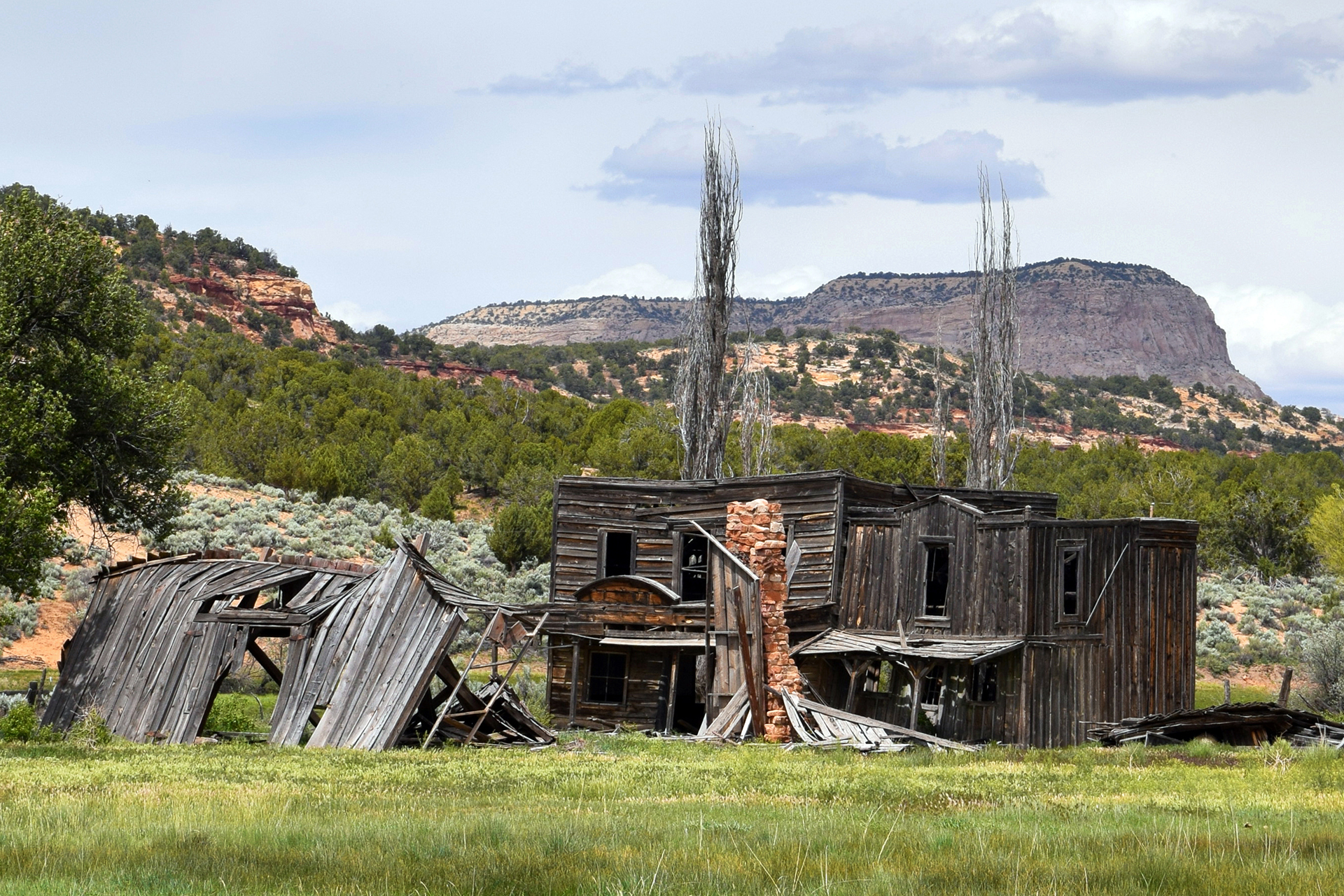
In the 1950s, some similarly enterprising locals convinced Hollywood producers to shoot westerns in the area – including the TV show Gunsmoke. Tipped off by Dixie, we stopped by one of the old sets, now decaying slowly in the desert near some new housing developments. Sort of sad to see, but it made for some cool pictures.

Unlucky Numbers

As the headquarters for several federal park activities, Kanab has the unique distinction of being the location for a very special lottery. Six times a week, tourists gather at 9:00 a.m. sharp to try to win a coveted permit to see The Wave. You’ve probably never heard of it, but you may have seen a picture – The Wave features parallel bands of red and white rock curving gracefully in the shape of… well, a wave.  Here’s a picture from Wikipedia:

TheWave 1600pixels.jpg
[By Gb11111Own work, CC0, https://commons.wikimedia.org/w/index.php?curid=15724006]

There were at least eighty people at the morning lotteries, but only a few winners – only ten people total are allowed to see the Wave each day.  We tried three times, but never won.  Bummer!  At least we got to see something similar earlier in our trip at the Valley of Fire.

Hard Rock Life

With no Wave, we instead took another Dixie suggestion and visited the Toadstools. These are a series of super-cool hoodoos – weathered rock pillars – with caps of harder (and therefore larger) stone on top.

The toadstools were pretty awesome, as was the general landscape.  What really blew our minds, though, was that the toadstools aren’t even a big attraction. There is so much cool stuff in southern Utah that these amazing rock formations barely even merit a parking lot! We would never have known they were there if not for our Kanab newsletter, and we couldn’t help but wonder what else is waiting out there to be discovered. (Answer: a lot.)

BAFFs

Our final stop in Kanab (aside from the national parks) was a pretty heart-warming one. Kanab is the headquarters for the Best Friends Animal Sanctuary, a non-profit group dedicated to ending euthanasia for unwanted animals. Their motto is “Save Them All,” and although they have grown to many locations nationwide, the Kanab facility is the largest and most important. It is their “shelter of last resort,” where un-adoptable animals of any species are sent to live out their days in the peace and quiet of beautiful Angel Canyon – mostly dogs and cats, but also pigs, horses, birds, and more.

We took a tour of the vast sanctuary, and it was really wonderful. Everything is thoughtfully designed with the animals in mind, whether it be bright, airy houses for the cats, or the dozens and dozens of individual and shared runs for the dogs – they have both a “Dogtown” and a “Dogtown II.”

The fantastic trainers work diligently to rehabilitate every animal, even the ones that will never be adopted. Some have physical or mental issues – we saw a volunteer walking one dog which constantly turns in circles as it walks – while others are there for different reasons.  Many of Michael Vick’s abused pit bulls ended up at Best Friends, and we actually got to meet one. She was smaller than we expected, but with an incredibly broad chest and the deepest bark we have ever heard. Like many “fighting” dogs, she actually had a very sweet disposition, but due to court order, she can never be adopted.

So, she gets to live here instead.

Best Friends is the rare kind of place that makes you happy about humankind. But of course this sort of thing happens in a lot of different places, and we’d be remiss if we didn’t mention that Jake’s aunt and uncle in LA, Fran and Bob, foster rescued cocker spaniels for another wonderful charity, Camp Cocker. Despite our cold, cynical hearts, we have to say thanks to Best Friends, Fran and Bob, and everyone who does such amazing work for animals everywhere.

Marketeering

Rather than end on a warm, sappy note, we’ll share one more quick story. After leaving Zion National Park late one night, we grabbed a bite to eat a restaurant just outside of Kanab called Thunderbird, which advertises itself as the “Home of the Ho-Made Pies.”

We just had to try them, but friends, we’re sad to report: those pies appear neither ho-made, nor even homemade!  In fact, we’re pretty sure some of the filling was still in the shape of the Sysco jug it came in.  We were so dispirited we didn’t even get a picture.  To quote Lionel Hutz, “[t]his is the most blatant case of fraudulent advertising since my suit against the film The Neverending Story.”

Ah, well.  We figured we’d just have to eat some more pie in the future to make up for it.  (Spoiler alert! We did.)

Roadtrip Time Travel

Roadtrip Status

Still alive?  Check.

Where are you now?  Pittsburgh, PA, beginning the job search process.

Next location?  We’ll be in Pittsburgh for a while, for once.

Follow Us On Social Media
FacebooktwitterinstagramFacebooktwitterinstagram

Latest Posts

0

Week 46.2: Great Basin National Park

After a short-but-sweet visit to Salt Lake City, we headed south along I-15. It was smooth sailing through the valleys between Utah’s many mountains, but we soon turned off towards the west, to the tiny town of Delta, UT – population 3,500. Delta is at the absolute end of civilization, sitting on the edge of a vast desert wasteland.

On the other side of that wasteland? Our destination, Great Basin National Park.

Mad Max: Utah

“Great Basin” is the name of a national park, but it really describes a much larger area. The Great Basin is a desert, and it encompasses almost all of Nevada and some of surrounding Utah, Idaho, and Oregon. Situated between the Sierra Nevada and Wasatch mountain ranges, the Great Basin is unique because it drains internally – none of the (little) water flows out to any ocean.

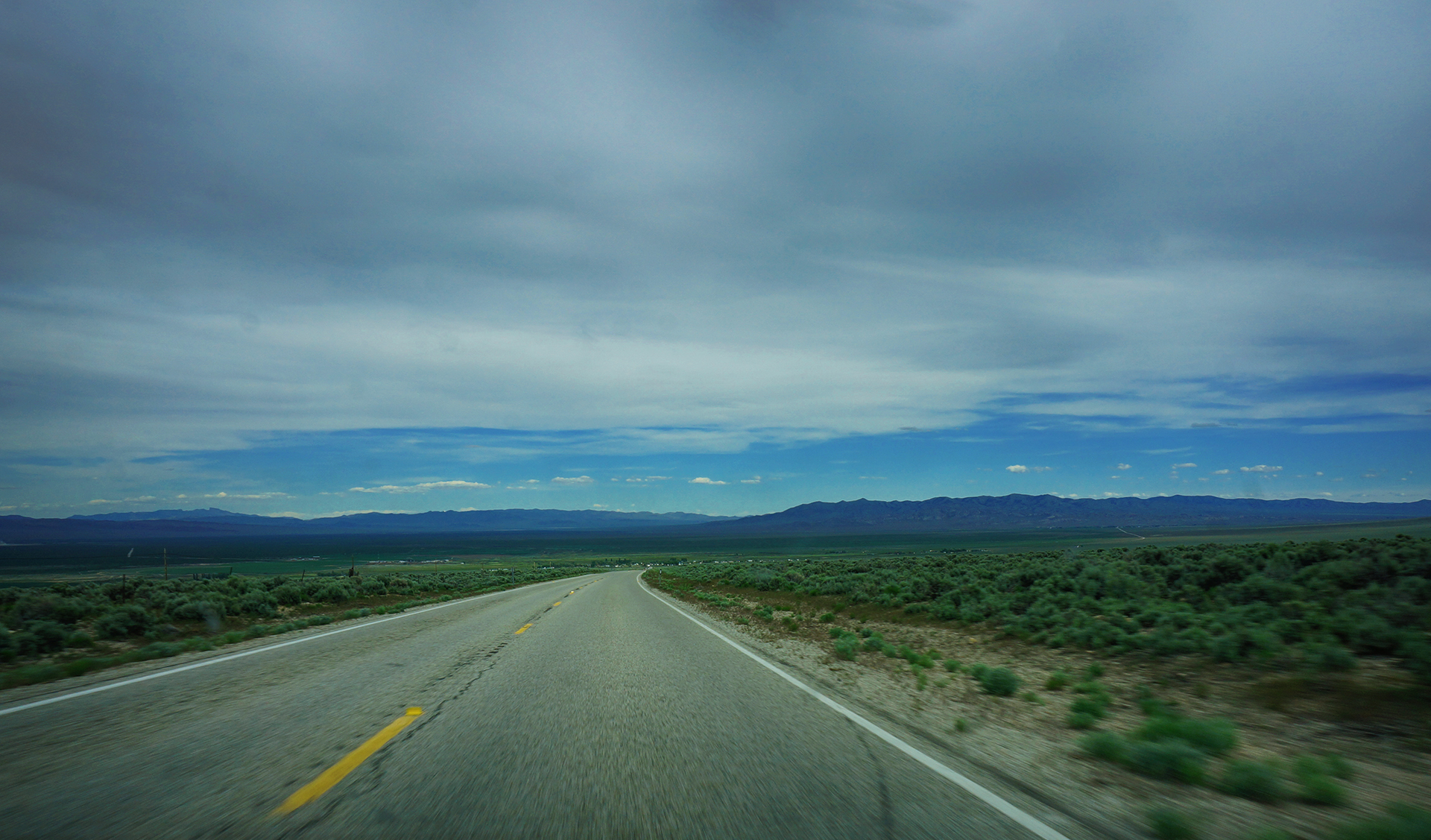
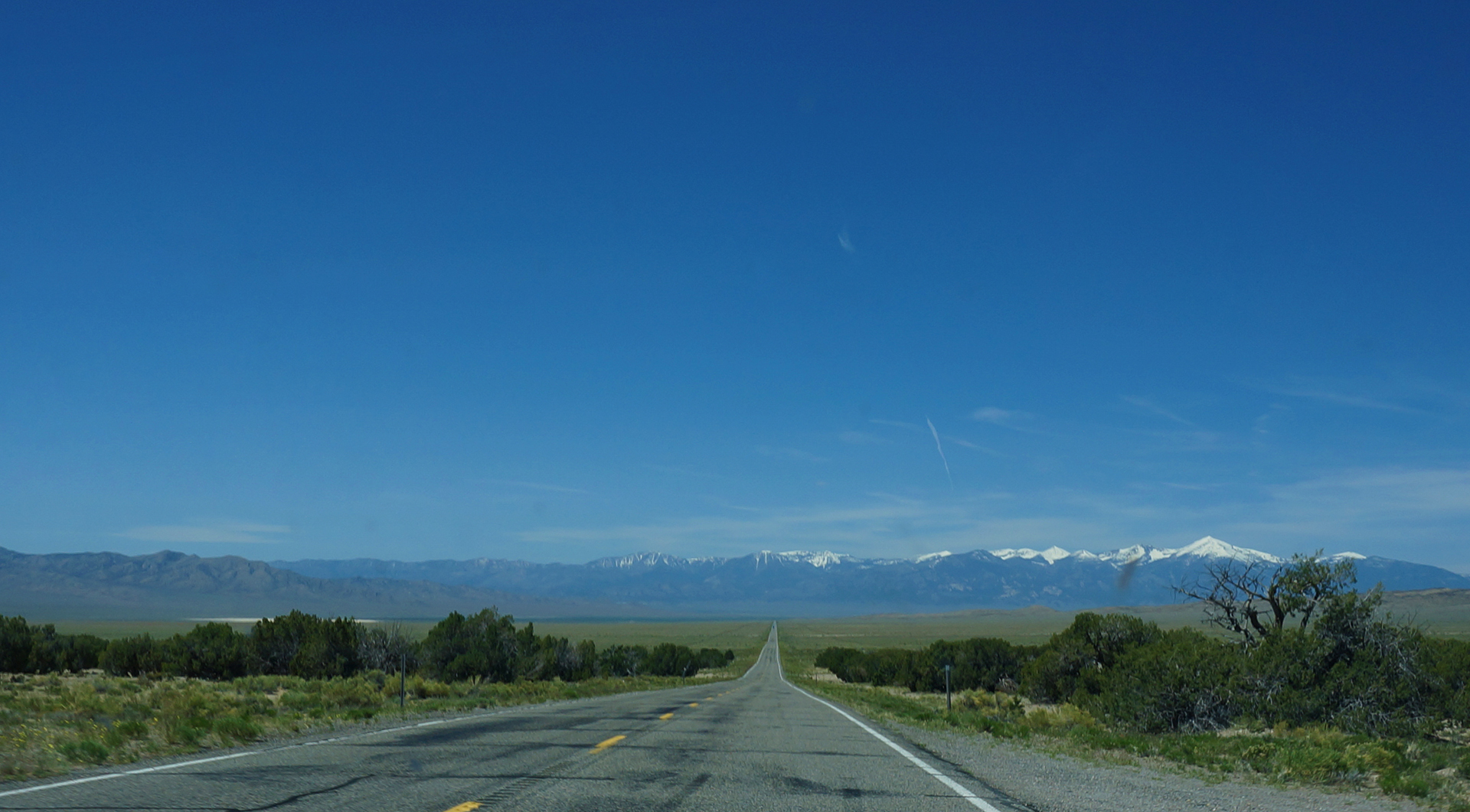
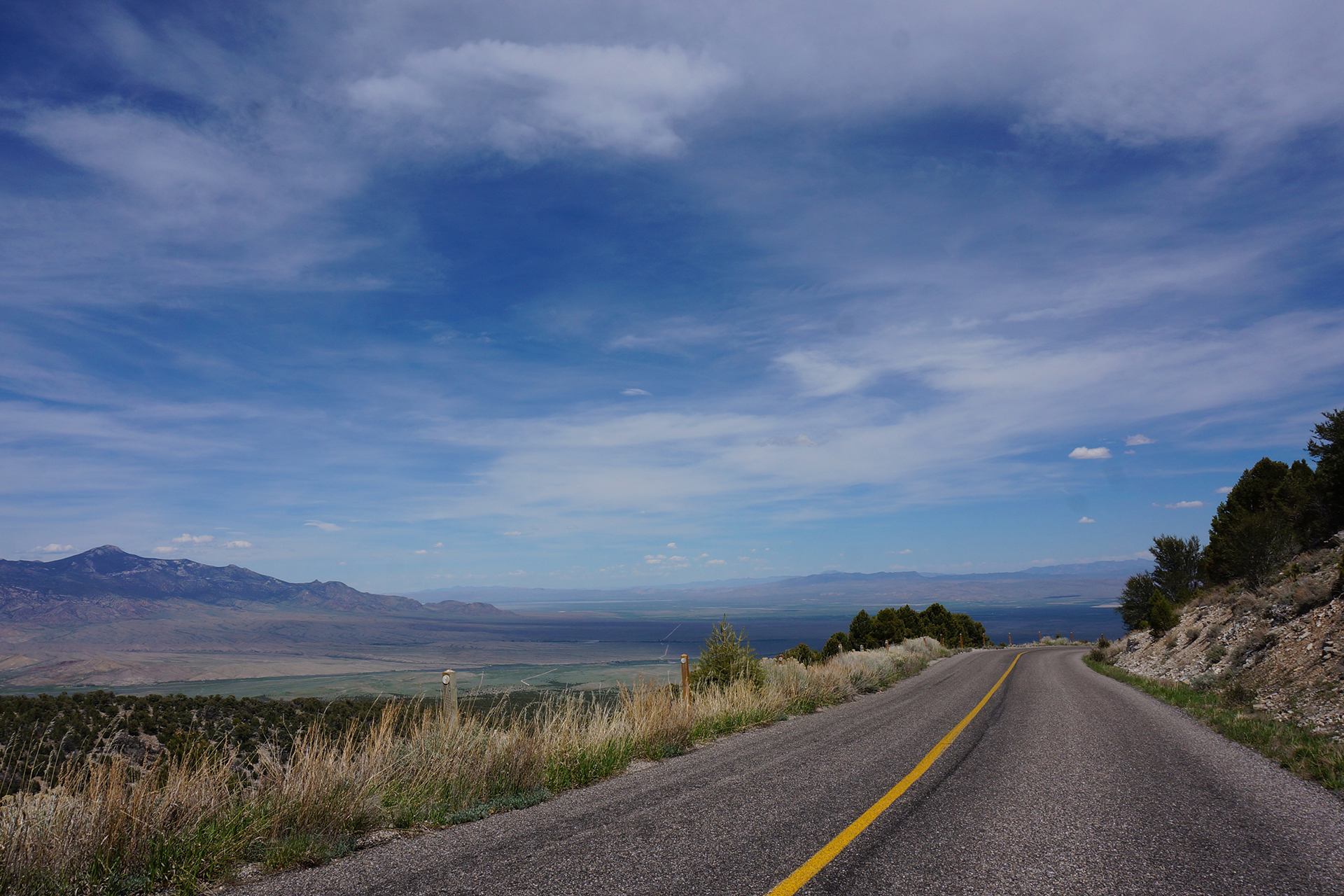
Great Basin National Park is in Nevada, 100 miles from Delta, but with a speed limit of 80 mph, it wasn’t such a long drive. It certainly was memorable, though. The terrain was utterly fascinating, a unique and alien landscape which defines “barren.” There are no towns in that 100 miles, frankly no people at all, and the desert was often utterly flat and empty. Then, out of nowhere, we would encounter a shimmering salt lake or a jagged mountain range – which we would zoom by, and then back to nothing.

It was a good place to pretend to be in a Mad Max movie. Also: thank goodness for podcasts.

Oldies But Goodies

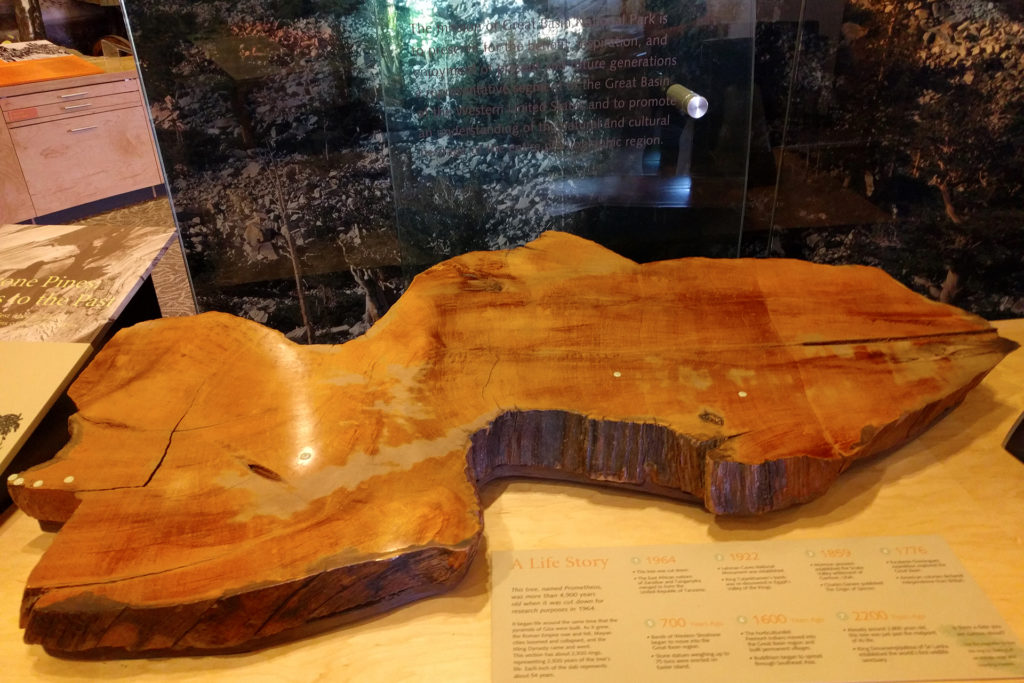
Aside from cinematic fantasies, the reason we made the trek through the wasteland was to see the world’s oldest trees – Great Basin’s bristlecone pine trees. Bristlecone pines aren’t particularly lovely – they’re small, twisted, and gnarly – but they are particularly good at surviving. Their age was actually unknown until 1964, when a grad student cut one down and counted the rings.

And discovered he had killed a 4,862 year old tree, one of the Earth’s oldest.  Whoops!

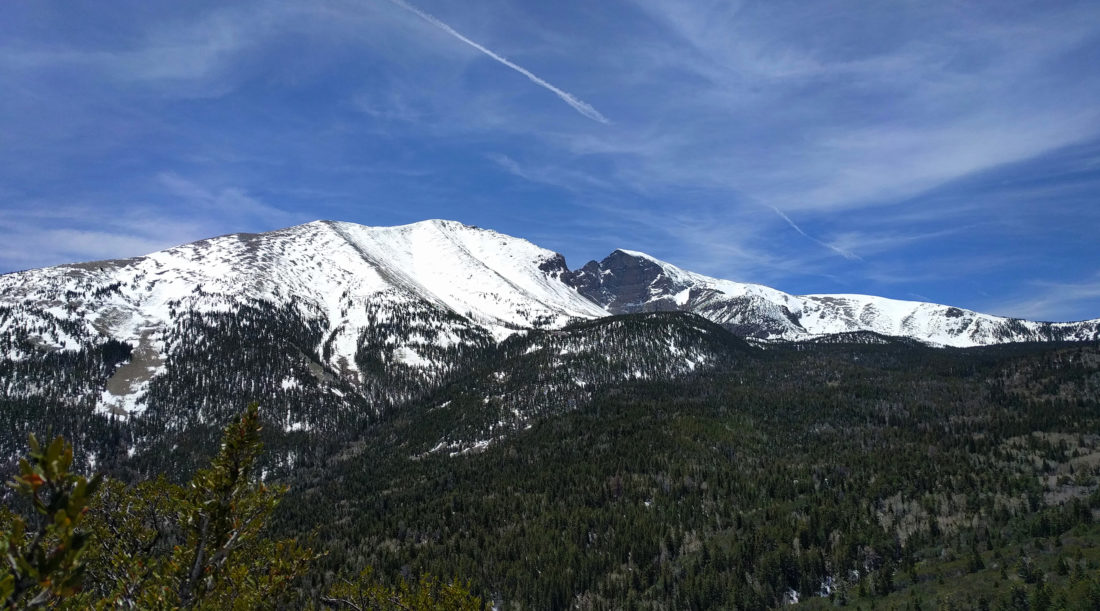
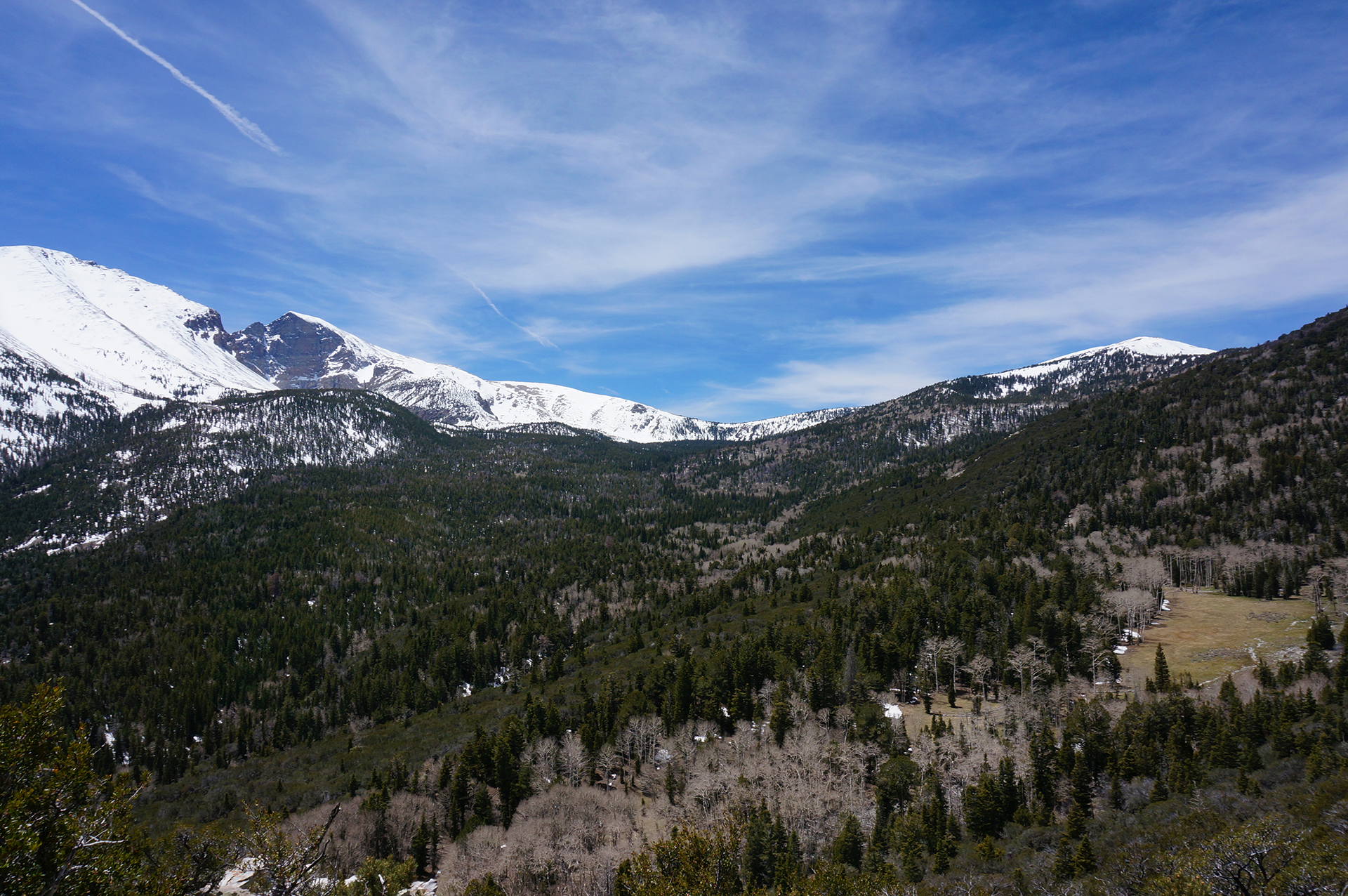
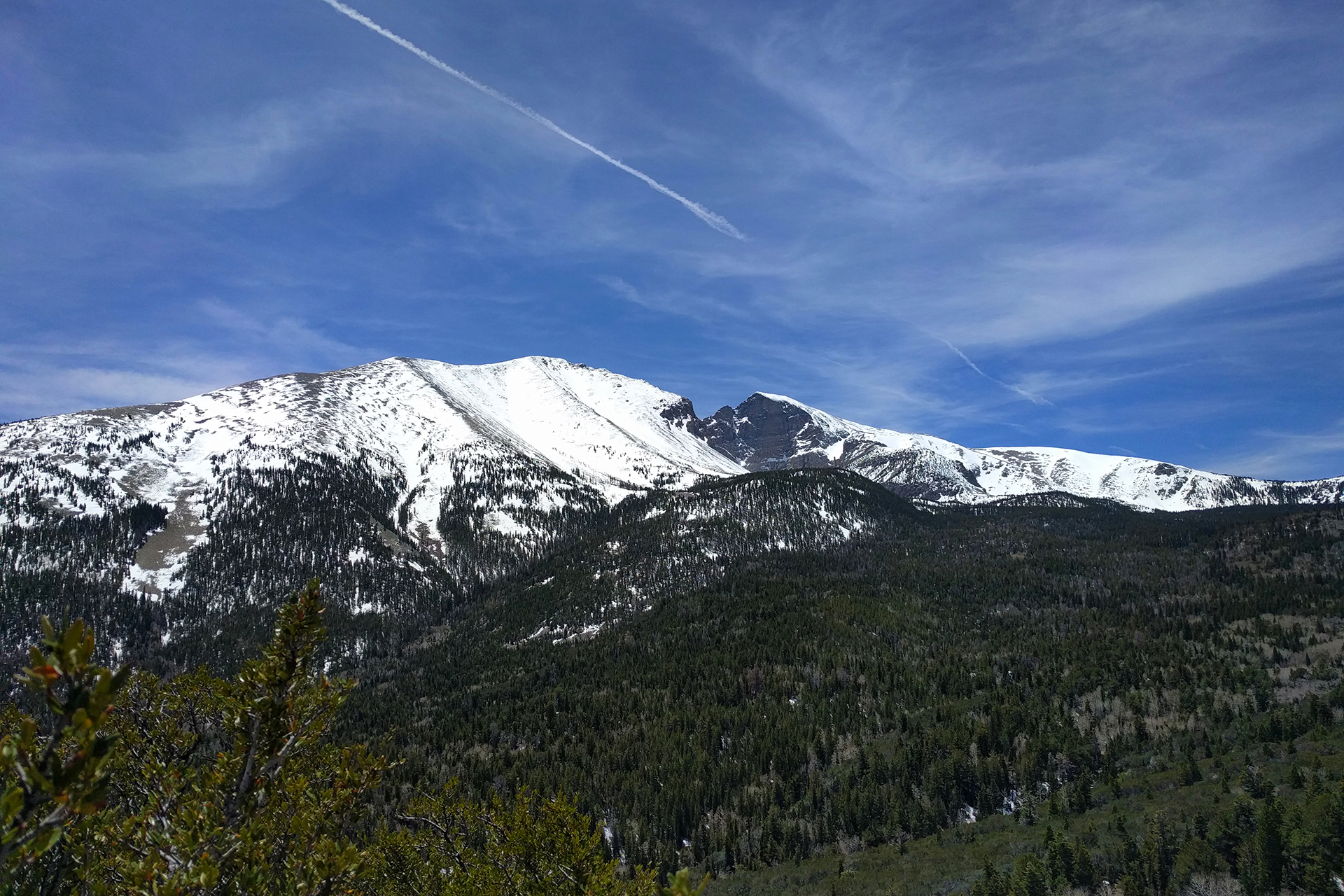
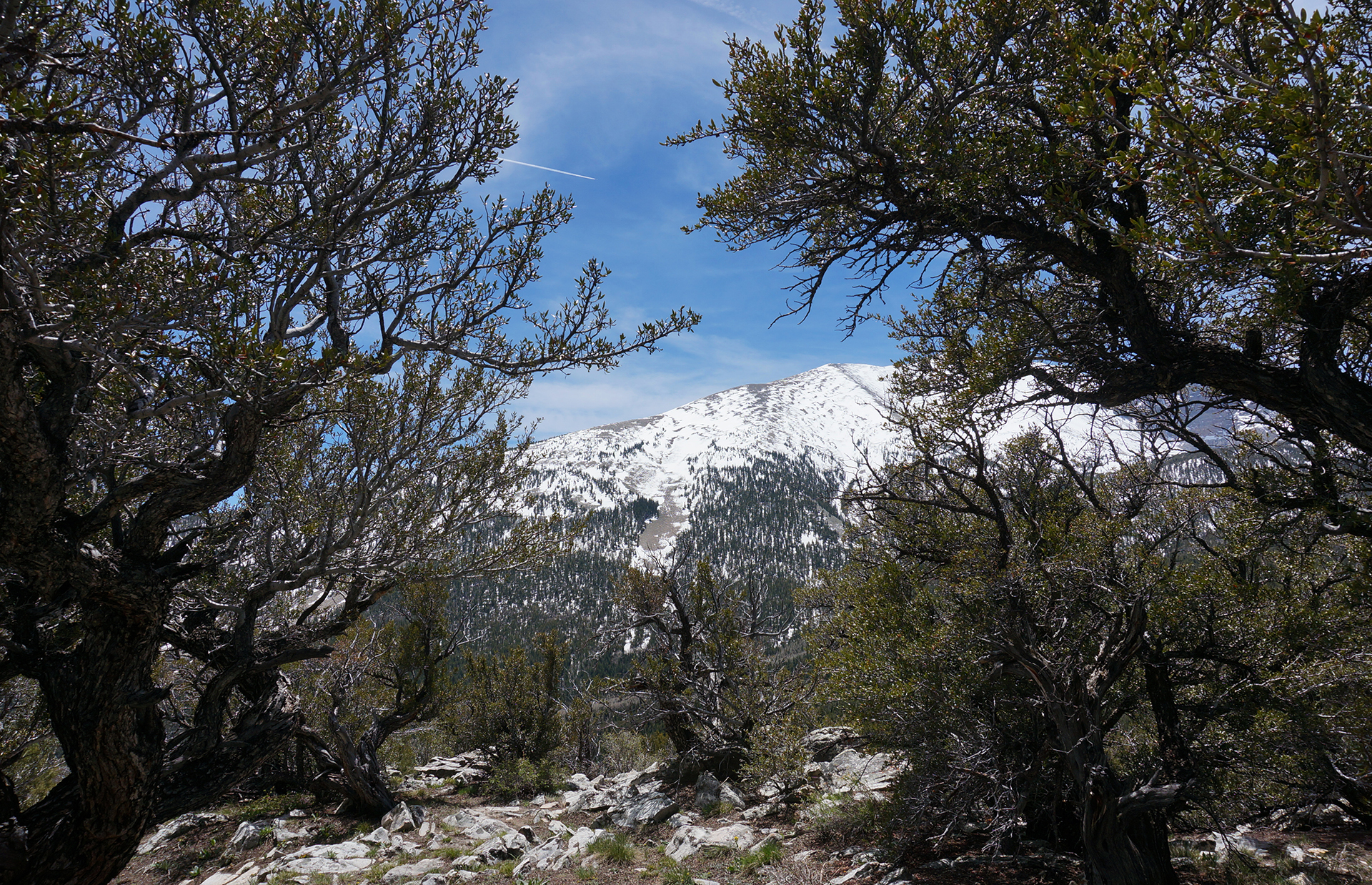
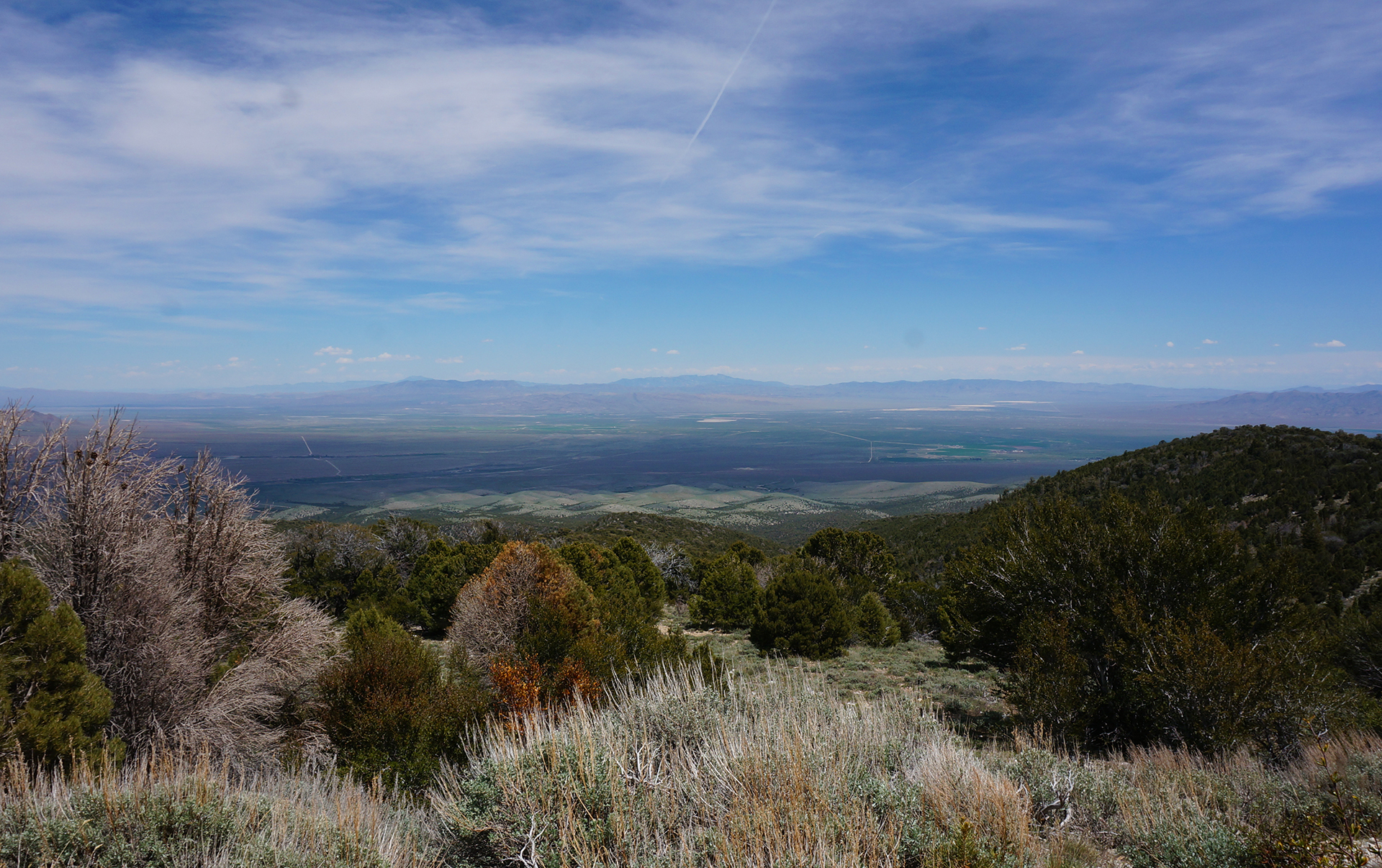
Today, bristlecone pines are better protected, but we never actually got to see them. Even though it was mid-May, the mountaintop where they live was still closed due to snow. (In fairness, that mountain is 9,000 feet high.) We had to settle for some amazing views from a nearby overlook.

Underground Vandalism

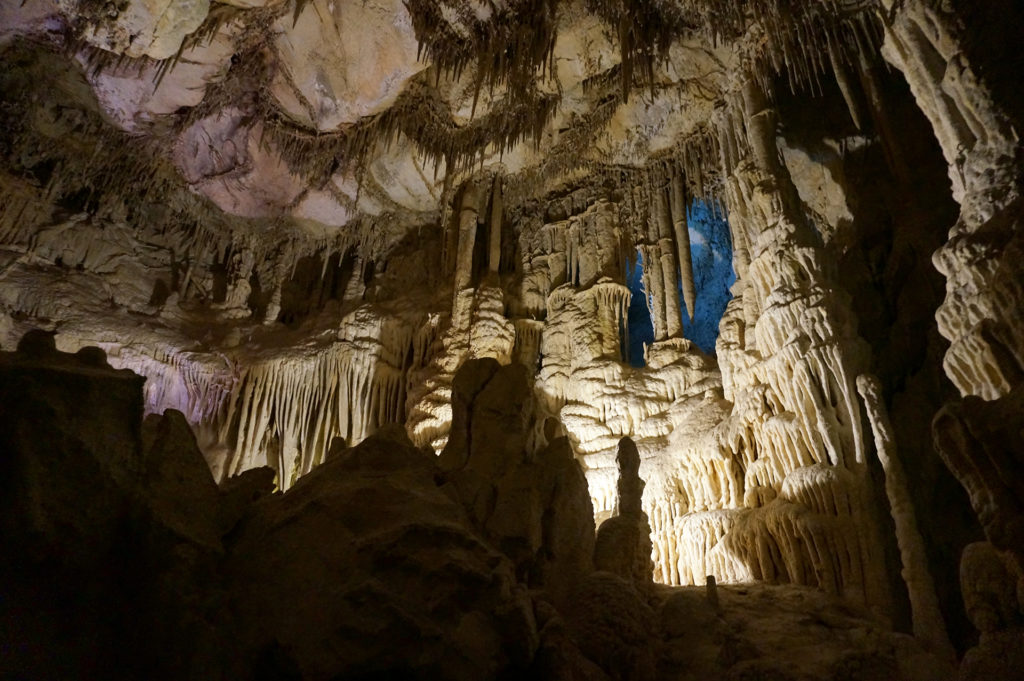
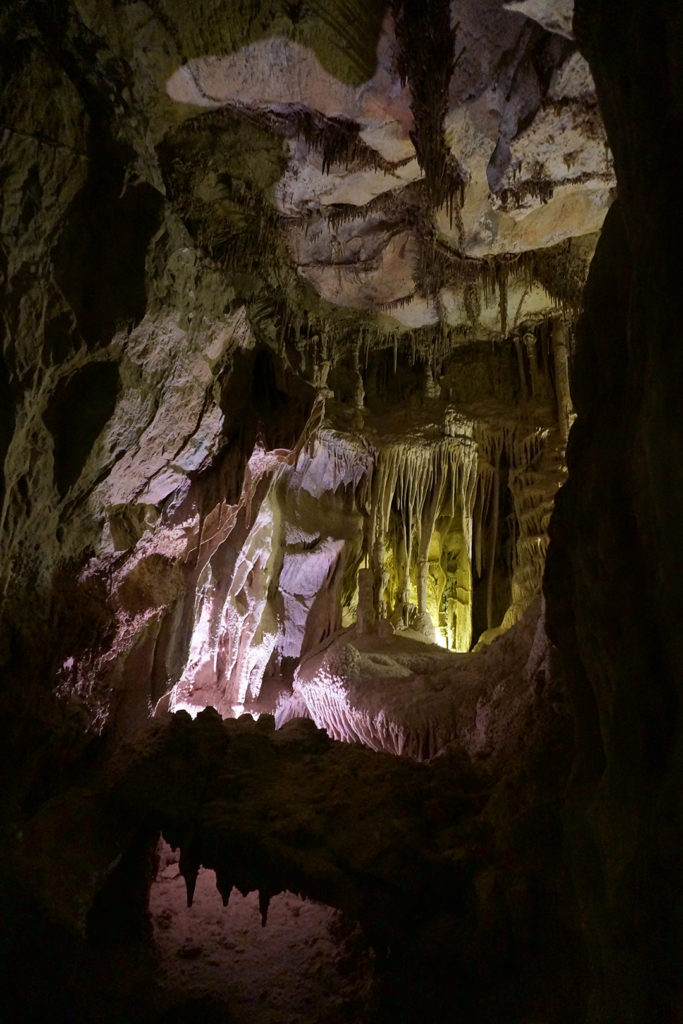
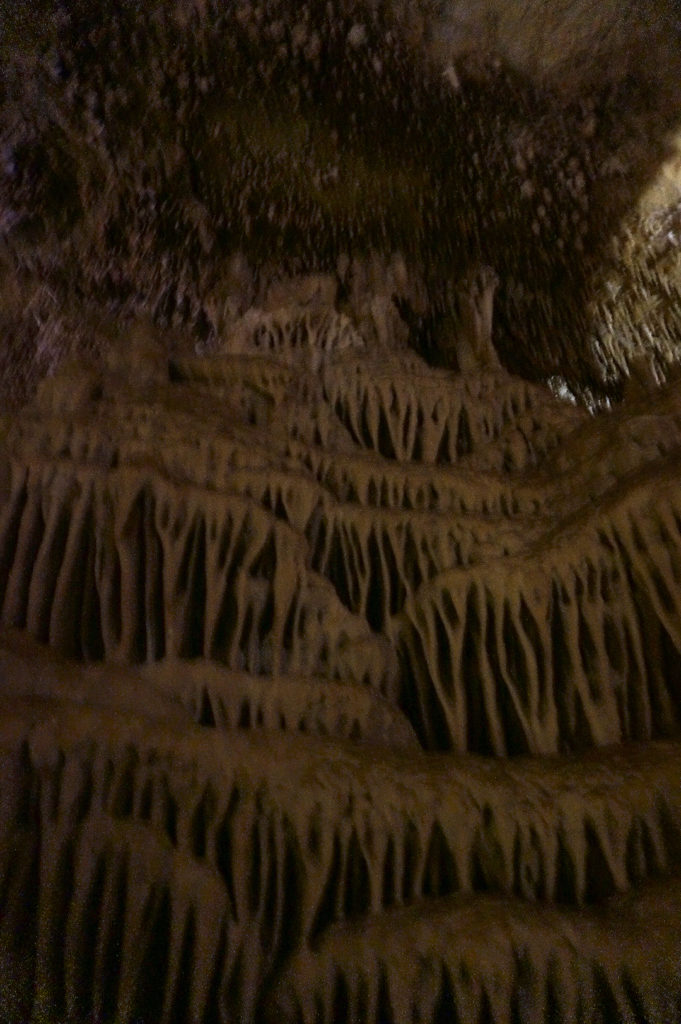
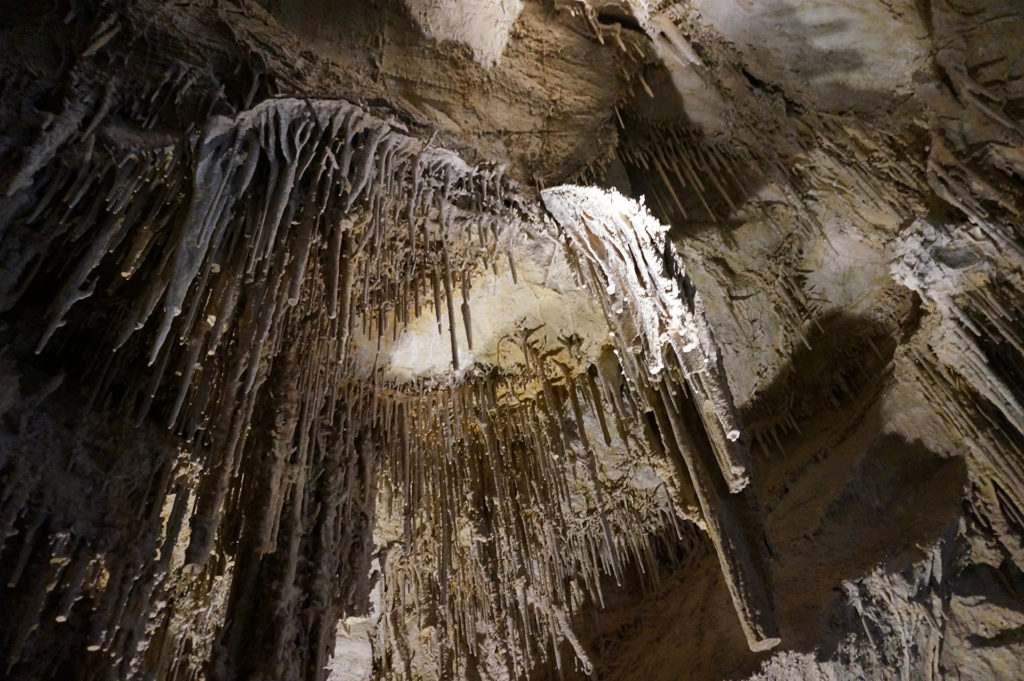
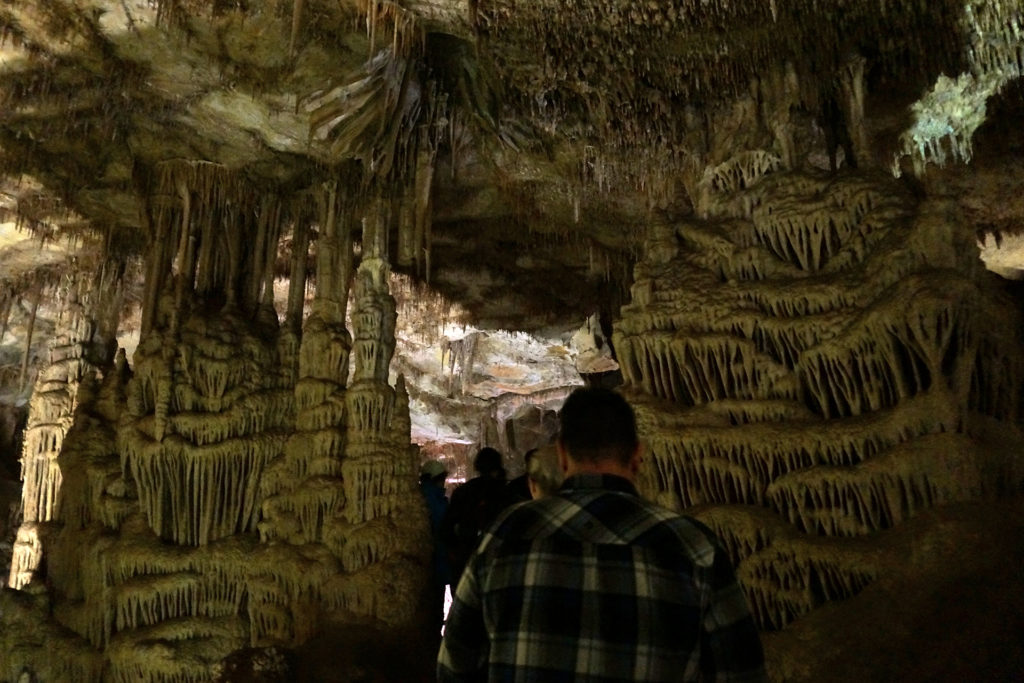
With no bristlecone pines, we decided to visit the other major attraction at Great Basin, the Lehman Caves. We’ve been lucky enough to see some beautiful caves on this trip – most notably the Caverns of Sonora – and the Lehman Caves could have been one of the best.

Sadly, however, they have been horrifically defaced. The original owners of the cave used to sell stalactite pieces to visitors, so many of the features are clipped off halfway down. In another room, visitors were encouraged to leave their name on the ceiling via candle burn marks. The ranger leading our tour suggested that the defacement of the caves created a new cultural significance, but we couldn’t help but feel sad for what was done there.

Speaking of the ranger, here’s a story that we just have to tell. The ranger leading our tour, Ranger Steve, was a seasonal ranger, meaning he had only recently arrived to work during the summer season. Steve was friendly and started out strong, but over the course of our ninety minute tour, his discussions gradually became more and more rambling.  By the end, he was almost incomprehensible.

That was strange, but things soon got stranger.  Our group ended up heading out of the caves around the same time as another group. The ranger of that group (lets call him Alan, because we don’t remember) asked Ranger Steve if they should merge the groups. Steve seemed genuinely terrified to answer and deferred to Alan, who then took charge of both groups. As we walked out of the cave entrance, Alan thanked everyone for coming and suggested we all come back for another tour sometime.

Which sounds innocuous, except that what Alan actually said was that we “should come back sometime and get a different experience with a different guide,” while staring directly at our (Ranger Steve’s) group.  The implication was clear: Steve was the worst, and we should try again sometime with someone else.

Ranger Steve just stared at the ground and said nothing.

Friends, this raised so many questions. Was Ranger Alan doing some sort of subterranean bullying of Ranger Steve? Or maybe Ranger Steve really was a terrible ranger, and even he knew it? Was Ranger Steve even a ranger?

So strange. The last puzzle piece of weirdness, though, is that all of this was only Jake’s experience. Heather didn’t observe any of these interactions between the rangers. Her experience was just that Ranger Steve and Ranger Alan were both “very nice.”

So… did any of this even happen?  Or was it all some kind of cave madness?

Was Ranger Steve even real?

We may never know.

Roadtrip Time Travel

Roadtrip Status

Still alive?  Check.

Where are you now?  Still in Pittsburgh, moochdocking with friends.  Thanks, Jamie and Chris!

Next location?  Dunno.  We are beginning to regret including this field in each blog post.

Follow Us On Social Media
FacebooktwitterinstagramFacebooktwitterinstagram

Latest Posts

0